If You Happen To Be In New York City

04-nypl-580

It has been a while since we have seen any old maps of Iceland, or old images of anything for that matter, so combined with a few select Raxa bloggers receiving a near-final copy of Seth’s honors thesis for review a few moments ago, this announcement came as a pleasant surprise:

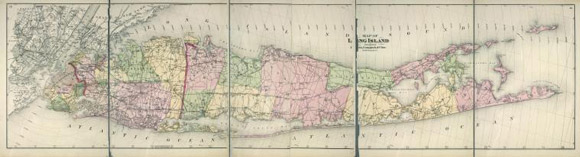
Last week, the New York Public Library released twenty thousand maps from its extensive collection, which includes more than four hundred thousand sheets and twenty thousand books and atlases, as free, high-resolution digital downloads. In announcing the newly accessible maps, the N.Y.P.L explained that the holding includes more than a thousand maps of New York City from the seventeenth century to the twentieth century, “which detail transportation, vice, real estate development, urban renewal, industrial development and pollution, political geography among many, many other things.” Continue reading

Santa Cruz Basilica – Fort Kochi

Photo credits : Abhay

Photo credits: Abhay

The Santa Cruz Basilica is a heritage church in Fort Kochi with a colorful history. Built by the Portuguese in 1505 and elevated by Pope Paul IV to cathedral status in 1558, it was demolished by the British in 1795 when they took over Kochi. Bishop Dom Gomez Ferreira commissioned a new building at the same site in 1887. Continue reading

If You Happen To Be At Yale

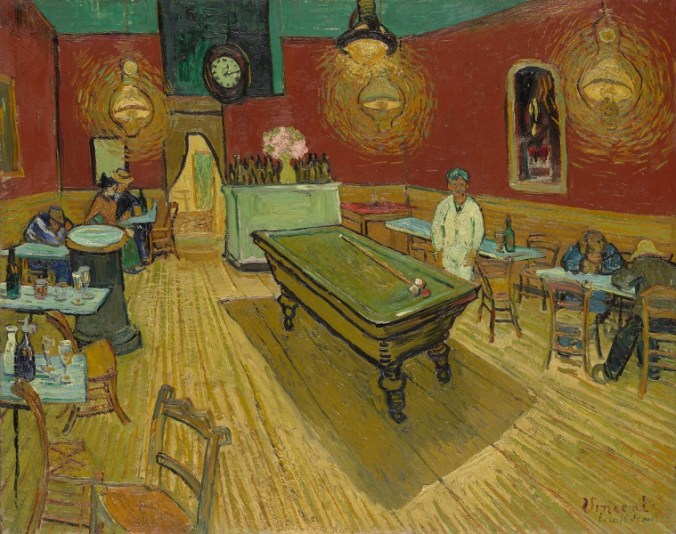
Vincent van Gogh, Le café de nuit (The Night Café) (1888). Photo: courtesy Yale University Art Gallery.


The intersection of these three names–one, a painter who is known to have influenced a community of influential fellow-painters during his own brief lifetime (not to mention since); one, a community of revolutionaries; and the other (how many ways can we categorize Yale according to the communities it represents?)–is as oddly appealing as the painting in question:

Van Gogh Painting Seized by Bolsheviks Will Stay at Yale

Continue reading

Libraries Old And New, Big And Small, At The Core Of Communities

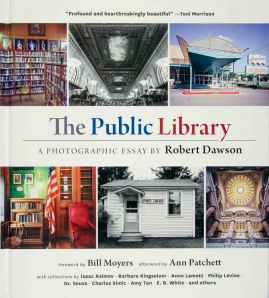
Cover_The_Public_Library_bookThis book by Robert Dawson pays attention to one of the institutions we care most about, libraries–specifically public ones. Why do we care so much about them? Because of the essential role they play in so many communities, both small and large, with regard to education and egalitarian opportunity.

Toni Morrison’s assessment of the book is that “Robert Dawson’s work is an irrefutable argument for the preservation of public libraries. His book is profound and heartbreakingly beautiful.”  From the author/photographer’s own website the text that introduces the work is a mix of promotion and fact:

This project is a photographic survey of public libraries throughout the United States featuring essays on libraries and the public commons from prominent American writers. The book The Public Library: A Photographic Essay will be published in April, 2014 by Princeton Architectural Press. ISBN 978-1-61689-217-3

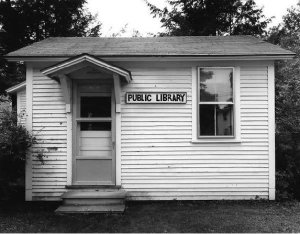
Smallest library, now closed, Hartland Four Corners, Vermont

There are over 17,000 public libraries in this country. Since I began the project in 1994, I have photographed hundreds of libraries in forty-eight states. From Alaska to Florida, New England to the West Coast, the photographs reveal a vibrant, essential, yet threatened system.

For the past two centuries public libraries in America have functioned as a system of noncommercial centers that help us define what we value and what we share. The modern library in the computer age is in the midst of reinventing itself. What belongs in a library? Continue reading

Taj Mahal

Photo credit : Sanjayan

Photo credit: Sanjayan

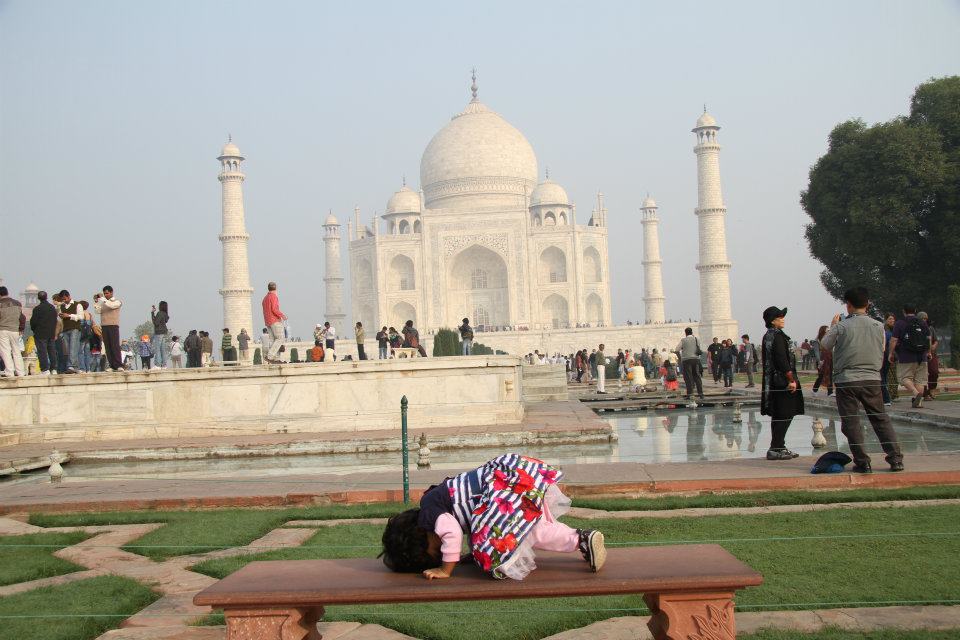
A Unesco World Heritage Site and considered one of the eight wonders of the world, the Taj Mahal is in Agra in the Indian state of Utterpradesh. Twenty-two thousand laborers and craftsmen worked on the mausoleum complex between A.D. 1631 and 1653, to the cost of what is believed to be thirty-two crore (320 million) rupees. Continue reading

If You Happen To Be In New York City

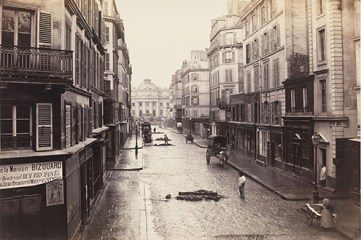
Charles Marville: Photographer of Paris
January 29 – May 4, 2014

Rue de Constantine fourth arrondissementteaser

…As the exhibition of his photographs at the Metropolitan Museum makes clear, Marville was the right man for the job. For starters, he was a local. His father was a tailor, his mother a laundress. He grew up on a cramped street near the Louvre that later vanished to make way for one of Haussmann’s imperial avenues. Like Baudelaire, his contemporary, Marville honed his eye on Paris; the city taught him to see…

Brought to our attention by a post on the New Yorker’s website today, from which the snippet of text above is taken (and where you can see 10 excellent images from the collection the text describes), this exhibit catches our eye because it has to do with both the history of photography and the cultural heritage of a lost form of Paris:

Exhibition Location: Galleries for Drawings, Prints, and Photographs, Second Floor, Galleries 691-693
Press Preview: Monday, January 27, 2014, 10 a.m.–noon Continue reading

Holi, 2014 Edition

This slideshow requires JavaScript.

Each year, we in the south of India wish to be in the north of India for this celebration that marks the end of winter. We have linked to some great photo spreads in other publications, and this year choose the Reuters photojournalists’ snapshots to mark this year’s Holi.

Kerala Architecture – Napier Museum

Photo credits: Ramesh Kidangoor

Photo credits: Ramesh Kidangoor

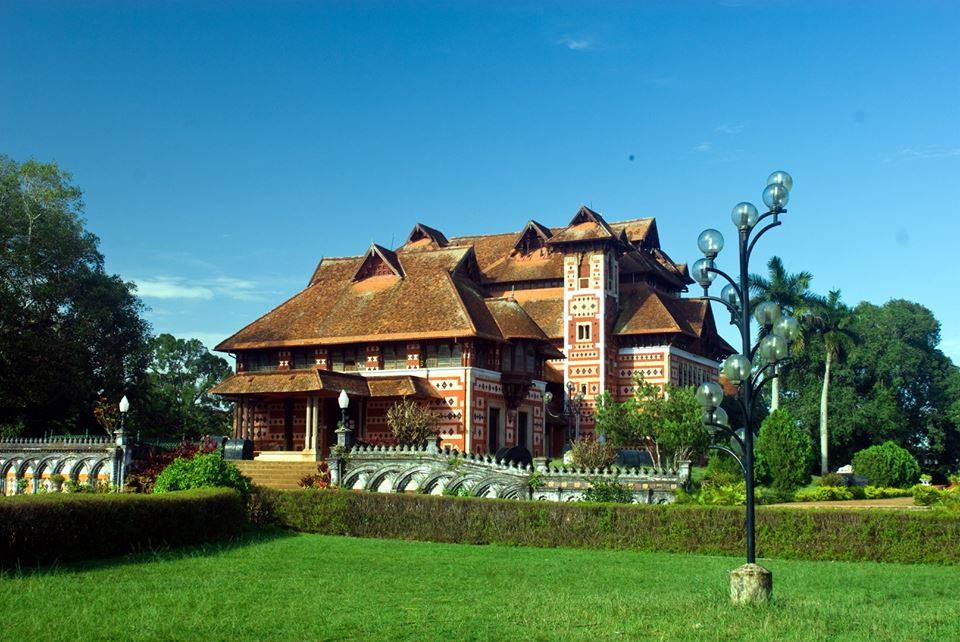
A gem of an architectural exuberance, the Napier Museum in Trivandrum is an example of authentic Kerala architectural design. The pink and blue stripes alternating with stripes of yellow and chilly red, scalloped arches of banana yellow, elaborately carved balconies and the red mock friezes leave visitors with a fairytale impression of beauty and perfection. Continue reading

Yoga In Perspective

San Antonio Museum of Art

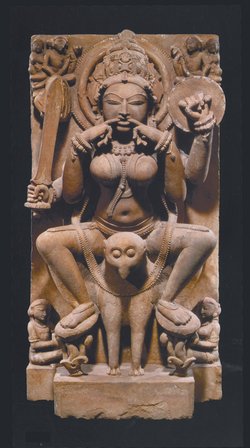
San Antonio Museum of Art. ‘Yogini’; sandstone statue, Kannauj, Uttar Pradesh, first half of the eleventh century. William Dalrymple writes that ‘in ancient India yoginis were understood to be the terrifying female embodiments of yogic powers who could travel through the sky and be summoned up by devotees who dared to attempt harnessing their powers.’

William Dalrymple, in the New York Review of Books, provides a summary of four books that should be considered essential reading to understand yoga in its proper historical context. The last few paragraphs are among the best:

…Yogis seem to have gone particularly out of control during the eighteenth-century anarchy between the fall of the Mughals and the rise of the British. This is a subject explored by William Pinch in his brilliant 2006 study of the militant yogis of the period, Warrior Ascetics and Indian Empires.

European travelers of the period frequently describe yogis who are “skilled cut-throats” and professional killers. “Some of them carry a stick with a ring of iron at the base,” wrote Ludovico di Varthema of Bologna in 1508. “Others carry certain iron diskes which cut all round like razors, and they throw these with a sling when they wish to injure any person.” A century later the French jewel merchant Jean Baptiste Tavernier was describing large bodies of holy men on the march, “well armed, the majority with bows and arrows, some with muskets, and the remainder with short pikes.” By the Maratha wars of the early nineteenth century, the Anglo-Indian mercenary James Skinner was fighting alongside “10 thousand Gossains called Naggas with Rockets, and about 150 pieces of cannon.” Continue reading

If You Happen To Be In New York

This slideshow requires JavaScript.

Thanks to the New Yorker‘s website for keeping us posted on the first show of a new curator at MOMA, in a medium of expression we care about for various reasons both aesthetic and technical:

In this week’s issue of the magazine, Vince Aletti talks to Quentin BajacMOMA’s new chief curator of photography, about “A World of Its Own: Photographic Practices in the Studio,” his first show for the museum:

“I’m a bit tired of the predictable history from the daguerreotype to the digital print,” says the Paris-born Bajac, who comes to MOMA from stints at the Musée d’Orsay and the Centre Pompidou, where he was the head of the photography department from 2007 to 2013. Continue reading

Temple Architecture – Thrikkaikunnu Mahadeva Temple

Photo credits : Immanuel Abraham

Photo credits: Immanuel Abraham

Kerala has more than 20,000 temples dotting its landscape. Unique in their design and construction they stand out when compared to other Indian temples. Unlike other regions of the country, Kerala’s temples are primarily wooden structures that stress horizontal lines rather than tall towers and pillars. Continue reading

Kanakakunnu Palace – Trivandrum

Photo credit: Ramesh Kidangoor

Kanakakunnu Palace was built during the reign of Sree Moolam Tirunal (1885-1924), one of the most popular ruler’s of Travancore state.  Situated near the Napier Museum, it was mainly used for the Royal family guest entertainments. Continue reading

“Change the Mascot”

The United States National Football Leage (NFL) and it’s Hunky Dory Saucery Thing (which is beyond my scope of imagination) have never held any interest for me. The sport doesn’t elicit any reaction other than sympathy for the players’ bodies, although my disinterest bears  no grudge against those who enjoy a game, whether from within the dynamic minefield of titanic collisions or from the comfort of their own home’s sofa, or anything in between. In fact, I know so little of the culture, statistics, and geopolitical implications of the sport that before last week I couldn’t have named three teams off the top of my head. Today, I unsuspectingly watched this:


Continue reading

The Story of “Kalyana Saungandhika”

Kalyana Saungandhika–Bhima and Draupadi

The true Kathakali experience that I’ve referred to previously is only understood fully within the context of the grand Indian epic stories that they express. The rightful heirs to the throne of Hastinapur were 5 Brothers called Pandavas. The brothers were beaten in a game of dice by their 100 cousins called the Kauravas and were sent to the forest. The arrangement was such that the Pandavas were required to spend 12 years in the forest (Vanavaasa) and one year incognito (Ajnaathavaasam). If they were to be recognized by the Kauravas during the year of living incognito, they had to repeat the 12 years of forest life.

Many incidents good and bad occurred while they were undergoing Vanavaasa and the story of Kalyana Saungandhika is about one such incident, which also happens to be the favorite of ‘Kathakali’ performers.

Arjun, one of the 5 Pandavas, won his future wife Draupadi through an archery test and due to a misunderstood statement by Kunti the mother of the Pandavas, Draupadi had to accept all 5 of the Pandavas as her husband. Continue reading

Kathakali – An Introduction

Tiraseela

Tiraseela – the cloth that is used both as curtain and dramatic effect

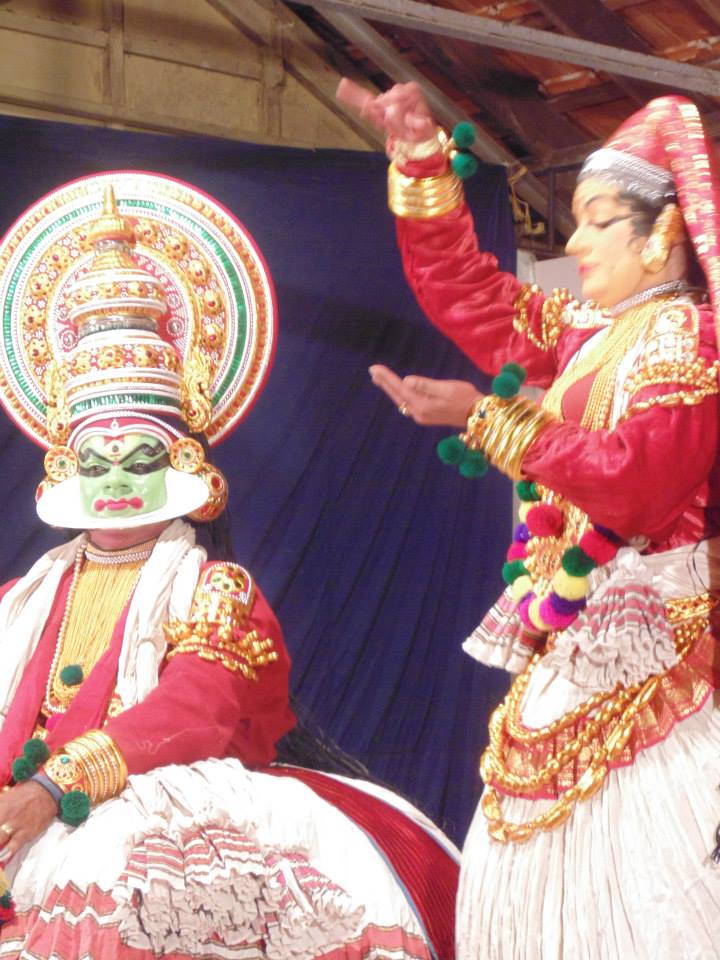
Kathakali is one of the oldest theatre forms in the world. Originating in the area of southwestern India now known as the state of Kerala, it is a group presentation in which dancers take various roles in performances traditionally based on themes from Hindu mythology, especially the two epics, the Ramayana and the Mahabharata.

One of the most interesting aspects of the art form is its elaborate make-up. Characters are categorized according to their nature, which determines the colors used in the make-up. Continue reading

Chinese Fishing Nets, Kochi

Photo credits : Ramesh Kidangoor

Photo credits: Ramesh Kidangoor

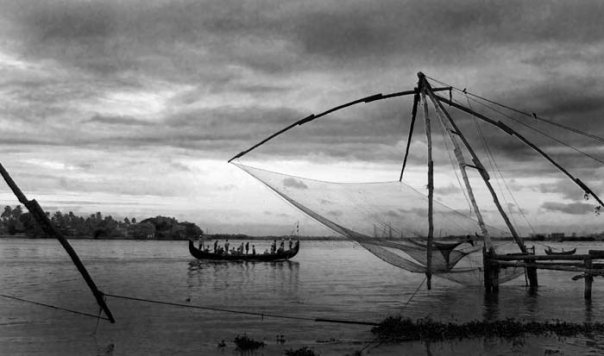
The Chinese fishing nets are a unique and special part of Kochi. A legacy of some of the earliest visitors to this coast, they are thought to have been brought to Kochi by traders from the Chinese court some time between 1350 and 1450. Employed mainly during high tides, these nets are set up on bamboo poles supported by teak wood structures and require at least four men to operate their system of counterweights. Continue reading

Kerala Culture and Arts – Ranga 2014

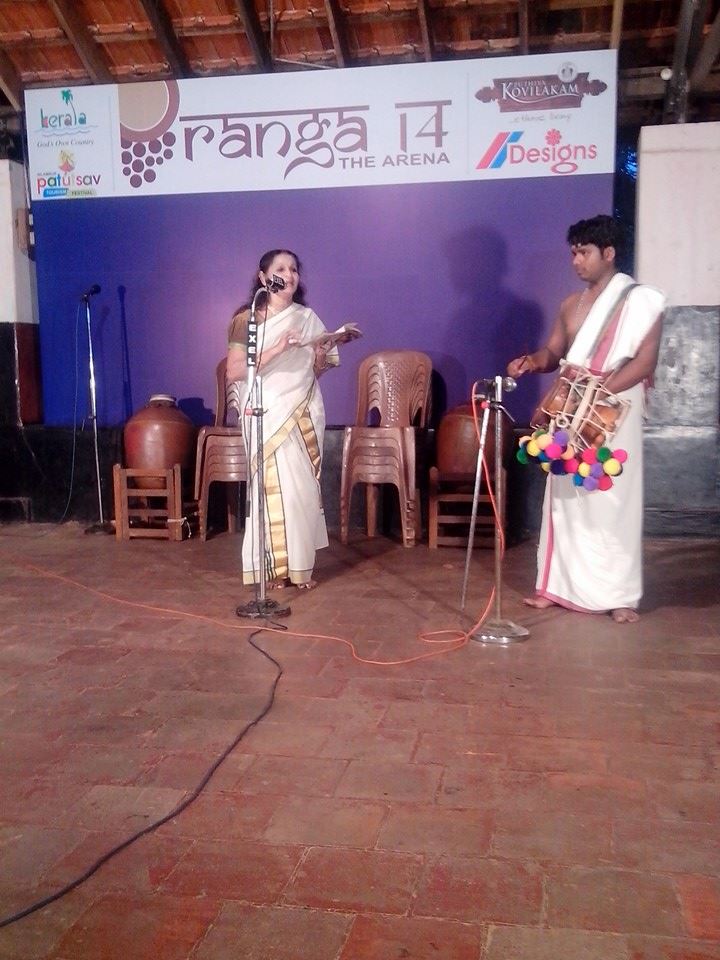
Ashtapadi

With the goal of conserving the cultural art of Kerala from extinction, Nilambur Kovilakam recently conducted an event called ‘Ranga 2014’ on the 17th and 18th of January.  It was a two day event wherein artists portrayed their talents to a mixed audience of people from the Kovilakam and visitors from farther afield. The major intention of this event was to showcase the cultural heritage of Kerala and demonstrate its art forms to an invited audience from various parts of the world.  Continue reading

Classics-R-Us

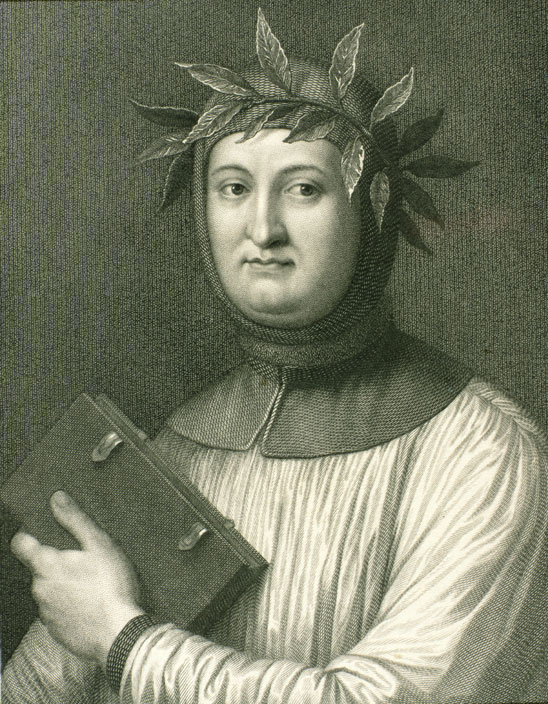
PRIVATE COLLECTION/KEN WELSH/THE BRIDGEMAN ART LIBRARY. Fourteenth-century Florentine poet Petrarch so loved the classical authors that he imagined conversations with them.

PRIVATE COLLECTION/KEN WELSH/THE BRIDGEMAN ART LIBRARY. Fourteenth-century Florentine poet Petrarch so loved the classical authors that he imagined conversations with them.

Among all the topics we survey, link to and write about on this site, the classics are if anything underrepresented relative to their importance in matters of community, collaboration and conservation. History is probably the most visible, thanks to Seth’s recent series on Iceland. Book reviews and shout outs to great professors are also visible with some frequency. Maybe enough, maybe not. Anyway, once more to the trenches, on the side of the humanities but not against practical considerations; the liberal arts matter to our future, not just to our past as this essay reaffirms, so let’s not lose them:

In 2011, the University of California at Los Angeles decimated its English major. Such a development may seem insignificant, compared with, say, the federal takeover of health care. It is not. What happened at UCLA is part of a momentous shift in our culture that bears on our relationship to the past—and to civilization itself. Continue reading

Prehistoric Kerala Rock Art

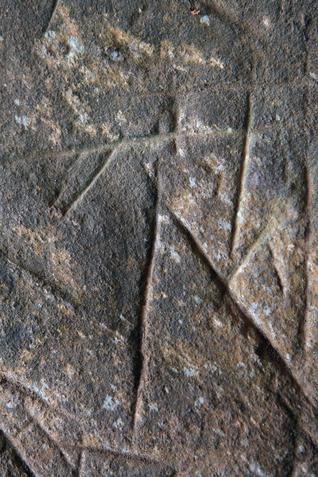
Deep meanings: A newly discovered anthropomorphic motif on a rock in the Thovari hills near the Edakkal caves in Wayanad.

Deep meanings: A newly discovered anthropomorphic motif on a rock in the Thovari hills near the Edakkal caves in Wayanad.

The Hindu reports today on a discovery in Wayanad, where Raxa Collective hopes to offer travelers cultural heritage conservation experiences in the near future:

This is the first time an anthropomorphic figure, a recurring motif of pre-historic rock arts sites in the world, has been reported from the site.

An anthropomorphic figure has been discovered among the prehistoric petroglyphs (rock engravings) on the Thovari hills near Edakkal caves in the Wayanad district of Kerala.

Continue reading

Hill Palace – Kochi

Photo credits : Aju

Photo credits: Aju

The Hill Palace, built in a blend of Dutch and traditional Keralan architectural styles, was built in the year 1865 and spreads over 20,000 square feet in forty-nine buildings. Once the official residence of the maharaja of Cochin, today Hill Palace is one of Kerala’s largest archaeological museums. Continue reading