Ayurveda is science of life. Although Ayurveda is practised all over India, Kerala is perhaps the only state where this science of medicine still follows age-old traditional laws. Marma Points are positions on the body where flesh, veins, tendons, bones and joints meet. Oil therapy is an important Marma Chikitsa, where warm Medicated oils are used in specific Marma points. Continue reading
Heritage
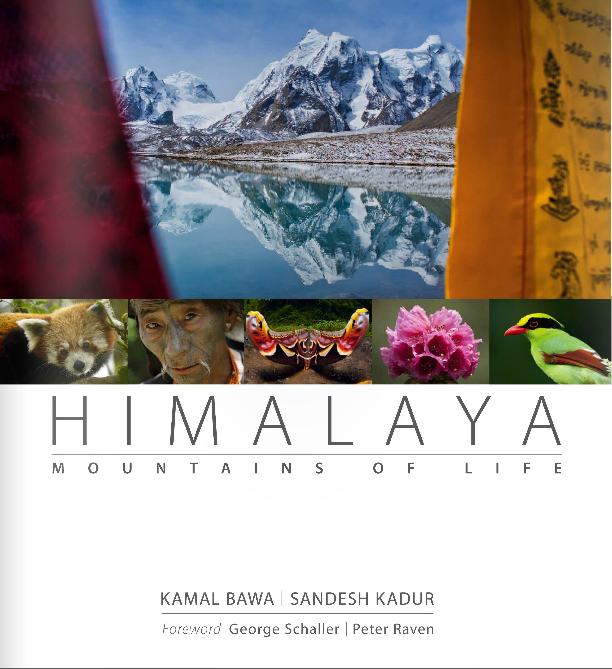
Photographer + Professor + Himalayas = Collaborative Book
The blurb is enough to get our attention, but the images on the book’s website (click the image above to see) make the journey palpable:
The Eastern Himalaya—land of Gods, of ancient mountain kingdoms, of icy peaks and alpine meadows—is like no other place on Earth. The life and landscapes of the region are as diverse, spectacular and fragile as the mountains themselves. Even today, these mountains hold many mysteries: unnamed species, primeval cultures and the promise of magical cures to heal all of humanity. Himalaya—Mountains of Life takes us on a journey of biocultural discovery, from the great canyon of Yarlung Tsangpo and the Siang Gorge in the east to the Kali Gandaki Gorge in the west. Along the way, Himalaya demonstrates through breathtaking imagery and words, why the preservation of this heritage is so important—not just for us, but for the future of all life on Earth. Continue reading
Library, Guardian Of Spiritual Treasure

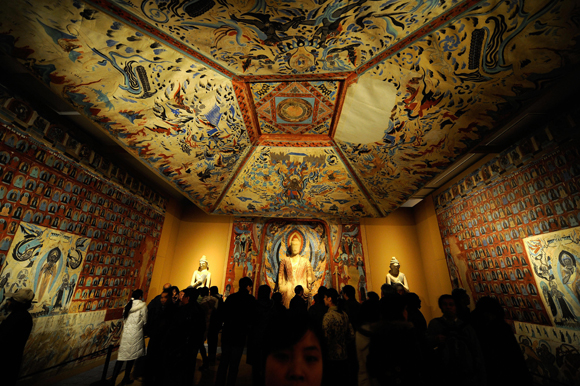
Visitors visit a replica parts of the Mogao Cave during the Dunhuang Art Exhibition in Beijing on February 20, 2008. The exhibition displays collections mostly from the Dunhuang Grottoes which were constructed between the 4th and the 14th century, including recovered antres, original painted sculptures and their replicas from Library Cave of Dunhuang. Dunhuang, located in Jiuquan of Northwest China’s Gansu province along the historic Silk Road, is in danger of being swallowed by sands of the adjacent Kumtag desert, which are creeping closer at a rate of up to four metres (13 feet) a year. (Photo credit TEH ENG KOON/AFP/Getty Images)
We tend to avoid topics pertaining to religion, spirituality or related highly personal matters that sometimes can lead to misunderstandings, misapprehensions, or worse; but our love of libraries, of archives, of discoveries are all satisfied in one fell swoop of a blog post, and we are particularly impressed to learn that Gutenberg may not be the only key to understanding the history of printing:
Just over a thousand years ago, someone sealed up a chamber in a cave outside the oasis town of Dunhuang, on the edge of the Gobi Desert in western China. The chamber was filled with more than five hundred cubic feet of bundled manuscripts. They sat there, hidden, for the next nine hundred years. When the room, which came to be known as the Dunhuang Library, was finally opened in 1900, it was hailed as one of the great archaeological discoveries of the twentieth century, on par with Tutankhamun’s tomb and the Dead Sea Scrolls. Continue reading
Thenmala Sengottai – Meter Gauge Rail
The Thenmala-Sengottai Meter Gauge Ghat section had been one of the gems of the Indian rail system and certainly one of Kerala’s most beautiful routes. Maharajah Balarama Varma of Travacore conceived and implemented the railway line during 1904, with an , with an inaugural run in July of that year. Continue reading
Padmanabhapuram Palace – Trivandram
Padmanabhapuram Palace was the capital seat of the Travancore State until 1792, when it was shifted to Trivandrum. This magnificent home of the Travancore rulers was not a single unit, but a complex of 14 palaces spread across six and a half acres. Continue reading
Elephant Stables – Hampi, Karnataka
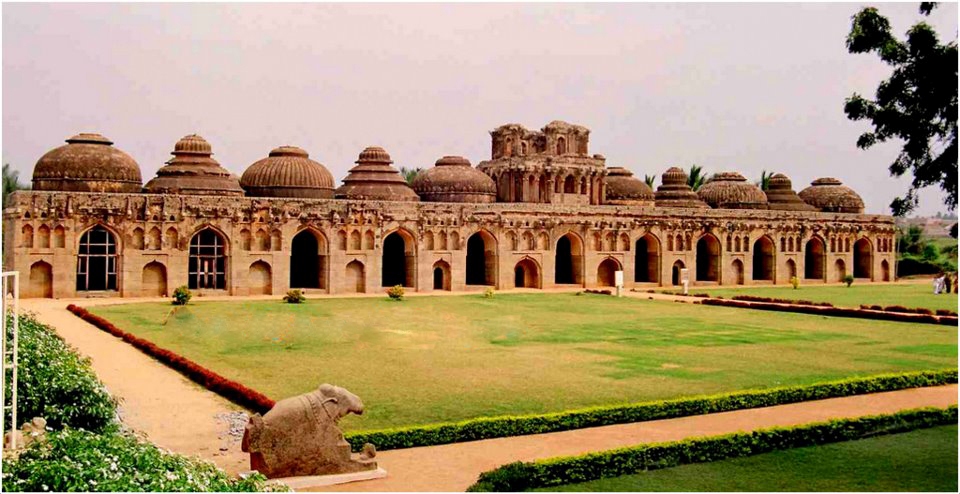
The Elephant Stables are located in the UNESCO World Heritage city of Hampi in Karnataka. This long structure was constructed with majestic openings for the resting places of the royal elephants. The open area in front of the of the building was a parade ground for the elephants. The Elephant stables with their lofty domes and arches is synthesis of Hindu and Islamic forms.
Kamal Mahal – Hampi, Karnataka
Hampi is a World Heritage Site village located on the southern bank of the river Tungabhadra in Karnataka. Kamal Mahal is one of Hampi’s secular or non-religious structures Its unusual design blends elements of Muslim and Hindu architecture. The building’s function is not exactly known but the quarters are believed to have been used by Hampi’s female guards.
World Tourism Day 2013
The United Nations World Tourism Organization (UNWTO) invites people world wide to participate in World Tourism Day on September 27 every year. Kerala enjoys unique geographical features that have made it one of the most sought after tourist destinations in Asia. Continue reading
Uthrattathi Vallamkali – Aranmula
The world famous Aranmula boat race will be held this year on September 20th. The uthrattathi Vallamkali sees 26 boats participating in the two days of festivities. The festivities involve the oarsmen singing traditional boat songs and wearing white Mundu and turbans. The boats are decorated with golden lace at the head of the boat and a flag and ornamental umbrellas in the center. Continue reading
Photography, History, Destiny
There is more than one photography-history-literary continuum buff out there for whom this link-post is intended. One is our erstwhile contributor of great photographic compositions and written reflections on his own photographs; as Milo heads west, he heads toward history. His family history, at minimum. His Inman predecessors first headed west centuries back when Kansas was the great frontier. But this guy is always looking forward while his brother puts some perspective on it all, taking a closer look through the rearview mirror.
Milo follows in the footsteps of several generations of painters, photographers and printmakers in his family who all headed west. One of them, in San Francisco now, has even shown an affinity for Civil War era photography of the type reflected on in this article on the Atlantic‘s website, so we shout this one out to Milo, Seth and Paul in particular:
Let’s play a short, highly contrived game, called called “Smile or Grimace?”
Here’s Major General Samuel P. Heintzelman, an officer of the Federal Army, photographed during the war:
An Early Great, Revealed
At first glance, it might seem to be a group of photos from the box of one of those street vendors in Paris. Not so, as Luc Sante points out in the New York Review of Books:
Charles Marville is best known for his government commission to photograph the neighborhoods of Paris slated for demolition during Baron Haussmann’s reconfiguration of the city between 1853 and 1870. In fact, that is virtually all he has been known for, a matter the authors of Charles Marville: Photographer of Paris are eager to rectify. Continue reading
Historian Cross-overs
For anyone who has been following Seth’s posts on this site over the last couple years, there has been a notably strong dose of history in many due to his decision to focus his undergraduate studies in environmental history. Summer 2013–an archival deep dive quite distinct from his previous summers in the present reality of Galapagos, Nicaragua, India, Jordan, Chile, Croatia, Costa Rica, France–was spent in Ithaca, his first summer there since the series of summers 1992-1995 (birth year through toddlerhood, when his father was engaged in history-based doctoral dissertation research). Is there a DNA tracer for history appreciation?
This comes to mind reading Gyan Prakash’s account of his experience mixing history and film. For the many readers of university age who follow Seth’s writings the reasonable question might be what he plans to do with that degree once he graduates. We expect that in the coming months as he approaches graduation this will start popping up as a theme in his posts. What good is history? Consult Mr. Prakash for inspiration:
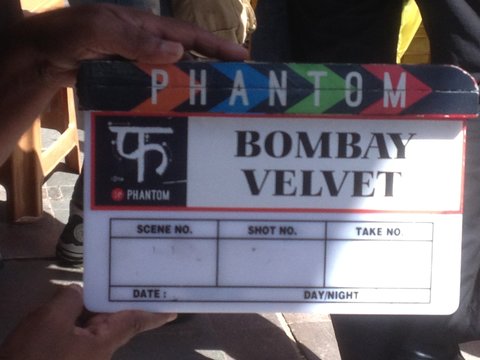
On July 28, I flew to Colombo, the capital of Sri Lanka, to join the filmmaker Anurag Kashyap, the actors Ranbir Kapoor and Anushka Sharma, and a massive crew making the movie “Bombay Velvet.” In 2004, drawing on my research on the history of Mumbai, I had written the outline for a retro film noir aimed at capturing the momentous transformation of Mumbai’s milieu of jazz clubs and industrial society in the 1960s. Continue reading
Hermes, Circa 1979
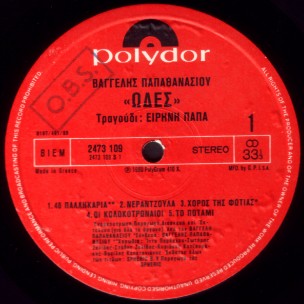
At Easter time, 1979, my mother and I traveled back to Vourthonia. Musical soundtrack can accompany an occasion in life, just as in film. Vangelis, in collaboration with Irene Pappas, had just released the soundtrack for that visit. Click the image to the left to read a bit about the album; better yet find the music and listen.
The lamb had been over the fire since morning, and was now on the table. Feta, salads, and the best olives in the world were there too. That music was playing from the open doors of an old VW Beetle parked near where we were sitting–my mother, many villagers, and me. That god gave safe passage. Continue reading
Kizhi – Ayurvedic Treatment
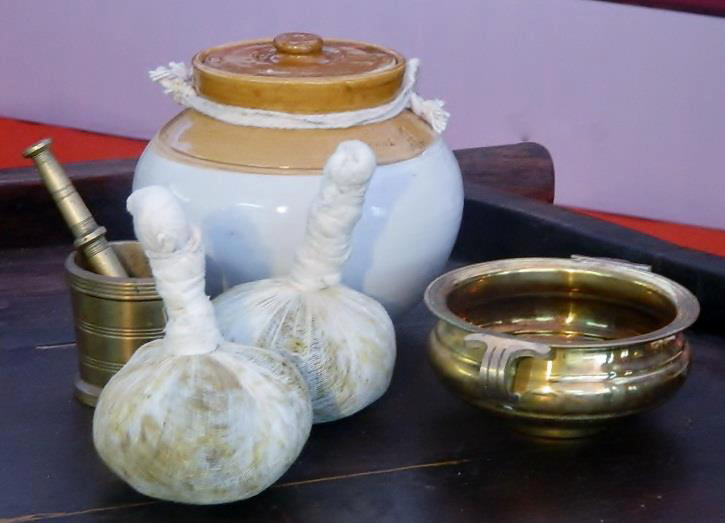
Ayurveda is the science of life. Mythology says that this science of healing originated in the cosmic consciousness of Brahma – The Creator. Kizhi Treatment is a therapy where heated herbs and medicinal oil is tied in cloths and used as a bolus on the effected body part. Continue reading
Hermes, Circa 1969
As one of the contributors referred to in this post, and as the one who took the photographs in that post, it occurred to me that I should comment further on the reference. And in doing so, perhaps I could add to the small collection of personal statements that have been gathering on this site since mid-2011. I am 100% sure I took the photograph above during that same visit to Greece in 2008. As I snapped this photo my mother was at my side and we both remembered having stood in the same spot in 1969. Continue reading
The Last Bookstore
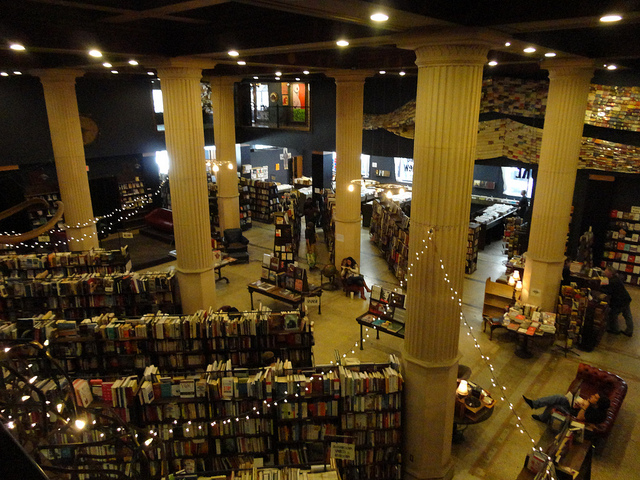
Thanks to Paris Review, and particularly Casey N. Cep, for a reminder of why bookstores have more meaning than other forms of merchandising:
…Our inheritance felt large, but it was the sawhorses that I most admired, especially when my father put them to use constructing bookshelves for my bedroom. My father was no stranger to construction; he built the log cabin in which I was raised. He inherited not only tools but also skills from his father, so he was able to cut, stain, and install the wide bookshelves on my bedroom walls in no time. The shelves were required to house my growing library, acquired book by book in a thrilling sequence of gifts, purchases, and trades. Continue reading
Krishnapuram Palace – Alappuzha, Kerala
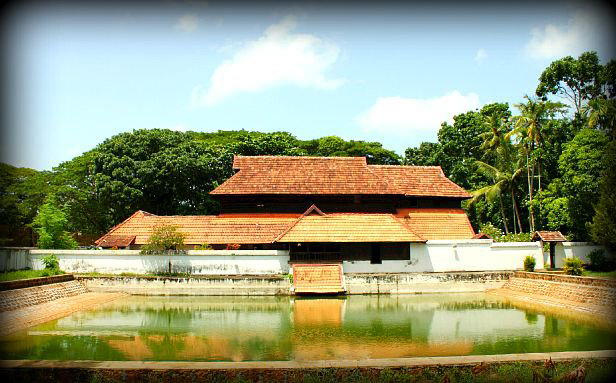
Krishnapuram Palace is located in Kayamkulam, in the Alappuzha district of Kerala. The palace was built in the traditional Kerala style of architecture during the 18th century by King Anizham Thirunal Marthanda Varma. Continue reading
Pondicherry
Pondicherry is the capital city of “The Union Territory of Puducherry”, one of the famous tourist destinations in South India. The main attractions are the backwaters, palm-fringed beaches, fishing villages and the French boulevard town with its French heritage–not to mention the charming and picturesque beach side promenade. Pondicherry was the largest French colony in India with a long and interesting history of trade and war. Continue reading
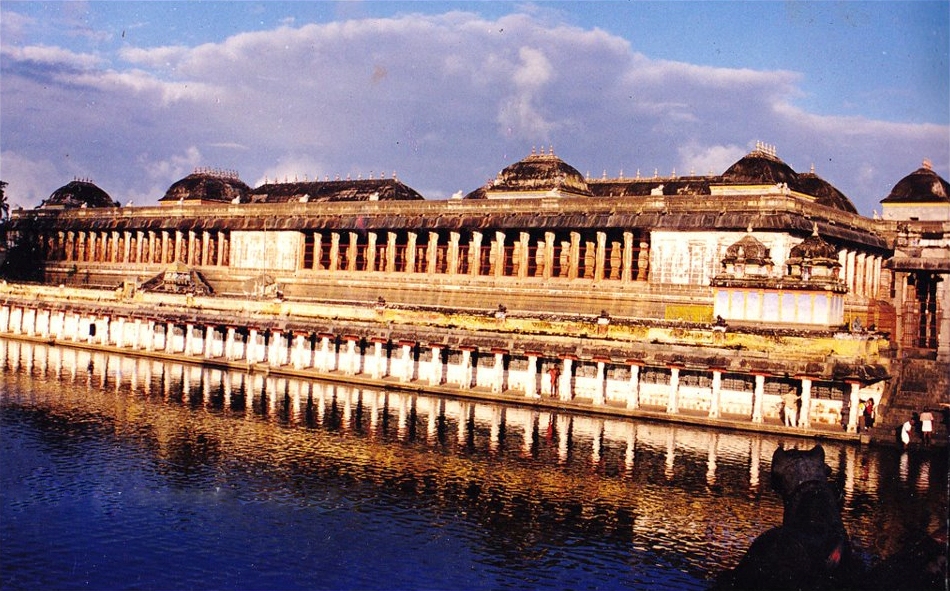
Chidambaram Natraja Temple – Tamil Nadu
Chidambaram is uniquely interesting because it is the only temple complex to understood to be built primarily between the 12th and 13th centuries. This temple is dedicated to Lord Shiva. A huge Shiva Ganga tank is the one of the main attraction of this temple. Continue reading
Music From And Between Other Worlds

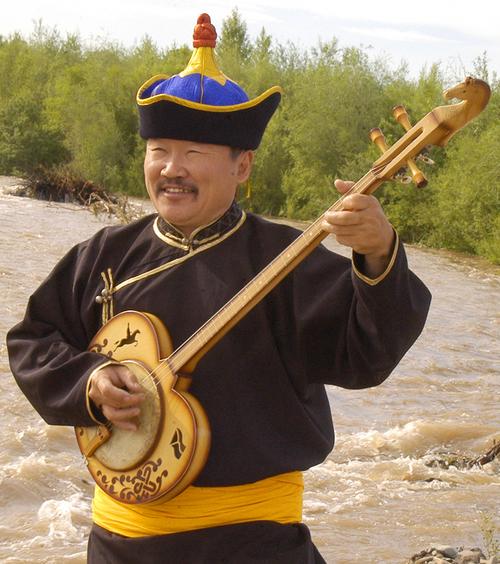
Photo via last.fm. Mr. Ondar was a superstar in Tuva. He’s often known for his prominent role in the 1999 documentary “Genghis Blues” about throat singing. He collaborated with Frank Zappa, Willie Nelson, Bela Fleck, among many others.
Whenever you first heard his music, you can probably remember who introduced you, or where you were. It does not sound like any other natural sound, musical or otherwise. Sometimes it does not sound natural. The interview we link to below is the finest he ever gave (that we know of) because Ralph Leighton lucidly and intelligently explains his own experience working with and producing an album for Mr. Ondar, whose music will live on:
The technique known as throat singing is an ancient style still practiced in Tuva, a small republic between Siberia and Mongolia’s Gobi desert. Traditionally, it was practiced by herders.
In 1995, Kongar-Ol Ondar won a U.N.-sponsored international festival of throat stinging, and was honored by his nation with the title People’s Throat Singer of Tuva. He performed around the world and collaborated with Ry Cooder, The Chieftains, Mickey Hart, Willie Nelson, Randy Scruggs and others. He was also featured in the 1999 film Genghis Blues... Continue reading