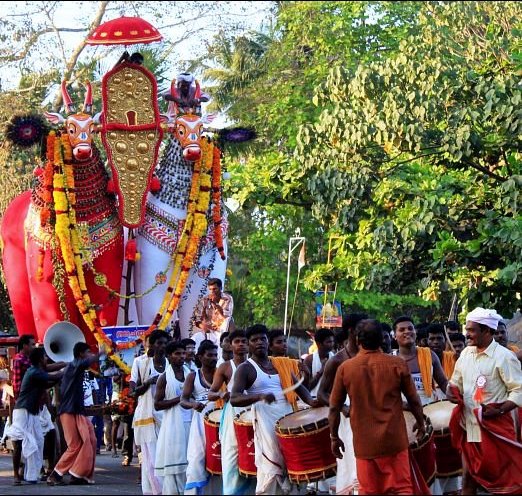
Ochira, located in the Kollam district of Kerala, is famous for the Parabrahma Temple, dedicated to Lord Shiva. The Ochirakkali is a mock fight enacted between groups of men dressed as warriors on the battlefield, commemorating the historic battle fought between the Kayamkulam and Chempakasseri soldiers. Continue reading
History
A Wonder of the World
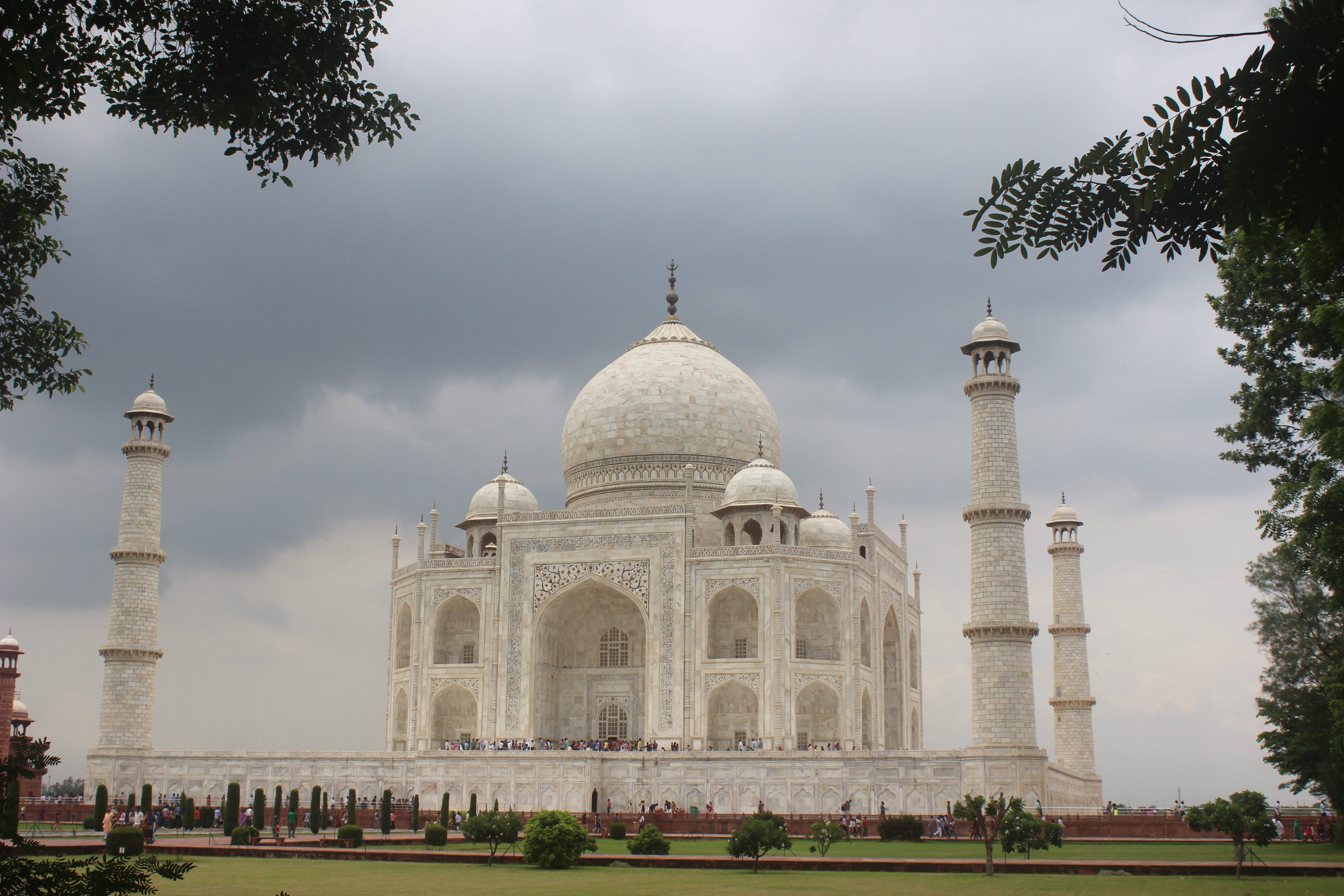
Throughout my life I have had the privilege of frequently traveling and visiting new countries. However, I had not yet had the pleasure of seeing any of the deemed “Seven Wonders of the World.” A week ago, I was finally able to change that when I took a trip to Agra and visited the Taj Mahal with my father. Continue reading
Crossing the Border: From Kerala to Tamil Nadu
The first thing that I noticed about Tamil Nadu was the juxtaposition to the Kerala landscape to which I am now accustomed. Unlike the mountainous western Kerala, where during monsoon rain is plentiful and direct sunlight a rarity, just across the border in Tamil Nadu the land is flat, and during monsoon the air is dry and the sun shining. It is a shockingly fast transition that you can see as soon as you are at the base of the mountains. I knew this part of Tamil Nadu was flat, but I thought it would all be made up of lush green farm land, but instead what I encountered resembled central Texas, dry and rocky. In fact, it made me feel quite at home.
After seeing the landscape it was not surprising to hear from a local organic farmer, that most of the water in Tamil Nadu comes from the Periyar River in Kerala via the Mullaperiyar Dam. The farm boasted many types of fruits, including grapes and pomegranates. It was well worth the trip to see a farm in action and to see how and where some of the local fruits are grown. Continue reading
Europeans And Indians, The Early Days
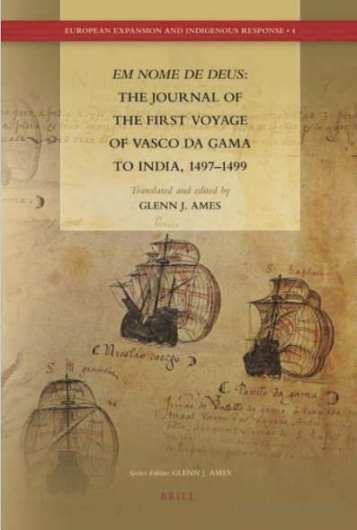
In several past posts about historically interesting interactions between Europeans and Indians, the New World variation on that story was invoked to make a point, mainly with an eye toward environmental history. Today’s Hindu has an article that draws on the history contained in the journal to the left about (Old World) Vasco de Gama’s first experience in (Older World) India, specifically the Malabar Coast and what is now the state of Kerala. Click the image to go to the source of the book, and here to go to the Hindu article:
The hero of the first Portugese contact on Indian shores is a degradado, or Portugese convict and exile, not Vasco da Gama.
One of the greatest navigators from the Age of Discoveries, da Gama, appointed by Dom Manuel, King of Portugal, for his “energy and high spirits” refused to take the initiative to go ashore on the morning of May 21, 1498. Instead, da Gama chose to wait in the depths of his ship, Sao Gabriel, while the convict Joao Nunes stepped out into the monsoon showers off the western coast of Kozhikode to meet, much to his amazement, a pair of multi-lingual Tunisian merchants. Continue reading
If You Happen To Want To Live in Felpham, West Sussex
We are not brokers, but in the spirit of entrepreneurial conservation, and a price tag so seemingly reasonable, we are obliged to bring this to your attention:
Guide Price Of £650,000 Continue reading
Birthday Present For Mr. Tesla
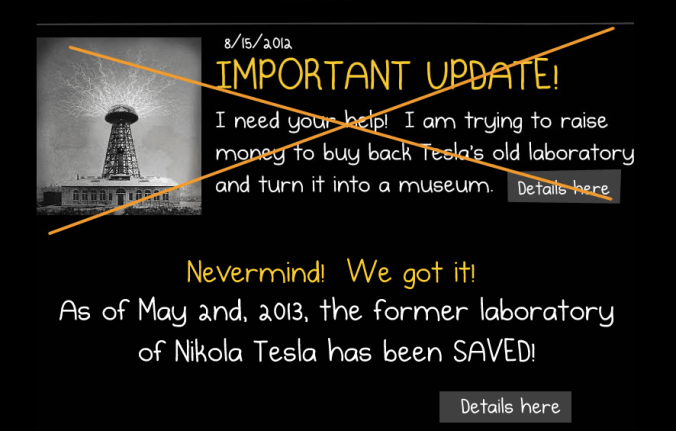
Last August we recommended reading to the end of Mr. Inman’s mischievously hilarious tribute to Nikola Tesla, partly because every bit of it was great, but the end asked for attention to an initiative that rang true to us: the conservation of patrimony related to this exceptional man. A couple months ago, when we saw on Mr. Inman’s site that the initiative had succeeded we decided to investigate further before celebrating this. Now, in honor of Tesla’s birthday, seems like a good time to highlight it. Click the image above to see the results. There have been some birthday tributes to Tesla elsewhere and we share one of those as well. Continue reading
Icelandic Writings

The two first edition volumes of Captain Richard F. Burton’s “Ultima Thule; or, a Summer in Iceland,” 1875. Photo by Bauman Rare Books.
I’ve mentioned before that throughout the literature from the 18th and 19th centuries in Iceland I’ve found a conflict between traditional and modern conceptions of the land’s nature, but I want to clarify that this was likely not limited to a simple farmer-or-scientist dichotomy. My aim is to more closely examine any relationships between the writings of Icelanders and Europeans that were meant for a European audience (in the case of the former this involves contemporary translations) and tease out the nuances between them. I believe these scientists, travelers and explorers from various cultures sought the same thrill of setting foot on ground that had never been touched by “civilized” man before; they traveled untrodden lands whose exploration allowed them to feel a sense of discovery and lonely grandiosity while experiencing wilderness; and in some cases they desired the satisfaction of improving scientific knowledge of a natural area.
When I talk about looking at ‘writings’, I mean primary sources like Continue reading
If You Happen To Be In New York
Last time we mentioned this library, it was to raise some important questions; on a previous occasion to recommend a lecture; this time we recommend what looks like an important exhibition curated by Leonard S. Marcus:
The ABC of It is an examination of why children’s books are important: what and how they teach children, and what they reveal about the societies that produced them. Through a dynamic array of objects and activities, the exhibition celebrates the extraordinary richness, artistry, and diversity of children’s literature across cultures and time. Continue reading
Lonesome George Makes His NYC Debut
There’s something unsettling about taxidermy and the lifelike diaramas that I grew up seeing at museums. But the research that goes into each zoological and botanical detail serves a monumental educational purpose for visitors and scientists alike. And in a “Last Chance to See” context, there are cases where those diaramas are the only way both current and future generations are able to have a face to face experience with extinct species.
A little over a year ago the icon of Galapagos conservation “Lonesome George” died of natural causes. Although property of the people of Ecuador, he is considered an example of World Heritage Patrimony. Researchers froze his body and shipped it to the American Museum of Natural History for preservation and a temporary exhibition in New York. Continue reading
Celebrating Conservation’s Important Moments In History

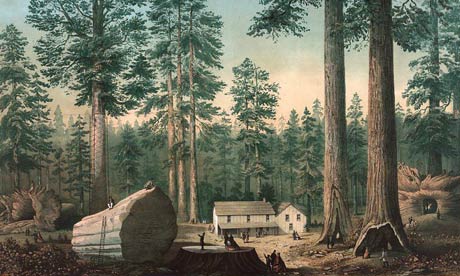
Tourists inspecting the stump of the ‘Mammoth Tree’ in Calaveras County, California, c1860. The ‘Mother of the Forest’, without its bark, can be seen in the background. Image: LoC
We have written about and sometimes celebrated important moments in conservation history in the past, and these celebrations are among those most responded to by readers of this blog. A few days ago, a landmark anniversary was observed in an editorial at the newspaper that most consistently keeps us in perspective:
Today marks the 160th anniversary of a seminal, but largely forgotten moment in the history of the conservation movement.
On Monday, 27 June, 1853, a giant sequoia – one of the natural world’s most awe-inspiring sights – was brought to the ground by a band of gold-rush speculators in Calaveras county, California. It had taken the men three weeks to cut through the base of the 300ft-tall, 1,244-year-old tree, but finally it fell to the forest floor. Continue reading
Entrepreneurial Conservation In Rajasthan

Photography by Robert Polidori. BLUE HEAVEN | Built in the 15th century by Rao Jodha, the walls of the fortress of Mehrangarh are 70 feet thick. Many of the houses of Jodhpur are painted blue to deflect the sunlight, and, according to folklore to repel insects.
The Wall Street Journal carries a feature that is quite our cup of tea:
EACH SPRING, Maharaja Gaj Singh II hosts a Sufi music festival inside his family’s vast desert fort in the Indian city of Jodhpur. From a distance, this monumental sandstone fortress, called Mehrangarh, looms over the city’s chalky blue buildings, evoking the country’s ancient and otherworldly history. And yet people fly in from across the globe because the festival—and the maharaja who hosts it—blends old India so deftly with new. Continue reading
St. Francis Church
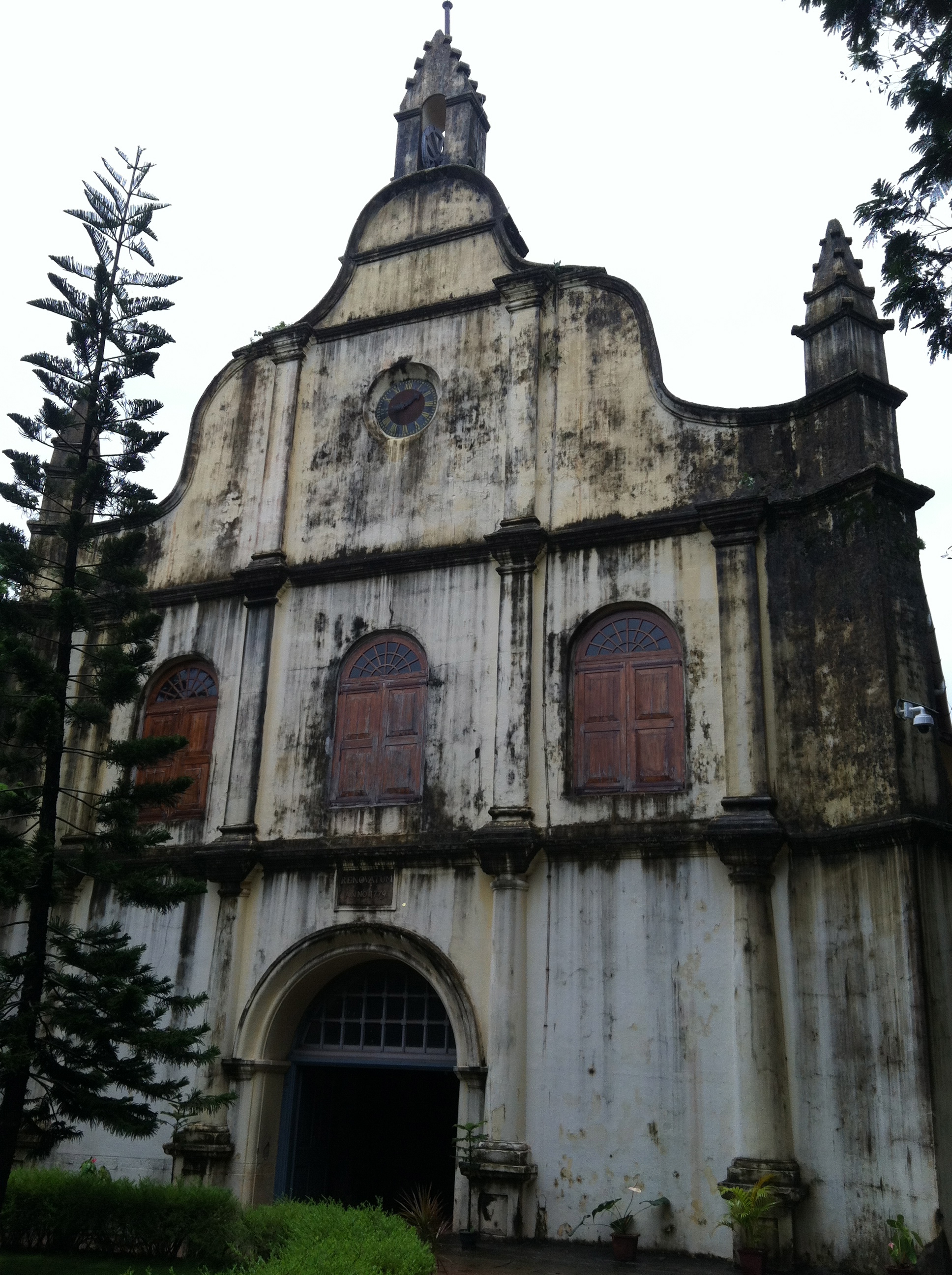
Today, for the first time in my life, I visited Fort Kochi. One of the first places I stopped at was the St. Francis Church, which is the oldest European church in India, and the original burial site of the Portuguese explorer Vasco Da Gama. In 1498, Vasco da Gama became the first person to sail from Europe to India. Both the Portuguese and the Spanish were in search of an ocean alternative to the Arab monopoly on the lucrative spice trade, and the Portuguese had the good fortune to sail east vs. west. He and a few other Portuguese men who followed were allowed by the Raja of Cochin to build a fort in Kochi, and subsequently, in 1506, Francisco de Almeida, the Portuguese viceroy, was allowed to build a Christian church. Ten years later, the church was completed and was dedicated to Saint Anthony. Continue reading
Cochin : exploring Mattancherry
Wandering around Mattancherry : the vibrant murals covering the walls of Mattancherry Palace as well as each and every street; Dockers carrying sacks of produce urging you to move out of the way; Those boats that look more like works of art…not to mention the art installations on the docks… The streets that surround Spice Harbour, a development Raxa Collective is currently working on, are full of colours, spices and, yes goats… Continue reading
Voice Versus Exit
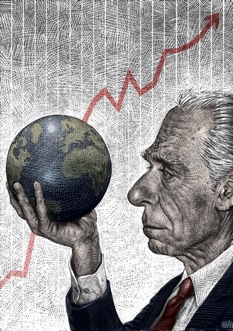
Malcolm Gladwell brings to our attention an economist/planner/idea guy who might not otherwise have found his way to our reading list. In his usual writing style, Gladwell makes the man, by reviewing his biography, irresistible. Toward the end of the review, what is described as one of the economist’s key contributions provides a perfect counterpoint to these ideas. We like this guy because he chooses voice over exit (click the image to the right and it is definitely worth reading to the end):
In the mid-nineteenth century, work began on a crucial section of the railway line connecting Boston to the Hudson River. The addition would run from Greenfield, Massachusetts, to Troy, New York, and it required tunnelling through Hoosac Mountain, a massive impediment, nearly five miles thick, that blocked passage between the Deerfield Valley and a tributary of the Hudson. Continue reading
Seasteading, Self-Reliance Utopia, And Our Shared Future
An article recently published in n+1 examines a utopian futurist form of an idea that seems oddly symmetric with Seth’s posts about the history of exploration using Iceland as a case study. Looking back, we see much in common with explorers, pioneers, pilgrims and adventurous thinkers of all sorts. Looking forward, we are inclined to embrace smart, creative, enthusiastic group efforts to resolve seemingly intractable challenges. Especially when they involve living on boats. We recommend reading the following all the way through:
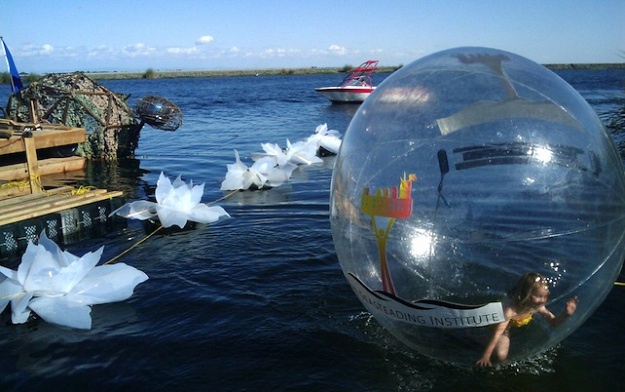
To get to Ephemerisle, the floating festival of radical self-reliance, I left San Francisco in a rental car and drove east through Oakland, along the California Delta Highway, and onto Route 4. I passed windmill farms, trailer parks, and fields of produce dotted with multicolored Porta Potties. I took an accidental detour around Stockton, a municipality that would soon declare bankruptcy, citing generous public pensions as a main reason for its economic collapse. After rumbling along the gravely path, I reached the edge of the Sacramento–San Joaquin River Delta. The delta is one of the most dredged, dammed, and government subsidized bodies of water in the region. It’s estimated that it provides two-thirds of Californians with their water supply. Continue reading
False Starts, Heroic Conclusions

ESSAY: A Different River Every Time
What is ‘smart’ and how does it fit our consciousness? Is there just one way to it? Are smarter people happier, richer? The answers may not always be that obvious. by SANDIPAN DEB
…Which, of course, brings us to that common capitalist question: “If you’re so smart, why aren’t you rich?” There is something abhorrent about this query. Of course, Mukesh Ambani is super-smart, but so was Jagadish Chandra Bose, who invented wireless communication at least a couple of years before Guglielmo Marconi, who received the Nobel prize for the breakthrough (It is now established that Marconi met Bose in London when the Indian scientist was demonstrating his wireless devices there, and changed his research methods after that meeting). Bose also invented microwave transmission and the whole field of solid state physics, which forms the basis of micro-electronics. Bose’s contributions are all around us today, from almost every electronic device we have at home to the most powerful radio telescopes in the world. But he steadfastly refused to patent any of his inventions, or to license them to any specific company. Some 70 years after Bose’s death, the global apex body, Institute of Electrical and Electronics Engineers, officially acknowledged Bose to be the father of wireless communication.
This is an excerpt whose catchy question pervades an essay worth reading in full. Intelligence, specifically smart Indian people, is the subject of a whole special issue of Outlook magazine. We have pondered amazing people from India on occasion in the past, and if the brief tale above intrigues you then see this post about Tesla versus Edison, but for now Continue reading
More On The Full Stop In India

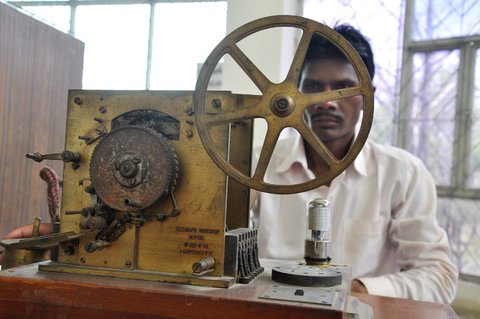
Sanjeev Gupta/European Pressphoto Agency. An employee of the National Telecom Museum in Bhopal, Madhya Pradesh, sitting behind an 1871 model of a telegraphic code machine invented by French engineer Emile Baudot.
As we mentioned, history is about to be amended and here is a small post at India Ink about what various people intend to do in honor of the occasion:
On Saturday afternoon, Vikrant Deshpande, a 32-year-old Indian Air Force pilot, drove with his wife to the Central Telegram Office in New Delhi. The newly married couple gazed at a sign in the Telegram Office lobby that read, “Standard Phrases for Greeting Telegrams.” Continue reading
Exploring Iceland

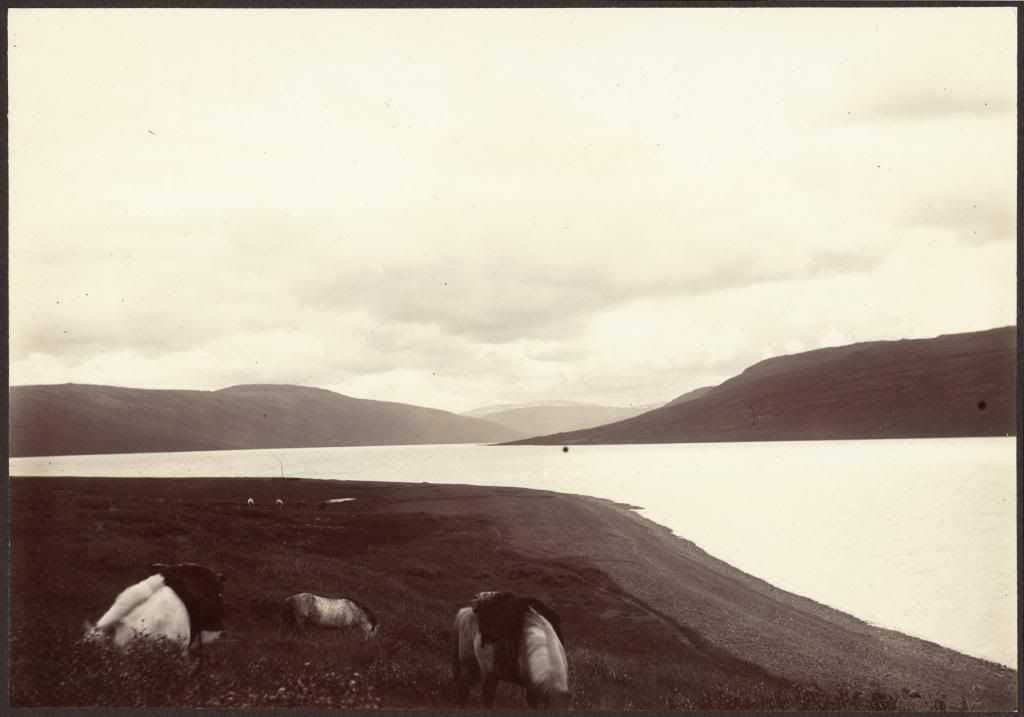
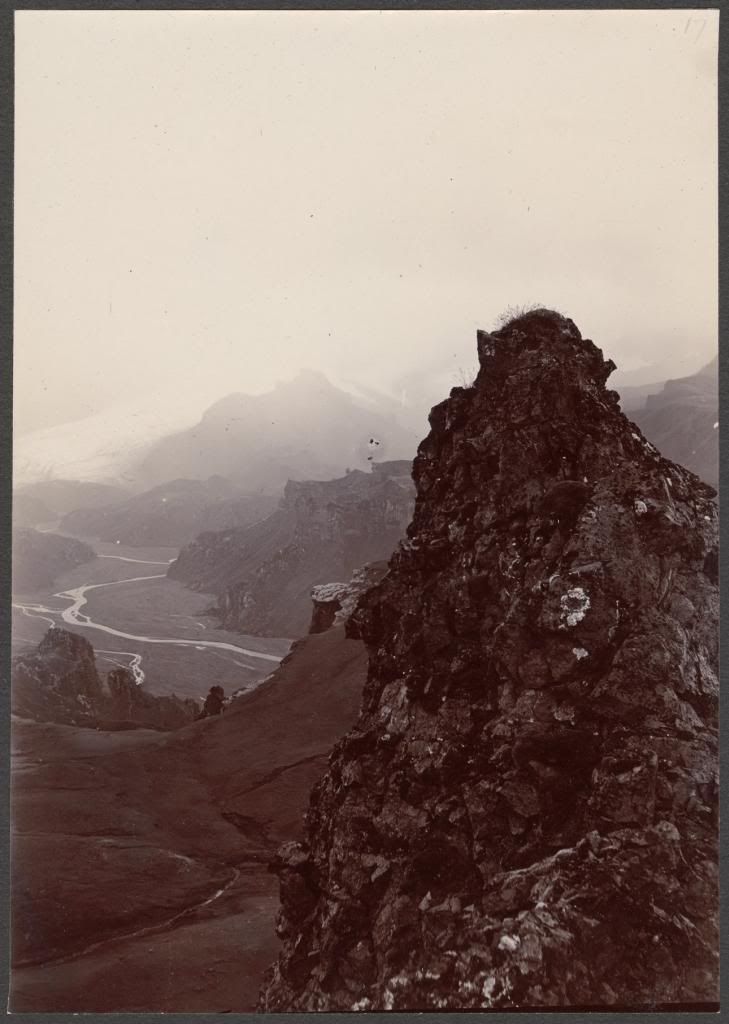
The head of Skorradalsvatn. Collodion print ca. 1900 by Frederick W. Howell. Bequest of Daniel Willard Fiske; compilation by Halldór Hermannsson at the Fiske Icelandic Collection of Cornell University.

Þórsmörk. Head of Krossárdalur. Collodion print ca. 1900 by Frederick W. Howell. Bequest of Daniel Willard Fiske; compilation by Halldór Hermannsson at the Fiske Icelandic Collection of Cornell University.
It was mentioned a week or two ago that Iceland is in the air. For me, Iceland is on my mind, in my laptop, hidden throughout the Cornell libraries, and scattered about my room. After a couple essays for an environmental history course last year and some preliminary research for finding an honors thesis topic in the history major, I discovered that, thanks primarily to Cornell University’s first librarian, we have one of the largest collections of Icelandic material in the world. Since one of my projects for the environmental history class had shown me that Iceland was an interesting place to examine more closely, I did some more research and found the topic of European travel there during the eighteenth and nineteenth centuries engaging enough to choose as an honors thesis subject.
One of the places in Europe with the most spaces left blank by cartographers through the eighteenth and nineteenth centuries, Iceland’s inner regions were not fully mapped until 1901. Continue reading
Hill Palace Museum – Tripunithura
Now the largest archaelogical museum in Kerala, the Hill Palace was the official residence of the Kochi Royal family. The 20,000 sq ft palace was built in 1865 in the traditional architectural style of of the state, and includes beautifully landscaped gardens, a deer park and facilities for horse riding. Continue reading
Nature, Culture And The Challenges Of History
We have found another keeper in this magazine which we have linked to several times in the past, this time with a conservation theme at the intersection of natural and cultural heritage (click the image above to go to the source):
I’ve been nursing a gentle obsession with a quartet of bone-white, thumb-sized figurines. I first saw them, lined up in a row, on the cover of Miguel Tamen’s book Friends of Interpretable Objects (2001). They rested in a pair of open hands, looking toothy, and vital, exuding a cool glimmer, while evoking the long Arctic night and the estranging cold. And yet they’re also tiny and personable, these figurines. Their smooth features beckon you to enfold them in the palm of your hand. Their heads are cocked at mad angles, and their leering eyes and rabid smiles bespeak a secret, conspiratorial sociability. Continue reading