Happy 150th, Oswego

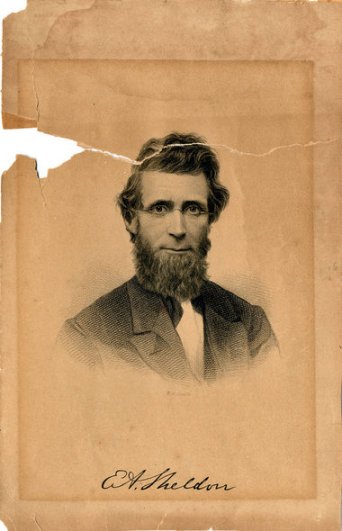
For a school not widely known outside its region and professional focus, it is interesting to note a bit about the man who founded a school in upstate New York in the 19th Century that has recently been quietly celebrated for things that we care deeply about on this site:

The Carnegie Foundation awarded Oswego State a prestigious Community Engagement Classification in January 2011… Then in May 2011, Oswego was named to the U.S. President’s Higher Education Community Service Honor Roll “with Distinction,” an equally distinguished recognition for the college’s commitment to volunteerism, service learning and civic engagement.

Continue reading

Connecting The Madeleines

The young man working his way through the kitchen brought to mind a young man of about the same age, three decades earlier. I had the good fortune, in my early adulthood, to work in a restaurant owned and operated by a man who is one of the great chefs of his generation.  I did not work in the kitchen, but in the dining room, from 1983-1985. It provided the most important education of my life, which is saying a lot because I eventually earned a Ph.D. and even that did not top the learning earned in Guy Savoy’s restaurant.

Continue reading

A Gandhi At Cornell University

Last week residents of the Cornell University community had the opportunity to hear the grandson of Mahatma Gandhi share anecdotes about their life together.  But those anecdotes were not merely crumbs of celebrity worship–their point is clear all the way through Arun Gandhi’s message, delivered as the Martin Luther King Jr. Commemorative Lecture on February 13 in that University’s beautiful Sage Chapel.

Click the image to the right to go to the article, which includes an embedded link to a video recording of the Lecture.

Continue reading

Melville’s Muse

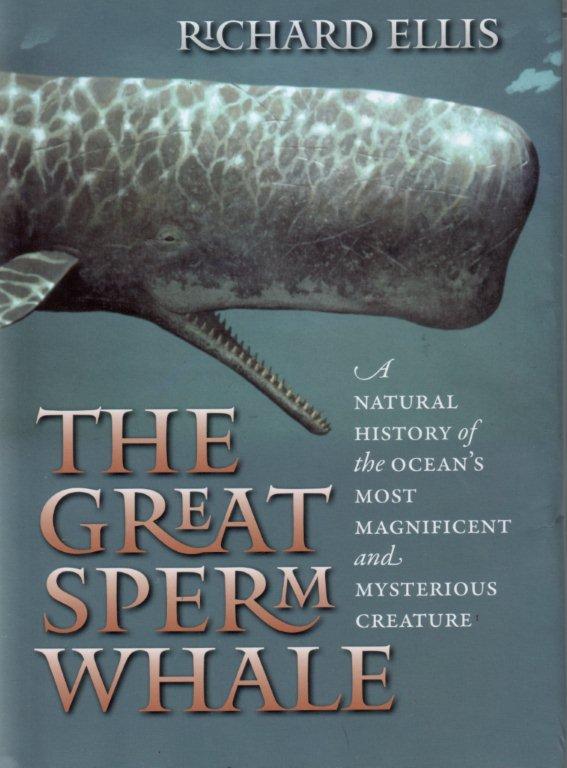
Click the image above to go to the publisher’s website (which also sells the book directly).  If your only knowledge of the title creature comes from a high school literature class, the blurb on the book’s promotional page might make you think this book belonged in the syllabus of the last biology course you took:

Ranging far and wide, Ellis covers the sperm whale’s evolution, ecology, biology, anatomy, behavior, social organization, intelligence, communications, migrations, diet, and breeding. He also devotes considerable space to the whale’s hunting prowess, including its clashes with the giant squid, and to the history of the whaling industry that decimated its numbers during the last two centuries.

According to the review provided in the Times Literary Supplement, the book deserves more attention than that blurb would imply. Continue reading

Travel, Writing & Games

This series has always been worth reading, whether you are an American looking through the eyes of a fellow American, or otherwise intrigued by a niche of American perspective that is not quite representative of that culture as a whole.

First things first: sometimes a book, a music recording or other item is only available from the mainstream online retailers such as Amazon or iTunes, but whenever possible we promote the purchase from independent sellers.  So click the image to the right if you want a link to independent booksellers in the USA, provided by the ever-entrepreneurial American Booksellers Association.

Now, the side show: the series editor Jason Wilson is also a contributor to a site we refer to on occasion, and he wrote an interesting item a couple of years ago that began:

Continue reading

Ideas About Why To Hug A Tree

In several earlier posts Seth highlighted the evolution of environmental philosophy in readings for a course he was taking at Cornell University.  For those of us not lucky enough to be in a course like that, there is a magazine whose current issue covers some of the same terrain.  From one of the articles in that issue (click the image above to go directly to the source):

Leopold argued for the extension of what we see as worthy of our respect from the human community to include animals and the natural world, or what he referred to as ‘the biotic community’. His famous principle, briefly expressed, was, ‘A thing is right when it tends to preserve the integrity, stability and beauty of the biotic community. It is wrong when it tends otherwise’.

Continue reading

Temporal Mapping

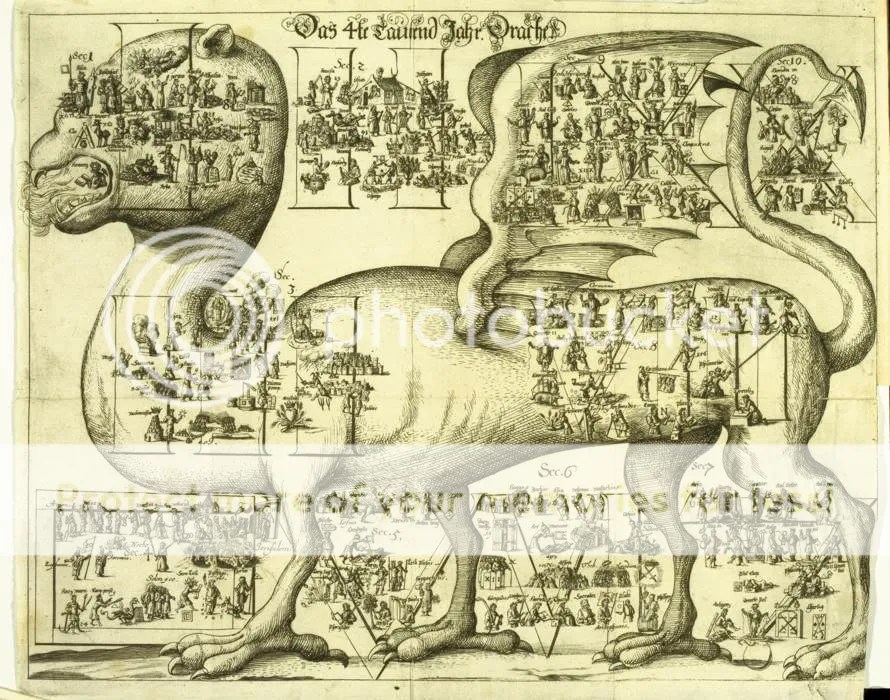
Thanks to The Morning News, and Rosecrans Baldwin in particular, for bringing this book out of the specialty section and to our attention:

Selections from a captivating history of timelines—from time circles to time dragons, to a history of the world drawn on a single piece of paper.

Continue reading

Architectural Conservation in Dubai?

What do you do with a 5 hour layover in Dubai?  Whenever I fly with Emirates, I somehow find myself with a lengthy layover at the Dubai airport. The last time this happened I was lucky enough to have a friend in town to show me the infamous skyline by night. This time, however, my flight arrived in Dubai at about 6am. So after an hour or so nap on the fairly comfortable waiting lounge seat, I headed off to check out old town Dubai by Dubai Creek. The pink women and children-only taxi dropped me off in the Shindagha area, right beside the docking area for the abras, the commuter boats.  I walked along the quiet and pristine port towards a cluster of traditional-looking buildings.

This slideshow requires JavaScript.

Low and behold, I stumbled upon a sign reading “Traditional Dubai House”. Continue reading

Margin Calls

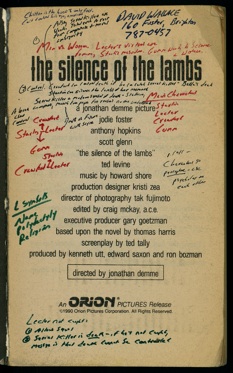
Click the image to the right for an explanation of what that image has to do with the remarkable world of marginalia, which begins:

“In getting my books,” Edgar Allan Poe wrote in 1844, “I have always been solicitous of an ample margin; this is not so much through any love of the thing in itself, however agreeable, as for the facility it affords me of penciling in suggested thoughts, agreements, and differences of opinion, or brief critical comments in general.”

A certain Mr. Wallace, of literary fame, apparently had reason to write in the spaces of whatever was at hand.  But that is a matter of quite trivial pursuit compared to Kerouac’s marginalia while reading Thoreau.

Continue reading

The Evolution Of Cooperation

Several earlier posts have touched on the topic–how cooperation (or altruism, defined here) comes about, overcoming the problems associated with the potential for free riders and other collective action barriers.  The current issue of Nature contains findings from the research of a team at Harvard Medical School.  If you are a subscriber to the journal click the image above to go to the research.  If you want a four minute synopsis with excellent visuals, jump the jump.

Continue reading

Slow, Steady, Go

The January 23 issue of The New Yorker has an article on one wealthy man’s approach to conservation.  Click the image to the left to go to the article and if you are a subscriber to the magazine, and follow conservation trends, this will get your day off to an interesting start, provide a good respite from work in the middle of the day, or send you to bed dreaming.

It is paywalled, but as always available for purchase, and as always providing a tempting reason to subscribe to the magazine.  In case you do not have time to read it, or spare funds for a subscription, take a look at this short video based on some of the material covered in the article.

Continue reading

USA Refresher

Before there was social media as we know it today, there was social media.  Social reformers and thinkers of all varieties have centuries of experience not just using the tools of social media, but utilizing them.  Leveraging them.  August 28, 1963 in Washington, D.C. was one of the days when the USA experienced a moment of truth, and when social media included word of mouth, television/radio simulcast and later replay.

This is the day when the man who spoke longest on that day is remembered officially.  One minute into the above video he begins speaking, but the memory is affected, no matter how many times one has seen, heard or read these words, most when that man talks about his hopes for the future of a country that had a history of injustice, but also a history of reform, change, improvement. Continue reading

God in Goa

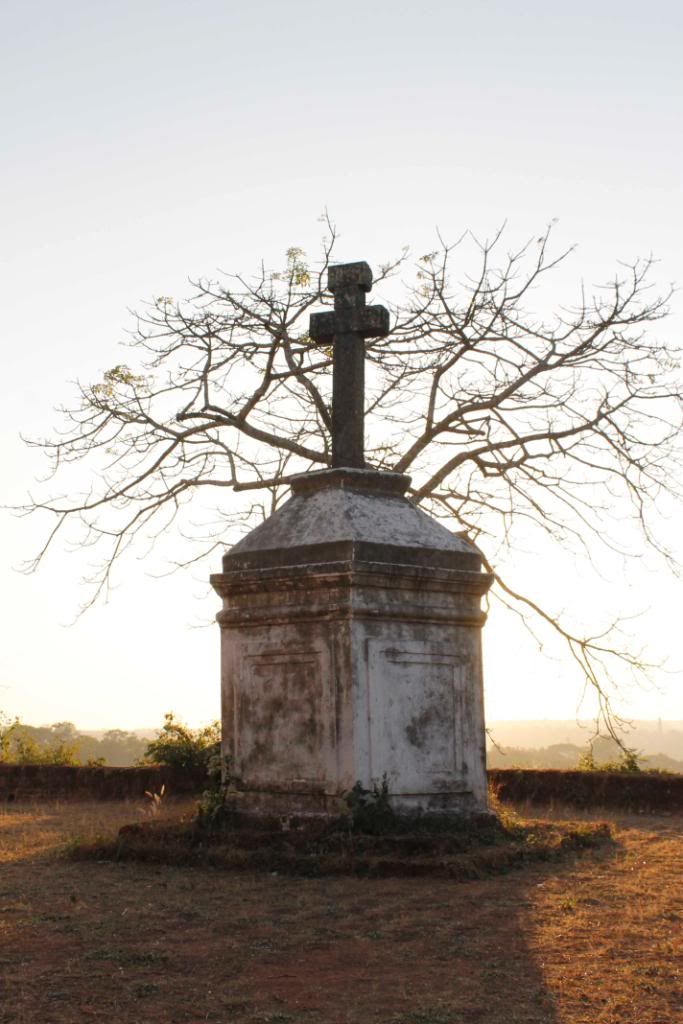
Goa, India’s smallest state, is a former Portuguese colony bordering the Arabian Sea. Once a key trading enclave for spices, Goa is now a significant tourist attraction due to its beaches and festivals. It is also known for its considerable Catholic history and architecture; St Francis Xavier arrived in 1542 with Jesuit missionaries (he was a pupil of St Ignatius Loyola, founder of the Jesuit Order) and there are many impressive churches throughout Goa’s capital, Panaji, and its former capital, Old Goa.

Perhaps one of the most awe-inspiring of these is the Church of St Augustine. Augustinian friars completed its construction in 1602, and it has been in different states of disrepair since 1835, when the Portuguese government began evicting many religious orders from Goa. The 46 meter tower (half of which collapsed in 1931), in varying stages of illumination, is perhaps the most easily appreciated element of grandeur remaining. But close examination of the vault floor reveals dozens of tombstones in relief, mostly for men who seem to have been knights, or at least who had knightly coat of arms. Some of these sigils are surprising, such as the skull and crossbones motifs. This is the church that I spent the most time at; most of what is left is eroded, overgrown, cracked, or otherwise dilapidated, without detracting from the ruins’ beauty or impressiveness, however. Continue reading

What Is India?

For any new resident of India, let alone its own citizens, the question is always interesting.

The following is the text of a speech delivered by Justice Markandey Katju, chairman of the Press Council of India, at Jawaharlal Nehru University on November 14, 2011.

Friends,

I am deeply honoured to be invited to speak before all of you. My time is limited, as I was told I should speak for 30 minutes and after that there will be a question answer session. As my main speech will be restricted to 30 minutes, I may come to the topic of discussion immediately, that is, What is India? …

…The difference between North America and India is that North America is a country of new immigrants, where people came mainly from Europe over the last four to five hundred years, India is a country of old immigrants where people have been coming in for 10 thousand years or so.

Continue reading

Mahatma Gandhi In Paris

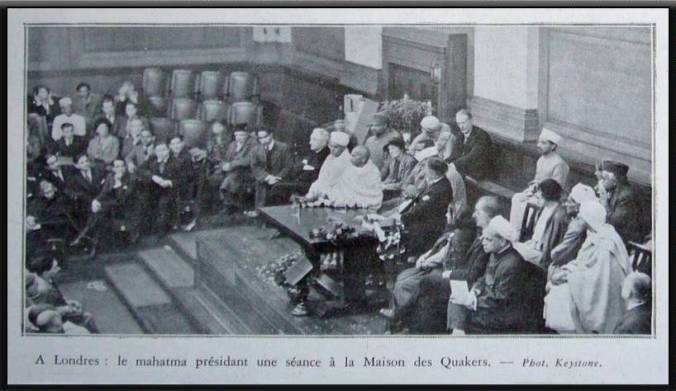
With a mission like this how could we not pay attention? The image above links to the story about two of our favorite subjects, brought together by The Caravan.  The image is from a French magazine, which covered the Mahatma’s visit to Paris (and elsewhere) with reverence.

Continue reading

Wordsmithing: Authentic

We have been using this word for years as a shorthand for one of the core objectives of our entrepreneurial conservation work: collaborating with communities to assist in the retention of heritage that has meaning, and that those communities feel should remain essentially as it was.  It is therefore interesting to consult OED (finally) on exactly what this means.

Top of the list of entries:

a. Of authority, authoritative (properly as possessing original or inherent authority, but also as duly authorized); entitled to obedience or respect.

Continue reading