Meeting the Masai

Although the Kenyan destination tourism market has commercialized the Masai name, I was pleasantly surprised to find the traditions and heritage of the Masai people thriving and vibrant in the Masai Mara. In Nairobi, you will find merchants and craft markets collectively selling Masai blankets, beaded jewelry, artwork and more. I would contend the Masai name is an over-utilized marketing tool, a clear indication it’s moving dangerously close to holding a “tourist trap” reputation. Although my position on the matter remains unchanged, the innate beauty of the Masai culture should not be dismissed. The Masai Mara may be best recognized as Kenya’s wildlife mecca, but the region is also home to over fifty authentic Masai villages of tremendous character and unique local charms.

This slideshow requires JavaScript.

After our concluding full day safari game drive, our guide gave us the option of visiting a Masai Village near our camp. Indicating that the venture would cost us an additional 15USD, I immediately believed yet another “tourist trap” pitstop was in store. Nevertheless, faced with the alternative option of sitting in my non-electrified tent, I succumbed to the sales proposal and scrambled together 1500 Kenyan Shillings to visit this so called “authentic village”. The entrance fee granted us a traditional Masai welcome dance, entry into the villagers’ homes, a guided tour of the community, and complimentary photo opportunities. With my skepticism still intact upon entering, I anticipated some sort of lazily executed, artificial village re-creation of primitive Masai Mara life, à la Plymoth Plantation or some cheesy Renaissance Fair. While the community has certainly optimized their culture’s tourism appeal, I was happily surprised to find that what we witnessed wasn’t just for show or to indulge us “muzungus” (foreigners); conversely, it demonstrated how the native Masai currently lived day-to-day.

Continue reading

Life Mein Ek Baar, Featuring River Escapes

Every minute of this is fun.  The 35th minute is particularly fun for those of us based in Kerala because members of our organization join the stage with the stars of this show.

About five months ago we were approached by a film production company about a show they were filming for National Geographic Channel.  They told us that River Escapes was recommended to them as having the best houseboats in the Kerala backwaters (a bit of music to our ears).  Then they proposed that their Kerala episode should be based on our houseboats (we danced to that music).

Continue reading

Voltaire Strikes Again

The cover illustration is not very inviting, but the reviews and blurbs in more than one newspaper make it sound worth the read:

Not really a dictionary, but a series of short essays on such topics as equality, Hell, miracles, religion, tyranny and superstition by one of the leading spirits of the Enlightenment. The tone is witty, catty, and there are many neat aphorisms such as: “Atheism does not prevent crimes, whereas fanaticism commits them.”

Incidentally, in case you are already a Voltairophile, you may want a deeper well from which to draw inspiration.  In which case you may want to pay a visit to Oxford.

Continue reading

Almost Missed It

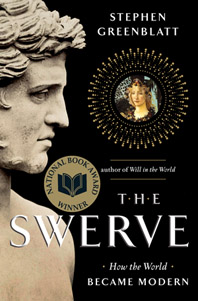
It is just the way things are.  My reading list/pile is always longer/taller than I have time for.  And living between the rice fields and spice-laden Western Ghats I do not have access to the kind of bookstores we took for granted while living elsewhere.  Amazon does not deliver in India, nor would I put a penny in their coffers until I have the sense that they are not trying to monopolize the book trade, not to mention everything else.

Even if I had access to a great book store I might not have picked this one up off the shelf, though I admire the author’s writing.  I have not been in the mood for anything too canonical or Great lately; rather merely useful, interesting, lesser reading.  Short- and long-form journalism tend to be my standard fare. There was something in the pile with Greenblatt’s name on it, a magazine article, that I kept burying for months and which persistently kept resurfacing. Continue reading

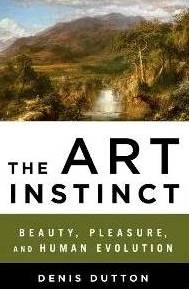
“Taste”: Naturally Selected

The arts in all their glory are no more remote from the evolved features of the human mind and personality than an oak is remote from the soil and subterranean waters that nurture and sustain it. The evolution of Homo sapiens in the past million years is not just a history of how we came to have acute color vision, a taste for sweets, and an upright gait.  It is also a story of how we became a species obsessed with creating artistic experiences with which to amuse, shock, titillate, and enrapture ourselves, from children’s games to the quartets of Beethoven, from firelit caves to the continuous worldwide glow of television screens.

—Denis Dutton

The late philosophy professor, editor, writer (and occasional provocateur) Denis Dutton spent a great deal of his professional life closing the gap between art and science. Continue reading

Glassy Eyed

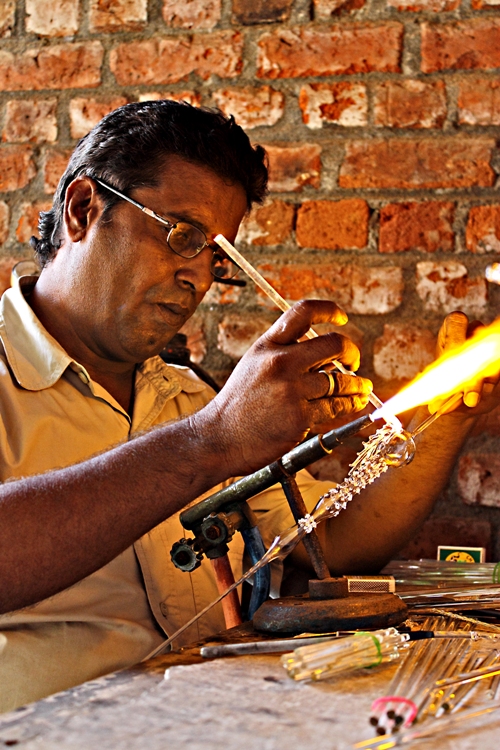
While in Chennai about a week ago, I visited a cultural center, somewhat like a living museum, about an hour outside the city. Dakshinchitra, the name of the display, means “picture of the South” – and it lives up to its name. In addition to being a window to the past, the center, supported by an NPO, supports local artists who set up small stalls on the premises, selling their crafts directly to the buyer, eliminating dealers and price-cranking middlemen. One such artist is Mr. V. Srinivasa Raghavan – a glass blower born and bred in Tamil Nadu.

While I at first felt that the blowtorch-wielding artist was out of place in the century-old surroundings of the compound, I was soon thinking back to my historical education, remembering that glass was being manipulated as far back as the Roman Empire. The means in this case justifies the ends – perhaps the trade’s Continue reading

“Lord God Birds”

Left: Ivory Billed Woodpecker by John James Audubon;

Right: Imperial Woodpecker by John Livzey Ridgway

In the world of ornithology and bird watching, scale is as important as plentiful plumage, vivid color or song style.  From Cuba’s Mellisuga helenae (bee hummingbird) to the Andean Condor, life lists are often based on superlatives.  The Campephilus (woodpecker) family has its own followers, especially the larger species that have eluded scientists and amateurs alike for decades.

While in Chaihuín, part of the Nature Conservancy’s Valdivian Coastal Reserve in Chilean Patagonia, we saw the Magellanic Woodpecker, a sighting that preceded a “Stop the Jeep!” moment of excitement.  Part of that excitement was based on the memory of a Cornell Lab of Ornithology film we’d recently seen about the Ivory Billed Woodpecker. Continue reading

All the World’s a Stage

In a recent post Matthias Jost shared his impressions of San Jose, Costa Rica and its Teatro Nacional.  But what he didn’t share was the fascinating history that surrounds this piece of National Patrimony.

Part apocryphal and part historical, the tale goes that in the late nineteenth century an important European Opera Troupe was touring Central and South America, but they refused to stop in the “back water” of Costa Rica, as it had no proper venue for them to perform in. Continue reading

Opening Doors

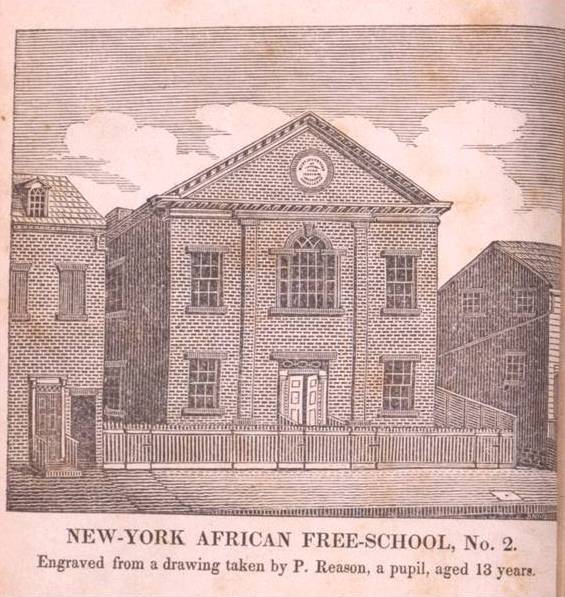
Source: Schomburg Center for Research in Black Culture / Manuscripts, Archives and Rare Books Division/ The New York Public Library, via Columbia University

The New York African Free School was established November 2, 1787, seventy-eight years before slavery was officially abolished by the 13th Amendment of the U.S. Constitution. Despite the fact that slavery was considered “crucial to the prosperity and expansion of New York”, groups such as the New York Manumission Society were established that advocated for African Americans and abolition.

Certainly ahead of its time, the school was co-educational, teaching reading, writing, arithmetic, and geography equally to children of both slaves and free men. Vocational skills were taught as well; the boys were offered astronomy and cartography, skills needed by seamen, and the girls learned sewing and knitting. Continue reading

Progress Back And Forth

We have noted before the intriguing coincidences that link the “old world” to the “new world”–not least the desire to establish trade with what is now Kerala and the accidental discovery of somewhere else; and other links in both directions.  “Old” and “new” become fuzzy qualifiers when considering “modern” European travelers of the 15th century sailing to “ancient” India and instead encountering people we now call Pre-Columbians.  Seth has posted on the environmental impacts of people from that so-called old world as they settled in the new world and brought their definitions of progress with them.  Now, thanks to an article in Smithsonian Magazine our attention is brought to a book and a man who broaden our horizons back to the old world from which those people came. Continue reading