The Swerve, Prized Again

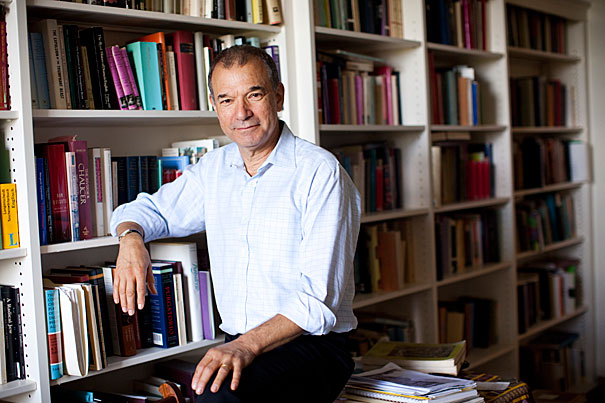
File photo by Stephanie Mitchell/Harvard Staff Photographer

I have already said how surprising I found it that writing about the influence of classical literature on modern thought can be so effectively illuminated; in fact I could not help but say it a couple of times.  On this site we like to celebrate the success of our favored visionaries, writers, producers, educators, artists, thinkers, doers.  One of the publications at the university where he teaches had special reason today to put his name in visible circulation (click the image above to go to the story) with the announcement mentioned here:

Greenblatt’s book, which describes how an ancient Roman philosophical epic helped pave the way for modern thought, was awarded the 2012 Pulitzer Prize for general nonfiction.

In its citation, the Pulitzer board described “The Swerve” as “a provocative book arguing that an obscure work of philosophy, discovered nearly 600 years ago, changed the course of history by anticipating the science and sensibilities of today.”
Continue reading

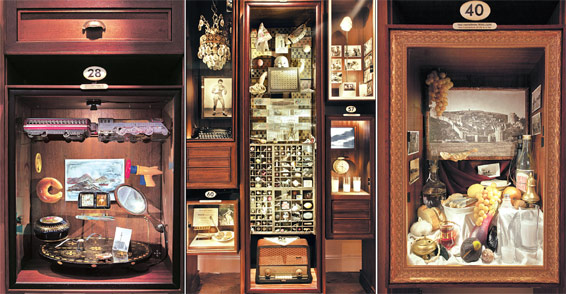
Museum of Innocence: Written, Published, Built, Open

Click the image above to go to the article in Financial Times about a museum inspired by a book, and an author’s life experience:

In a dark-red Ottoman town house in Istanbul’s antiques district, a fast-gentrifying quarter where brassware spills on to steep, cobbled lanes, an idiosyncratic museum has been taking shape. Continue reading

Less Light, Please

Click the image to the right to go to the Guardian’s article in today’s paper about a campaign to reduce light pollution.  We tend to like these stories, and that publication, and have been known to support pollution-reducing schemes in our own communities; but quoting our favorite cosmos guru ensures attention: Continue reading

Sweet Sounds

Click the image above for the fourth installment, and best yet, in a series of short posts on Smithsonian’s website, discussing the relationship between food and sound:

The sound of food matters. So does the sound of the packaging and the atmospheric sounds we hear when we’re eating. We’re all synesthesiates when we sit down to dinner.

Continue reading

Do You Remember These Dates?

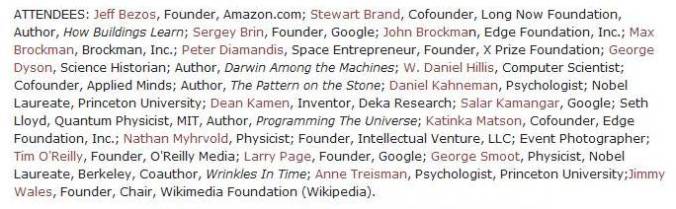
On July 20-22, 2007 all these people attended a workshop of sorts.  On those exact dates I was with my family on a small island in the Adriatic sea, watching off in the distance as fire fighters in airplanes performed their heroics in the forests surrounding Dubrovnik.  Little did I know that Daniel Kahneman was leading a master class for Edge (and those attendees) titled “A SHORT COURSE IN THINKING ABOUT THINKING.” Continue reading

Yoga & Evolution

A few months ago there was an article in The New York Times that apparently caused a ruckus (click the image to the left to read The Guardian‘s coverage of that aftermath) in the Western yoga community.  Maybe it is because I am not a member of the Western yoga community that, when I read the article originally I thought:   Brilliant.  Eastern tradition meets Western science.  Evolution.  Improvement.

Today I had a reminder about that article, and my response to it, while listening to this podcast.  The journalist (a Pulitzer-toting science writer who also has practiced yoga for more than 40 years and recently published The Science Of Yoga) writing that article says something about half way through that rings true: Continue reading

Meeting in the Middle

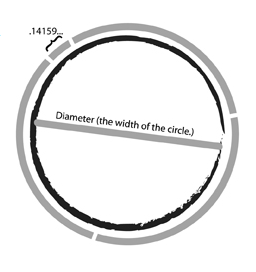
Pi, Greek letter (π), is the symbol for the ratio of the circumference of a circle to its diameter.  The area of a circle is calculated using Pi and the radius of the circle.
In honor of this perfect proportion, math enthusiasts around the world celebrate Pi Day on March 14th. Pi = 3.1415926535…

Multiple ancient civilizations including Egypt, Greece and Iron-Age India have stunning examples of the use of Pi; think “Great Pyramids” and you get the idea. Continue reading

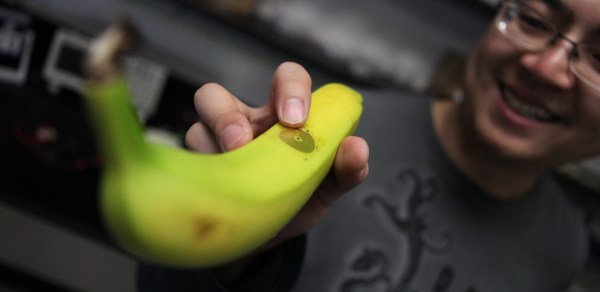
The Emperor’s New Silk

“We see a huge market for food,” Hu “Tiger” Tao, a postdoc at Tufts University told Co.Exist. “People are always looking forward to some kind of sensor that’s easy to use and gives you information about spoilage.”

Continue reading

Plan B

My past posts reveal my desire to be directly involved with sustainable farming.  I plan and hope to achieve this, but as both the global population and the demand for land, space, and food rise, I recognize that being flexible with this dream may minimize any potential disappointment.  Comparatively, as much as I seem to “fly by the seat of my pants,” I like to plan.  I come close to peace when I at least have some general structure to my life.  So with this in mind, I began to brainstorm back-up plans to having my own farm.

In this search and planning excursion, I read an article and learned of vertical farming.  Dickson Despommier of Columbia University and his students researched this urban farming phenomenon and hypothesized that such projects could solve our global food insecurity problems.

I am unsure of its feasibility, but in my characteristic optimism, I believe it has potential.  Continue reading

High Time

…Some years ago — never mind how long precisely — having little or no money in my purse, and nothing particular to interest me on shore, I thought I would sail about a little and see the watery part of the world. It is a way I have of driving off the spleen, and regulating the circulation. Whenever I find myself growing grim about the mouth; whenever it is a damp, drizzly November in my soul; whenever I find myself involuntarily pausing before coffin warehouses, and bringing up the rear of every funeral I meet; and especially whenever my hypos get such an upper hand of me, that it requires a strong moral principle to prevent me from deliberately stepping into the street, and methodically knocking people’s hats off — then, I account it high time to get to sea as soon as I can… Continue reading

Photographic Parlor Games

Perhaps to close a recent string of links to interesting items on photography, which began here, continued here and here, and then extended just a bit here, there is an item in the Photo Booth feature on The New Yorker‘s website that:

asked Lyle Rexer which five photography books he would want to be stranded on a desert island with. Lyle is a photo critic, curator, teacher, and author of numerous books about photography, so I had a feeling he would take the challenge seriously. My suspicions were confirmed when, after three hours in our library, he was still deliberating. Knowing Lyle’s selections and his reasons for making them, I would gladly trade one of my five desert island photo books for a volume of Lyle’s photo criticism.

Click the image to above to go to the International Center of Photography’s website; they carry one of the choices mentioned in Rexer’s response. Continue reading

Connecting The Madeleines

The young man working his way through the kitchen brought to mind a young man of about the same age, three decades earlier. I had the good fortune, in my early adulthood, to work in a restaurant owned and operated by a man who is one of the great chefs of his generation.  I did not work in the kitchen, but in the dining room, from 1983-1985. It provided the most important education of my life, which is saying a lot because I eventually earned a Ph.D. and even that did not top the learning earned in Guy Savoy’s restaurant.

Continue reading

Optimism and Opportunity

Many of my posts reflect my outlook to err on the upside of life’s circumstances.  I try to drown out my inner (and often powerful) pessimism by surrounding myself with positivity and optimism.  I find that this is a careful balance of being hopeful while remaining realistic.  Today, when I was taking a break from my coursework, or the slightly negative part of my day, I watched an encouraging Ted Talk that I think demonstrates hopeful realism.

Johan Rockstrom suggests that the earth is at a point where major transformation must occur.  He optimistically recommends that we use and continue to use crises as opportunities and local initiatives to transform and sustain life.  Also, he makes a realistic statement that climate change is not our biggest problem only a symptom of our land use.

I found this talk engaging and thought-provoking.  I agree that I transformation is soon to happen and I look forward to being a part of it.

Photographer As Mystery

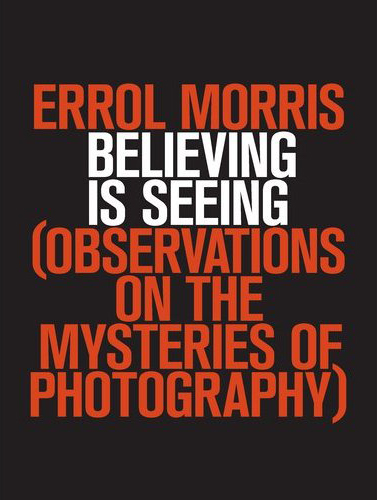
Errol Morris has been a hero at the vanguard of quirky approaches to justice (made a film that freed an innocent man on death row; followed that up with a film that led a famous statesman to be able to acknowledge his war crimes), but has never been noted as a hero within the wider popular culture.

Smithsonian has an article about Morris (click the image to the right to go to it) that will not likely change that, but it does have one of the most fascinating paragraphs you are likely to read about a film maker who writes extensively, especially about photography:

Born in suburban Long Island, Morris graduated from the University of Wisconsin. After a stint of cello study in France, he talked his way into the Princeton graduate philosophy seminar of Thomas Kuhn, an icon of postmodernism, the man who coined the term “paradigm shift.” It wasn’t exactly a meeting of the minds. In fact, it almost cracked Morris’ skull, which is what Kuhn seemed to be aiming to do at the climax of an argument when the esteemed philosopher threw an ashtray at Morris’ head.

Blue Revolution

The Utne Reader, long the aggregator of choice for news on a wide variety of topics from a wide variety of sources, has a great new life on the internet: bigger, better, faster. An item currently on their website (click the image above to go there) is worth a look because of the provocatively obvious (to anyone living in a location where water scarcity is already an issue) opening line:

It’s time to confront our long-held, deeply ingrained belief that water should be forever free, Cynthia Barnett contends in her new book Blue Revolution: Unmaking America’s Water Crisis, which recently came out on Beacon Press.

Continue reading

Universities Pushing Boundaries

The University of Minnesota has a website devoted to environmental issues, and we immediately enjoy its spirit and perspective.  Click the image to the left to go to one brief article in a series titled “What would it take?”, in this case featuring an interview with Solomon Prakash.  He is asked a series of questions around the specific theme “What would it take for social entrepreneurship to make inroads to poverty?”  His answers conclude with:

I think the next 10 years will be the decade of social entrepreneurs. I see lots of talented people who want to solve social problems making serious career changes. Some mainstream design firms have actually set up a whole branch around social innovation. Consulting companies are looking at hybrid models of social change. Increasingly, companies are saying it’s no longer possible to look at customers just as consumers. More and more people understand that social change is no longer a marginal activity. The opportunity is huge to solve problems and to come up with interesting commercial models that can be sustainable.

Continue reading

Celebrating Difficulty

Meg’s post, considering the image and the beginning, might have taken a different turn.  Click the image above to go to a short blog post by astrophysicist Adam Frank, which has a photograph remarkably similar to Meg’s as its header.  Where Frank goes, we follow. Continue reading

A Gandhi At Cornell University

Last week residents of the Cornell University community had the opportunity to hear the grandson of Mahatma Gandhi share anecdotes about their life together.  But those anecdotes were not merely crumbs of celebrity worship–their point is clear all the way through Arun Gandhi’s message, delivered as the Martin Luther King Jr. Commemorative Lecture on February 13 in that University’s beautiful Sage Chapel.

Click the image to the right to go to the article, which includes an embedded link to a video recording of the Lecture.

Continue reading

Travel, Writing & Games

This series has always been worth reading, whether you are an American looking through the eyes of a fellow American, or otherwise intrigued by a niche of American perspective that is not quite representative of that culture as a whole.

First things first: sometimes a book, a music recording or other item is only available from the mainstream online retailers such as Amazon or iTunes, but whenever possible we promote the purchase from independent sellers.  So click the image to the right if you want a link to independent booksellers in the USA, provided by the ever-entrepreneurial American Booksellers Association.

Now, the side show: the series editor Jason Wilson is also a contributor to a site we refer to on occasion, and he wrote an interesting item a couple of years ago that began:

Continue reading