A 3D Printed Shell for Fred

Fred the tortoise received a 3D printed shell after a horrific fire destroyed his original. PHOTO: 3DPrint

Fred the tortoise received a 3D printed shell after a horrific fire destroyed his original. PHOTO: 3DPrint

This one’s a win for goodwill and technology, a fine example of how how ideas can traverse diverse spaces and change lives. The high cost of human prostheses has long been a challenge for amputees and people born with missing limbs, but 3D printers have begun to change that. Unlike traditional manufacturing, 3D printing can create an object in almost any shape by reading a digital model. Using cheap materials, companies and non-profits can now print simple prosthetic hands and arms for as little as $50. And animals like Grecia and Derby, and now Fred, stand to gain, too.

Continue reading

Notes from a Natural History Museum

Harvard Natural History Museum

I recently had the chance to visit the Harvard Natural History Museum. Despite having lived in Cambridge for nearly a year, and having often thought about visiting the museum when I passed by going to and from my apartment, I had not stopped in until now. What a treat! The collections are full, diverse, and well curated. On this occasion, I spent most of my time in the animal wing, but I plan to return soon to take in the flora and minerals, and spend much more time in choice display rooms (e.g. the absolutely gorgeous Mammals/Birds of the World permanent exhibit: see below for pictures).

A ground sloth skeleton. It is hard to get an idea of the size of this creature from this photo, but it probably weighed several tons while alive!

Continue reading

Playing to Light Up Lives

Uncharted Play is a social enterprise based in New York City founded with the mission of harnessing the power of play to achieve social good. PHOTO: UP

Uncharted Play is a social enterprise based in New York City founded with the mission of harnessing the power of play to achieve social good. PHOTO: UP

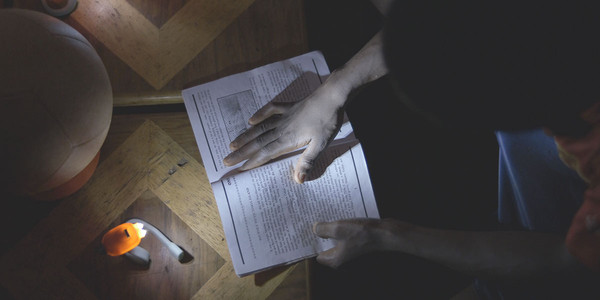
1.2 billion people around the world lack access to reliable electricity. They end up using kerosene lamps or diesel generators for their lighting requirements. But did you know that the annual collective emissions from kerosene lamps all over the world is equal to the carbon emissions of 38 million automobiles? It’s not just the carbon footprint – burning kerosene lamps indoors is as bad for the lungs as smoking two packs of cigarettes per day.

Continue reading

Use Them Lights to Grow Some Vegetables

In this huge urban farming lab, LED "Recipes" grow juicier tomatoes and sweeter basil. PHOTO: Co Exist

In this huge urban farming lab, LED “Recipes” grow juicier tomatoes and sweeter basil. PHOTO: Co Exist

Behind a vault-like door, the long, windowless room has the same purple glow as the cabin on a Virgin America flight. Instead of passengers, the space is filled with row after row of plants, each growing under a carefully calibrated series of red and blue lights. White-coated researchers walk by studying each leaf of lettuce or kale. Welcome to the GrowWise Center, one of the largest homes for urban farming research in the world.

Continue reading

Fancy a Chlorine-free Pool?

A natural pool set up by Total Habitat

A natural pool set up by Total Habitat

Natural pools are miraculous, gorgeous creations that use plant life, rocks, and other biological filters to eliminate the need for cleansing chemicals. They’re clean, they’re safe, and they’re absolutely beautiful. These natural pools have been big in Europe for a couple of decades now, with the first ones popping up in Austria and Germany in the 1980s. In the years since, they’ve seen a rapid increase in numbers. Today there are over 20,000 natural pools in Europe, including plenty open to the general public.

Continue reading

From Perfume Research to Eco-friendly Pesticides

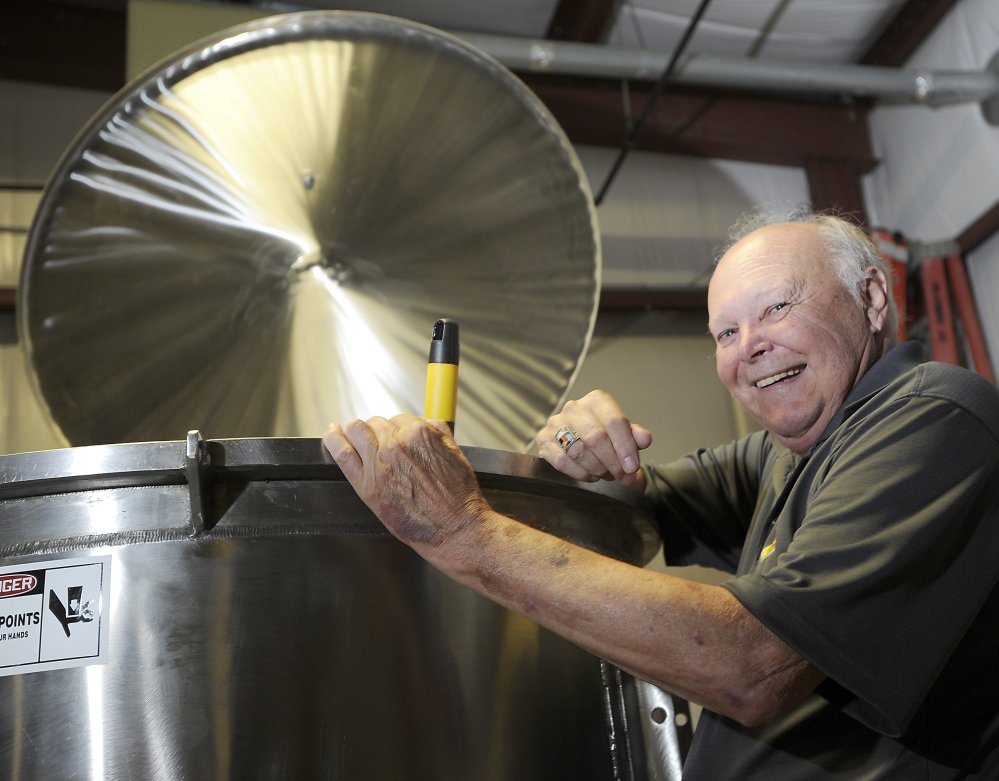
Jim White's Anti-Pest-O grew out of ill effects of working with chemicals as a botanist. PHOTO: Gordon Chibroski

Jim White’s Anti-Pest-O grew out of ill effects of working with chemicals as a botanist. PHOTO: Gordon Chibroski

Are the beanstalks over your heads and the Japanese beetles in your garden driving you into a murderous rage? Then meet Jim White, creator of an eco-friendly insect repellent called Anti-Pest-O. Talk to him about bugs and find how we can dispense with them in the garden without relying on hard-core chemicals. The Portland resident came up with the formula for his product in the late 1990s as a form of self-defense when he was working as a botanist; every time he sprayed his plants with pesticides he broke out in a rash and/or developed a cough.

Continue reading

A ‘Ketchup’ Sachet and its Power to Heal

An HIV positive mother in Moshi, Tanzania, giving her baby antiretroviral medicine from the sachet

An HIV positive mother in Moshi, Tanzania, giving her baby antiretroviral medicine from the sachet

Inside a foil sachet, which looks more at home in a fast-food restaurant, an exact dose of antiretroviral medicine is helping to protect newborn babies against the threat of infection from their HIV-positive mothers. According to the UN, mother-to-child transmission in the developing world creates 260,000 new infections in children every year. Thanks to a program involving the Ecuadorian government, the VIHDA foundation in Guayaquil and Duke University in North Carolina, at least 1,000 babies have been born without the infection from HIV-positive mothers.The program is enabling newborn babies to take their medicines efficiently – via a pouch that looks just like the small ketchup sachets you get at fast food restaurants. Only in this case, they are filled with antiretroviral drugs, which protect against HIV.

Continue reading

Eco-friendly Home of the Future

Fitted out with a photo voltaic (solar panel) roof system and high-tech wall panels, the Solcer house collects and stores thermal and electrical energy

Fitted out with a photo voltaic (solar panel) roof system and high-tech wall panels, the Solcer house collects and stores thermal and electrical energy

Introducing the house of the future – which generates more energy than it consumes. The walls of The Solcer house, which was designed and constructed by the Welsh School of Architecture, collect and store thermal and electrical energy. Located at Stormy Down, near Bridgend, the building also has a photo voltaic (solar panel) roof system and has been funded through the Low Carbon Research Institute (LCRI) programme funded by Wales European Funding Office (WEFO).

Continue reading

Welcome to the Urban Forest Neighborhood

The OAS1S™ architecture is shaped as a 1 and answers to the deep human need to become 1 with nature.

The OAS1S™ architecture is shaped as a 1 and answers to the deep human need to become 1 with nature.

If one Dutch architect gets his way, we might soon be living in car-free urban forests where the buildings look like trees. Raimond De Hullu’s new home design, the OAS1S, runs completely off the grid, thanks to renewable energy and on-site water and waste treatment. It’s made with recycled wood and organic insulation, meeting “cradle to cradle” standards where no material goes to waste. But the designer wanted to also rethink what a green building—and neighborhood—should look like.

Continue reading

The Underwater Greenhouse

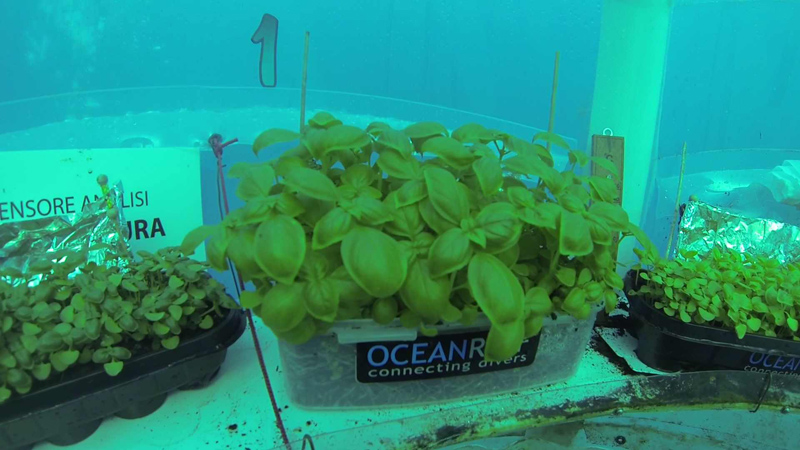
The Orto di Nemo project—Nemo's Garden, as it's called in English—resides 30 feet under the waves, off the Noli Coast in in Italy.

The Orto di Nemo project—Nemo’s Garden, as it’s called in English—resides 30 feet under the waves, off the Noli Coast in in Italy.

Basil, strawberries and lettuce are being grown 30-feet underwater off of the Noli coast in Italy. A team of ‘diver gardeners’ have taken advantage of a surprising opportunity and have found that actually, a least on a  small scale, growing vegetables underwater can be highly successful. There are a number of advantages to growing underwater – a steady temperature, the absence of aphids and the atmosphere is CO2 rich. The products are grown in oxygen filled ‘bubbles’, which are tethered to the ocean floor.

Continue reading

When Gardens Go Vertical

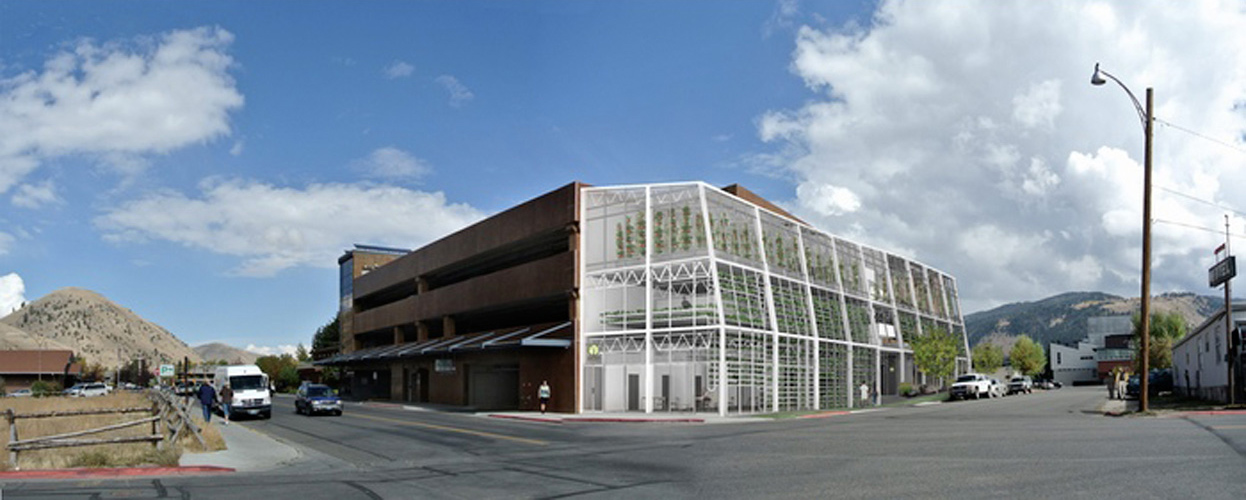
A vacant lot In Jackson, Wyoming is all set to become a vertical farm. PHOTO: CoExist

A vacant lot In Jackson, Wyoming is all set to become a vertical farm. PHOTO: CoExist

Jackson, Wyoming, is an unlikely place for urban farming: At an altitude over a mile high, with snow that can last until May, the growing season is sometimes only a couple of months long. It’s also an expensive place to plant a garden, since an average vacant lot can cost well over $1 million. But the town is about to become home to a vertical farm. On a thin slice of vacant land next to a parking lot, a startup called Vertical Harvest recently broke ground on a new three-story stack of greenhouses that will be filled with crops like microgreens and tomatoes.

Continue reading

A Scooter That Charges Faster Than Your Phone

Ather Energy's e-scooter - S340 - is powered by a battery that charges within an hour

Ather Energy’s e-scooter – S340 – is powered by a battery that charges within an hour

India is the world’s second largest market for two-wheelers, and more than 14 million two-wheelers were sold last year. But electric scooters, so far, aren’t too big a part of that pie. When electric two-wheelers were first introduced nearly a decade ago, companies were betting big. They had a brief honeymoon period between 2008 and 2010, with sales more than doubling during that time. But all that dwindled once the government slashed its Rs22,000 ($346) subsidy for lithium battery packs in 2012. From selling 100,000 units two years ago, sales plunged to 21,000 units by 2014. But Ather Energy is bent on revising the trend.

Continue reading

Is This the New Super Battery?

A cassette tape—the origin, incredibly, of how batteries are made.(AP Photo)

A cassette tape—the origin, incredibly, of how batteries are made.(AP Photo)

Since about 2010, a critical mass of national leaders, policy professionals, scientists, entrepreneurs, thinkers and writers have all but demanded a transformation of the humble lithium-ion cell. Only batteries that can store a lot more energy for a lower price, they have said, will allow for affordable electric cars, cheaper and more widely available electricity, and a reduction in greenhouse gas emissions. This is where Yet-Ming Chiang enters the picture. A wiry, Taiwanese-American materials-science professor at the Massachusetts Institute of Technology (MIT), Chiang is best known for founding A123, a lithium-ion battery company that had the biggest IPO of 2009.

Continue reading

Walter Isaacson On Geniuses Of The Digital Revolution

File photo by Kris Snibbe/Harvard Staff Photographer.  "We’re now in a phase in which the connection of creativity to technology is going to drive innovation," said Walter Isaacson ’74, a Harvard Overseer, biographer, and CEO of the Aspen Institute. "I do believe that it’s important for people to have an appreciation for the arts and humanities."

File photo by Kris Snibbe/Harvard Staff Photographer. “We’re now in a phase in which the connection of creativity to technology is going to drive innovation,” said Walter Isaacson ’74, a Harvard Overseer, biographer, and CEO of the Aspen Institute. “I do believe that it’s important for people to have an appreciation for the arts and humanities.”

Thanks to Christina Pazzanese and Harvard Gazette for this conversation with one of the more interesting biographers writing today:

Ghosts in the machines

The history of the Digital Revolution touches our hearts and heads, Isaacson says

In many ways, the entire Digital Era can rightly be laid at the courtly foot of Lord Byron’s rebellious daughter, Ada. Lady Lovelace was the poet’s only child born in wedlock, inheriting both her father’s headstrong, Romantic spirit and her mother’s practical respect for mathematics.

As the Industrial Revolution bloomed, her appreciation for the beauty of numbers and invention, an analytical approach she called “poetical science,” led her to write what is now regarded as the first algorithm and to help refine a machine that could be programmed to perform many different tasks, an idea that anticipated the modern computer by a century.

That’s where Walter Isaacson’s latest book, “The Innovators: How a Group of Hackers, Geniuses, and Geeks Created the Digital Revolution,” steps off.

Continue reading

Reflecting: Half-a-World Away

Cardamom Siesta

Cardamom Siesta

Five months have elapsed since my departure from Cardamom County and Raxa Collective in Kerala — sufficient time, in my opinion, to think back on my experience and growth during my adventures there, as well as the time I have spent back in the United States.

Words cannot express how thankful I am for having been given the opportunity to travel farther and live longer away from home than I ever have before, and in a truly amazing, diverse, and different region of the world than I could ever imagine.  The head honchos, Crist and Amie Inman, have an ethos rooted deeply in progressive ecological conservation that is truly admirable, and for the area they are established, borderline revolutionary.

Continue reading

Aloe Vera from A to Z, or, How to Harvest your Aloe Plant

Aloe vera in Xandari’s garden — Read the post to watch how it’s harvested!

Aloe vera, meaning “true aloe” in Latin, is a versatile and rather mysterious plant. Although it is perhaps best known for its healing properties on (sun-)burned skin, it shows up as an ingredient in many skin and hair products for various therapeutic or cosmetic purposes. The plant’s frequent appearance in traditional medicine all over the world reinforces the belief that it may really possess some restorative power–but just how miraculous is aloe vera after all? Many users of aloe swear by its ability to fight everything from arthritis, stomach ulcers, and diabetes to tooth and gum decay, but despite these glowing reports, the plant has not gained widespread traction as the “miracle drug” some of its proponents claim it to be. Nevertheless, the really astonishing claims in some of these anecdotes, and aloe’s established healing powers in other spheres of health (skin, hair, etc.), could suggest that further scientific research into the plant’s healing properties would not be fruitless.

Continue reading

Reading Recommendations For Raxa Collective’s Extended Community, And From Raxa Collective Interns

Many universities in the western and northern regions of the world are concluding their academic years about now as summer break begins, which means it is time for Raxa Collective to begin welcoming interns. Some who join have already completed their undergraduate degrees, and prior to beginning their “real” careers they come to spend time in one of our communities, collaborating with our staff, local communities, etc..

One such case is a contributor who has just completed an undergraduate degree; before heading to New England to pursue Ph.D. studies he will carry out projects at Xandari that will allow him to perfect his Spanish language skills. Since he is going to be in the same community as these people below, starting in August, we post this “suggestions on summer reading” article from Harvard Gazette as a prompt for James to make his own summer reading recommendations in a new post. If he takes us up on this prompt we will see who follows his lead and shares their own reading recommendations…

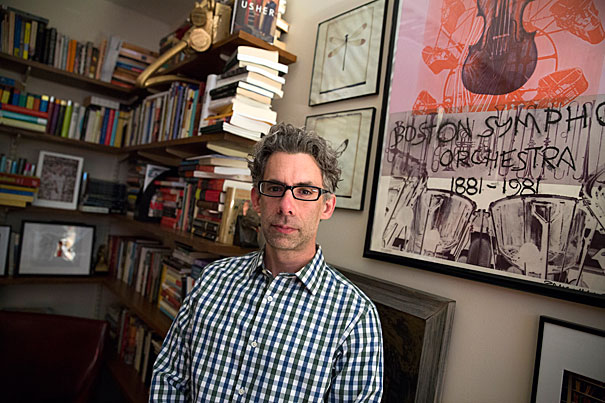
Stephanie Mitchell/Harvard Staff Photographer. Yeats and Bishop made Bret Anthony Johnston's summer reading list but, he said, "I’m eager to happen upon unexpected used bookstores, tag sales, and library fundraisers, where I often buy books outside of my typical reading inclinations."

Stephanie Mitchell/Harvard Staff Photographer. Yeats and Bishop made Bret Anthony Johnston’s summer reading list but, he said, “I’m eager to happen upon unexpected used bookstores, tag sales, and library fundraisers, where I often buy books outside of my typical reading inclinations.”

Bret Anthony Johnston
Paul and Catherine Buttenwieser Director of Creative Writing

This summer I’m going to read W.B. Yeats and Elizabeth Bishop, and “Wynne’s War,” a new novel by Aaron Gwyn about special forces on horseback in Afghanistan.

Continue reading

Innovation In Humanities, Essential To Our Future

Image by Corbis Images.  Thomas Rowlandson’s view of the library of the Royal Institution in London, circa 1810

Image by Corbis Images.
Thomas Rowlandson’s view of the library of the Royal Institution in London, circa 1810

We have been monitoring Harvard Magazine and some of its kindred publications since the early days of this blog, as constant sources of interesting articles relevant to our interests; and now this:

Toward Cultural Citizenship

New gateways into the humanities for students “still fully molten as human beings” by Jonathan Shaw  May-June 2014

Continue reading

Brown University Keeps Giving

Ackerman-290We have a tradition of honoring Brown University from time to time because of the many gifts to the world that come from that place. The letter to the Editor (the New Yorker‘s) below is one of those. Why? Mainly, just because. It is about the quality of writing, in this case. If you read it and do not feel it is worthy, no problem. Tempting to think one must have read the original piece to appreciate the letter in full, but not really. Professor Ackerman has simply written the perfect pithy paragraph:

Re “All the Letters That Are Fit to Print,” April 10th online: Of course, I am delighted with Andrew Marantz’s piece about me. But I have three small bones to pick. First, he quotes me as saying, “I then decided that I would probably live longer if I was less fat.” He also says I speak “hypergrammatically.” So I certainly hope I said, “if I were less fat.” Continue reading

Do The Green Thing Countdown 25/29

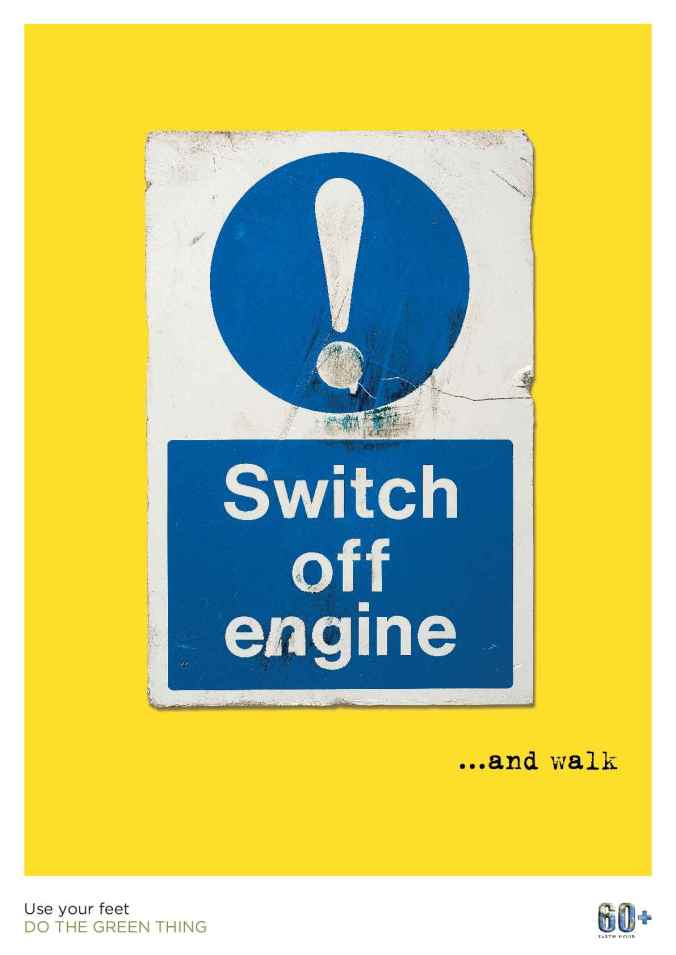
Continuing our promotion of Do The Green Thing’s campaign on behalf of WWF for Earth Hour, we point you to Switch Off Engine by Harry Pearce in which he:

…takes a warning sign from the depths of the car world and reuses it to create a messages that instructs us to step away from our vehicles and go by foot instead.

“The visual language of obedience demands our attention and compliance,” says Harry. “Maybe the car industry should follow its own rules.”

Why?

Continue reading