Indian Food For Thought

Thank you, Mr. Cardoz, on behalf of all those who resist the family’s gravitational pull to other professions, and choosing food.  And thanks to the New York Times for bringing your story in brief, thoughtful form:

In Edison, New Jersey, “Floyd Cardoz was scanning the shelves at a supermarket called Apna Bazar Cash and Carry, looking for inspiration,” Jeff Gordinier wrote in The New York Times. Continue reading

Convocation Power Well Used

Open, N.Y.

Open, N.Y.

We are grateful when people whose name and heritage give them convocation power use their power on behalf of others less fortunate (until they shake our confidence), so we give thanks to the New York Times and to Peter Buffett, both privileged, for sharing this startling opinion piece. We, a small group of moderately privileged people with a small platform for sharing ideas, are particularly interested in the intersection of good and market forces, so Mr. Buffett’s challenge here is germane to our mission and to our practice:

I HAD spent much of my life writing music for commercials, film and television and knew little about the world of philanthropy as practiced by the very wealthy until what I call the big bang happened in 2006. That year, my father, Warren Buffett, made good on his commitment to give nearly all of his accumulated wealth back to society.

Continue reading

Impossible, Past Tense

There are already more than a million views of this, in what looks like one day’s time (but may be a hoax and may be old news, but does not look like either as this is posted, so we hope to add to the hype if we are correct).  Thanks to the folks at The Verge for this story:

A Canadian duo and their Kickstarter-funded, pedal-powered helicopter have won one of the longest-standing challenges in the history of aviation — keeping a human-powered aircraft hovering up in the air at height of at least 9.8 feet, within a 32.8 by 32.8-foot square, for 60 seconds minimum. The challenge, known as the Sikorsky prize, has withstood at numerous failed attempts since it was established in 1980, 33 years ago, even with a $250,000 bounty. But it was finally bested earlier in June by the Atlas, a gigantic human-powered helicopter designed by Cameron Robertson and Todd Reichert, aeronautical engineers from the University of Toronto, who cofounded a company AeroVelo. Continue reading

Smiling, Thinking Of Math As Language

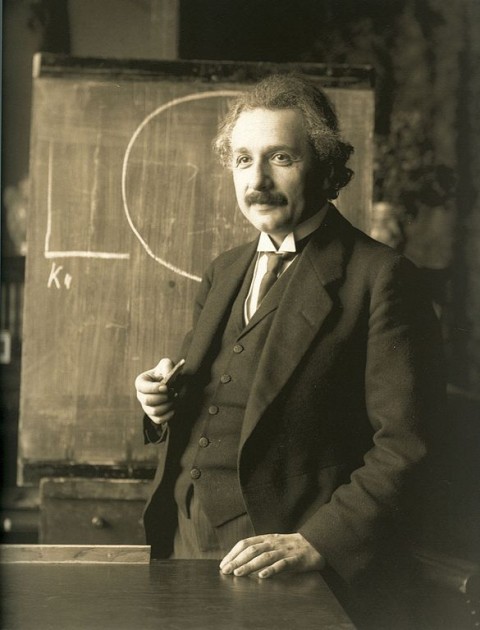
Planning our work with communities in diverse locations, language is a challenge, a puzzle. We are constantly on the lookout for new ways of thinking about how to resolve this puzzle, so when we hear this fellow speak on the topic, it makes us smile. Nothing to do with conservation, but everything having to do with community and collaboration at a very fundamental level, we thank Open Culture for bringing this wonderful recording to our attention:

The essay is called “The Common Language of Science.” It was recorded in September of 1941 as a radio address to the British Association for the Advancement of Science. The recording was apparently made in America, as Einstein never returned to Europe after emigrating from Germany in 1933. Continue reading

Bay Area Branding

Anyone who has been following the Raxa Collective blog would likely be aware that natural beauty trumps man-made wonders for us, hands down.  Because of that, rather than in spite of it, we have also been sensitive to built space because we live and work in it every day, and welcome travelers to such places.  Paying tribute to design, as we like to do from time to time, we recommend this item on Atlantic’s website about a new landmark building in the Bay Area and the ideas it represents (worth reading in full; excerpted here are the early and closing lines):

…The heart of the development is a ten-story tower that the company’s architect, NBBJ, says “will create a powerful brand image for Samsung.” Continue reading

Birthday Present For Mr. Tesla

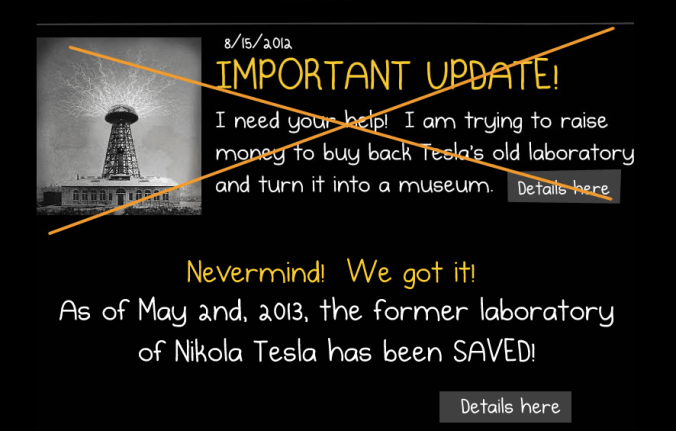
Last August we recommended reading to the end of Mr. Inman’s mischievously hilarious tribute to Nikola Tesla, partly because every bit of it was great, but the end asked for attention to an initiative that rang true to us: the conservation of patrimony related to this exceptional man.  A couple months ago, when we saw on Mr. Inman’s site that the initiative had succeeded we decided to investigate further before celebrating this. Now, in honor of Tesla’s birthday, seems like a good time to highlight it.  Click the image above to see the results.  There have been some birthday tributes to Tesla elsewhere and we share one of those as well. Continue reading

Ideas That Give ‘Far Out’ A New Meaning

Conservation Is Sometimes The Story Of Change

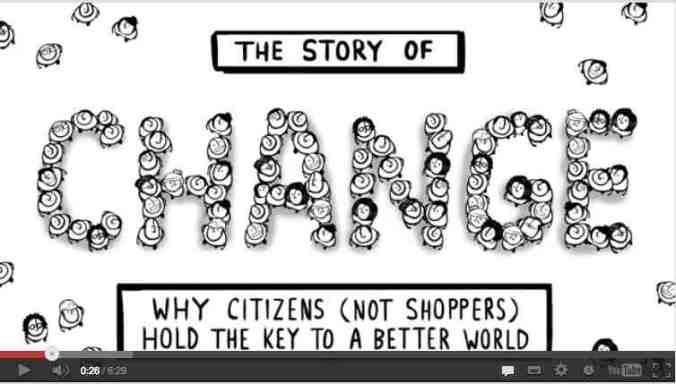
Click above to go to the location where Cornell University is hosting this brief video by a fellow alum of several Raxa Collective contributors:

Can shopping save the world? The Story of Change urges viewers to put down their credit cards and start exercising their citizen muscles to build a more sustainable, just and fulfilling world. Continue reading

Voice Versus Exit

Malcolm Gladwell brings to our attention an economist/planner/idea guy who might not otherwise have found his way to our reading list.  In his usual writing style, Gladwell makes the man, by reviewing his biography, irresistible.  Toward the end of the review, what is described as one of the economist’s key contributions provides a perfect counterpoint to these ideas.  We like this guy because he chooses voice over exit (click the image to the right and it is definitely worth reading to the end):

In the mid-nineteenth century, work began on a crucial section of the railway line connecting Boston to the Hudson River. The addition would run from Greenfield, Massachusetts, to Troy, New York, and it required tunnelling through Hoosac Mountain, a massive impediment, nearly five miles thick, that blocked passage between the Deerfield Valley and a tributary of the Hudson. Continue reading

Seasteading, Self-Reliance Utopia, And Our Shared Future

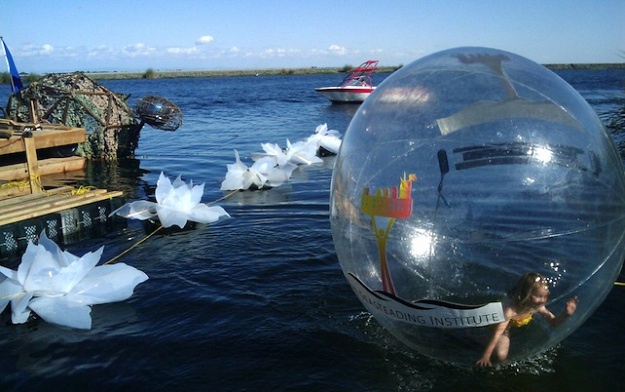
An article recently published in n+1 examines a utopian futurist form of an idea that seems oddly symmetric with Seth’s posts about the history of exploration using Iceland as a case study. Looking back, we see much in common with explorers, pioneerspilgrims and adventurous thinkers of all sorts.  Looking forward, we are inclined to embrace smart, creative, enthusiastic group efforts to resolve seemingly intractable challenges. Especially when they involve living on boats. We recommend reading the following all the way through:

To get to Ephemerisle, the floating festival of radical self-reliance, I left San Francisco in a rental car and drove east through Oakland, along the California Delta Highway, and onto Route 4. I passed windmill farms, trailer parks, and fields of produce dotted with multicolored Porta Potties. I took an accidental detour around Stockton, a municipality that would soon declare bankruptcy, citing generous public pensions as a main reason for its economic collapse. After rumbling along the gravely path, I reached the edge of the Sacramento–San Joaquin River Delta. The delta is one of the most dredged, dammed, and government subsidized bodies of water in the region. It’s estimated that it provides two-thirds of Californians with their water supply.  Continue reading

Veg Beat

New research shows that cabbage, carrots and blueberries are metabolically active and depend on circadian rhythms even after they’re picked, with potential consequences for nutrition. Photo by Flickr user clayirving

New research shows that cabbage, carrots and blueberries are metabolically active and depend on circadian rhythms even after they’re picked, with potential consequences for nutrition. Photo by Flickr user clayirving

Smithsonian has an article about a surprising natural phenomenon, which may not impact your feelings but should get your thoughts stirred up a bit:

You probably don’t feel much remorse when you bite into a raw carrot.

You might feel differently if you considered the fact that it’s still living the moment you put it into your mouth.

Of course, carrots—like all fruits and vegetables—don’t have consciousness or a central nervous system, so they can’t feel pain when we harvest, cook or eat them. But many species survive and continue metabolic activity even after they’re picked, and contrary to what you may believe, they’re often still alive when you take them home from the grocery store and stick them in the fridge. Continue reading

Creative Uses Of Intelligence, Intelligent Uses Of Creativity

How smart are they? Do they drink alot of coffee?  Find out by clicking the image above, or reading the following from the article accompanying that video:

…Google X seeks to be an heir to the classic research labs, such as the Manhattan Project, which created the first atomic bomb, and Bletchley Park, where code breakers cracked German ciphers and gave birth to modern cryptography. After the war, the spirit of these efforts was captured in pastoral corporate settings: AT&T’s (T) Bell Labs and Xerox (XRX) PARC, for example, became synonymous with breakthroughs (the transistor and the personal computer among them) and the inability of each company to capitalize on them. Continue reading

False Starts, Heroic Conclusions

ESSAY: A Different River Every Time
What is ‘smart’ and how does it fit our consciousness? Is there just one way to it? Are smarter people happier, richer? The answers may not always be that obvious. by SANDIPAN DEB

…Which, of course, brings us to that common capitalist question: “If you’re so smart, why aren’t you rich?” There is something abhorrent about this query. Of course, Mukesh Ambani is super-smart, but so was Jagadish Chandra Bose, who invented wireless communication at least a couple of years before Guglielmo Marconi, who received the Nobel prize for the breakthrough (It is now established that Marconi met Bose in London when the Indian scientist was demonstrating his wireless devices there, and changed his research methods after that meeting). Bose also invented microwave transmission and the whole field of solid state physics, which forms the basis of micro-electronics. Bose’s contributions are all around us today, from almost every electronic device we have at home to the most powerful radio telescopes in the world. But he steadfastly refused to patent any of his inventions, or to license them to any specific company. Some 70 years after Bose’s death, the global apex body, Institute of Electrical and Electronics Engineers, officially acknowledged Bose to be the father of wireless communication.

This is an excerpt whose catchy question pervades an essay worth reading in full. Intelligence, specifically smart Indian people, is the subject of a whole special issue of Outlook magazine. We have pondered amazing people from India on occasion in the past, and if the brief tale above intrigues you then see this post about Tesla versus Edison, but for now Continue reading

The Wild5Five collection : drawing from Nature

via kerala‘s Wild 5 Five collection was designed to raise awareness about the fauna of the Periyar forest by setting forth 5 wildlife ambassadors. To decide which 5, the team of designers at Thought Factory carried out thorough research on the fauna of the Periyar Tiger Reserve in online journals and books, blogs and libraries. Continue reading

Worlds And Distant Times Apart, Bridged By Ideas (Or Ideology)

Future Shlock

The New Republic is not a magazine we scan often, because its focus rarely intersects with our focus; even its Must Reads are to us, not-often-must; but occasionally we stumble on something of interest.  Perhaps because the first link of today had a technology component, we got on a roll thinking about the relationship between technology, ideas, culture. This particular article is worth reading simply for the quality of both content and style:

The sewing machine was the smartphone of the nineteenth century. Just skim through the promotional materials of the leading sewing-machine manufacturers of that distant era and you will notice the many similarities with our own lofty, dizzy discourse. The catalog from Willcox & Gibbs, the Apple of its day, in 1864, includes glowing testimonials from a number of reverends thrilled by the civilizing powers of the new machine. Continue reading

On Language, Travel And Imagination

The snow-covered mountains and punctual trains of Montreux, Switzerland, summon childhood train sets, and the daydreams that accompanied them. (Harold Cunningham/Getty)

The snow-covered mountains and punctual trains of Montreux, Switzerland, summon childhood train sets, and the daydreams that accompanied them. (Harold Cunningham/Getty)

If we failed to get you reading him here, shame on us. If you choose to ignore this short piece of his, well, you have only yourself to answer to. He has had a running series of blog posts on the Atlantic‘s website dealing with the frustrations and wonders of language acquisition as an adult, a phenomenon several of us at Raxa Collective can relate to perfectly well.  He captures some of the many benefits of the process and the outcome, especially the collaborative part, in short order here:

When I was about 6 years old, I started collecting model trains with my father. We would assemble the track in the attic, put a foam mountain with a tunnel over the top, and, through the magic of a transformer, watch the trains make their rounds. My dad took me to train shows, and for my birthdays back then, I always got train sets or trestles. I had books on model trains, and books on actual trains. Both kinds showed pictures of big mountains parted by trains, small towns bisected by trains, and trains adorning white Christmas-scapes. Continue reading

Iceland In The Air

Lopez Williams, courtesy of FSG.

Lopez Williams, FSG

Our daily scanning of magazines, blogs, news websites, etc. for inspiration led us to the conclusion recently that Iceland has captivated a lot of minds.  We do not know why, but it is popping up everywhere.  For example, this portion of a wonderful post on Paris Review‘s website about a recent event at Scandinavia House:

…It’s a young crowd, trendy, expectant, giddy even, though I’m surprised to see so many empty seats. It turns out Scandinavia House closed their RSVP list weeks earlier, almost immediately after announcing the event, grossly botching the numbers and no doubt needlessly turning away scores of would-be attendees. But it’s no matter to those of us here—in fact it makes the evening feel all the more intimate. Continue reading

A Particularly Indian Sense Of Community

Anupam Nath/Associated Press. An Internet cafe in Guwahati, Assam.

Anupam Nath/Associated Press. An Internet cafe in Guwahati, Assam.

An article in India Ink today explores the odd (from the perspective of non-Indians, at least) phenomenon of elites downgrading their socio-economic status in the interest, apparently, of a stronger sense of community belonging:

If you are an Indian reading this, you are very likely among the top 10 percent in the country, since you have Internet access. Continue reading

World Building Through Media

Every day for the past three years or so we have posted a few personal accounts, links to news stories, sometimes told through video, etc. all in the interest of highlighting collaborative, community-based contributions to conservation.  We reach far and wide for inspiration, and some daily features are there not as a direct statement about conservation but about the world we see around us. So when we see a story about world building though media, and a name like 5D Institute, it catches our attention. According to their website, the future of narrative media is a form of world building, and an important contribution to it can be found here:

5D Institute is a cutting edge USC non-profit Organized Research Unit dedicated to the dissemination, education, and appreciation of the future of narrative media through World Building. World Building is the interdisciplinary process of building worlds that evolve into containers for the new narrative resolutions. World Building is the intersection of creativity and technology for students in academia and industry who need to understand now how to thrive in the media jungle of the future. World Building works beyond the edges of known media to express the full arc of our creative role in making new narrative worlds. Continue reading

Community-Enhanced Blogging

On occasion we have linked to stories in The Atlantic, one of the oldest continuously published magazines in the world. Most recently we have been paying attention to a science writer there. One writer we have not had occasion to link to is Ta-Nehisi Coates, who writes often about race, social justice, politics and other topics we care deeply about but which are not the focus of this blog.  He writes for the print magazine but he is also among the most prolific bloggers on the magazine’s website.  He has just posted a profound note (pasted in full below, but please click here so he gets full “internet metrics” credit for it) about the importance of community, aka The Horde, in his writing:

Last night The Atlantic won two awards. The first was for best website. The second was for essays and criticism. The essay in question was written by me. In my mind, these awards are linked. Writing for the website has fundamentally changed how I write in print. Continue reading