Getting It Done, With Attitude

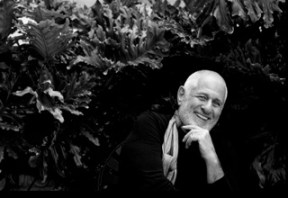
Richard_Saul_Wurman2

Harvard Magazine writes about a man we have appreciated since hearing him interviewed on a show whose podcasts with some of our heroes we have mentioned in previous posts.  It is easy to perceive Wurman as a world class pain in the neck. Listen to the end of that podcast and you learn that he is self-aware of this. For those who know ourselves to come across as unreasonable, contentious, etc. Wurman is an inspiration worthy of the pantheon:

Described by Fortune magazine as an “intellectual hedonist with a hummingbird mind,” Wurman created and chaired the TED conference from 1984 through 2002, bringing together many of the world’s pathbreaking thinkers to share their ideas and spark discussion.  Continue reading
For Your Consideration

If you follow American popular culture, and care about race relations, you may find this piece interesting:

In a recent article on the lack of ethnic diversity on American television, the critic Emily Nussbaum paused from pondering the absence of blacks on TV — the usual complaint against homogeneity — to note the sudden ubiquity of South Asians. “Black and white are not the only colors of diversity,” she wrote, and listed roles accorded to desi actors in The OfficeParks and RecreationCommunitySmashThe Big Bang TheoryWhitney, and The Good Wife. Continue reading

A Great Magazine Becomes A Great Insititution

The consistently superb essayist Adam Gopnik, who often writes about topics unrelated to the themes of our blog, in this week’s New Yorker writes on a topic close to our heart (click the image above to go to the article, subscription required):

Magazines in their great age, before they were unmoored from their spines and digitally picked apart, before perpetual blogging made them permeable packages, changing mood at every hour and up all night like colicky infants—magazines were expected to be magisterial registers of the passing scene. Yet, though they were in principle temporal, a few became dateless, timeless. The proof of this condition was that they piled up, remorselessly, in garages and basements, to be read . . . later. Continue reading

Simple Superiority

On the margins of topics we pay attention to on this site, there is a steady stream of posts related to some of today’s great thinkers and researchers on the topic of decision-making and related topics. Here is more.  But simpler, we presume. We have not read the book yet; only this review from the New York Times:

Less is more. The bare essentials. Back to basics. User-friendly. No fine print. Clutter-free. Transparent. Clean. Easy. Back in the mid-19th century Henry David Thoreau exhorted us to “simplify, simplify,” and his appeal to distill things down to “the necessary and the real” has only gained more resonance, as our Internet-driven, A.D.D. culture has grown ever more complex and frenetic. Continue reading

University-Based Groups Worth Noting

syn-mosaic

An occasional feature, beginning here, will point to university-based groups–informal organizations, living arrangements, secret societies, etc.– we can relate to:

Co-operative societies bring forth the best capacities, the best influences of the individual for the benefit of the whole, while the good influences of the many aid the individual.

Leland Stanford
October 1, 1891
Stanford University Opening Ceremonies

Willfully Contemplating

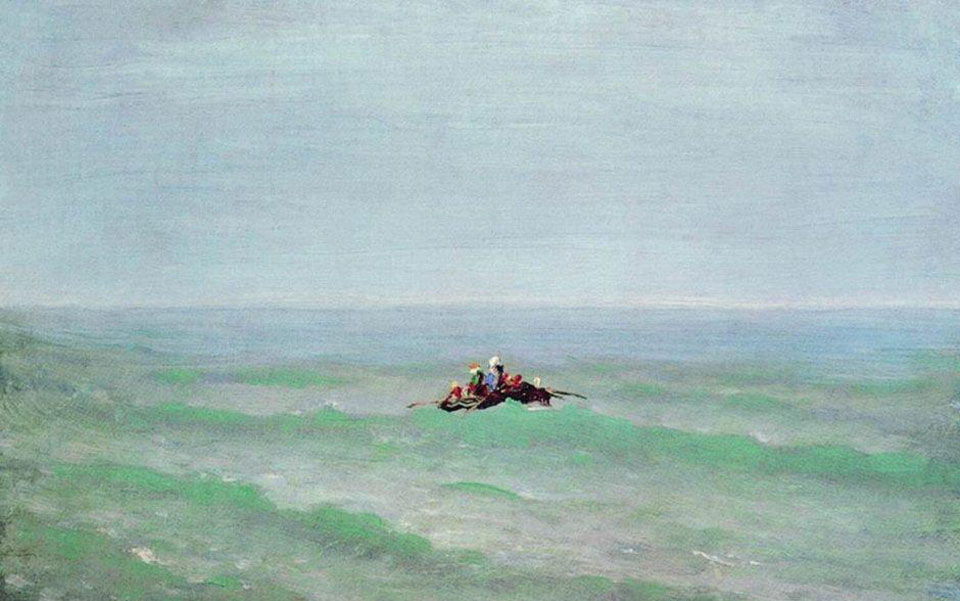
A Boat in the Sea by Arkhip Kuindzhi, c.1875. Oil on canvas.

A Boat in the Sea by Arkhip Kuindzhi, c.1875. Oil on canvas.

We tend to favor action as a general rule on this site, but without contemplation where would we be? Two choice paragraphs from a recent philosophical musing in one of our newly favored  and now reliably interesting online publications:

…After three years, I was no wiser than when I started. Did we choose freely? Or were we just victims of larger historical, social and biological forces? It was impossible to tell. What I did realise was that philosophers had been struggling with such questions for thousands of years, but were no closer to understanding the answer than they were when they started out. Continue reading

The Great Paddy-City Migration

For those of us living and working in Rising Asia, much in this book either rings true from experience or is eye-opening about things that may be lurking just around the corner, out of sight.  Kerala is a long way from Lahore, in every sense.  But at least the basic notion–that the world has only in the last year or so become one in which a majority of us are urban dwellers for the first time in human history, and not long from now it will be a super-majority–can be felt in Raxa Collective’s back yard.  The great migration from paddy to city is noisily happening all around us each day.  What of it?

Mr. Hamid has alot to say about that, good, bad and ugly.  An interview he conducted to discuss the book can be heard in this podcast.  The book is likely to anger some, but it has received positive reviews, even from often-tough critics:

“Mr. Hamid reaffirms his place as one of his generation’s most inventive and gifted writers.” –Michiko Kakutani, The New York Times

Continue reading

Tidy Up

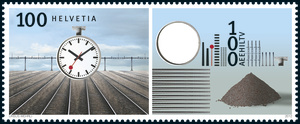
© Die Post  Swiss Post has asked Ursus Wehrli to create a tidied up stamp – the stamp is NOW available at every Swiss post office.

© Die Post Swiss Post has asked Ursus Wehrli to create a tidied up stamp – the stamp is NOW available at every Swiss post office

There is an entertaining video from five years ago of this comic artist presenting his “work” and a book review from 18 months ago on Trendland that is worth a look because it presents an excellent sampling of Ursus Weherli’s images, and you can decide relatively quickly whether you want more or not (one purpose of a book review, well fulfilled in this case:

Organizational skills aren’t usually something you look for in an artist, but in Ursus Wehrli‘s case, they’re definitely something of value…

His most famous image is likely this one below, but the stamp above commissioned by Swiss Post shows an evolution of sorts, which you can see after reviewing the images in that book review.  It also shows an idea, a concept, on a roll.  Where did it come from?  Where is it going?

theartofcleanup2

Continue reading

Pi With Pies

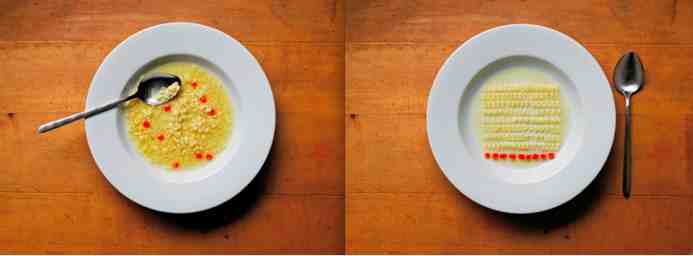
Krulwich is our go-to guy on a certain kind of day. A day when important scientific ideas might otherwise put us to sleep, and just need a fresh approach to get our attention. Today is one of those days, and the pied piper of fun science delivers a short and sweet one:
Continue reading

Happy Mother Language Day

Ruth Fremson/The New York Times. A sign in Bangla language in the front window of a shop in Astoria, Queens, in this March 7, 2001, file photo.

Ruth Fremson/The New York Times. A sign in Bangla language in the front window of a shop in Astoria, Queens, in this March 7, 2001, file photo.

From our friends at India Ink:

I take pride in the fact that despite being born and raised in New York City, I speak Bangla fluently. I credit this mostly to my Bangladeshi parents for being brutal in their approach to teaching my younger sister and me a language that that was so violently fought for. Feb. 21 is recognized by the United Nations Educational, Scientific and Cultural Organization as International Mother Language Day in honor of linguistic diversity, Continue reading

Le Macchine E Gli Dei

Machines and Gods: Dionysus at MCCM

The Musei Capitolini Centrale Montemartini is an interesting place, to say the least: it combines Italian machinery of mammoth proportions from the Industrial Revolution with ancient Roman statuary. These statues include the monolithic “Fortuna Huiusce Diei” (“Fortune of This Very Day”), various Greek gods (Venus, Dionysus as pictured above, and others), Roman emperors, famous statesmen, and lesser known wealthy citizens; the machinery, on the other hand, consists in titanic pieces of metal that when whirring generated tens of thousands of horsepower. Continue reading

Sticky Explanations

Pea aphid on alfalfa

Pea aphid on alfalfa

Thank you, Ed.  Thank you, National Geographic. A smart fellow who communicates clearly, a great publication with a long history of communicating important information with good writing and excellent photography; now we have an explanation for:

How Falling Aphids Land on Their Feet Like Cats

by Ed Yong

Cats are famous for landing on their feet after a fall, but they aren’t the only animals that do so. The tiny pea aphid can also right itself in mid-air, and it does so in a way that’s far simpler than a falling feline. Continue reading

If You Happen To Be In Brooklyn

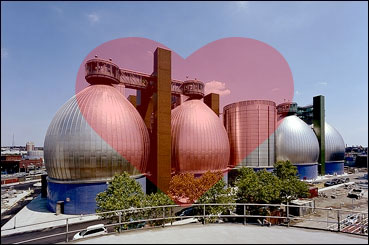
Your public servants are hard at work, innovating at the intersection of waste, love and water.  Make a Valentine’s Day reservation with your romantic counterpart to visit this spot in the Greenpoint section of Brooklyn, as per the press release:

Department of Environmental Protection Announces Second Annual Valentine’s Day Tours of the Newtown Creek Wastewater Treatment Plant

For Those Seeking an Alternative Valentine’s Day Experience, a Tour of the Greenpoint Plant Will Both Educate Visitors on the Essential Wastewater Treatment Process and Provide Breathtaking Views of the City from Atop the Famous Digester Eggs

Continue reading

Engaged In The Temple Of Abstraction

Searching for the truly authentic image: Gerhard Richter’s paintings invite a deep engagement. Abstraktes Bild 809-4. Photo by Peter Macdiarmid/Getty Images

We are finding more reasons to pay attention to this publication each time we dig deeper into it. This artist, his art form, this writer, and the intersection of these ideas are all worth the 30-40 minutes this article grips your attention for:

I was in my teens when I first started to really look at paintings. Although I didn’t just look, I bathed in them, and I was perpetually teased by my friends for the tremendous length of time it took me to navigate an art gallery. This pleasure of looking and of being completely absorbed in painting has remained constant; whether ancient or modern, figurative or abstract, and whatever the style, I am prepared to give every work the chance to lure me in.

What is so compelling? When art was an adjunct of religion, its power was clear. But from the Renaissance on, painting, at least in the Western tradition, has preoccupied itself as intensely with secular as with overtly religious subject matter, or else with no subject at all. Continue reading

Taking The Geek Out Of Greek

We have already sung Stephen Greenblatt‘s praises several times, but why stop there? He has done something remarkable, making classicism classy:

Glories of Classicism

FEBRUARY 21, 2013

Stephen Greenblatt and Joseph Leo Koerner

The Classical Tradition

edited by Anthony Grafton, Glenn W. Most, and Salvatore Settis Belknap Press/ Harvard University Press, 1,067 pp., $49.95

Over a thousand pages in length, with some five hundred articles surveying the survival, transmission, and reception of the cultures of Greek and Roman antiquity, The Classical Tradition is a low-cost Wunderkammer, a vast cabinet of curiosities. Take the entry on the asterisk: you learn that this ubiquitous critical sign, named from the Greek for “small star,” originated in Ptolemaic Alexandria, where the great textual scholar Aristophanes of Byzantium and his student Aristarchus of Samothrace used them to mark repeated lines in the Iliad and Odyssey.

Continue reading

Mammals, Emotions And Human Intelligence

Close cousins: a gorilla family in Rwanda. Photo by Charles L Harris/Gallery Stock

Close cousins: a gorilla family in Rwanda. Photo by Charles L Harris/Gallery Stock

Another great item in a publication we recently started following:

‘If he grabs you, just go limp and let him throw you around. If you tense up, he’ll take it as a dominance challenge.’

‘Um. Okay.’ Continue reading

Obelisks in Rome

The Obelisk at Piazza Navona

Rome is renowned for (among many other, er, more important things) its vast “collection” of obelisks. These obelisks, most featuring hieroglyphics running their length, typically came to Rome through conquests in Egypt. Victorious generals and emperors Continue reading

Another View On Miraculous Silicon Valley

Click the banner above to read the whole entry at its source:

Diary

Rebecca Solnit

The buses roll up to San Francisco’s bus stops in the morning and evening, but they are unmarked, or nearly so, and not for the public. They have no signs or have discreet acronyms on the front windshield, and because they also have no rear doors they ingest and disgorge their passengers slowly, while the brightly lit funky orange public buses wait behind them. Continue reading

Teacher Of Teachers In Natural History

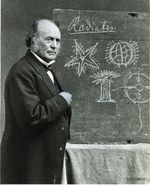
Because of its importance to this idea we work with, entrepreneurial conservation, we pay attention to the history of natural sciences.  We are curious, as individuals and collectively, about how we found our way here. In the Books sections of the New York Times Rebecca Scott reviews the Christoph Irmscher study on the Swiss immigrant scientist Louis Agassiz and his contributions to science–and therefore nature and conservation–in his adoptive country:

Nonetheless, there is no arguing with the claim that Agassiz, a Swiss immigrant, was pivotal to the making of American science. He was “one of the first,” Irmscher writes, “to establish science as a collective enterprise.” He was extraordinarily prolific and influential in many fields, including paleontology, zoology, geology and glaciology. Continue reading