Finding History in High Tech

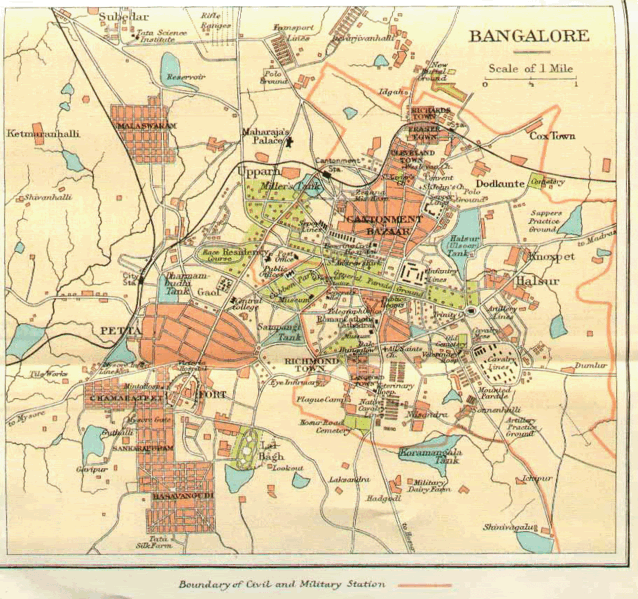
Bangalore city map, circa 1924 from “Murray’s 1924 Handbook”

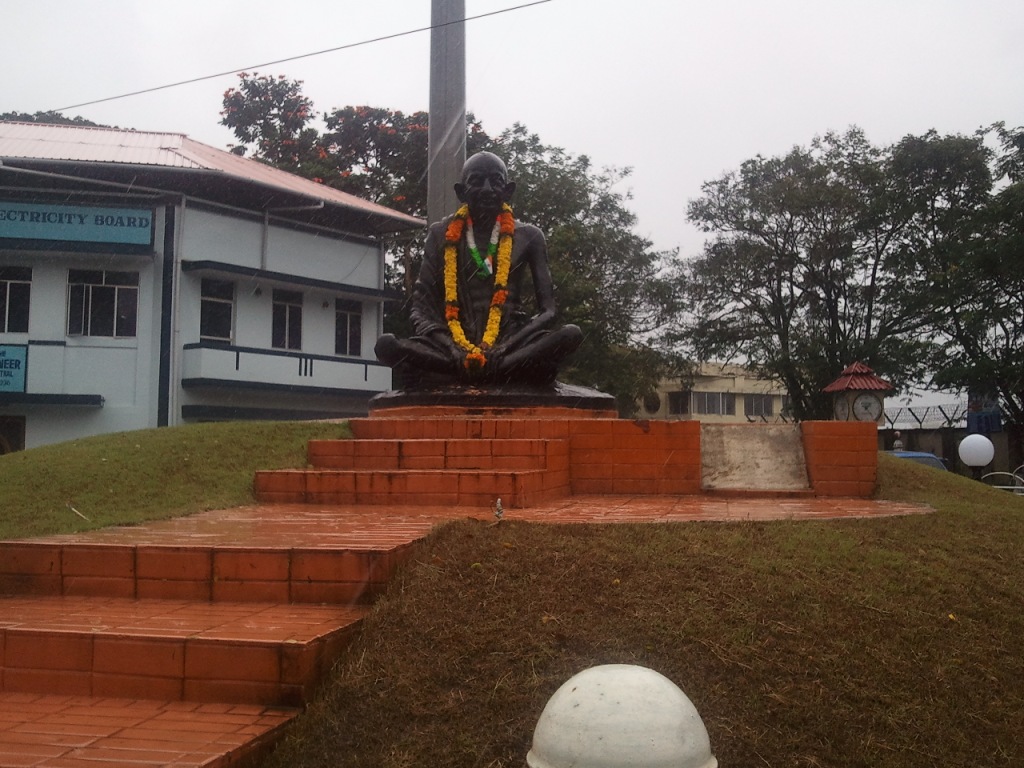
Before a recent trip to Karnataka I’d asked my Indian friends for advice prior to any urban travels, getting their opinions on the iconic activities in each of the cities on my itinerary.  There were pearls and biryani in Hyderabad, palaces and markets in Mysore…but for Bangalore, most friends said things such as, “Oh Bangalore. That’s where people from Cochin go to get their shopping done.”

Well, okay.  Considering I actually did need to get some shopping done, I wasn’t terribly distressed about this advice. However, the fact remains that I am not a particularly good shopper, so I’d hoped that there was more to the city than just consumer attraction. Continue reading

One Day in Jaipur, Rajasthan

Now that I’m back at Cornell, crunching numbers once again for my Finance classes, I have to look back on my trip to Jaipur, Rajasthan to remember that freedom that I already miss. For everybody who misses traveling, here is something to keep you happy.

This slideshow requires JavaScript.

Cheers!

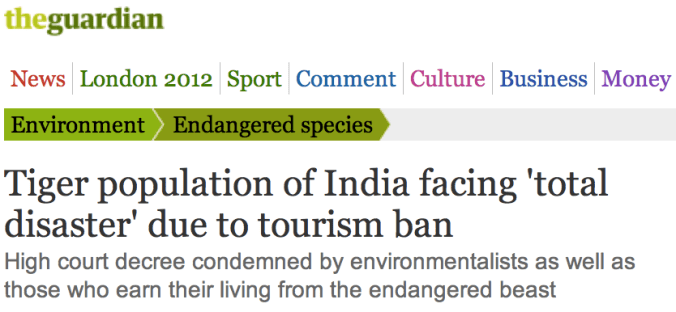
August 22, A Big Day For Tigers

Click the headline above to go to the story, in advance of tomorrow’s ruling in India about a controversial ban.  These issues are at the core of the entrepreneurial conservation concept:

“If the ban on tourism continues, it will be the end of the tiger in India,” he said. “We’re the ones who put energy into tracking them. We deter poachers. Tourists are only allowed in the park for six hours every day, but we guides take it in turns to patrol the park from sunrise to sunset. Voluntarily.” Continue reading

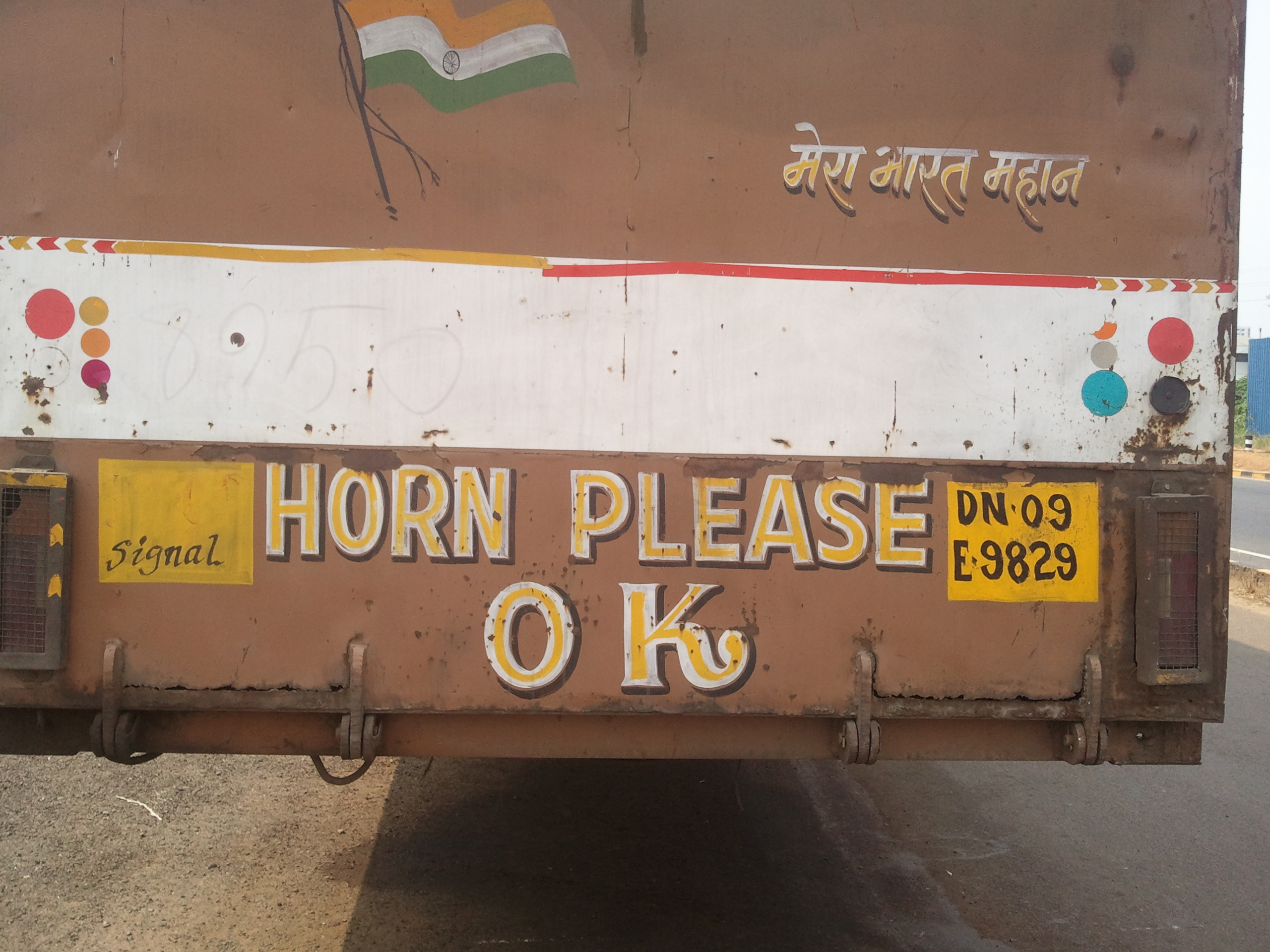
From Behind the Wheel

Road sign in Kerala’s Parambikulam Wildlife Sanctuary

Driving in India can be an eye opening experience.  Or you can close your eyes if you have the confidence. We’ve written about it several times over the past year, usually from the point of view of the passenger’s seat, but occasionally from the “right-hand seat” as well.

Continue reading

Thorn Apple (Devil’s Apple)

Thorn Apple is an erect succulent annual shrub which grows throughout India especially in the Western Ghats  and is untended land, roadsides and farms. The plant is useful in treating asthma , cough ,fever ,ulcer and skin diseases  Traditionally the roots are used to treat rabid dog  bites and even insanity and the leaves are useful to treat epilepsy. Continue reading

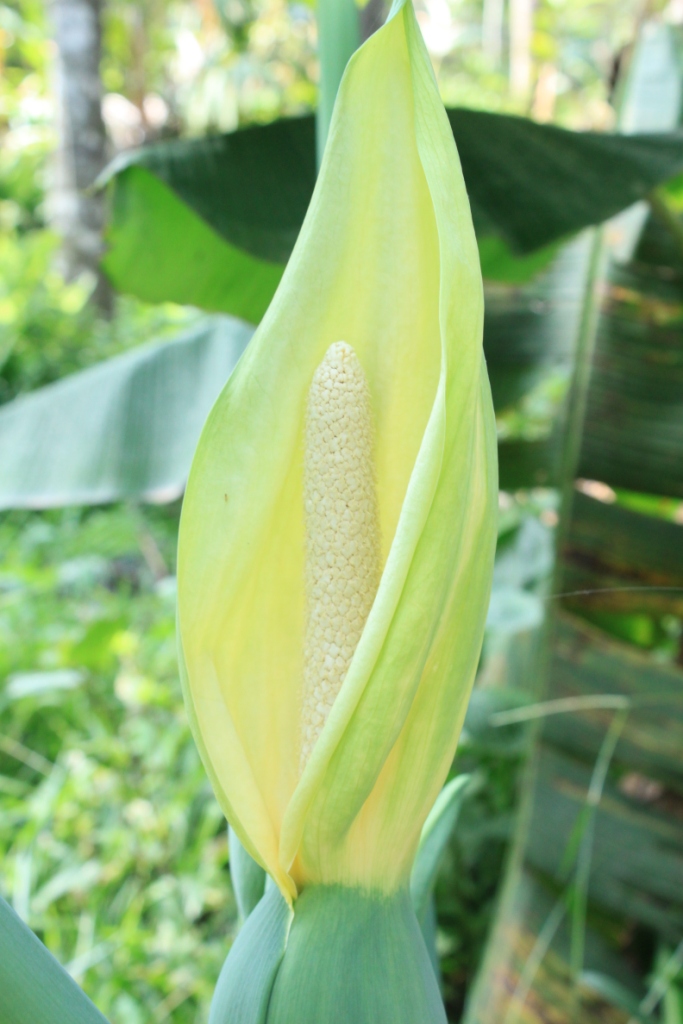
Taro (Colocasia esculenta)

Taro is a gregarious herb growing from tubers on the banks of streams, ponds and marshes and in moist patches of the forest at altitudes up to 1400m. Taro is widely cultivated throughout Kerala, Tamil Nadu and Sri Lanka primarily for its tubers, but the eaves and stems are also cooked and eaten. Continue reading

Banyan (Ficus benghalensis)

Banyans are large evergreen trees with aerial roots descending from branches that enter the ground and thicken and become strong enough to support the crown. The Banyan is sacred to the Hindus; they frequently stand guardian near temples and shrines. The figs provide food for variety of animal life and the leaves are fodder for elephants and camels. Banyan is the national tree of India. Continue reading

Turk’s Turban (Clerodendrum Indicum)

Turk’s Turban is a tall shrub with long, narrow, pointed, oleander-like leaves that grows wild throughout India along roadsides, cultivated areas and near human dwellings. Caterpillars of the common silverline butterfly and Death’s Head Hawkmoth feed on these plants. The roots and leaves are used in Ayurveda medicines. Continue reading

Nutmeg (Myristica Fragrans)

The Nutmeg Tree is an evergreen aromatic which usually grows up to a height of 15-20 meters. Nutmeg and mace are two distinctly different spices produced from the same tree- the nutmeg being the actual interior nut, while mace is the red lacy covering beneath the outer shell. Although it is now cultivated throughout most of the south Indian states, the tree is a native of Moluccas, an island in the Indonesian archipelago. It thrives in hot and moist climates at low elevations.

Continue reading

Black – Eyed Susan Vine (Thunbergia Alata)

The Black Eyed Susan vine is native to tropical countries and naturalized in India. The twiner is often seen among hedges as well as on the ground. The leaf paste of this  plant is used in traditional medicine. It is commonly grown in gardens, plains and hills.

Continue reading

A Perfect Sendoff and a Nostalgic Farewell

It is amazing how fast ten weeks can go by.  I remember sitting in the library at Cardamom County writing about my first day of birding here; I remember how excited I was to see barbets, minivets, and leafbirds from the parking lot.  Now, ten weeks later with about a dozen activities completed and many birding expeditions into the Periyar Tiger Reserve under my belt, I’m suddenly looking back on fond memories.  My first excursion into Periyar was a Bamboo Rafting trip along Periyar Lake.  To be honest, I was a little overwhelmed in this strange new place with its checklist of over 300 unfamiliar birds.  As is always the case with Periyar, the excursion was a blast, and that trend continued with the Border Hike, the Nature Walk, the Tiger Trail, the Green Walk, and indeed with every trip into the Reserve.

Continue reading

Connecting Over Competition

Guest Author: Siobhan Powers

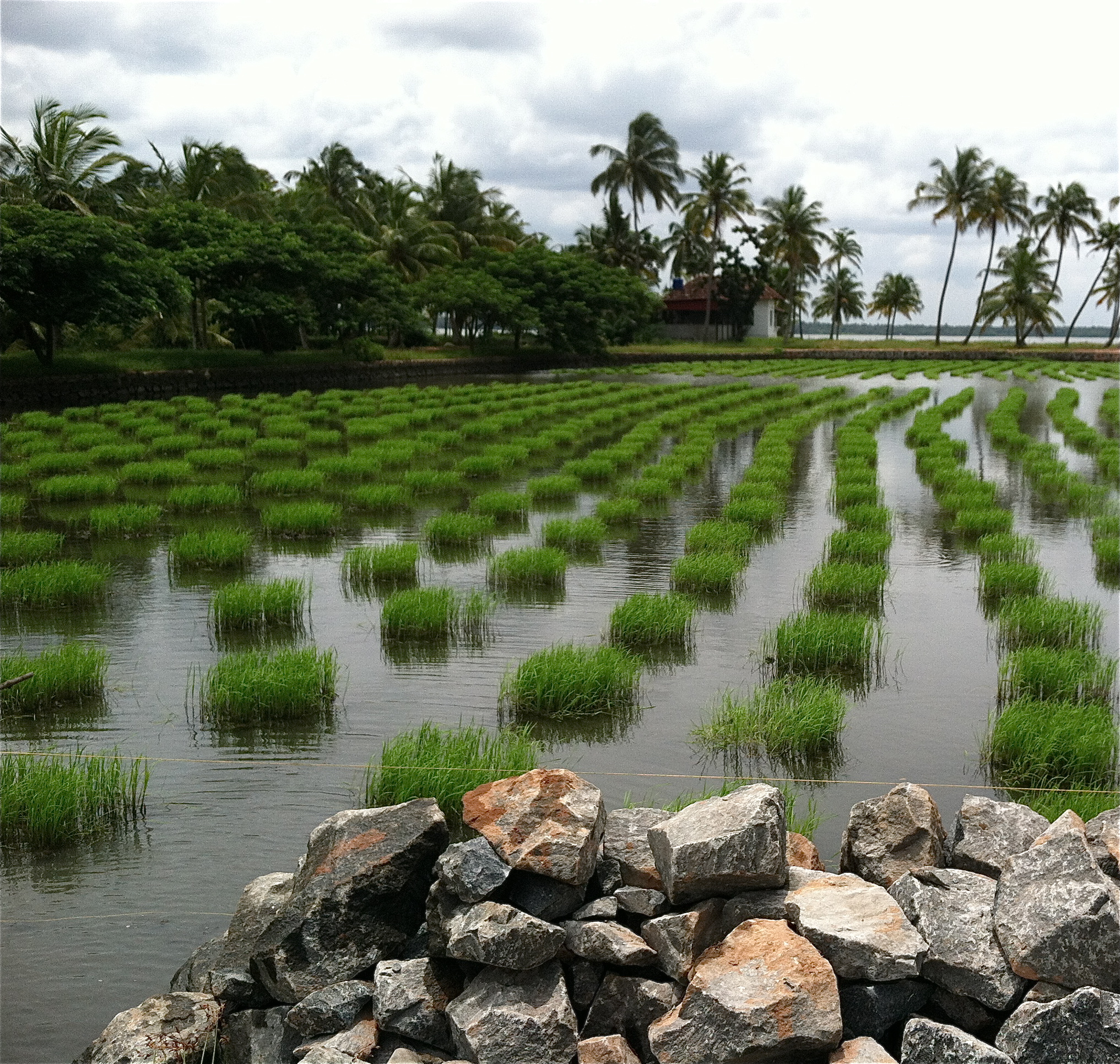
I’ve been staying in the beautiful backwaters of Kerala for the past few days, which has put me at ease as I always feel more comfortable by the water.  Jonathon and I took some time out of our workday to take a walk and get a feel of the area, including all it has to offer, both culturally and agriculturally. We interrupted the construction of a stone wall surrounding a rice paddy field and watched a young boy catch fish in a stream at the side of the narrow road. In the heat of the Indian sun’s rays, we contemplated buying ice cream, but, on our return, settled on the universal refreshing thirst-quencher that is an ice-cold cola.

Rice paddy in Panangad

Continue reading

Religion, India, & Timeless Observations

Click the banner above to go to this literary-intellectual online magazine edited by Russell Bennetts. Click the image after the jump to go to their reprinting of an item by a lion of letters from another era, writing about a place familiar to us, translated by Louise and Aylmer Maude. It was first published in 1885 in the short story collection What Men Live By.  Thank you berfrois and thank you Leo!

The Coffee-House of Surat

by Leo Tolstoy

In the town of Surat, in India, was a coffee-house where many travellers and foreigners from all parts of the world met and conversed… Continue reading

“There is no better designer than nature.”

Color is quite possibly the most strategic tool a designer can use to breathe life into a concept.

And it comes as no surprise to the RCDT that used effectively and responsibly, color can transform an existing space more powerfully than any other single alteration. But it is important to realize that color does not exist as an object in itself; rather color is the relationship between light and an object, producing a condition that is unique and inherent to a specific material. As pure white light from the sun reaches a material’s surface, various light frequencies are either absorbed or reflected causing our visual perception to interpret the surface as a certain color. Thus color is actually a very scientific narrative between light, a surface, and our eyes.

This post could delve very deeply into the science of color and those factors that cause us to perceive what we do, but the scenery of India is far too inspiring to diminish it to wavelengths. Instead I dedicate this post to the basic and simple application of color, what it is, and why it is one of the things that makes India one of the most beautiful places on our earth. Continue reading