An American Soldier, World War, and India

photo

28 years ago, a Chicago-based couple found a shoebox of photographs of the Indian countryside and they traveled halfway across the world to find their origin. PHOTO: Scroll

Here’s the plot: In 1988, a couple visited an estate sale of a deceased friend and stumbled upon a shoebox of old photographs tucked under a couch. It contained more than a hundred envelopes filled with negatives and contact sheets for photographs depicting India in 1945. The identity of the photographer: unknown.

But only until they set out to discover the man behind the lens. The answer (and the photographs) hang at Delhi’s Indira Gandhi National Centre for the Arts till January 31.

Continue reading

Love For, Of the Planet

claude-and-norma

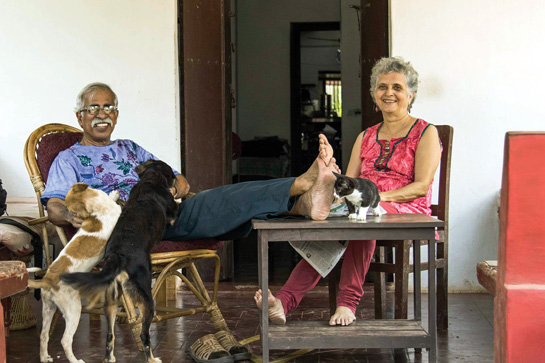
Claude and Norma Alvares are the pillars of conservation in India’s extreme tourist city of Goa. PHOTO: Rahul Alvares, Scroll

There’s a small but wonderful tribe of people who keep the dignity of life on the planet. Call them eco warriors, guardians of tomorrow, nature’s advocates. No tag can do justice to their lives spent preserving, restoring, and protecting life. Goa, the tourist mecca of India, has sundowners, music, beaches and a welcoming culture going for it. It is also the base of Claude and Norma Alvares’ environmental movement of over 40 years.

Continue reading

The Lost Frog Of India

_87821587_92b1068a-e193-4352-b00f-ddafaf388815

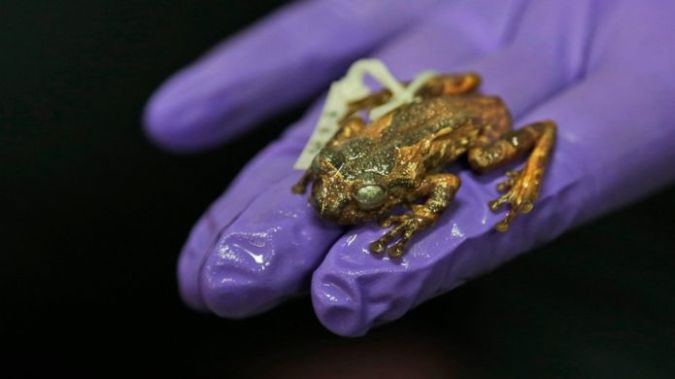
AP Image. Unusually, the frogs feed mostly on vegetation, rather than insects or larvae

Thanks to the BBC’s website for this note of encouragement:

An extraordinary tree frog thought to have died out more than a century ago has been rediscovered in India

The discovery was made by renowned Indian biologist Sathyabhama Das Biju and a team of scientists, in the jungles of north-eastern India.

It is hoped the frogs might now be found across a wide area, from China to Thailand.

Studies of the frog have also led scientists to reclassify it as an entirely new genus. Continue reading

India’s First Organic State

sikkim

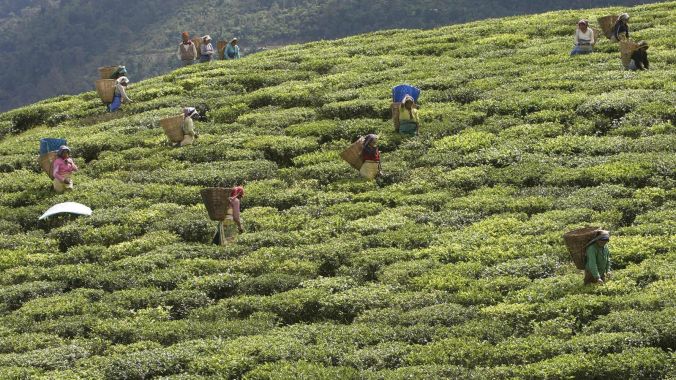
Tea plantations on the hillside. PHOTO: Reuters/ Rupak De Chowdhuri

The buzzword is organic. From grocery store shelves to textile designers to travel. At the center of this phenomenon is respect to the land, cognizance of the immense potential of living organisms, acknowledgement of a way of life that has restorative powers. Today, India hears that message loud and clear in the North-eastern hill state of Sikkim.

Continue reading

Nutmeg – from Table to Design

You must have heard the phrase in a nutshell. Well, this post is not exactly that. It’s going to border on being a story in a nutmeg. Yet another tale to add to Kerala’s legacy of having a heart of spices. The nutmeg, though not as glorious as its cousins pepper or cinnamon, is integral for its medicinal, herbal properties and its place in the kitchen.

For me, it’s the embrace that links spending holidays with a grandmother whose heart had nutmeg all over it and a design sensibility at Xandari Harbour. The wispy haired grand lady is long gone, but the wind rustles up her memories among the nutmeg trees. So does a certain corridor at work.

Continue reading

Rain Scents

Vivek Prakash/Reuters

Vivek Prakash/Reuters

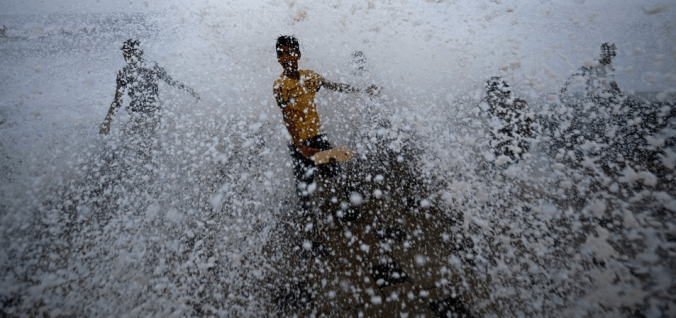
Smell is one of the most evocative of the five senses, allowing us to relive memories that span our entire lives. Scents from the kitchen make our mouths water. Scents from nature make us long to be outdoors. Considering that on average our bodies consist of 60% water, it isn’t surprising that we’re so attuned to the range of smells associated with H2O.

Many of the RAXA Collective team long for the refreshing monsoon rains in Kerala, never imagining that exhilaration could be captured in a bottle.

Once again we thank The Guardian for this intoxicating story.

Every storm blows in on a scent, or leaves one behind. The metallic zing that can fill the air before a summer thunderstorm is from ozone, a molecule formed from the interaction of electrical discharges—in this case from lightning—with oxygen molecules. Likewise, the familiar, musty odor that rises from streets and storm ponds during a deluge comes from a compound called geosmin. A byproduct of bacteria, geosmin is what gives beets their earthy flavor. Rain also picks up odors from the molecules it meets. So its essence can come off as differently as all the flowers on all the continents—rose-obvious, barely there like a carnation, fleeting as a whiff of orange blossom as your car speeds past the grove. It depends on the type of storm, the part of the world where it falls, and the subjective memory of the nose behind the sniff… Continue reading

Understanding India

i187-darjeeling-west-bengal-1983

Darjeeling, India, 1983.

In short, you cannot. India is too diverse to explain, or even describe, in any meaningful way. So understanding it is a journey, at least lifelong if not eternal. But you should try. And we are dedicated to all kinds of attempts, including via journey; this book, published recently by Phaidon, may help with visual clues prior to such a journey, whether it will be your first or 80th:

The brilliant American Magnum photographer Steve McCurry has travelled so widely, he could have produced a great monograph on almost any continent. Yet, in his latest Phaidon publication, he has chosen to focus on the country that he first visited as a 28-year-old photojournalist in 1978, and has since returned to over eighty times.

Continue reading

A Timeless Moment on the Backwaters

A scenic backwaters view. Photo by S. Inman.

During my stay at Xandari Pearl – another charming property that I visited recently – I had the opportunity to go on one of the Riverscapes houseboats to have lunch and spend a few hours on the famous Kerala backwaters. I think I will remember this experience as the most peaceful that I have lived. Indeed, everything is united to provide you a relaxing and timeless moment.

Obviously the first thing that I noticed is the landscape and each element that surrounds it. It was my first time on the backwaters, and I have to say that this large expanse of water and all the green nature around it is quite wonderful. What makes it peaceful is the fact that you can just enjoy the moment and the view. You don’t have to do anything else! The best part is that except for the lapping of water and some birds, you can’t hear any sounds. It’s the best place to go unwind.

Continue reading

Still Standing – the Last Jews of Jew Town

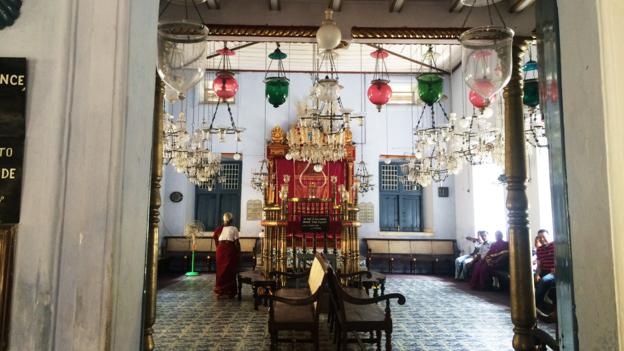
The Paradesi synagogue in Jew Town, Fort Kochi, Kerala.  Credit: Alyssa Pinsker

The Paradesi synagogue in Jew Town, Fort Kochi, Kerala. Credit: Alyssa Pinsker

Xandari Harbour, going beyond a hotel, doubles as a gateway to history. Located between the tourist paradise of Fort Kochi and the heritage rich bylanes of the spice markets of Mattanchery, it sees people and time come and go. Among the tales we hold precious is the heartwarming lifestory of the Jews of Jew Town. A handful left, behind doors and windows they sit – reminders of a people who found warm refuge in an alien land. Reminders of a page of a history turning to close.

In a small neighbourhood in the South Indian city of Cochin, Kashmiri shopkeepers in Islamic dress stand in front of shops emblazoned with banners reading “Shalom!” Inside, Hindu statues and shawls vie for space with Jewish stars, menorahs and mezuzahs. Although this multiculturalism might seem strange, the majority-Hindu city is well known for its substantial Muslim and Christian populations. Less known is that there’s also a fast-dwindling native Jewish community, known as the Paradesi (Foreign) Jews, who once populated the neighbourhood of Jew Town.

Continue reading

Washing Hands to a Cleaner World

When Dr. Pawan found out about the unhygienic living conditions in Gadchiroli, Maharasthra, India, he created a hand-washing device in just Rs.35 (50 cents) that has been saving the lives of the villagers. - PHOTO: Better India

When Dr. Pawan found out about the unhygienic living conditions in Gadchiroli, Maharasthra, India, he created a hand-washing device in just Rs.35 (50 cents) that has been saving the lives of the villagers. – PHOTO: Better India

Clean care is safe care, says the World Health Organisation and follows it with a campaign on washing hands towards cleaner living and working conditions across the globe. And Dr. Pawan did his part too. By creating a hand-washing device that costs less than 50 cents, roping in children to keep the initiative going, and relying on elders for the device to adapted and adopted into the community.

In 2008, Dr. Pawan was one of the seven students selected for a two-year fellowship programme at Nirman’s SEARCH (Society for Education, Action and Research in Community Health), in Gadchiroli district, Maharashtra, India. The programme encourages students to work in areas affecting rural communities like water management and NRGA schemes, and being a physician, Dr. Pawan chose to work in the health sector. Living in the community, he realised that there were several diseases persisting in the village, those that could be prevented by merely drinking clean water or paying more attention to cleanliness. He promptly did a study that revealed that of the 64 families living in the village, only six families used soap for washing hands.

Continue reading

Mark Your Calendar for Steve McCurry

Do you remember the image of the Afhan girl that made the cover of the June 1985 issue of National Geographic? It is regarded as one of the world’s most recognizable photographs. And the man behind it is Steve McCurry. Since then, McCurry has traveled extensively, later returning to India to create the series’ “Monsoon” and “India by Rail.” Photographs from these collections, including some that have never been seen before, will be showcased in a new exhibition by the International Center of Photography and the Rubin Museum of Art that opens on November 18th.

Continue reading

Making Silk Non-violent

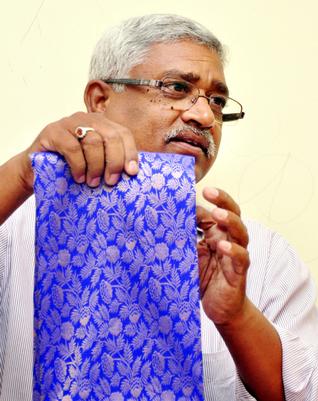
Kusuma Rajaiah displaying a sari made from 'Ahimsa Silk'. Photo: Balachander Goud

Kusuma Rajaiah displaying a sari made from ‘Ahimsa Silk’. Photo: Balachander Goud

Do you know how many silkworms are normally killed to make a five yard silk sari? Kusuma Rajaiah, a 55-year old government officer from India’s Andhra Pradesh state, does: “Around 50,000.” Rajaiah estimates that around 15 silkworms are normally sacrificed to produce a gram of silk yarn. For years, he’s been battling against what he describes as the “cruel killing of millions of innocent worms.” And has come up with an alternative. He realized the lure of silk was too strong to persuade people to give it up altogether so he came up with a technique that spares the life of the silkworm.

Ahimsa silk derives its idea and the brand name from Mahatma Gandhi, who was also critical of the conventional method of silk production. In fact, he had written to the Silk Board of India to explore ways of producing silk without hurting any living being. For Rajaiah, it’s a matter of pride to have fulfilled that wish; a pride shared by those who use the fabric.

Continue reading

Lessons of Islam in a Temple

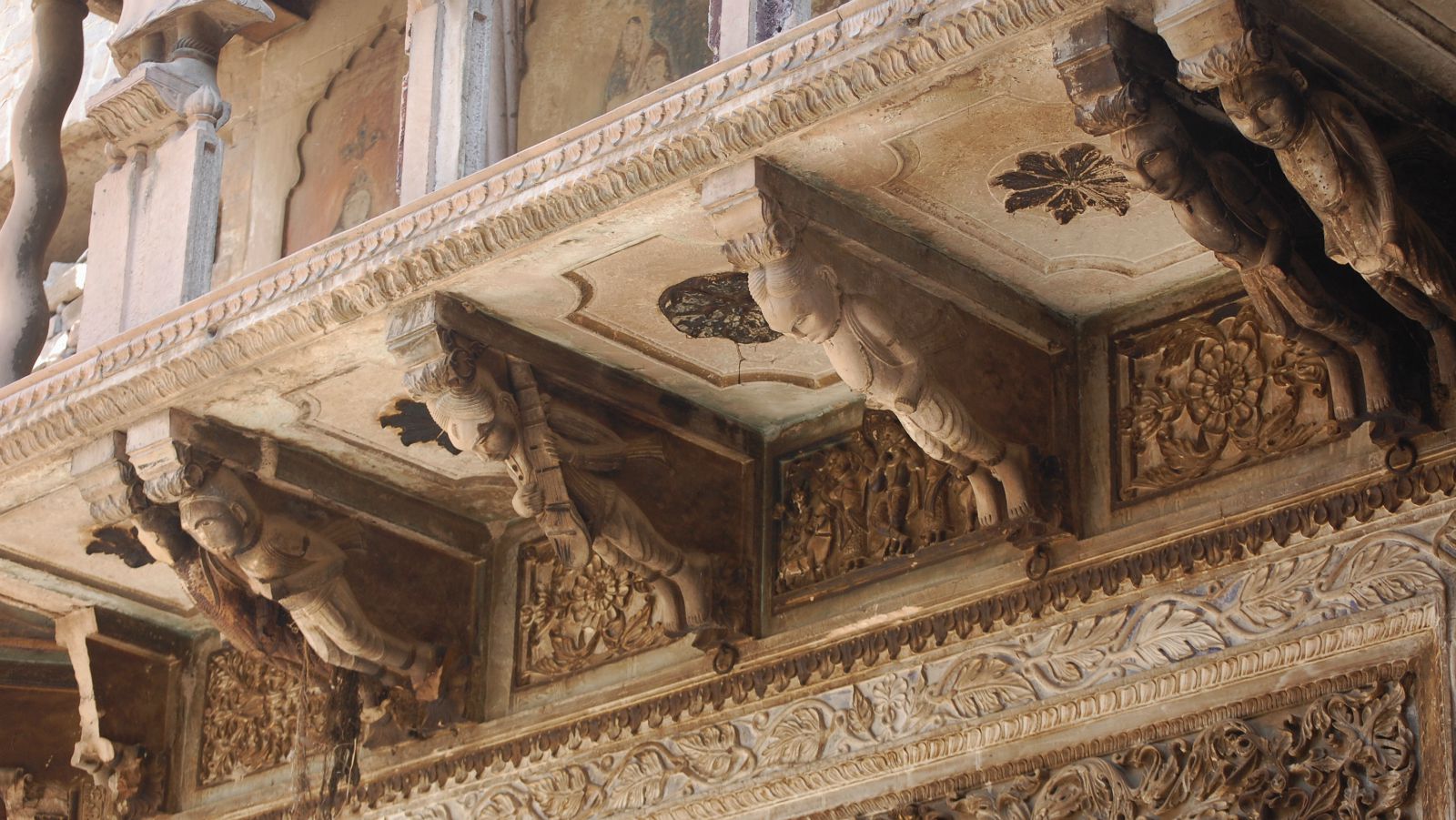
Some Hindu temples in Pakistan are now Islamic schools. PHOTO: Rida Arif

Some Hindu temples in Pakistan are now Islamic schools. PHOTO: Rida Arif

Given the volatile relationships between India and Pakistan, any sentence that involves the two nations is fraught with speculation and scrutiny. Talking of a temple and a mosque in the same breath spells secularism in a liberal setting but portends unrest in another quarter. And when you do hear of goodwill where these worlds meet amicably, it’s a story worth sharing. Like this one about how ancient temples in Pakistan have turned into centers of Islamic teaching.

We stood at the entrance of the temple, not sure if we would be allowed to go inside.

It was a double-storey structure with a small round balcony. The door was made of wood with intricate patterns on it, while there were fading remnants of frescoes on the wall. Judging by the entrance, I could only imagine how beautiful this structure must be from the inside. The only problem was that this temple was not vacant. It wasn’t even taken over by an individual family, as has happened in many other cases. In that situation, I could have requested them to allow me to see the temple from inside. But this was now controlled by the women’s wing of an Islamic religious organisation called Minhaj-ul-Quran, founded by the famous preacher-turned-politician Tahir-ul-Qadri.

Continue reading

Celebrating Flour Power

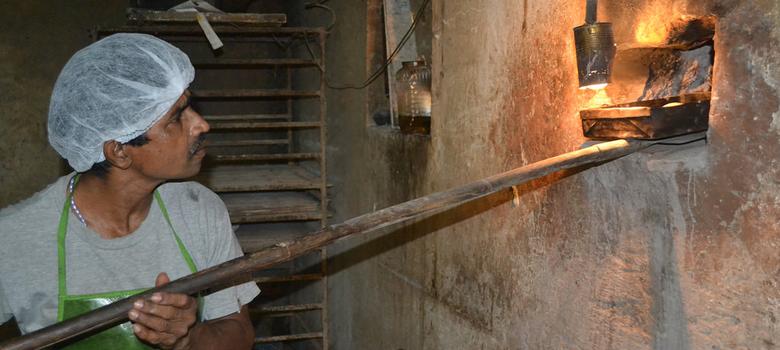
The Poderanchem Fest will pay tribute to the state's unique baking traditions and the people who keep them alive. PHOTO: Scroll

The Poderanchem Fest will pay tribute to the state’s unique baking traditions and the people who keep them alive. PHOTO: Scroll

India is home to celebrations that pan religions, occasions like harvest, birthdays of legendary heroes, and more. And now the country gets its first platform celebrating bakers. All the way from the tourist-laden beaches of Goa.

It’s the sound of Goa. Every morning at the crack of dawn, the bulb horn of the poder wakes up people across the state, encouraging them to start their day with cheap, freshly baked bread.  On Friday, the state’s humble bakers will finally get turn in the spotlight. Goa’s first Poderanchem Fest, or Baker’s Festival, being hosted in the leafy North Goa village of Succorro, will feature a baker’s parade and stalls selling traditional and new varieties of pao, in addition to the region’s favourite foods to eat the bread with.

Read more here.

What’s The Catch?

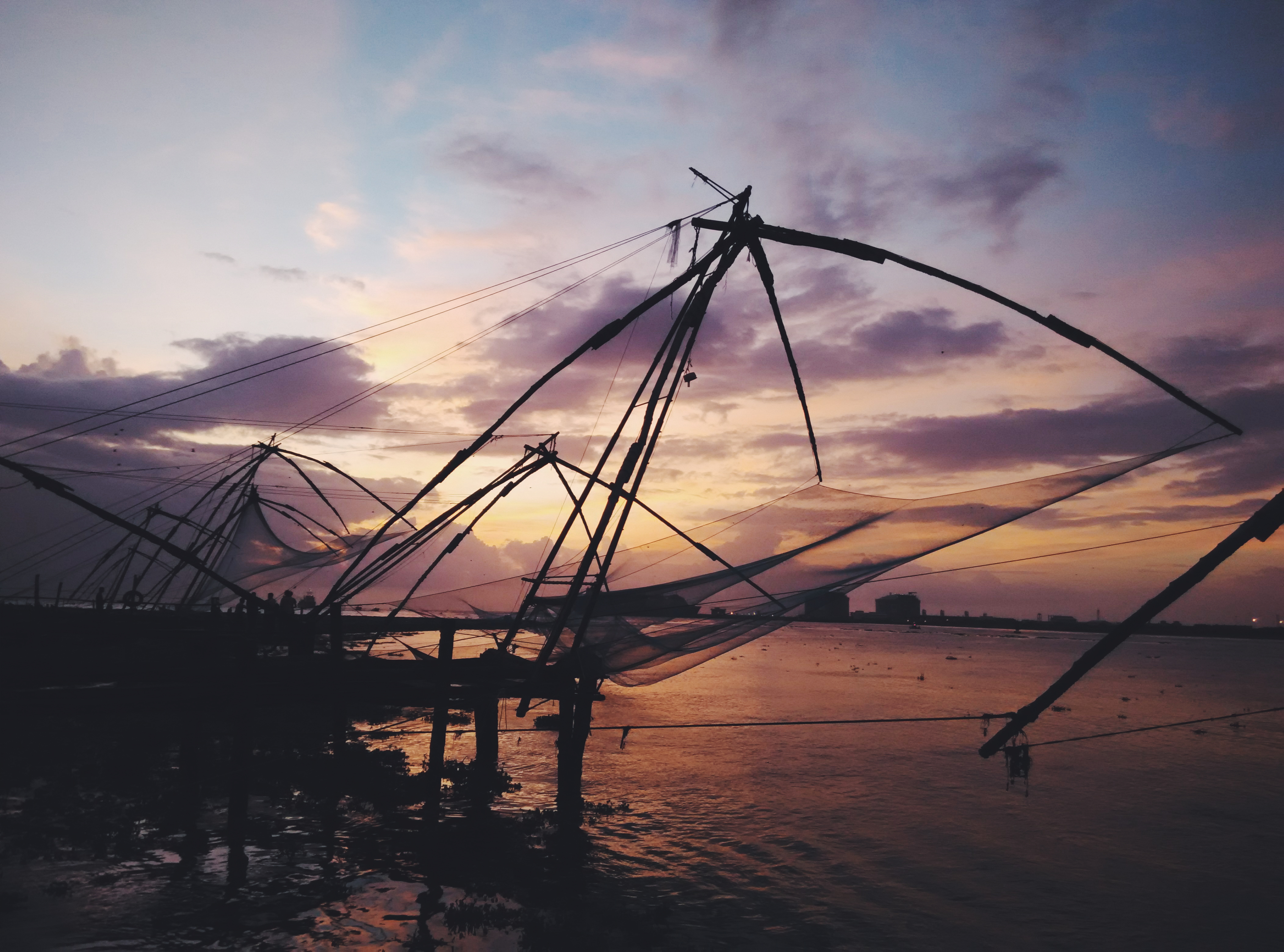
Golden hour at the line of fishing nets along Fort Kochi beach, Kerala, India. PHOTO: Rosanna

Golden hour at the line of fishing nets along Fort Kochi beach, Kerala, India. PHOTO: Rosanna

Are you a traveler or a tourist? Yes, both mean different things. A traveler – unhurried, lacks the “need” to see/do things, explores beyond the ‘must’ eat, visit lists. A tourist – one for order, one who settles for a “simplified ABC version of the globe“. Highly subjective definitions, yes. Disputable, too. But it easily makes you and I a traveler every single day, at every other place. It makes me a traveler in my own land, in my own time. Friend to tourists and wayfarers, a commonplace storyteller, a forever traveler.

Continue reading

When Stories Travel the World

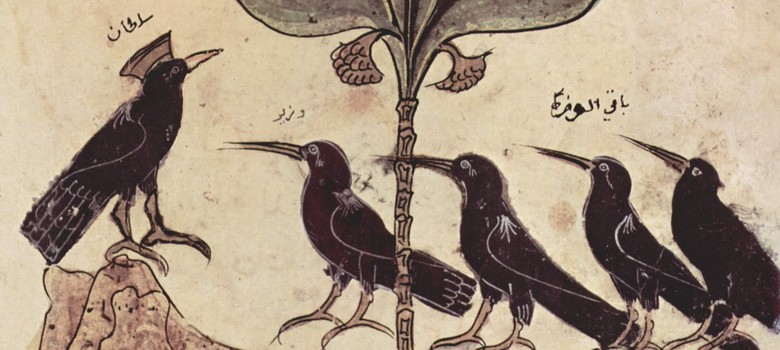
Few books have been narrated, written, re-written, translated and adapted as much as Panchatantra, the collection of tales of wisdom. PHOTO: Scroll

Few books have been narrated, written, re-written, translated and adapted as much as Panchatantra, the collection of tales of wisdom. PHOTO: Scroll

For more than two and a half millennia, the Panchatantra tales have regaled children and adults alike with a moral at the end of every story. Some believe that they are as old as the Rig Veda. There is also another story about these fables. According to it, these are stories Shiva told his consort Parvati. The present series is based on the Sanskrit original.

A king, worried that his three sons are without the wisdom to live in a world of wile and guile, asks a learned man called Vishnu Sharman to teach them the ways of the world. Since his wards are dimwits, Vishnu Sharman decides to pass on wisdom to them in the form of stories. In these stories, he makes animals speak like human beings. Panchatantra is a collection of attractively told stories about the five ways that help the human being succeed in life. Pancha means five and tantra means ways or strategies or principles. Addressed to the king’s children, the stories are primarily about statecraft and are popular throughout the world. The five strategies are: First Strategy: The Loss of FriendsSecond Strategy: Gaining FriendsThird Strategy: Of Crows and OwlsFourth Strategy: Loss of Gains and Fifth Strategy: Imprudence.

Continue reading

4,000 Years of Shared History

The African baobab, though, is most widely distributed both in its home continent and in the neo-tropics where enslaved Africans were brought to work. PHOTO: Gavin Evans

The African baobab, though, is most widely distributed both in its home continent and in the neo-tropics where enslaved Africans were brought to work. PHOTO: Gavin Evans

The Baobab tree is a native African tree with numerous valuable advantages including food, shelter, clothing, medicines, hunting, fishing, water storage, etc. It is considered sacred and immortal and its species is as old as 5000 years.And some of this is heritage is shared with India as well.
In the French novella The Little Prince, the titular prince comes from a very small asteroid planet called B612 where soil is full of baobab seeds. He tells the author that if left to grow, the baobabs would become so numerous and huge that they could make the little planet explode.On Earth, though, baobabs are quite the opposite. Anyone living in Africa where baobabs grow to enormous sizes would be able to tell you about the numerous benefits the trees provide for humans and animals.They would probably describe the marvellous generosity of its trunk and its hospitality to many creatures, and extol the hardy and light fruit pod with its deliciously powdery pulp and nutritious seeds that remain fresh and edible over long periods of time.
But there is a mystery to baobabs, as they are also found in India. How did they get there?

Continue reading

When Temples Teach About Forests

Traditional temple gardens, called Nandavanam, are strewn along the banks of the river Tamaraparani that originates in the Western Ghats, India. Each is attached to one of the 150-odd temples in the region, some as old as 1,000 years. PHOTO: Scroll

Traditional temple gardens, called Nandavanam, are strewn along the banks of the river Tamaraparani that originates in the Western Ghats, India. Each is attached to one of the 150-odd temples in the region, some as old as 1,000 years. PHOTO: Scroll

Sacred texts are guides to living while temples and the religious community teach a thing or two about what has been and what will be. But do temple gardens move beyond their aesthetic value and stand for something greater? Yes, their valuable insights into living ecosystems.

Some of these old surviving forest patches are invaluable when it comes to shining a light on what a forest might have been like in the area several thousand years ago, like a relic to an ancient civilisation. Considering the Indian government’s rapid march towards creating new forests to combat deforestation, sacred groves, their histories and regeneration can be a blueprint to such plans. “In short, one could say sacred groves provide a small window into an ecosystem’s past,” said Osuri. “They might even provide a source population and a reference library.”

Continue reading

India and the Malay Literary Tradition

Caritra Rama, in romanised Malay with many Javanese elements, copied at Surabaya in February 1812. PHOTO: British Library, MSS Malay D 7, f. 5r (detail).

Caritra Rama, in romanised Malay with many Javanese elements, copied at Surabaya in February 1812. PHOTO: British Library, MSS Malay D 7, f. 5r (detail).

The epics of Ramayana and Mahabharata find their meaning and origin on Indian soil but their reach goes beyond the subcontinent. And the British Library’s archives find evidences of these in Malay literary traditions.

The great Indian epics the Ramayana and Mahabharata were known throughout Southeast Asia, but it was the Ramayana that most profoundly influenced Malay literary tradition. One of the oldest Malay manuscripts in a British collection is a copy of the Hikayat Seri Rama in the Bodleian Library, Oxford, which bears the ownership inscription of Archbishop Laud dated 1633. The British Library holds a manuscript of Caritra Rama, “The story of Ram”, in romanised Malay, which was copied in Surabaya in 1812.

Continue reading