Keeping A Family Business Busy, Moving Into The Future While Preserving The Past

09calabria3-master675

Camillo Sirianni, a third-generation family business that began as a mechanized carpentry company in 1909, has overcome the isolation of its hometown to become a leading manufacturer of school furniture. Credit Gianni Cipriano for The New York Times

The EU, like all governance systems and especially relatively young ones, had its shortcomings; but it also had plenty of visionary good that we continue to admire:

Internet Throws Lifeline to Family Businesses in Small Town in Italy’s South

By

SOVERIA MANNELLI, Italy — Mario Caligiuri can still recall the night that may be credited with changing the fortunes of Soveria Mannelli.

It was New Year’s Eve at the turn of the millennium, and as mayor he dashed off an email to the authorities in Rome seeking an audience to explain his initiative to connect his struggling mountaintop town of about 3,000 inhabitants to the internet. Continue reading

Recycling Thermal Erstwhile-Waste

00wit_paris-thermal-master768-v3

Illustration by Tamara Shopsin; Photos by All for You, Mrnok, via shutterstock

We appreciate that the City of Lights keeps brightening our future, as well as their own:

If the Pool Is Warm in Paris, Thank the Washing Machine

By

What do washing the dishes and uploading pictures to Facebook have in common? Continue reading

How Much Energy Does A Bicycle Produce?

We had been wondering this too, we admit:

An NPR listener (with what may be the best Twitter handle ever — Booky McReaderpants) inquired whether a home can be powered by bicycle-powered generator.

It’s an interesting issue about energy and the modern world. And the short answer comes from just running the numbers.

A typical house in the U.S. uses about 1,000 kilowatt-hours of energy in a month. So — to Booky McReaderpants’ question — could you generate that much power all by yourself on stationary bike?

No.

Nope.

Not even close. Continue reading

App For Food Waste Reduction

‘A love for food and a distaste for waste’: Iseult Ward (left) and Aoibheann O’Brien in the FoodCloud warehouse in Dublin. Photograph: Mark Nixon for the Observer

‘A love for food and a distaste for waste’: Iseult Ward (left) and Aoibheann O’Brien in the FoodCloud warehouse in Dublin.
Photograph: Mark Nixon for the Observer

Thanks to the Guardian for their coverage of stories about reducing food waste:

FoodCloud: new app proves a nourishing idea for wasted food

The distribution of surplus food in Ireland is being transformed by FoodCloud. Killian Fox meets the duo behind the venture

Killian Fox

Within one community, there can be a business that’s throwing away perfectly good food and just around the corner there’s a charity that’s struggling to feed people in need,” says Iseult Ward of FoodCloud, a remarkable social enterprise which she co-founded with Aoibheann O’Brien in 2012. “We wanted to connect the two.” Continue reading

Sound-Recognition Software Advances

MIT-SoundRec-1_0.jpg

The researchers’ neural network was fed video from 26 terabytes of video data downloaded from the photo-sharing site Flickr. Researchers found the network can interpret natural sounds in terms of image categories. For instance, the network might determine that the sound of birdsong tends to be associated with forest scenes and pictures of trees, birds, birdhouses, and bird feeders. Image: Jose-Luis Olivares/MIT

From Larry Hardesty at the news office of the Massachusetts Institute of Technology an interesting article on machine-learning, which we thought was going to be about a new app for birders but it is a much broader finding:

Computer learns to recognize sounds by watching video

Machine-learning system doesn’t require costly hand-annotated data.

Watch Video

In recent years, computers have gotten remarkably good at recognizing speech and images: Think of the dictation software on most cellphones, or the algorithms that automatically identify people in photos posted to Facebook. Continue reading

Food Waste Approaching Zero (Goals Are Powerful)

dsc_0080-90-beea8781c209d5611d13eacd9f03985d6f1a805d-s1100-c85

Junior Herbert, a volunteer with Olio, collects leftovers from vendors at London’s Camden Market. London has become a hub for apps and small-scale businesses that let restaurants and food vendors share leftovers with the public for free, and otherwise reduce the amount of edibles they toss. Maanvi Singh for NPR

Green entrepreneurship is alive and well in London (thanks to National Public Radio, USA, and its program the salt for this story):

Eat It, Don’t Leave It: How London Became A Leader In Anti-Food Waste

MAANVI SINGH

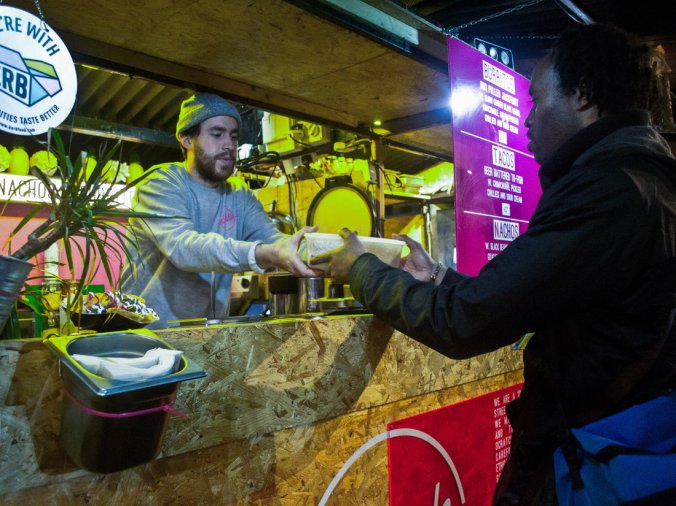
It’s around 6 o’clock on a Sunday evening, and Anne-Charlotte Mornington is running around the food market in London’s super-hip Camden neighborhood with a rolling suitcase and a giant tarp bag filled with empty tupperware boxes. She’s going around from stall to stall, asking for leftovers.

Mornington works for the food-sharing app Olio. “If ever you have anything that you can’t sell tomorrow but it’s still edible,” she explains to the vendors, “I’ll take it and make sure that it’s eaten.” Continue reading

Renewable Energy Outlook

light-bulbs2.jpg

World electricity production going from black to green

In a time of troubling headlines, the more promising headlines can get lost, but they are there. At least with regard to renewable energy. Click the image above to read the summary of this book at Anthropocene or the image below to go to the source:

MTrenew2016.jpgThe rapid spread of renewable energy is a bright spot in the global energy transition towards a low carbon economy. Despite lower fossil fuel prices, renewable power expanded at its fastest-ever rate in 2015, thanks to supportive government policies and sharp cost reductions. Continue reading

Dutch Methane Capture

2711

Agriculture produces about 10% of the Netherlands’ greenhouse gas emissions. A new project will help capture methane emissions from Dutch dairy farming. Photograph: Julian Stratenschulte/EPA

Thanks to the Guardian for this:

Poo power: Dutch dairy industry launches €150m biogas project

Will a scheme to turn cow manure into biogas help the Netherlands lose its reputation as the ‘bad guy’ of Europe when it comes to agricultural emissions?

The air smells fruity, slightly alcoholic. Against the strong hum of machinery, 175 cows are eating hay. As their dung drops to the slatted floor, a machine sweeps it through and it runs underneath the barn to a futuristic dome outside. Continue reading

Hello Anthropocene

screen-shot-2016-10-15-at-10-47-32-am

We have been looking forward to seeing you:

We are a digital, print, and live magazine in which the world’s most creative writers, designers, scientists, and entrepreneurs explore how we can create a sustainable human age we actually want to live in.

Sundrop Farms, Harnessing Seawater & Solar

screen-shot-2016-10-11-at-2-26-28-pm

Thanks to EcoWatch for this:

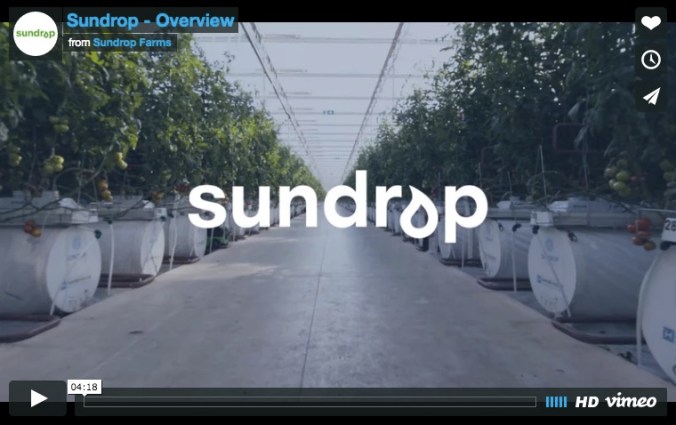
World’s First Farm to Use Solar Power and Seawater Opens in Australia

Sundrop Farms, a tomato production facility that is the first agricultural system of its kind in the world, celebrated its grand opening in Port Augusta, South Australia, Thursday.

Continue reading

Kite Power

5911

Bill Hampton, chief executive of Kite Power Solutions. Photograph: Sarah Lee for the Guardian


Kite power to take flight in Scotland next year

Kite Power Solutions plans to open UK’s first kite power plant and predicts the technology could global ease energy costs

Continue reading

Coffee’s Potentially Powerful Afterlife

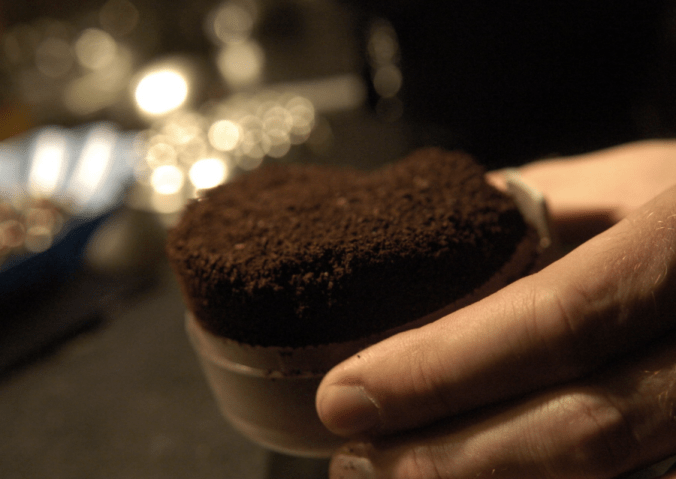
Researchers are experimenting with using used coffee grounds to filter pollutants out of water. Credit RJ Sangosti/The Denver Post via Getty Images

Researchers are experimenting with using used coffee grounds to filter pollutants out of water. Credit RJ Sangosti/The Denver Post via Getty Images

Coffee lovers that we are, it’s amazing that we almost missed this piece of news…

Each year, coffee manufacturers, restaurants, cafes and home brewers worldwide produce about six billion tons of coffee waste… If not rotting in a dump or fertilizing a garden, the grounds end up in animal feed and biofuels.

But researchers in Italy have found a new home for the stinky old coffee bits — by infusing them into a porous foam that removes heavy metals from polluted water, according to a study published this month in ACS Sustainable Chemistry and Engineering.

“We use a lot of coffee here in Italy,” said Despina Fragouli, the author of the study and a materials scientist at the Istituto Italiano di Tecnologia. She and her team develop new compounds from agricultural waste — like turning cacao husks into a material for preserving and packaging food.

Naturally, they wondered “What about coffee?” Continue reading

Coal Mining, Climate Change & Entrepreneurial Conservation

coal-jp1-superjumbo

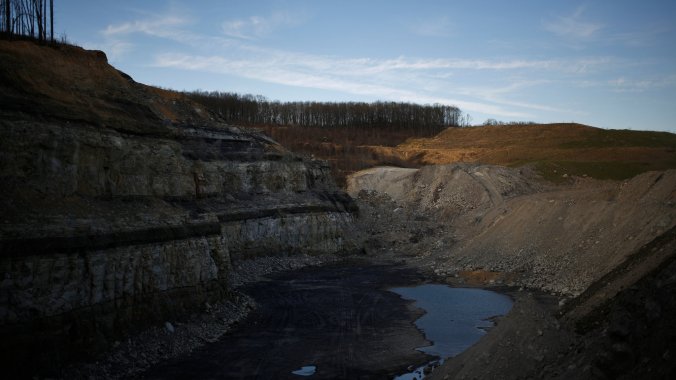
Reclamation crews fill in rock highwalls like this one, creating flat land that Tom Clarke intends to reforest as a way to trap and hold carbon dioxide. Credit Luke Sharrett for The New York Times

We had to read it to believe it:

A Curious Plan to Fight Climate Change: Buy Mines, Sell Coal

Tom Clarke, a nursing home owner, concocted a strategy to cut carbon emissions by gaining control of millions of tons of coal reserves and multiple mines.

FAIRVIEW, W.Va. — The coal was piled about as high as it could go, spilling down to the railroad tracks and towering over the elevator shaft. A yellow bulldozer pushed the mound to make room for more. From a distance on this rainy day, the black heap looked like a giant whale about to swallow the mine whole.

The word underground was that Federal mine No. 2 would soon have to close. It was early April, and the mine was running out of storage space. There were not enough buyers for all the coal. Continue reading

If You Happen to be in Cincinnati

cincyatnight

If you happen to be (or work) in Cincinnati, you will likely notice that the city is setting precedent as one of the “greenest,” most innovative cities in the US. According to an article published on Triple Pundit, the city is one of the fastest growing centers for technology innovation and it is employing that expansion to propel its 60 sustainability initiatives as outlined in the Green Cincinnati Plan, which covers a whole spectrum of topics from renewable energy, to transportation, to food waste.

“In addition to benefiting the environment, our initiatives must make economic sense (save money, create jobs) and improve quality of life for residents (improve public health, mobility, connectedness)” explained Ollie Kroner, the Sustainability Coordinator for the City of Cincinnati.

Continue reading

Wildlife Crime Challenge Winners Announced

From wildlifecrimetech.org

From wildlifecrimetech.org

Back in July we shared a story on turtle egg poaching that was part of the Wildlife Crime Tech Challenge, created by USAID with the support of the Smithsonian Institution, the National Geographic Society, and TRAFFIC. The company with the fake turtle egg idea from that article was one of the sixteen winners of the competition, but a grand prize was announced for the four “most creative and impactful” ideas offered out of those winners. The four grand prize winners were announced this weekend at the  World Conservation Congress of the International Union for Conservation of Nature in Honolulu, Hawaii. Christine Dell’Amore reports:

Every year about 10 million aquarium fish pass through United States ports, many on their way to new homes as family pets. But first, federal inspectors must leaf through mountains of paperwork on the animals, which are shipped from more than 40 countries around the world. “Until recently, the [inspectors] didn’t even have wireless access in the warehouses,” says Michael Tlusty, director of ocean sustainability and science at the New England Aquarium. Continue reading

Interview with Creator of Segway and More Important Technologies

Dean Kamen. Credit: DEKA Research

It is a somewhat morbid urban legend that the inventor of the Segway drove off a cliff in a fatal freak accident, but is founded in some truth: the man who purchased the company from inventor/entrepreneur Dean Kamen did indeed pass away in such a manner, a year after acquiring the tech manufacturer and nine years after the creation of the two-wheeled transportation tool. Mr. Kamen being alive and well, with hundreds of patents and plenty of ideas for inventions that particularly help in the medical world, spoke with Chau Tu from Science Friday about his company DEKA Research and Development and his history of prolific invention:

How did you first get interested in engineering?
I think I got started in a much more unusual way than most people I know. I sort of got into it as a kid, because I wanted to make things that weren’t available at the time, and in order to make them, I had to learn some engineering. I learned a little bit of electronics, I learned a little bit about mechanics, and I learned a little bit about how to make things and run machines—a lathe and a mill and a machine shop. I did that long before I academically studied any engineering or math or physics.

When I was in college, I had an older brother in med school who was a pediatric hematologist, and he needed ways to deliver very, very tiny amounts of drugs to very, very tiny babies. The equipment in the hospital was pretty much made for adults. So he asked if I could find a way to make a drug delivery system do what he needed. That was one of my first businesses and projects. [This was the AutoSyringe.]

Continue reading

Novel and Efficient Mosquito Control

The predator cues emitted by the Backswimmer, a mosquito larvae predator, trigger a stress response in the mosquitoes, which impairs their immune system.
Photo © E. Van Herk

Two weeks ago we saw a chemically-baited, solar-powered trap for mosquitos implemented in Kenya. New research – conducted only in the laboratory so far – has shown the potential for another chemical cocktail to be used in a very different way for mosquito control, hopefully in a manner that can reduce quantities of pesticide applied in eradication efforts. From the EurekAlert press release by the Belgian University of Leuven:

Existing strategies for mosquito control often involve the use of pesticides that harm the environment. These pesticides are increasingly less effective as well, as insects can become resistant to existing products relatively quickly.

Biopesticides are a possible alternative. The most commonly used biological pesticide is the Bacillus thuringiensis israelensis (Bti) bacteria. Unfortunately, mosquitoes are already developing a resistance to this pesticide as well. This means we have to keep increasing the dose of Bti to kill mosquitoes, so that this biological substance, too, is beginning to harm the environment.

Continue reading

A Milky Package

milkplastic

Source: American Chemical Society

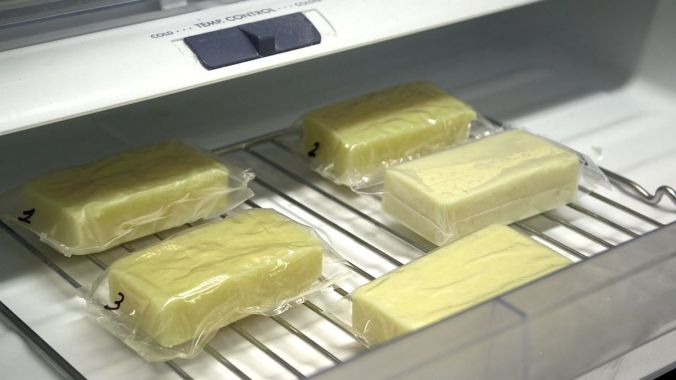
On numerous occasions we have written about the need to reduce consumption of plastics and the need for alternative, sustainable food packaging. Fortunately, researchers have developed a food packaging that is much better at keeping food fresh than regular plastics – it’s also biodegradable and edible. Yes, you read correctly, edible! This new packaging is made of casein from milk proteins, which are clear and fairly pliable, and has little flavor. This material has other unique applications  in addition to being used as plastic pouches and cling-style wrap. Continue reading

In the Future, Windows May Be Made of Wood

CREDIT: UNIVERSITY OF MARYLAND AND ADVANCED ENERGY MATERIALS

It seems too weird to be true, but wood can be bleached and then soaked in epoxy to create a material not quite as transparent as glass, but which lets in plenty of non-glare light and insulates far better against heat. Scientists at the University of Maryland have patented the technology and are studying its applications in building for the future. One interesting feature of the wooden window is that it directs the diffused sunlight in the same direction regardless of the angle at which it enters the panel, which, as the lead author Tian Li says, “means your cat would not have to get up out of its nice patch of sunlight every few minutes and move over. The sunlight would stay in the same place. Also, the room would be more equally lighted at all times.” Sounds great!

Continue reading

A Portable Power Plant

estream-portable-hydro-power-plant-blades-889x593

Source: Enomad.com

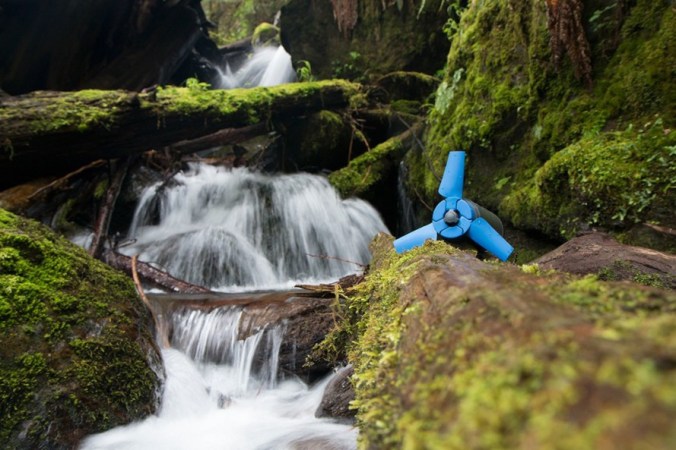
I believe I can confidently say that all of us at some point during a nature outing have run out of battery power on our cell phone or camera just at the moment we were about to capture a magnificent shot of a cool animal or a picturesque landscape. There are plenty of portable battery chargers that can spare us from those despairing occurrences, but what about one that uses a renewable energy source to charge? I bet you’re guessing it’s solar powered, but that would be too ordinary for the developers at Enomad. They have created a portable hydroelectric generator called Estream that can fit easily into a travel pack. The tube-like device has three turbines which rotate when placed or dragged underwater and the energy created from the rotating turbines gets stored in the battery attached. The battery takes about 4.5 hours to charge, and can power up a maximum of three smartphones, GoPros, or even tablet PCs.

Continue reading