Biolighting: A New Alternative for Light

icone_v7qrqw

Glowee.com

In the developed world, light and electricity go hand in hand. But what if there was a way to produce light without electricity? That is the question Glowee, a biolighting living system, is striving to resolve. Glowee is a biological source of light that relies on the natural properties of marine microorganisms, specifically, the genetic coding for bioluminescence. The benefit to this alternative lighting is that it emits very low light pollution and CO₂.

To understand this new development, Continue reading

Farm-to-Car Research by Ford Motor Co.

Photo of an agave plant by Stan Shebs via WikiMedia Commons

Plant-based plastics and the circular economy are both concepts that we like but have not seen enough of since their introduction into the discourse of sustainability and the collective fight against climate change. Below, Lauren Hepler from GreenBiz reports on Ford’s continued research in “farm-to-car” materials like soy-based foam and car parts reinforced by castor oil byproducts, rice husks, and other recycled waste, but we can’t forget that despite the carbon and petroleum saved by these changes, the use of gasoline as fuel is still the biggest problem:

With thick, spiky leaves that can grow up to 7 feet tall, so-called “blue agave” is a hearty plant that grows in high-altitude desert climates. The succulent’s claim to fame: being the essential ingredient in authentic Mexican tequila.

Luckily for distillers such as Jose Cuervo, agave grows well when cultivated in arid regions such as Southern Mexico. Still, with a processing volume of 200-300 tons per day, the company is often left with considerable waste from the 90-plus-pound plants — which is exactly what appealed to the company’s unlikely new business partner.

Continue reading

New Hybrid Bike Concept from Schaeffler

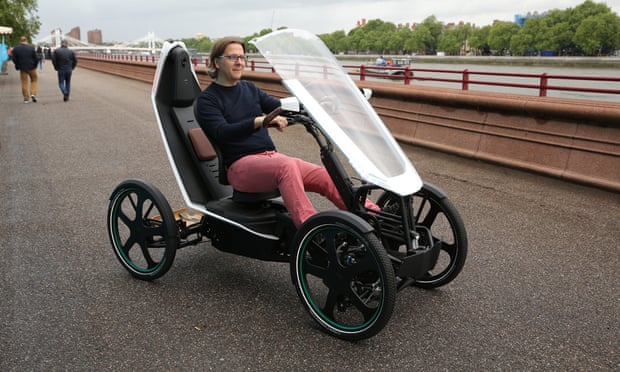
Damian Carrington testing the Schaeffler Bio-Hybrid. Photograph: Schaeffler

We like bikes, including fresh designs or materials for them, and with news from Paris that vehicles built before 1997 will no longer be allowed in the city during weekdays, having more vehicles like this concept design could be useful for commuters looking for a change. Damian Carrington reports for The Guardian:

I’m sitting in a cross between an electric-assisted bicycle and an electric car that looks like a cool golf buggy.

The model I am in is also the only one in the world and cost a lot of money to build. So no pressure as I take this concept vehicle for my first spin. The Schaeffler Bio-Hybrid looks hi-tech, but luckily it is very easy to drive. Or do I mean ride?

Continue reading

Floating Dairy Farm Planned in Netherlands

Illustration of proposed floating farm by Beladon.

We’ve written about floating solar panels before, and created a floating fence at Xandari Harbour to keep out water hyacinth, but there are plans in Rotterdam for a floating cow farm that will process milk and yogurt, according to Senay Boztas, writing for the Guardian:

Do cows get seasick? It’s not a question farmers often ask, except in the Dutch city of Rotterdam where a team of developers plans to build a floating dairy.

“They won’t here,” says Minke van Wingerden of Beladon, a company involved with water-based projects from a luxury hotel to this floating farm proposed for Rotterdam harbour. “In Friesland, where I come from, sometimes they bring cows from one place to another on a small barge,” van Wingerden recalls. “[The floating farm] will be very stable. When you are on a cruise ship, you aren’t seasick.”

Continue reading

Aviation & Renewable Resource Milestone

ap_16175288680698_custom-0c6b67df90bdb4e2069afde43ff22e60a5cc62cd-s1400-c85

Solar Impulse 2, piloted by Swiss pilot Bertrand Piccard, prepares to land in Seville, Spain, on Thursday. Jean Revillard/AP

In case you missed it, this is awesome, and worth a quick read (thanks to NPR, USA):

‘Beautiful Flight’ Across The Atlantic Is Major Milestone For Solar Plane

After 71 hours and 8 minutes of flight time crossing the Atlantic, Solar Impulse 2 has touched down in Seville, Spain. It’s a major step toward the team’s goal of circumnavigating the globe using only the sun’s power.

The end of this leg means they’ve now completed 90 percent of that journey.

As The Two-Way has reported, the single-seater plane took off from New York’s John F. Kennedy International Airport early Monday with pilot Bertrand Piccard at the controls. Continue reading

Changing Our Eating Habits

impossible-foods-6_edited_custom-7dc5fbab4da8c072dcd7f800ee14c96766bb0f58-s1400-c85

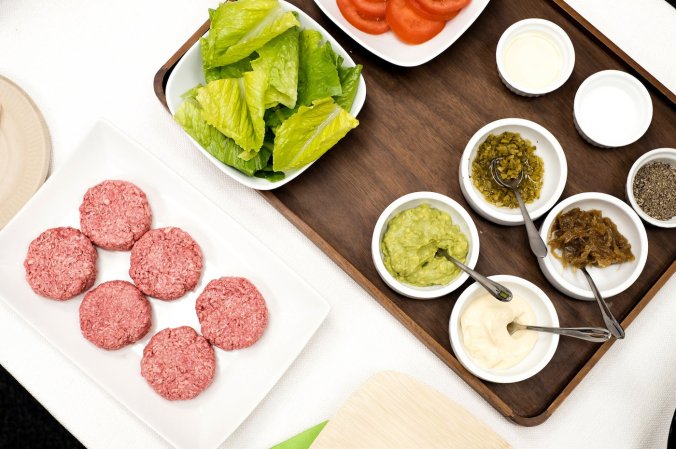
Silicon Valley-based Impossible Foods has taken a high-tech approach to creating a plant-based burger that smells and tastes like real meat. At the company’s headquarters in Redwood City, Calif., chef Traci Des Jardins served the Impossible Burger (pictured uncooked) with vegan mayo, Dijon mustard, mashed avocado, caramelized onions, chopped cornichon, tomato and lettuce on a pretzel bun. Maggie Carson Jurow

Full disclosure first: we operate restaurants that serve meat. It is always the best quality meat we can source, and best includes the most humane and most ecologically sensitive growing conditions. But still, it is meat, and meat is problematic. So, we tread lightly when we speak about our behaving responsibly, and try to minimize judgementalism.

When we get reminders of the importance of reducing meat consumption we know it is true, but we still ensure all our guests are able to get, within reason, the best of what they want food-wise.  I spent more time, and consumed more calories than I care to count, taste-testing for the new menus at three hotel restaurants in the last two years; that is my own sin to bear, and I am in penance mode now, trust me.

So, when I see a good feature story related to vegetarianism, or to vegetarian innovations, I am all in. Here is one from the Salt show on National Public Radio (USA) and I look forward to taste-testing it:

This summer, diners in New York, San Francisco and Los Angeles will get their hands on a hamburger that has been five years in the making.

The burger looks, tastes and smells like beef — except it’s made entirely from plants. It sizzles on the grill and even browns and oozes fat when it cooks. It’s the brainchild of former Stanford biochemist Patrick Brown and his research team at Northern California-based Impossible Foods. Continue reading

Biomimicry Institute Ideas

Illustration by Franz Eugen Köhler via Wikimedia

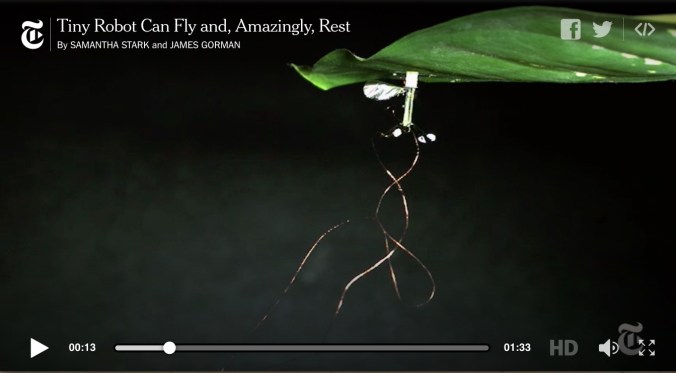
Just a few days ago we shared a piece on biomimicry, and two weeks before that, this little drone showed the advantage of copying flying animals’ ability to perch. Today, via GreenBiz.com, we heard from the Biomimicry Institute about three ways that asking nature “how do you make energy?” can potentially help industries like construction, transportation, and energy:

Humans are becoming increasingly dependent on our ability to connect via technology and easily access the energy grid. Practically every facet of our lives is somehow plugged in and powered up. Yet as our demand for power increases, so must the innovative and life-friendly ways we access and use that energy.

Here’s a light bulb idea: how does nature make energy? For the billions of species that have existed on planet earth, humans are the only ones who have placed such a premium on unsustainable and non-local sources of energy. How then, does nature balance its energy books while producing relatively little energy waste?

Continue reading

Bionic Botanic Alchemy

The device uses solar electricity from a photovoltaic panel to power the chemistry that splits water into oxygen and hydrogen, then adds pre-starved microbes to feed on the hydrogen and convert CO2 in the air into alcohol fuels. Credit: Des_Callaghan via Wikimedia Commons

The device uses solar electricity from a photovoltaic panel to power the chemistry that splits water into oxygen and hydrogen, then adds pre-starved microbes to feed on the hydrogen and convert CO2 in the air into alcohol fuels. Credit: Des_Callaghan via Wikimedia Commons

Renewable energy is manifested in multiple forms, utilizing all the classical elements. All the better when innovation brings things full circle in this form of biomimicry.

A tree’s leaf, a blade of grass, a single algal cell: all make fuel from the simple combination of water, sunlight and carbon dioxide through the miracle of photosynthesis. Now scientists say they have replicated—and improved—that trick by combining chemistry and biology in a “bionic” leaf.

Chemist Daniel Nocera of Harvard University and his team joined forces with synthetic biologist Pamela Silver of Harvard Medical School and her team to craft a kind of living battery, which they call a bionic leaf for its melding of biology and technology. The device uses solar electricity from a photovoltaic panel to power the chemistry that splits water into oxygen and hydrogen, then adds pre-starved microbes to feed on the hydrogen and convert CO2 in the air into alcohol fuels. The team’s first artificial photosynthesis device appeared in 2015—pumping out 216 milligrams of alcohol fuel per liter of water—but the nickel-molybdenum-zinc catalyst that made its water-splitting chemistry possible had the unfortunate side effect of poisoning the microbes… Continue reading

Support Edible Utensils, Reduce Plastic

Screen Shot 2016-05-31 at 8.52.42 AM

Click the image above to go to the video on this new company’s page at Kickstarter, and then scroll down if you want to pre-order items to support the mission:

Eat your utensil and prevent waste at its source! 

Bakeys is launching the world’s first edible cutlery line made of three flours: rice, wheat, and sorghum. Help us change the way we eat and think about waste!

And we understand how important it is to be able to provide delicious cutlery that can be eaten by anyone. We are already fully vegan, preservative free, trans fat free, dairy free and operate on principals of fair trade. We have put a focus on bringing up the following certifications within the following year: Continue reading

The Origins of E-Ink

Some of us contributors to the blog are Kindle users. We all have friends that are obstinate book-handlers and would never give up the feeling of rustling pages or the musty smell of yellowing paper, and we understand the appeal, but sometimes the convenience of having several books packed into one slim package is too much to give up. But one thing we’ve taken for granted is the relatively new technology of e-ink. How does it work? When was it invented? Chau Tu reports for Science Friday in an article from a few weeks ago:

When Amazon introduced its first Kindle back in 2007, it raved about the e-reader’s “crisp, high-resolution electronic paper display that looks and reads like real paper, even in bright sunlight.” The tablet did not use the LCD screens that most consumers saw on their laptops or TVs. “It reflects light like ordinary paper and uses no backlight, eliminating the eyestrain and glare associated with other electronic displays such as computer monitors or PDA screens,” Amazon boasted.

Continue reading

Better Packaging for the Ocean’s Sake

Over the years we have referenced Ecovative Designs before, as a mycological solution for styrofoam and way to reduce reliance on petrochemicals. Recently we learned about a new method of replacing plastics that doesn’t involve fungus–at least not directly. Using the byproducts of beer-making (which technically includes yeast, a fungus), the Saltwater Brewery partnered with WeBelievers to create edible six-pack rings for beer cans, as you can see in the video below:

Continue reading

Lionfish Initiative In Florida

tbfish1-master768.jpg

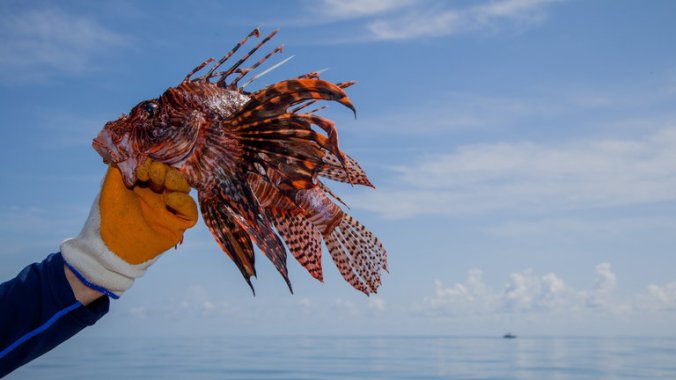
Capturing lionfish is typically done by divers with spears. Credit Angel Valentin for The New York Times

We never tire of hearing about new initiatives to eradicate this introduced species, and like the way the folks in Florida are thinking outside the box:

Florida Needs a Lionfish King or Queen. It Could Be You.

By

Ladies and gentlemen, behold an opportunity to become maritime royalty. The Florida Fish and Wildlife Conservation Commission is hosting the Lionfish Challenge, a statewide hunting competition intended to encourage divers to capture, kill and eat the beguiling beauties, which have been invading western Atlantic waters and gobbling up native species for at least two decades. The title of Lionfish King or Queen goes to whoever captures the most lionfish by Sept. Continue reading

Solar Thermal vs Photovoltaics

Photo © German Aerospace Center

Solar power is always on our radar, but we understand that storing the electricity from photovoltaics can be an issue. Today we are learning about a new solar technology for the first time, even though it revolves around something that we benefit from every day: the sun’s heat. Umair Irfan reports for Scientific American‘s ClimateWire section on this interesting idea being researched in Europe:

COLOGNE, Germany—At Germany’s aerospace agency, the next frontier is capturing the sun here on Earth and keeping it on tap.

In a 4-year-old glass and steel building near the Cologne-Bonn Airport, researchers at the German Aerospace Center (DLR), Germany’s equivalent of NASA, are working on new ways to produce more heat than light in order to smooth over intermittency, one of the biggest drawbacks of solar power on the grid.

Continue reading

Waddler Utility

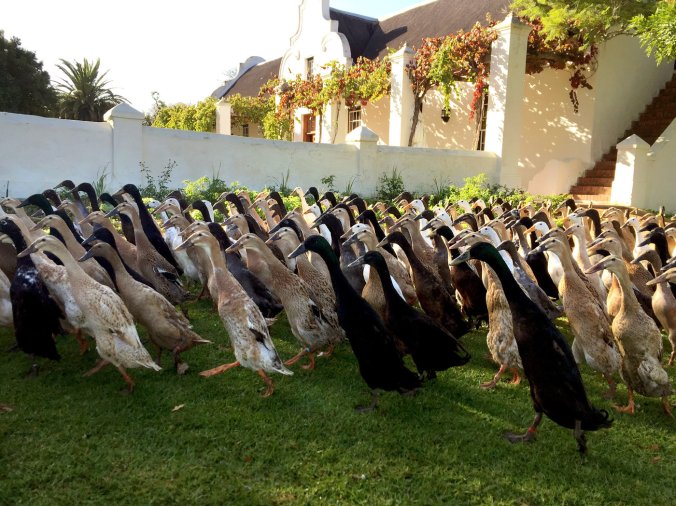
duck-parade_custom-581ea4c0b2ef8bc06e405fc310706495ca268162-s1400-c85

Indian runner ducks have been used in Asia for thousands of years to control pests. Now they’re used in a South African vineyard to eat snails that damage the vines. Sarah Birnbaum for NPR

We are pleased to know that birds from India have such enormous value in places outside India:

For This Vineyard, It’s Duck, Duck, Booze

On Vergenoegd Wine Estate in Stellenbosch, South Africa, about a thousand Indian runner ducks parade twice a day into a vineyard to rid it of pests. It’s a remarkably orderly scene.

Unlike your typical waddling duck, these ducks don’t sway back and forth. They run quickly in a straight line.

Every morning at 9:45 a.m., they emerge from a gate and zip around the gleaming white manor house – even sticking to a manicured gravel path. They run in formation. Their beaks all point in the same direction, their bodies all turn at the same time — like they’ve worked on the choreography beforehand.

The previous owner of the wine estate, John Faure, is a bird lover and brought them over from Asia. They have been at the estate for at least 30 years. Continue reading

Coffee Better Understood

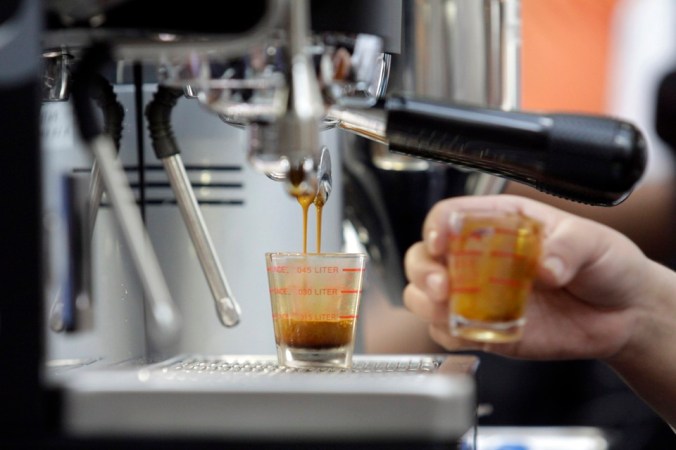
A competitor prepares coffee during the El Salvador National Barista Championship at a mall in San Salvador

STR New / Reuters

From the Atlantic, where some of (but not all) our favorite coffee stories have come from in the past, we have this new item to share:

Specialty Coffee’s Resident Scientist

A computational chemist is changing the way coffee makers think about water.

by Sarah Kollmorgen

Wherever he goes, Christopher H. Hendon brings a homemade supply of powdery white chemicals. Made from coral-reef care sets, the little bottles and plastic bags may raise some TSA eyebrows, but they serve a perfectly innocent purpose. The substances comprise his personal water filtration titration kit.

“Who travels with this much white powder?” Hendon says with a laugh. His duffel currently contains several compounds including calcium chloride, magnesium sulfate, and potassium bicarbonate. These mixtures help detect the invisible chemicals present in a glass of water, he explains. Using them, Hendon can determine how hard the water is in any geographical area, based on the minerals it contains. Continue reading

Re-Use That Amazing Phone

21techfix1-master675

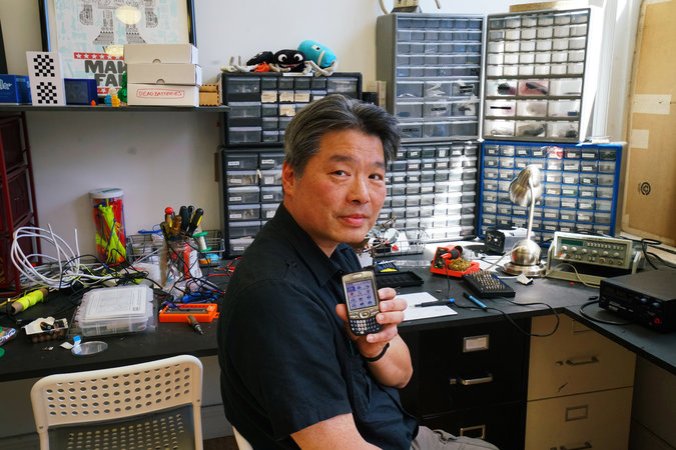
Vincent Lai with the Treo he rescued. “A phone can last for a very, very long time,” he said. CreditNicole Bengiveno/The New York Times

No one on our team is exempt from the temptation to have the latest, greatest whatever. But we have gotten into the habit of reminding each other it is not always necessary. Frequently not. Almost never, actually. We never tire of sharing, and hope you never tire of reading, new stories about re-use, recycle and up-cycle options in our every day lives:

Choosing to Skip the Upgrade and Care for the Gadget You’ve Got

By

Vincent Lai was working at a recycling facility in New York and sorting through a bin of used cellphones a few years ago when he dug up a Palm Treo, a smartphone that was discontinued last decade.

Mr. Lai, 49, tested the Treo and found it still worked. So he took the device home and made it his everyday mobile companion, much as one would adopt an abandoned animal on its way to being euthanized. Continue reading

Good News in Plastics

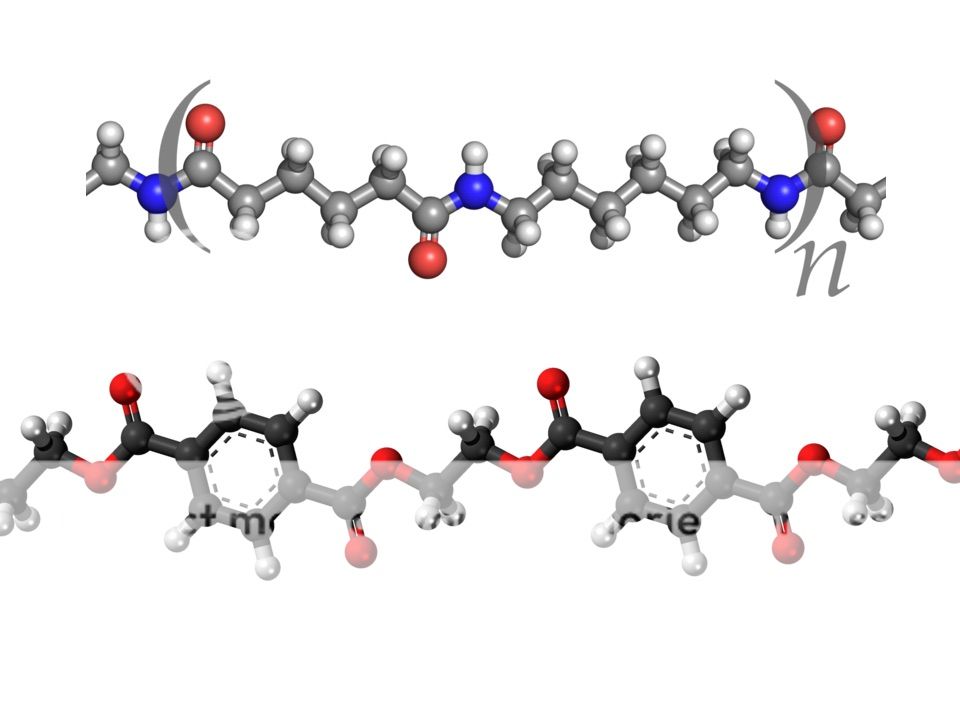
Compiled illustrations of a nylon chain above and PET chain below, both thermoplastic polymers, or simply put, types of plastic. Via WikiMedia, created by users YassineMrabet and Jynto, respectively.

There’s some cause to celebrate from a couple findings published recently in two journals, Nature and Animal Conservation, related to plastics, though of very different sorts. The first paper deals with a new method of plastic production using carbon dioxide and agricultural waste rather than petroleum as the raw input for PET plastic, and the second article studies the feasibility of introducing biodegradable fishing nets to replace nylon ones.

Continue reading

Enzyme Superheros

It sounds like the stuff of science fiction – but imagine the impact of a plastic eating bacterium! Thanks to Scientific American for posting this story.

A tiny microbe one day could devour the millions of metric tons of polyethylene terephthalate, or PET, that pile up in landfills each year. Researchers in Japan have discovered the world’s first PET-eating bacterium, a critter that uses PET as its major carbon and energy source.

Each year, plastic manufacturers pump out more than 45 million metric tons of PET to make water bottles, salad domes, peanut butter jars, and other products—all of which sport a stamp with the number one inside a recycle symbol.

PET is the most recycled plastic in the U.S., according to PETRA, the PET Resin Association. Continue reading

More On Wintergatan

Wintergatan

When we recently posted on this newfangled musical contraption we could not find any further information about it. Lo and behold, after a drought sometimes when it rains it pours. Today, National Public Radio (USA) has this:

The “Marble Machine” is a musical instrument by way of a Rube Goldberg contraption, the love child of a barrel organ, a kick drum, a vibraphone and a bass — all powered by hand-cranked gears and 2,000 steel marbles.

The machine was built by Swedish musician Martin Molin, who fronts the Swedish band Wintergartan… Continue reading