It looks old fashioned, but is definitely newfangled. We do not have anything particular to say about this. Just enjoy the odd mix of ingenuity, musicality and spectacle.
Innovation
Newer Clean Energy Use by Big Companies

At peak production, Intel’s new solar carport can carry half of the campus’ electricity demand. Photo by Intel via GreenBiz
Businesses are finally seeing the sense of clean energy, which we try to share about as much as possible when it comes to savings and renewables or alternative sources. Heather Clancy at GreenBiz reports on the use and investment of clean energy by several big US businesses, like GM with landfill gas, Intel with solar panels, and Google with renewable energy contracts:
Despite uncertainty surrounding the future of the Clean Power Plan and contractual nuances that make even the smallest project feel unnecessarily complex, big businesses seem more committed to renewable energy than ever.
“This time it’s not about fashion, it’s about real economics, about real business opportunity,” said economist Mark Kenber, CEO of the Climate Group, during a keynote interview at last week’s GreenBiz 16 conference in Scottsdale, Arizona.
Oregon, Trendsetter

Shepherdess Briana Murphy herds goats at the Portland International Airport in Portland, Oregon, as Mount Hood is seen in the background, April 17, 2015. In a city that loves its goats, the Portland International Airport now has a temporary herd. Forty goats and a llama started munching this week on invasive plants such as blackberries, thistle and Scotch broom near the PDX airfield. The llama’s job is to keep away predators like coyotes. Picture taken April 17, 2015. REUTERS/Steve Dipaola – RTX19KH0
The aroma seems like a small price to pay, under the circumstances, but we appreciate Oregon for trying this novel approach nonetheless:
Oregon city fires its grounds-keeping goats with ‘barnyard aroma’
A crew of goats brought in to devour invasive plants at a popular park in Oregon’s state capital, Salem, have been fired because they ate indiscriminately, cost nearly five times as much as human landscapers and smelled far worse, a city official said on Friday. Continue reading
Avant Guard

The guards at The Broad Museum in Los Angeles aren’t just here to protect the art — they’re also expected to engage and educate. They’re called visitor services associates, and they’ve gone through hours and hours of training to become ambassadors for contemporary art.
Ryan Miller/Capture Imaging/The Broad Art Foundation
I can easily spend hours wandering museum galleries – viewing Art, artifacts and people – it’s all fascinating. More likely than not every other room I’ll pass an ever present museum guards, usually efficient, sometimes friendly. Always in uniform. The directors of The Broad Museum in L.A. are viewing this important role in a new light. Dressed eclectically in black with red lanyard IDs, the VSAs (Visitor Service Associates) are well-trained crosses between guard and guide. Their knowledge and friendly delivery creates a concierge museum experience, which seems especially appropriate for a private collection museum.
Guard Sabrina Gizzo might easily be mistaken for a docent. She’s talking with some visitors about Thomas Struth’s huge color photograph of a crowd at a museum in Florence Italy. In the photo, tourists are dressed in summer clothes — shorts, T-shirts, caps, sneakers. Struth photographs the crowd facing us, looking up at something we can’t see. As Los Angeles visitors to The Broad study Struth’s photograph — a museum crowd looking at another museum crowd — one Broad visitor notices that a man in the photograph is wearing sunglasses clipped to the front of his shirt. Gizzo suggests that her guest take a very close look at the sunglasses.
Why? Turns out, if you look closely, a famous statue can be seen in the reflection of the man’s glasses: Michelangelo’s sculpture of David.
The History of Organic Design

Carl Aubock II [Austrian, 1900-1957] Ashtray, Model No. 3597, 1948. Ashtray Model No. 4736, 1947. PHOTO: CoExist
In the 1930s, the central belief of the organic movement was that furniture and architecture should reflect a harmony between people and nature. In furniture design, this meant natural materials like wood, and smooth, rounded forms. The bent plywood furniture of legendary French designer Jean Prouve came out of this period, as did Marcel Breuer and his laminated birch plywood armchair with a calfskin cushion. These designers prided themselves on being dedicated to their craft, and their pieces were painstakingly made and not easily reproduced. “They saw it as a unique work that refers to nature,” says Olshin. “These pieces tend to be unique one-of-a-kind studio work that’s not easily produced in mass quantities.”
On Food Waste
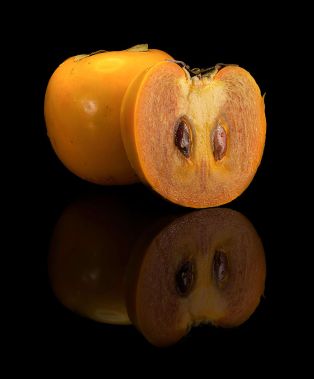
Oriental Persimmon by Rodrigo Argenton. Licensed under CC BY-SA 4.0 via Wikimedia Commons.
We’ve featured food waste here many times before, since it’s such a global and upsetting problem–an issue that one could call a “wicked problem” for its difficulty in solving, its myriad causes, and its changing nature. Several of our shared stories in just the last year, however, have offered some hope: a food truck chef in Denmark showed that expired or just-expiring products can still be consumed; another foodtrucker in the US helped develop a software to create a more sustainable kitchen by modeling what products are being over- or under-ordered; and two startups worked on different ways of drying food that would otherwise spoil, one because the fruit would go bad but could be dried and powdered, and the other because developing countries don’t always have appropriate storage or energy to refrigerate food, so they came up with a solar food-drier.
The common theme in these posts is the reiterated phrase: approximately one-third of all food produced around the world is wasted, representing about $1 trillion in losses every year. This week, two of our favorite magazines, Conservation (by University of Washington) and GreenBiz repeated these statistics and shared pieces of their own.
Hiking for E-mail

For six years, Mahabir Pun trekked long distances to check emails in Nepal. Until he brought the Internet home to his remote village. PHOTO: Hiking for Emails, Vimeo
In India, there exists this dwindling practice of writing letters to the Editor. Of publications. Most people write on current affairs, some write to highlight issues that range from a lack of streetlights to dissent. Some write in to commend actions, public campaigns. A handpicked bunch of these are published in a column titled Letters to the Editor. Mahabir Pun of a remote village in the mountainous country of Nepal wrote to BBC, asking for help to bring the Internet home.
Footstep by Footstep

This solar-powered football pitch in Lagos also uses kinetic energy generated by footballers playing. PHOTO: Edelman PR
There’s a host of ingenious solar projects impacting the developing world. Energy’s role in political, social, and economic development is being highlighted more than before and being energy-smart is the blueprint to a sustainable future. Clean energy is the way forward. And Lagos has an example. In the name of soccer.
Occasional Ideas: Misbehaving With Intent
 Ok, while the tiny habits idea was compelling 48 hours ago, and is already having its impact on me, the notion of a daily series posting ideas I have come across may be too ambitious for all concerned. Hence, occasional.
Richard Thaler was a professor when I arrived as a graduate student at Cornell University in 1988. He was, not surprisingly, awesome. But I had no real clue how much so, since it was all relative to my other professors who were also mostly awesome. In recent years it has become more verifiably clear, the scale of his awesomeness measured well by the popularity of his recent books. Also, awesome enough to make a cameo (in the scene at the casino table alongside Selena Gomez) in the great film The Big Short, which I also recommend. But for now, take advantage of this podcast: Continue reading
Rain Scents
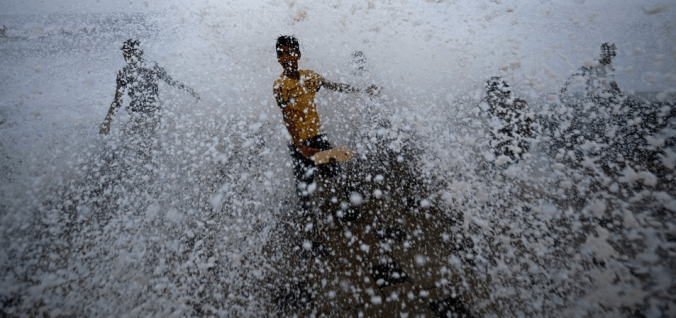
Vivek Prakash/Reuters
Smell is one of the most evocative of the five senses, allowing us to relive memories that span our entire lives. Scents from the kitchen make our mouths water. Scents from nature make us long to be outdoors. Considering that on average our bodies consist of 60% water, it isn’t surprising that we’re so attuned to the range of smells associated with H2O.
Many of the RAXA Collective team long for the refreshing monsoon rains in Kerala, never imagining that exhilaration could be captured in a bottle.
Once again we thank The Guardian for this intoxicating story.
Every storm blows in on a scent, or leaves one behind. The metallic zing that can fill the air before a summer thunderstorm is from ozone, a molecule formed from the interaction of electrical discharges—in this case from lightning—with oxygen molecules. Likewise, the familiar, musty odor that rises from streets and storm ponds during a deluge comes from a compound called geosmin. A byproduct of bacteria, geosmin is what gives beets their earthy flavor. Rain also picks up odors from the molecules it meets. So its essence can come off as differently as all the flowers on all the continents—rose-obvious, barely there like a carnation, fleeting as a whiff of orange blossom as your car speeds past the grove. It depends on the type of storm, the part of the world where it falls, and the subjective memory of the nose behind the sniff… Continue reading
Airports and Urban Farming

Katrina Ceguera tends JetBlue’s farm outside Terminal 5 at New York’s John F. Kennedy International Airport. PHOTO: Chelsea Brodsky /JetBlue
Airports are growing a ‘green’ conscience, and how! If Kochi in Kerala, India is home to the world’s first airport to be completely powered by solar energy, then the Galapagos airstrip is not far behind. Going off-grid is just one way to offset massive carbon footprints left behind by the use of fossil fuels. Another way might be to add a touch of green – like JetBlue did at the New York airport.
JetBlue was intent on growing potatoes and other produce at John F. Kennedy International Airport in New York. It took three years of jumping through hoops before the T5 Farm, named for its location outside Terminal 5, came to fruition in early October, the company says.
When the Sun Goes Down

Holding a solar-powered lamp, Soni Suresh, 20, and Suresh Kashyap, 22, celebrate their marriage ceremony in Uttar Pradesh, where 20 million households lack electricity. PHOTO: Nat Geo

A worker at a logging camp in Myanmar’s Bago region, where elephants have been used by loggers for centuries, sits atop his 11-year-old animal. Laborers in these camps have no electricity, so they use solar lanterns before sunrise. PHOTO: Nat Geo
About seven out of every 10 households in rural India have no access to electricity. Many of these households still use less efficient energy sources that are harmful to the environment, such as kerosene. Even in places where electricity is accessible, shortages are frequent and the supply is inconsistent. In such a scenario, solar lamps come as a blessing and are revolutionizing lives in the country and around the world.
PRASHANT MANDAL FLIPS ON A CANDY-BAR-SIZE LED LIGHT in the hut he shares with his wife and four children. Instantly hues of canary yellow and ocean blue—reflecting off the plastic tarps that serve as the family’s roof and walls—fill the cramped space where they sleep. He shuts down the solar unit that powers the light and unplugs it piece by piece, then carries it to a tent some 20 yards away, where he works as a chai wallah, selling sweet, milky tea to travelers on the desolate road in Madhotanda, a forested town near the northern border of India.
“My life is sad, but I have my mind to help me through it,” Mandal says, tapping the fraying cloth of his orange turban. “And this solar light helps me to keep my business open at night.”
Washing Hands to a Cleaner World

When Dr. Pawan found out about the unhygienic living conditions in Gadchiroli, Maharasthra, India, he created a hand-washing device in just Rs.35 (50 cents) that has been saving the lives of the villagers. – PHOTO: Better India
Clean care is safe care, says the World Health Organisation and follows it with a campaign on washing hands towards cleaner living and working conditions across the globe. And Dr. Pawan did his part too. By creating a hand-washing device that costs less than 50 cents, roping in children to keep the initiative going, and relying on elders for the device to adapted and adopted into the community.
In 2008, Dr. Pawan was one of the seven students selected for a two-year fellowship programme at Nirman’s SEARCH (Society for Education, Action and Research in Community Health), in Gadchiroli district, Maharashtra, India. The programme encourages students to work in areas affecting rural communities like water management and NRGA schemes, and being a physician, Dr. Pawan chose to work in the health sector. Living in the community, he realised that there were several diseases persisting in the village, those that could be prevented by merely drinking clean water or paying more attention to cleanliness. He promptly did a study that revealed that of the 64 families living in the village, only six families used soap for washing hands.
Her Job is To Keep Mars Clean
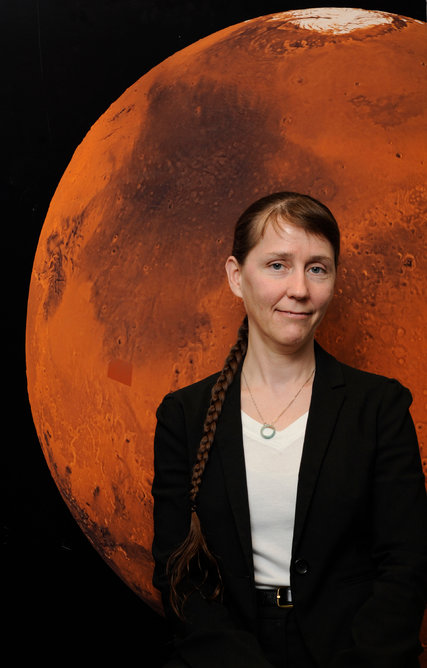
Catharine A. Conley, a NASA planetary protection officer. PHOTO: Paul E. Alers/NASA
You’ve heard of a myriad job profiles, but what do you think are the responsibilities of a planetary protection officer? This officer knows, and all her efforts are now focused on keeping micro-organisms and spores from Earth away from Mars.
At the National Aeronautics and Space Administration, Catharine A. Conley has a lofty job title: planetary protection officer. But with no extraterrestrial invasions on the horizon, Dr. Conley’s job is not so much protecting Earth from aliens as protecting other planets from Earth. Mars, in particular. “If we’re going to look for life on Mars, it would be really kind of lame to bring Earth life and find that instead,” Dr. Conley said.
The Prize for Energy Storage
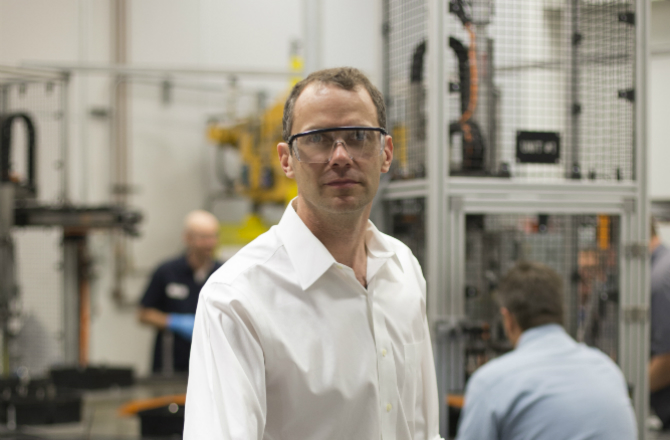
Jay Whitacre is the latest recipient of the prestigious $500,000 Lemelson-MIT Prize, which honors mid-career inventors who have also demonstrated a commitment to mentorship in science, technology, engineering and mathematics (STEM). PHOTO: LEMELSON-MIT PROGRAM
The Aqueous Hybrid Ion (AHI™) Batteries are based on a simple idea: in order to meet the challenges of the world’s growing energy needs and increase the use of renewable power, we need large-scale energy storage systems that are high performance, safe, sustainable and cost-effective. Jay Whitacre set out to solve this problem and discovered a simple and elegant solution that is a twist on a 200 year-old technology: saltwater batteries. Using abundant, nontoxic materials and modern low cost manufacturing techniques, the AHI batteries are now ready to take on the global energy storage challenge. And have also won Whitacre the prestigious $500,000 Lemelson-MIT Prize.
New York, Have a Sunny Day!

With New York packing so many buildings into a small area, the rooftops offer seemingly limitless potential to take homes off the grid. PHOTO: Business Insider
For the average homeowner, there’s more benefit to going solar than ever before. With the sun being a consistent source, of energy, those investing in photo-voltaic panels can be assured of seeing returns. There’s bound to be questions about feasibility, yes. About how much space is required, the type of structures involved, whom to contract for setup, etc.That’s where Mapdwell, a spin-off company from MIT that is creating incredibly detailed maps of the solar potential for each and every building in various cities, comes in.
“Solar energy has all this baggage, in a way. Solar panels have been out there for 30 to 40 years, but most homeowners still believe panels are “complicated, expensive, not-for-me kinds of things,” says CEO Eduardo Berlin, an architect and designer who is based in Cambridge, MA. “Solar is a real possibility for many people now, but somehow that got missed. It never got rebranded. The idea that you can put something on a roof and create energy from the sun, it’s pretty amazing.”
The Decision is To Bee

Researchers are using micro sensors to learn about the problems bees face. PHOTO: BBC
Around here, we understand the importance of bees. That explains the numerous posts on these winged creatures. If you must know right away, bees are guardians of the food chain and keepers of biodiversity, thanks to their super power of pollination. Precisely why it’s a cause for worry when we hear of their numbers dwindling. Now, an international group of scientists, beekeepers, farmers and technology companies is using cutting-edge technology to help find out why honey bee populations around the world are crashing.
Drawing Inspiration from Paper Folding
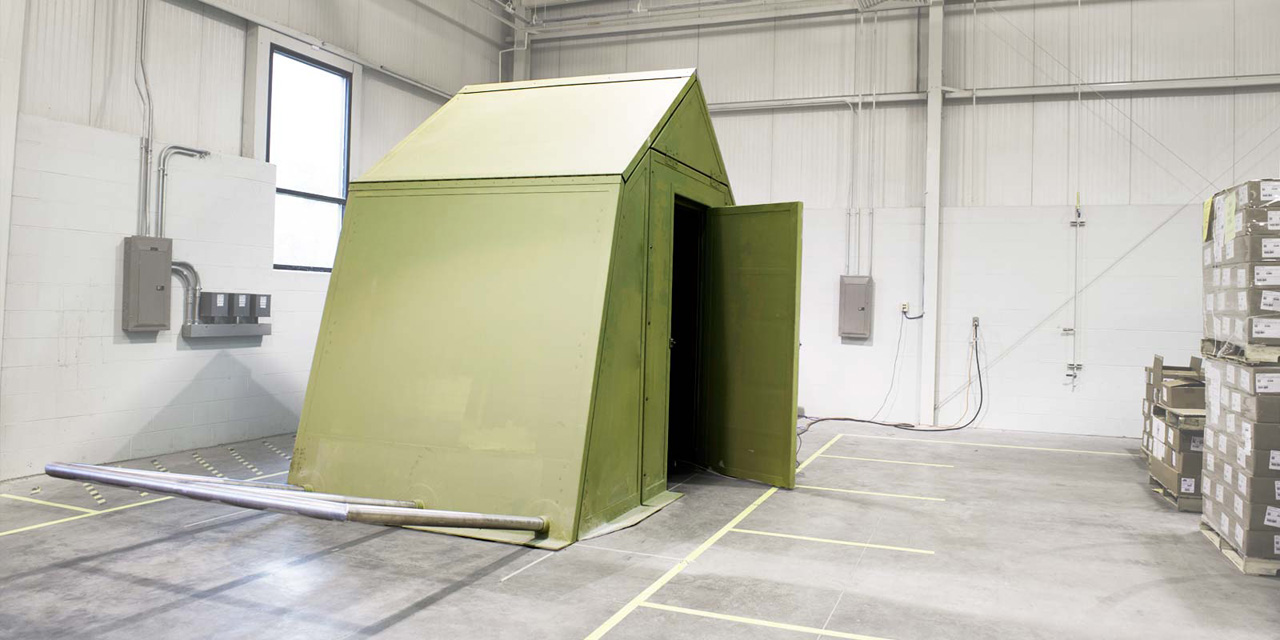
The flat-pack design could reduce energy demand drastically compared to a standard canvas structure. PHOTO: CoExist
It has long been known that origami has many benefits like developing eye hand co-ordination, sequencing skills, attention skills, patience, temporal spatial skills, math reasoning etc. And now a structure design inspired by the Japanese art of folding paper may help the military significantly reduce its energy demand.
‘Lettuce’ Celebrate NASA’s Moment

On Monday, astronauts aboard the International Space Station harvested and ate the first lettuce to have been grown in space. Photo by NASA
“It was one small bite for man, one giant meal for mankind.” And that’s putting it lightly. On Monday, after watching a batch of red romaine lettuce grow under a purplish glow in the microgravity of space, NASA astronauts aboard the International Space Station harvested their own fresh produce. And this officially is the first time astronauts have dined on a harvest sown in space. Nothing like ‘home-grown’ food, right?
Let’s Fill Up on Some Brewtroleum

New Zealanders can now run their cars on the same fuel they run themselves on—beer. Brewtroleum is a new biofuel which mixes beer by-products with regular gasoline to power cars. PHOTO: Wikimedia Commons
 Organikos