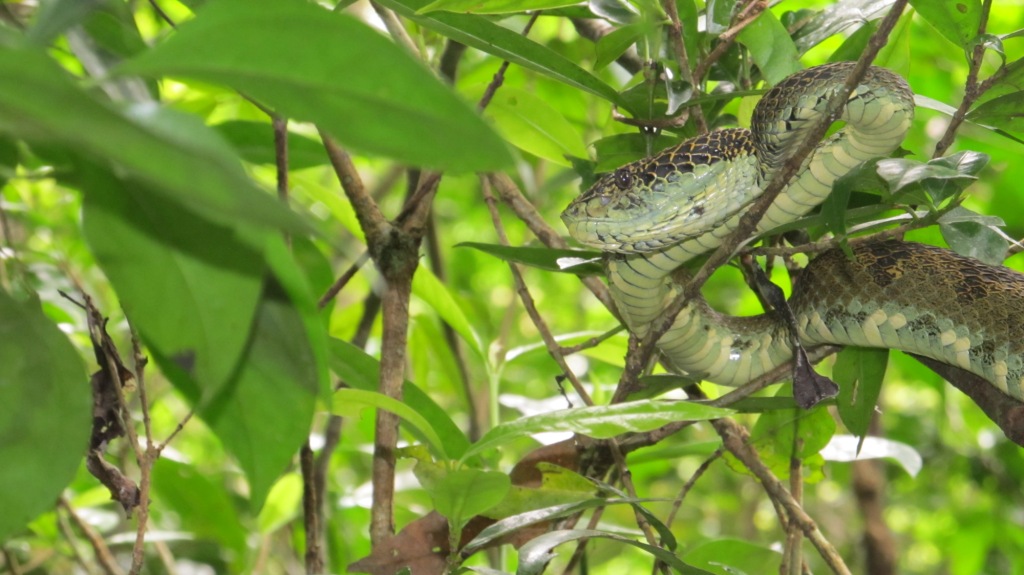
This photo was taken by Mr. Kannan, a senior forest watcher in Periyar Tiger Reserve. The Bamboo pit viper is one of the venomous snakes of Indian which is mostly found in the Western Ghats. They are typically green in color along with black, yellow and orange markings in the skin.
Kerala
Garlic Vine (Mansoa alliacea)
The Garlic Vine is an ornamental plant with a woody stem growing as either a shrub or vine to a height of 2-3 meters. It has bright green leaves, strong twining tendrils and trumpet shaped flowers. The flowers bloom purple and change to a lighter shade of lavender with age, eventually fading to almost white. This climber is native to the Amazon forest but is currently abundant in southern India.
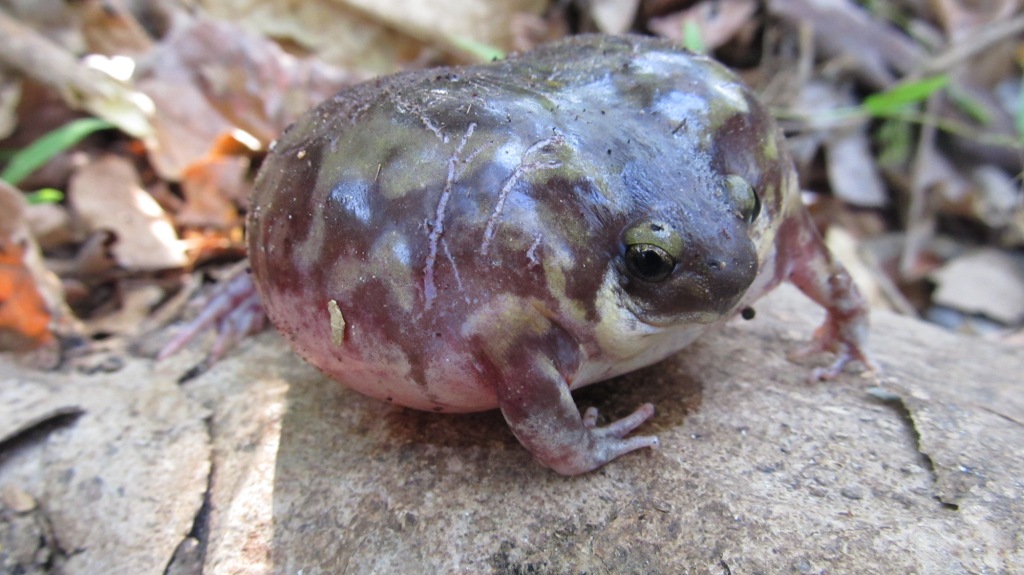
Indian Balloon Frog – Uperodon globulosus
The Uperodon, commonly known as the Balloon Frog, is well known for its ability to puff up, expanding its lungs past its backbone. It has a small head, especially compared with its exaggerated body, with a narrow mouth and a rounded snout.
The Unseen Scenes
March 2012
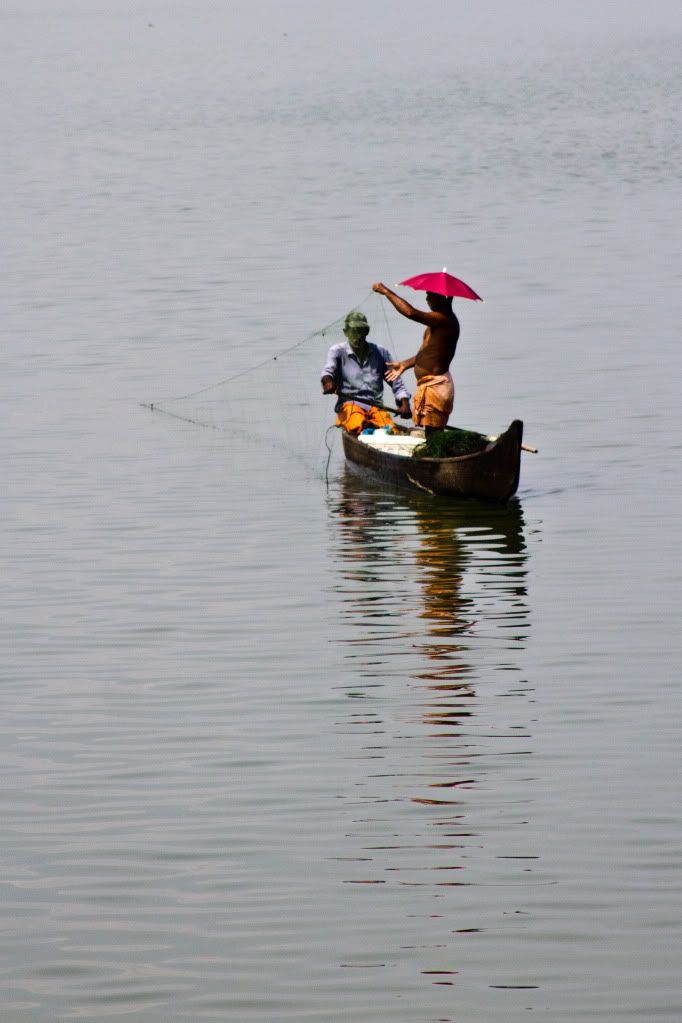
A morning on Kerala’s Backwaters. Although in the general sense you know what to expect in terms of how the day will play out, you are guaranteed to see some strange and possibly surreal things between breakfast and lunch. More if you rise before the sun comes up. This is purely out of self-preservation – during the heat of the day, any significant physical activity ends up being exhausting, and the locals know best. That said, it’s worth being up early to catch a number of interesting photographs that you would have been unable to were you sleeping. To the left are two fishermen – one rowing slowly while the other (suitably attired for protection from the sun) checks nettings for a catch. This was my first time seeing fishermen wearing umbrella hats, but I see workers in the paddy fields with them often. Despite this fact, I haven’t photographed them due to poor lighting conditions and a significant distance between us every time. Continue reading
Enchanting Backwaters – Kuttanad
Kerala is a land of extensive networks of rivers, canals, streams and lagoons that form the Enchanting Backwaters which exemplify an amazing relationship between the ingenuity of man and the artistry of Nature. Its crisscrossing canals which were once busy waterways, have evoked comparisons with Venice since travelers began visiting them. The backwater region of Kuttanad is famous for paddy fields, duck farming and fishing. Most of Kuttanad consists of paddy fields that spill out into vast structures inland from the backwaters. With its abuntant paddy Kuttanad has been named the “Rice Bowl of Kerala”.
Aranmula Kannadi – An Ancient Indian Metal Mirror
Aranmula, an ancient village in the district of Pathanamthitta on the banks of the famous Pamba River, has a special history of Kerala’s traditional arts. For centuries Indians have been experts in Metallurgy; Delhi’s ancient Mayuran Iron Pillar, and forged Damascus steel are part of an artisanal culture in South India that stretches back more than 2000 years. The Aranmula Kannadi (metal mirror) technology is part of this history.
Bilimbi (Averrhoa bilimbi)
Tree sorrel or cucumber tree is a tropical fruit tree which reaches 35 ft in height. It is cultivated in southern India, where it is commonly called Bilimbi (Averrhoa bilimbi). In Kerala, it is widely used for making pickles. In other regions of the country, it is often eaten raw along with salt and chilli powder.
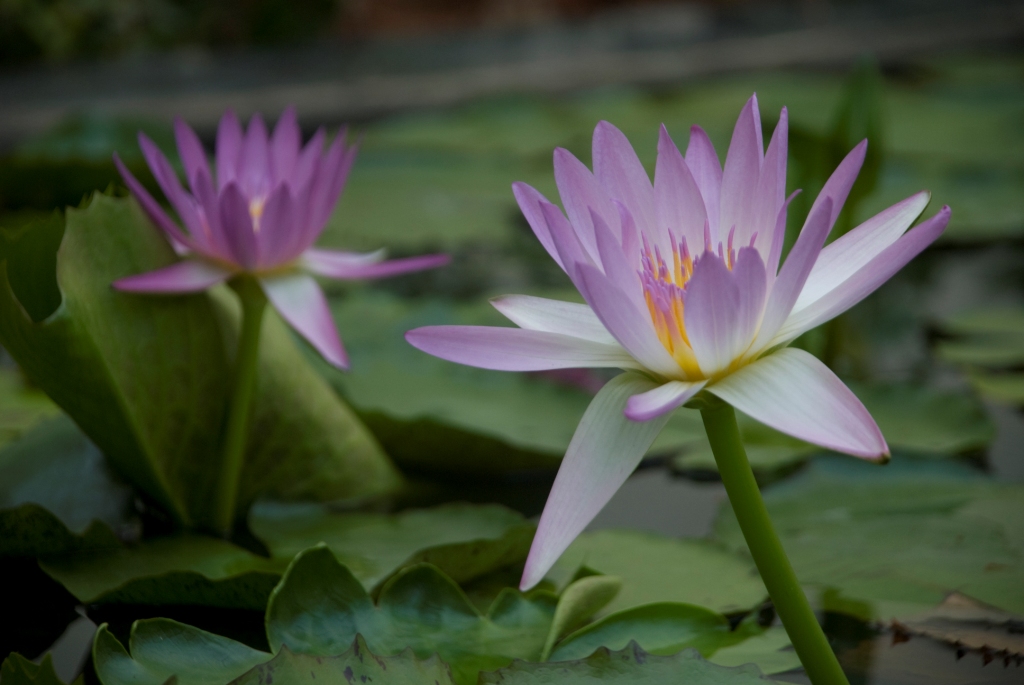
Blue Water Lily (Nymphaea nouchali)
The Blue water lily is an iconic fresh water plant which is also known as Blue Lotus of India. It is widely seen in Kerala mostly growing in the fresh water ponds and brackish backwaters. The leaves of the water lily are oval shaped with a notch in the leaf stem. The solitary flower blooms in the dawn and withers in the dusk.
Periyar Sightings: March 31, 2012
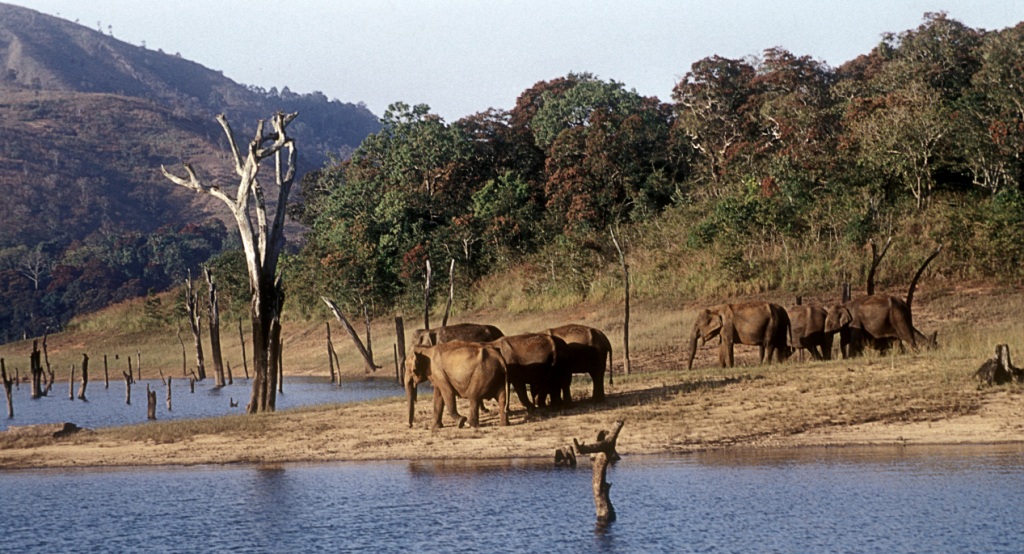
We interacted with Mr. Orillard Pascal and Nathalia from France, who visited Gavi on March 29, 2012. They shared some of their photos.
We visited Gavi on Thursday. As it was quite hot, we thought we wouldn’t spot animals. But we were very lucky to see elephants grazing on the mountains. We also saw some birds and a Malabar giant squirrel. We enjoyed the spice tour and tea plantation visit too. We really enjoyed our stay at Cardamom County and activities around Thekkady.
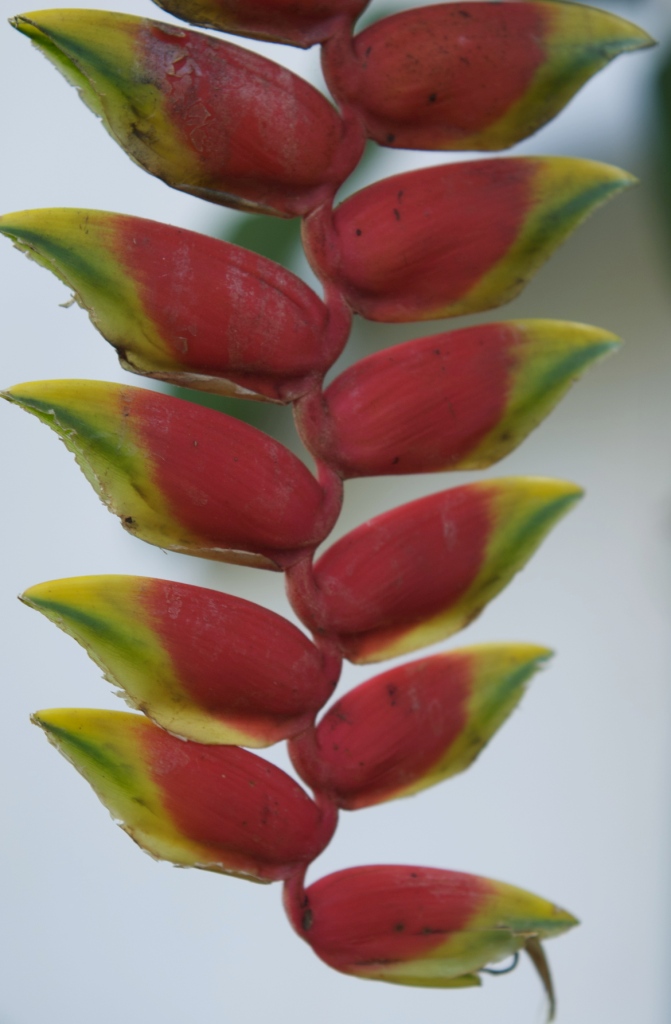
Heliconia pendula
Heliconia pendula are the herbaceous plants that grows up to the height of 0.5 to 4.5 meters. Heliconia are native to Central America and the Caribbean islands. An “exotic” in India, these are mostly found growing in the Western Ghats above 900m. The long leaves of this flower are nearly 15-300cm and grow opposite to one another on a non-woody stalk. Continue reading
Machad Mamankam – Unique and Traditional Temple Festival
In Kerala, almost every village has its own temple with an annual festival. So there is always a local festival happening somewhere or the other, each with its own flavor and color. The 800 year old Mamankam festival is celebrated annually at the Machad Thiruvanikav temple near Trichur, the cultural capital of Kerala. Continue reading
Allspice (Pimenta dioica)
Native to the New World Tropics, allspice is a medium sized tree growing up to 35 to 42 feet in height whose leaves smell like a combination of cinnamon, cloves and nutmeg. The evergreen tree produces small berries which contains one or two seeds. This seed is priced as the second most expensive spice in the world market after Saffron.
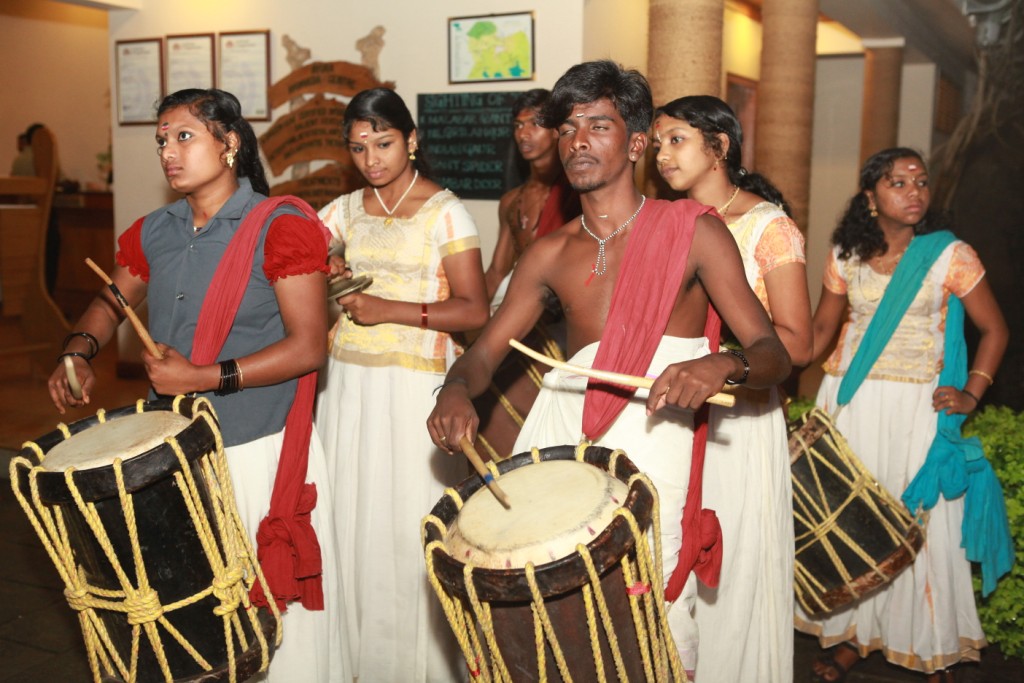
The Chenda melam- Traditional band of Kerala
The Chenda melam is the most widely performed keshtra vadhyas (songs or programmes based on temples festivals) of south India. Irrespective of cast or religion, the melam have been an important part of every Kerala festival for over 300 years old. The most important among these melams are Pandy and Panchari, which may extend up to 5 hours. The leading instrument in these compositions is the Chenda, a cylindrical drum that originated in Kerala. The Chenda is divided into Valamthala Chenda & Edamthala Chenda (right & left side of the instrument) or also known as “Veekam Chenda” & “Uruttu Chenda”.
Periyar Sightings: March 24 & 25, 2012
Some of our guests at Cardamom County recently enjoyed the Nature Trail at Periyar. They were happy to share their photos with us.
Mr. Manoj Vasudevan, who is a senior Tour Escort, took a good collection of pictures while on the trek with his group.
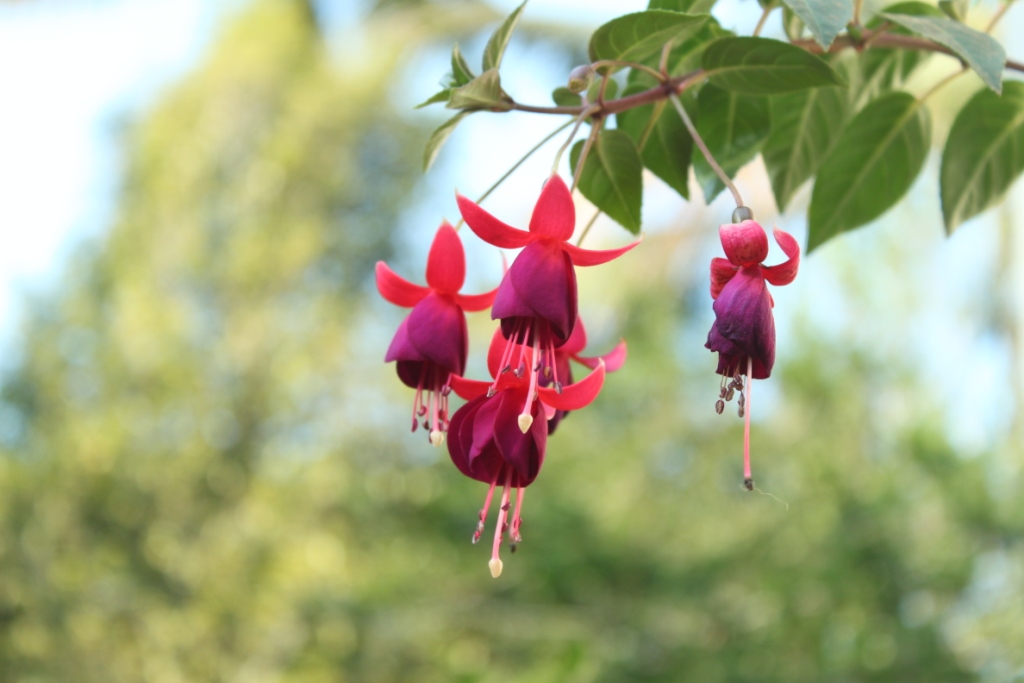
Fuchsia – An Ornamental Plant
The fuchsia flower is a beautiful ornamental exotic flower with striking colors which is widely grown in the Western Ghats. The majority of fuchsia species are native to Central and South America. There are almost 110 varieties of this species.
The Truly Golden Dartlet
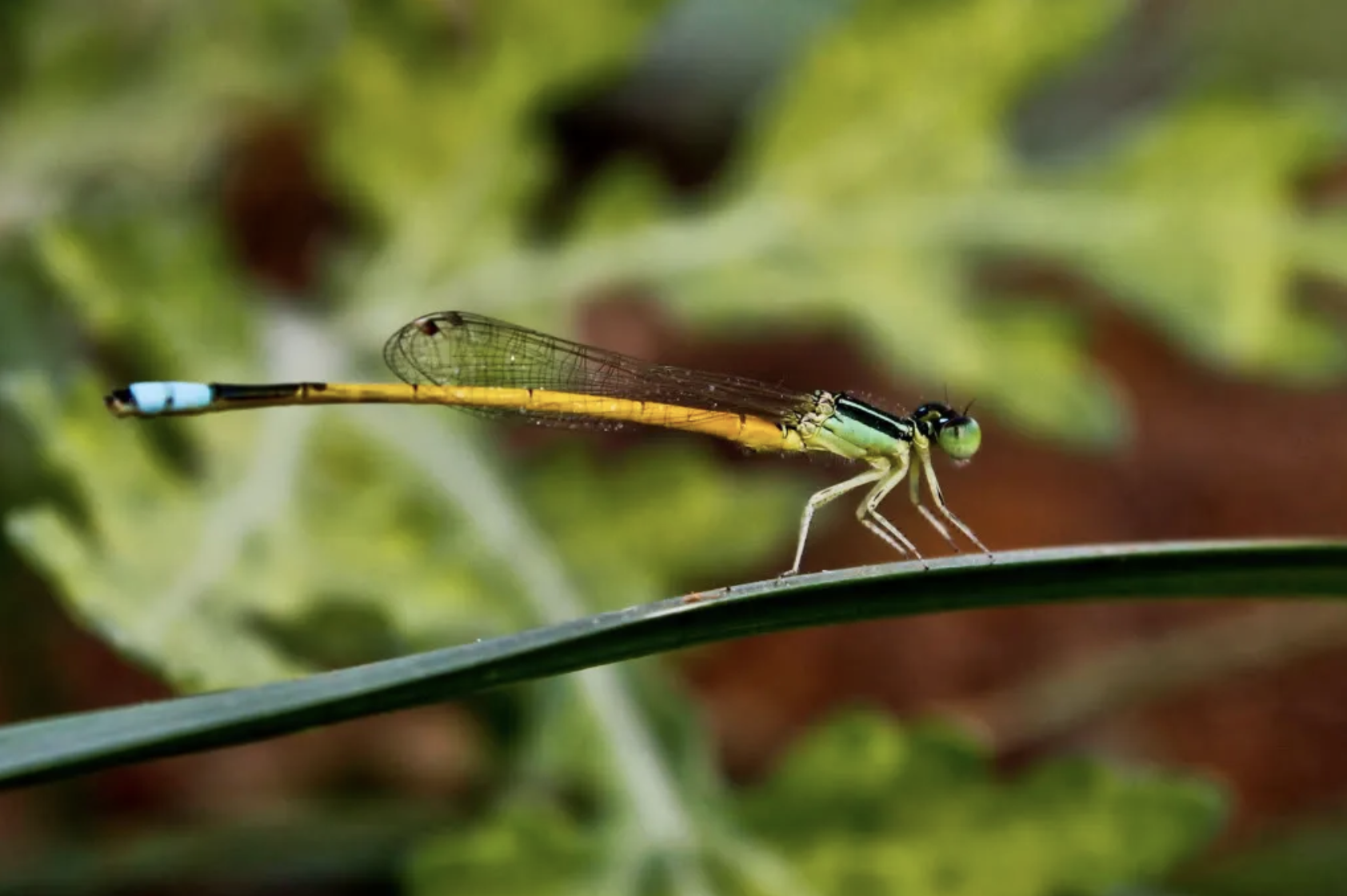
The Golden Dartlet, or Iscnura aurora, is a small species of damselfly that resides in the general vicinity of small streams and ponds. The above photograph was taken several hundred meters from any sizable body of water – a testament to the creature’s rugged and functional, yet beautiful design. Continue reading
Jacaranda Tree (Jacaranda mimosifolia)
Native to the New World Tropics, the Jacaranda (Jacaranda mimosifolia) is an ornamental tree that grows up to 18 meters. The tree is renowned for its clusters of fragrant purple trumpet shaped blossoms that bloom from March to May.
Sacred Fig ( Ficus religiosa)
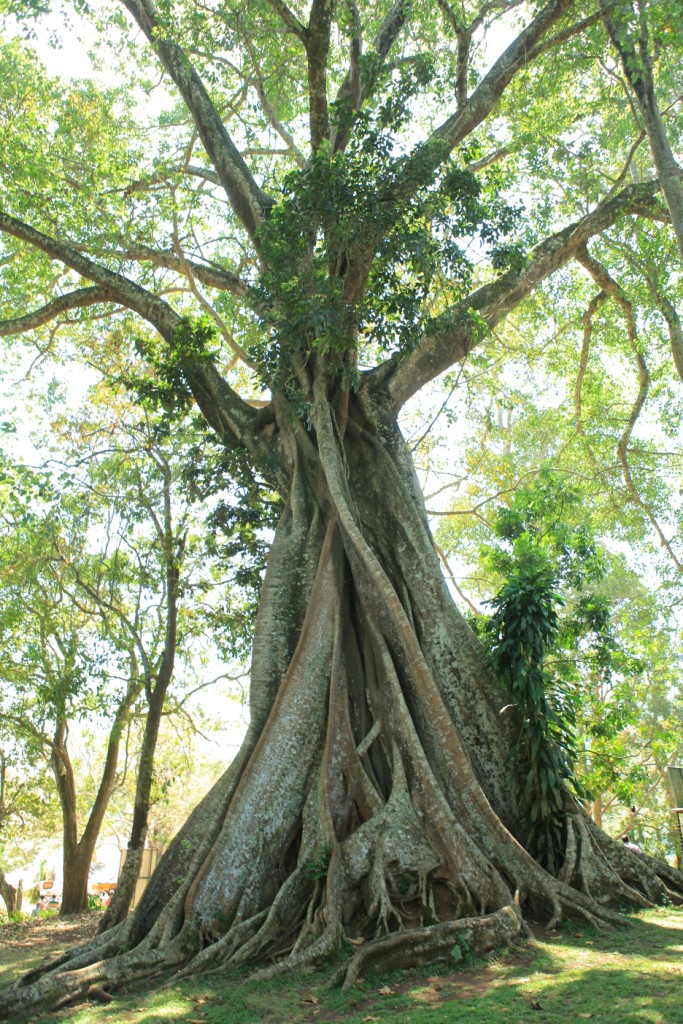
Ficus religiosa is a semi-evergreen tree that grows up to 30 meters in height with wonderful wide spreading branches. It is commonly known as Peepal tree, but is also known as Bodhi tree, Bo-tree and Holy tree. The fruit of the sacred fig is a favorite food for birds, monkeys, squirrels and fruit bats.
According to Buddhism (one of the religions of India), the Peepal is sacred because it is believed that Lord Buddha found enlightenment beneath this tree. Continue reading
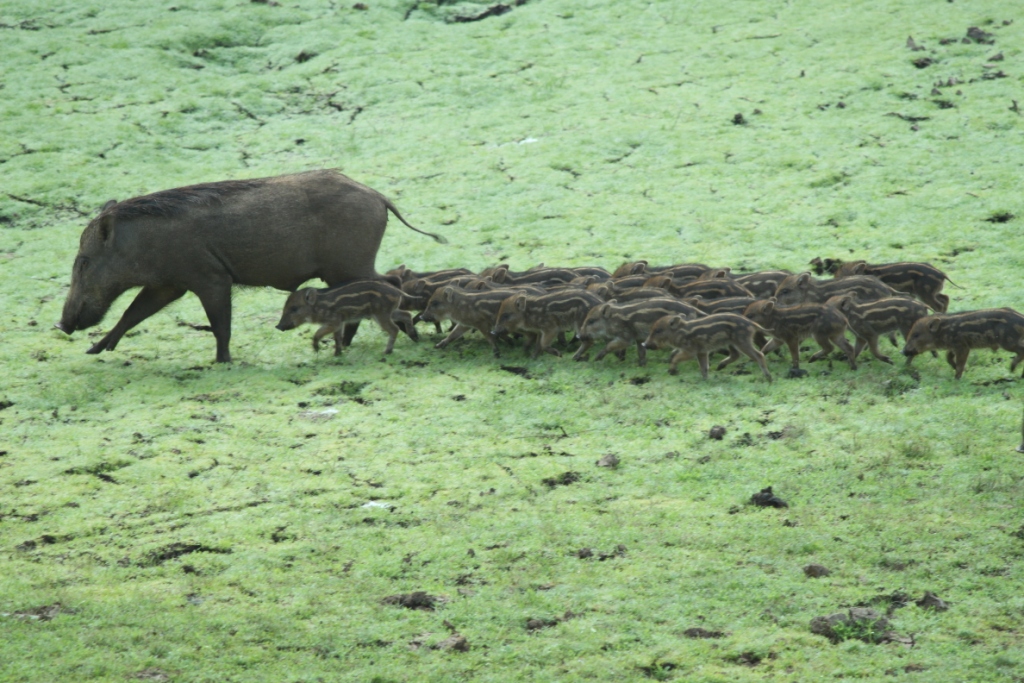
The Boar March with Piglets
Early this morning my friends and I had a walk in the Periyar Tiger Reserve. My friend Mr. Senthil was looking toward the banks of the Periyar Lake when he found a herd of piglets marching with their mother.
Cocoa – The Chocolate Tree
Cocoa (Theobroma cacao) grows on a small evergreen tree that reaches up to 13-26 feet and is native to the forests of Central and South America. Being a tropical crop, Cocoa is mainly grown in the western ghats region of Kerala.