Library Luxury of a Different Sort

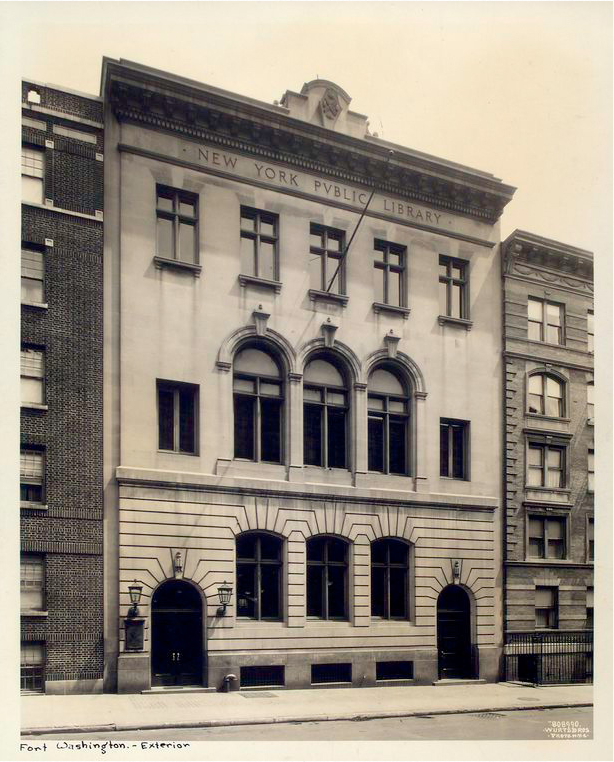
The exterior of the Fort Washington library the year it opened, 1914. The top floor windows are for the apartment. (Photo: New York Public Library/Public Domain)

The beautiful Beaux-Arts design of many of the buildings in the New York Public Library system represent only one definition of luxury. The idea of children growing up playing and reading in the stacks at night produces the colorful imaginings of literature where children spend nights in museums, or ramble about in the “tippy-top floor of the Plaza Hotel”.

I’m sure most of us haven’t heard of the custodian apartments that used to grace New York City’s branch libraries, and I for one, am grateful to Atlas Obscura for sharing this curious history.

Inside the New York Public Library’s Last, Secret Apartments

There are just 13 left.

There used to be parties in the apartments on the top floors of New York City’s branch libraries. On other nights, when the libraries were closed, the kids who lived there might sit reading alone among the books or roll around on the wooden library carts—if they weren’t dusting the shelves or shoveling coal. Their hopscotch courts were on the roof. A cat might sneak down the stairs to investigate the library patrons.

When these libraries were built, about a century ago, they needed people to take care of them. Andrew Carnegie had given New York $5.2 million, worth well over $100 million today, to create a city-wide system of library branches, and these buildings, the Carnegie libraries, were heated by coal. Each had a custodian, who was tasked with keeping those fires burning and who lived in the library, often with his family. “The family mantra was: Don’t let that furnace go out,” one woman who grew up in a library told the New York Times. Continue reading
Library Reading Room, Luxury, Legacy

schwartz-restored-rose-reading-room-1200

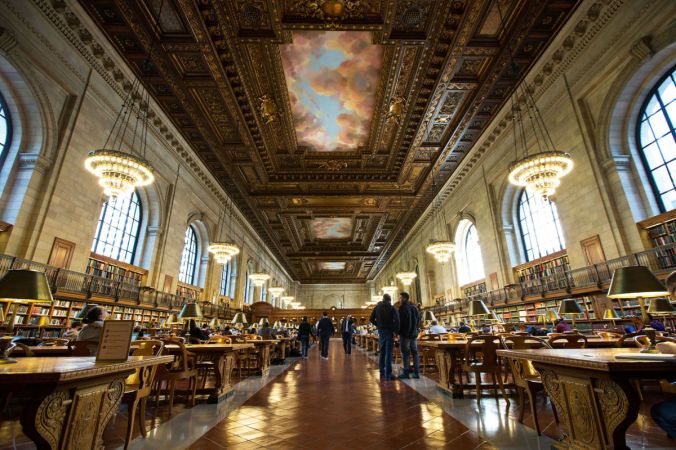
The Rose Reading Room is luxurious in the way that only certain shared spaces can be. Its grandeur attracts its visitors, and is in turn amplified by their presence: the true urban symbiosis. PHOTOGRAPH BY DREW ANGERER / GETTY

It was the room in the photo above where I sat, in the early 1990s, collecting some data for a research project that would eventually become my doctoral dissertation. I had been in that room once or twice in my youth, but as an adult on a specific mission (little did I know the data collected that day would help me develop ideas that we now call entrepreneurial conservation within La Paz Group) the room barely registered in my notice. Except as a very practical place to read some historical documents.

So I am delighted to see that room again after a long time. It looked great to me the last time I saw it. Now I can say wow for different reasons. The legacy of the room is protected, and perhaps renewed for another hundred years. If you click the image and go to a larger viewing with greater detail, you will understand why the word luxury fits in the title of this post on the New Yorker website.

It is not our practice to use the word luxury because it is so laden with old and often inappropriate (considering the ecological condition of the planet, considering advances in socio-economic development, and considering other modern sensibilities) meanings. So we appreciate when others take care in how they use it:

THE ROSE READING ROOM AND THE REAL MEANING OF “LUXURY” IN NEW YORK CITY

By

To say that the ceiling of the Rose Main Reading Room, at the New York Public Library’s main building, on Fifth Avenue—the biggest room in the biggest public-library branch in the country’s biggest city—is an ornate piece of work is putting it mildly. Continue reading

Bookstores Are Just A Small Notch Below The Library In Our Pantheon Of Cultural Institutions, But They Are There

eckstein-bodhi-1200

Bodhi Tree—Los Angeles, California

We liked it the first time around, and appreciate his extension:

DRAWING THE WORLD’S GREATEST BOOKSTORES

By

It was a little more than two years ago that I walked around New York, drawing pictures of the city’s endangered landmark bookstores.  Continue reading

If You Happen To Be In The Boston Area

so16_image_page_036_image_0001

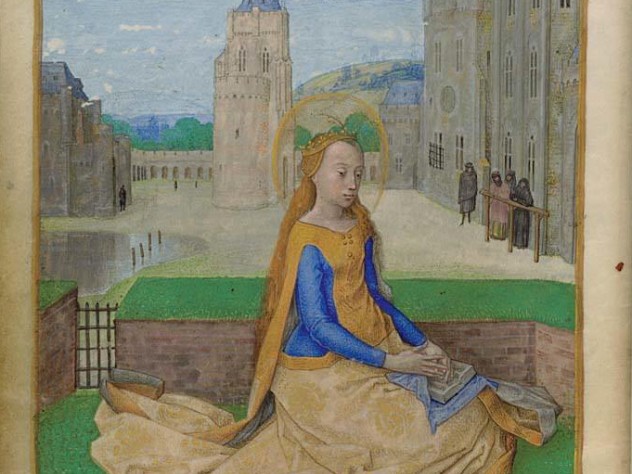
Saint Barbara, attributed to the “Ghent Associates” of the Master of Mary of Burgundy, from a book of hours-missal, c. 1485-1490. Courtesy of Houghton Library/Harvard University

We check in from time to time at magazines published by universities where we have recruited. This article, which we appreciate topically because of the conservation of cultural heritage described, makes us wish we could visit the venues described in “Illuminations.”  Lily Scherlis provides a good example of why we keep coming back to this magazine–crisp, clear writing and a compelling argument in favor of looking back into history for an enriching perspective on crowdsourcing versus individual authorship (read to the end of the quoted section):

…These works were born into a world where literacy was scarce and almost universally affiliated with religion: the exhibition description refers to monasticism as, at its heart, a “cult of the book.” I imagine how compelling written religious text would have been to early readers: the words echo off the page, as if read by an invisible voice heard only by you, but are available to other readers as well. Continue reading

Library Law’s Legacy

wit-czech-master768

The National Library of the Czech Republic in Prague. Credit Pavel Horejsi for The New York Times

If you search this site for topics written about frequently, library might be among the top 10 topics, for reasons that many of those earlier posts would make clear. Today, a lovely short item from Eastern Europe, that makes us wonder:

Why Libraries Are Everywhere in the Czech Republic

By

PRAGUE — In the age of Amazon and the internet, the idea of going to a public library to borrow a book may seem ever more quaint and old-fashioned in many parts of the world, but one country, at least, is clinging to it tenaciously: the Czech Republic. Continue reading

Libraries, Phaidon Style

ssanantonio-ricardo

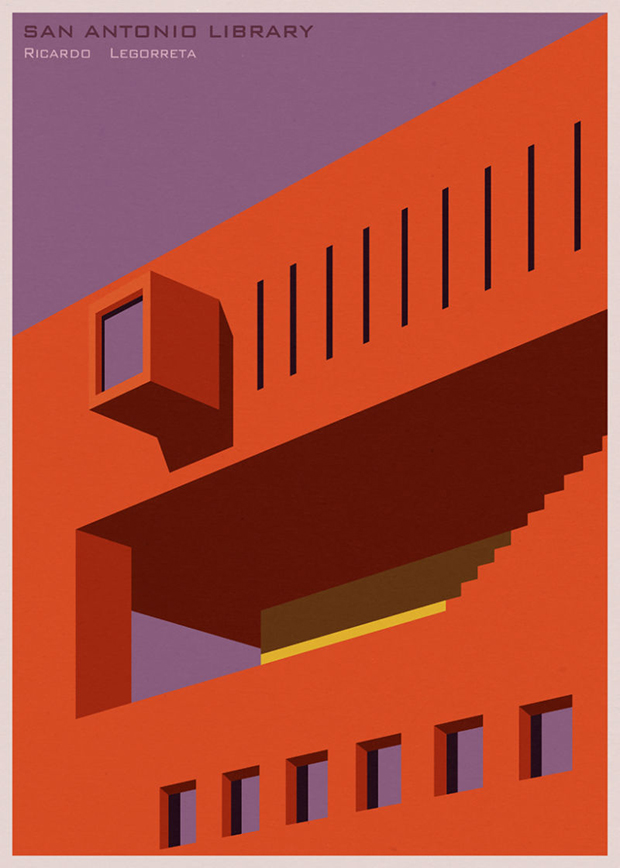
Ricardo Legorreta’s San Antonio library, Texas, as illustrated by André Chiote

Phaidon has produced a book to meet our library fancy:

The world’s best libraries look even better as posters

See how architect André Chiote has illustrated buildings by Norman Foster, Oscar Niemeyer, Rem Koolhaas and co

When successful architects are tasked with designing important city or national libraries, they rise to the challenge. These practices, which often spend much of their time on overtly commercial work, seem to come to life when they put their civic-minded hats on. Continue reading

Library Charisma

01COLORADO1-master768

An old sheep barn and loafing sheds will one day house books. Credit Allison Amend

It has not been long since our last linkage out to a “library love” story. But this one is combined with a travel/journey and a conservation ethos–themes we enjoy seeing addressed together. Worth a read, thanks to the Travel section of the New York Times:

I am perched on a slippery roof ridge at the Buffalo Peaks Ranch in the rain, feet sliding on ancient asphalt shingles atop rotting plywood decking, tethered only by a rope. For fun.

With me on the roof are five other volunteers who are donating their time and brawn to create a live-in rural library in Colorado, helping the booksellers Jeff Lee and Ann Martin realize their dream.

In the course of their 20 years at the independent Denver bookstore Tattered Cover, Mr. Lee and Ms. Martin have accumulated more than 32,000 volumes on the American West (my first novel, “Stations West,” is among them). Seeking to share the books, and their love of Colorado, the pair, who are married, have leased the Buffalo Peaks Ranch, about two hours from Denver, to house their collection. Continue reading

An Unusual Library With A Conservation Mission

3058058-slide-3-the-rarest-colors-in-the-harvard-pigment-library.jpg

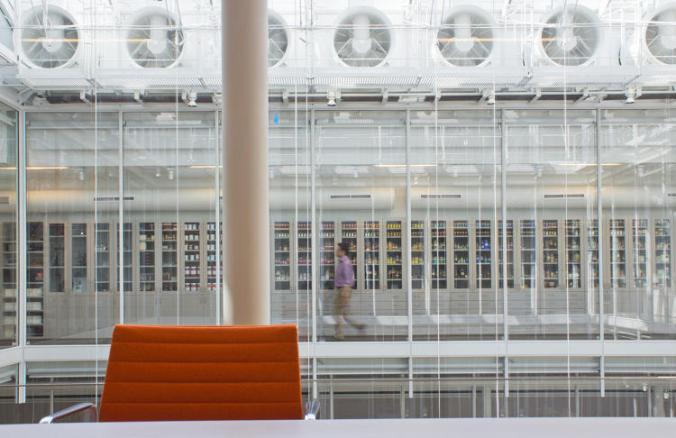
A short note here to link out to a story of interest because of its intersection of conservation, commerce and education. Thanks to this new (to us) source of interesting (to us) news:

The Harvard Library That Protects The World’s Rarest Colors

The most unusual colors from Harvard’s storied pigment library include beetle extracts, poisonous metals, and human mummies.

Today, every color imaginable is at your fingertips. You can peruse paint swatches at hardware stores, flip through Pantone books, and fuss with the color finder that comes with most computer programs, until achieving the hue of your heart’s desire. But rewind to a few centuries ago and finding that one specific color might have meant trekking to a single mineral deposit in remote Afghanistan—as was the case with lapis lazuli, a rock prized for its brilliant blue hue, which made it more valuable than gold in medieval times. Continue reading

New York Public Library, At It Again

pd_banner_magnified_3We appreciate the efforts of the New York Public Library, which we have posted on numerous times previously for its innovative as well as its occasionally worrisome institutional changes, to make more of its collection more available to more people for more uses. This blog post by Shana Kimball, Manager of Public Programs and Outreach at NYPL Labs, explaining the value to all of us:

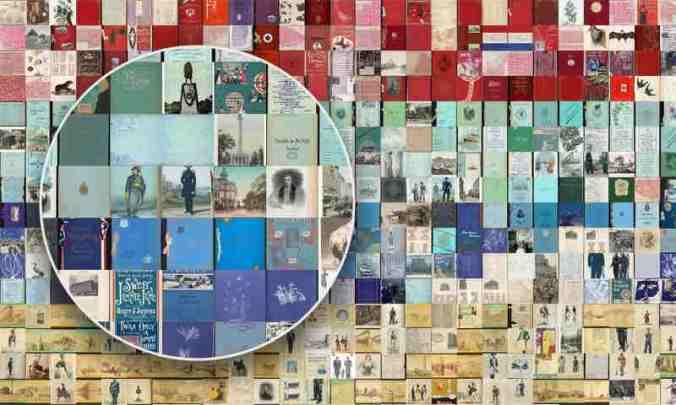
Today we are proud to announce that out-of-copyright materials in NYPL Digital Collections are now available as high-resolution downloads. No permission required, no hoops to jump through: just go forth and reuse!

The release of more than 180,000 digitized items represents both a simplification and an enhancement of digital access to a trove of unique and rare materials: a removal of administration fees and processes from public domain content, and also improvements to interfaces — popular and technical — to the digital assets themselves. Online users of the NYPL Digital Collections website will find more prominent download links and filters highlighting restriction-free content; while more technically inclined users will also benefit from updates to the Digital Collections API enabling bulk use and analysis, as well as data exports and utilities posted to NYPL’s GitHub account. These changes are intended to facilitate sharing, research and reuse by scholars, artists, educators, technologists, publishers, and Internet users of all kinds. All subsequently digitized public domain collections will be made available in the same way, joining a growing repository of open materials. Continue reading

Of Books and Travel

What might be the perfect holiday retreat has just been listed on AirBnB: the opportunity to become a bookseller for a week or two. PHOTO: Colin Tennant

What might be the perfect holiday retreat has just been listed on AirBnB: the opportunity to become a bookseller for a week or two. PHOTO: Colin Tennant

Quotes on travel abound. And chances are you’ve read this some time: The world is a book and those who do not travel read only page. St. Augustine immortalized those words and now, AirBnB has literally taken it to heart. Always believed in the many worlds that exist between two ends of a book? Then, imagine a library. One that you run for a week. Or maybe two, too.

Continue reading

Museums, Libraries, And An Innovative Hybrid

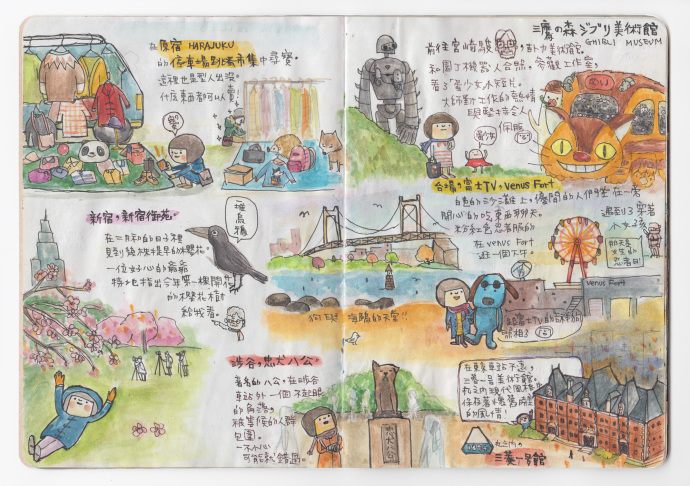
DRAWING BY LINYU YEN, COURTESY THE SKETCHBOOK PROJECT

DRAWING BY LINYU YEN, COURTESY THE SKETCHBOOK PROJECT

Museums, as well as libraries and other community institutions get a disproportionate share of our attention on this blog. When we see a random variation like the following, we cannot help but follow the trail (thanks to Jordan Kisner):

One recent Wednesday afternoon, a man wandered into a library on North Third Street in Brooklyn and asked how he could sign up for a library card. The young woman behind the counter smiled and explained that at this particular library there were no cards—or even traditional books. The Brooklyn Art Library, housed in a Williamsburg storefront with unfinished floors and exposed piping, is, instead, home to the Sketchbook Project, a collection of crowdsourced sketchbooks that is, according to its staff, the largest in the world. The project was founded in 2006, when Steven Peterman and Shane Zucker, two art students living in Atlanta, began mailing blank Moleskines to anyone who wanted one for a small fee, and then archiving whatever came back. Now anyone can pay twenty-eight dollars for a sketchbook, or sixty-three dollars for a digital membership, which means that their books will be scanned in full and archived online in a digital library. Continue reading

If You Happen To Be In New York City

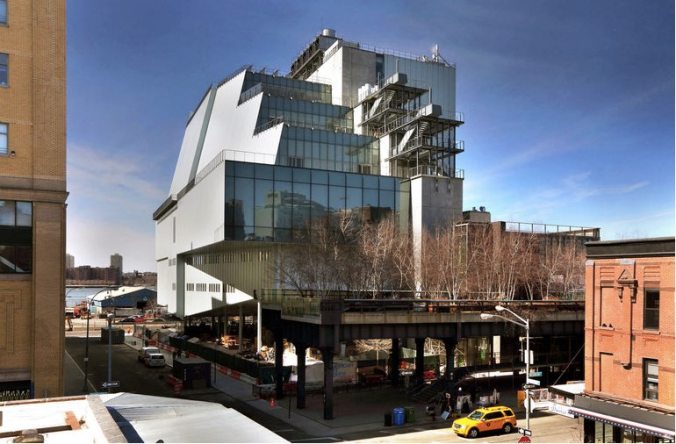
Whitney Museum of American Art. Photograph by Ed Lederman

Whitney Museum of American Art. Photograph by Ed Lederman

We have a thing for public spaces, especially when they combine with community activism. We try to get firsthand experience, and when we have learned enough about such places, we share what we can here. Ditto for museum exhibits, special library exhibitions, and unusual library thingys. It is not every day we get to announce the opening, or re-opening, of one of the greatest museums in the world, right in the midst of such a public space:

THE NEW WHITNEY OPENS MAY 1, 2015 BUY ADVANCE TICKETS NOW

The reviews convince us that this will be worth the visit, and this particular wording puts it in perspective:

The Whitney Museum of American Art, long the odd duck among the Big Four of Manhattan art museums—a cohort that includes the mighty Metropolitan, the starry Modern, and the raffish Guggenheim—takes wing on May 1st, when it reopens in a new, vastly expanded headquarters downtown. The fledging owes a lot to the Italian architect Renzo Piano’s ingenious building, on Gansevoort Street, which features six floors of shapely galleries, four open-air terraces, spaces for performance and screening, a library and reading rooms, a restaurant, a café, and an over-all feeling of seductive amenity—a bar on the piazza-like ground floor bodes to be one of the toniest trysting spots in town. It is likely to win far more fans than the Whitney’s old home, Marcel Breuer’s brutalist “inverted ziggurat,” which opened in 1966, on Madison Avenue, and which it vacated six months ago and leased to the Met. Piano’s museum stands at the southern end of the High Line and hard by the Hudson River, in what remains of the tatterdemalion meatpacking district. It looms like a mother ship for both gallery-jammed Chelsea, to the north, and the puttering West Village, to the south. It is instantly a landmark on the cultural and social maps of the city—and on its poetic map, as a site to germinate memories. Continue reading

From The Department Of Save It For Later

Screen Shot 2015-04-09 at 4.58.56 AM

Anyone, anywhere, who believes that something is worth saving (preserving, conserving, protecting, etc.) enough to dedicate time and effort, among other resources, we are likely to support it however we can. Our Bird of the Day feature is an example that goes back to one man’s collection of photographs he took personally containing all the birds, endemic and otherwise, that inhabit and/or migrate through south India. This collection is part of his passionate commitment to wilderness conservation in Kerala and other neighboring states.

We asked, in 2011, if Vijaykumar would allow us to publish his photographs in the interest of promoting conservation. He said yes. By now we have probably published all of the collection as it was in 2011, but he is still photographing and contributing. And four years later we have talented birders, many of whom are also exceptional wildlife photographers, contributing their photographs from all over the world. Seth became an employee of the Cornell Lab of Ornithology that same year, and that has led to a whole bunch of other interesting bird-related posts that we host.

Meanwhile New York City has rarely been a subject we cover from a conservation perspective, though its Public Library is of special interest to us. We have not linked to Jeremiah’s blog previously, but it is the type we favor, as you might have noticed, so here goes. Maybe there is more NYC in store for us.

Continue reading

Inspired By Libraries Without Borders

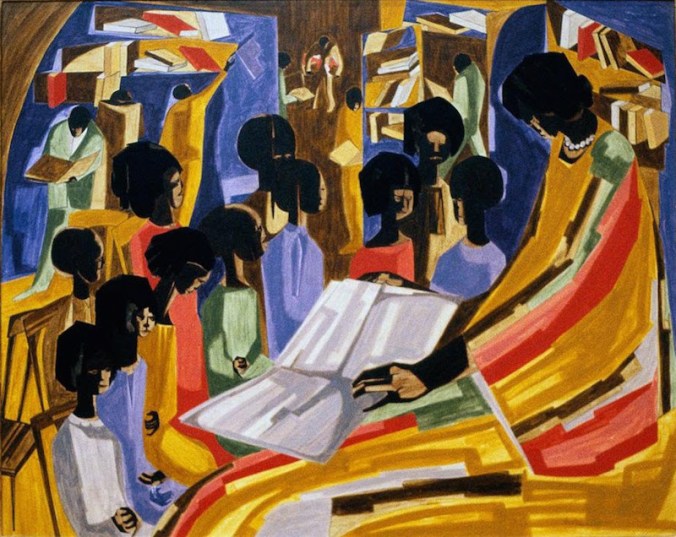
jacob-lawrence-library-1

from a series on libraries by Jacob Lawrence.

What a wonderful surprise, to come across this talk by Kenan Malik, on a topic that has been of interest to us for some time:

I gave a talk at the launch at London’s Institut Français of Libraries without Borders, the charity inspired by Patrick Weil that aims to increase global access to books and libraries. Also speaking were Ian McEwan, Lisa Appignanesi, Barbara Band and Patrick Weil himself. Here is a transcript of my talk.


Let me begin with a story not of a library or a book but of a grand piano. The one grand piano in Gaza, that was discovered still intact in a theatre destroyed by an Israeli missile during last year’s war. A piano that has been restored string by string, hammer by hammer, by Claire Bertrand, a young French music technician who travelled to Gaza specially to bring the piano back to life, in a project financed by Daniel Barenboim. Continue reading

If You Happen To Be In London

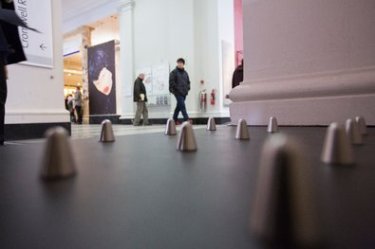
Peter Kelleher/Victoria and Albert Museum, London, 2015. Spike studs, used to keep people from sleeping near buildings, are part of the exhibition.

Peter Kelleher/Victoria and Albert Museum, London, 2015. Spike studs, used to keep people from sleeping near buildings, are part of the exhibition.

When we hear of civic-minded initiatives, museum shows are not the first thing that comes to mind. Schools, and libraries, and conservation initiatives come to mind.

Museums are civic institutions, of course, and we have posted more on this site about museums than almost any other topic.

But civic? We like the theme. This is a show we know will be worth seeing:

V&A Museum Returns to Its Civic-Minded Roots

“All of This Belongs to You,” an exhibition running through July 19 at the Victoria and Albert in London, seeks to stimulate debate about citizenship and the role of museums as public spaces.

Feathers’ Maps Rediscovered

Map

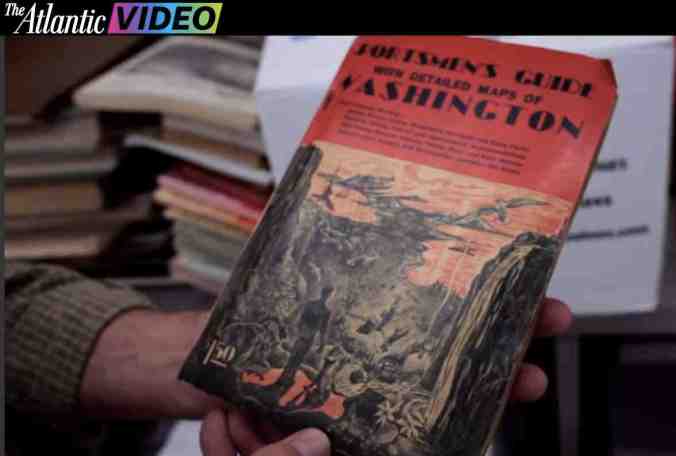
Thanks to the Atlantic‘s website for this Editor’s Pick, a fascinating video about a map collection and its conservation:

‘A Hidden Treasure’: The Unusual Story Behind a Rare Map Collection

Video by Alec Ernest

In this short documentary produced for the Los Angeles Review of Books, Alec Ernest digs into the story behind an extraordinary private collection of maps discovered by Glen Creason, a librarian.

Continue reading

A Museum You Likely Never Heard Of

Aby Warburg (second from left) was the spirit behind the iconographic studies that dominated much of twentieth-century art history. CREDIT COURTESY THE WARBURG INSTITUTE At f

Aby Warburg (second from left) was the spirit behind the iconographic studies that dominated much of twentieth-century art history. CREDIT COURTESY THE WARBURG INSTITUTE

We mention and link to museums, and museum exhibits from time to time. For reasons related to our love and belief in libraries as essential institutions worthy of our civic support; but also related to our interest in entrepreneurial conservation.

Weird museum? Count us interested:

At first, the library of the Warburg Institute, in London, seems and smells like any other university library: four floors of fluorescent lights and steel shelves, with the damp, weedy aroma of aging books everywhere, and sudden apparitions of graduate students wearing that look, at once brightly keen and infinitely discouraged, eternally shared by graduate students, whether the old kind, with suède elbow patches, or the new kind, with many piercings. Continue reading

Neighbors Unite

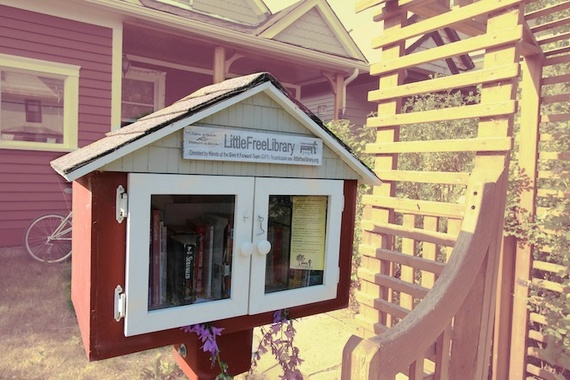
Photo credit: Davebloggs007/Flickr

Photo credit: Davebloggs007/Flickr

Many of the RAXA Collective contributors could could easily get behind  the motto: “Book Lovers Unite!”; many could be found with their noses in a book from early childhood to the present day. So when we read about these “pop up libraries” in various parts of the country the only response possible was excitement.

Books are an essential part of culture and the LFL concept of sharing creates an even greater community bond worth conserving.

Three years ago, The Los Angeles Times published a feel-good story on the Little Free Library movement. The idea is simple: A book lover puts a box or shelf or crate of books in their front yard. Neighbors browse, take one, and return later with a replacement. A 76-year-old in Sherman Oaks, California, felt that his little library, roughly the size of a dollhouse, “turned strangers into friends and a sometimes-impersonal neighborhood into a community,” the reporter observed. The man knew he was onto something “when a 9-year-old boy knocked on his door one morning to say how much he liked the little library.” He went on to explain, “I met more neighbors in the first three weeks than in the previous 30 years.” Continue reading

Librarians Fortify The Front Line

9780544535022_custom-376b39afbbf45a91478a9f43c2df0b1cc11e6e4f-s500-c85

Books we love, war not so much. The story told in this book is about books, about librarians, publishers and common folk who believe in books. And who believe that books are important for fortifying people who need heroic capacities.

In an interview with the author, we see publishers and their town square counterparts, librarians, in a light we had not been aware of, showing their contribution to community at a critical moment in history:

…Over the next few years, millions of Americans would leave home to fight in Europe and the Pacific. They had few comforts and little in the way of escape or entertainment — at least not until American publishers got involved.

A soldier reads an Armed Services Edition in monsoon conditions during World War II. Australian War Memorial/Courtesy of Houghton Mifflin Harcourt

A soldier reads an Armed Services Edition in monsoon conditions during World War II. Australian War Memorial/Courtesy of Houghton Mifflin Harcourt

“During World War II, American publishers wanted to support the troops,” author Molly Guptill Manning tells NPR’s Renee Montagne. “And so they decided that the best they could do was print miniature paperback books that were small enough that they could fit in a pocket so the men could carry these books with them anywhere.”

Guptill Manning’s new book, When Books Went to War, is a history of these paperbacks, known as Armed Services Editions. They included all sorts of literature — from Charles Dickens and William Shakespeare to mysteries and Westerns — and were the culmination of earlier efforts on the part of American librarians to get usedbooks to servicemen with help from book drives. Well-intentioned though they were, the results of these book drives were mixed, turning up titles like How to Knit and Theology in 1870. So the focus switched to designing and printing books that soldiers actually wanted to read — no easy task since these Armed Services Editions had to be battlefield ready.

Continue reading

What We Read, Why, And How

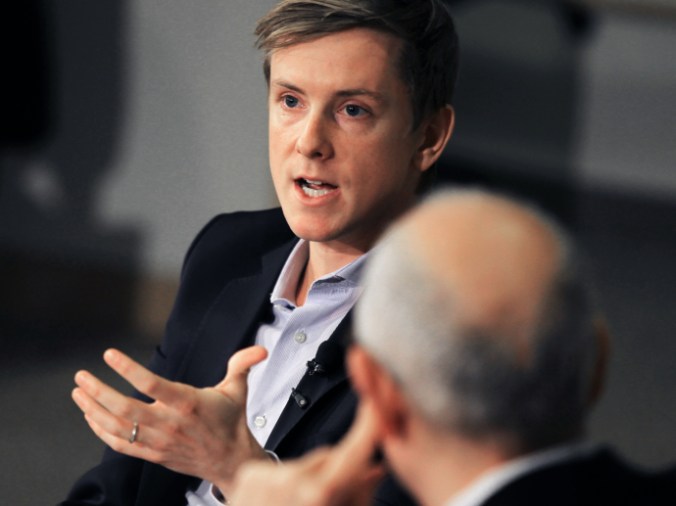
Chris Hughes, the thirty-one-year-old owner of The New Republic. CREDIT PHOTOGRAPH BY JONATHAN WIGGS/THE BOSTON GLOBE VIA GETTY

Chris Hughes, the thirty-one-year-old owner of The New Republic. CREDIT PHOTOGRAPH BY JONATHAN WIGGS/THE BOSTON GLOBE VIA GETTY

We care about books, and libraries, and languages, and long form journalism among other reasons to get perspective, to become informed beyond our local experience. When a century-old vital institution from any of these realms perishes, it is worth taking note, and mourning as George Packer does in a short punch of a post:

…As for the mass self-purge of editors and writers at The New Republic, it might be taken as part of the ongoing demise of old journalistic institutions in the face of new realities of technology and business. Or it might just be the story of one incompetent media mogul. Two years ago, with a lucky Facebook-based fortune and earnest talk about great journalism, Chris Hughes seduced a lot of hardened veterans of the New York-Washington news world who were desperate for a vision of the future.

Continue reading