Resistance, Change, Art, Words–Liberating

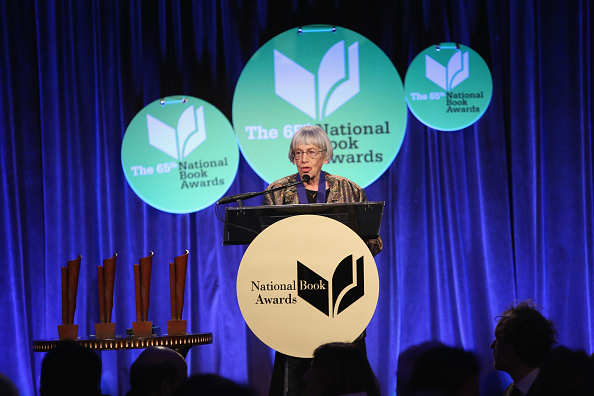
NEW YORK, NY - NOVEMBER 19:  Ursula K. Le Guin attends 2014 National Book Awards on November 19, 2014 in New York City.  (Photo by Robin Marchant/Getty Images)

NEW YORK, NY – NOVEMBER 19: Ursula K. Le Guin attends 2014 National Book Awards on November 19, 2014 in New York City. (Photo by Robin Marchant/Getty Images)

We do not normally pay attention to awards ceremonies, but this one catches our attention. We have said on occasion why we think books matter, why libraries matter, why the fate of publishing matters. On a good day, in our line of work, we approach the same ideal of books: to create experiences different from those encountered in normal, every day lives and by virtue of such experiences, to liberate. Comfort. Beauty. Taste. Wonderment, awe, perspective, yes yes yes.

But going somewhere. And that somewhere is freedom from the confines of norms, from the confines of places devoid of nature. The freedom of the road, a cliche that nonetheless has meaning.  Thanks to the New Yorker‘s Rachel Arons for pointing us to the short, powerful comment from an author who influenced many of us early in life to do what we do for a purpose:

…But it was Ursula K. Le Guin, accepting the Medal for Distinguished Contribution to American Letters early in the evening, who gave the definitive remarks of the ceremony, gliding through the genre debate and the Amazon-Hachette debacle on her way to explaining the crucial role that literature must play in our society.

Continue reading

Library Futures

The New Central Library, Calgary, Canada - Snøhetta

The New Central Library, Calgary, Canada – Snøhetta

Thanks to Phaidon for these images and accompanying story that leads us to believe that libraries are less endangered than we might otherwise have thought, a story about a beautiful new library:

Snøhetta unveils ‘floating’ library design in Canada

Calgary design will feature arches inspired by cloud formations and will house over half-a-million books

As the Frankfurt Book Fair opens this week work has already begun in Calgary, Alberta, to construct a home for 600,000 books directly above a transport hub. The New Central Library by Norwegian starchitects Snøhetta will sit at the intersection of Downtown Calgary and the cultural hotspot that is East Village.

Trains on the light rail track will chug along tracks that appear out of the base of the slim, curved structure, with the library ‘lifted’ above the public transport below. A covered plaza has been created by cutting away the ground levels of the building, as if slicing through the corner of a pat of butter. Continue reading

If You Happen To Be In Big Sur (But You Don’t Have to Be…)

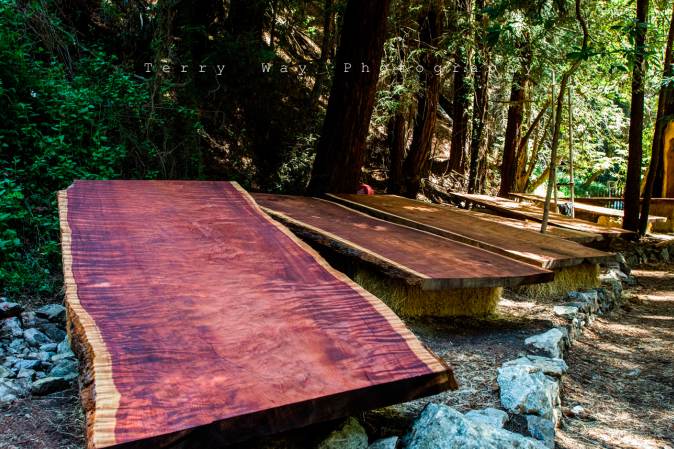
Big Sur fallen redwood auction: Proceeds benefit the Henry Miller Memorial Libarary

Big Sur fallen redwood auction: Proceeds benefit the Henry Miller Memorial Libarary

Although we’d never wish damage to a tree of this age and history we’re happy to hear that the rare and beautiful wood will help a cause near and dear to our hearts.

Profits generated from the redwood auction will be used for the following purposes:

Upgrading the Library to meet State and Federal regulatory requirements. This includes a water-treatment system, ADA compliant bathrooms, upgraded septic system, and more. Bringing the Library into compliance will ensure the Library can remain operational while also providing exceptional programming, including our acclaimed short film screening series,workshops, audio series, etc. This will require paying for building and maintaining a water system as well as paying related legal and administrative fees. Continue reading

Technology Aids Access Of Classicists To Classics

The Loeb classics, newly available online

The Loeb classics, newly available online

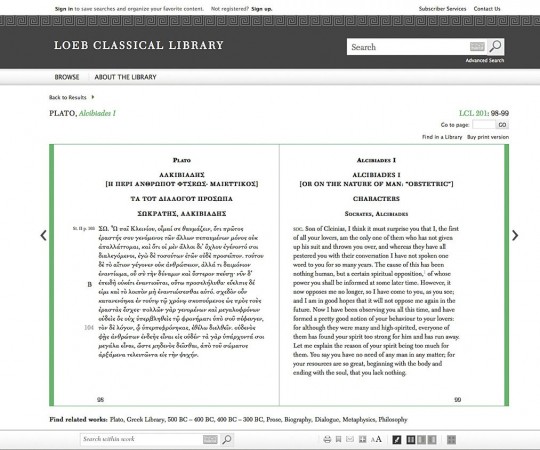
We do not know whether James has made his way to the library yet, but we imagine there are classical treasures in the vaults at Harvard University that can only be appreciated in person. But a scholar’s best friend will likely, increasingly be technology like this:

WHEN JAMES LOEB designed his soon-to-be-launched series of Greek and Roman texts at the turn of the twentieth century, he envisioned the production of volumes that could easily fit in readers’ coat pockets. A century later, that compact format is still one of the collection’s hallmarks. Beginning in September, however, the iconic books will be far handier than Loeb had hoped: users of the Loeb Classical Library (LCL) will have the entire collection at their fingertips. After five years of dedicated work on the part of the library’s trustees and Harvard University Press (HUP), which has overseen LCL since its creator’s death in 1933, the more than 520 volumes of literature that make up the series will be accessible online. Besides allowing users to browse the digitized volumes, which retain the unique side-by-side view of the original text and its English translation, the Digital Loeb Classical Library will enable readers to search for words and phrases across the entire corpus, to annotate content, to share notes and reading lists with others, and to create their own libraries using personal workspaces.  Continue reading

Books, Authors And Sparks Of Inspiration

In a climate of embattled bibliophilia, authors have been undertaking reading stunts to prove that reading—anything—matters. Construction by Stephen Doyle.

In a climate of embattled bibliophilia, authors have been undertaking reading stunts to prove that reading—anything—matters. Construction by Stephen Doyle.

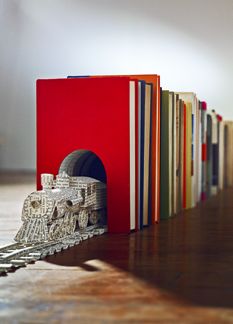
Our occasional posts on books and book-ish things, on libraries and library-ish things, on authors and author-ish things, all grow out of the obvious: books are essential to humanity. We do what we can in the general interest of books. So, this item on the New Yorker‘s website about stunts in the stacks is welcome here and now:

In the nineteen-nineties, when you bought a book at Barnes & Noble the cashier slipped it into a plastic bag bearing a black-and-white illustration of an author’s face—Mark Twain, Oscar Wilde, Edith Wharton. Recently, I was poking around a bookstore in Manhattan and noticed a canvas tote for sale. In a simple red heart, the word “books” was spelled out in white letters. This tale of two bags is the story of decades of change in the publishing industry. “Books,” O.K.—but which ones? Continue reading

New York Public Library’s Good And Sensible Decision

ILLUSTRATION: TOM BACHTELL

ILLUSTRATION: TOM BACHTELL

Thanks for this (and other recent) attention from the New Yorker‘s stable of super-writers (and others, elsewhere) on a topic of ongoing interest to us, especially this important comment:

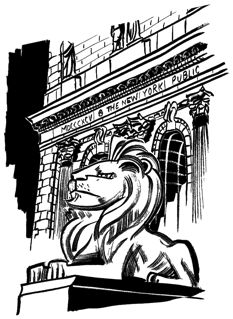
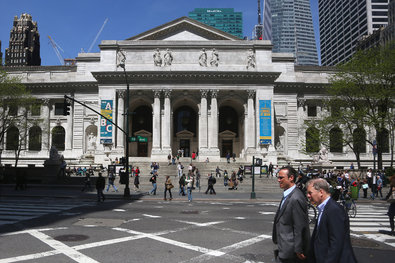
The New York Public Library’s announcement that it is abandoning its Central Library Plan has been praised as a good and sensible thing, and indeed it is. The C.L.P. would have sold off the Mid-Manhattan Library and the Science, Industry, and Business Library (called sibl; five of its floors not open to the public have been sold already). The collections of those libraries would have been moved to the main research library, on Fifth Avenue, and elsewhere. That hundred-and-three-year-old edifice (now known as the Stephen A. Schwarzman Building), with the stone lions out front, would have been reconfigured: seven floors of its stacks taken out, a lending library added to what had been a research library only, more than a million books moved off-site, and a four-level atrium and other new elements put in, following a design by the architect Norman Foster. Continue reading

New York Public Library’s Evolving Plans

08LIBRARY-hp-sfSpan

Chang W. Lee/The New York Times. The New York Public Library has abandoned its controversial plan to turn part of its research flagship on 42nd Street into a circulating library.

Our interest in public libraries, as pillars of their communities, is frequently leading us to stories about the interplay between new technology and how libraries or used; or supposed challenges to the relevance of libraries. We remain convinced of their relevance and are interested in stories that highlight innovative solutions to the challenges these institutions face. Continue reading

Flash Folio Exhibition at Cornell–Happy Birthday Will!

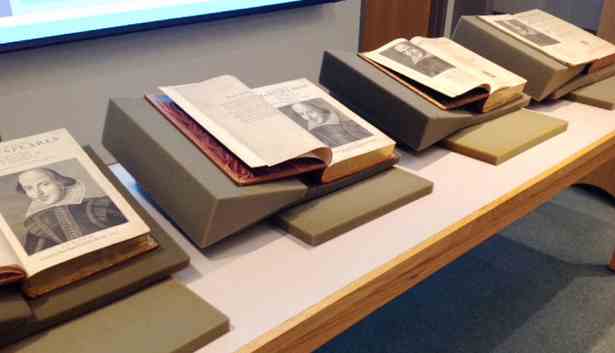
shakespeare

I spent my university years lugging around the weighty Riverside Shakespeare, the volume that has held the status of “definitive Shakespeare” text in academic circles since its first publication 30 years ago. Having never minded the moniker Shakespeare nerd–I could not help the stab of jealousy at missing the opportunity to experience Cornell’s flash exhibition of 4 rare folios in honour of the Bard’s 450 birthday.

For one day only, the Library is putting all four folio editions of William Shakespeare’s plays — the earliest published collections of his work, all printed in the 17th century and now among the most important books in all of world literature — on display to commemorate the 450th anniversary of the Bard’s birth.
All the world may be a stage, but Cornell is fortunate to be one of the few places in the world that can put all four folios on display for its community of readers and researchers.

Continue reading

Woody@101

Credit: Michael Ochs Archives/Getty

Last year we were a bit “off calendar” in honoring one of our favorite American Masters, this year less so. The good news is that his music and his relentless work on behalf of less fortunate people and the communities they were part of is so vast that, luckily for us, it will take some time to exhaust the full measure of his recordings.

For decades, we’ve had the Smithsonian recordings (with the help of Alan Lomax and Moe Asch) to thank for preserving both the musical and oral history of the nation. In honor of this less symmetrical birthday Rounder Records has released additional works from the archives, this time focusing on the part of Guthrie’s canon that was written for the American government.

In the Library of Congress recordings, the young musicologist and historian Alan Lomax made recordings of songs and stories in the 1940s of many of the country’s most colorful and important musicians, including Guthrie.

Along with John Steinbeck’s “The Grapes of Wrath,” it is one of the single greatest resources for understanding Depression-era Oklahoma: how the pioneer spirit reacted when confronted with crushing poverty. Continue reading

Reading, Libraries & Good Citizenship

'We have an obligation to imagine' … Neil Gaiman gives The Reading Agency annual lecture on the future of reading and libraries. Photograph: Robin Mayes

‘We have an obligation to imagine’ … Neil Gaiman gives The Reading Agency annual lecture on the future of reading and libraries. Photograph: Robin Mayes

Libraries still have enough friends that we do not yet count them out, but the challenges they face are undeniable. Thanks to the Guardian‘s coverage of one prominent writer’s address on this important topic:

Neil Gaiman: Why our future depends on libraries, reading and daydreaming

A lecture explaining why using our imaginations, and providing for others to use theirs, is an obligation for all citizens

It’s important for people to tell you what side they are on and why, and whether they might be biased. A declaration of members’ interests, of a sort. So, I am going to be talking to you about reading. I’m going to tell you that libraries are important. I’m going to suggest that reading fiction, that reading for pleasure, is one of the most important things one can do. I’m going to make an impassioned plea for people to understand what libraries and librarians are, and to preserve both of these things. Continue reading

Library, Guardian Of Spiritual Treasure

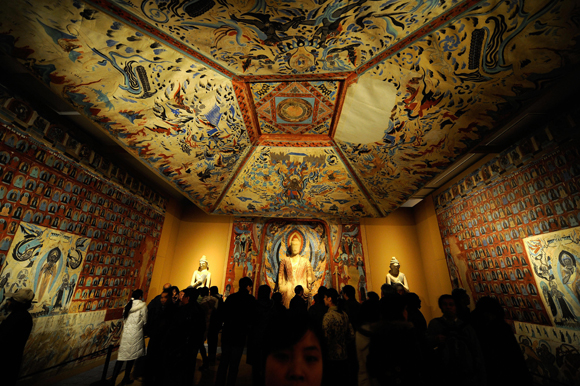
Visitors visit a replica parts of the Mogao Cave during the Dunhuang Art Exhibition in Beijing on February 20, 2008.  The exhibition displays collections mostly from the Dunhuang Grottoes which were constructed between the 4th and the 14th century, including recovered antres, original painted sculptures and their replicas from Library Cave of Dunhuang. Dunhuang, located in Jiuquan of Northwest China's Gansu province along the historic Silk Road, is in danger of being swallowed by sands of the adjacent Kumtag desert, which are creeping closer at a rate of up to four metres (13 feet) a year. (Photo credit TEH ENG KOON/AFP/Getty Images)

Visitors visit a replica parts of the Mogao Cave during the Dunhuang Art Exhibition in Beijing on February 20, 2008. The exhibition displays collections mostly from the Dunhuang Grottoes which were constructed between the 4th and the 14th century, including recovered antres, original painted sculptures and their replicas from Library Cave of Dunhuang. Dunhuang, located in Jiuquan of Northwest China’s Gansu province along the historic Silk Road, is in danger of being swallowed by sands of the adjacent Kumtag desert, which are creeping closer at a rate of up to four metres (13 feet) a year. (Photo credit TEH ENG KOON/AFP/Getty Images)

We tend to avoid topics pertaining to religion, spirituality or related highly personal matters that sometimes can lead to misunderstandings, misapprehensions, or worse; but our love of libraries, of archives, of discoveries are all satisfied in one fell swoop of a blog post, and we are particularly impressed to learn that Gutenberg may not be the only key to understanding the history of printing:

Just over a thousand years ago, someone sealed up a chamber in a cave outside the oasis town of Dunhuang, on the edge of the Gobi Desert in western China. The chamber was filled with more than five hundred cubic feet of bundled manuscripts. They sat there, hidden, for the next nine hundred years. When the room, which came to be known as the Dunhuang Library, was finally opened in 1900, it was hailed as one of the great archaeological discoveries of the twentieth century, on par with Tutankhamun’s tomb and the Dead Sea Scrolls. Continue reading

If You Happen To Be In New York

Last time we mentioned this library, it was to raise some important questions; on a previous occasion to recommend a lecture; this time we recommend what looks like an important exhibition curated by Leonard S. Marcus:

The ABC of It is an examination of why children’s books are important: what and how they teach children, and what they reveal about the societies that produced them. Through a dynamic array of objects and activities, the exhibition celebrates the extraordinary richness, artistry, and diversity of children’s literature across cultures and time. Continue reading

Exploring Iceland

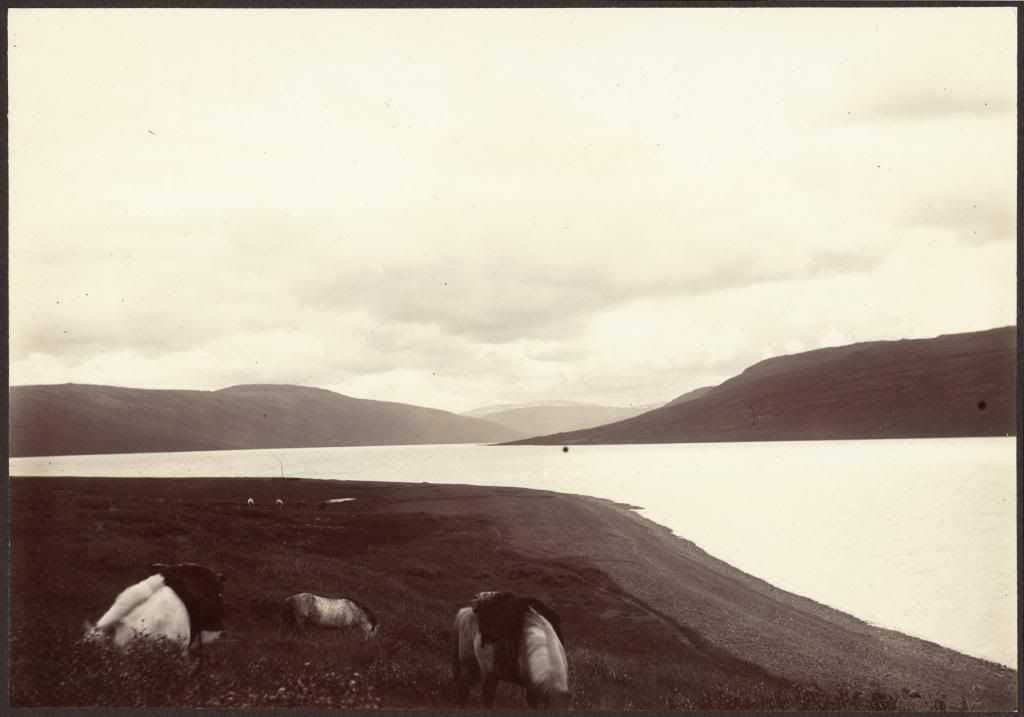
The head of Skorradalsvatn. Collodion print ca. 1900 by Frederick W. Howell. Bequest of Daniel Willard Fiske; compilation by Halldór Hermannsson at the Fiske Icelandic Collection of Cornell University.

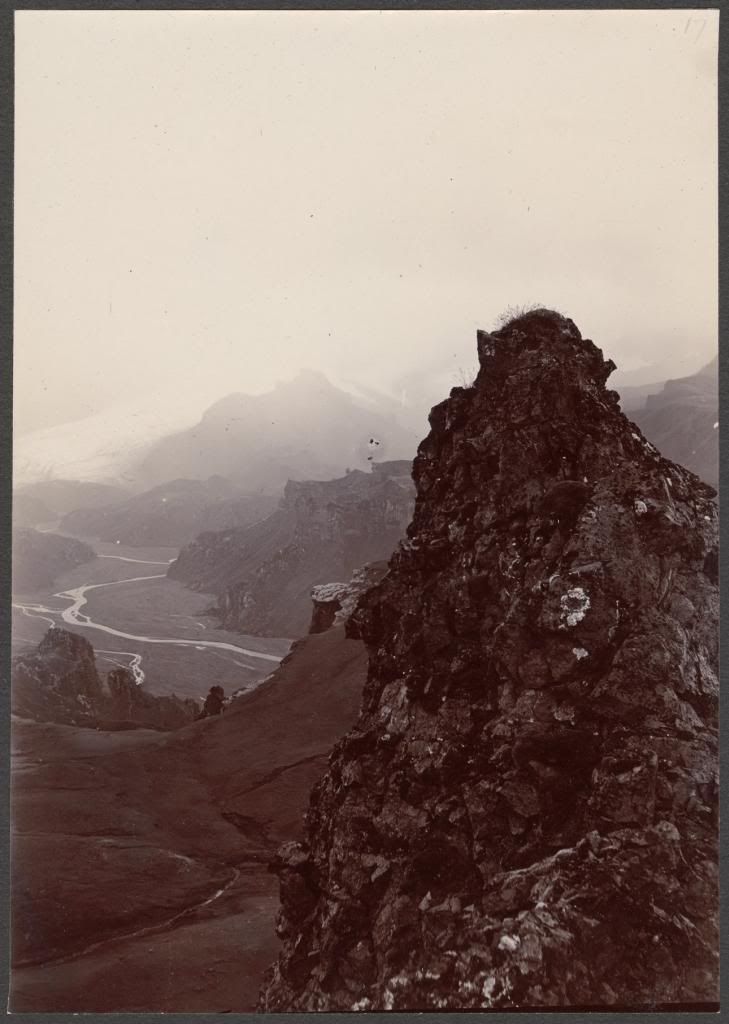
Þórsmörk. Head of Krossárdalur. Collodion print ca. 1900 by Frederick W. Howell. Bequest of Daniel Willard Fiske; compilation by Halldór Hermannsson at the Fiske Icelandic Collection of Cornell University.

It was mentioned a week or two ago that Iceland is in the air. For me, Iceland is on my mind, in my laptop, hidden throughout the Cornell libraries, and scattered about my room. After a couple essays for an environmental history course last year and some preliminary research for finding an honors thesis topic in the history major, I discovered that, thanks primarily to Cornell University’s first librarian, we have one of the largest collections of Icelandic material in the world. Since one of my projects for the environmental history class had shown me that Iceland was an interesting place to examine more closely, I did some more research and found the topic of European travel there during the eighteenth and nineteenth centuries engaging enough to choose as an honors thesis subject.

One of the places in Europe with the most spaces left blank by cartographers through the eighteenth and nineteenth centuries, Iceland’s inner regions were not fully mapped until 1901. Continue reading

Happy 75th Anniversary Caldecott!

I’ve always loved books, and in many contexts those with fine illustrations are all the more powerful. That’s why I’m so grateful for the American Library Association’s Caldecott Medal for honoring the most distinguished American picture books.

The beloved titles are timeless – many are the same books that were read to me as I child, which I in turn read to my own children. I am confident this pattern will continue.

Listen to the story about this year’s winners here

New York Public Library Is Privileged

If you have an interest in books and especially their role in libraries, as we do here because of their educational and cultural contributions to communities, you could not have ignored the stories of this man‘s shift from leading Amherst College to his present role at the New York Public Library.  Looking at NYPL’s history, from the 19th Century to more recent times it seems on occasion more like a tool for the aggrandizement of wealth and privilege than a public institution.  But not so, or not entirely so.  Speaking to research librarians in an hour-long gentle provocation, NYPL’s President and CEO frames its role in a manner any modern library lover must be willing to speculate on:

Research libraries have long been considered the intellectual hub of a community, whether it’s a university or a city. With the shift to digital content, network-based services, and globalization, research libraries have been challenged to adapt in unprecedented ways. Some even question their ongoing importance.

If You Happen To Be In Portland (Maine)

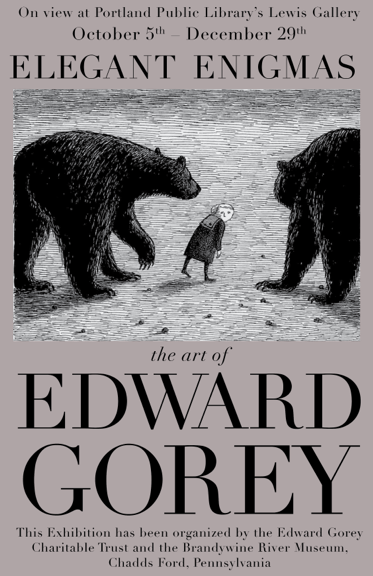
Our never-ending commitment to demonstrate the value of public libraries–not just the institution as a great idea but all its phenomenal specific examples– led us to the Portland, Maine Public Library.  We wish it were as simple as walking down the street to visit this exhibit…

Click the image to the right to go to its website, highlighting the roles of Maine College of Art and Portland Public Library. And major thanks to The Bank of Maine, mainly for funding generously provided to support your public library, but also for doing it with a master of illustrated story-telling.

If you happen, like many of us on this site, to be a devoted fan of Mr. Gorey, you might find this profile of him in Harvard Magazine to be of interest.  And for that matter, if you happen to be in Portland, Maine then you are relatively not so far from the Gorey home, which is open to visitors.

Oliver Sacks, Come To India!

A letter that touches on a theme close to our hearts.  Any of us could have written a letter with this sentiment (click the banner above for the letter and the link below to Zadie Smith’s article that inspired it) but his way with words is simply more powerful:

IN RESPONSE TO:

North West London Blues from the July 12, 2012 issue

To the Editors:

Seeing the photograph of Willesden Library in Zadie Smith’s powerful article [“North West London Blues,” NYR, July 12] gave me a sudden start, and a rush of intense memories and emotions, for it was here that I spent many of the happiest hours of my growing-up years—our house was a five-minute walk from the library—and where I received my real education. Continue reading

Fighting Fire With Fire

This isn’t the first time we’ve applauded local libraries taking a stand to protect their place in public service. But the particular example above is prime in terms collective action lassoing social media.  Kudos to Leo Burnett/Arc Worldwide agency for campaigning the hoax, and hurray for yet another library with the backbone to publicly roar.

Troy Public Library would close for good unless voters approved a tax increase. With little money, six weeks until the election, facing a well organized anti-tax group who’d managed to get two previous library-saving tax increases to fail, we had to be bold. We posed as a clandestine group who urged people to vote to close the library so they could have a book burning party. Public outcry over the idea drowned out the anti-tax opposition and created a ground-swell of support for the library, which won by a landslide.


“You-er Than You!”

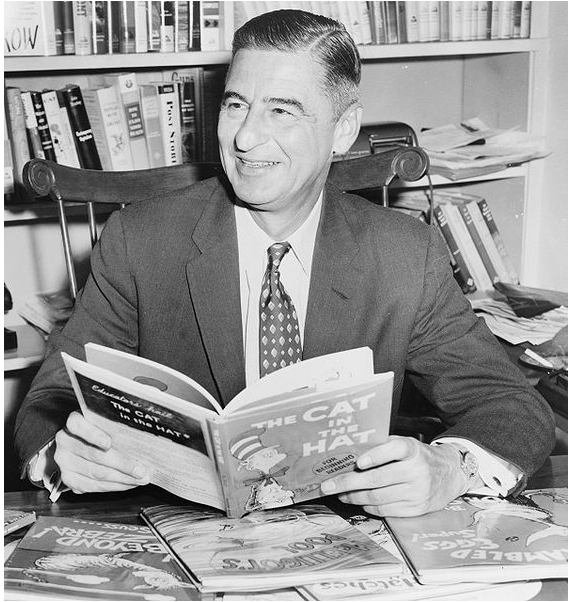
Photo: Library of Congress Prints and Photographs Division

A Dr. Seuss centennial had come upon me a few days ago in an “almost missed it moment”. In many ways the consumate “ad man” who became one of the most beloved children’s book authors never actually changed careers.  Nearly each and every one of his books continues to reach the pinacle of salesmanship, but not for a product. With joy, wit and often irony, they sold the love of reading, imagination and exploration.

Continue reading

Margin Calls

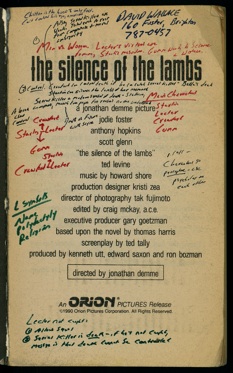
Click the image to the right for an explanation of what that image has to do with the remarkable world of marginalia, which begins:

“In getting my books,” Edgar Allan Poe wrote in 1844, “I have always been solicitous of an ample margin; this is not so much through any love of the thing in itself, however agreeable, as for the facility it affords me of penciling in suggested thoughts, agreements, and differences of opinion, or brief critical comments in general.”

A certain Mr. Wallace, of literary fame, apparently had reason to write in the spaces of whatever was at hand.  But that is a matter of quite trivial pursuit compared to Kerouac’s marginalia while reading Thoreau.

Continue reading