The Sense Of A Place

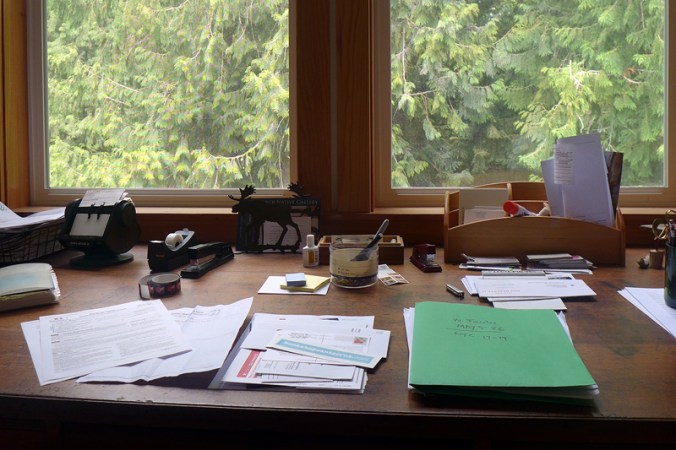
proulx-desk

What Annie Proulx says about places she has lived–through her fiction especially but also in this interview below–rings a bell for us, considering the number of places we have chosen to live to do what we do. What the interview echoes specifically for me is the inherent improbability of accomplishing one of our key objectives: we want travelers to become as attached to places as we are, so that they will care about the conservation mission of our initiatives in each location as much as we do. It occurs to me that our guests spend about as much time with us in any given location as a reader spends on any given book by Proulx; also, books and our locations share in common the fact that they can be revisited an indefinite number of times.

That said, we want our guests to care more about these locations than even the most devoted reader cares about a Proulx character; not because we think less of her characters but because our conservation mission is about places in need of constant support. Improbability in this context refers to the question: how can our guests become intensely attached–as happens when a reader is gripped by a compelling character in a deeply human situation in an exquisitely described location–in a limited amount of time and continue to care intensely after they depart? That is our challenge, and we are constantly finding new ways of answering that question.

Another echo from reading what Annie Proulx says about the places she has lived, about belonging, feels strongly relevant. If we are a fraction as good at what we do as she is at what she does, belonging becomes irrelevant. What matters is how much sense we make of the place, and how much sensibility we harness in showcasing it to our guests. If you have read any of her books, you know how evocative place can be–like an additional character–and if that captures your attention you should read the interview that follows the introductory section excerpted below.

HOW THE WRITER RESEARCHES:
ANNIE PROULX

JOHN FREEMAN INTERVIEWS THE PULITZER PRIZE WINNER IN HER SNOQUALMIE VALLEY HOME

Annie Proulx is 80 years old and still not sure where she belongs. Standing in the atrium of her home in the Snoqualmie Valley, the Pulitzer Prize-winning novelist eyes a photograph of the cottage she once occupied in Newfoundland, the setting of her 1993 novel, The Shipping News. “I fell in love with that landscape,” Proulx says, speaking in the tone of a woman describing an ex-lover. Continue reading
What Would I Read At Villa del Faro?

Proust

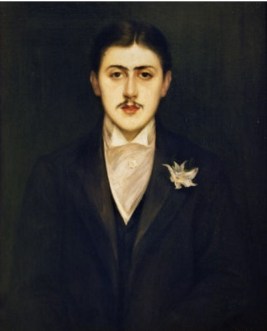
As a teen-ager, Marcel Proust filled out a questionnaire as part of a parlor game. His responses have experienced a startling afterlife. PHOTOGRAPH BY IMAGNO / GETTY

Seth’s post, followed by Jocelyn’s post, both reach me just after reading this fascinating short history on the so-called Proust questionnaire, which I first encountered in the back pages of Vanity Fair magazine when I had nothing better to do. I am reminded of two things: guilty pleasure reading, and actual reading of something other than news, news analysis, or long-form non-fiction–which are a mainstay of my contributions on this site.

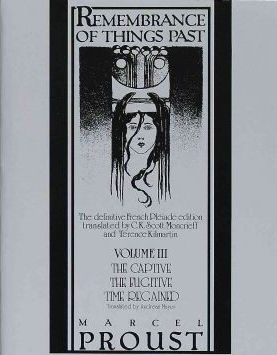
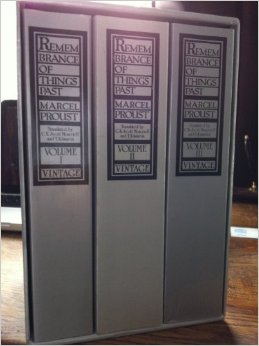
I am reminded of a third thing: Amie’s marathon reading of Proust, and the view of this 3-volume set around our home for a long stretch of time. Those books that she would lug around were the sign of an unreformed, unrepentant student of literature, whose career started as a book editor in New York City, when she had nothing better to do.

41vfEDKvg7L._SY344_BO1,204,203,200_

I say that mainly to contrast what I did with my guilty pleasure reading time back then, and what she did with hers. I say that because in more recent times, especially the past six years in India, she has had something much better to do, and plenty of it to do, and I think we are all better for that. Which has me thinking: if I had the time, what would I read if I could just leave it all behind right now and land at Villa del Faro with nothing but books (and at least a couple changes of clothes, of course)? Would I find that Proust set Amie has in storage? As an amateur nostalgist with limited writing talent, I might choose those volumes as a self-help guide.

9780394711843I write on this site partly to share about events, people and places that I believe are worthy of others’ attention; but also for the sake of further reflection and sense-making of those. Patterns repeat; some people and places important once come back to be important again.  For example, nearly five years ago I was on my third of five extended periods of work in Baja California Sur.  It was on an earlier visit in 2008 that I had met Andy Murphy, then with WWF, with whom I became friends and then eventually more with our project in Ghana. Continue reading
The Emily Dickinson Museum

Homestead-1858-lithograph

During a father-son road trip in 2009 to visit prospective colleges, we spent time in Amherst (MA, USA). The most important outcome of that visit was time spent with Michael Muller, who two years later would spend time as an intern with us in India during the summer before his final year at Amherst College.

Michael brought a literary quality to the startup of this communication platform where I continue to write. Which is why I thought of him when my attention was drawn to this museum in Amherst. For me it was valuable to take a moment to read about the relationship between this home’s history and the college where Michael was educated:

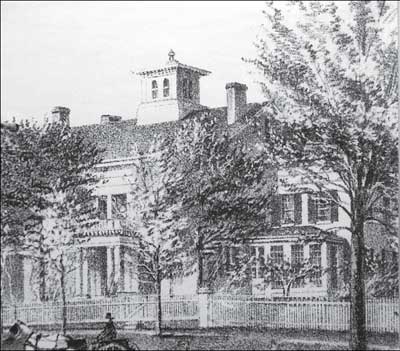
THE HOMESTEAD, probably the first brick house in Amherst, was built around 1813 for Samuel Fowler Dickinson and Lucretia Gunn Dickinson, Emily’s grandparents. Fowler Dickinson, a lawyer, was one of the principal founders of Amherst College. In 1830, his eldest son Edward, also a lawyer, and Edward’s wife, Emily Norcross Dickinson, together with their young son Austin, moved into the western half of the Homestead. Later that year, on December 10, Emily Elizabeth Dickinson was born. In 1833, a second daughter, Lavinia, was born. Continue reading

All the Ducks in a Row…

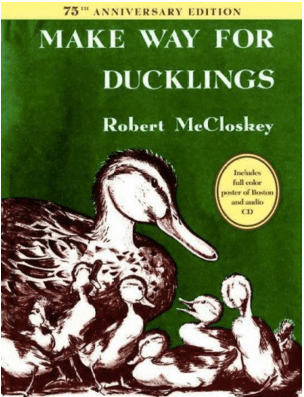
Of the many volumes in our family bookcase, Robert McCloskey’s Make Way for Ducklings and Blueberries for Sal always held pride of place. The stories, the charm and personality of the illustrations, made them family favorites to be read over and over at story time.

It’s not surprising to read that the artist took his work so seriously as to fill his Greenwich Village apartment with a clutch of ducklings for inspiration.  Continue reading

Journeys That Set Our Lives In Motion

9780544706262_custom-197e5387589323c99cfd561caf58b83ba52e68bb-s500-c85

You do not need to be an admirer of the works of this author to appreciate the value of the story told in this book review (thanks to National Public Radio, USA):

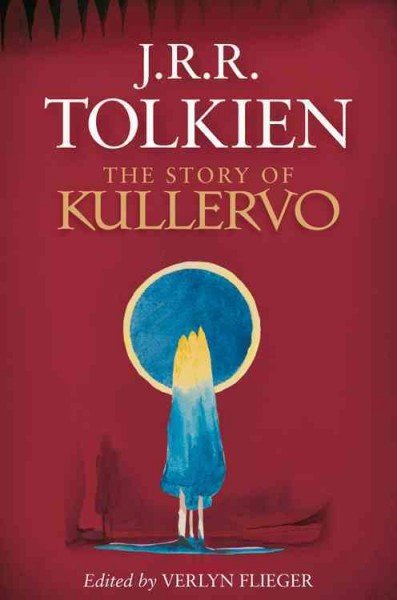
In 1913, the 21-year-old Ronald Tolkien should have been studying for his exams. He was halfway through his Classics degree — the subject all the best students did at Oxford in those days. Getting admitted to Oxford on a scholarship was a great opportunity for young Ronald, an orphan who had always struggled to stay out of poverty. A Classics degree would have set him up for almost any career he chose. But he wasn’t studying. Instead, he was trying to teach himself Finnish.

Why would a brilliant student with so much at stake let himself go astray at such a crucial time? There were two reasons: love and the Kalevala.

Tolkien’s twin obsessions at the time were his future wife, Edith Bratt, and the Kalevala, the national epic of Finland. This collection of poems, myths, spells and hero-tales had been collected and published in the early 19th century, but the poems themselves are thought to be far older. Its unique voice, resembling no other European mythology, thoroughly captured the mind and heart of young Tolkien. “The almost indefinable sense of newness and strangeness … will either perturb you or delight you,” he wrote at the time. Continue reading

Reasons For Rethinking Thoreau

151019_r27147-320

A series of blog posts since we debuted here in 2011 shows that we are Thoreauvians–quite likely referencing that 19th Century American writer more than any other writer. Our conservation ethos would explain that devotion. And yet, always at the ready to reconsider, in the spirit of small-l liberalism, we are open to the possibility that we had it wrong on this front all along. For example, at least one contributor to this blog, at 17 years old, took a can of spray paint and committed a crime in the form of grafitti, with a quotation from Thoreau spread across nearly 30 feet of a wall that had gone up in a place where the 17-year old was sure that wall did not belong. How could that have been right? And if wrong, while Thoreau was certainly not to blame, was it evidence that sometimes Thoreau has been improperly invoked?

The opening six paragraphs of this article– revisionism at its small-l liberal best–will likely hook you to read it to the end, if the paragraph above rings any bells:

On the evening of October 6, 1849, the hundred and twenty people aboard the brig St. John threw a party. The St. John was a so-called famine ship: Boston-bound from Galway, it was filled with passengers fleeing the mass starvation then devastating Ireland. They had been at sea for a month; now, with less than a day’s sail remaining, they celebrated the imminent end of their journey and, they hoped, the beginning of a better life in America. Early the next morning, the ship was caught in a northeaster, driven toward shore, and dashed upon the rocks just outside Cohasset Harbor. Those on deck were swept overboard. Those below deck drowned when the hull smashed open. Within an hour, the ship had broken up entirely. All but nine crew members and roughly a dozen passengers perished. Continue reading

Thanks To Humboldt

Homboldt.jpg

In the “oops, forgot to post on this” category, we recommend you start with the introductory video above, then continue on to the author’s website:

55054_us_humboldt_cov“The Invention of Nature” reveals the extraordinary life of the visionary German naturalist Alexander von Humboldt (1769-1859) and how he created the way we understand nature today. Though almost forgotten today, his name lingers everywhere from the Humboldt Current to the Humboldt penguin. Humboldt was an intrepid explorer and the most famous scientist of his age. His restless life was packed with adventure and discovery, whether climbing the highest volcanoes in the world, paddling down the Orinoco or racing through anthrax–infested Siberia. Perceiving nature as an interconnected global force, Humboldt discovered similarities between climate zones across the world and predicted
Continue reading

Short Story Dispensers Aim to Dispense with Unproductive Waiting Time in Grenoble

Screenshot from a spot by the French news channel M6

Last week Konbini, the online magazine dedicated to popular culture, featured a short story (the nonfiction kind) on the French city of Grenoble, so-called capital of the French Alps. In a collaboration between the city council and the French publishing company Short Édition, certain public spaces that frequently feature waiting time–libraries, the post office, the tourist center–have been equipped with short story dispensers.

After pressing a button to select between one-, three-, and five-minute stories, a long strip of paper is printed from the kiosk and the user can enjoy a piece of short fiction from Continue reading

When Stories Travel the World

Few books have been narrated, written, re-written, translated and adapted as much as Panchatantra, the collection of tales of wisdom. PHOTO: Scroll

Few books have been narrated, written, re-written, translated and adapted as much as Panchatantra, the collection of tales of wisdom. PHOTO: Scroll

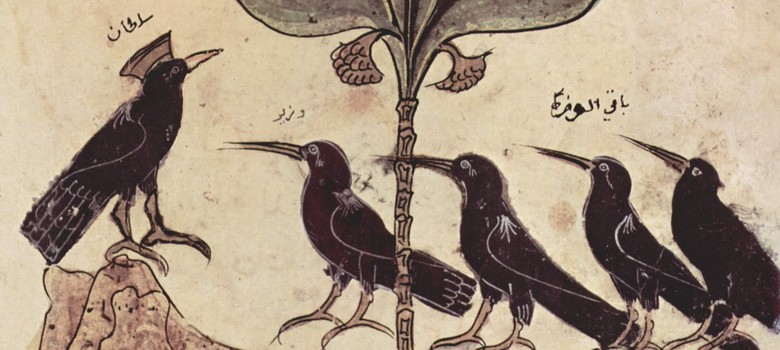
For more than two and a half millennia, the Panchatantra tales have regaled children and adults alike with a moral at the end of every story. Some believe that they are as old as the Rig Veda. There is also another story about these fables. According to it, these are stories Shiva told his consort Parvati. The present series is based on the Sanskrit original.

A king, worried that his three sons are without the wisdom to live in a world of wile and guile, asks a learned man called Vishnu Sharman to teach them the ways of the world. Since his wards are dimwits, Vishnu Sharman decides to pass on wisdom to them in the form of stories. In these stories, he makes animals speak like human beings. Panchatantra is a collection of attractively told stories about the five ways that help the human being succeed in life. Pancha means five and tantra means ways or strategies or principles. Addressed to the king’s children, the stories are primarily about statecraft and are popular throughout the world. The five strategies are: First Strategy: The Loss of FriendsSecond Strategy: Gaining FriendsThird Strategy: Of Crows and OwlsFourth Strategy: Loss of Gains and Fifth Strategy: Imprudence.

Continue reading

The Internet of Philosophy

The Stanford Encyclopedia of Philosophy now contains nearly 1,500 entries, and changes are made daily. (Installation by Marcos Saboya and Gualter Pupo. Photo by Reuters/Olivia Harris)

The Stanford Encyclopedia of Philosophy now contains nearly 1,500 entries, and changes are made daily. (Installation by Marcos Saboya and Gualter Pupo. Photo by Reuters/Olivia Harris)

The Internet is a goldmine of information, yes. In a parallel dimension, it lags in providing authoritative, rigorously accurate knowledge, at no cost to readers. The Stanford Encyclopedia of Philosophy has changed all that, beginning two decades ago.

The story of how the SEP is run, and how it came to be, shows that it is possible to create a less trashy internet—or at least a less trashy corner of it. A place where actual knowledge is sorted into a neat, separate pile instead of being thrown into the landfill. Where the world can go to learn everything that we know to be true. Something that would make humans a lot smarter than the internet we have today.

Continue reading

India and the Malay Literary Tradition

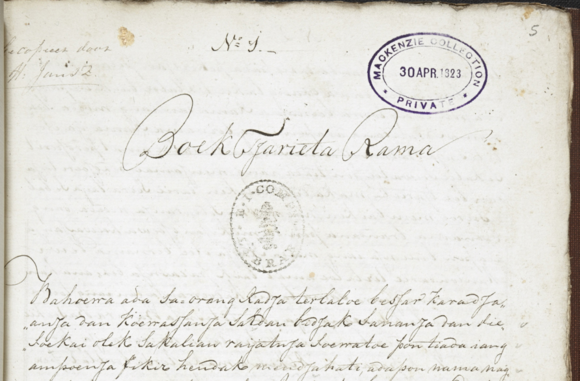
Caritra Rama, in romanised Malay with many Javanese elements, copied at Surabaya in February 1812. PHOTO: British Library, MSS Malay D 7, f. 5r (detail).

Caritra Rama, in romanised Malay with many Javanese elements, copied at Surabaya in February 1812. PHOTO: British Library, MSS Malay D 7, f. 5r (detail).

The epics of Ramayana and Mahabharata find their meaning and origin on Indian soil but their reach goes beyond the subcontinent. And the British Library’s archives find evidences of these in Malay literary traditions.

The great Indian epics the Ramayana and Mahabharata were known throughout Southeast Asia, but it was the Ramayana that most profoundly influenced Malay literary tradition. One of the oldest Malay manuscripts in a British collection is a copy of the Hikayat Seri Rama in the Bodleian Library, Oxford, which bears the ownership inscription of Archbishop Laud dated 1633. The British Library holds a manuscript of Caritra Rama, “The story of Ram”, in romanised Malay, which was copied in Surabaya in 1812.

Continue reading

Did Scrabble Almost Fail to Take Off?

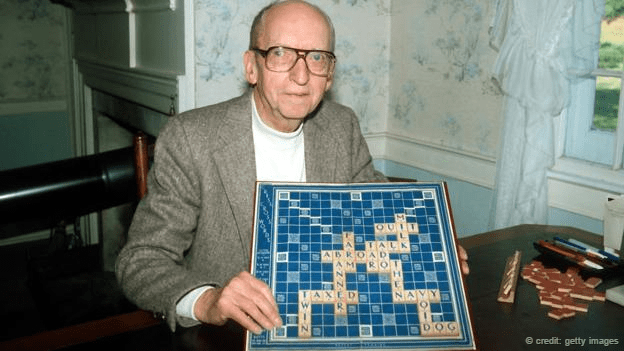
The game also formerly known as It and Criss-Cross Words acquired its lasting moniker in 1948, but its story begins 15 years earlier, when a 32-year-old architect named Alfred Mosher Butts joined the millions who’d already lost their jobs in the Great Depression. PHOTO: Getty

The game also formerly known as It and Criss-Cross Words acquired its lasting moniker in 1948, but its story begins 15 years earlier, when a 32-year-old architect named Alfred Mosher Butts joined the millions who’d already lost their jobs in the Great Depression. PHOTO: Getty

A game played avidly by amateurs and pros alike. In jails and by the British Royal Family, and has fans even at The White House. No other game brings wordsmiths together like Scrabble. And to think it may not have seen the light of living rooms:

Though words are its currency, it’s really a game about anything but. It’s a spatial game, a game of patterns and of memory. No wonder many top players have a mathematical rather than a linguistic background. You certainly don’t need to know what an obscure two-letter filler like ‘ee’ or ‘da’ means in order to play it, only that it appears on the endorsed word lists.

Continue reading

A Volcano That Fanned the Arts

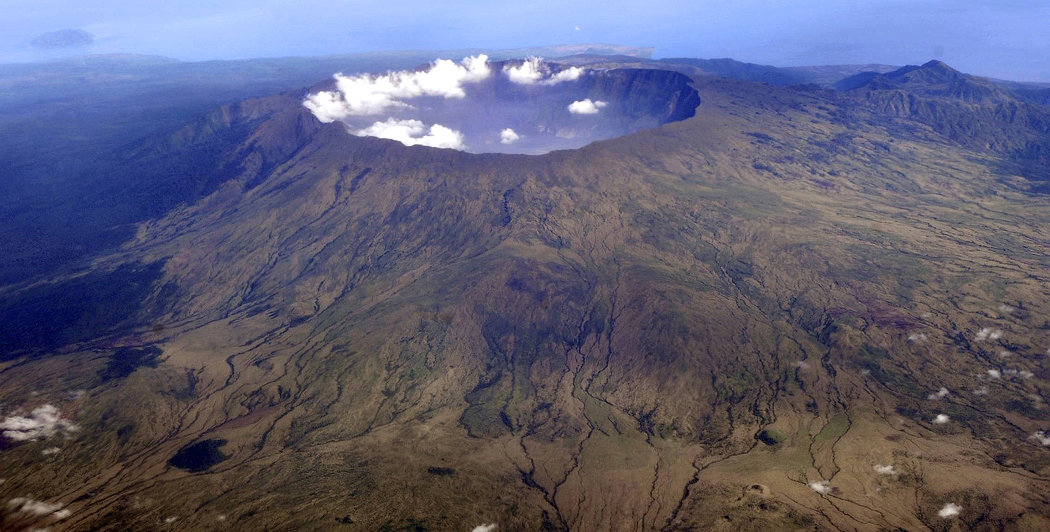
The deep volcanic crater, top, was produced by the eruption of Mount Tambora in Indonesia in April 1815 - the most powerful volcanic blast in recorded history. PHOTO: Iwan Setiyawan/KOMPAS, via Associated Press

The deep volcanic crater, top, was produced by the eruption of Mount Tambora in Indonesia in April 1815 – the most powerful volcanic blast in recorded history. PHOTO: Iwan Setiyawan/KOMPAS, via Associated Press

That the volcanoes have power is plain, cemented truth. You hear of their trail of ravage – ash, rocks, lava, evacuation, barren lands. The volcano vocabulary is dreary, if you may say so. But not the eruption of Mount Tambora. For this be the reason for many a flood, famine, disease, civil unrest and economic decline.

“The year without a summer,” as 1816 came to be known, gave birth not only to paintings of fiery sunsets and tempestuous skies but two genres of gothic fiction. The freakish progeny were Frankenstein and the human vampire, which have loomed large in art and literature ever since.

“The paper trail,” said Dr. Wood, a University of Illinois professor of English, “goes back again and again to Tambora.”

Continue reading

The European Who Gave India its Railway Book Stalls

A vendor attends a customer at a railway platform at Mumbai, India. PHOTO: Reuters

A vendor attends a customer at a railway platform at Mumbai, India. PHOTO: Reuters

You remember railway book stalls as being there since eternity. Being in the business of making arduous train journeys a pleasant affair in the company of books and newspapers. It’d be easy to assume a well-meaning civic body put them up. But as far as India goes, the country and its people owe their reading on trains to Emile Edouard Moreau, a European businessman.

Continue reading

Of Books and Travel

What might be the perfect holiday retreat has just been listed on AirBnB: the opportunity to become a bookseller for a week or two. PHOTO: Colin Tennant

What might be the perfect holiday retreat has just been listed on AirBnB: the opportunity to become a bookseller for a week or two. PHOTO: Colin Tennant

Quotes on travel abound. And chances are you’ve read this some time: The world is a book and those who do not travel read only page. St. Augustine immortalized those words and now, AirBnB has literally taken it to heart. Always believed in the many worlds that exist between two ends of a book? Then, imagine a library. One that you run for a week. Or maybe two, too.

Continue reading

Of Rains and Communist Reading Rooms

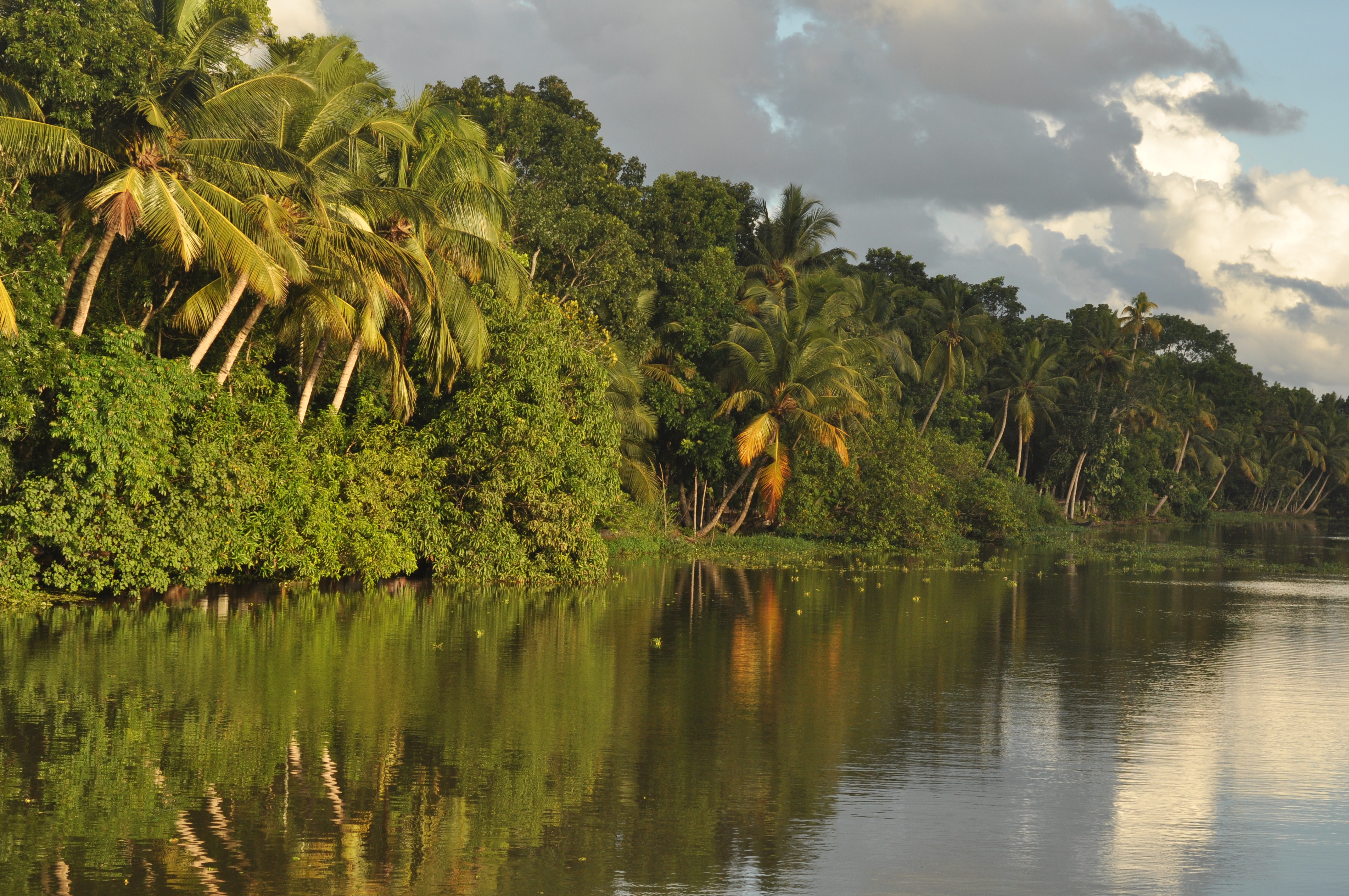
View of the approaching storm from our Xandari Riverscapes houseboat.

View of the approaching storm on Vembanad Lake, from a Xandari Riverscapes houseboat.

Monsoon rains in Kerala – the greatest drama I’ve ever watched. They tick everything on Aristotle’s checklist for a good play. A country dried by summer and hoping on a good ending makes for a decent plot. Meet the characters. A thick blanket of menacing grey, humid air hugging skin. Gusty winds that uproot trees and power lines, darkness that comes calling even before night. And the stellar spectacle of a finale – prayers, predictions, and calculations answered in silvery drops. Stunning, stinging, and relieving all at once.

Writing this while watching blue and grey jostle in the skies, the earth still smelling of the last rain (petrichor is the word), I am reminded of the book I’m reading now. One that is as old as me, one befitting the best season in India. Alexander Frater’s Chasing the Monsoon.

“As a romantic ideal, turbulent, impoverished India could still weave its spell, and the key to it all – the colours, the moods, the scents, the subtle, mysterious light, the poetry, the heightened expectations, the kind of beauty that made your heart miss a beat – well, that remained the monsoon.”
Alexander Frater, Chasing the Monsoon

Continue reading

Museums, Libraries, And An Innovative Hybrid

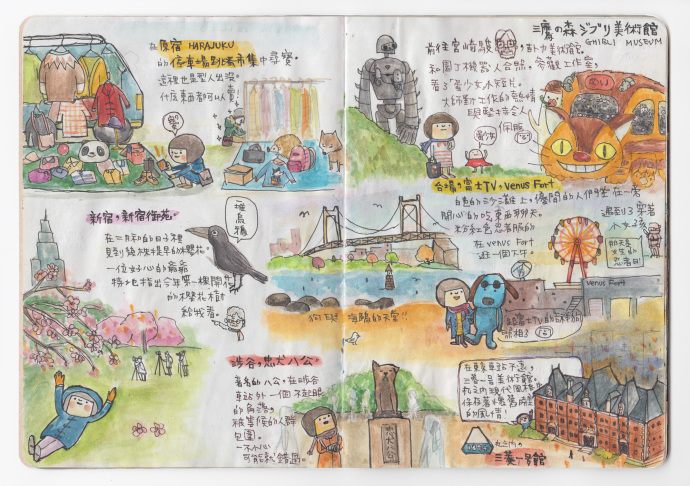
DRAWING BY LINYU YEN, COURTESY THE SKETCHBOOK PROJECT

DRAWING BY LINYU YEN, COURTESY THE SKETCHBOOK PROJECT

Museums, as well as libraries and other community institutions get a disproportionate share of our attention on this blog. When we see a random variation like the following, we cannot help but follow the trail (thanks to Jordan Kisner):

One recent Wednesday afternoon, a man wandered into a library on North Third Street in Brooklyn and asked how he could sign up for a library card. The young woman behind the counter smiled and explained that at this particular library there were no cards—or even traditional books. The Brooklyn Art Library, housed in a Williamsburg storefront with unfinished floors and exposed piping, is, instead, home to the Sketchbook Project, a collection of crowdsourced sketchbooks that is, according to its staff, the largest in the world. The project was founded in 2006, when Steven Peterman and Shane Zucker, two art students living in Atlanta, began mailing blank Moleskines to anyone who wanted one for a small fee, and then archiving whatever came back. Now anyone can pay twenty-eight dollars for a sketchbook, or sixty-three dollars for a digital membership, which means that their books will be scanned in full and archived online in a digital library. Continue reading

A 750-year-old Legacy

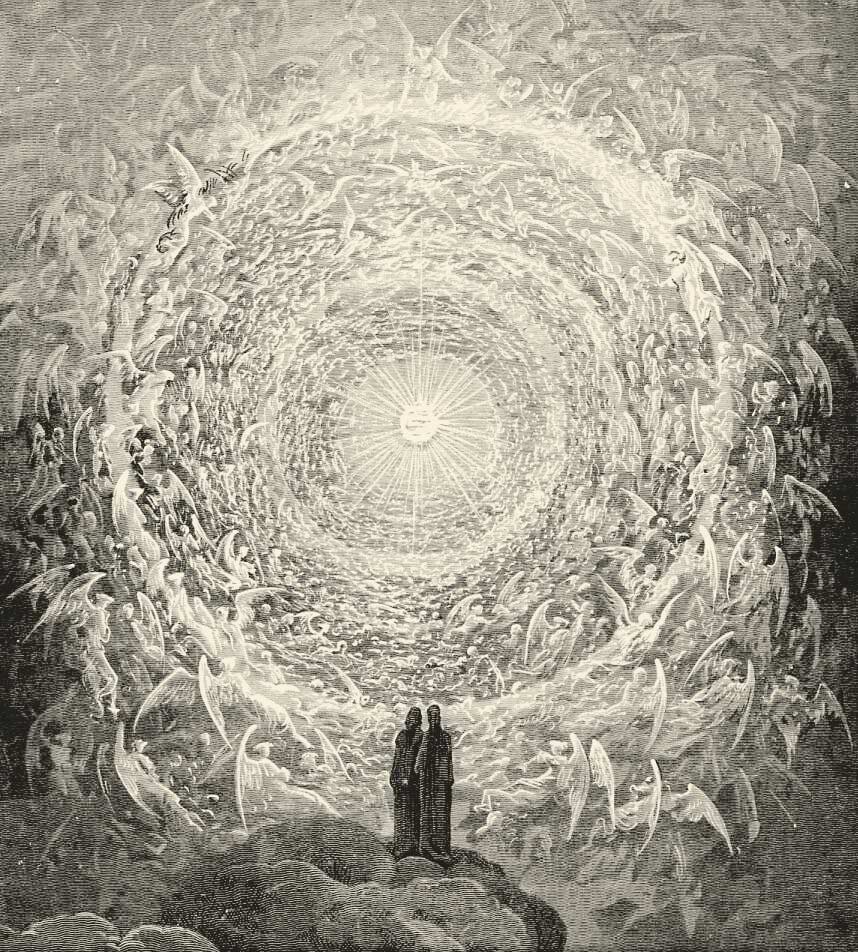
This be the destination that Dante Alighieri envisioned then: A love that moves the sun and other stars. ILLUSTRATION: Gustave Dore

This be the destination that Dante Alighieri envisioned then: A love that moves the sun and other stars. ILLUSTRATION: Gustave Dore

A prophet of hope, herald of the possibility of redemption, liberation and the profound transformation of every man and woman, of all humanity

– Pope Francis on Dante

An epic poem running into 14,233 lines, an allegorical exploration of hell and purgatory to reach paradise and a quest to understand the authentic self and the transcendental meaning of existence – Dante Alighieri has given much to the world. With Italy and literary circles celebrating his 750th birth anniversary this month, all awe and criticism once again turn the Divine Comedy’s way. Wondering about a 700-year-old text’s relevance in this century? Well, we are talking Dante and to say his masterpiece is a timeless revolution wouldn’t be way off the mark. Over his oft-didactic narrative and theological inferences, Dante leaves readers with gruesome yet alluring imagery, the knack to examine status-quo and a careful look at the duality in life. Continue reading

Tricksters, Animals, And Narratives We Are Meant To Learn From

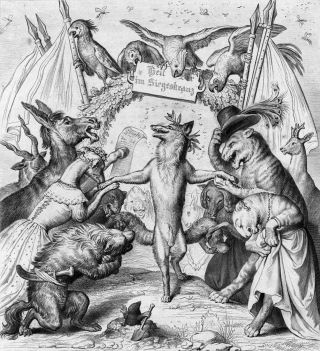
“Reynard” is a defining document of a vast tradition in Western art: the trickster story. CREDIT ART AND PICTURE COLLECTION / THE NEW YORK PUBLIC LIBRARY

“Reynard” is a defining document of a vast tradition in Western art: the trickster story. ART & PICTURE COLLECTION, THE NEW YORK PUBLIC LIBRARY

Thanks to Joan Acocella for illumination of a narrative form we are quite fond of:

…Animal narratives have allowed writers with lessons on their mind to make art rather than just lessons.

Such tales are no doubt as old as animal paintings on cave walls. The earliest evidence we have of them is the beast fable, a form that is said to have come down to us by way of Aesop, a Greek storyteller who was born a slave in the sixth century B.C. Actually, no solid evidence exists that there ever was an Aesop, any more than there was a Homer. As with the Iliad and the Odyssey, we are talking about manuscripts that date from a period much later than the supposed author’s, and were probably assembled from a number of different fragments. In any case, a beast fable is a very short story (the Penguin Classics edition of Aesop renders “The Tortoise and the Hare,” perhaps the most famous of the fables, in five sentences) in which, typically, a couple of animals with the gift of speech learn a lesson from their dealings with one another. This moral is then stated at the end of the fable, and it is usually of a cautionary variety: don’t eat too much, don’t brag, watch out for this or that. As early as the third century B.C., these stories were being gathered together in various editions, usually for children, to teach them Latin (most were in Latin until the late Middle Ages) and some basic rules about life. Continue reading

The Mysteries Of Elena Ferrante

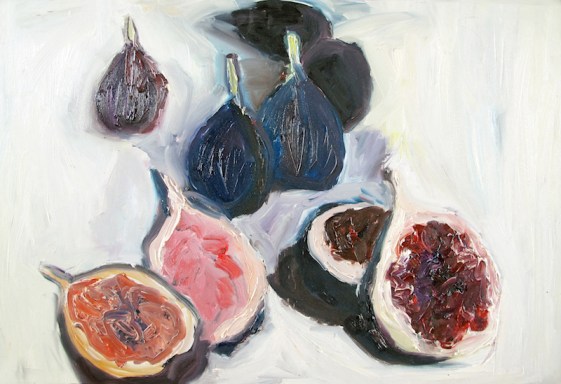
Path of Figs, 2012. Giulia Bianchi.

If you have not heard of Elena Ferrante before, you may want to start here, here, or here. But then come back here for this review. Thanks to the nplusone magazine website:

Those Like Us

On Elena Ferrante, by Dayna Tortorici,Issue 22: Conviction, Spring 2015

WHENEVER I HEAR someone speculate about the true identity of Elena Ferrante, the pseudonymous Italian novelist of international fame, a private joke unspools in my head. Who is she? the headlines ask. Don’t you know? I whisper. In my joke I’m sitting opposite someone important. The person promises not to tell, so I say:

She’s Lidia Neri.

She’s Pia Ciccione.

She’s Francesca Pelligrina. Domenica Augello.

Different names, every time, but the reaction is the same: a momentary light in the listener’s eyes that fades to bored disappointment. An Italian woman from Naples, whose name you wouldn’t know. Who did you expect?

Continue reading