From The Department Of Save It For Later

Screen Shot 2015-04-09 at 4.58.56 AM

Anyone, anywhere, who believes that something is worth saving (preserving, conserving, protecting, etc.) enough to dedicate time and effort, among other resources, we are likely to support it however we can. Our Bird of the Day feature is an example that goes back to one man’s collection of photographs he took personally containing all the birds, endemic and otherwise, that inhabit and/or migrate through south India. This collection is part of his passionate commitment to wilderness conservation in Kerala and other neighboring states.

We asked, in 2011, if Vijaykumar would allow us to publish his photographs in the interest of promoting conservation. He said yes. By now we have probably published all of the collection as it was in 2011, but he is still photographing and contributing. And four years later we have talented birders, many of whom are also exceptional wildlife photographers, contributing their photographs from all over the world. Seth became an employee of the Cornell Lab of Ornithology that same year, and that has led to a whole bunch of other interesting bird-related posts that we host.

Meanwhile New York City has rarely been a subject we cover from a conservation perspective, though its Public Library is of special interest to us. We have not linked to Jeremiah’s blog previously, but it is the type we favor, as you might have noticed, so here goes. Maybe there is more NYC in store for us.
Continue reading

Inspired By Libraries Without Borders

jacob-lawrence-library-1

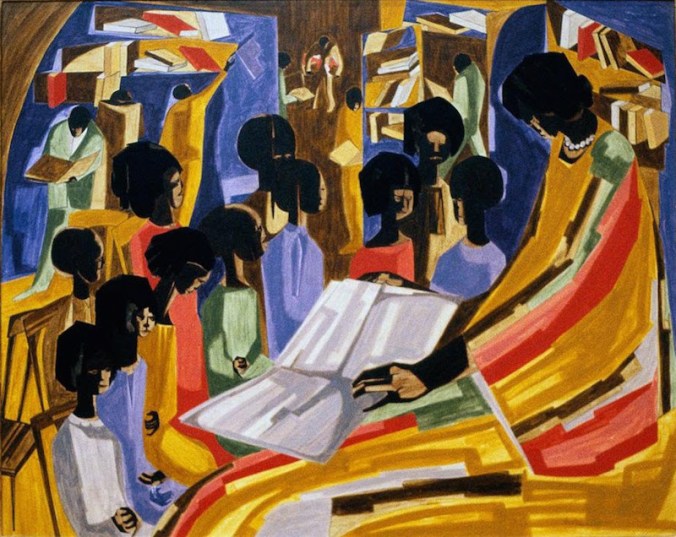
from a series on libraries by Jacob Lawrence.

What a wonderful surprise, to come across this talk by Kenan Malik, on a topic that has been of interest to us for some time:

I gave a talk at the launch at London’s Institut Français of Libraries without Borders, the charity inspired by Patrick Weil that aims to increase global access to books and libraries. Also speaking were Ian McEwan, Lisa Appignanesi, Barbara Band and Patrick Weil himself. Here is a transcript of my talk.


Let me begin with a story not of a library or a book but of a grand piano. The one grand piano in Gaza, that was discovered still intact in a theatre destroyed by an Israeli missile during last year’s war. A piano that has been restored string by string, hammer by hammer, by Claire Bertrand, a young French music technician who travelled to Gaza specially to bring the piano back to life, in a project financed by Daniel Barenboim. Continue reading

H Is For Hawk, Reviewed

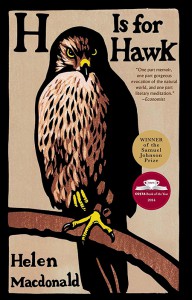
We already posted on this book earlier this month, but there is no question it deserves more attention. This time the attention comes in the form of a book review at the Cornell Lab of Ornithology’s blog, All About Birds from an “insider” (at two levels, including lifelong falconer and someone who edits one of the leading magazine’s for bird-oriented readers):

H_is_for_Hawk_cover450-192x300By Tim Gallagher, editor of Living Bird magazine

Last fall, a remarkable memoir called H is for Hawk, by Helen Macdonald, took the United Kingdom by storm, winning two prestigious awards and rising to the top of the bestseller list. It’s just been released in the U.S. and promises to do the same here. Last fall, our own Living Birdmagazine published a review that highlighted Macdonald’s lyrical writing —but as a lifelong falconer I also give her high marks for providing a window into the minds of falconers and their birds.

Continue reading

Clothing Past, Experienced In The Present

One of Hortense Mitchell Acton’s Callot Soeurs gowns in the Camera Verde of Villa La Pietra. The gold and silver lace at the neck, the apron skirt, and the five metallic rosettes across the chest recall the forms of a Gothic cathedral. The sleeves are made of metallic lace, now oxidized. PHOTOGRAPHS BY PARI DUKOVIC

One of Hortense Mitchell Acton’s Callot Soeurs gowns in the Camera Verde of Villa La Pietra. The gold and silver lace at the neck, the apron skirt, and the five metallic rosettes across the chest recall the forms of a Gothic cathedral. The sleeves are made of metallic lace, now oxidized. PHOTOGRAPHS BY PARI DUKOVIC

It is likely that the New Yorker is the publication we link to the most, between its magazine and its website. If so, there is a reason. They care about stories we care about, enough to put their best writers and photographers on the task:

PortfolioMARCH 23, 2015 ISSUE

Twenty-One Dresses

BY AND

A number of years ago, a young painting conservator entered a forgotten storeroom in a fifteenth-century Florentine villa and stumbled on a pile of Louis Vuitton steamer trunks. She opened them and discovered a collection of exquisite dresses, the kind usually seen only in movies, or inside protective vitrines in museums. Closer inspection revealed silk labels, hand-woven with the name “Callot Soeurs.” Continue reading

Rimbaud In Ethiopia

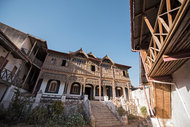
Michael Tsegaye for The New York Times. The Arthur Rimbaud Cultural Center in Harar.

Michael Tsegaye for The New York Times. The Arthur Rimbaud Cultural Center in Harar.

For those involved in Raxa Collective’s recent scouting expedition in Ethiopia, since Harar was not on the itinerary we must consider Rimbaud’s endorsement during the next expedition:

Where Rimbaud Found Peace in Ethiopia

A Book Our For Our Collective Sympathies

Haunted by her father’s death, Helen Macdonald kept company with a bird of prey. CREDIT PHOTOGRAPH BY CHRISTINA MCLEISH / COURTESY GROVE ATLANTIC

Haunted by her father’s death, Helen Macdonald kept company with a bird of prey. CREDIT PHOTOGRAPH BY CHRISTINA MCLEISH / COURTESY GROVE ATLANTIC

Birds represent something important in our work, and it is not always clear exactly how and why, so every day we try to elaborate it for ourselves as much as for anyone.

If you did not take the moment to watch the video posted yesterday, or read the post from our boys in the Blue Mountains of Jamaica, no matter. Today those are complemented by a book review, of all things, that captures the essence of why we find birds so compelling, and helps us understand why their world has come to play such a vital role in this blog:

…Among those who know their birds of prey, the reputation of the goshawk is half Hamlet, half Lady Macbeth: mad, murderous, unpredictable, the kind of creature whose partners and intimates should brace themselves for trouble. “Spooky, pale-eyed psychopaths,”

Continue reading

Librarians Fortify The Front Line

9780544535022_custom-376b39afbbf45a91478a9f43c2df0b1cc11e6e4f-s500-c85

Books we love, war not so much. The story told in this book is about books, about librarians, publishers and common folk who believe in books. And who believe that books are important for fortifying people who need heroic capacities.

In an interview with the author, we see publishers and their town square counterparts, librarians, in a light we had not been aware of, showing their contribution to community at a critical moment in history:

…Over the next few years, millions of Americans would leave home to fight in Europe and the Pacific. They had few comforts and little in the way of escape or entertainment — at least not until American publishers got involved.

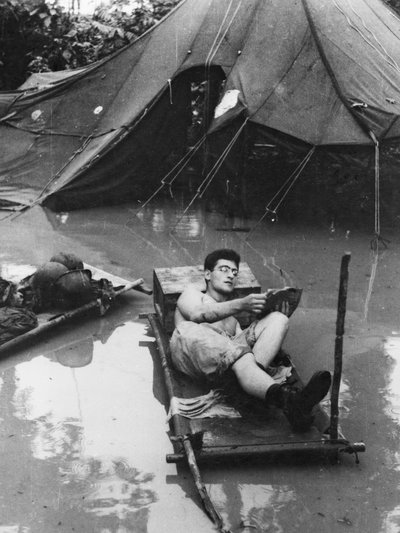
A soldier reads an Armed Services Edition in monsoon conditions during World War II. Australian War Memorial/Courtesy of Houghton Mifflin Harcourt

A soldier reads an Armed Services Edition in monsoon conditions during World War II. Australian War Memorial/Courtesy of Houghton Mifflin Harcourt

“During World War II, American publishers wanted to support the troops,” author Molly Guptill Manning tells NPR’s Renee Montagne. “And so they decided that the best they could do was print miniature paperback books that were small enough that they could fit in a pocket so the men could carry these books with them anywhere.”

Guptill Manning’s new book, When Books Went to War, is a history of these paperbacks, known as Armed Services Editions. They included all sorts of literature — from Charles Dickens and William Shakespeare to mysteries and Westerns — and were the culmination of earlier efforts on the part of American librarians to get usedbooks to servicemen with help from book drives. Well-intentioned though they were, the results of these book drives were mixed, turning up titles like How to Knit and Theology in 1870. So the focus switched to designing and printing books that soldiers actually wanted to read — no easy task since these Armed Services Editions had to be battlefield ready.

Continue reading

Good Writing, According To Steven Pinker

Thanks to Intelligence Squared for the last dozen years of excellent debate, Oxford style, and in particular for this recent conversation that picks up where this last post, and the one before that, left off in terms of making us want to hear more from Steven Pinker:

STEVEN PINKER ON GOOD WRITING

with Ian McEwan

Steven Pinker is one of the world’s leading authorities on language, mind and human nature. A professor of psychology at Harvard, he is the bestselling author of eight books and regularly appears in lists of the world’s top 100 thinkers.

On September 25th he returned to the Intelligence Squared stage to discuss his latest publication The Sense of Style, a short and entertaining writing guide for the 21st century. Pinker argued that bad writing can’t be blamed on the internet, or on “the kids today”. Continue reading

Resistance, Change, Art, Words–Liberating

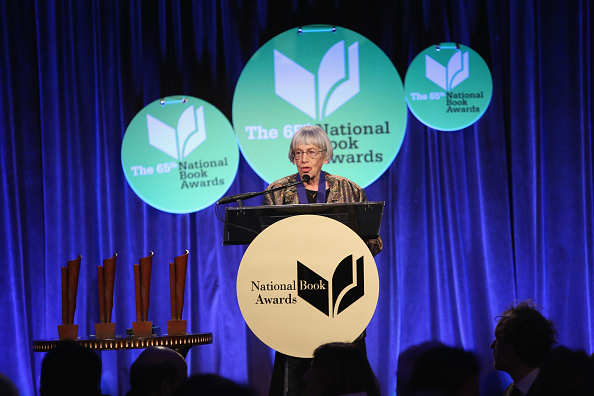
NEW YORK, NY - NOVEMBER 19:  Ursula K. Le Guin attends 2014 National Book Awards on November 19, 2014 in New York City.  (Photo by Robin Marchant/Getty Images)

NEW YORK, NY – NOVEMBER 19: Ursula K. Le Guin attends 2014 National Book Awards on November 19, 2014 in New York City. (Photo by Robin Marchant/Getty Images)

We do not normally pay attention to awards ceremonies, but this one catches our attention. We have said on occasion why we think books matter, why libraries matter, why the fate of publishing matters. On a good day, in our line of work, we approach the same ideal of books: to create experiences different from those encountered in normal, every day lives and by virtue of such experiences, to liberate. Comfort. Beauty. Taste. Wonderment, awe, perspective, yes yes yes.

But going somewhere. And that somewhere is freedom from the confines of norms, from the confines of places devoid of nature. The freedom of the road, a cliche that nonetheless has meaning.  Thanks to the New Yorker‘s Rachel Arons for pointing us to the short, powerful comment from an author who influenced many of us early in life to do what we do for a purpose:

…But it was Ursula K. Le Guin, accepting the Medal for Distinguished Contribution to American Letters early in the evening, who gave the definitive remarks of the ceremony, gliding through the genre debate and the Amazon-Hachette debacle on her way to explaining the crucial role that literature must play in our society.

Continue reading

If You Happen To Be In Big Sur (But You Don’t Have to Be…)

Big Sur fallen redwood auction: Proceeds benefit the Henry Miller Memorial Libarary

Big Sur fallen redwood auction: Proceeds benefit the Henry Miller Memorial Libarary

Although we’d never wish damage to a tree of this age and history we’re happy to hear that the rare and beautiful wood will help a cause near and dear to our hearts.

Profits generated from the redwood auction will be used for the following purposes:

Upgrading the Library to meet State and Federal regulatory requirements. This includes a water-treatment system, ADA compliant bathrooms, upgraded septic system, and more. Bringing the Library into compliance will ensure the Library can remain operational while also providing exceptional programming, including our acclaimed short film screening series,workshops, audio series, etc. This will require paying for building and maintaining a water system as well as paying related legal and administrative fees. Continue reading

Ambling, Thinking, Progress

PHOTOGRAPH BY ALEX MAJOLI/MAGNUM

PHOTOGRAPH BY ALEX MAJOLI/MAGNUM

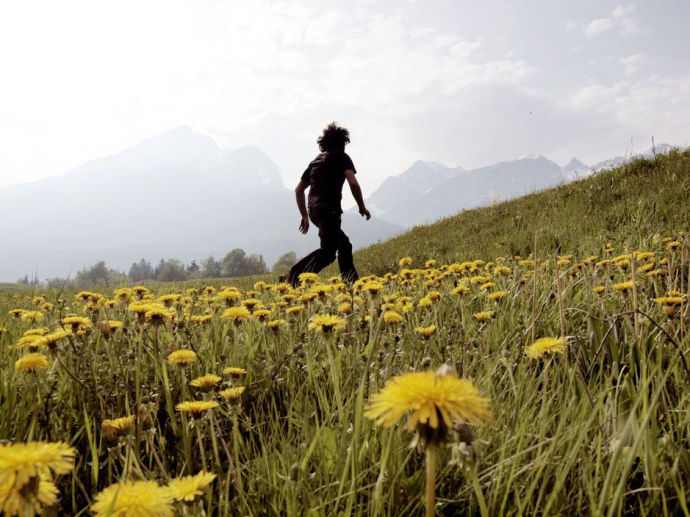
We are all for it.  We post here about walking frequently for a reason. When travelers join us, whether in Africa, Latin America or Asia there is a common thread in conversations about their journeys, with walking be essential to the value of the experience of new places. Otherwise, it is just site-seeing. This New Yorker post expands on the theme well, linking walking to thinking, which we stretch to imply (for our own work) the source of progress:

In Vogues 1969 Christmas issue, Vladimir Nabokov offered some advice for teaching James Joyce’s “Ulysses”: “Instead of perpetuating the pretentious nonsense of Homeric, chromatic, and visceral chapter headings, instructors should prepare maps of Dublin with Bloom’s and Stephen’s intertwining itineraries clearly traced.” He drew a charming one himself. Several decades later, a Boston College English professor named Joseph Nugent and his colleagues put together an annotated Google map that shadows Stephen Dedalus and Leopold Bloom step by step. The Virginia Woolf Society of Great Britain, as well as students at the Georgia Institute of Technology, have similarly reconstructed the paths of the London amblers in “Mrs. Dalloway.” Continue reading

Books, Authors And Sparks Of Inspiration

In a climate of embattled bibliophilia, authors have been undertaking reading stunts to prove that reading—anything—matters. Construction by Stephen Doyle.

In a climate of embattled bibliophilia, authors have been undertaking reading stunts to prove that reading—anything—matters. Construction by Stephen Doyle.

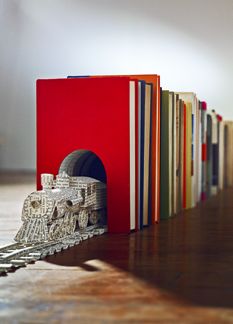
Our occasional posts on books and book-ish things, on libraries and library-ish things, on authors and author-ish things, all grow out of the obvious: books are essential to humanity. We do what we can in the general interest of books. So, this item on the New Yorker‘s website about stunts in the stacks is welcome here and now:

In the nineteen-nineties, when you bought a book at Barnes & Noble the cashier slipped it into a plastic bag bearing a black-and-white illustration of an author’s face—Mark Twain, Oscar Wilde, Edith Wharton. Recently, I was poking around a bookstore in Manhattan and noticed a canvas tote for sale. In a simple red heart, the word “books” was spelled out in white letters. This tale of two bags is the story of decades of change in the publishing industry. “Books,” O.K.—but which ones? Continue reading

Travel, Stimulation, Writing

Prochnik-2a In a post on the New Yorker website just now we discovered that last August we had neglected to read what we surely would have passed along here, an article that fits our blog’s themes well. George Prochnik had us with the first sentence:

Travel is my favorite stimulant, and while I was writing “ The Impossible Exile,” a portrait of the Viennese author Stefan Zweig, hunting-and-gathering expeditions to Zweig’s far-flung haunts felt imperative. Zweig was born in Vienna in 1881, but he became one of the most representative Viennese writers largely in absentia—idealizing the city’s cosmopolitanism while doing his best to embody it by making himself at home all across Europe. After the First World War, he set up his primary residence in Salzburg, but for large parts of the following years he was on the move—writing, in hotels, the short stories, essays, and biographies for which he became famous  Continue reading

Innovation In Humanities, Essential To Our Future

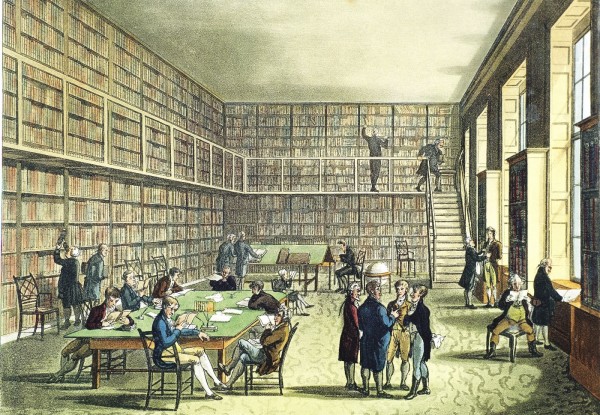
Image by Corbis Images.  Thomas Rowlandson’s view of the library of the Royal Institution in London, circa 1810

Image by Corbis Images.
Thomas Rowlandson’s view of the library of the Royal Institution in London, circa 1810

We have been monitoring Harvard Magazine and some of its kindred publications since the early days of this blog, as constant sources of interesting articles relevant to our interests; and now this:

Toward Cultural Citizenship

New gateways into the humanities for students “still fully molten as human beings” by Jonathan Shaw  May-June 2014

Continue reading

Flash Folio Exhibition at Cornell–Happy Birthday Will!

shakespeare

I spent my university years lugging around the weighty Riverside Shakespeare, the volume that has held the status of “definitive Shakespeare” text in academic circles since its first publication 30 years ago. Having never minded the moniker Shakespeare nerd–I could not help the stab of jealousy at missing the opportunity to experience Cornell’s flash exhibition of 4 rare folios in honour of the Bard’s 450 birthday.

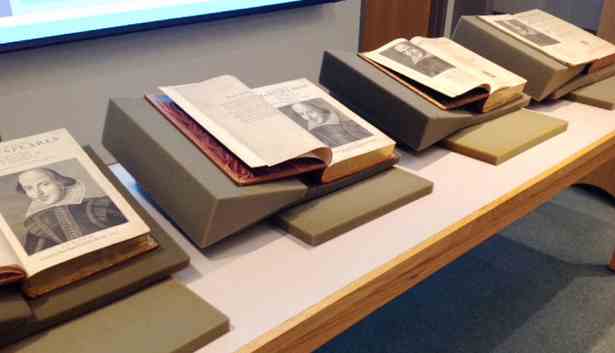
For one day only, the Library is putting all four folio editions of William Shakespeare’s plays — the earliest published collections of his work, all printed in the 17th century and now among the most important books in all of world literature — on display to commemorate the 450th anniversary of the Bard’s birth.
All the world may be a stage, but Cornell is fortunate to be one of the few places in the world that can put all four folios on display for its community of readers and researchers.

Continue reading

Get To Know The Baffler

This post is simply a link to a resource that we think furthers the case for the liberal arts tradition. In case you do not yet know it, get to know it here:

The epigraph stamped on The Baffler no. 1, from Arthur Rimbaud’s “Morning of Drunkenness,” introduced it as a punk literary magazine. It was the summer of 1988. The founders, Thomas Frank and Keith White, were recent graduates of the University of Virginia. They named their magazine as a joke on academic fads like undecidability, then in fashion. The Baffler was born to laugh at the baffling jargon of the academics and the commercial avant-garde, to explode their paralyzing agonies of abstraction and interpretation. Continue reading

A Science Writer’s Public Service

41EWvquSk3L_SL500_AA300_.5095659_std

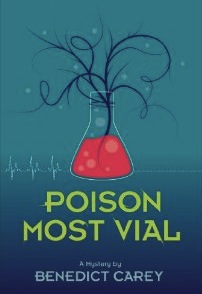
The famous forensic scientist Dr. Rama is dead – murdered – and suspicion has fallen on Ruby Rose’s father, the only family she has. Ruby is new to her school and is having enough trouble just making a friend; now she has far bigger problems. To save her father, she will have to solve the murder herself, relying for help on an elderly neighbor who used to be a toxicologist. But is this woman reliable? And is there enough time?

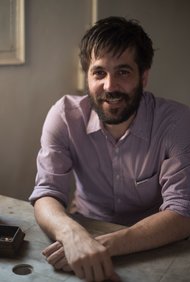
Benedict Carey is better known as a science reporter for the New York Times, but that is just his day job.  It certainly qualifies as public service, but in addition he moonlights on further public service. He explains his purpose:

Both books are adventures in which kids use science to save themselves and solve a mystery. It’s real science, accessible but not obvious, and builds understanding of some fairly advanced principles – transcendental numbers (among other things) in “Island of the Unknowns,” and mass chromatography in “Poison Most Vial.”

In a trailer park called Adjacent, next to the Folsom Energy Plant, people have started to vanish, and no one seems to care. At first Lady Di and her best friend, Tom Jones, barely notice the disappearances—until their beloved math tutor, Mrs. Clarke, is abducted, too. Mrs. Clarke has left them clues in the form of math equations that lead them and other kids all over the trailer park, through hidden tunnels under “Mount Trashmore,” and into the Folsom Energy Plant itself, where Lady Di and Tom Jones and a gang of other misfits uncover the sordid truth about what’s really happening there. That's Di on the left and Tom on the right.

In a trailer park called Adjacent, next to the Folsom Energy Plant, people have started to vanish, and no one seems to care. At first Lady Di and her best friend, Tom Jones, barely notice the disappearances—until their beloved math tutor, Mrs. Clarke, is abducted, too. Mrs. Clarke has left them clues in the form of math equations that lead them and other kids all over the trailer park, through hidden tunnels under “Mount Trashmore,” and into the Folsom Energy Plant itself, where Lady Di and Tom Jones and a gang of other misfits uncover the sordid truth about what’s really happening there. That’s Di on the left and Tom on the right.

Perfectly principled reality: if you had been restricted to Benedict Carey’s better known science reporting for the New York Times, that would be not such a bad thing. He also serves on the board of Edge, a non-profit which seeks to “arrive at the edge of the world’s knowledge, seek out the most complex and sophisticated minds, put them in a room together, and have them ask each other the questions they are asking themselves.” Again, not bad.

But we like in particular the effort to branch out further, reaching the next generation and aiding the mathematical and scientific efforts of educators who otherwise compete with entertainment of all sorts for the hearts and minds of youth.

That said, do not miss his reporting. He is a master at this trade, and improves the quality of conversation we are determined to engage in more often. His most recent article for the Times reviews the research into cognitive performance and aging and with humor and gravitas all at once he acknowledges why as we get older we tend not to be too interested in these findings: Continue reading

Maps, More Than A Practical Tool

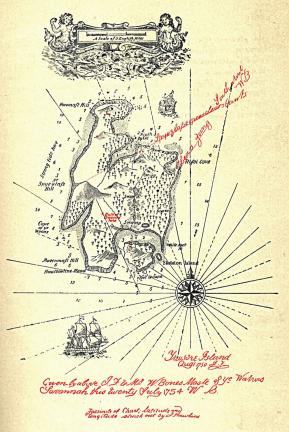
Map of Treasure Island, from Robert Louis Stevenson’s “Treasure Island.”

Map of Treasure Island, from Robert Louis Stevenson’s “Treasure Island.”

Travel without a map can be fun, sometimes, if adventure is the objective; but context and direction helps more than it hurts most of the time. The same is true when maps are there just for the sheer pleasure or comfort, in environmentally sensitive, creative graphic design, or for historical research. This post on the New Yorker‘s website captures the sentiment well:

For years, I carried the same map wherever I went. When I wasn’t travelling, Scotch Tape held it to the back of my bedroom door: it was visible to me when the door was closed, but invisible to almost everyone else. That map moved from dorm rooms to apartments and houses, from the Eastern Shore of Maryland to New England, from New England to the United Kingdom, and back again.

When I felt homesick, I would drag my fingers up and down the map’s paper folds, tracing its shorelines and rivers, wishing they were the real thing. But touching that map only made me more homesick. Continue reading

Jaipur Literature Festival’s Guest From The New Yorker

Courtesy of Sukruti Anah Staneley. Jonathan Shainin.

Courtesy of Sukruti Anah Staneley. Jonathan Shainin.We link to the New Yorker frequently and to The Caravan occasionally, so we are happy to share a link to a story that provides an intersection to both:

We link to the New Yorker frequently and to The Caravan occasionally, so we are happy to share a link to a story that provides an intersection to both:

A Conversation With: Jonathan Shainin, Newyorker.com News Editor

By MAX BEARAK

Jonathan Shainin was the senior editor at The Caravan, an English-language long-form journalism magazine, for three years before leaving India in October to become the news editor at The New Yorker’s website, where he commissions and edits both domestic and international news stories.

Continue reading

2014 Jaipur Literature Festival

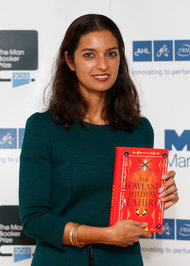
Sang Tan/Associated Press Author Jhumpa Lahiri with her book ‘The Lowland’ at the Queen Elizabeth Hall in London on Oct. 13, 2013.

Sang Tan/Associated Press
Author Jhumpa Lahiri with her book ‘The Lowland’ at the Queen Elizabeth Hall in London.

Thanks to India Ink for an overview:

The 2014 Jaipur Literature Festival, now in its ninth edition, kicks off in the state capital of Rajasthan on Friday. Over the course of five days, celebrated writers from India and abroad will talk about not just their books but also about the two World Wars, Afghanistan after the withdrawal of American troops, Himalayan languages and the making of modern China.

This year’s highlights include:

The festival starts with an inaugural keynote address on Friday at 10 a.m. by the Nobel Prize-winning economist Amartya Sen, who will also talk about the workings of democracy and human freedoms with John Makinson, chairman of Penguin Random House, in another session later that day at 2:15 p.m.

Read the whole article here.