Manta Matching

mantaray

Click the image above or the title below to go to the article:

WANDERING MANTA RAYS HIGHLIGHT GAPS IN MARINE CONSERVATION

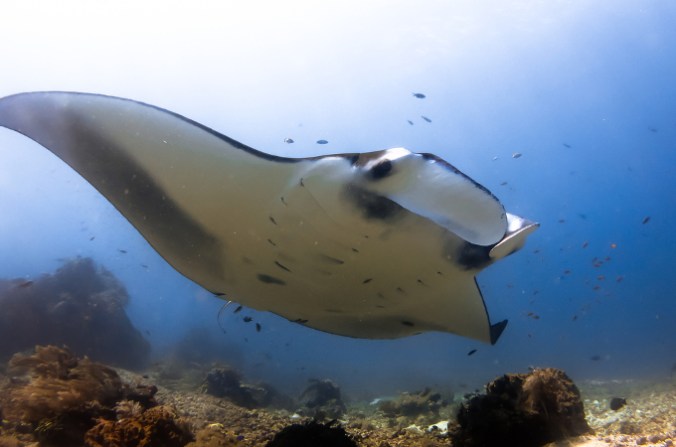
Earlier this year we showcased a study showing how reef fish don’t exactly pay much attention to where humans draw conservation lines. Just because a Marine Protected Area, or MPA, exists, doesn’t mean a species we might be keen on saving will stay inside its borders. Manta rays, a charismatic and threatened group of animals, are now showing us how understanding and targeting certain species may help improve ocean conservation.

Continue reading

Giants Known And Unknown

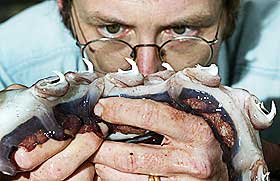
me 2 - CopyWe have posted a few times about awesome oceanic creatures, and their literary impacts, and lots of times about the heroes working to save whales in particular, so when this decade-old but still-fresh article on the giant squid we had missed came to our attention just now, we had to share it:

…Though oceans cover three-quarters of the Earth—the Pacific alone is bigger than all the continents put together—the underwater realm has remained largely invisible to human beings. For centuries, there was no way for scientists to peer into the depths, no telescope that could gaze into the abyss. (A pearl diver can venture down no more than a hundred feet.) Until the nineteenth century, most scientists assumed that the deepest parts of the ocean—where the temperature was frigid, the pressure intense, and the light minimal—contained no life. Continue reading

Marine Reserves And Their Discontents

mpafisheries

Thanks to Conservation magazine for this:

MARINE RESERVES BENEFIT ONLY BADLY MANAGED FISHERIES  September 9, 2014

When you’re close to hitting bottom, there’s a whole lot more room for success. This appears true with regard to a long-held belief about the benefits of marine reserves, protected areas where fishing of many species is illegal: the commonly cited idea that the reserves provide spillover benefit to neighboring fisheries may only be true when that fishery is poorly managed. Continue reading

Tourism, Conservation, Whale Sharks

shark-shutterstock_127906316-680x450

shutterstock.com

Thanks to Conservation for this item about entrepreneurial conservation of the ecosystems where one of the greatest of sea creatures dwell:

HOW CAN WHALE SHARK TOURISM BE KEPT SUSTAINABLE?

August 22, 2014

When the revenue generated by wildlife-related tourism is higher than that generated by the consumption of that wildlife, then the animals in question are worth more alive than dead. This seems intuitive, but the economics of wildlife tourism aren’t always easy to work out.

Over the last couple decades, one form of wildlife-based tourism that has quickly become popular is diving alongside free-swimming whale sharks. While they’re the largest fishes in the sea, whale sharks are actually quite docile and have highly predictable seasonal movement patterns. That makes them particularly attractive to dive operators. While whale shark tourism has operated in Western Australia’s Ningaloo Reef since the late 1980s or early 1990s, most whale shark tourism outfits have sprung up more recently, in the eastern Gulf of Mexico, Honduras, Belize, the Philippines, Mozambique, Seychelles, and the Maldives. While some attempts have been made to quantify the economic impacts of whale shark tourism in Ningaloo, Belize, and the Seychelles, nobody has done so for the Maldives. Measuring the economic value of the industry is especially important because it is difficult for local governments, with limited powers especially when it comes to environmental protection, to prioritize conservation without that information. Continue reading

The Value Of A Manta

manta-shutterstock_148271486-680x450

MANTA RAYS ARE WORTH MORE ALIVE THAN DEAD

The title may sound a bit obvious, but this article is anything but (thanks to Jason G. Goldman and  Conservation magazine):

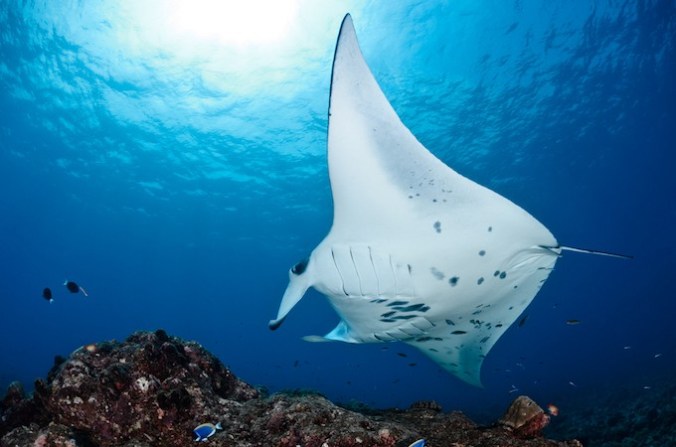
Manta and mobula rays, together the “mobulids” are among the most recognizable, charismatic fish in the world. They’re also particularly vulnerable, thanks primarily to the use of their gill plates in Traditional Chinese Medicine. That’s despite the fact that mobulid gill plates are not officially recognized by most practitioners of Traditional Chinese Medicine. There are so many nonsensical aspects to this story that it’s hard to know where to start. Continue reading

Citizen Science in Belize – Update on Lionfish Jewelry: Part 2

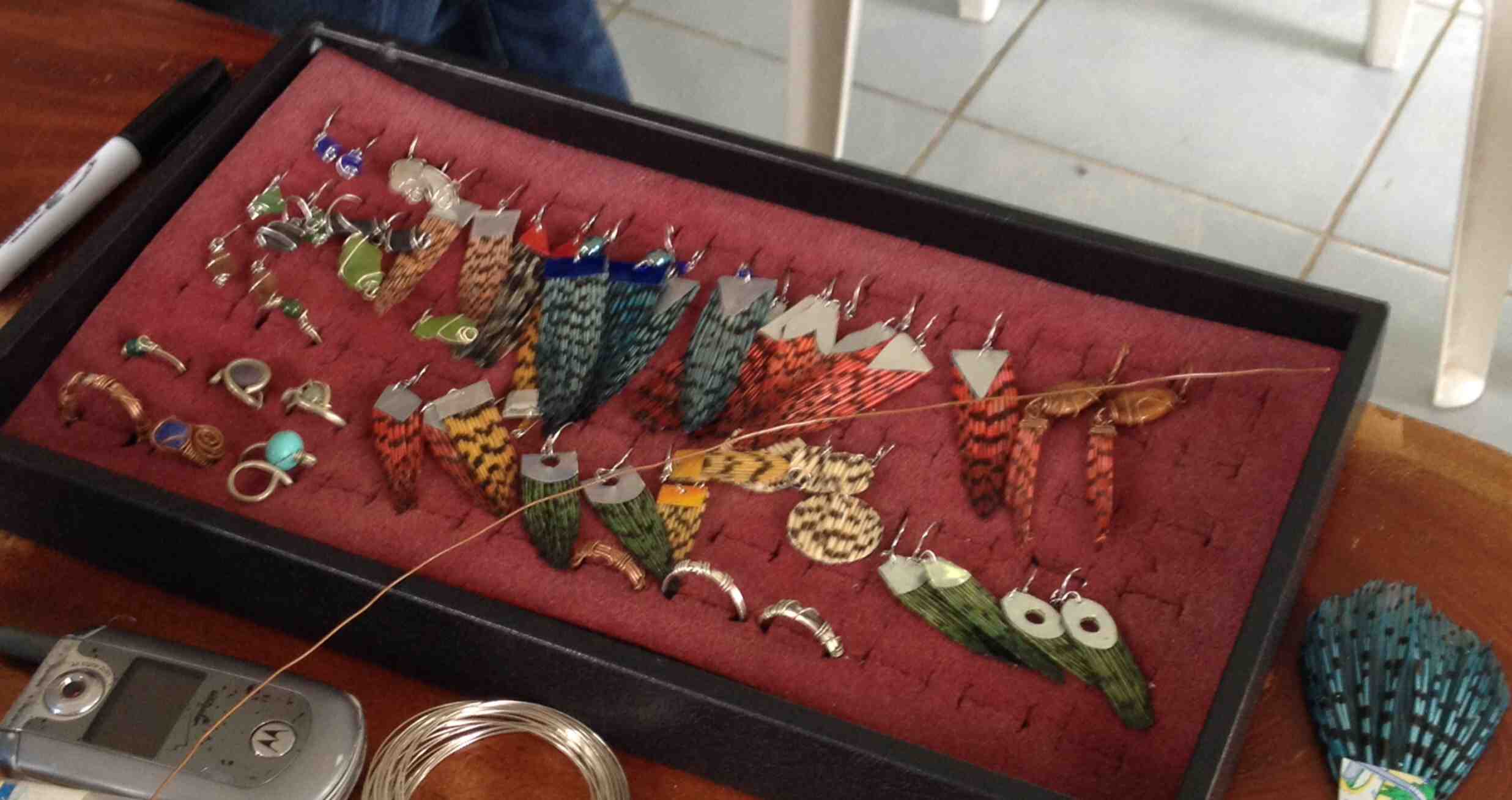
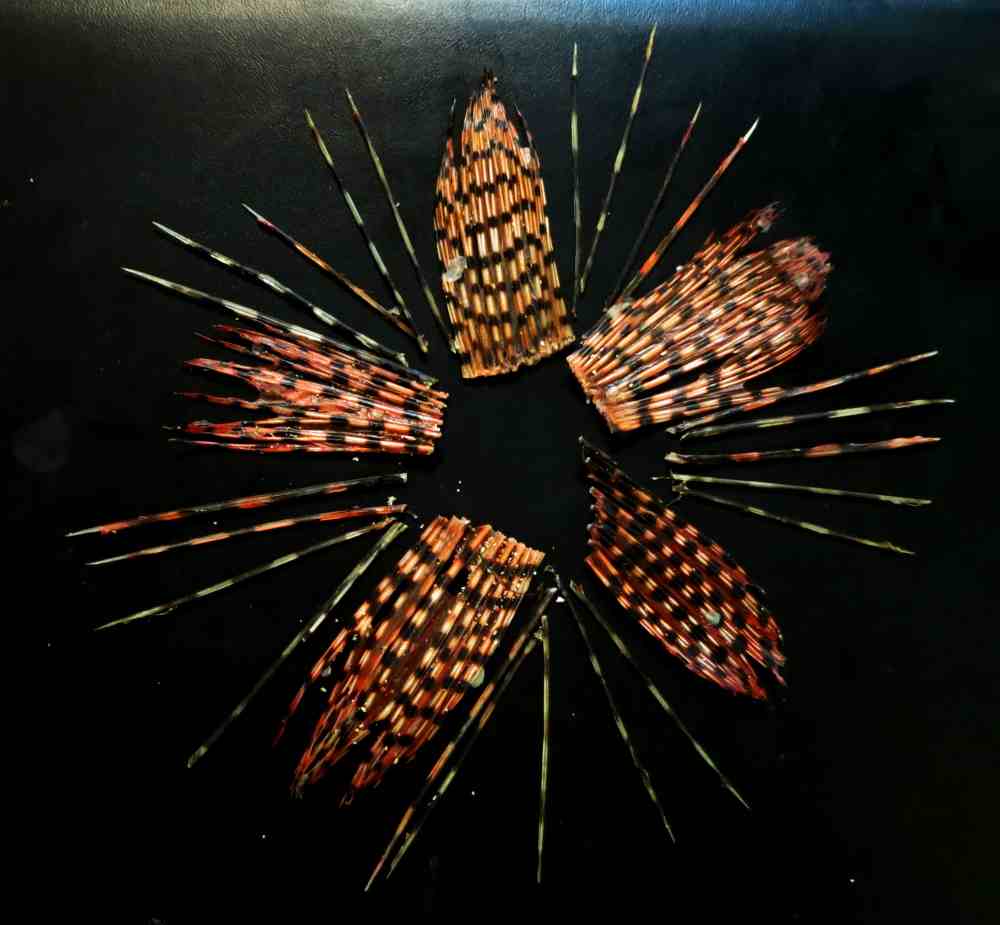
Assorted lionfish jewelry from Palovi Baezar, Punta Gorda, Belize

Assorted lionfish jewelry from Palovi Baezar, Punta Gorda, Belize

In Part 1 of this post I wrote about my recent visit to Belize to help with further development of the nascent  market for lionfish jewelry; one of several market-based approaches to addressing the threat to Southwest Atlantic marine ecosystems posed by the invasion of this non-native species. I noted that the market is most advanced in the area around Punta Gorda, in Southern Belize, in large measure due to the support provided by ReefCI which has provided training on jewelry making to a group of local women and is supplying them with lionfish spines, fins, and tails as well as marketing assistance.

Lionfish spines, fins, and tails ready for jewelry

Lionfish spines, fins, and tails ready for jewelry

While ReefCI’s involvement has been instrumental in getting things started, further development and expansion of the market will require engagement with artisans and women’s groups in other parts of the country, particularly areas closer to major tourist markets. Interventions are also needed to develop a reliable and sustainable supply chain for lionfish jewelry production and sales. I was pleased to hear from one of the jewelry makers in Punta Gorda that a local fisherman had approached her about selling lionfish tails. This was music to my ears, as one of the motivations behind the lionfish jewelry idea has been to up return to fishers in order to create added commercial incentive for them to hunt lionfish (the fish cannot be caught using conventional fishing methods such as hook and line or nets, but must instead be speared or hand-netted by diving). Continue reading

World’s Largest Ocean Sanctuary, Maybe

This slideshow requires JavaScript.

Thanks to the CS Monitor for this welcome news:

Obama seeks to create world’s largest marine sanctuary

With the aim of protecting marine wildlife, President Obama is considering greatly expanding the Pacific Remote Islands Marine National Monument, an ocean preserve that lies between Hawaii and Samoa.

President Barack Obama is looking to create the largest marine preserve in the world by protecting a massive stretch of the Pacific Ocean from drilling, fishing and other actions that could threaten wildlife, the White House said.

Aiming to protect marine wildlife, Obama will also direct the government to create a program to deter illegal fishing. The executive steps come as Obama is searching for ways to leave his second-term mark on the environment despite opposition from many Republicans in Congress.

Obama was to announce the steps Tuesday in a video message to those participating in an “Our Ocean” conference that the State Department and Secretary of State John Kerry are hosting. Continue reading

Citizen Science in Belize – Update on Lionfish Jewelry: Part 1

Freshly dried lionfish fins and tails. Photo: Polly Alford, ReefCI

I’ve written in previous posts about the initiative to develop a market for lionfish jewelry as one of a number of commercially sustainable approaches to fighting this invasive species that is threatening marine ecosystems throughout the Caribbean, the Gulf of Mexico, and the Southern Atlantic seaboard of the United States. In my last post, I mentioned that the idea is beginning to take off in Belize.  I was able to observe this first-hand last month, spending two and a half weeks in the country.  During my stay I had the opportunity to meet local artists who are making lionfish jewelry and to participate in several workshops to share techniques and designs.  Continue reading

How Coral Reefs Grow By Crawling

coral-reef-shutterstock_116387641-680x450

shutterstock.com

In its weekly “good reads” section Conservation has this following summary of an article in Scientific Reports, of interest to our reef watchers/protectors:

In November 1835, the HMS Beagle visited Tahiti, in the South Pacific. Climbing up the island’s slopes, the young Charles Darwin looked across the sea to nearby Moorea, and saw an island surrounded by a barrier reef. During and after his voyage, Darwin constructed a theory for reef formation that explained how fringing reefs grow into barrier reefs, which then convert into atolls. “The close similarity in form, dimensions, structure, and relative position between fringing and encircling barrier-reefs, and between these latter and atolls,” he wrote, “is the necessary result of the transformation, during subsidence, of the one class into the other. On this view, the three classes of reefs ought to graduate into each other.” Continue reading

Fiji Shark Dive

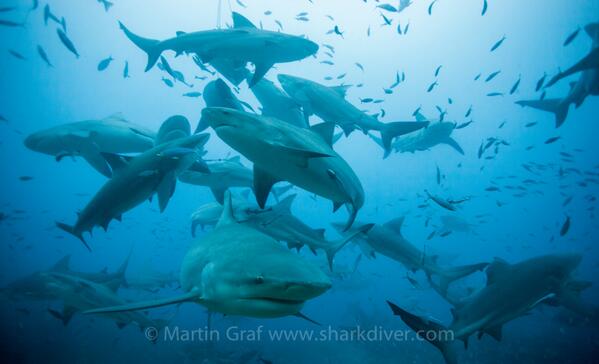
Photo Credit: Martin Graf, Sharkdiver.com

Photo Credit: Martin Graf,  Sharkdiver.com

In an earlier post I wrote about how more and more countries are waking up to the benefits of preserving natural capital, in recognition of the economic value that can be derived through ecotourism. I noted, in particular, the value that can be generated through ecotourism ventures focused on iconic species such as sharks, manta rays, and sea turtles. I cited a number of studies and calculations that demonstrate that the ecotourism value of these animals far outweighs their one-time economic value if harvested for food or body parts.

Earlier this week, I had an opportunity to experience one such venture first hand, via the famous Fiji Shark Dive. Over the course of two dives I was treated to the spectacle of 40+ Bull Sharks and dozens of Blacktip and White Tip Reef Sharks, up close and personal!  What an amazing experience to see these magnificent animals – some upwards of 8 feet long –swimming only inches away.  Click here for a video (check out the background music!) courtesy of Martin Graf, one of the pioneers of the Shark Diving industry, who just happened to be in Fiji this week and was along on my dives. Continue reading

If You Do Not Happen To Be In Monterey Bay, You Might Want To Be

This slideshow requires JavaScript.

Something is happening in the Bay Area, and it is worth a listen, or a quick read. National Public Radio (USA) has a podcast version of this story here:

Monterey Bay on California’s central coast rests atop one of the largest underwater canyons in the world. It’s deeper than the Grand Canyon, making it possible for lots of ocean life — including humpback whales, orcas, dolphins and sea lions — to be seen extremely close to shore. That is, given the right circumstances. Lately, the right circumstances have converged, and there’s more marine and wildlife in the bay than anyone’s seen in recent memory. Continue reading

Controlling Invasive Lionfish – Update on Market Solutions: Part 2/2 — Lionfish Art

spines and tails-photo3

Array of dried lionfish spines and tails -ready for jewelry use Credit: ReefCI

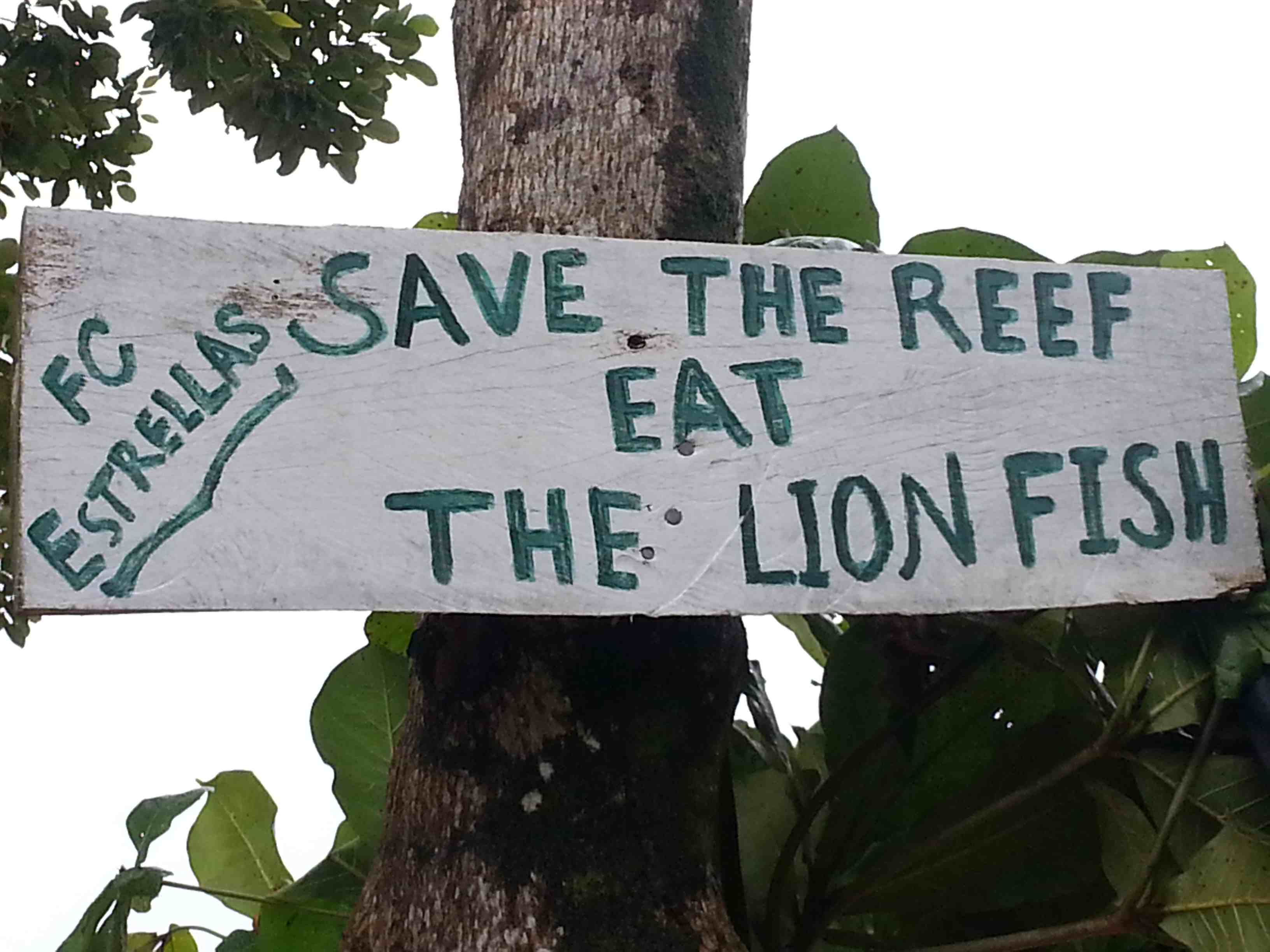
In Part 1 of this post regarding market-based solutions to fighting the lionfish invasion that is threatening coral reef and other marine ecosystems throughout the Caribbean, Gulf of Mexico, and Southern Atlantic Seaboard of the United States, I wrote about the challenge of developing commercially sustainable strategies for undertaking the systematic removals that are needed to keep lionfish populations under control. I discussed the need to develop a series of vertical markets, pointing to promotion of lionfish as a seafood choice as the most obvious of these. Capture of juvenile lionfish for the aquarium trade as another.  A third market, and one in which I’m personally involved, is use of lionfish spines and tails for jewelry and other decorative items.  Continue reading

Controlling Invasive Lionfish – Update on Market Solutions: Part 1/2


I’ve posted previously about the lionfish invasion that is threatening coral reef and other marine ecosystems throughout the Caribbean, Gulf of Mexico, and Southern Atlantic Seaboard of the United States. As I noted in earlier posts, it is the general consensus of the scientific and conservation community that eradication of lionfish from the Atlantic is impossible. There have been some anecdotal reports that native predators such as groupers and snapper are beginning to recognize lionfish as prey, but there is no systematic evidence, as of yet, of widespread predation. So the conclusion remains that human intervention is the only way to keep lionfish populations in check. The good news is that there is growing evidence that systematic removal efforts can indeed be effective in controlling lionfish populations and in reversing their negative impact on reef health. A study published earlier this year found that populations of snapper and grouper rebound by 50-70 percent once lionfish are removed. And it isn’t necessary to remove 100 percent of lionfish for recovery of native fish populations to take place; the study found that reduction of lionfish populations by as little as 75 percent will do the trick. This is important, given difficulties in reaching lionfish at depths beyond the limits of divers.  Also, removal efforts may become more difficult over time, as lionfish on reefs where regular culling takes place begin to wise up and hide from divers (click here for a cute poetic rendition of findings of a study on this behavioral adaptation).

Thus the challenge is to find a sustainable basis on which to undertake the systematic removals that are needed to keep lionfish populations under control. Continue reading

Natural Capital Valuation and Protection of Marine Megafauna

Photo © Fabrice Jaine

I’ve noticed a number of positive and interesting developments as of late in the area of marine species protection, pointing to an increasing recognition, by policymakers, of the value of natural capital and associated ecosystem services, particularly the value arising from ecotourism.

In February of this year, the Government of Indonesia granted full protection to manta rays within its nearly 6 million square kilometer exclusive economic zone (EEZ), making it the world’s largest sanctuary for manta rays. This reverses the trend of the past three decades wherein Indonesia has had the dubious distinction of being home to the world’s largest fishery for sharks and rays. Why the reversal? It seem that studies showing that the ecotourism value of a manta ray is an estimated $1 million over its lifetime, as compared to the onetime value of several hundred dollars for its gill rakers and meat played a key role in persuading policymakers to take action to protect the iconic species.

A few weeks later, the President of Palau announced that the country’s entire 200 nautical mile EEZ will be declared a marine sanctuary and closed to commercial fishing and seabed mining.  This follows a move a few years earlier to declare Palau a shark sanctuary. In explaining the reasoning behind the moves Palau’s president noted that a dead shark is worth several hundred dollars, whereas a live shark is worth $1.9 million in tourism during its life span, and that his country will promote scuba diving, snorkelling and ecotourism as an alternative income to commercial fishing. Continue reading

Ocean Ownership And Caveat Emptor

carved-ocean

The U.S. has laid claim to 2.5 billion acres of coastal seas, but that vast area produces very little seafood for Americans. Therein lies a dilemma: should the U.S. cultivate giant offshore fish farms in its piece of the sea or keep taking most of the fish we eat from foreign waters?

Conservation magazine raises the following question, and goes a long way to answering it in their current issue:

NATIONS HAVE CARVED UP THE OCEAN. NOW WHAT?

…In the minds of most consumers, there is a clear dividing line between which fish are wild and which are farmed. But the truth is that this line is increasingly a blurry one.  Continue reading

Watch, Weep, Read, Wonder, Share

A synopsis of this documentary is here:

Blackfish tells the story of Tilikum, a performing killer whale that killed several people while in captivity. Along the way, director-producer Gabriela Cowperthwaite compiles shocking footage and emotional interviews to explore the creature’s extraordinary nature, the species’ cruel treatment in captivity, the lives and losses of the trainers and the pressures brought to bear by the multi-billion dollar sea-park industry. Continue reading

Drink the Wild Air

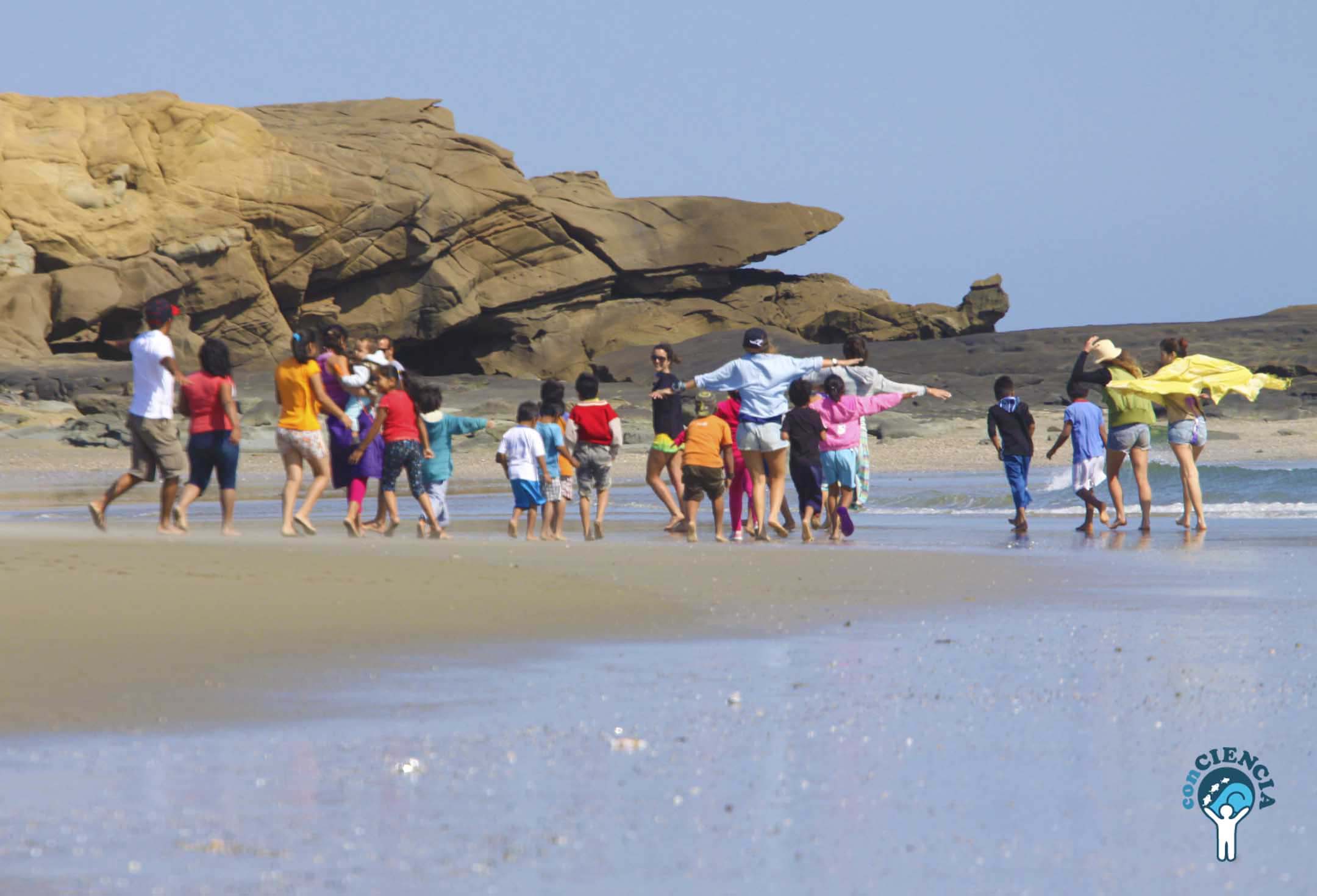
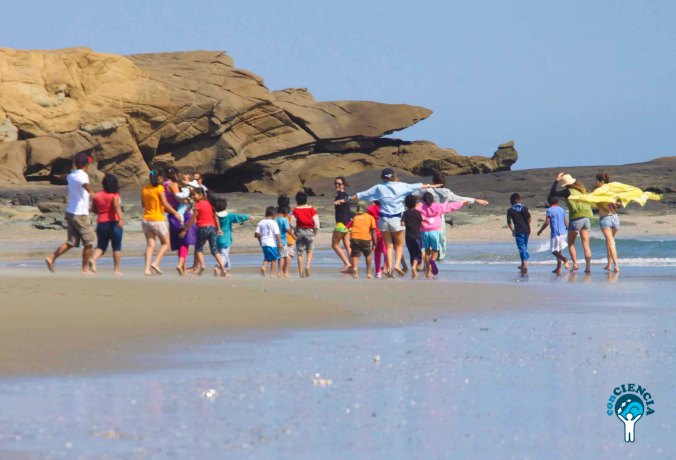
“Live in the sunshine, swim the sea, drink the wild air.” Alejandra Benavides/conCIENCIA

Working for the balance and health of nature as a conservation biologist brought me to understand the importance of nature in the balance and health of communities. The great gap between the two inspired me to establish conCIENCIA, a nature-based education design program. We build environmental identity in fishing villages across Peru through nature-based integrated learning guided by play, creativity, curiosity and the senses.
As First Mermaid in conCIENCIA, I work with an amazing group of artists and scientist, to connect coastal children to the natural wonderland, since 2010.

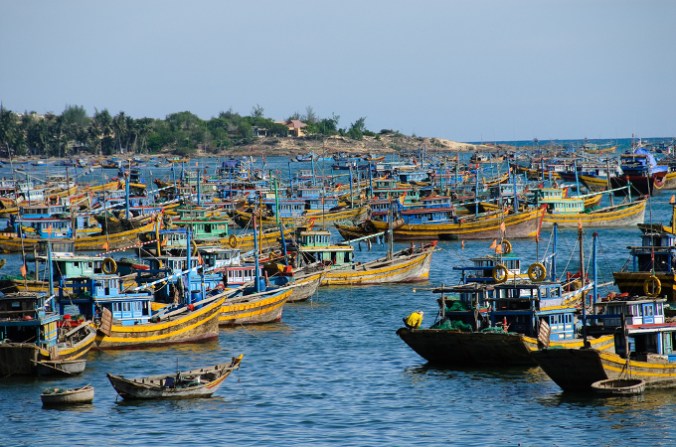
Lobitos has some of the most beautiful beaches on the Peruvian coast. Its world-class surfing draws hundreds of surfers from all over the planet and is known far and wide. A lesser-known fact is that it also has 153 children enrolled in its elementary school. Walking down the beach we wonder where these kids are. We walk from point to point with not one in sight. There’s no laughter or splashing on the shores. Surfers and fishermen dominate our view. No mothers and children sharing the democratic fun the beach offers: a place with more attractions than we could ever finish exploring.

In Latin American cities like Rio de Janeiro it is on the beach that rich and poor meet, crossing the giant social chasm that separates them, virtually identical in their bathing suits, covered in sand, sweat and salt. Surprisingly, this doesn’t seem to be the case in many of Peru’s coastal towns. Exactly why is hard to say. Our NGO conCIENCIA helps coastal communities develop an environmental identity and engagement through outdoor science-based learning. We hope to be able to answer the question ‘why’ through surveys, conversation and appreciation.

On the surface one could say it is cultural.  Fishermen don’t bathe in the sea or lounge on the beach. This is their place of work, as for a New Yorker her office would be–of course, with greater hardships and demands. The sea is treacherous and fish stock is dwindling. Continue reading

The Black Sea Nettle (Chrysaora achlyos)

Continuing my exhibition of exotic animals, I present a prime example of the bizarre and awe-inspiring ability for the ocean to produce truly alien creatures.  The Black Sea Nettle (Chrysaora achlyos), otherwise known as the Sarlacc or Black Jellyfish is found in the Pacific Ocean. A fairly massive specimen, its bell can reach diameters of 1 meter in length and its tentacles 6 meters. Displaying a vividly contrasting maroon hue against the ocean’s blue/green backdrop, Chrysaora achlyos preys upon zooplankton, and are often found en masse during red tide phenomenons in which zooplankton are responsible. Continue reading

A Camera Trap By Any Other Name

Humpback whales lunge feeding in the Inside Passage of Southeast Alaska during summer on an overcast day. Photograph by Mark Kelley, Alaska Stock Images/National Geographic Creative

Humpback whales lunge feeding in the Inside Passage of Southeast Alaska during summer on an overcast day. Photograph by Mark Kelley, Alaska Stock Images/National Geographic Creative

A sweet invention, that camera trap.  Call it what you will, but the more we capture on film, it seems, the better we understand:

Humpback whales are known for their bubble nets. In Cape Cod Bay (map), the marine mammals spend the summer blowing bubbles in circles under the water and then lunging through roiling schools of fish for a mouthful of water and sand lance, a skinny, finger-length fish.

If you watched humpbacks only from the surface, you’d think that was how they got all their food. But a team of scientists has been putting tags on the whales to snoop on them underwater. They found something surprising: Humpbacks actually spend a lot of time feeding at the bottom. (Watch video of humpback whales blowing bubble nets.) Continue reading