Algal Jazz

The radio show Living on Earth, produced by Public Radio International (thanks to their contributors and sponsors!), first carried this story about a biologist who intuited an interplay between marine microbes and jazz music.  The interview with that biologist is here, both as podcast and transcript. Thanks to the University of Washington’s Conservation magazine for bringing it back to our attention before it floated off on the horizon:

Music in the key of algae

In the age of Big Data, making sense of the information deluge is no small feat. But biologist and jazz-music fan Peter Larsen of Argonne National Lab thinks he has a powerful way to capture the complex interplay between microbial life and the physical environment: bebop music.

Larsen’s data-driven compositions are generated by observations collected at the L4 marine monitoring station, a data buoy operated by the U.K.’s Plymouth Marine Laboratory and Marine Biological Association. The buoy records weekly measurements of temperature, salinity, nutrient levels, and other parameters. In addition, researchers classify and measure the abundance of zooplankton and phytoplankton from samples collected at the site. Continue reading

Shark Basks In Glow Of Recovery

Mystery creature: basking sharks are increasingly seen in British waters during the summer, but little is known about where they go in the winter. Photograph: Alex Mustard

Mystery creature: basking sharks are increasingly seen in British waters during the summer, but little is known about where they go in the winter. Photograph: Alex Mustard

Not everyone will be uniformly happy, perhaps, but we count ourselves happier upon seeing this news:

This summer, on the western edges of Britain and Ireland, was a time of gentle monsters: great black fins parading sedately off the beaches, leviathans floating in warm sea as docile as Granddad on a lilo. From Cornwall to Donegal, local papers ran stories of swimmers’ and kayakers’ encounters with sharks “Bigger than Jaws!” “The size of a bus!” But most of the reports went on to say that the fish – which can indeed grow to 11m, a double-decker’s length – were strangely blasé about the panicky, flapping humans. In fact, they didn’t seem interested at all. Continue reading

Popularity Contests Some Will Never Win

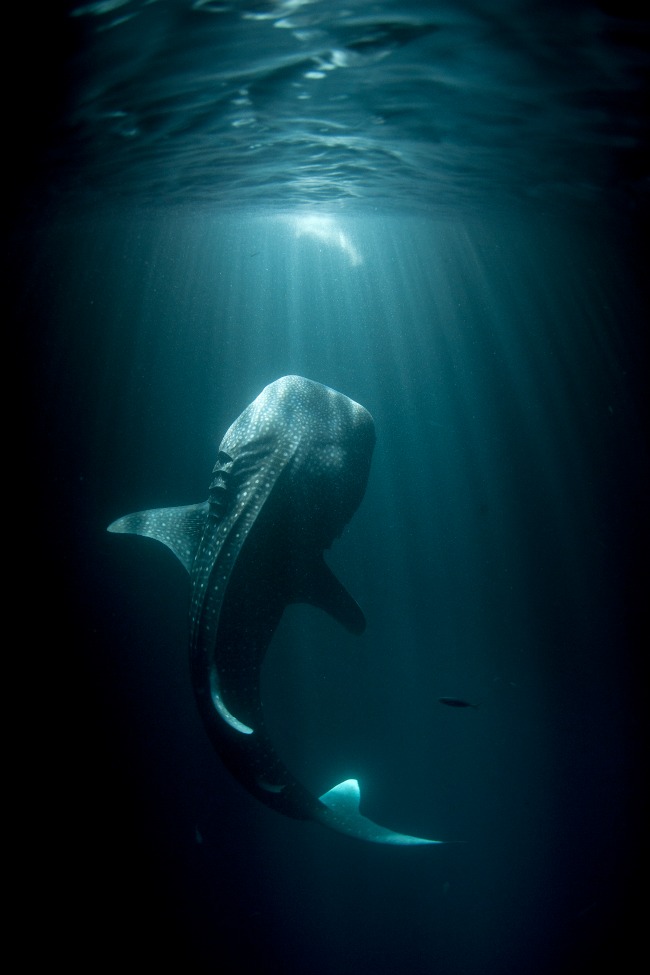
05SharksPeople@Thomas P. Peschak

Whale shark. (Thomas Peschak / University of Chicago Press)

We note from time to time the tallies of our most popular posts and writers. Seth still has the record for “most instantaneously viral” with Volcano Sandboarding (3,000+ views in the first couple days after it was posted); Tim’s Carbon Emissions Series: Vacationers’ Diets is by far the most viewed with nearly 9,000 readers to date; Salim is by far the most widely read of our contributors, just having passed the 50,000 mark for views of his daily series on the natural and cultural heritage of south India (Thiruvathira Kali (Traditional dance of Kerala) being the most popular with nearly 3,000 views).

Phil’s most recent post has been a runaway hit, and rapidly approaching 1,000 views within a couple weeks it is on pace to put him in the ranks of our most popular contributors.  So when we saw the photo above, we thought of Phil’s series with the hope he contributes another post soon. Dr. Tenner’s book review, from which that photo comes, provides an essential reminder of facts, as well as visual testament to the beauties and tragedies associated with sharks, to counter whatever perverse attention those Shark Week shows purvey:

…Thomas Peschak makes an eloquent visual case for the sublimity of sharks—and also for their conservation. He notes that the media still devotes far more attention to rare shark attacks than to the urgent need to protect them from human depredation, especially the shark fin trade. He might have noted that Peter Benchley, who became wealthy through the 1970s novel and film Jaws, regretted the fear he had sown and became a shark advocate. In the long run, though, China’s removal of Mao Tse-Tung’s ban on shark fin soup as bourgeois decadence in 1987 may have resulted in more shark slaughter than all the horror books, films, and news items together. Great conservation photography like Peschak’s, one must hope, will have the power to change attitudes globally…

Continue reading

Fish Stock

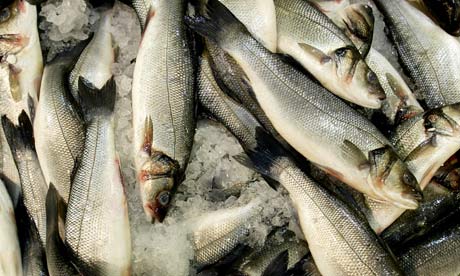
A display of Sea bass for sale at Billingsgate Fish Market in London. Photograph: Scott Barbour/Getty Images


Seth got us started with historical perspective on this topic a couple years back, and Phil recently created the most popular series of posts of the year, also on this topic; we have even tried sharing a sense of humor when possible.  But grim tidings continue:

First it was the cod, then the haddock, the swordfish and even the anchovy – now sea bass looks likely to join the list of no-nos for eco-conscious dinner party menus.

Stocks of the palatable species have sunk to their lowest in the past 20 years, according to a new assessment by the International Council for the Exploration of the Seas. Continue reading

Discovery, Conservation’s Better Half

Wilderness conservation, marine or terrestrial, is difficult. On a good day the challenge might be described as a complex puzzle, which has its pleasures; but on most days it is slogging and increasingly, dangerously warlike.

On the best days, we observe, conservationists have the thrill of discovery. Thanks to the Guardian‘s commitment to reporting on the environment, and specifically for this story that highlights that discovery of species is an ongoing enterprise, one more reason why posts like this, and this, among others are so important in getting us all to do our part:

‘Walking shark’ discovered in Indonesia

Previously unknown fish, Hemiscyllium halmahera, uses its fins to move along the sea bed in search of crustaceans Continue reading

The Upsides Of Downside Exploration

The Shinkai6500 deep-sea submersible

The Shinkai6500 deep-sea submersible. Photograph: Jon Copley

Told in the first person, we appreciate Jon Copley’s account of his most recent amazing work, and the Guardian’s coverage of it:

Five kilometres, or 3.1 miles, is not a great distance on land – the length of a pleasant stroll. But five kilometres vertically in the ocean separates different worlds. On 21 June I had the opportunity to make that short journey to another world, by joining Japanese colleagues for the first manned mission to the deepest known hydrothermal vents, five thousand metres down on the ocean floor. Continue reading

Seasteading, Self-Reliance Utopia, And Our Shared Future

An article recently published in n+1 examines a utopian futurist form of an idea that seems oddly symmetric with Seth’s posts about the history of exploration using Iceland as a case study. Looking back, we see much in common with explorers, pioneerspilgrims and adventurous thinkers of all sorts.  Looking forward, we are inclined to embrace smart, creative, enthusiastic group efforts to resolve seemingly intractable challenges. Especially when they involve living on boats. We recommend reading the following all the way through:

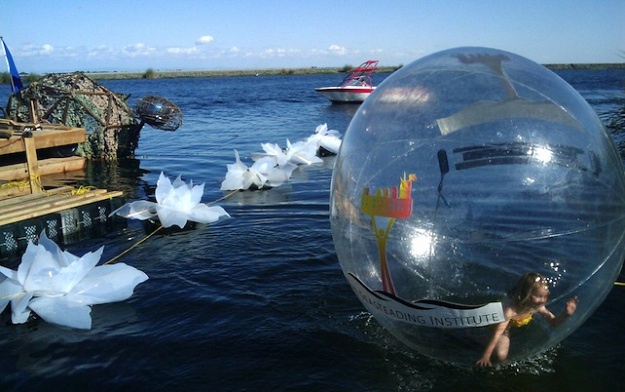
To get to Ephemerisle, the floating festival of radical self-reliance, I left San Francisco in a rental car and drove east through Oakland, along the California Delta Highway, and onto Route 4. I passed windmill farms, trailer parks, and fields of produce dotted with multicolored Porta Potties. I took an accidental detour around Stockton, a municipality that would soon declare bankruptcy, citing generous public pensions as a main reason for its economic collapse. After rumbling along the gravely path, I reached the edge of the Sacramento–San Joaquin River Delta. The delta is one of the most dredged, dammed, and government subsidized bodies of water in the region. It’s estimated that it provides two-thirds of Californians with their water supply.  Continue reading

Smithsonian In Deep Water

This slideshow requires JavaScript.

New (to us) thanks to the Smithsonian and its supporters:

The Ocean Portal is part of the Smithsonian Institution’s Ocean Initiative. Together with the National Museum of Natural History’s Sant Ocean Hall and the Sant Marine Science Chair, the Ocean Portal supports the Smithsonian’s mission to increase the public’s understanding and stewardship of the Ocean. Continue reading

Eyes Of Other Animals (#2 Of 2)

Thanks to The Atlantic‘s Alexis Madrigal, we have some coverage of this topic that we had honestly never thought about, but which makes total sense now that we have some information about it.  Eyes matter in ways more than just the obvious practical:
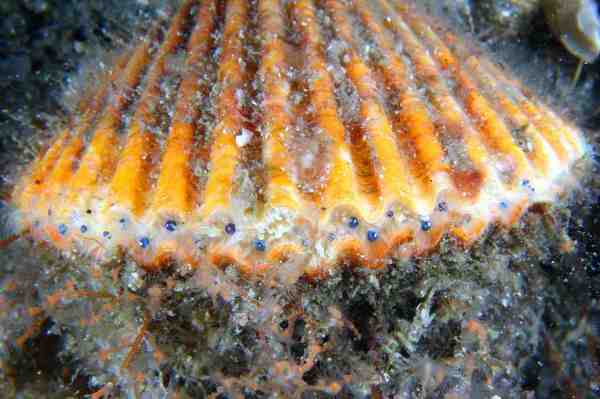
Unless you are an avid scuba diver, when you think of scallops, you probably think of linguine and garlic more than oceans and shells. That’s because we only eat the muscle of the scallop: You never see them in context.

Sharks As Charismatic Megafauna

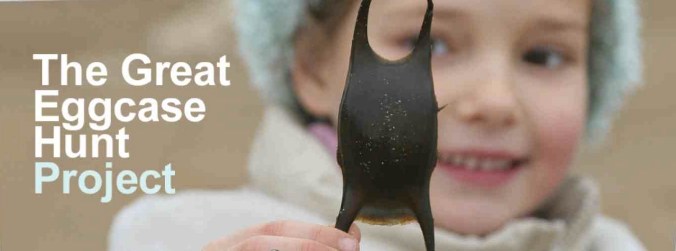
If you are like most people, the words shark and trust do not normally work well together in the same sentence. Sharks are predators, and predators predate. So unless you are a professional you should not take anything for granted when in their waters. But the two words work together well in a sentence about this organization, and the project they have launched to help sharks is intriguing. Entrepreneurial, even.  Click the image above to read more about this initiative:

With over 600 species of skate and ray worldwide, at least 16 species have been regularly recorded in UK coastal waters; most of these species reproduce by laying tough leathery eggcases on the seabed. Of more than 30 species of British sharks, only two species lay eggcases that are commonly found on our beaches; the Smallspotted Catshark and the Nursehound. Continue reading

Recommissioning, Stronger Attention To Our Oceans

This slideshow requires JavaScript.

Folks we respect and admire, not retiring nor shrinking from the challenges, but rethinking what’s next, state their case here on opening day:

‘Outstanding opportunity for change’ – Global Ocean Commission launches

The Global Ocean Commission, an independent body of international leaders, launches today (12th February) with the aim of reversing degradation of the ocean and restoring it to full health and productivity.

Chaired by former Costa Rican President José María Figueres, South African cabinet minister Trevor Manuel and former UK Foreign Secretary David Miliband MP, the Commission brings together senior political figures including former Heads of State, Foreign Ministers and Finance Ministers from around the world, alongside business leaders and development specialists. Continue reading

Chile’s Zones Of Sacrifice

Thanks again to Oceana for countering mendacity as it impacts oceans, especially among politicians made fabulously wealthy from extraction businesses, who dare redefine the otherwise honorable word, sacrifice.  Thanks also for their educational contributions on the value of seamounts and ongoing efforts to get this law passed.

Marine Sanctuaries Expanding

The ocean bluff at Vista Point, seven miles south of Elk on California’s Mendocino Coast (Thomas R. McDonough/Knight-Ridder News Service Archives)

Among our favorite type of stories:

In a move that would permanently ban oil drilling along more than 50 miles of Northern California coast, the Obama administration announced plans Thursday to expand two Northern California marine sanctuaries, extending them up the rugged Sonoma and Mendocino coast. Continue reading

Farming Future For Fast-Fading Phenotypes

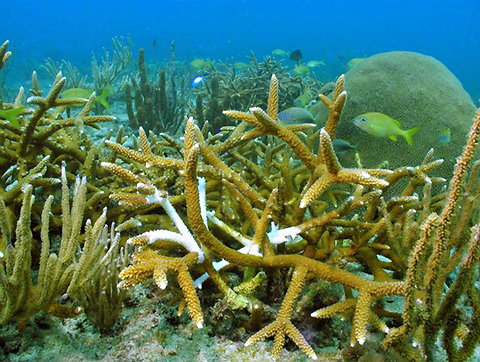
Image: NOAA. Staghorn coral afflicted by whitening, which is associated with ocean acidification and rising ocean temperatures.

We care about both genotypes and phenotypes when it comes to finding solutions to endangerment.  And in case you are reading this you should hear the truth: we selected the word phenotype among many possibilities for the post title, mainly for its alliterative value. We need a bit of lingual levity from time to time to balance out the accumulated weight of the days’ environmental news. This particular wordplay is nonetheless a fine fit to the purpose of the story. Thanks to Green Blog for the view on farming as one solution to the various types of endangered coral whose traits, including their morphology and development, may be replicated using techniques from agriculture:

In the international trade in live coral, most of which ships to the United States for ornamental marine aquariums, the source is quickly shifting from wild harvesting to farming, researchers report in a new study. Continue reading

Mongering Marine Merchandise Mendaciously

Click here to go to Oceana’s report, which documents a study in which, through sampling and DNA testing, it is found that 39% of seafood peddled in major metro markets is fraudulently labeled:

Executive Summary

Seafood fraud can happen anywhere – even in the Big Apple. Fraud includes any false information accompanying seafood, from short weighting to swapping out one species of fish for another. Oceana’s investigation focused on species substitution, or the swapping of a lower value or lower quality fish for a more desirable species. This “bait and switch” hurts our oceans, our health and rips off consumers. And most importantly, it is illegal. Continue reading

You, and 999,999 Other Email Protesters, Can Sometimes Save The World (In This Case, The One Whales Inhabit)

South Korea had planned y to conduct ‘scientific’ whale hunts similar to those carried out by Japan in the Antarctic every winter. Photograph: Momatiuk – Eastcott/Corbis

Bravo, activists of all stripes, but in this case especially the emailing type.  And thank you, Korea, for finally rejecting false justification for whale-killing and doing the right thing. Click the image above for the whole story in the Guardian (whose consistent coverage to these issues deserves credit, too):

Japan, which uses the loophole to kill hundreds of whales every year, is expected to send its whaling fleet to the southern ocean in the next few weeks.

South Korea initially said an increase in whale stocks in its coastal waters had prompted the decision to resume whaling. The fisheries ministry said rising whales numbers posed a threat to squid and fish stocks.

The ministry reportedly began to reconsider after criticism from anti-whaling nations and an online petition that attracted more than 1,000,000 protest emails in three weeks.

Et tu, Japan?

Friends In High Places

Not all marine creatures have equal opportunity of species survival.  As in any social milieu, some are better connected than others; some have benefactors to look out for them; others do not. Thanks to Green Blog, more on the protection of certain charismatic species (but not not others) in the wild blue yonder:

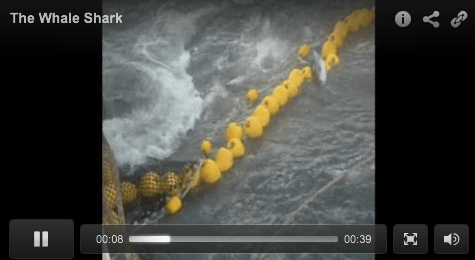
Whale sharks get some respect; the bigeye tuna, not so much.

That was the gist of the message from the Western and Central Pacific Fisheries Commission, whose member nations agreed this week at a meeting in Manila to help reduce whale shark deaths in Pacific fisheries. The commission did not act on a recommendation from scientists that the catch of bigeye tuna be sharply reduced. Continue reading

Jellyfish & Life

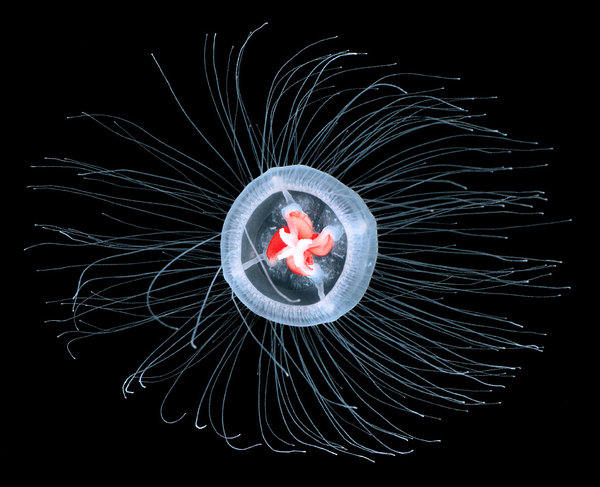
One of the longest and most fascinating items in the New York Times Magazine in ages:

After more than 4,000 years — almost since the dawn of recorded time, when Utnapishtim told Gilgamesh that the secret to immortality lay in a coral found on the ocean floor — man finally discovered eternal life in 1988. He found it, in fact, on the ocean floor. The discovery was made unwittingly by Christian Sommer, a German marine-biology student in his early 20s. He was spending the summer in Rapallo, a small city on the Italian Riviera, where exactly one century earlier Friedrich Nietzsche conceived “Thus Spoke Zarathustra”: “Everything goes, everything comes back; eternally rolls the wheel of being. Everything dies, everything blossoms again. . . .” Continue reading

Marine Protected Areas As Collective Action

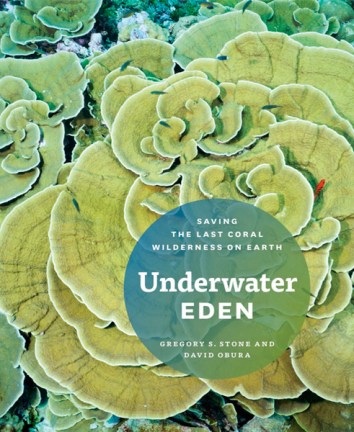
There are newer, larger marine protected areas. How and why do such areas come to be and how do they fare? According to this review the book to the left explains, and is even published as an authorial act of entrepreneurial conservation:

The Phoenix Islands Protected Area (PIPA) came into existence in 2006.  It was, at the time, the largest marine protected area in the world and was the result of a courageous step by the government of the Republic of Kiribati – a South Pacific nation consisting of what was once known Continue reading

Really, Canada?

Click above for the video and related article from CBC News.  Click here for the original source of the open letter reprinted below:

OTTAWA, ONTARIO–(Marketwire – Nov. 6, 2012) –

We, the undersigned, are independent scientists with expertise in marine biology and marine mammals in Atlantic Canada.

We have reviewed the Senate Fisheries Committee report ‘The Sustainable Management of Grey Seal Populations: A path toward the recovery of cod and other groundfish stocks’.

We call upon the Minister of Fisheries and Oceans to reject the recommendation to cull grey seals in Atlantic Canada. Continue reading