Support Your Local Marine Ecologist: They Uncover These Delightful Little Surprises

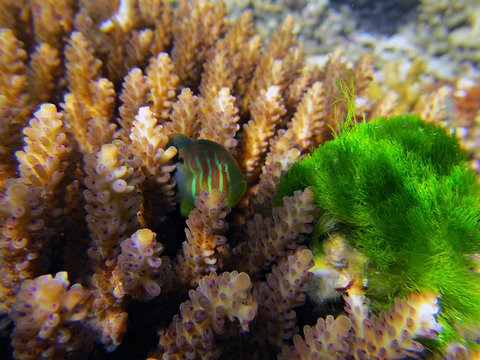
Danielle Dixson/Georgia Tech. Gobidon histrio, a goby fish species, protects coral from the menacing seaweed Chlorodesmis fastigiata.

Click the image to go to the story at Green Blog:

In the waters surrounding the Fiji Islands, the coral reef has vigilant defenders. Researchers have discovered that when alerted by chemical signals transmitted by corals, two resident species of the goby fish will swing into action and limit a growth of seaweed that contributes to the bleaching of precious reefs.

The gobies, inch-long gemlike creatures, report to the affected areas of the corals and nibble the aberrant seaweed back into place, making it look “like somebody went out there with little hedge trimmers,” said Mark Hay, a marine ecologist at Georgia Tech. Continue reading
Conservation Measures With Serious Teeth

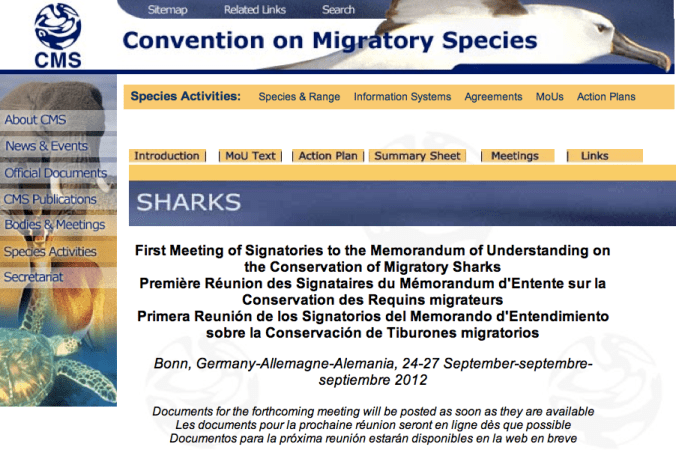
MEMORANDUM OF UNDERSTANDING ON THE CONSERVATION OF MIGRATORY SHARKS

After three meetings – the first in Mahé, Seychelles in December 2007, the second in Rome in 2008 and a third in Manila in February 2010 – the Memorandum of Understanding on the Conservation of Migratory Sharks was negotiated and signed. It commenced on 1 March 2010, the requisite number of signatures (ten) having been achieved in Manila at the end of the negotiations. Continue reading

Largest Marine Park

Click the image above to go to the story:

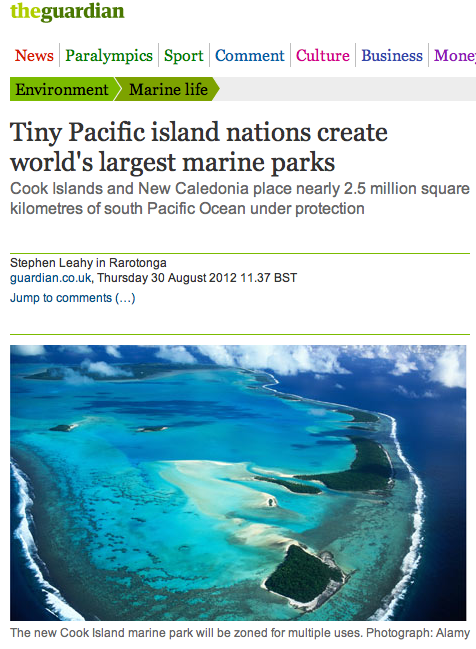
Two of the world’s smallest countries are to place nearly 2.5 million square kilometres of south Pacific Ocean in newly created marine protected areas.

The Cook Islands, nation of 20,000 people on 15 islands, formally announced on Tuesday the creation of the world’s largest marine park covering nearly 1.1m sq km, an area bigger than France and Germany.

“This is our contribution not only to our own wellbeing but also to humanity’s wellbeing,” said the prime minister, Henry Puna.

Note To Maggie

August 14, 2012

Dear Maggie,

We got so busy that we neglected to notice your work and its wonderful home until just now.  I may have heard someone say boingboing before, but I did not know what it meant.  Now I have one data point to help me understand it.  It looks in spirit and even in content much akin to our own style and interests on this site.

If work brings you to India, or any of the other locations where you see contributors on this site, please let us know.

Regards from Kerala,

Crist

p.s. we like your other site too. Continue reading

Galápagos Sea Lions

I just got back from Isabela Island, where I was able to snorkel with a sea lion as playful as the ones in this video (taken, once again, by the ScubaIguana guide Quike Morán), and play with it alone in the relatively shallow waters of Tintoreras (named for the reef sharks that can often be seen there; tinto is red in Spanish; you get the point).

I tried to mimic the swirling, bubble-blowing, and alternating fast and slow approaches as I played with the juvenile sea lion, and was rewarded with a dance even longer than that seen in the video. Continue reading

Calling All Collective Activists

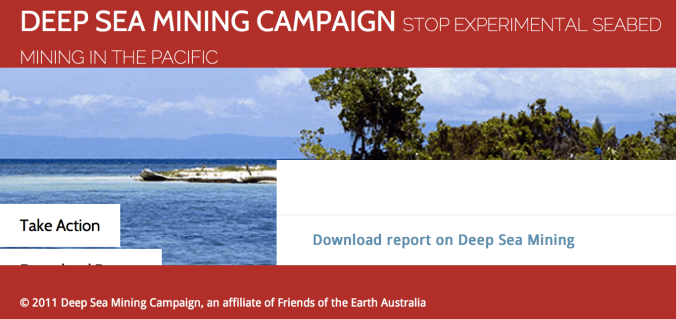
A deeply disturbing story, one among seemingly countless opportunities for any of us to jump in and build an opposition, brought the above organization to our attention.  Gold and copper, not to mention jobs, and concession revenues in a developing nation, are all important.  Up to a point.  But so is the marine ecosystem that will suffer the consequences.  The mining company and its shareholders gain if the operation is profitable; plus the livelihoods of all those working on the technology and the mining jobs to carry out these operations; plus what the PNG government earns; and then some.  It sure looked valuable enough to whomever was involved in granting the concession.

But who did the calculation on the other end of this equation?  The ecosystem valuation side.  Click the image above to see in detail (download the report) what is at stake and what might be done about it, as also reported here in The Guardian:

Nautilus alone has around 524,000 sq km under licence, or pending licence, in PNG, Tonga, New Zealand and Fiji. Continue reading

Live And Let Live

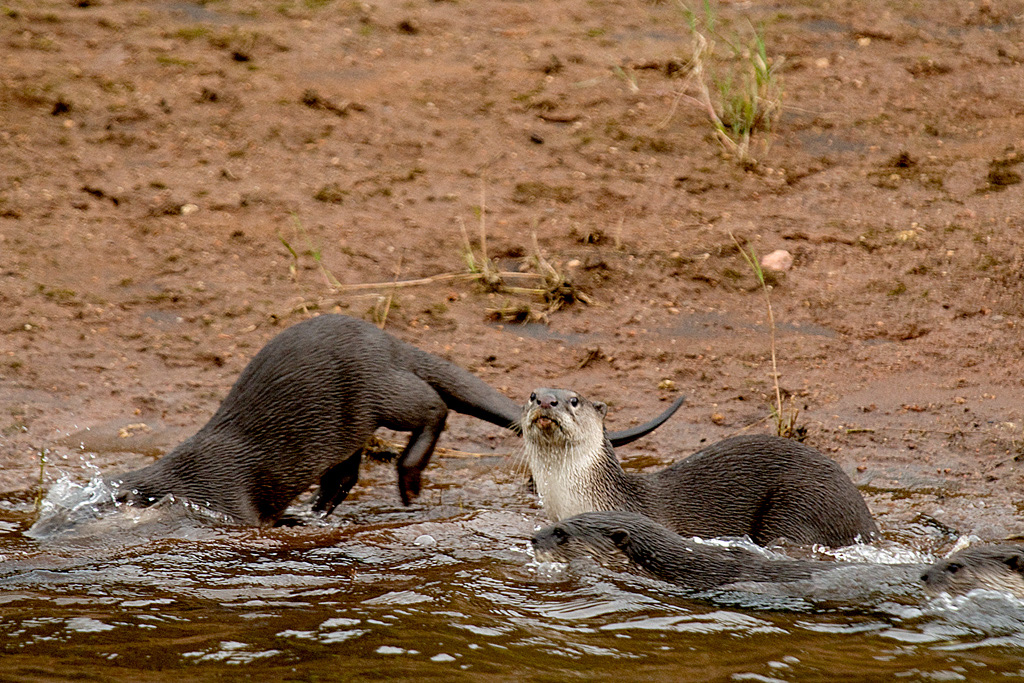
The images after the jump are from here and first came to our attention in the Guardian story (click the headline image to the left), which follows a recent interest we have taken in these mercilessly misunderstood and under appreciated wild creatures. Seth’s recent post begins a new vein in our conversation about marine conservation (for
that wait for 2/2 in that series).

Continue reading

Thank You Australia!

Click the image to go to the coverage:

Australia has created the world’s largest network of marine reserves and will restrict fishing and oil and gas exploration in a major step to safeguard the environment and access to food.

The area will cover 3.1 million square kilometres (1.2 million square miles) of ocean including the entire Coral Sea, and encompass a third of the island continent’s territorial waters.’

The Great Barrier Reef is one of the areas that will be protected through the marine reserve network. Photograph: Doug Steley B / Alamy/Alamy

Whale Wonders

Click the UCP banner above to see more on this new book:
“Preternaturally hardened whale dung” is not the first image that comes to mind when we think of perfume, otherwise a symbol of glamour and allure. But the key ingredient that makes the sophisticated scent linger on the skin is precisely this bizarre digestive by-product—ambergris. Despite being one of the world’s most expensive substances (its value is nearly that of gold and has at times in history been triple it), ambergris is also one of the world’s least known. But with this unusual and highly alluring book, Christopher Kemp promises to change that by uncovering the unique history of ambergris. Continue reading

Drifters

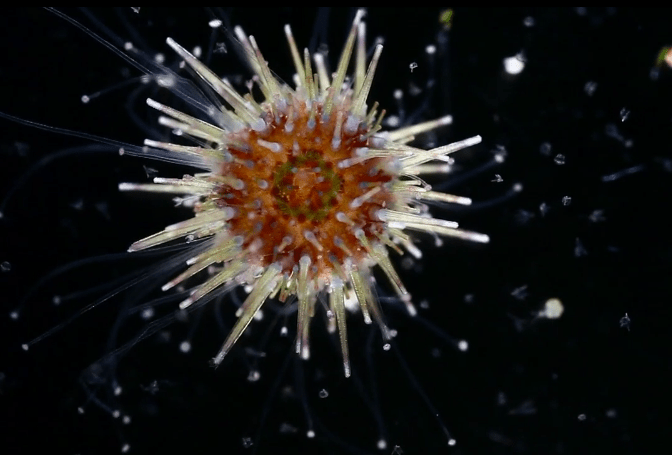
Despite its “Science Fiction Trilogy” sounding name, The Plankton Chronicles is a series of short, compelling educational videos made in conjunction with Tara Oceans Expeditions (a scientific expedition to “sail the seven seas” collecting plankton samples to understand and hopefully mitigate the effects of climate change) and the Observatoire Oceanologique de Villefranche-sur-Mer.

Viewed as a set, they invite the viewer into the kaleidoscopic world that exists in a teaspoon of seawater as well as the open oceans.  Click on the image for a macro lens glimpse. Continue reading

I Belize I Can Fly

Guest Author: Robert Frisch

The tiny islands or “cayes” off the coast of Belize sit in the middle of beautifully serene coral atolls and are surrounded by the world’s second largest barrier reef.  Like shallow lakes in the middle of the ocean, the atolls host several UNESCO world heritage sites and some of the best snorkeling and scuba diving in the world.  My team, consisting of three Johnson  students and an MPA student from the Cornell Institute of Public Affairs, found itself tasked with providing consulting services and business advice for the owners of one of these cayes in what turned out to be the most unique spring break of my life. Continue reading

High Time

…Some years ago — never mind how long precisely — having little or no money in my purse, and nothing particular to interest me on shore, I thought I would sail about a little and see the watery part of the world. It is a way I have of driving off the spleen, and regulating the circulation. Whenever I find myself growing grim about the mouth; whenever it is a damp, drizzly November in my soul; whenever I find myself involuntarily pausing before coffin warehouses, and bringing up the rear of every funeral I meet; and especially whenever my hypos get such an upper hand of me, that it requires a strong moral principle to prevent me from deliberately stepping into the street, and methodically knocking people’s hats off — then, I account it high time to get to sea as soon as I can… Continue reading

Melville’s Muse

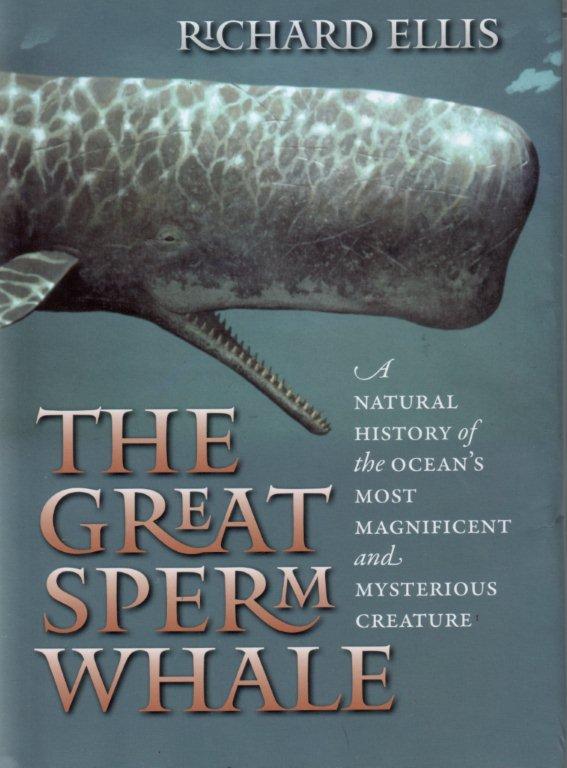
Click the image above to go to the publisher’s website (which also sells the book directly).  If your only knowledge of the title creature comes from a high school literature class, the blurb on the book’s promotional page might make you think this book belonged in the syllabus of the last biology course you took:

Ranging far and wide, Ellis covers the sperm whale’s evolution, ecology, biology, anatomy, behavior, social organization, intelligence, communications, migrations, diet, and breeding. He also devotes considerable space to the whale’s hunting prowess, including its clashes with the giant squid, and to the history of the whaling industry that decimated its numbers during the last two centuries.

According to the review provided in the Times Literary Supplement, the book deserves more attention than that blurb would imply. Continue reading

Travel, Writing & Games

This series has always been worth reading, whether you are an American looking through the eyes of a fellow American, or otherwise intrigued by a niche of American perspective that is not quite representative of that culture as a whole.

First things first: sometimes a book, a music recording or other item is only available from the mainstream online retailers such as Amazon or iTunes, but whenever possible we promote the purchase from independent sellers.  So click the image to the right if you want a link to independent booksellers in the USA, provided by the ever-entrepreneurial American Booksellers Association.

Now, the side show: the series editor Jason Wilson is also a contributor to a site we refer to on occasion, and he wrote an interesting item a couple of years ago that began:

Continue reading

Shark-Free Shark Fin Soup

The hot hand remains hot.  One of the horrible culinary traditions that persists around the world, even though it is repugnant from an environmental perspective, is the harvesting of fins from sharks to make soup. Click the image to the left for but one small data point in the effort to end the illegal harvesting and sale of shark fins.

Better yet, don’t click that. Continue reading

The Heavy Hand’s Awesome Grip

What can be done to reduce hypoxia?

Although reducing fertilizer use is the most cost effective method of ameliorating hypoxia in the Gulf of Mexico, the reductions necessary are too difficult and expensive to implement; the massive agribusiness establishment of wheat, soy, and especially corn is not easily confronted. So conservation and restoration of wetlands, or creation of any other form of buffer zone, is one of the better alternatives.

Buffer zones can filter between 50 and 90 percent of nitrogen and phosphorous from runoff; riparian buffers, filter strips, grassed waterways, and contour grass strips are practices eligible for the Conservation Reserve Program that also prevent nutrient runoff. The Conservation Reserve Program, or CRP, is Continue reading

A Dead Zone

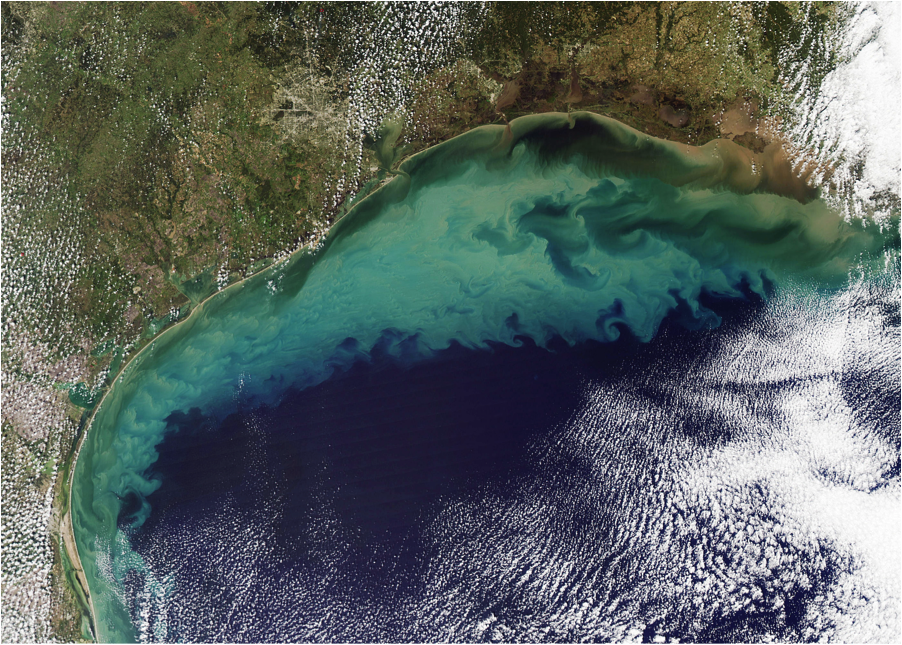
This picture is of the hypoxic area in the Gulf of Mexico, the largest “dead zone” in the western Atlantic. Since the beginning of this site we have tried to accentuate the wonders of nature, creative and collaborative approaches to conservation, and other fun stuff.  Every now and then a dose of scientific explanation helps put this in perspective, even if it is a downer like hypoxia.

Hypoxia occurs when oxygen concentrations in the water are too low to sustain most life, and is created by a process known as eutrophication. This is the over-enrichment of water by nutrients, which cause dense growth of algae that consumes oxygen as it multiplies and decomposes. The resulting lack of oxygen can cause large die-offs of marine life, seriously threatening ecosystems in the Gulf.

Continue reading

Iguana Charisma

The lovely finch tells a story, aesthetic and scientific, that most of us accept as the gospel truth, about adaptation and evolution.  A good interpretive guide can help the average lay person understand the story.  Charles Darwin penciled out some of the first notes that guides use to explain why finches vary in color, beak size, behaviors, etc. and plenty of very smart people have contributed to the evolution of those explanations.  So we continue to learn.

This slideshow requires JavaScript.

A visit to the Galapagos Islands should include attention to the finch, considering the role they played in the ability we now have to understand some of the mysteries of the natural world.  Continue reading