Seven Generations

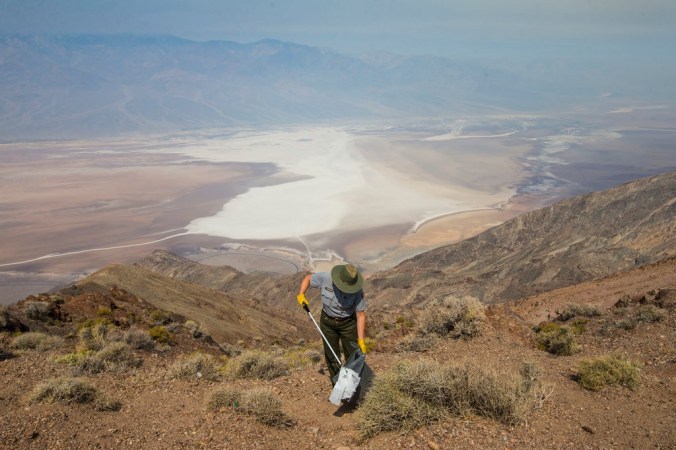
A custodian in Death Valley National Park, which would gain 40,000 acres under the measure. Credit Chase Stevens/Las Vegas Review-Journal, via Associated Press

At a time when the current administration and it’s legislative supporters are busy dismantling the environmental protections that have been painstakingly developed for over half a century, this bipartisan achievement is surprising, and heartening news.

Senate Passes a Sweeping Land Conservation Bill

The Senate on Tuesday passed a sweeping public lands conservation bill, designating more than one million acres of wilderness for environmental protection and permanently reauthorizing a federal program to pay for conservation measures.

The Senate voted 92 to 8 in favor of the bill, offering a rare moment of bipartisanship in a divided chamber and a rare victory for environmentalists at a time when the Trump administration is working aggressively to strip away protections on public lands and open them to mining and drilling.

“It touches every state, features the input of a wide coalition of our colleagues, and has earned the support of a broad, diverse coalition of many advocates for public lands, economic development, and conservation,” said Senator Mitch McConnell, Republican of Kentucky, the majority leader.

Western lawmakers of both parties have been working for four years on the bill, which will next be taken up by the House of Representatives, where it also enjoys bipartisan support.

“This package gives our country a million acres of new wilderness, protects a million acres of public lands from future mining, permanently reauthorizes the Land and Water Conservation Fund and balances conservation and recreation for the long term,” said Representative Raúl Grijalva, the Arizona Democrat who heads the House Natural Resources Committee. “It’s one of the biggest bipartisan wins for this country I’ve ever seen in Congress.” Continue reading
Connecting the Dots Between Technology & Nature Conservation

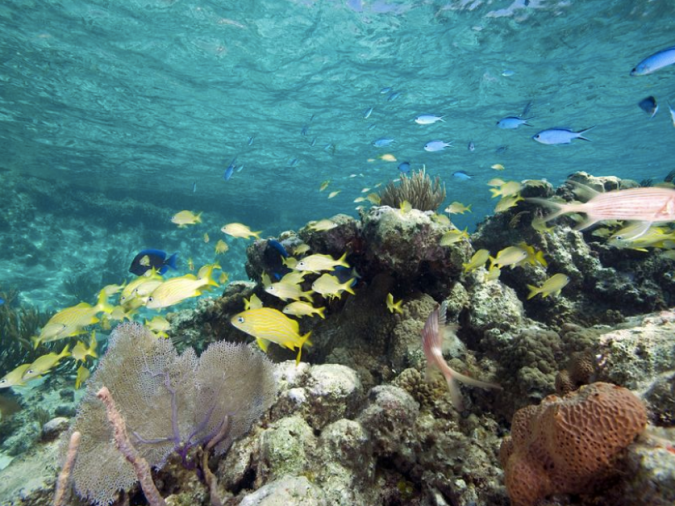
REEF FISH, BAHAMAS Fish congregate near a shallow reef in Exuma Cays Land and Sea Park. © Jeff Yonover

Those familiar with our work will recognize the word valorization, which is an essential element of what we write about and what we do. It’s increasingly important to note that Nature, made more fragile with each passing year by human impact climate change, requires human efforts to protect and hopefully, turn back the clock on damage already done; and it appears to be human nature that maintain a direct  correlation between how something is valued and the amount of attention it gets.

We’re particularly impressed by this example of tech collaboration. Thanks to the Nature Conservancy for highlighting these stories…

The Caribbean Needs Tourism, and Tourism Needs Healthy Coral Reefs

AI and social media are helping quantify the economic value of coral reefs

The Caribbean region is more dependent on tourism than any other region in the world—the sector accounts for over 15 percent of GDP and 13 percent of jobs in the region. And almost all visitors to the Caribbean take part in some activity that relates to coral reefs—either directly, like snorkeling and scuba diving, or indirectly, like enjoying sandy beaches, eating fresh seafood and swimming in crystal waters. That means the health of the Caribbean’s tourism industry—and thus the whole regional economy—is dependent on the health of its coral reefs.

But just how much value do reefs produce? After all, “what gets measured gets managed and improved.” The Nature Conservancy (TNC) recently released the results of a study that focused on reef-adjacent activities and the value they generate for the tourism industry, island governments and Caribbean communities. This study, which builds on an earlier body of globally focused research produced by TNC, found that reef-adjacent activities alone generate an estimated $5.7 billion per year in the Caribbean from roughly 7.4 million visitors. When combined with reef-dependent tourism activities, they generate $7.9 billion total from roughly 11 million visitors.

In other words, a major draw for people traveling to the Caribbean are activities related to coral reef ecosystems, and both the tourism industry and other aspects of the local economies depend on healthy coral reefs to keep this relationship afloat. This evidence offers a pivotal opportunity for advancing coral conservation initiatives not only in the Caribbean but around the world, as it can catalyze both the tourism industry and local governments and communities to invest in protecting and restoring coral reefs for the benefit of economies and incomes.

We now know that these natural wonders are responsible for generating billions of dollars, sustaining livelihoods and anchoring economies in the Caribbean as well as other tropical destinations across the globe. And that should translate into a major incentive to conserve them.   Continue reading

Naughty Behavior Will Not Be Tolerated

Thanks to the Guardian for the latest story in this series. We have avoided adding our voice to the many rightly concerned about the radically pro-extraction, carbon-freewheeling policies of the United States since early 2017. The concern is loud and widespread. We have listened. Today, reading this story, I pictured a naughty boy, a bully, getting away with bad behavior for an extended period. Any period of bad boy behavior is intolerable but it happens. Until it is no longer tolerated. Which eventually always happens. And that may be the best stand-in for optimism these days:

Lost lands? The American wilderness at risk in the Trump era

Exclusive: a new study reveals the vast extent of public lands being opened up to the energy industry. The Guardian heard from three communities on the frontlines

by Charlotte Simmonds, Gloria Dickie and Jen Byers

3872 (2).jpg

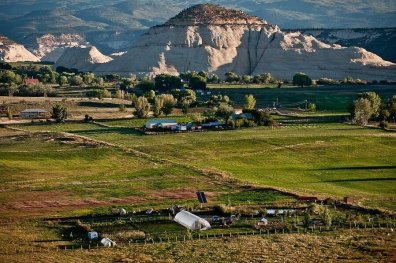
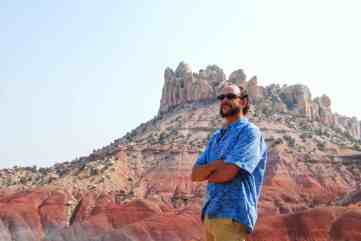
Colter Hoyt, an outdoors guide and conservationist, at Grand Staircase-Escalante. Photograph: Charlotte Simmonds for the Guardian

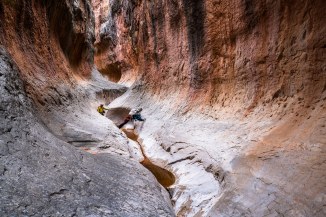
In the great expanses of the Grand Staircase-Escalante national monument, the silence hits you first. Minutes pass, smooth and unbroken as glass. The smallest sound – a breath of wind, a falling rock – can seem as loud as passing traffic.

Colter Hoyt knows this landscape well. As an outdoor guide, he walks the monument almost daily. Yet these days he is full of fear. This remote paradise of red rocks, slot canyons and towering plateaus faces an uncertain future, following a controversial presidential proclamation that removed 800,000 acres from the monument and opened land up for potential energy development.

When Trump took office in 2016, he promised the energy industry a new era of “American energy dominance”. This would only be possible by exploiting America’s 640m acres of public land: mountains, deserts, forests and sites of Native American history that cover more than a quarter of the country. Continue reading

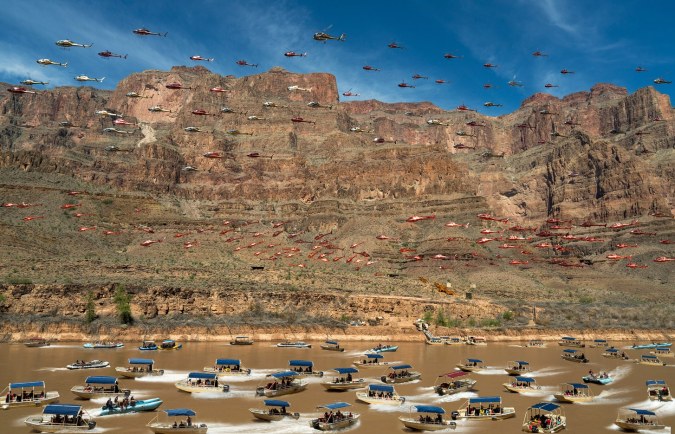
A Visual Requiem, And A Call For Quiet Grace At The Grand Canyon

Paumgarten-Grandy-Canyon_01.jpg

In a merged image, the photographer Peter McBride captured a vision of the Grand Canyon choked by noise and exhaust. Photograph by Pete McBride

Noise pollution was the topic of several of the first posts on this platform when we started it in 2011, and has been a persistent theme ever since then. We especially appreciate those related to noise in wilderness areas, so thanks to Nick Paumgarten for this story:

The Grand Canyon Needs to Be Saved By Every Generation

Paumgarten-Grandy-Canyon_03.jpg

Hiking in the Grand Canyon can be a perilous pursuit. Photograph by Pete McBride

Three years ago, in the course of thirteen months, the photographer Peter McBride and the writer Kevin Fedarko hiked from one end of the Grand Canyon to the other. They did it in eight sections, mainly so that McBride could shoot in different seasons. In all, it took them seventy-one days to cover two hundred and seventy-seven river miles and some eight hundred shoe-leather miles, through some of the continent’s roughest hiking terrain—“a whole lot of scratching around the rock puzzles in that giant abyss,” as McBride put it recently.

Before they set off, the Grand Canyon had been hiked nose to tail only nine times in recorded history. There is also a handful of obsessives who have chipped away at it, piece by piece, in the course of decades. “Maybe some crazy ancestral Puebloan did the whole thing, but that wouldn’t make logical sense—they wouldn’t have had any reason to,” McBride said.

Paumgarten-Grandy-Canyon_02.jpg

 panoramic view of the confluence of the Colorado and the Little Colorado. Photograph by Pete McBride

McBride, a native Coloradan who shoots for National Geographic, has been documenting the Colorado River for a decade, sometimes from a perch in an ultralight aircraft. Fedarko, who lives in Flagstaff, Arizona, has guided on the river and is the author of “The Emerald Mile,” an account (with many historical tributaries) of a harrowing speed run of the Grand in a dory during the biggest flood in generations. (As it happens, Kenton Grua, the boatman in the book, was also the first person to walk the canyon, in 1976.) McBride and Fedarko have both become persistent, ardent advocates for preserving the place, in all its spellbinding, inhospitable glory, in abidance with Teddy Roosevelt’s famous dictum, issued during his one visit, in 1903: “Leave it as it is. Man cannot improve on it; not a bit.” Still, this was the first time, and surely the last, that either of them had tried to walk it. Continue reading

Protecting Nature & Defying The Odds

23akagera2-jumbo-v2.jpg

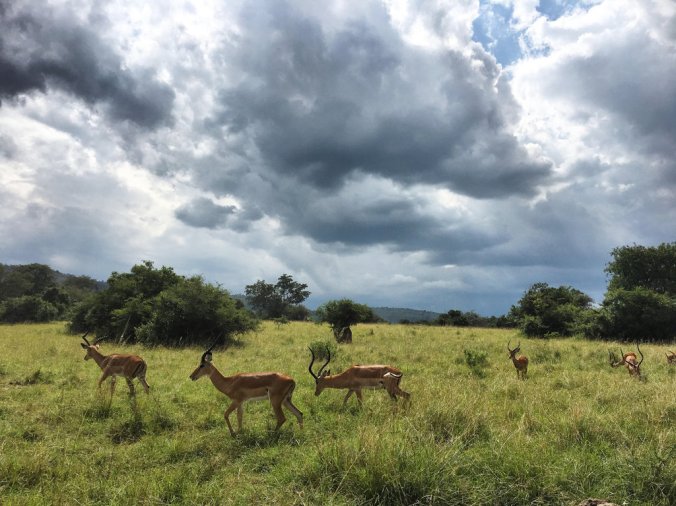
On a game drive in Akagera. Shannon Sims

Thanks to Shannon Sims for this story of a refuge defying the odds:

A Rwandan Game Park Defying the Odds

Despite modest tourism numbers, Akagera National Park is a success story in the making, particularly considering that, like its host country, it survived catastrophe.

23akagera-jumbo-v2

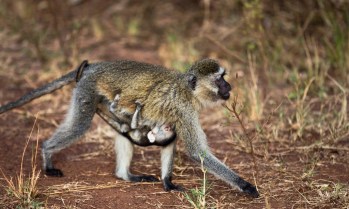
A velvet monkey and her baby in Akagera National Park. The Rwandan park is a success story, despite modest tourism numbers. Credit Ben Curtis/Associated Press

The road through Akagera National Park in eastern Rwanda was blocked. Two giraffes had positioned themselves smack in the middle of the dirt road and were rubbing their necks together. In the car, with a driver and a guide, my cell service was long gone; there was nothing to do but sit back, relax and enjoy the show.

Right around this time of year, to the east of Rwanda’s borders, in Tanzania and Kenya, big packs of tourists are stumbling over each other to get the perfect photo of a scene like this. They’re driving through protected areas like Serengeti National Park and the Maasai Mara National Reserve in caravans of Land Rovers, each packed so tightly that peoples’ binocular straps get tangled up. It makes sense: the animal migrations that occur in this part of the world these months are rightly considered by many to be the greatest natural show on earth. Continue reading

Big Cat News From India

Sundarban_Tiger_SoumyajitNandy_Wikimedia_web.jpg

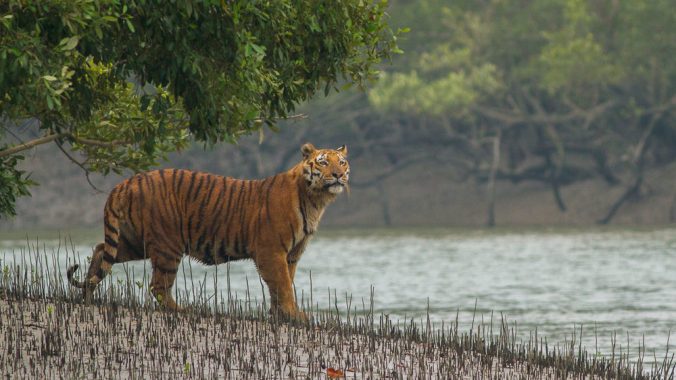
A tiger in the Sundarbans National Park, a protected tiger reserve, in the Indian state of West Bengal. SOUMYAJIT NANDY / WIKIMEDIA COMMONS

Richard Conniff, one of the science writers we most depend on for useful conservation news, shares this interview with one of our heroes from India’s big cat conservation network:

Big Cat Comeback: How India Is Restoring Its Tiger Population

Dr.-Ullas-Karanth_WCS_web.jpg

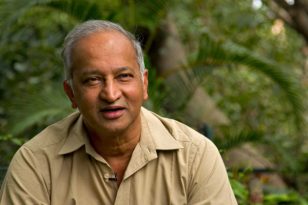
Ullas Karanth

Ullas Karanth has spent a half-century working to protect India’s endangered tigers. In an interview with Yale e360, he argues that with smart planning and the cooperation of its rural residents, the country could support five times the number of tigers it has now.

Ullas Karanth, a senior scientist with the Wildlife Conservation Society, is one of the world’s premier tiger experts and a leader in the effort to restore India’s depleted tiger populations. Raised in the South India state of Karnataka, he has spent much of his professional life studying and working to bring back tigers there, starting in Nagarahole National Park in the foothills of the Western Ghats, and then across a 10,000-square-mile region of that mountain range.

Karanth’s emphasis on scientific methods has frequently brought him into conflict with India’s forest bureaucracy, particularly over its insistence on estimating tiger populations based on footprint counts. Karanth instead pioneered the use of camera traps for population estimates based on identification of individual tigers. That method belatedly became the national standard after a 2004 scandal, when Sariska Tiger Reserve, officially estimated to have 26 tigers, turned out to have none. Continue reading

Read About This Place, These People, Their Food

660708410.jpg

Thanks to Blake and Jen for all their awesome work. Also thanks to Sara Ventiera (a new food and travel writer for us to follow!) and her colleagues at National Public Radio (USA) for keeping us connected to such heroics:

Meet The Restaurateurs Fighting To Save The Grand Staircase-Escalante Monument

restaurant_custom-85b7446a9674f688f4281aff18efef2ba28904ee-s1400-c85.jpg

Hell’s Backbone Grill is located in Boulder, Utah, about 250 miles south of Salt Lake City. The restaurant’s owners are fighting Trump’s plans to slash the size of nearby Grand Staircase-Escalante National Monument by more than half. Ace Kvale

Standing between peach and cherry trees on her 6.5-acre Utah farm, Blake Spalding points to the Kaiparowits Plateau. The looming bluff is dotted with thousand-year-old pinyon pine and juniper trees.

“That is one of the areas they’re hoping to mine,” she tells a group of visiting chefs from Salt Lake City. “It’s full of dinosaur fossils and more than 650 documented species of wild bees.”

hells-542a80853d1900a1e76f2d1b4944854d744f9e94-s1400-c85.jpg

The remote and sustainable restaurant has become a destination for travelers seeking a taste of its terroir-driven fare. Ace Kvale

Nearly 20 years ago, Spalding and her business partner, Jen Castle, founded Hell’s Backbone Grill in Boulder, Utah, on the edge of the then-newly designated Grand Staircase-Escalante National Monument, about 250 miles south of Salt Lake City. The remote and sustainable restaurant has become a destination for culinary travelers seeking a taste of its terroir-driven fare. It’s an amalgam of Mormon pioneer, Western range cowboy and traditional Southwest flavors, like juniper lamb posole or grilled pork chops with Boulder crabapple barbecue sauce. Continue reading

Some Regrets Are Better Than Others

OaklandInstitute.pngThere is a saying, often attributed to Mark Twain (though it appears nowhere in his published writings), that history never repeats itself but it often rhymes. That quote comes to mind reading this report below by the Oakland Institute, in light of yesterday’s news from Greece. There is a rhyme with no reason that echoes between the two stories. It also brings to mind, for me, an ever-present question about the work I have done for the last two decades. Tourism, even if it is sustainable tourism development, has its downsides. So, I am always on the lookout for ways to avoid regret in projects I take on, and how they are executed. More often than not, if I sense regret it is about not having had enough impact. I prefer that to the regret of too much of this type of impact:

maasai-med-hero

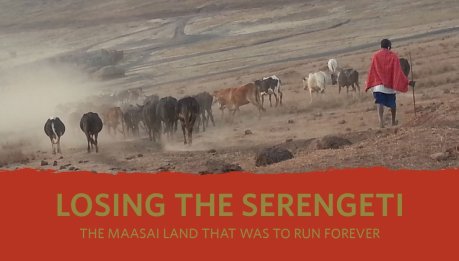
Losing the Serengeti: The Maasai Land that was to Run Forever is based on field research, never publicly-seen-before documents, and an in-depth investigation into Tanzania’s land laws. This report is the first to reveal the complicity between Tanzanian government officials and foreign companies as they use conservation laws to dispossess the Maasai, driving them into smaller and smaller areas and creating a stifling map of confinement. Continue reading

Commerce, Conscience & Conservation

06Patagonia1-jumbo

Yvon Chouinard, the founder of Patagonia, with its chief executive, Rose Marcario, in the tin shed where he once forged and hammered metal. The outdoor-clothing company has mixed commerce and activism since the early 1970s. Credit Laure Joliet for The New York Times

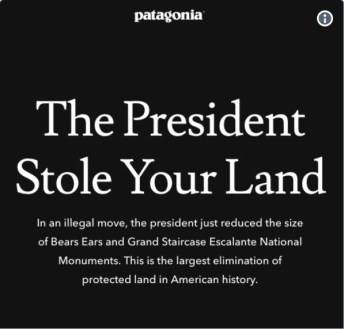
Since the early days of this platform we have linked to stories about this company many times, and its founder in particular is in our pantheon of role models. During these seven years we have also studiously avoided linking to stories involving politics, other than highlighting activism that holds public officials accountable. This story below borders on  too much politics, but I find the company’s position not only acceptable, but as usual about this company, aspirational. Thanks to David Gelles for this story about how Patagonia has supported grass-roots environmental activists for decades and how it is suing the president in a bid to protect Bears Ears National Monument:

merlin_136030764_da829491-ce0c-4974-a0f9-b170acc558c4-superJumbo

Patagonia employees at the Ventura, Calif., headquarters, where there are picnic tables in the parking lot, on-site day care and easy access to the beach.CreditLaure Joliet for The New York Times

VENTURA, Calif. — The offices of Patagonia occupy a low-slung complex of stucco buildings in this sleepy beachside town in Southern California. There are solar panels and picnic tables in the parking lot, day care with a jungle gym by the main lobby and easy access to the beach, where employees surf during lunch break. It is a corporate Eden of sorts, where idealistic Californians run a privately held company that sells about $1 billion of puffy down jackets and organic cotton jeans each year.

Screen Shot 2018-05-05 at 7.06.08 AMBut on an unseasonably hot and windy Monday morning in early December, Patagonia headquarters were transformed into something that quickly resembled a war room. There were emergency conference calls with Washington lawyers. Court filings were prepared. Web designers remade the company’s home page.

It wasn’t a business crisis that had mobilized the company, however. It was politics. Continue reading

Meanwhile, North Of The Border

Kormann-Ryan-Zinke.jpg

The Interior Secretary, one of President Trump’s most loyal allies, sees public lands as the key to an “energy-dominant” future. Photograph by Morgan Rachel Levy / Redux

Yesterday’s rich south of the border story is complemented, not flatteringly, by this note by Carolyn Kormann:

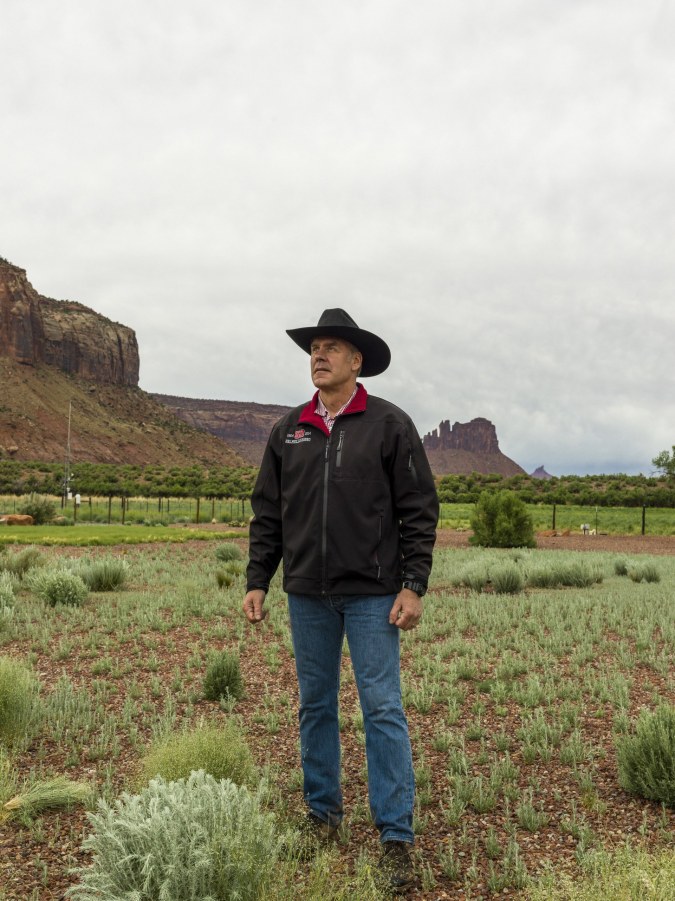
Ryan Zinke’s Great American Fire Sale

Not long ago, the Bureau of Land Management, an agency within the U.S. Department of the Interior, began distributing “vision cards” to its employees. The front of each card features the B.L.M. logo (a river winding into green foothills); short descriptions of the Bureau’s “vision,” “mission,” and “values”; and an oil rig. On the flip side is a list of “guiding principles,” accompanied by an image of two cowboys riding across a golden plain. Amber Cargile, a B.L.M. spokeswoman, told me that the new cards are meant to reflect the agency’s “multiple-use mission on working landscapes across the West, which includes grazing, energy, timber, mining, recreation, and many other programs.” Individual employees, she added, can opt to wear or display the cards at their own discretion. But, according to the advocacy group Public Employees for Environmental Responsibility, which obtained photos of the cards and shared them with the Washington Post, supervisors in at least two B.L.M. field offices have been verbally “advising that employees must clip them to their lanyards.” Some workers, speaking to the Post anonymously, said that they felt they had no choice but to comply. Continue reading

A Question Worth Asking About Yosemite

5988

There is an intentional lack of exterior signage for the new Starbucks at Yosemite national park. Photograph: Courtesy of Starbucks

Thanks to Freddy Brewster, the former Yosemite trail guide who raised the question, and thanks to the Guardian for airing it:

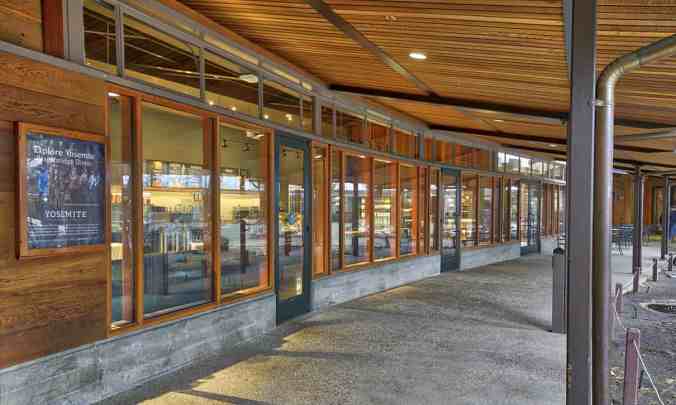
Yosemite’s secretive Starbucks: cafe opens in park, to delight and dismay

A new Starbucks provides convenience and caffeine to visitors, but to many it represents a trend of commercialism and 25,000 people petitioned to stop it from opening

6720

Australian visitor Tom Collin sips a coffee from the new Starbucks at Yosemite, part of a major remodeling effort inside the 128-year-old national park. Photograph: Gabrielle Canon for the Guardian

It looks and feels just like any of the other roughly 27,000 Starbucks locations that have opened around the world. The green apron-clad barista makes tall, grande and venti coffee concoctions that are handed over in familiar mermaid-endowed cups.

But from the parking lot outside – where there is an intentional lack of Starbucks signage – the world-famous Yosemite falls can be heard through the patter of an early spring rainstorm. Continue reading

Peru’s Rendering Of The Best Idea

20SCI-AMAZON1-jumbo

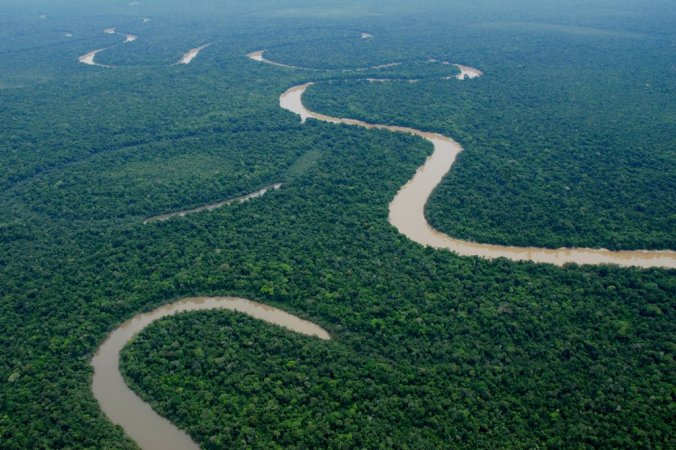
The Yaguas River of the Yaguas National Park in Peru, one of the Western Hemisphere’s newest national parks. Credit Álvaro del Campo/The Field Museum

The Idea Gets Greater, In Chile

webTHOMPKINSmap-460

Protecting More Wilderness
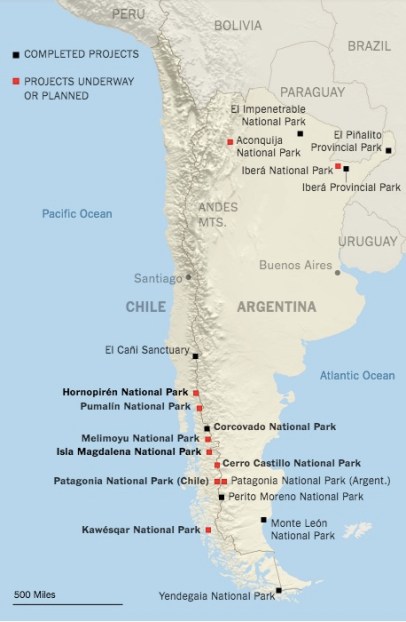
Map shows the scope of Tompkins Conservation park projects in Chile and Argentina. Eight Chilean parks, shown in boldface, comprise the latest expansion of wilderness areas, an area roughly twice the size of Massachusetts. Source: Tompkins Conservation. By The New York Times

When the news was first reported, just the facts were enough. Then yesterday we had some commentary that made us think more on how important this news really was, from a global perspective. Now, the story behind the facts, and this op-ed by Kristine McDivitt Tompkins echoes the greatest idea:

We need a new story about the Earth that isn’t just a litany of alarming statistics about crashing wildlife populations, polluted air and water, and climate chaos. We need a story that reminds us that the continuing degradation of landscapes and the seas is not necessarily a one-way street toward irreversible destruction.

On Monday we began to write such a story with the government of Chile. Under the wide skies of the new Patagonia National Park, President Michelle Bachelet and I formalized the largest-ever expansion of a national park system prompted by a donation of private land. Continue reading

The Greatest Idea, In Peril

5700

America’s public lands belong to all of us. We owe it to ourselves to save them

A truly noble idea – one deeply democratic in its inspiration and one that honors the human need to be in relationship to awe and majesty.

America’s public lands.

This idea was seeded by early American settlers, who came here to escape a class system in Europe that excluded them from land – owning it, hunting on it, surviving on it. Conservation was articulated as a national endeavor by hunters and foresters with the unique discernment that our game and timber resources were not boundless, and required professional management to remain bountiful.

This was a hard-won national ethos. From the pitch battles for their existence, our public lands were imbued with moral standing and national sanction: the idea that they “belong” to all of us. Continue reading

10 Million Acres Added to Chile’s Parks

I don’t normally expect to get my daily news from Instagram, unless it’s an update from a personal friend. I follow the company Patagonia because they feature beautiful photos like those above, but yesterday they shared this fantastic announcement. Visiting Patagonia about a decade ago was an amazing experience that I hope to repeat before too long, and I am thrilled that there will be some new national parks to visit. Jonathan Franklin reports for The Guardian:

McDivitt Tompkins, the former chief executive of the outdoors company Patagonia, handed over 1m acres to help create the new parks. The Chilean government provided the rest in federally controlled land.

McDivitt Tompkins has spent 25 years working on land conservation in Chile with her late husband Doug, who founded North Face and Esprit. Doug Tompkins died in a kayaking accident in Chile in 2015.

“This is not just an unprecedented act of preservation,” said [Chile’s President Michelle] Bachelet, who flew to this remote Patagonian valley on Monday to receive the donation. “It is an invitation to imagine other forms to use our land. To use natural resources in a way that does not destroy them. To have sustainable development – the only profitable economic development in the long term.”

Continue reading
Understanding Oregon Rancher Culture’s Concerns

21mag-oregon2-jumbo-v2

If, like those of us who contribute to this platform, you had been following the standoff mentioned in this article, and following the Bundys as a sidenote, this article is worth a read. The author Jennifer Percy gives full voice, as far as we can tell, to the concerns of the people from that region and specifically their opposition to all aspects of the federal government other than the military. The last three paragraphs of the article are particularly chilling but getting there is a worthy journey:

21mag-21oregon-t_CA1-superJumbo

The landscape of eastern Oregon has little in common with the state’s Pacific Coast. Credit Peter van Agtmael/Magnum, for The New York Times

I took the eastern route from Idaho, on a day of freezing rain, over the Strawberry Mountains, into the broad John Day River Basin, in Oregon. I was used to empty places. Most of my childhood was spent in this region of eastern Oregon, in remote areas of the sagebrush desert or in the volcanic mountains with their jagged peaks and old-growth forests. My family moved away just before I entered high school, and I never returned; I’ve felt in romantic exile ever since. This part of America that had once belonged to my childhood became the spotlight of national news in the winter of 2016, when the Malheur National Wildlife Refuge — an old childhood haunt — became the scene of a cowboy takeover. The takeover began as a protest in the town of Burns after two ranchers were sentenced to prison for arsons on federal land. The ranchers, Dwight and Steven Hammond, caught the attention of the Nevada rancher Ammon Bundy, who thought the punishment unfair. Bundy and a crowd of nearly 300 marchers paraded through Burns, and a splinter group eventually took over the Malheur headquarters. For 41 days, they refused to leave, protesting federal ownership of public lands, which they considered unlawful and abusive. I didn’t understand what had happened since I left, why so many people seemed so disillusioned and angry.

21mag-21oregon-t_CA0-superJumbo.jpg

Joe Cronin on his ranch in the Malheur National Forest, in October. Credit Peter van Agtmael/Magnum, for The New York Times

The ground was snow-covered when I visited John Day last winter and the temperature below freezing. I was there to attend a meeting organized by Jeanette Finicum, the widow of LaVoy Finicum, an Arizona rancher who was shot and killed by government agents a year earlier. LaVoy was a leader of the Malheur occupation. He left the refuge for a speaking engagement in John Day with plans to return, but he was shot three times at an F.B.I. roadblock. For that reason, his widow was calling this event “The Meeting That NEVER Happened.” Continue reading
Half-Earth Is Not Happening, But Co-Habitation Is


luisa-rivera-yale-e360_web

LUISA RIVERA / YALE E360

Thanks to Richard Conniff, whose articles about the intersection between humans and other species, and about how our museums shape our views we have shared from various sources, including this recent one from Yale360:

Habitat on the Edges: Making Room for Wildlife in an Urbanized World

Efforts to protect biodiversity are now focusing less on preserving pristine areas and more on finding room for wildlife on the margins of human development. As urban areas keep expanding, it is increasingly the only way to allow species to survive.

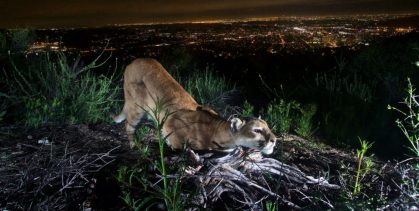
FemaleMountainLion_VerdugosMountainsGlendaleLA_NPS_web2

A female mountain lion in the Verdugos Mountains, north of Los Angeles. Also known as cougars, these animals are an increasingly common sight in the mountains surrounding Southern California’s cities. NATIONAL PARK SERVICE

One morning not long ago, in the southern Indian state of Karnataka, I traveled with a Wildlife Conservation Society biologist on a switchback route up and over the high ridge of the Western Ghats. Our itinerary loosely followed the corridor connecting Bhadra Tiger Reserve with Kudremakh National Park 30 miles to the south. Continue reading
Undoing Dams, Animals Pitch In

ap_498416275898

Since 2014, Washington’s Elwha River has flowed freely through what once was Lake Mills and the Glines Canyon Dam. But the site still leaves a barren scar in Olympic National Park. Now, a human- and bird-led effort is turning it green again. Photo: Elaine Thompson/AP

Conservation is sometimes in the hands of animals, as this story in the current Audubon magazine illustrates:

Birds Are Helping to Plant an Entire Lost Landscape in Olympic National Park

After the largest dam removal in U.S. history, scientists, Native Americans, and wild animals are working together to restore the heart of the Elwha.

ap_081210040812

The Elwha Valley and Glines Canyon Dam prior to demolition. Photo: Elaine Thompson/AP

It’s a scorching August day in the Elwha Valley, and it only feels bleaker as we peer into the 200-foot void of Glines Canyon Dam. A sputtering trail of water marks the concrete lip where, for nearly a century, two hulking braces trapped logs, rocks, and sediments as they washed down from the mountains of northern Washington, forming a reservoir that was six times deeper than a competition-diving pool. At its height, the dam churned out 13.3 megawatts of hydroelectricity, enough to power 14,000 homes and a local paper mill. But it also seriously altered the Elwha River’s ecology, along with that of surrounding Olympic National Park. Endangered chinook salmon were cut off from their spawning sites; fish-eating birds and otters suffered; and estuaries became more brackish and shallow. Finally, in 1992, the U.S. government issued the order to destroy Glines Canyon Dam and the nearby Elwha Dam. Yet it wasn’t until two decades later when the water was completely freed. Continue reading
Victory Favoring Earth, We Hope

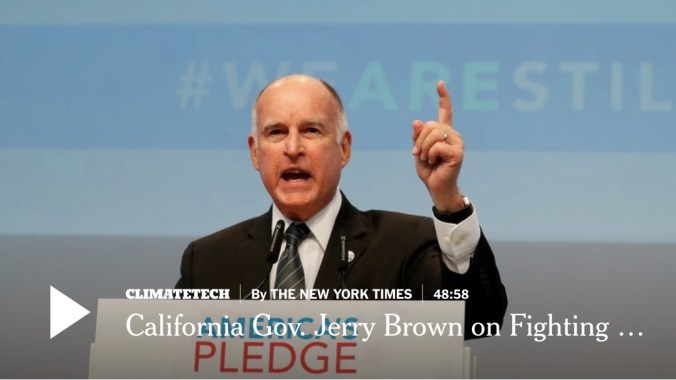
Lisa Friedman appears twice on today’s landing page of the newspaper she works for, once as co-host on a video, below, about Alaska; and again as host of an equally important story in the form of an interview, also captured on this video titled Jerry Brown on How to Fix Global Warming.

JBrown

How can policymakers fight climate change in the face of political headwinds? Gov. Jerry Brown of California addresses that question at ClimateTECH, a conference from The New York Times, in a conversation with Thomas L. Friedman. By THE NEW YORK TIMES on Publish DateNovember 29, 2017. Photo by Friedemann Vogel/European Pressphoto Agency.  Watch in Times Video »

Rewilding Europe, Alive & Well


RewildBear

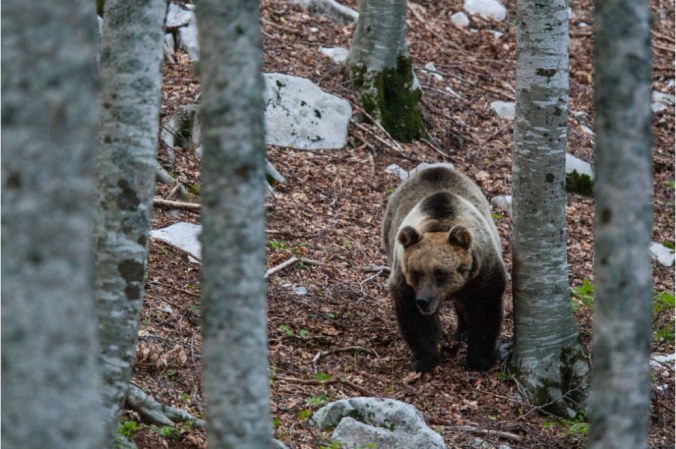
Salviamo L’Orso is committed to conserving the critically endangered Marsican brown bear (pictured here in its central Apennines habitat), and has already won many grants for its grassroots projects. Bruno D’Amicis / Rewilding Europe

It has been some time since we regularly featured news on the topic of rewilding. This announcement is as good a reason as any to revisit rewilding:

A Salviamo l’Orso project titled “Let’s take action for the Bear” was approved for funding by members of EOCA in early November, together with four other proposals from around the world.

With only 50 to 60 individuals remaining, all living in a relatively small area of the Central Apennines, the endemic Marsican brown bear (Ursus arctos marsicanus) is today critically endangered. The Salviamo l’Orso project, which comprises four conservation activities, will enhance the habitat of these magnificent animals and hopefully help them to expand their home range. Continue reading