The Wettest Place on Earth

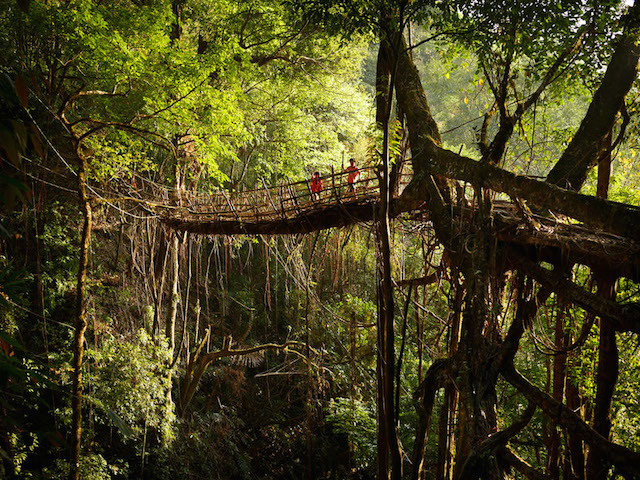
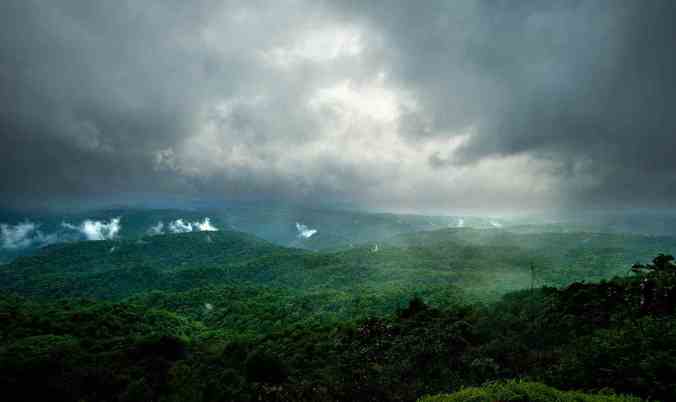
New Zealand-based photographer Amos Chapple captures a "living bridge" deep in the forests of Meghalaya, India.

New Zealand-based photographer Amos Chapple captures a “living bridge” deep in the forests of Meghalaya, India.

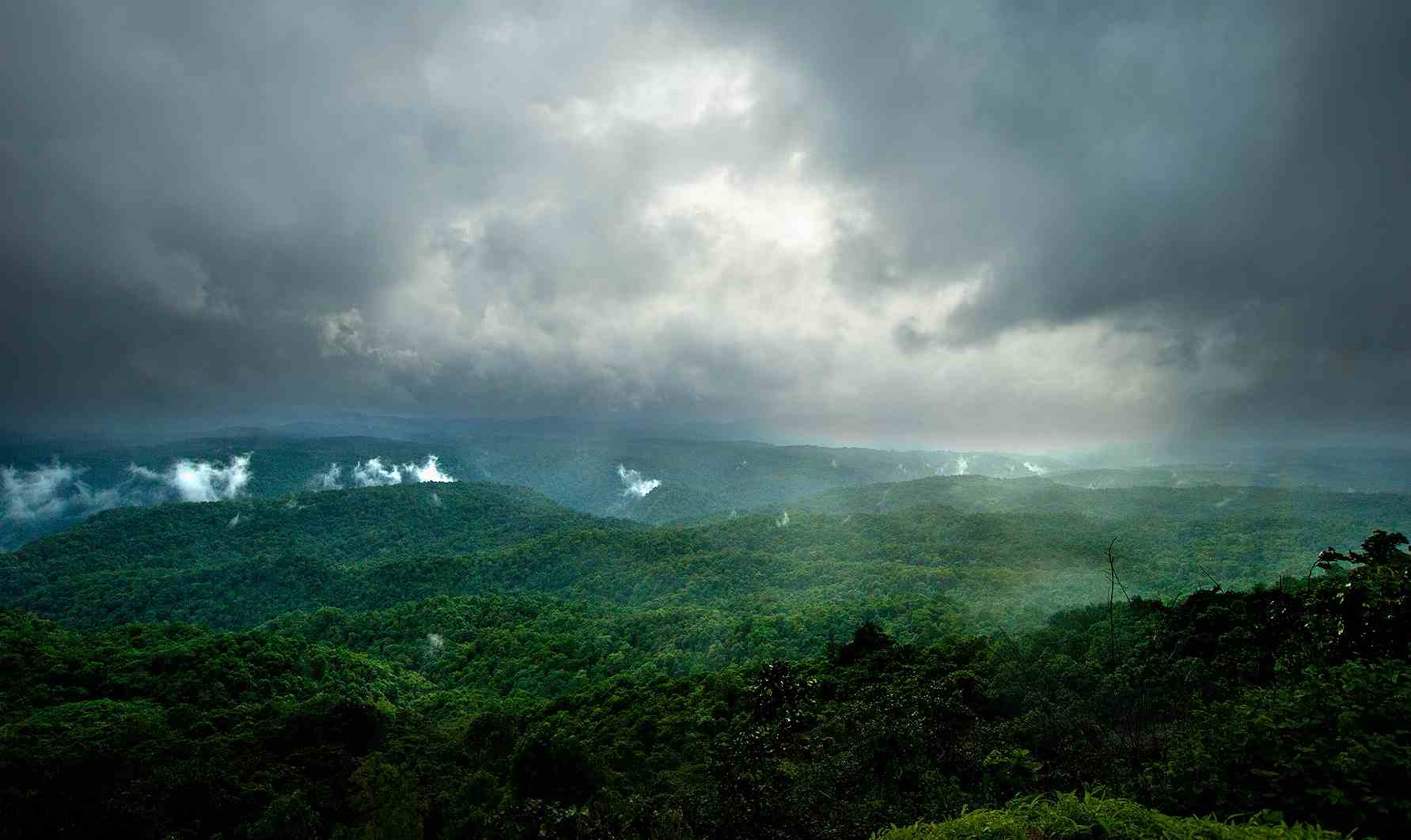
Perched atop a ridge in the Khasi Hills of India’s north-east, Mawsynram has the highest average rainfall – 467in (11.86 metres) of rain per year – thanks to summer air currents gathering moisture over the floodplains of Bangladesh. When the clouds hit the steep hills of Meghalaya they are compressed to the point where they can no longer hold their moisture. The end result is near constant rain. Even the world’s biggest statue, Rio de Janeiro’s 30m tall Christ the Redeemer, would be up to his knees in that volume of water.

Continue reading

Notes from a Natural History Museum

Harvard Natural History Museum

I recently had the chance to visit the Harvard Natural History Museum. Despite having lived in Cambridge for nearly a year, and having often thought about visiting the museum when I passed by going to and from my apartment, I had not stopped in until now. What a treat! The collections are full, diverse, and well curated. On this occasion, I spent most of my time in the animal wing, but I plan to return soon to take in the flora and minerals, and spend much more time in choice display rooms (e.g. the absolutely gorgeous Mammals/Birds of the World permanent exhibit: see below for pictures).

A ground sloth skeleton. It is hard to get an idea of the size of this creature from this photo, but it probably weighed several tons while alive!

Continue reading

Don’t Go Away Mad, Just Go Away

koch_sitegraphic-830x467

The Koch brothers are a wondrous phenomenon. You probably knew that. What can you do (?), you might ask. We know the feeling. Well, here is something. A public service announcement from our colleagues at EcoWatch, linking to a petition effort worthy of your consideration:

The Natural History Museum just released an unprecedented letter signed by the world’s top scientists, including several Nobel laureates, calling on science and natural history museums to cut all ties to the fossil fuel industry.

The letter comes on the heels of recent news that Smithsonian-affiliated scientist Willie Soon took $1.25 million from the Koch brothers, Exxon Mobil, American Petroleum Institute and other covert funders to publish junk science denying man-made climate change, and failed to disclose any funding-related conflicts of interest.

In particular, it points a finger at the Smithsonian National Museum of Natural History (D.C.) and the American Museum of Natural History (NY), where David Koch is a member of the board, a major donor and exhibit sponsor.

Oil mogul David Koch sits on the boards of our nation’s largest and most respected natural history museums, while he bankrolls groups that deny climate science.

Sign this petition to the Smithsonian and the American Museum of Natural History: It’s time to get science deniers out of science museums. Kick Koch off the Board! Continue reading

Libraries of Life

Elsie, a former teaching assistant for Cornell’s ornithology course, holds up an Impeyan Pheasant skin specimen. Photo by Rebecca Snow.

At Raxa Collective we’ve always been big admirers of museums, whether focussed on art, culture, or nature. In today’s op-ed section of the New York Times, two biologists write about the importance of natural history museums. The authors, Larry M. Page and Nathan K. Lujan, argue that funding shouldn’t be cut from these types of institutions and that the active collection of specimens from the wild should not be curtailed:

These specimen collections serve as the bedrock of our system of taxonomy — the rules by which we classify life — and are integral to our understanding of the threats, origins and interrelationships of biodiversity. And yet, thanks to budget cutbacks, misplaced ethical critiques, public misconceptions and government regulations that restrict scientists while failing to restrict environmental exploitation, the continued maintenance and growth of these libraries is in danger.

Though most visitors never know they are there, natural history collections are as critical to modern biologists as libraries are to journalists and historians. Indeed, like good literature, each museum specimen allows reinterpretation by every person who examines it.

A couple of our contributors–myself included–are currently working for the Smithsonian Institution, and our supervisor is the curator of birds Continue reading

Museums, Birds, Natural History–A Few Of Our Favorite Things

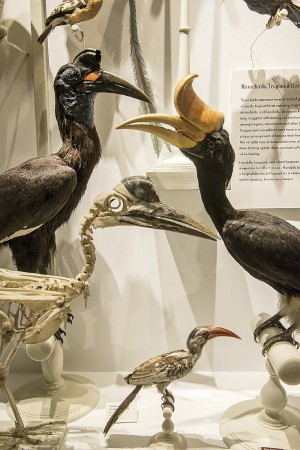
Photograph by Jim Harrison Hornbills, including the Malaysian state bird, Buceros rhinoceros (right)

Photograph by Jim Harrison
Hornbills, including the Malaysian state bird, Buceros rhinoceros (right)

If you happen to be in Boston, and are one of our many bird-motivated readers, you may want to visit a place where birds have helped a great institution become greater:

THE GREAT MAMMAL HALL has been emblematic of the Harvard Museum of Natural History for decades. Traditionalists will be glad to know that the gorilla tirelessly pounding on his chest, the placid okapi, and the room-long whale skeleton are still in place, and birds still fill cases on the balconies that run all around the hall. But the birds are no longer solely the “Birds of North America,” as has been the case for ages. Like the University that houses them, they have become more cosmopolitan and are now “Birds of the World.”

“I’m staggered by their diversity,” said Maude Baldwin, a doctoral student

Continue reading

Awesome Oceans, Awesome Curator, Awesome Book

opulent-oceans_imagelarge

The American Museum of Natural History is a favorite childhood and parenthood hangout of many of the readers of these pages and visitors to places where Raxa Collective does its work. Our sense of awe about the natural world often starts in an urban institution like this one. No surprise, its curators are awesome in their own right. Here is one example from the AMNH blog a few weeks back:

Q&A with Curator Melanie Stiassny

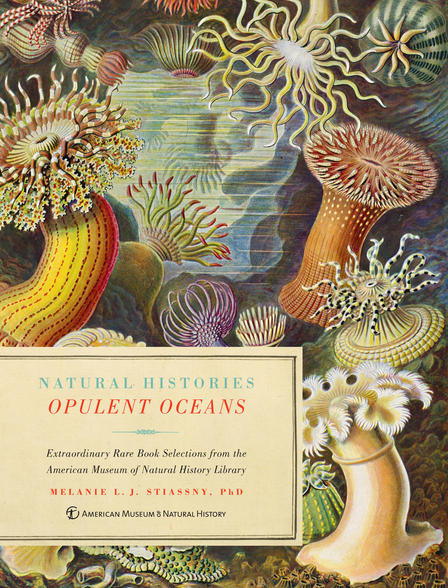
This month marks the publication of Opulent Oceans:Extraordinary Rare Book Selections from the American Museum of Natural History Library (Sterling Signature, 2014), the third in a series showcasing the spectacular holdings of the Rare Book Collection in the Museum Library. Written by Curator Melanie L. J. Stiassny, the book includes essays about pioneering biologists who studied marine life. (And like the preceding volumes—Natural Histories (2012), which inspired the current exhibition, and Extraordinary Birds (2013)—it also showcases a variety of scientific illustrations that brought new discoveries to a growing audience of experts and laypeople alike.)

We recently spoke with Dr. Stiassny, who is Axelrod Research Curator in the Department of Ichthyology, about her experiences researching the book. Continue reading

World Wildlife Week: Tigers & Territories!

habitat


As a part of celebrating World Wildlife Week I was sharing information about the importance of saving our Natural Heritage, trying to create awareness among the growing population of nature lovers and wildlife photographers.

In the previous posts I discussed the relationships between healthy ecosystems, the well-being of wildlife and humans.

Here I’ll address another essential element for a healthy tiger population – territories!

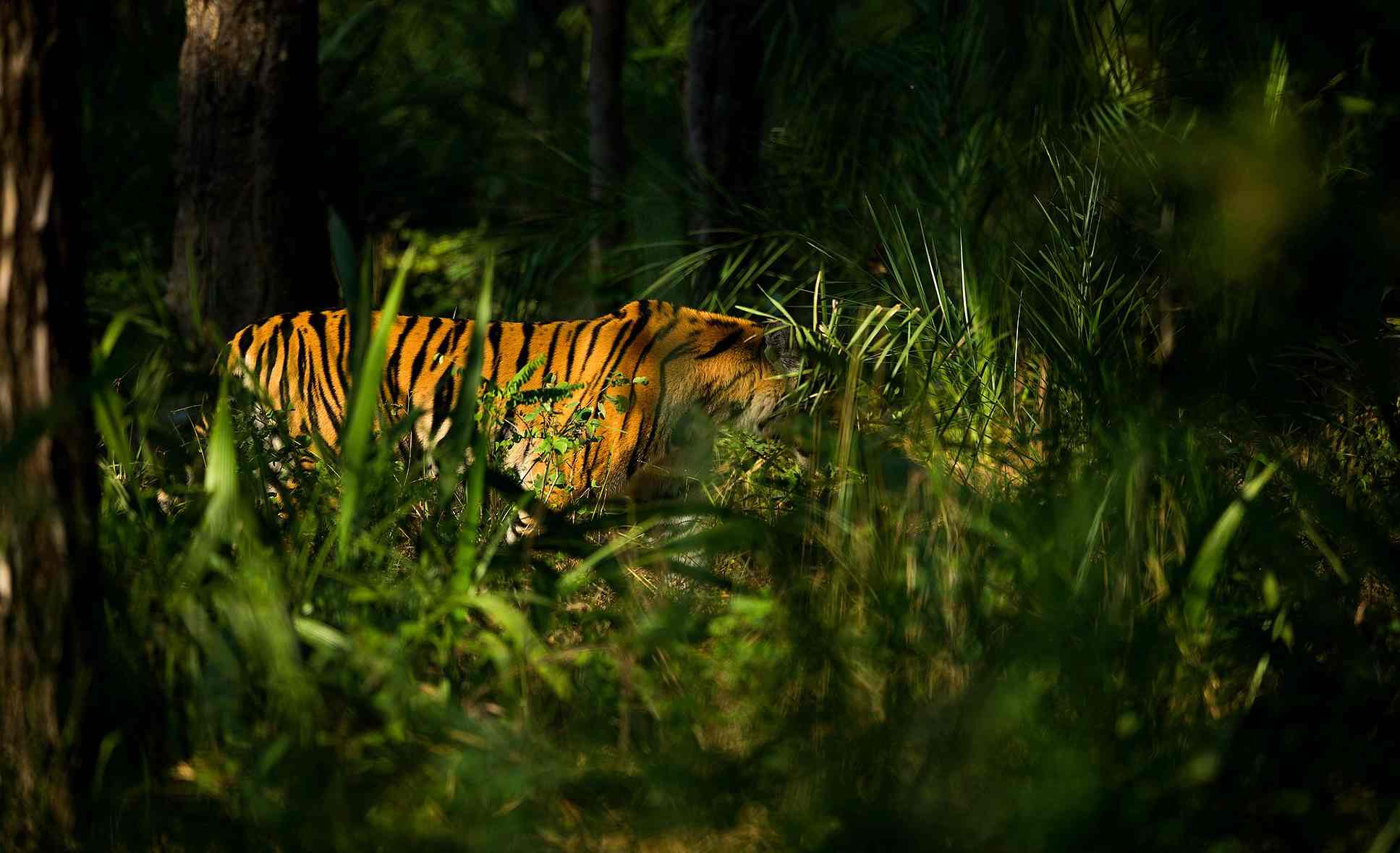
Next to food, the most important requirement for a tiger is territory. A male tiger with a territory encompassing those of several females has more mating opportunities. A female in control of a ‘home range’ with abundant prey has the best chance of raising more cubs.

With so much at stake, tigers are fiercely possessive of their turf, and scent-mark and defend their territories from rivals.

There is increased pressure on the Tiger territories from the development front. Environmental and forest clearances have been delinked to allow work on linear projects, such as highways, on non-forest land without waiting for approvals for the stretches that require forest land.

India has ONLY 4.9% of total geographic area established as protected area (PAs). If we are not able to increase this, we need to see how we can at least protect that. But look at this news published in hindustantimes:

In a boost to the real estate sector, the environment ministry may soon allow state governments to take a call on setting up new townships, information technology and developmental parks near tiger reserves, national parks, eco-sensitive zones and critically polluted areas.

The ministry has already issued draft rules proposing delegation of its power to decide on construction projects within 10 kms of wildlife areas and critically polluted areas to the state governments.

Till now, the Centre used to examine such projects to consider their impact on wildlife before giving a go-ahead. But now, the ministry has proposed the “general condition” for construction projects including information technology parks, hotels and offices will “not” apply. Continue reading

World Wildlife Week: Spotted and Sambar Deer

tiger hunt

As a part of celebrating World Wildlife Week I will be sharing information about the importance of saving our Natural Heritage, hopefully trying to create awareness among the growing population of nature lovers and wildlife photographers. My first post makes the correlation between a healthy tiger habitat with our own well-being.

Now let me talk about the importance of deer in our forests.

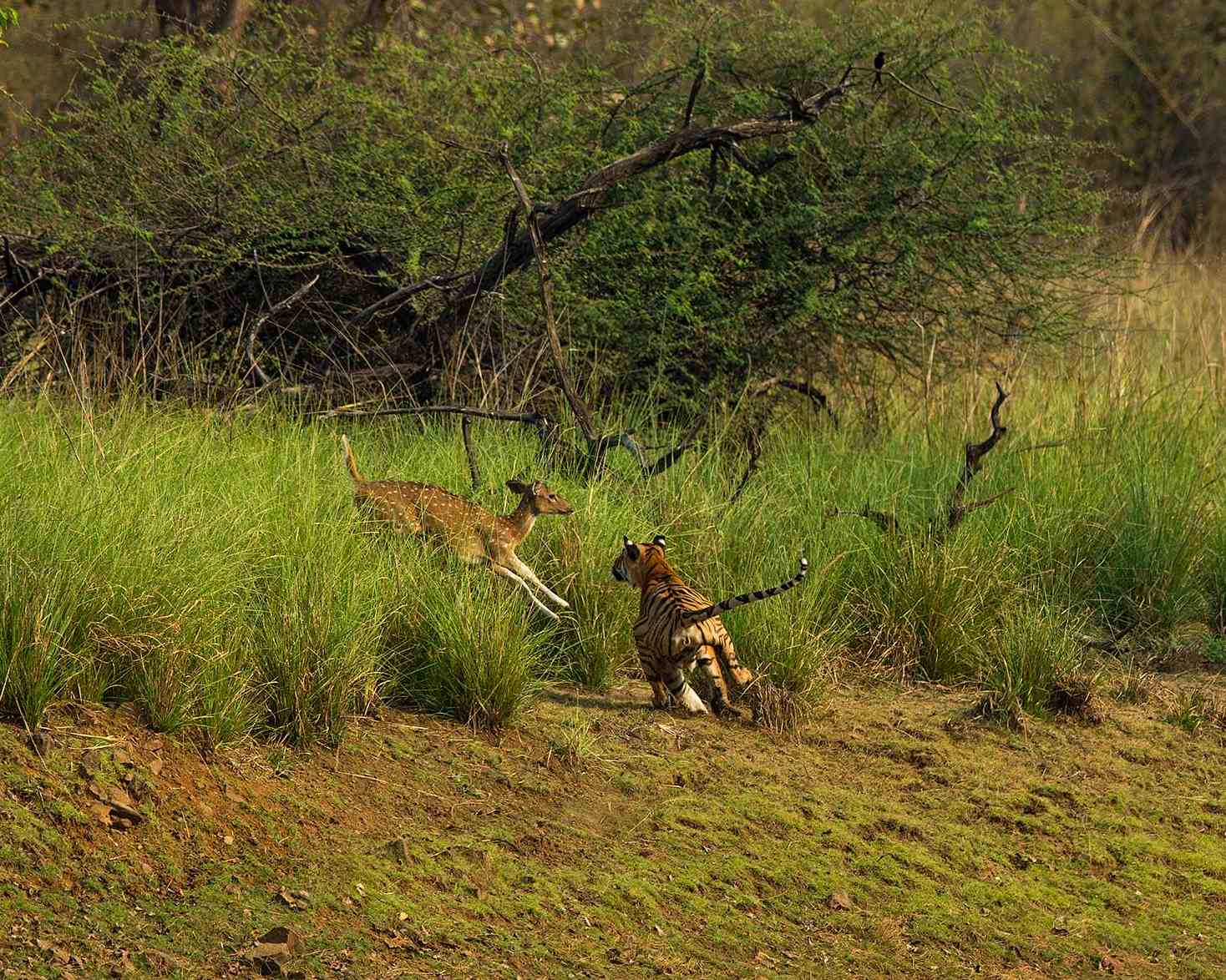
One of the primary reasons why large areas of forest in India no longer have tigers is because local people have hunted and eaten away most of the prey animals. While the direct poaching of tigers is contributing to their rapid decline now, it is the steady erosion of the tiger’s prey base that has resulted in low numbers of tigers to start with.

An adult tiger needs about 3000 kg of food a year. This translates roughly into one deer-sized animal every week.

Continue reading

World Wildlife Week: Why Save the Tiger?

tiger by Sudhir Shivaram

As a part of celebrating World Wildlife Week I will be sharing information about the importance of saving our Natural History, hopefully trying to create awareness among the growing nature lovers. Lets start with why we need to save the Tiger.

The tiger is at the top of the food chain. Therefore, the healthy presence of tigers indicates healthy forests. The presence of tigers in a forest has dual benefits, firstly, it keeps the ungulate (hoofed animals like deer and wild boar) population in check and also keeps humans at bay as most people are scared of venturing into a tiger or lion forest. This mostly applies to poor villagers and not poachers and hunting tribes. If there is no apex predator, herbivores wreak havoc and humans enter the forest for farming, logging, and poaching of smaller animals with less fear. The existence of tigers is vital for the survival of forests. But why do we need forests? Think of the forest as a gigantic sponge. A sponge absorbs water and stores it until and unless you squeeze it out.

Continue reading

The Missing Link In The Museum Of Natural History

PHOTOGRAPH BY ERIC FEFERBERG/AFP/GETTY

PHOTOGRAPH BY ERIC FEFERBERG/AFP/GETTY

Thanks to Alex Carp over at the New Yorker‘s website, and specifically the increasingly awesome Elements section, for keeping us up to date on the acquisitions at one of our favorite museums:

The insect collection at the American Museum of Natural History holds approximately sixteen million specimens, collected from some of the most remote corners of the world. But until earlier this year, the museum lacked a single ant from a place that scientists have traditionally neglected to look: the sidewalks and street medians of Manhattan. Almost by definition, natural science tends to begin its examination of wildlife only after travelling as far away from people as possible. Continue reading

If You Happen To Be In New York

Book Launch


We believe in, and care about biophilia, which is a phenomenon first identified and named by E.O. Wilson. Thankfully, we are not the only ones. We appreciate the intersection between art and science in elucidating biophilia evident in this book. Thanks, Polly:

Polly Brown is a London based artist, and photographer. Continue reading

Saving Species–One Paper, One Video, One Course, And One Initiative At A Time

saving-species-logo-long-small

We thank Stuart Pimm for his ongoing excellent contributions to conservation through science and education, as well as creative activism, and congratulate him and his colleagues for their most recent publication:

new scientific paper was published today in the prestigious journal Science and it has important findings for biodiversity. Though it reaffirms what we already know—that there is a global extinction crisis and it is worse than we believed—it also details how technology and smart decision-making are offering hope for endangered species and their habitats. Continue reading

A Minor Detraction From Aging’s Major Detractors

old-tree

Thanks to Roberta Kwok for her ever-concise summaries of remarkable scientific findings on Conservation‘s website, this one following the theme of a companion post with regard to aging organisms:

SCORE ONE FOR THE REALLY OLD GUYS

Aging is generally associated with slowing down. But scientists have found that trees actually grow faster as they get older, making them star players in a forest’s carbon storage. In fact, one old tree can fix as much carbon in a year as the total amount of carbon in a “middle-aged” tree. Continue reading

Collaboration On Oldest Living Things

Thanks to Jonathan Minard for the short film above presenting Rachel Sussman Carl Zimmer and Hans Ulrich Obrist, and the book that they collaborated on:

Since 2004 artist Rachel Sussman has been researching, working with biologists, and traveling all over the world to photograph continuously living organisms 2,000 years old and older. The work spans disciplines, continents, and millennia: it’s part art and part science, has an innate environmentalism, and is driven by existential inquiry. She begins at ‘year zero,’ and looks back from there, photographing the past in the present. Together, her portraits capture the living history of our planet – and what we stand to lose in the future.

Continue reading

If You Happen To Be In New Britain


home_030714

We have been following James Prosek since first learning about his work, and more recently have been looking for an opportunity to catch one of his in-person exhibitions. This opportunity is just around the corner:

bg_logoNaming Things in the Natural World
Monday, Apr. 21, 2014

9:30 a.m. Welcome reception with Coffee
10 a.m.-2:30 p.m. Program
Continue reading

A Master Puzzle

Photograph: Nati Harnik/AP

Photograph: Nati Harnik/AP

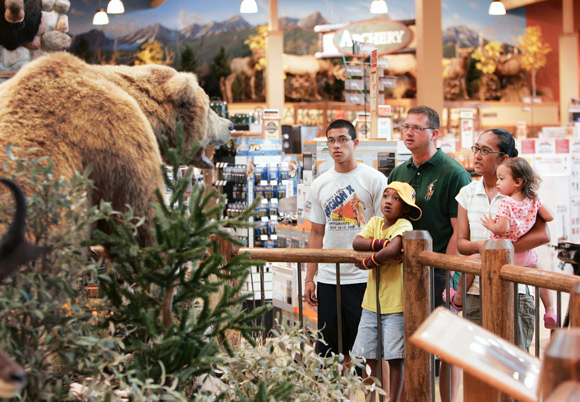
If you have shopped there in person, or ordered from them online, or see that the interrelation between the USA’s various communities are sometimes not easy to figure out, you know why this story is important:

…The growth of Cabela’s reflects Americans’ odd relationship with the outdoors: we mythologize it even as we pave it over. To accommodate their bulk and the crowds that they attract, Cabela’s stores are often built next to interstates and surrounded by giant parking lots. Generally, the only wildlife in sight are the crows picking over the litter. Some of the newest branches are on the edges of cities—Denver, Austin—that epitomize sprawl. In Greenville, South Carolina, where Cabela’s plans to open on a congested retail strip in April, other retailers are worried that traffic jams will scare away their customers. Continue reading

Odd Architects And Other Natural Wonders Brought Into Better Focus

Photograph: Arco Images GmbH / Alamy/Alamy

Photograph: Arco Images GmbH / Alamy/Alamy

The Guardian is preparing us for 2014’s new lineup of nature shows on television by highlighting the role of technology in bringing us a closer view of all things wild, including more than one of the types of amazing creatures we like featured in the photo above:

An unusual line-up of stars will make their names on television next year. They include the gigantopithecus, a huge extinct ape – resurrected through the wonders of CGI – which will frolic in 3D with David Attenborough in Sky’s Natural History Museum Alive.

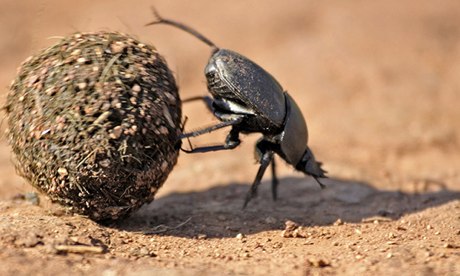
The south-east Asian tree shrew and the dung beetle will bear testimony to the hardships that the world’s tiniest animals endure, in BBC1’s Hidden Kingdoms, while Dolphins: Spy in the Pod, also on BBC1, will reveal the intimate lives of wild cetaceans through the use of cameras fitted to robot fish. Continue reading

Panoramic Viewpoints

Fred F. Scherer, left, and James Perry Wilson, center, paint the background for the American Bison/Pronghorn antelope diorama in 1942.

Visitors to the American Museum of Natural History look at a diorama for which Scherer painted the background decades prior.

Growing up in and around New York I spent many happy hours at the American Museum of Natural History. In addition to it being the depository of many anthropological, archeological and paleontological wonders, it also successfully brings the outside inside for many city dwellers. One of the ways they effectively did this was through museum dioramas. In the age that preceded high-quality large format photography the dioramas required skilled mural painters to help bring the taxidermic animals “to life”. Continue reading

Geology And The Natural History Of The Environment’s Future

Here is the second installment in a series on natural/environmental history from the perspective of what is referred to here as human impact and the geology of the future. The author requires you to work, but it is important work, worthy of the effort to focus the lens of history for the sake of our decisions about the future:

The Geological Society of London, known to its members as the Geol Soc (pronounced “gee-ahl sock”), was founded in 1807, over dinner in a Covent Garden tavern. Geology was at that point a brand-new science, a circumstance reflected in the society’s goals, which were to stimulate “zeal” for the discipline and to induce participants “to adopt one nomenclature.” There followed long, often spirited debates on matters such as where to fix the borders of the Devonian period. “Though I don’t much care for geology,” one visitor to the society’s early meetings noted, “I do like to see the fellows fight.” Continue reading

Environmental Pre-History

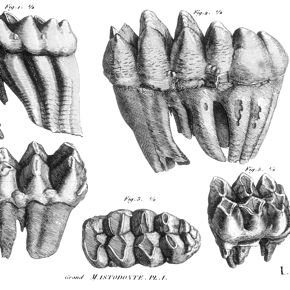
131216_r24386_g290_cropWho knew of such a thing as a calendar specific to the French Revolution? I obviously missed that session in my history education, or have forgotten it; but it is good to be reminded. And the way it is invoked is an almost-missable detail but essential to thinking about how we, in all our wisdom as evolving cultures, rewrite rules in ways that sometimes moves us two steps backward for every step we had already taken forward. From the New Yorker‘s environment-focused writer, a superb new look at the earth’s history from the unexpected perspective of teeth:

ANNALS OF EXTINCTION PART ONE

THE LOST WORLD

The mastodon’s molars.

BY 

DECEMBER 16, 2013

On April 4, 1796—or, according to the French Revolutionary calendar in use at the time, 15 Germinal, Year IV—Jean-Léopold-Nicholas-Frédéric Cuvier, known, after a brother who had died, simply as Georges, delivered his first public lecture at the National Institute of Science and Arts, in Paris. Cuvier, who was twenty-six, had arrived in the city a year earlier, shortly after the end of the Reign of Terror. Continue reading