The Oceans’ Invertebrates, Inveterately Out of This World

Clockwise from top left: a white phantom crab, a fuzzy red-spot crab, a frilled anemone Phymanthus, a red-eye Medusa Polyorchis penicillatus, a tiger cowrie Cypraea tigris and a three-lined nudibranch Flabellina trilineata. Credit Susan Middleton via NYTimes

We are no strangers to the fantastic sights of the deep sea — not only because of shallower personal experience but certainly also due to the wonders of the web. But the images captured by Susan Middleton look to be confirmation of how amazing invertebrate life can be in the oceans. Her new book, Spineless: Portraits of Marine Invertebrates, the Backbone of Life, includes around 250 photographs of these magnificent creatures, and we look forward to exploring them more in person. You can read Dana Jennings’ review of the book for the New York Times below:

As we stand on the thin crust of this watery planet, our gaze tends to roam from horizon to heavens. We often neglect the riot of life that seethes and thrives below us, especially in the still mysterious depths of our oceans.

Continue reading

The Importance of Whale Poo

Whales often feed at depth but return to surface waters to defecate. Their faecal plumes fertilises the surface waters and help plankton thrive. Caption: The Guardian. Photograph: Reinhard Dirscherl/Getty Images

We’ve posted about ambergris before, but this article by The Guardian‘s George Monbiot covers a completely different type of significance when it comes to cetaceans’ excrement. Here’s more from Monbiot:

I can hear you muttering already: he’s completely lost it this time. He’s written a 2,000-word article on whale poo. I admit that at first it might be hard to see the relevance to your life. But I hope that by the time you have finished this article you will have become as obsessed with marine faecal plumes as I am. What greater incentive could there be to read on?

In truth it’s not just about whale poo, though that’s an important component. It’s about the remarkable connectivity, on this small and spherical planet, of living processes. Nothing human beings do, and nothing that takes place in the natural world, occurs in isolation.

Continue reading

A Human’s Best Illustration Of Important Stuff

179571de-e7d8-4a39-82bf-ad6bef672f58-620x372

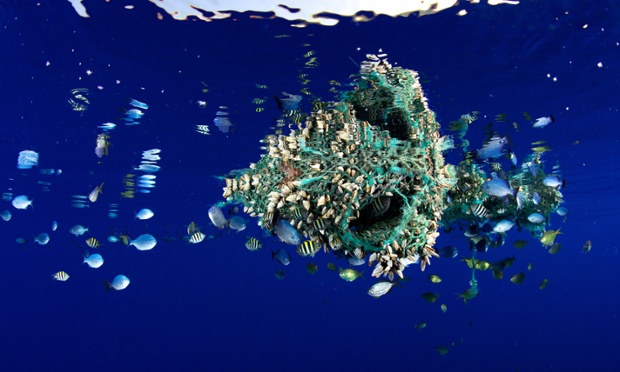
Plastic pieces in the ocean damage wildlife and enter the food chain when ingested by fish. Photograph: Bryce Groark/Alamy

Thanks to the Guardian for ongoing coverage of the world’s great environmental challenges:

Full scale of plastic in the world’s oceans revealed for first time

Over five trillion pieces of plastic are floating in our oceans says most comprehensive study to date on plastic pollution around the world

More than five trillion pieces of plastic, collectively weighing nearly 269,000 tonnes, are floating in the world’s oceans, causing damage throughout the food chain, new research has found.

Data collected by scientists from the US, France, Chile, Australia and New Zealand suggests a minimum of 5.25tn plastic particles in the oceans, most of them “micro plastics” measuring less than 5mm.

Continue reading

Digging Deeper, Getting To No

Casa Dominique is an ecolodge on Lanzarote's northern coast. Julie Genicot, a French trekking guide, has lived in Lanzarote since her grandparents opened the Casa Dominique when she was a child. She worries that offshore oil drilling might ruin the natural environment she grew up in. Lauren Frayer/NPR

Casa Dominique is an ecolodge on Lanzarote’s northern coast. Julie Genicot, a French trekking guide, has lived in Lanzarote since her grandparents opened the Casa Dominique when she was a child. She worries that offshore oil drilling might ruin the natural environment she grew up in. Lauren Frayer/NPR

We cannot possibly say that Spain does not need more oil. But we can say that before going to the Canary Islands there should be more effort to use the sun and wind, as at least one European country with less direct sunlight per year than Spain has successfully done. Spain should dig deeper on the alternative energy front before drilling in the sea. Go, Julie, go! Thanks to National Public Radio (USA) for bringing this story to our attention:

An oil rig now floats offshore in one of Europe’s top winter beach destinations — Spain’s Canary Islands. For the first time, Spain has authorized offshore oil drilling there. It’s hoping to reduce its dependence on foreign oil. But the project has prompted massive protests by local residents and environmental groups like Greenpeace.

Julie Genicot is a French trekking guide who’s lived in Lanzarote, one of Spain’s Canary Islands, ever since her grandparents opened an ecolodge there when she was a child.

“We have all the elements. It’s very windy, we have tides, the sun. It’s a very energetic place,” she says, looking out her windows across sand dunes in a protected natural park, backed by the Atlantic Ocean. “You have earth, the fire — we’re surrounded by volcanoes. And the wind, the sea — it’s very powerful.” Continue reading

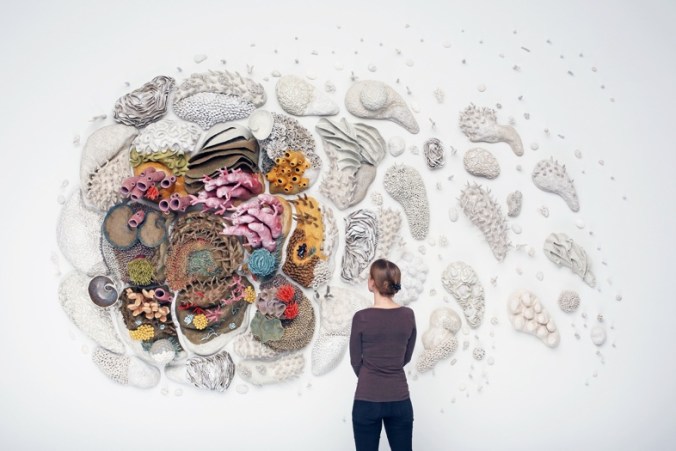
Courtney, Come To Kerala!

3D0A6730-web

We lean to the idea that art can be a nobler calling than other ways of making a living, even in unusual circumstances. After reading the morning news today, one could be forgiven for continuing to think that art is essentially a commercial endeavor, which we would rather not believe in spite of all the evidence:

AUCTION1-thumbStandardThanks to Giacometti, Sotheby’s Hits Its Highest Total Ever at Fall Opening

But thanks to Courtney Mattison for hewing to a different road, for which our doors will be open if she chooses to visit: Continue reading

If You Happen to Be in Washington, DC

Photo by Wikipedia User “The High Fin Sperm Whale”

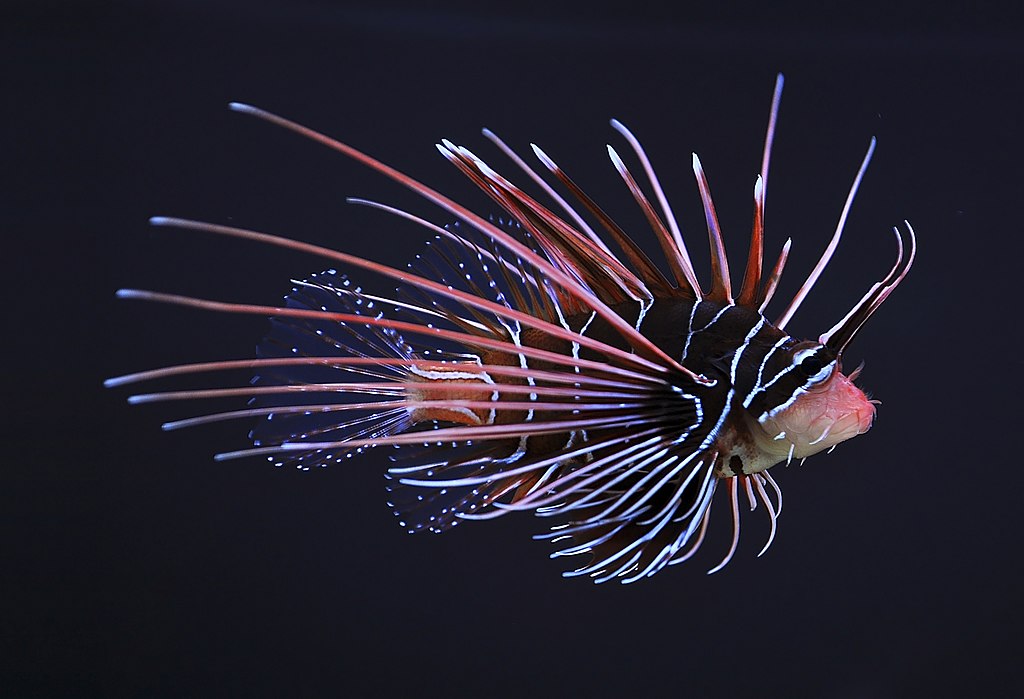
For over a year, we have been happy and fortunate to host Phil’s writings on the lionfish invasion and what entrepreneurial means might be taken to mitigate it. Next Tuesday, if you happen to be in the DC area and are looking for an educational way to spend your evening, consider going out for a happy hour lecture at Rosemary’s Thyme Bistro.  Continue reading

Tourism, Conservation, Whale Sharks

shark-shutterstock_127906316-680x450

shutterstock.com

Thanks to Conservation for this item about entrepreneurial conservation of the ecosystems where one of the greatest of sea creatures dwell:

HOW CAN WHALE SHARK TOURISM BE KEPT SUSTAINABLE?

August 22, 2014

When the revenue generated by wildlife-related tourism is higher than that generated by the consumption of that wildlife, then the animals in question are worth more alive than dead. This seems intuitive, but the economics of wildlife tourism aren’t always easy to work out.

Over the last couple decades, one form of wildlife-based tourism that has quickly become popular is diving alongside free-swimming whale sharks. While they’re the largest fishes in the sea, whale sharks are actually quite docile and have highly predictable seasonal movement patterns. That makes them particularly attractive to dive operators. While whale shark tourism has operated in Western Australia’s Ningaloo Reef since the late 1980s or early 1990s, most whale shark tourism outfits have sprung up more recently, in the eastern Gulf of Mexico, Honduras, Belize, the Philippines, Mozambique, Seychelles, and the Maldives. While some attempts have been made to quantify the economic impacts of whale shark tourism in Ningaloo, Belize, and the Seychelles, nobody has done so for the Maldives. Measuring the economic value of the industry is especially important because it is difficult for local governments, with limited powers especially when it comes to environmental protection, to prioritize conservation without that information. Continue reading

Ocean Conservation, Of Vital Interest Among Islanders Everywhere, Gets Its Due From The Relatively Tiny Barbuda

A map of protected marine zones that are being established around the Caribbean island of Barbuda. Credit Waitt Institute

A map of protected marine zones that are being established around the Caribbean island of Barbuda. Credit Waitt Institute

We had not expected to see Dot Earth again, but all of a sudden, thanks again for the surprise Mr. Revkin:

A Small Island Takes a Big Step on Ocean Conservation

Marine life in the Caribbean has been badly hurt in recent decades by everything from an introduced pathogen that killed off reef-grooming sea urchins to more familiar insults like overfishing and impacts of tourism and coastal development.

Some small island states are now trying to restore once-rich ecosystems while sustaining their economies. A case in point is Barbuda, population 1,600 or so, where the governing council on Aug. 12 passed a suite of regulations restricting activities on a third of the island’s waters. The regulations and reef “zoning,” in essence, came about after months of discussions involving fishing communities, marine biologists and other interested parties, facilitated by the Waitt Institute, a nonprofit conservation organization. Continue reading

Lost At Sea

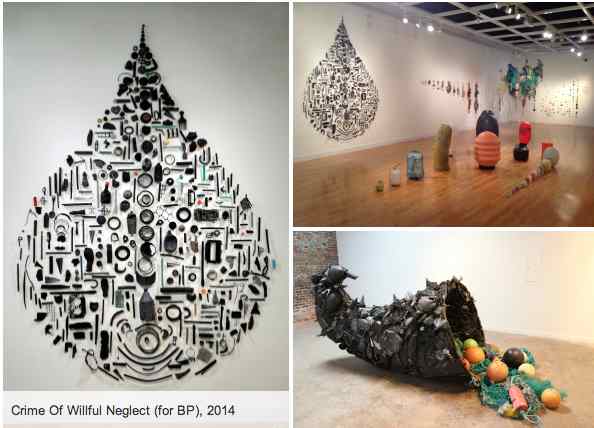
From the Drifters Project by Pam Longobardi

From the Drifters Project by Pam Longobardi

The world’s oceans effect all life on earth and it’s no longer news that even the most pristine places on earth are impacted by our “toxic legacy,” as artist Pam Longobardi puts it. The project statement for her Drifters project is really worth reading. Here is an excerpt I found particularly poignant:

Plastic objects are the cultural archeology of our time.  These objects I see as a portrait of global late-capitalist consumer society, mirroring our desires, wishes, hubris and ingenuity.  These are objects with unintended consequences that become transformed as they leave the quotidian world and collide with nature to be transformed, transported and regurgitated out of the shifting oceans.  The ocean is communicating with us through the materials of our own making.  The plastic elements initially seem attractive and innocuous, like toys, some with an eerie familiarity and some totally alien.  At first, the plastic seems innocent and fun, but it is not.  It is dangerous.   We are remaking the world in plastic, in our own image, this toxic legacy, this surrogate, this imposter.

By doing this Drifters project, she has removed thousands of pounds of material that would be considered trash and then presenting it within a cultural context. Amie wrote a previous post about artists using ocean trash as materials for art. They too found themselves telling the story of global consumerism using plastic.   Continue reading

Citizen Science in Belize – Update on Lionfish Jewelry: Part 2

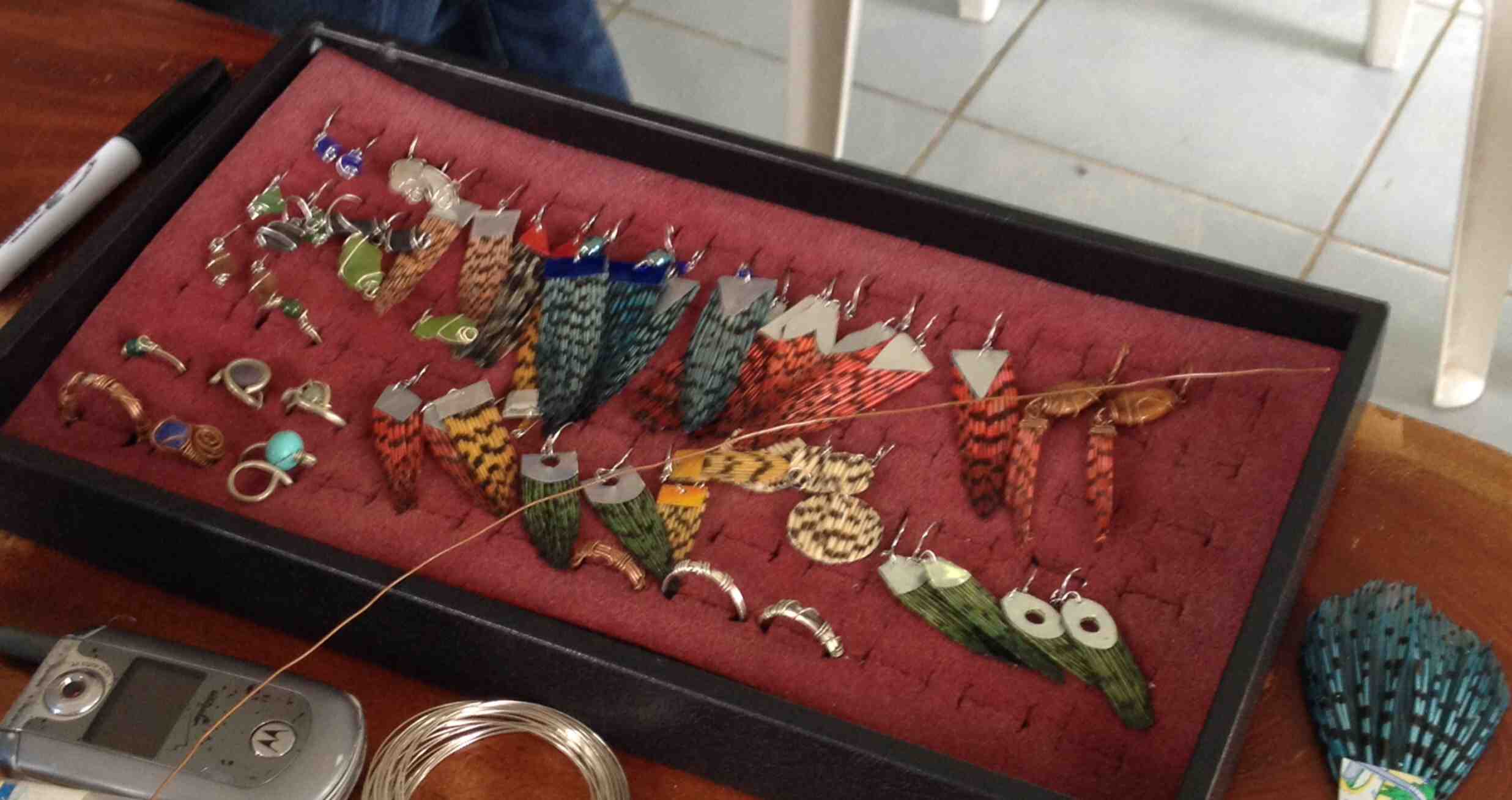
Assorted lionfish jewelry from Palovi Baezar, Punta Gorda, Belize

Assorted lionfish jewelry from Palovi Baezar, Punta Gorda, Belize

In Part 1 of this post I wrote about my recent visit to Belize to help with further development of the nascent  market for lionfish jewelry; one of several market-based approaches to addressing the threat to Southwest Atlantic marine ecosystems posed by the invasion of this non-native species. I noted that the market is most advanced in the area around Punta Gorda, in Southern Belize, in large measure due to the support provided by ReefCI which has provided training on jewelry making to a group of local women and is supplying them with lionfish spines, fins, and tails as well as marketing assistance.

Lionfish spines, fins, and tails ready for jewelry

Lionfish spines, fins, and tails ready for jewelry

While ReefCI’s involvement has been instrumental in getting things started, further development and expansion of the market will require engagement with artisans and women’s groups in other parts of the country, particularly areas closer to major tourist markets. Interventions are also needed to develop a reliable and sustainable supply chain for lionfish jewelry production and sales. I was pleased to hear from one of the jewelry makers in Punta Gorda that a local fisherman had approached her about selling lionfish tails. This was music to my ears, as one of the motivations behind the lionfish jewelry idea has been to up return to fishers in order to create added commercial incentive for them to hunt lionfish (the fish cannot be caught using conventional fishing methods such as hook and line or nets, but must instead be speared or hand-netted by diving). Continue reading

Citizen Science in Belize – Update on Lionfish Jewelry: Part 1

Freshly dried lionfish fins and tails. Photo: Polly Alford, ReefCI

I’ve written in previous posts about the initiative to develop a market for lionfish jewelry as one of a number of commercially sustainable approaches to fighting this invasive species that is threatening marine ecosystems throughout the Caribbean, the Gulf of Mexico, and the Southern Atlantic seaboard of the United States. In my last post, I mentioned that the idea is beginning to take off in Belize.  I was able to observe this first-hand last month, spending two and a half weeks in the country.  During my stay I had the opportunity to meet local artists who are making lionfish jewelry and to participate in several workshops to share techniques and designs.  Continue reading

Fiji Shark Dive

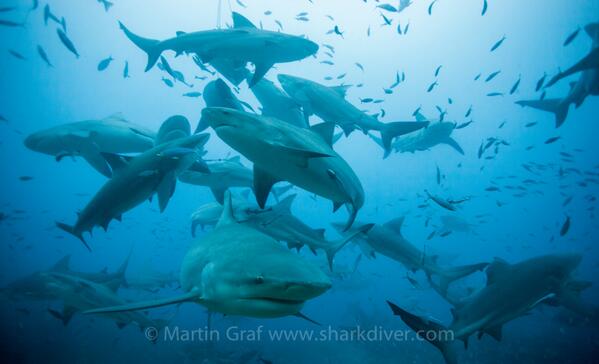
Photo Credit: Martin Graf, Sharkdiver.com

Photo Credit: Martin Graf,  Sharkdiver.com

In an earlier post I wrote about how more and more countries are waking up to the benefits of preserving natural capital, in recognition of the economic value that can be derived through ecotourism. I noted, in particular, the value that can be generated through ecotourism ventures focused on iconic species such as sharks, manta rays, and sea turtles. I cited a number of studies and calculations that demonstrate that the ecotourism value of these animals far outweighs their one-time economic value if harvested for food or body parts.

Earlier this week, I had an opportunity to experience one such venture first hand, via the famous Fiji Shark Dive. Over the course of two dives I was treated to the spectacle of 40+ Bull Sharks and dozens of Blacktip and White Tip Reef Sharks, up close and personal!  What an amazing experience to see these magnificent animals – some upwards of 8 feet long –swimming only inches away.  Click here for a video (check out the background music!) courtesy of Martin Graf, one of the pioneers of the Shark Diving industry, who just happened to be in Fiji this week and was along on my dives. Continue reading

Controlling Invasive Lionfish – Update on Market Solutions: Part 2/2 — Lionfish Art

spines and tails-photo3

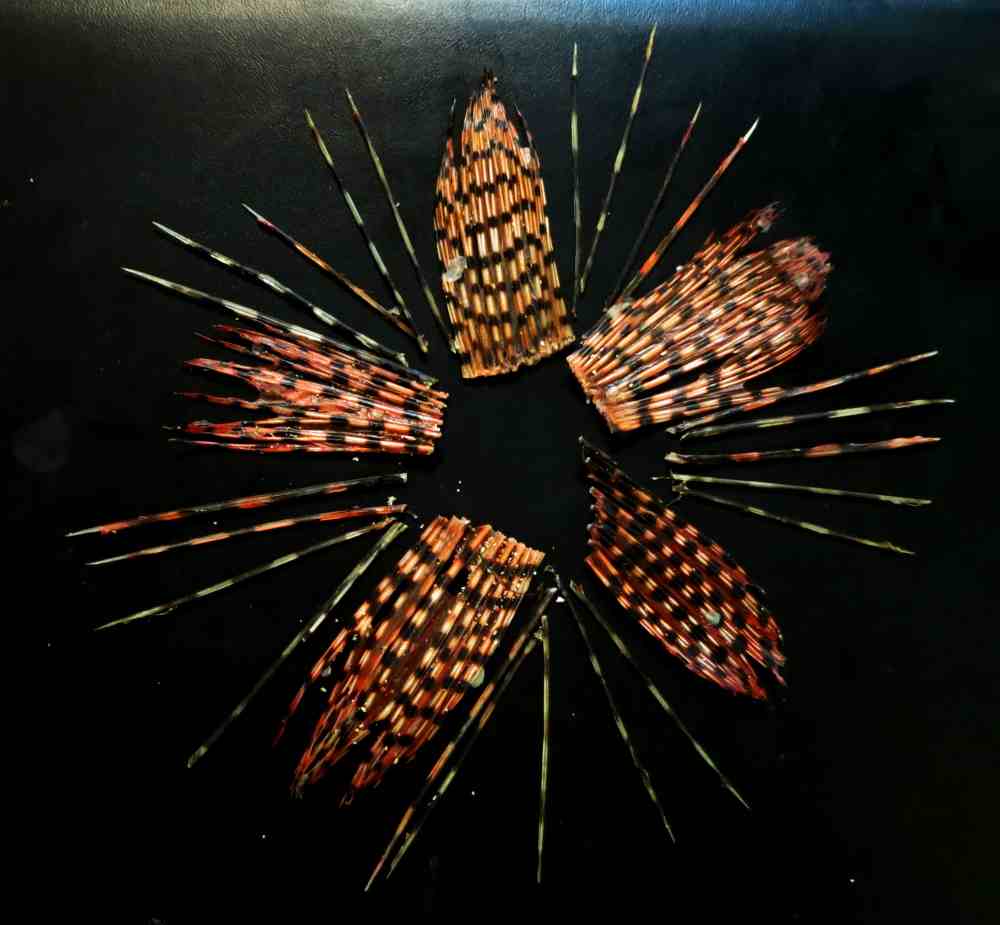
Array of dried lionfish spines and tails -ready for jewelry use Credit: ReefCI

In Part 1 of this post regarding market-based solutions to fighting the lionfish invasion that is threatening coral reef and other marine ecosystems throughout the Caribbean, Gulf of Mexico, and Southern Atlantic Seaboard of the United States, I wrote about the challenge of developing commercially sustainable strategies for undertaking the systematic removals that are needed to keep lionfish populations under control. I discussed the need to develop a series of vertical markets, pointing to promotion of lionfish as a seafood choice as the most obvious of these. Capture of juvenile lionfish for the aquarium trade as another.  A third market, and one in which I’m personally involved, is use of lionfish spines and tails for jewelry and other decorative items.  Continue reading

Collaborative Shorts From Brown

We have been watching those folks at Brown University since the early days of this blog, and more recently too. They are a community we never tire of learning more about, and from. In the five years since they first started offering simple but imaginative explanations for complex phenomena (many, but not all, oceanographically topical), we have almost come to expect a six minute short on how to save the world’s high seas from over-fishing collapse. Not likely, but we appreciate their efforts with each new short, most recently from about six weeks ago.

The New York Times, one of our many regular sources for excellent science writing, paid attention to this project late last year. We look forward to more. Background on, and credits for, the shorts:

Continue reading

Natural Capital Valuation and Protection of Marine Megafauna

Photo © Fabrice Jaine

I’ve noticed a number of positive and interesting developments as of late in the area of marine species protection, pointing to an increasing recognition, by policymakers, of the value of natural capital and associated ecosystem services, particularly the value arising from ecotourism.

In February of this year, the Government of Indonesia granted full protection to manta rays within its nearly 6 million square kilometer exclusive economic zone (EEZ), making it the world’s largest sanctuary for manta rays. This reverses the trend of the past three decades wherein Indonesia has had the dubious distinction of being home to the world’s largest fishery for sharks and rays. Why the reversal? It seem that studies showing that the ecotourism value of a manta ray is an estimated $1 million over its lifetime, as compared to the onetime value of several hundred dollars for its gill rakers and meat played a key role in persuading policymakers to take action to protect the iconic species.

A few weeks later, the President of Palau announced that the country’s entire 200 nautical mile EEZ will be declared a marine sanctuary and closed to commercial fishing and seabed mining.  This follows a move a few years earlier to declare Palau a shark sanctuary. In explaining the reasoning behind the moves Palau’s president noted that a dead shark is worth several hundred dollars, whereas a live shark is worth $1.9 million in tourism during its life span, and that his country will promote scuba diving, snorkelling and ecotourism as an alternative income to commercial fishing. Continue reading

Ocean Ownership And Caveat Emptor

carved-ocean

The U.S. has laid claim to 2.5 billion acres of coastal seas, but that vast area produces very little seafood for Americans. Therein lies a dilemma: should the U.S. cultivate giant offshore fish farms in its piece of the sea or keep taking most of the fish we eat from foreign waters?

Conservation magazine raises the following question, and goes a long way to answering it in their current issue:

NATIONS HAVE CARVED UP THE OCEAN. NOW WHAT?

…In the minds of most consumers, there is a clear dividing line between which fish are wild and which are farmed. But the truth is that this line is increasingly a blurry one.  Continue reading

Dolphins, Drones, Delight

Screen Shot 2014-03-06 at 7.37.42 AM

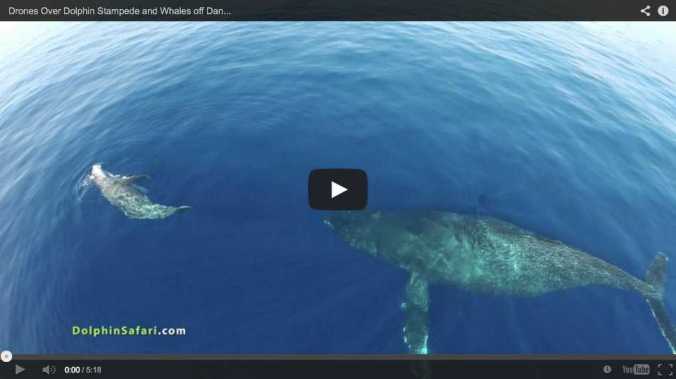
We have noted on several occasions in the past about the use of drone technology to good ends, but this one takes the cake:

Whatever you think of drone technology, this may be one use that we can all agree on.

The captain of a whale-watching boat who’s also a filmmaker sent a drone with a camera into the sky to capture a stunning event: thousands of common dolphins in a super- or megapod speeding through the waters off California, destination unknown. His gorgeous video of Delphinus delphis, which includes a mama whale nuzzling its baby, is here. Continue reading

Kerala Beaches – Cherai Beach

Photo credit : Vijay

Photo credit: Vijay

Cherai is a lovely beach not far from Kochi. Its position on the border of Vypeen island makes it ideal for swimming, and a typical Kerala village with paddy fields and coconut groves nearby provides an added attraction. Continue reading

Beaches of Kerala – Fort Kochi

Photo credits : Ramesh Kidangoor

Photo credits: Ramesh Kidangoor

Bordered on the east by the towering Western Ghats and interspersed with the magical backwaters for much of its length, Kerala’s coast has attracted people through the ages. In ages past it was traders, asylum seekers and empire builders; now it is haven for beach buffs and tourists. Continue reading

What Else is Out There?

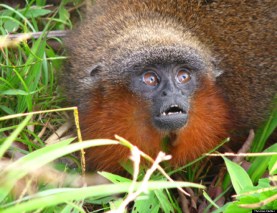
Thanks to the World Wildlife Fund, 441 new species of plants and animals have been discovered in the Amazonian rainforest, including a truly bizarre looking monkey that apparently purrs like a cat when content, as well as a… vegetarian piranha.

Image

Newly discovered Titi Monkey. Photo Courtesy World Wildlife Fund

It is a good feeling in any naturalist’s gut, amateur or professional, too know that undiscovered species still remain in today’s world — where technology and advancements in various facets of our lives thanks to 21st century progressivism don’t leave much to the imagination; it seems as though the mystique of discovery still remains just as true to many of us as it did when we were children. Unfortunately this is not the case for absolutely everyone, but for those who are still amazed by the world, discoveries such as this are a blessing.

Continue reading