Ornithologist’s Masterpiece At Auction

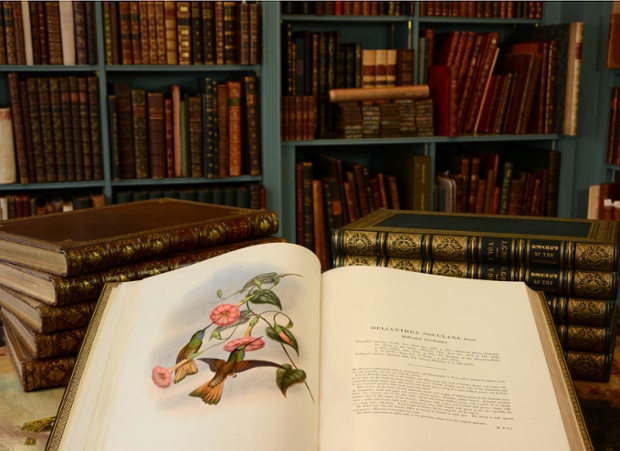
One of the 44 volumes containing over 3000 hand-coloured lithographs included in the sale


The Guardian notes the auction many of our ornithologically-oriented readers and contributors might find worth attending, even if not as bidders (given the expected final sale price) in order to see some of these prints up close (see samples after the jump):

Rare set of John Gould’s bird books for sale – in pictures

John Gould was one of the most brilliant ornithologists of the 19th century, and a talented artist to boot. He worked with Charles Darwin, travelled the world to research the beautiful folio works he produced, and set up a publishing company to sell them.

Continue reading

Saving Species–One Paper, One Video, One Course, And One Initiative At A Time

saving-species-logo-long-small

We thank Stuart Pimm for his ongoing excellent contributions to conservation through science and education, as well as creative activism, and congratulate him and his colleagues for their most recent publication:

new scientific paper was published today in the prestigious journal Science and it has important findings for biodiversity. Though it reaffirms what we already know—that there is a global extinction crisis and it is worse than we believed—it also details how technology and smart decision-making are offering hope for endangered species and their habitats. Continue reading

Birding’s Big Catch

The world of birding, it is safe to say, is growing. Occasionally we read about a noted person having established a passion for birdwatching and/or related conservation. Normally we do not take a humorist literally, but David Letterman, in announcing his retirement, seemed to give birds and in particular a newfound interest in bird identification a special credit in realizing he wanted to do something else with his time now:

…Letterman told the audience that people have always asked him how long he would continue to host. His answer is usually, “When this show stops being fun — I will retire 10 years later.”

Continuing his tale, Letterman said that he wanted to share an anecdote: Last fall, he went fishing with his 10-year-old son, Harry, and during the outing, they saw a giant, crazy-looking bird. So when Letterman got into work that following Monday, he spent the entire day making calls to bird societies, e-mailing the photo to his outdoorsy friends, and launching a full-scale investigation to find out what type of bird they saw. Continue reading

Calling On Solomon In A Birds-Versus-Science Conundrum

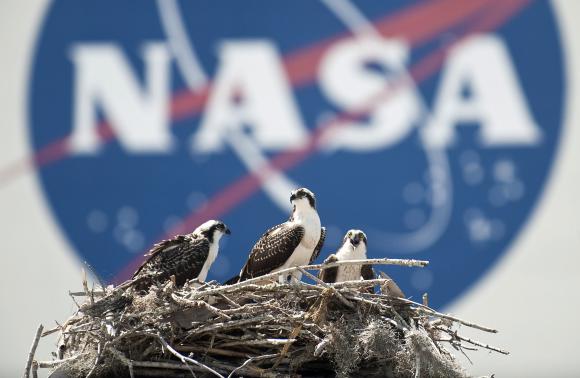
A family of Osprey are seen outside the NASA Kennedy Space Center Vehicle Assembly Building in Cape Canaveral, Florida in this file photo taken May 13, 2010. CREDIT: REUTERS, BILL INGALLS, NASA/HANDOUT/FILES

A family of Osprey are seen outside the NASA Kennedy Space Center Vehicle Assembly Building in Cape Canaveral, Florida in this file photo taken May 13, 2010. CREDIT: REUTERS, BILL INGALLS, NASA

Anyone who has been following Raxa Collective’s blog for more than a day is probably aware that we pay close attention to birds.  We do this because many of the places where we operate conservation-focused lodging are also exceptionally biodiverse bird habitats. Most of the travelers who visit our properties are at least interested in birds, and many are serious bird-watchers. But we also pay attention to birds for the same reason we pay attention to science in general: they are an indicator of the health of our planet and we want to both pay attention to the indicators and understand them better. Science matters. So, in general, we are NASA fans.  But the story here makes us wonder what Solomon’s wisdom might advise:

Florida’s plan to build a commercial space launch complex in a federal wildlife refuge surrounding the Kennedy Space Center drew sharp words from environmentalists and strong support from business boosters during the project’s first public hearing on Tuesday.

Advocates say the proposed spaceport is needed to retain and expand Florida’s aerospace industry, which lost about 8,000 NASA and civilian jobs after the shutdown of the space shuttle program in 2011.

Opponents of the plan to carve out about 200 acres from the 140,000-acre (57,000-hectare) Merritt Island National Wildlife Refuge cite concerns over protecting the refuge’s water, seashore, plants and wildlife, which include 18 federally listed endangered species. Continue reading

Citizen Science Democratizing Research

New technology is dramatically increasing the role of non-scientists in providing key data for researchers. In an interview with Yale Environment 360, Caren Cooper of the Cornell Lab of Ornithology talks about the tremendous benefits — and potential pitfalls — of the expanding realm of citizen science.

Most of our ornithological attention these days is on the bird count just getting under way, but citizen science is never far from our minds, so thanks to Yale 360 for this article that combines both interests:

When biologist Caren Cooper carries out her avian studies, she’s aided by thousands of assistants, none of whom are paid for their work. That’s because Cooper, a research associate at the Cornell Lab of Ornithology, relies on the help of so-called citizen scientists, volunteers from across the country who contribute data to her research projects. These lay people provide information that enables her and other scientists to study bird life in ways that would otherwise be impossible.

But, as Cooper notes in an interview with Yale Environment 360contributor Diane Toomey, the uses of citizen science now go way beyond events like the National Audubon Society’s Christmas Bird Count. Continue reading

Opposable Thumbs Are Great, But What About Flexible Memory?

Robert Krulwich/NPR

Robert Krulwich makes us wonder, as always:

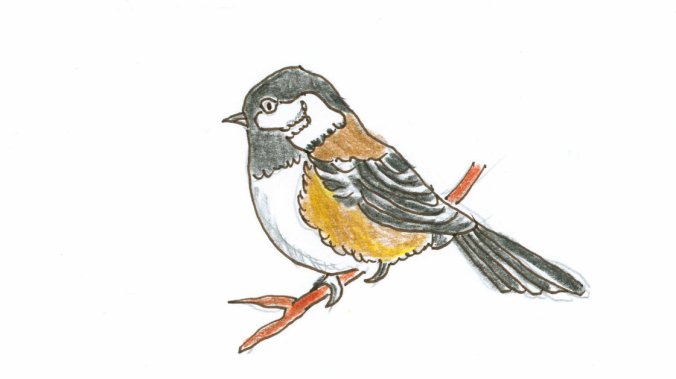
What Chickadees Have That I Want. Badly

First I look in my right coat pocket. Nothing. Then my left. Nothing. Then my pants, right side — no. Then my pants, left side — yes! This is me at my front door, looking for my keys. Every day.

Continue reading

Action Capture

Keoladeo Ghana National Park, Bharatpur in Rajasthan

Each time I head into the field to photograph wildlife I watch their movements within the habitat patiently and then think about how best to tell that individual’s story. Frequently action is a dramatic part of it.

Shutter Speed is an important parameter of the “exposure triangle”. When photographing action you can freeze the image using a high shutter speed or can create motion blurr with slow shutter speed.

As a photographer you need to decide in advance how you want to capture the image, whether it’s a silky flow of water, panning shot, long exposure star trials, long exposure vehicle tail light trails etc. There is no one correct answer. Continue reading

Winter Arrivals

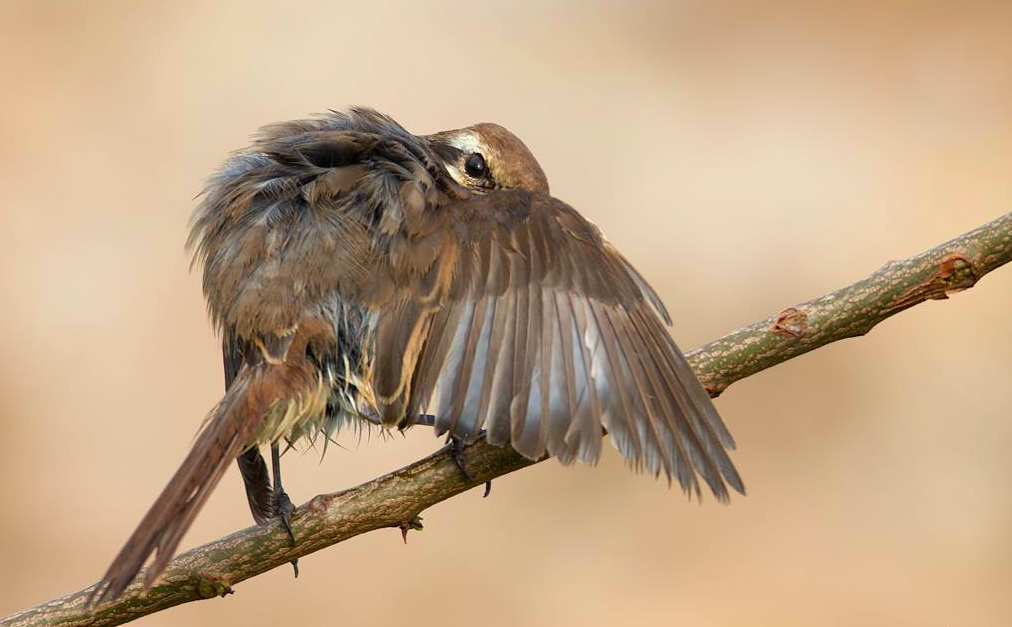
An exhausted winter arrival

Yesterday I encountered the first Brown Shrike for the season at Daroji Bear Sanctuary, near the town of Hampi, Karnataka.

For me, the appearance of the Brown Shrike is an indication of the winter migrants arrival. In previous years my first sightings have been in October, but they’ve arrived earlier this year.

I saw and photographed 2 individuals. One was totally worn out, probably because of the long, tiring migration from as far north as Siberia. Continue reading

Big Day Arizona

Northern Saw-whet Owl from Rustler Park

Northern Saw-whet Owl from Rustler Park

As we pulled up to the Rustler Park Campground parking lot in the Coronado National Forest a light rain began to fall.  Graham and I turned to each other upon arrival and with the same quizzical tone wondered, “Why is there someone else up here?”  The lights of another car illuminated the area and once we parked a man approached us.  There was a knock on my window as his flashlight blinded me.  I began the conversation puzzled and slightly alarmed, “Hey…how you doing?”  He announced himself as Portal’s lieutenant police officer and he asked to see our identification.  As I got out of the car to retrieve my id I noticed another ten or so officers standing behind the car.  When he asked what we were doing there at this hour and I replied “Birding” we received an expected response: “Birding? It’s midnight”.

This was hardly the way I imagined our Big Day would begin, but I suppose being searched to see if we were drug traffickers was an appropriate way to start our 24-hour birding adventure in the Chiricahua Mountains of Southeast Arizona. After trying to explain what a Big Day was (a whole day of non-stop birding in an attempt to see as many species as possible during that time) the officer hesitantly departed.

We didn’t have much time to think about this interaction, because our day was about to begin.

I gave Graham the countdown as my phone read, 11:59:45, 15 seconds, 10 seconds, 5 seconds, and Go. We immediately cupped our hands to our ears. There were three night birds we desperately needed at high elevation, and each was just as hard as next. A “sweep” of these three species would be unlikely to say the least. We did have one thing going for us though. For the past two months we had been interning at the Southwest Research Station just up the mountain from Portal. For those two months we had done almost nothing but bird. We knew specifically, sometimes down to a certain tree, where we could find each bird on our target list.

So as the clock struck midnight we were standing at the bathroom at Rustler Park listening for the rarest owl in the Chiricahuas, the Northern Saw-whet Owl. Graham and I used double playback, meaning I played the bird’s call and he would respond as a second bird; this strategy usually has a higher success rate of eliciting a call. To our delight we heard the tooting call of the owl echoing off the canyons. On a normal day we would want to see this bird, but today was far from normal. We were solely after numbers, and in the birding world an aural identification is sufficient. Once we got the Saw-whet we headed up the trail to the Forest Service cabins and began playing the Flammulated Owl. Our recordings weren’t loud enough, so I had to do it the old fashioned way and emulate the call myself. Based on my experiences in these mountains this particular owl is the most sought-after bird because it is the hardest to find. During the summer internship I received numerous emails from fellow birders asking where to spot it. But at the moment those other birders were certainly not our problem—getting this owl to respond was! Continue reading

Basket Cases

What strange growths protrude from this tree? Photo by Seth Inman.

There are birds around the world that use strands of different materials to craft marvelous woven nests that hang from tree branches — if you’re lucky enough to see them!

Yellow-rumped Cacique in Avian Architecture by Peter Goodfellow © Princeton University Press 2011. p95

Of course, in some circumstances it is not hard to find these pendent, or hanging, nests, as with many species of caciques and oropendolas in Central and South America (birds related to the North American blackbirds, orioles, and cowbirds). That’s right, the photo above isn’t of some weird fruit tree, but a tree-wide colony of oropendolas at Las Isletas, in Nicaragua!

Caciques, close relatives of Oropendolas, often nest beside wasp nests; orioles, only slightly more distant relatives, frequently nest near Eastern Kingbirds and Great Kiskadees. Wasps and these large flycatchers all help defend against nest predators. Yellow-rumped Caciques like the one pictured on the right start their nest building with a loop in a tangled mass of fibers that surrounds the end of a branch. Continue reading

Mysterious Bird, Carefully Studied

This slideshow requires JavaScript.

From Smithsonian‘s website a story about the most mysterious bird in North America:

Black swifts, Cypseloides niger, are among the most enigmatic birds in North America. Continue reading

If You Happen to Be At Cornell: The Colors of Collaboration

This slideshow requires JavaScript.

Eight years of collaboration between Cornell Lab of Ornithology scientist Edwin Scholes and National Geographic photographer Tim Laman have lead them on 18 expeditions to document and photograph all 39 species of the birds-of-paradise for the first time ever. Their work gives people a glimpse into the behavior and habitat of the world’s most “extravagant, beautiful, and bizarre species of birds”.

Continue reading