Losar, the Tibetan New Year

Guest Author: Carl Zainaldin
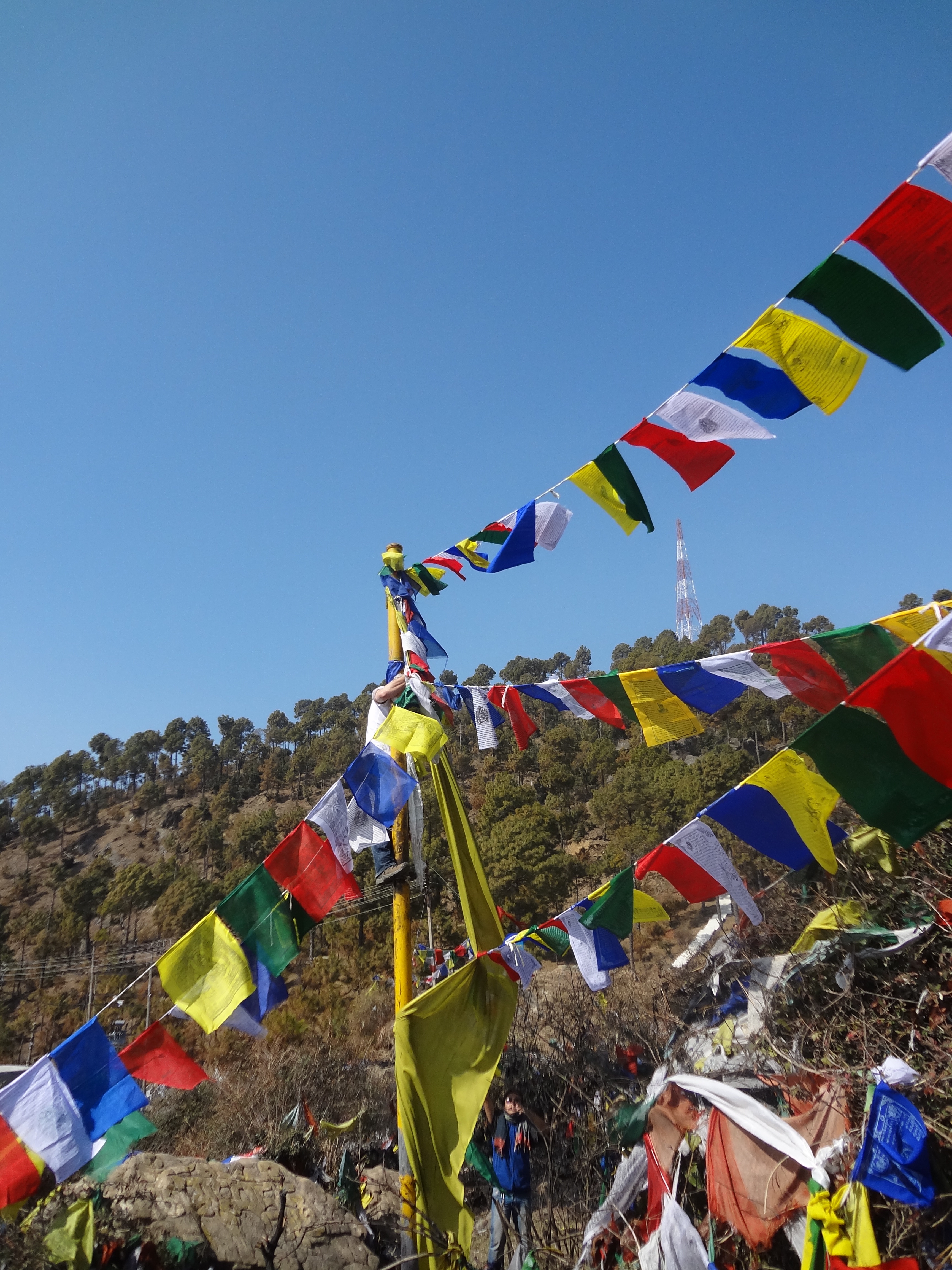
Losar, the Tibetan New Year which usually falls sometime in February, is celebrated by Tibetans all around the world. Lo means year, and sar means new. The Tibetans use a lunar calendar, and Losar falls on the first day of the new month, marked by the first new moon of the year.

Losar lasts for fifteen days, with the celebrations occurring on the first three days. To bring in the New Year, Tibetans dance, sing, drink chaang (a Tibetan beer that is served warm), and bake special goods such as khapsays (dough fried into butter and made into special shapes and various flavors).

Losar is a time for people make pilgrimages to sacred Buddhist temples and monasteries. Monasteries perform Losar pujas (rituals) which are popular events for Tibetans to attend. These pujas include ritual dancing, reciting Buddhist scripture, and performing offerings to certain deities, all of which are supposed to be auspicious activities to bring in the New Year. Continue reading

Travel, Writing & Games

This series has always been worth reading, whether you are an American looking through the eyes of a fellow American, or otherwise intrigued by a niche of American perspective that is not quite representative of that culture as a whole.

First things first: sometimes a book, a music recording or other item is only available from the mainstream online retailers such as Amazon or iTunes, but whenever possible we promote the purchase from independent sellers.  So click the image to the right if you want a link to independent booksellers in the USA, provided by the ever-entrepreneurial American Booksellers Association.

Now, the side show: the series editor Jason Wilson is also a contributor to a site we refer to on occasion, and he wrote an interesting item a couple of years ago that began:

Continue reading

About That Plowshare Tortoise

This slideshow requires JavaScript.

In an earlier post we pointed to a wondrous article in The New Yorker, and now a blog post on the magazine’s website has a collection of photo out-takes and some behind the scenes description of getting those shots:

The portrait that opens the piece, of Goode with a tortoise, just barely came together. “Everything was planned to the minute, and so many things could have gone wrong,” Torgovnik told me from Rwanda, where he was onto his next assignment.

USA Refresher

Before there was social media as we know it today, there was social media.  Social reformers and thinkers of all varieties have centuries of experience not just using the tools of social media, but utilizing them.  Leveraging them.  August 28, 1963 in Washington, D.C. was one of the days when the USA experienced a moment of truth, and when social media included word of mouth, television/radio simulcast and later replay.

This is the day when the man who spoke longest on that day is remembered officially.  One minute into the above video he begins speaking, but the memory is affected, no matter how many times one has seen, heard or read these words, most when that man talks about his hopes for the future of a country that had a history of injustice, but also a history of reform, change, improvement. Continue reading

MOMA Celebrates Bollywood

Click the image above to see the schedule of MOMA’s programming.  The image is from Shree 420 (1955), directed by Raj Kapoor and the image belongs to the Indian International Film Academy. Continue reading

Backwaters Home: Pampa Villa

Pampa Villa On The Pamba River

We have mostly shown images of life on Kerala’s backwaters from the perspective of boats, as in looking at and looking from.  As Milo’s recent post showed (at the tail end, so to speak), there is much more life on these waters than first meets the eye of the occasional visitor.  The view above is from the river, looking at a home that Raxa Collective recently took responsibility for.

This responsibility included modifications to the interiors in order to make it more welcoming to travelers.  It had served as the home of a prosperous resident of the backwaters, but now is open to receive visitors whose preferences in terms of privacy, decor and food (at least spice levels) often differ from those of locals, at least a bit.

Continue reading

A Complex Region Through A Thoughtful Lens

The newspaper, back in its paper days (1908-2008), was always excellent.  As a web resource, we are glad it has found firmer footing.  And some stories and contributors make its Latin America coverage particularly worth watching. Continue reading

What More About Picasso?

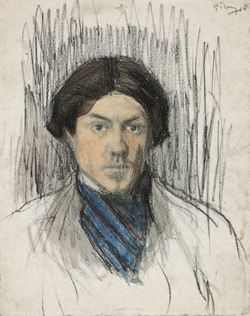
We had mentioned in an earlier post encountering this source of interesting observations, and now another from the same (click on the image for the full thought and information about the exhibition):

The idea of Picasso always precedes the experience of seeing Picasso’s art. Looking at drawings from the artist’s early years in the Frick Collection’s cramped basement, I wondered what we can say about Picasso that hasn’t already been said. I’ve previously encountered this question with artists whose reputations (and market value) are in such high esteem that it is almost impossible to see the work as separate from the artist’s image. Even in this small show, with works that look decidedly un-Picasso, I found it difficult to view the drawings as anything other than work of this great artist.

Continue reading

The United Nations Meet Las Defensoras Populares

As a new face here at Raxa Collective, I thought I’d take a minute to introduce you to all to the organisation I’m volunteering for here in Costa Rica. It’s called MUSADE, which stands for Mujeres Unidas en Salud y Desarrollo, and its function is to provide support for women who have suffered intra-familiar violence. MUSADE has a lot of great programs going on, but today I’d like to talk to you about some exciting news for our Defensoras Populares.

This banner was made to commemorate MUSADE's 25th anniversary this coming Tuesday.

Continue reading

National Geographic Channel In Panama

One of our Contributors recently posted from Panama, including a brief summary of his visit to the Panama Canal and Panama City.  Here is a nice two minutes worth of additional footage, courtesy of one of the few worthwhile channels on television.

Continue reading

Life Mein Ek Baar, Featuring River Escapes

Every minute of this is fun.  The 35th minute is particularly fun for those of us based in Kerala because members of our organization join the stage with the stars of this show.

About five months ago we were approached by a film production company about a show they were filming for National Geographic Channel.  They told us that River Escapes was recommended to them as having the best houseboats in the Kerala backwaters (a bit of music to our ears).  Then they proposed that their Kerala episode should be based on our houseboats (we danced to that music).

Continue reading

From Reliable Sources

Today major news organizations are reporting that, according to the IUCN, the Western Black Rhino is officially extinct.  The BBC, CNN and others must have received a press release that is not yet available on the IUCN website (as of my writing and posting this), but if you search on the terms IUCN and rhino you will find a link to the following video that provides a good visual definition of melancholic beauty:

When I see news like this, I fight the natural inclination toward depression and channel the emotional energy as best I can, using the news as a reminder of how slowly we are working at the various tasks mentioned in a string of earlier posts.  It is another example of the feeling I seem to have with increasing frequency: being late.

Continue reading

All the World’s a Stage

In a recent post Matthias Jost shared his impressions of San Jose, Costa Rica and its Teatro Nacional.  But what he didn’t share was the fascinating history that surrounds this piece of National Patrimony.

Part apocryphal and part historical, the tale goes that in the late nineteenth century an important European Opera Troupe was touring Central and South America, but they refused to stop in the “back water” of Costa Rica, as it had no proper venue for them to perform in. Continue reading

Iguana Charisma

The lovely finch tells a story, aesthetic and scientific, that most of us accept as the gospel truth, about adaptation and evolution.  A good interpretive guide can help the average lay person understand the story.  Charles Darwin penciled out some of the first notes that guides use to explain why finches vary in color, beak size, behaviors, etc. and plenty of very smart people have contributed to the evolution of those explanations.  So we continue to learn.

This slideshow requires JavaScript.

A visit to the Galapagos Islands should include attention to the finch, considering the role they played in the ability we now have to understand some of the mysteries of the natural world.  Continue reading

Occupy Language!

The collection of thoughts, links, images, etc here is meant to bring attention to ideas and actions for a challenged and challenging world.  Written and spoken language, to say the least, have been important tools to this end for some time.  The language we use on this site, by default, is a function of those of us who banded together on a given day at a given time to do this jig.  Other languages, the cultural patrimony sometimes referred to as intangible, are hopefully strengthened, rather than weakened by this effort.

This fellow makes some very important points about the English language.  We have not read his book, but from his excerpted thoughts there is good cause to read more reviews and add it to the maybe list.  Meanwhile, we make our cultural case (another reason, beyond skiiing, to put Kashmir on your map?) to keep languages alive, perhaps especially of those not included on the most-alive list:

There are anywhere from 350 to 500 million native English speakers, and up to 1 billion more who use it as a second or additional language to some extent. That’s 20% of the world’s 6.9 billion people. There are close to 7,000 languages spoken around the world today, but according to Ethnologue, 39% of the Earth’s people speak one of eight brand-name languages: Chinese, Spanish, English, Arabic, Hindi, Bengali, Portuguese, and Russian (Japanese is number 9). Of these, only English can claim global dominance.