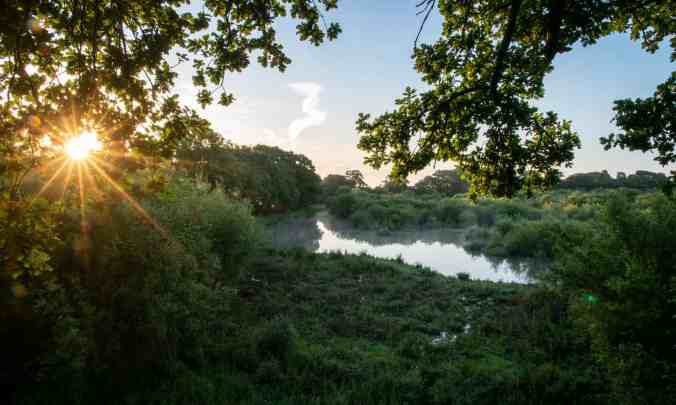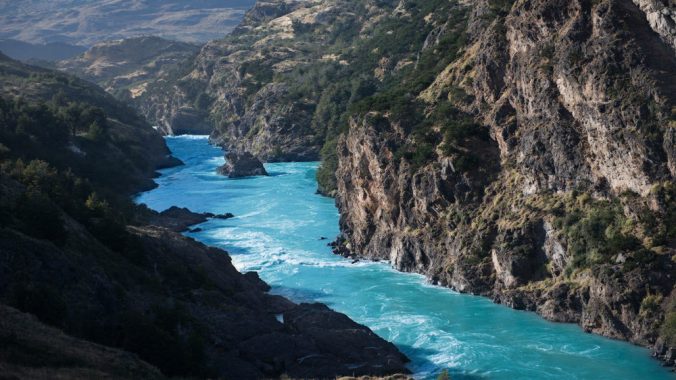
The free-flowing Baker River in Chile’s Patagonia region. Permits for a major hydroelectric project on the waterway were revoked in 2014 amid protests. LOUIS VEST/FLICKR
Dams in Patagonia are the gift that keep on giving, in terms of awakening activism and forcing raised awareness of the value of waterways. I first mentioned my experience in Chile here. I came back to the idea a few more times. Thanks to Jens Benohr and Patrick Lynch for this reminder, and for letting us all know where this seems headed from a legal point of view:
Should Rivers Have Rights? A Growing Movement Says It’s About Time
Inspired by indigenous views of nature, a movement to grant a form of legal “personhood” to rivers is gaining some ground — a key step, advocates say, in reversing centuries of damage inflicted upon the world’s waterways.
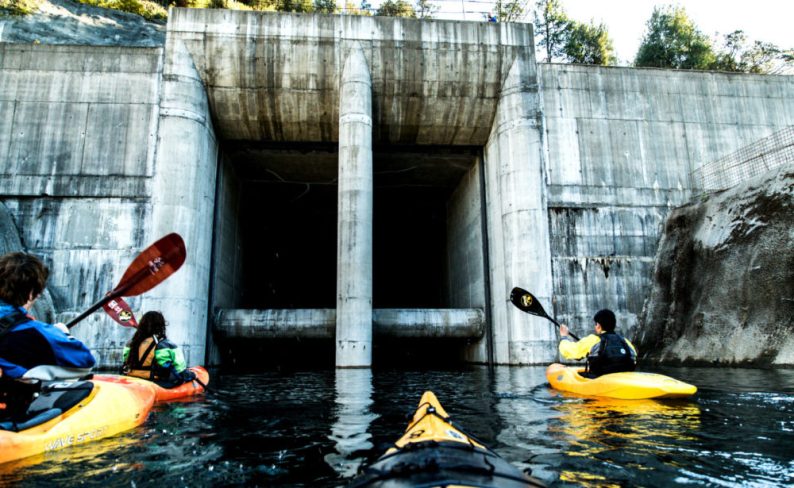
A Chilean energy company is seeking permits to restart the building of an unfinished dam along the San Pedro River. CARLOS LASTRA
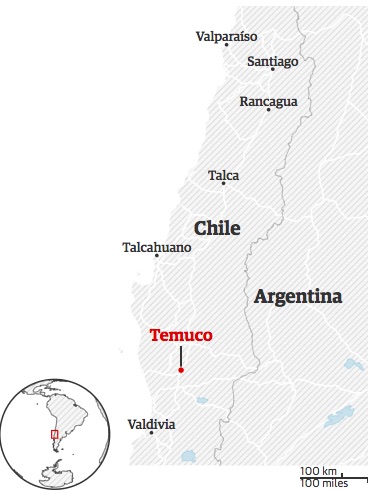
Chile is a land of rivers. Along its narrow 3,000-mile length, thousands of rivers and wetlands bring freshwater and nutrients down from the Andes Mountains to the Pacific Ocean. Together, these river systems drain 101 major watersheds that support both terrestrial and marine ecosystems, ranging from arid lands in the north to blue whale nurseries off of Patagonia in the south.
Chile’s second-longest river, the 240-mile Biobío, once tumbled fast and wild through deep gorges and spectacular scenery on its way from the Andes to the sea. The Biobío was one of the world’s great whitewater rafting venues — until the 1990s, when the first of three large hydroelectric dams was built across the river. Over the past two decades, the Biobío dams have flooded more than 13,000 acres, displaced hundreds of families of the indigenous Mapuche people, turned long stretches of this once-unruly river into placid reservoirs, and caused abrupt fluctuations in water levels that have wrecked nesting habitat for native birds and disrupted the river’s natural rhythms. Continue reading

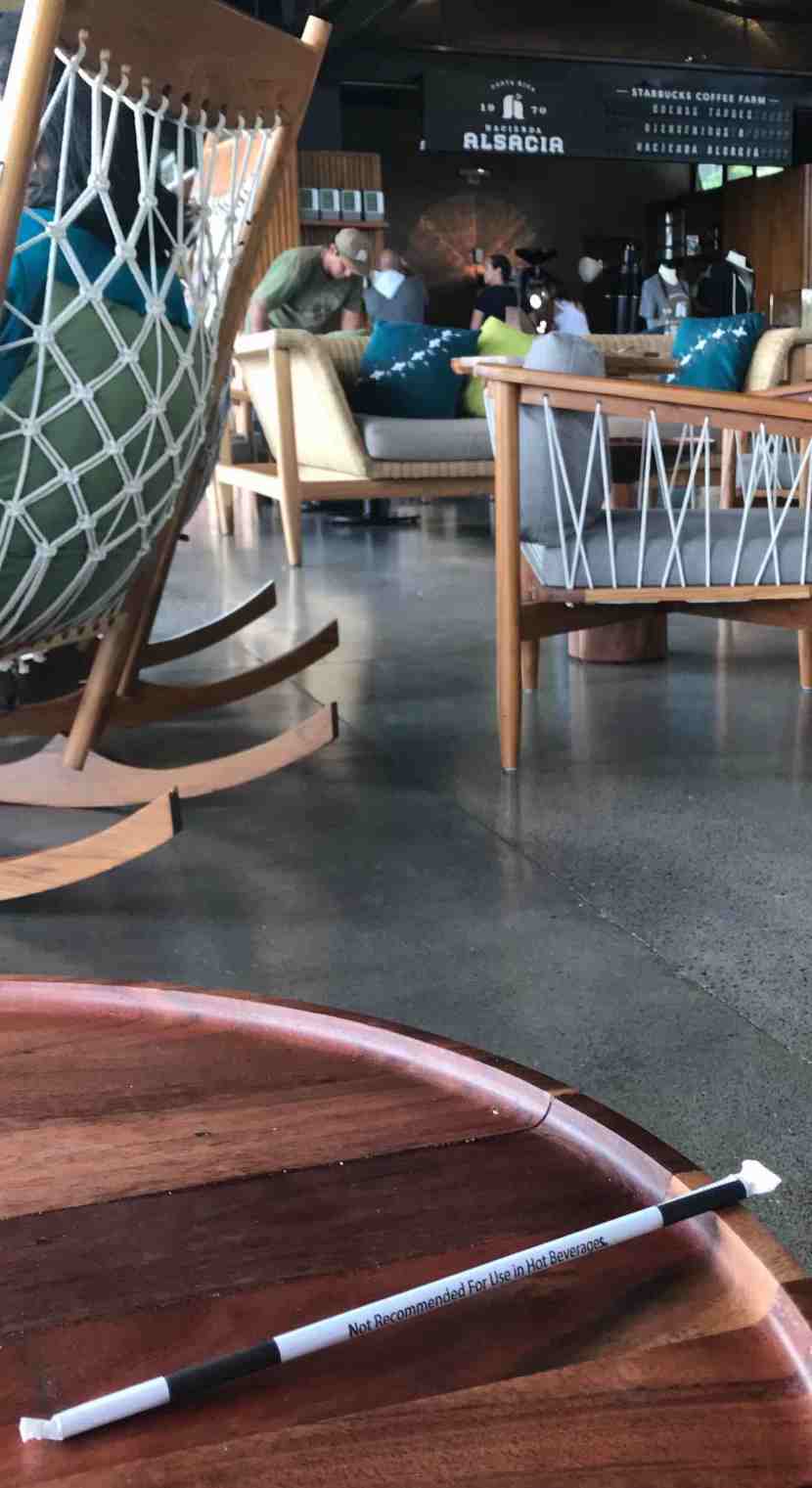 As it happens, the same day we saw this news we were also scheduled to visit the Starbucks showcase in Costa Rica, called Hacienda Alsacia. We experienced the tour they offer and then sat with our guide for a sampling of coffees. On the table next to me was a straw, so we used the opportunity as a reality check. Our guide did not miss a beat, very well aware of the newly announced plan to eliminate straws by 2020, and ready with a one-liner about the importance of eliminating plastic straws.
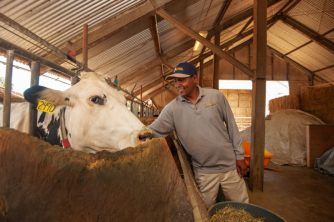
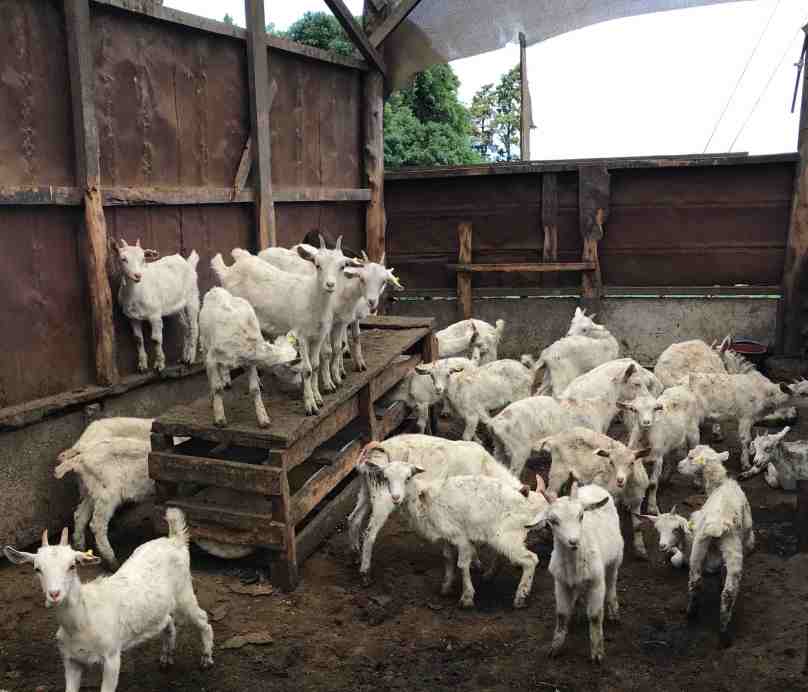 It has eight times the land and double the cows compared to where we are based, 10 miles north and about 1,000 feet lower in altitude. That farm also has dairy goats. More on other implications of the visit later. Here, a quick note on feed. We had noticed on the dairy where we live that pineapple is part of the diet of the cows.
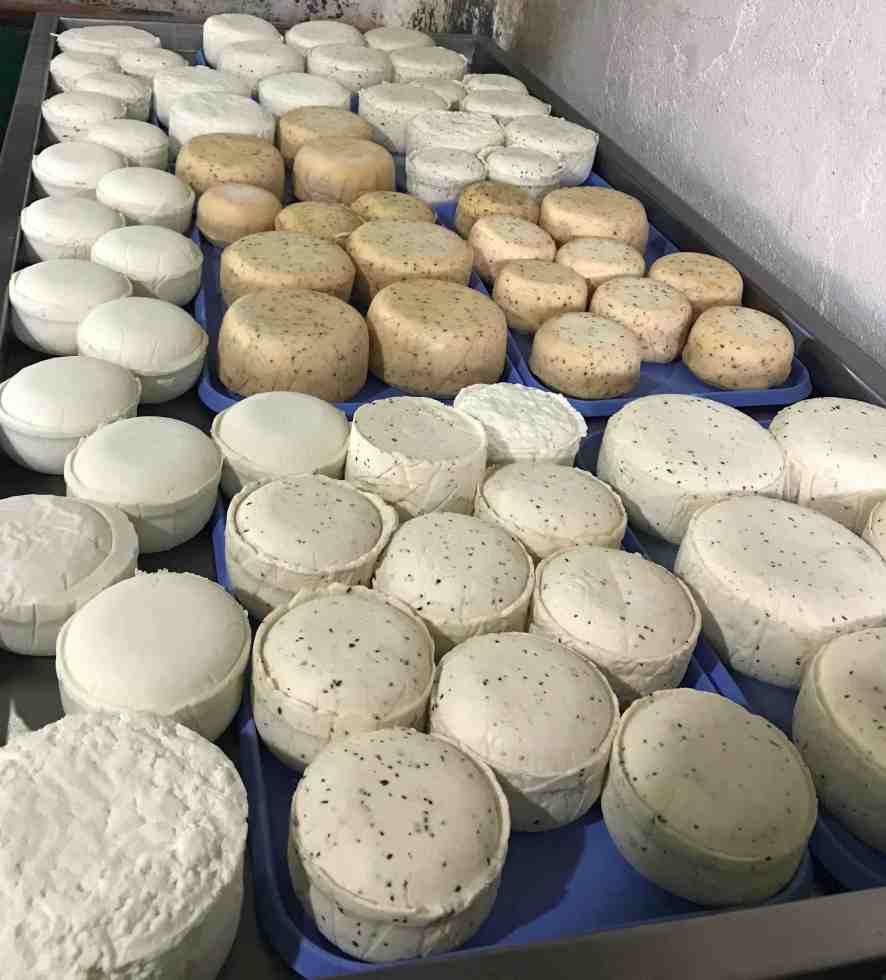 The dairy manager had explained that this is an important part of the nutritional mix. Despite our surprise we had not asked more about it. Yesterday we did, and the answer was another surprise. Milk production rises 10% or more with the pineapple added to the feed. The animals are healthier because of the fiber content of the fruit, compared to cows eating grains such as corn or soy. Plus, the methane bi-product is significantly decreased. Food produced in a dairy making this dietary change represents one small step toward reducing greenhouse gas emissions.
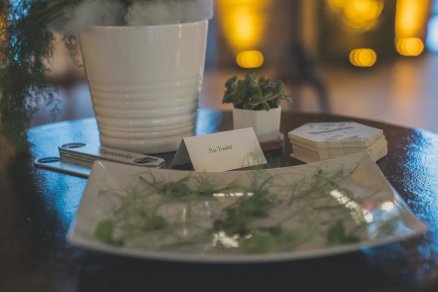
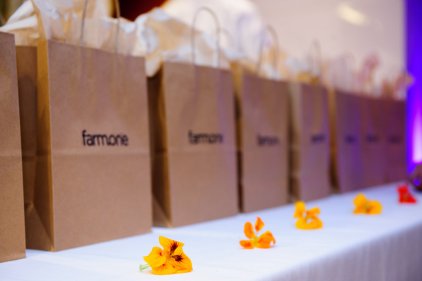
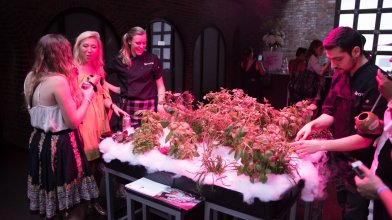 Farm.One is New York City’s grower of rare herbs, edible flowers and microgreens for some of the best restaurants in the city. Our Edible Bar and Tasting Plates make these fresh, exciting ingredients available for the first time in an event setting. Guests can discover botanical ingredients for the first time, with the expert guidance of our farm team. Taste ingredients on their own, or paired with cocktails and other beverages, for a colorful, flavorful and aromatic experience like no other.
 This short piece by Anna Russell below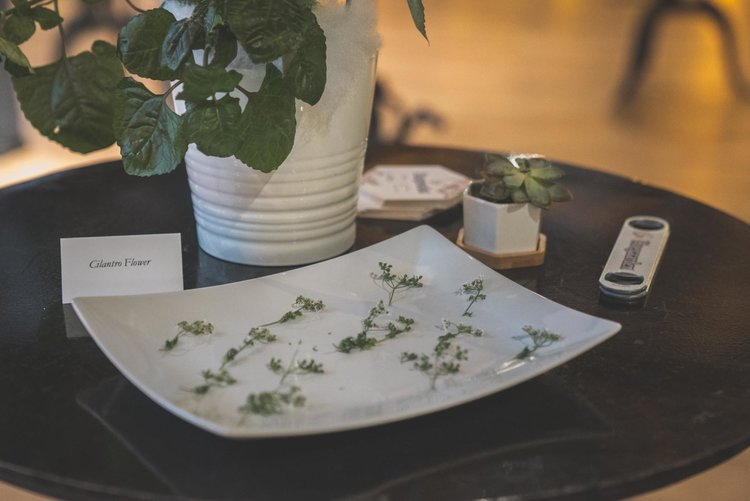





 It may be true that scientists have not been the most compelling communicators, but that is no excuse for our inaction. As someone who left a