Organic, Bird-Friendly Cold Brew Coffee At Chan Chich Lodge

07COLDBREW1-master1050-v2

At All Day, a coffee shop in Miami that’s on the must-visit list of coffee fanatics, cold brew is the foundation of the menu. Credit John Van Beekum for The New York Times

Apparently it is iced coffee season up north. It is intern season here at Chan Chich Lodge. Maybe an intersection? Emily, from an agriculture and environmental engineering background, and Alana who is an aspiring sustainable hospitality developer are off to the races, as they say. They were out in the forest yesterday with GPS tools, a GIS mapping app and the assistance of Migde and Hector on the trails, developing a more scientific way of estimating the incidence of Ramon trees in our 30,000 acres.

More on that from them. But more on coffee from me. We have been cultivating an estate coffee unique to Belize, organic and as bird-friendly as you will find. Let’s add cold brew to your list of summer experimentation? Migde and Hector, aka bartender and waiter and therefore defacto coffee baristas, will be setting up the instrumentation in the kitchen.

How Cold Brew Changed the Coffee Business

Continue reading →

First Day at Chan Chich

Hi! My name is Emily, and I am one of the La Paz interns for summer 2017. As an environmental science and engineering student, I have never had an internship at a hotel, let alone one in a remote location in a foreign country. However, the College of Agriculture and Life Sciences at Cornell University has prepared me for work in another large aspect of the Chan Chich property: sustainable agriculture. Ultimately, this is where my work will lead me, but until then I am becoming integrated with the lodge as a whole.

My first surprise during my experience so far was the actual lodge itself. On the drive to Chan Chich, we passed a great deal of farmland, with each area becoming less and less populated as we went on. However, as we turned down a road marked Chan Chich, the landscape instantly changed from cleared pastureland to a road densely surrounded by large trees draping over us as we drove. Soon, a sprinkling of lights entered our view, dotting the driveway and welcoming us to Chan Chich. Suffice it to say that my time searching Chan Chich on Google and Instagram did not do it justice. The greens of the grass and trees blended with the variety of flowers abundant across the property. The lodge and cottages were far more magnificent in real life making them feel humble and authentic while also luxurious all at once.

Continue reading →

Foraging Forays

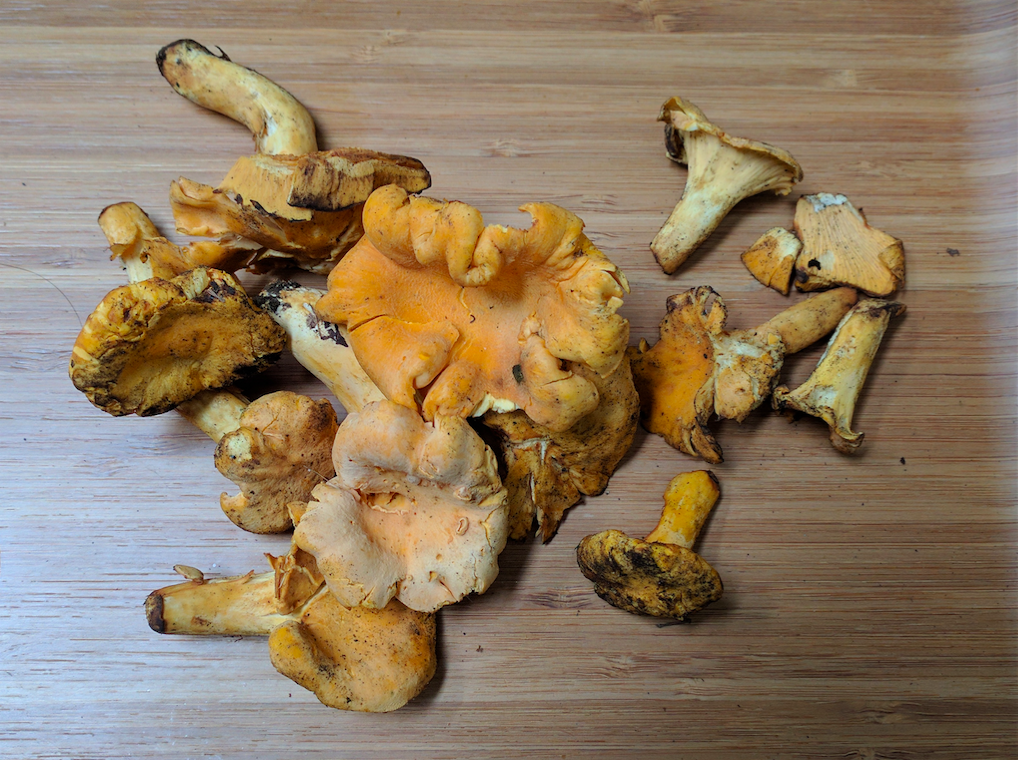
Taking a break from packing for my upcoming return to Belize, I joined a group of old friends from the Georgia Mushroom Club in a foray near the Georgia/South Carolina border. Fresh air, a walk in the woods, good company, and foraging for mushrooms – what better way to spend a morning?

The weather has been warm and wet, great conditions for mushrooms and we were happy to find patches of chanterelles. As we searched we talked about Chan Chich Lodge and Belize, and that we’re in the midst of brainstorming collaborations with the staff and local community who carry the ancestral knowledge of the old Mayan and Belizean foodways, and chefs who focus on foraging in the creation of their menus. We’ve recently discovered a variety of foods that are plentifully available from the Chan Chich forests, and are excited to incorporate them into our culinary story.  Continue reading →

I Love Peach

31PEACHES1-superJumbo.jpg

Peaches that bloomed late and thus missed the March freeze at Pearson Farm in Georgia. Production in the state this year might be just a quarter of what it was in 2016. Credit Maura Friedman for The New York Times

I have family in Georgia, and can attest to the state’s obsession described in the first paragraph of the article below. I have visited the state when peach is at its best, and the obsession makes sense to me. Although the article does not mention climate change, per se, considering the news I cannot help filtering this story through that one.

Farmers in the south are part of “the base” that have been led to believe that climate change is a hoax, and that efforts to mitigate it are wasted, even wasteful. Which leads me to wonder whether peach farmers at a moment like this might be on particularly fertile ground–whether they might be inclined to listen to science that can help them understand the season’s tragedy in a new light. For as long as there have been farmers they have been inclined to listen to all kinds of explanations for why things happen the way they do. Maybe climate change has just not been presented by the right messenger with the right message. I love peach enough to want to find out:

The South Faces a Summer With Fewer Peaches

By

ATLANTA — Peaches are such a part of Georgia’s identity that schools, streets and health care plans are named after them. Even the sticker you get when you vote is in the shape of the fruit. South Carolina, one state over, grows more peaches than Georgia. A giant statue of a peach is its most famous roadside attraction. Continue reading →

The Wonders Of Trees Never Cease

goat-02_custom-060bac4eeff1a0b290ff201210009e650a2025d0-s1400-c85.jpg

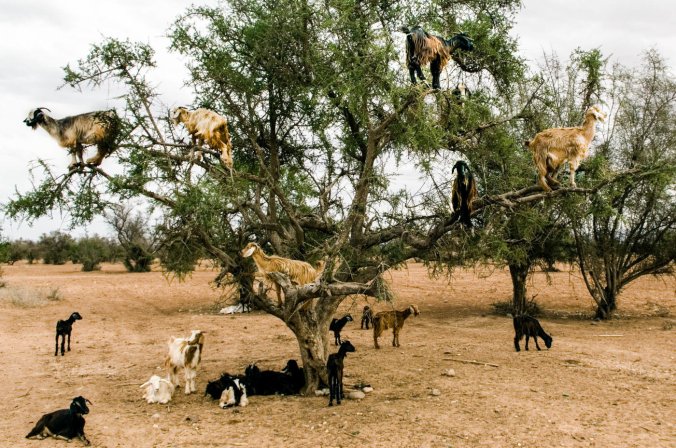
Goats climb an argan tree in Morocco to dine on its fruit. Jeremy Horner/Getty Images

At Chan Chich Lodge we are just embarking on a tree-related culinary journey, so any counterintuitive story about trees is likely to catch my attention these days.

FigDeer.jpg

Thanks to Marc Silver at National Public Radio for the story about the picture above, Do Tree-Climbing Goats Help Plant New Trees? It is a short read and worth every second of your attention if you are interested in arboreal foodstuff.

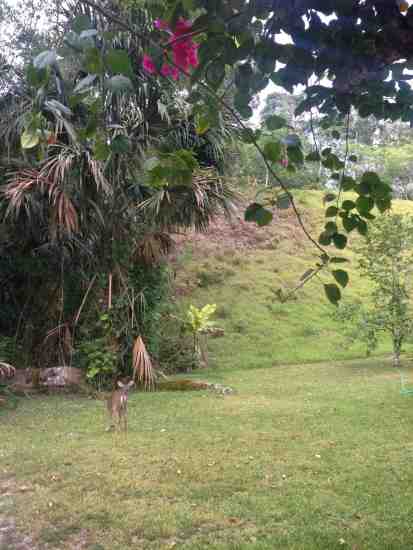
This image to the left, while not as amusing as the one above, shows a deer doing the same thing with less panache. That deer will spread the seeds of that wild fig far and wide in the forest, increasing food supply. Continue reading →

Richard O. Prum’s Beauty Challenge

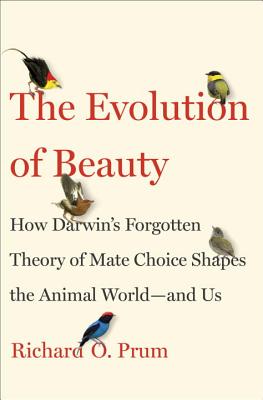
EvolutionBeautyFor evolutionary biology, on this platform we have favored E.O. Wilson because of his biophilia ideas (about which, plenty). For ornithology, we have leaned heavily on the Lab at Cornell and its many wonderful folks. Now, a scientist at Yale combines both of those fields and takes on the topic of beauty in a challenging manner–I am looking forward to this.

Click the book image at the left to go Indie Bound, a community of independent local bookstores, or if you need more convincing, read the beautifully illustrated Challenging Mainstream Thought About Beauty’s Big Hand in Evolution by James Gorman in the Science section of the New York Times. It is as much profile as review and asks:

Are aesthetic judgments about mates invariably tied to traits we see as adaptive and worth passing on Or, does beauty just ‘happen’?

Not long ago, a physicist at Stanford posed a rhetorical question that took me by surprise.

“Why is there so much beauty?” he asked.

Beauty was not what I was thinking the world was full of when he brought it up. The physicist, Manu Prakash, was captivated by the patterns in seawater made as starfish larvae swam about. But he did put his finger on quite a puzzle: Why is there beauty? Why is there any beauty at all? Continue reading →

Food Sleuthing

00Apples-2-superJumbo.jpg

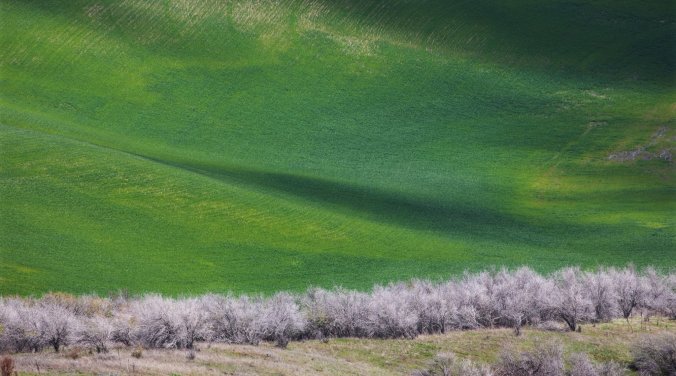
The remnant of an old apple orchard among wheat fields in Steptoe Butte State Park in Washington. Credit Ruth Fremson/The New York Times

Yesterday magic happened. After sharing in the morning a quick mention of why my thoughts are on agriculture, I was walking with a member of Chan Chich Lodge’s groundskeeping team to review some work he had completed. On the way, we encountered a tree showering small fruits onto the ground. Fragrant. I asked him what it was and he said a word I did not recognize that sounded like “yo”.

About the size of a blueberry but not a berry, nor resembling anything I could identify. Until I opened it and its inside looked exactly like that of my favorite fruit. And then I realized my colleague had said higo, the Spanish word for fig. He then told me that in his village the old Mayans use this to make a flour, something they have done since olden times. He paused a moment, a bit of reverie I could tell, and then he continued about how the tortilla made from this is the best. It’s got me thinking. Thanks to Kirk Johnson for this second unexpected pleasure of a story:

Hunting Down the Lost Apples of the Pacific Northwest

STEPTOE, Wash. — David Benscoter honed his craft as an investigator for the F.B.I. and the United States Treasury, cornering corrupt politicians and tax evaders. The lost apple trees that he hunts down now are really not so different. People and things, he said, tend to hide in plain sight if you know how and where to look. Continue reading →

Rewilding, Panthers & People

Filkins-The-Return-of-the-Florida-Panther.jpg

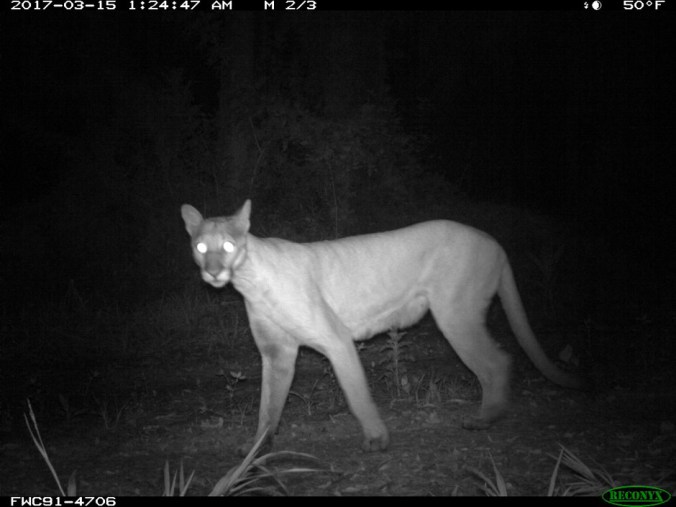
As Florida panthers have begun to multiply, they’ve been forced to search for new home ranges. PHOTOGRAPH COURTESY FLORIDA FISH AND WILDLIFE / FLICKR

Rewilding is a topic I started linking to as a matter of solidarity. While based in south India, I had plenty of exposure to residual evidence of the complicated–sometimes resplendently beautiful and other times brutally tragic–relationship between mankind and wild animals as played out over millennia, and still evolving. So I have kept an eye open for these stories, and have posted so many times on the topic that it might give the impression that it is a thing. As if it is happening more or better than it is really happening. But it is happening so I will keep the links coming.

Now I am in Belize most of the year, where the man-cat relationship is also millennia old, and as constant challenge as ever. But I am seeing it from well within the confines of Chan Chich Lodge and its surrounding hundreds of thousands of acres of healthy cat habitat. I know there are big cats in the USA, but not enough. That is why this story is a thrill. Dexter Filkins, never yet cited in these pages but whose reporting I depend on for other kinds of stories, was not a byline I expected to see on this story, but thanks to him for it:

For years, the Florida panther, a majestic creature that lurks in and around the forests of the ovbnm,./, has teetered on the edge of permanent disappearance. Closely related to the mountain lion, the panther once roamed across much of the South, but the ever-advancing modern world pushed it into a tiny corner of Southwest Florida. By the late nineteen-seventies, fewer than thirty survived.

Since then, the panther has been coming back, helped by a government- and privately backed expansion of its habitat. Florida panthers are now thought to number around two hundred. Indeed, there are so many big cats in the Everglades that they are venturing out in search of new territory. Continue reading →

Gallon Jug’s Bird Friendly Coffee

CoffeeConsvtn.jpg

I am back at Chan Chich, with one goal before I start focusing on my plan to go to graduate school. A recurring theme in my work for La Paz Group, especially at Xandari, has been the intersection of birds and coffee. And now I have some months to think about how this may relate to what I will study in graduate school. One of the programs I am considering applying to is the Masters in Environmental Management at the Yale School of Forestry. Can I link what I have learned while working to what I would study there? If so, maybe I could link that to what I do after grad school.

This other post today reminds me of the value of geeking out from time to time. Most of my attention to coral reef comes from Phil Karp’s posts on this platform and I admit to preferring stories featuring real people and their entrepreneurial approaches to conservation. But science is the other best friend of conservation. Today my attention is turning to coffee, in advance of the arrival this week of an intern coming from Cornell University’s College of Agriculture and Life Sciences.

Just one of the many topics for an intern, with science and research on her side, to help us tackle over the next ten weeks, bird-friendly coffee has been on been on my mind since last year but I have been waiting for the perfect moment to focus. Nothing like the arrival of an intern to focus your mind. And so today in my task-oriented wanderings I came across this website (click the banner above), which I loved immediately for sharing this news on capsules, but the rest of the site is a great resource for present purposes as well:

A short round-up of coffee news.

Farmers, Loggers & Biodiversity

5184 (1)

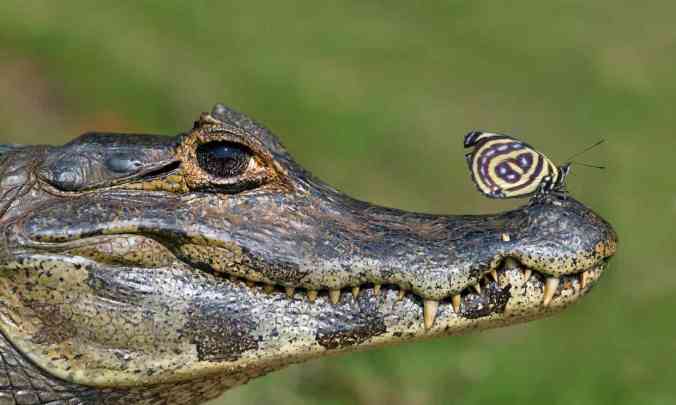
Serro Ricardo Franco is in one of the world’s biggest and most diverse ecological reserves. But reality on the ground is different, putting many animals at risk, such as Yacare caiman and giant river otters. Photograph: Angelo Gandolfi/Getty Images/Nature Picture Library

Sometimes, sitting in a glass house, reading the news makes me want to throw a stone. The glass house where I live includes a farm in an extremely biodiverse area. It is surrounded by nearly half a million acres where logging happens. But there is farming, as you can read about in the news below, and there are plenty of better ways of farming; there are loggers like those in the news below, and there are forests where extraction happens according to standards such as those set and enforced by the Forest Stewardship Council.

Instead of throwing a stone, I get up every day and make sure the glass around here is as transparent as possible, because we can demonstrate a better way of supplying food, of harvesting wood, and doing so with the protection of wildlife in constant view. Meanwhile, I do read the news from elsewhere and continue to share it here (thanks to the Guardian’s Jonathan Watts in Vila Bela da Santíssima Trindade for this one):

Wild Amazon faces destruction as Brazil’s farmers and loggers target national park

The Sierra Ricardo Franco park was meant to be a conservation area protecting rare wildlife

To understand why the Brazilian government is deliberately losing the battle against deforestation, you need only retrace the bootmarks of the Edwardian explorer Percy Fawcett along the Amazonian border with Bolivia.

During a failed attempt to cross a spectacular tabletop plateau here in 1906, the adventurer nearly died on the first of his many trips to South America. Back then, the area was so far from human habitation, the foliage so dense and the terrain so steep that Fawcett and his party came close to starvation.

He returned home with tales of a towering, inaccessible mesa teeming with wildlife and irrigated by secret waterfalls and crystalline rivers. By some accounts, this was one of the stories that inspired his friend Arthur Conan Doyle to write The Lost World about a fictional plateau jutting high above the jungle that served as a sanctuary for species long since extinct elsewhere. Continue reading →

Longform Escape & Corrections

pigeonphoto-1436823945-85.jpg

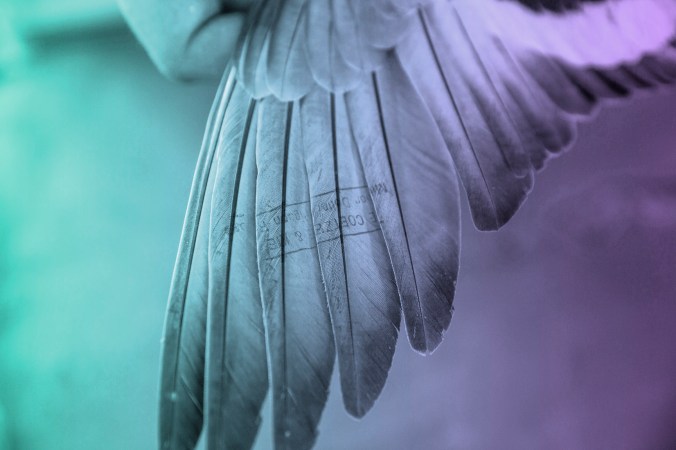
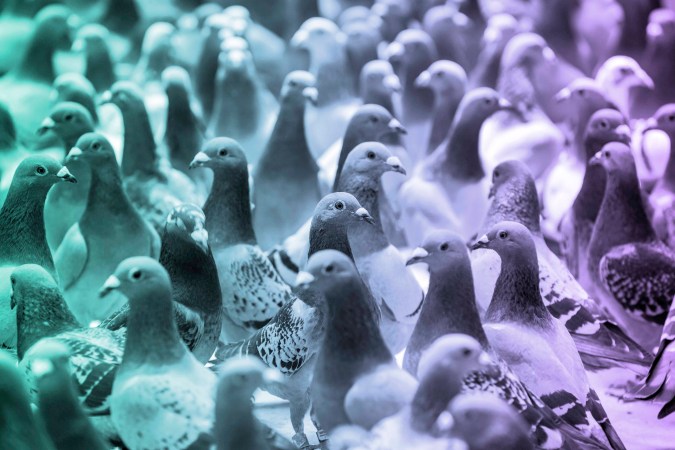
There are two dynamic illustrations in this piece by David Samuels that cannot be replicated here, but are worth visiting the website of The Atavist for, so the images above and below are placeholders. Anyway, the words are the thing so I take a paragraph from near the end as an example of why to read this:

…In the 1970s in Brooklyn, where I grew up, pigeons were everywhere, which is probably why I am here. Some of my earliest gray-scale memories include pigeons, which fluttered and occasionally nested on the windowsill of the first place I was aware enough of to call home, a housing project near the Brooklyn Bridge built for working families like mine. There was a bona fide pigeon coop on the roof of a building nearby, like in the famous scene from On the Waterfront. Sometimes I could see a man on the roof waving a flag, which in my imagination was red but in fact could have been any color. The pigeons he guided back to their loft every night were a promise of safety that New York City in the 1970s was obviously unable to keep, which is why my parents moved to the suburbs, where the birds in the trees outside my window twittered and cooed in foreign tongues that signified nothing…

I am not surprised that this is the article on their website that I gravitated to. The author wrote an item in the New Yorker at a time when I was just completing many years of work in Montenegro and Croatia, and I knew the landscape he was describing well, and still he brought the place alive for me in a way that living there had not. He does not need photos, gifs, or other illustrations to make his words dance better. And in this piece he does something even more magical, providing a correction for me.

Seven years in south India had at least one unexpected effect on me, and it is embarrassing. I developed a passionate dislike for pigeons. Pigeons caused continuous problems in one of the properties we developed and managed, an urban location pigeons loved as much as people. And pigeons express their love in messy ways, so they became my bane. At our home, pigeons would coo on the window sill and I remember that at the time I posted this, which was peak pigeon problem, my enthusiasm for conservation was red hot but I had an unwanted, guilty ability to imagine why passenger pigeons disappeared. Reading David Samuels just now, I have snapped out of that.
pigionssa-1436823680-87 Continue reading →
Lapham’s Quarterly, Now On Soundcloud As A Podcast

ship2

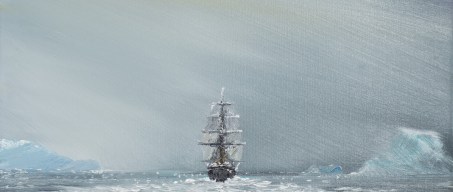
IMAGE: Discovery En Route to Antarctica (detail), by Vincent Alexander Booth, 2014. © Private Collection / Bridgeman Images.

Lewis Lapham has shown up in our pages here exactly once in the past. Mainly because, in the six years we have been posting on this platform, his own publication was not as accessible as others we have been linking to. Surely there was a purpose to the walls constructed around it, but we are happy that, for whatever reason, they have come down. Just the illustration above and the quotations below should make you want  to read more:

Evolution has arranged that we take pleasure in understanding—those who understand are more likely to survive.
—Carl Sagan

I’m sorry I know so little; I’m sorry we all know so little. But that’s kind of the fun, isn’t it?
—Vera Rubin

Lapham

We sample the opening two paragraphs after the jump below, and recommend savoring his writing, but we also have been on the podcast bandwagon since we started on this platform. If you have already been enjoying Lewis Lapham’s publication, and wishing it were available in an audible format, today is your lucky day (click the soundcloud banner here to listen). Continue reading →
Remembering Hurricane Earl

JillMagid2

Jill Magid: “Una carta siempre llega a su destino”. Los Archivos Barragán. MUAC, 2017.

Last year when I was first spending extended time at Chan Chich Lodge, I got to experience the reality of what had up to then been a cliche phrase–a force of nature. I had some minor experience with earthquakes, certainly other-worldy, and I have witnessed flooding and historic snowstorms. Nothing had ever exhilarated me for hours on end the way this hurricane did.

And what I chose to do during that experience has stuck with me as much as the hurricane itself. So I had to visit the website of the museum where this exhibit is hosted. And I had to read what happened after the end of that story:

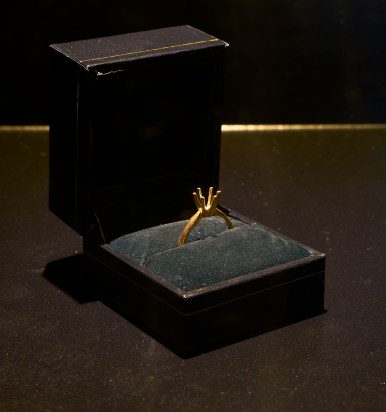
…One premise of Magid’s work is that the ring is not and will never be for sale. It can be accepted only by Zanco and only in exchange for the archive… When addressing claims that she had disrespected Barragán’s legacy, she shook her head. “Not only do I love his work, but the questions around his archive—what is accessible and what is not—affect the way his legacy goes forward,” she said. Continue reading →

James Prosek, Come to Chan Chich Lodge!

ProsekSweden.jpg

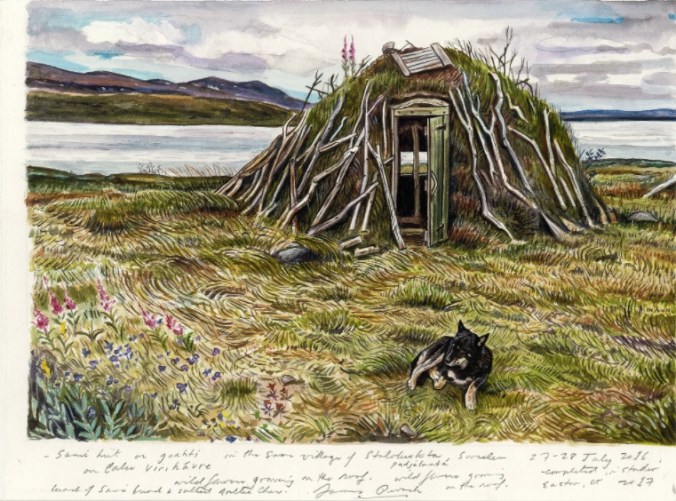
A Sami reindeer herders’ hut on Lake Virihaure in Padjelanta National Park. Credit Paintings by James Prosek, courtesy of the artist and Schwartz-Wajahat, New York

We had a tradition from the moment we arrived in Kerala, inviting some of our favorite people to come see what we were doing there. This one’s work at Cornell was a lovely coincidence because of Seth’s work at the Lab of Ornithology. But mainly, a conservation-oriented naturalist illustrator seemed a perfect fit for what we do. So, seeing what he has contributed to the Travel section of the New York Times today I realize we are due to extend another invitation, this time for him to join us at Chan Chich Lodge in Belize:

A Botanist in Swedish Lapland

By

The plan was to retrace part of a journey that Carl Linnaeus made in 1732 when he was 25, from Uppsala, just north of Stockholm, to the northernmost region of Sweden, known as Swedish Lapland. Linnaeus kept a detailed journal of his travels, often called his “Lapland Journal,” with maps of the mountains, rivers and lakes, drawings and his squiggly handwriting. Continue reading →
Chan Chich Archeology Season, When Skygazing Is Also At A Premium

Death-Valley-2-Skyglow-Desktop-Wallpapers-e1492808806156.jpg

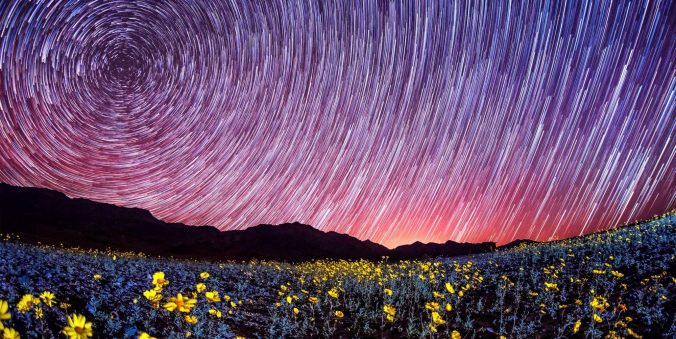
Today and tomorrow we are finalizing preparation for receiving a nearly full house of archeologists, who will be at Chan Chich Lodge for the next couple months. I came across the photo above at the same time I was looking at the to-do list related to their arrival, and am remembering that in May 2016 I was struck by the quality of night sky at Chan Chich for stargazing.

So this is a shout out to all those people who are intrigued by Mayan archeology, are stargazers, and have not yet made vacation plans for the next couple months. We have a few rooms available, so come on over!  The photo above is paid content from Intel, and while usually we avoid passing along commercials, this is on a topic we care about. It is worthy of a read. Also, after the text the Skyglow short on Vimeo is worth a look:

Timelapse photographers zigzagged 150,000 miles across the U.S. to capture the wonders of the dark skies and raise awareness about the growing threat of light pollution.

Their family and friends think they’re crazy for devoting so many nights to create Skyglow, a book and video born from Gavin Heffernan and Harun Mehmedinovic’s passion for nature and photography. Just how Carl Sagan and Stephen Hawking brought deeper understanding of the cosmos, Heffernan and Mehmedinovic are raising awareness about the damage caused by ever increasing light pollution. Their magical timelapse photography just might do the trick. Continue reading →

Strengthening Our Birding With Citizen Science

team-belize-720x405.jpg

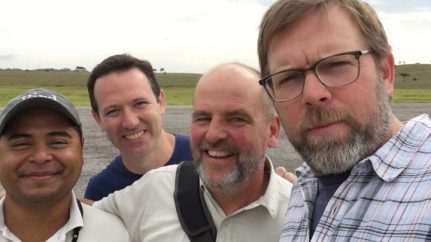
Team Belize finished with 242 species. From left: Roni Martinez, Andrew Farnsworth, Steve Kelling, Brian Sullivan.

Seth, since his time working for the Cornell Lab of Ornithology, and even after his time in Ithaca, has helped me to see how important the Lab’s work is to what our company has been doing since he was an infant. Citizen science is an essential component, and at Chan Chich Lodge guests have responded to the passion the guides have for eBird, which is why we put so much attention into this year’s Global Big Day. And it is why we are already planning the next collaboration with the Lab, a collaboration Seth will lead on our side. For now, a final roundup of stories from last weekend, starting with our favorite team:

…After pooling their lists, the teams ended the day with a whopping 327 species combined—reflecting not just great birding but the region’s importance to an immense diversity of birds. Team Belize topped the friendly group competition with 242 species (including 40 species the other teams didn’t find); Team Mexico found 224 species (with 43 unique to their list); and Team Guatemala tallied 213 (with 23 unique)…

58126301-520x611

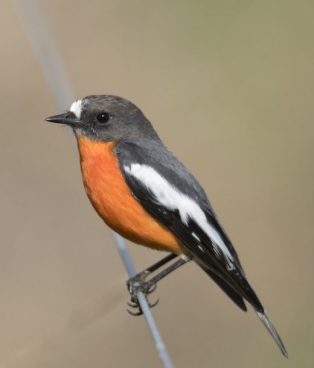
Flame Robin by John Cantwell/Macaulay Library, taken on Global Big Day

Also, the final numbers are in and news published late yesterday confirmed what I suspected as day was breaking in Belize, titled Global Big Day 2017: birding’s biggest day ever:

…On 13 May 2017, almost 20,000 birders from 150 countries around the world joined together as a global team, contributing more than 50,000 checklists containing 6,564 species—more than 60% of the world’s birds. This is a new record for the number of bird species reported in a single day, Continue reading →

Food, Labels & Useful Information

16-whole-foods-produce.w710.h473.2x.jpg

Photo: Robert Nickelsberg/Getty Images

We link to the occasional food trend article when it matches something we are working on, whether it is the Chan Chich Lodge culinary program or the food production at Gallon Jug Farm. This article, Whole Foods Would Look a Lot Different If It Were Science-Based, almost lost me with the first sentence, an annoying cliche within a sappy first couple paragraphs, but there is a useful case made starting soon after. We are dealing with these very questions so I can suggest the majority of the article starting after the jump:

Whole Foods used to be my idea of grocery heaven. Once upon a time, I shopped at the California Street location in San Francisco — it was light and airy with produce for miles. I knew the cheesemonger. I had philosophical conversations with the butcher. I stared longingly at the Le Creuset bakeware. The soap aisle smelled like lavender. Heaven.

But eventually, I fell out of love. Or, to be more specific, I changed my mind about organic food after reading the research: It turns out organic isn’t more nutritious or even necessarily better for the planet. So I pretty much stopped shopping at Whole Foods altogether. Continue reading →

The Bells & Whistles Of The Forest At Daybreak

GBD2017ResultsWed.jpg

We post a few times a day, sharing information about initiatives in our own realm of work and frequently observations on news links that we find interesting. For the record, here is a bit of news worth celebrating. As I type this at 5:30a.m. Belize time, the Global Big Day page on eBird shows the latest tally of the species count as seen above. At the same time, on the eBird Facebook page I am looking now at the last post, dated May 15 midday, that says:

The #GlobalBigDay total is now 6,255, less than 100 away from a new record for a single day of birding!

Looks to me like a new record has been set. Where are all the bells and whistles? They are outside my door right now, where the wildlife is whirring, cling-clanging, whooping and shrieking as the forest lights up…

Technology, Wilderness & Balance

4240

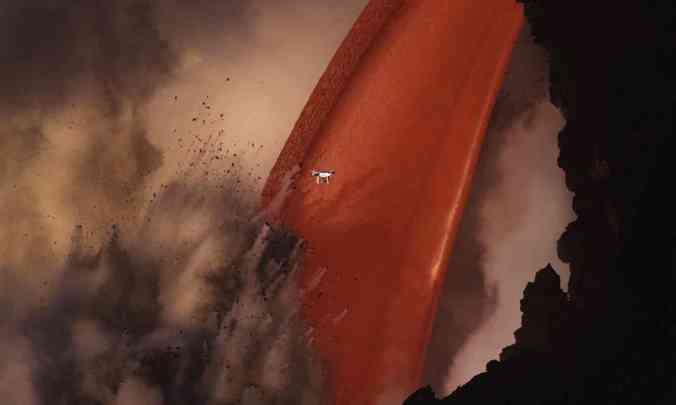
An illegally flown drone gives scale to next to a lava tube in Hawaii Volcanoes national park. Photograph: Andrew Studer

Some in the hospitality business will likely embrace technologies that I cannot picture using in our hospitality operations, ever, but that is fine. Good for them, I say. Recent events at Chan Chich Lodge have reinforced my wonder at, and love for, technology as a tool to support conservation. There is no doubt that guest photos of big (or small) cats and monkeys, shared via social media, help our conservation mission. There is no doubt that tech tools such as eBird and Merlin (Belize edition recently released, just in time for Global Big Day for those of us who need it) also move our conservation mission forward.

That said, I still have a preference for digital detox among our guests, as much as possible. Artificial noises, visuals, aromas and structures are best minimized in order to maximize the many benefits of nature. Distractions, which may be normal things and habits quite common at home, are the spoilers of visits to great places. The problem first came to my attention nearly two decades ago while visiting Mont Saint Michel, where helicopter tours were just becoming a thing, which clearly annoyed every individual who was making the wondrous visit on foot.

I hope, but doubt, that such tours have been limited in the time since then. The evidence seems to point to more distractions in monumental places, whether natural or cultural, that had previously been visually and sonically protected (thanks to Sam Levin at the Guardian for this):

‘Turn it off’: how technology is killing the joy of national parks

As drones, smartphones other gadgets invade America’s most tranquil trails, many lament the loss of peace and quiet Continue reading →

Sticking To Mission & Unintended Consequences

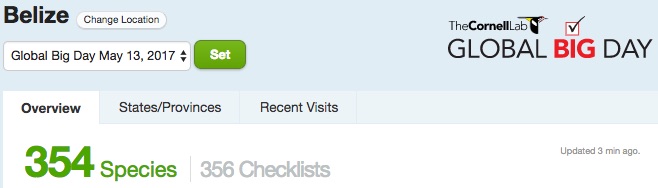
GBD2017Result1

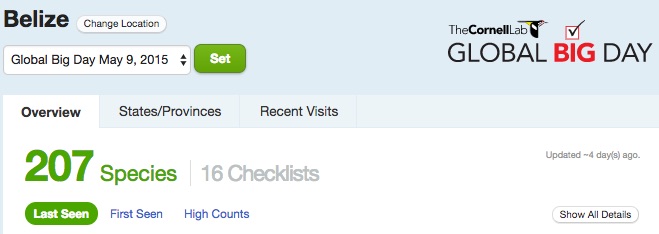
In recent months, as we prepared to host Team Sapsucker Belize at Chan Chich Lodge, our goals were focused on the citizen science mission. Using a couple simple metrics, the event was a clear success, comparing the number of species counted in Belize this year versus last year, and especially looking at the number of checklists submitted.

GBDResult16.jpg

If you look at this as the third iteration of an event that we hope to grow in future years, the progress from beginning to present is promising. As I type this there are still more than 40 hours of data entry remaining for this year’s event, so the increase in this year’s participation and species identification will likely grow larger by this time Wednesday.

GBDResult15.jpg Continue reading →