Odyssey’s Everlasting Allure

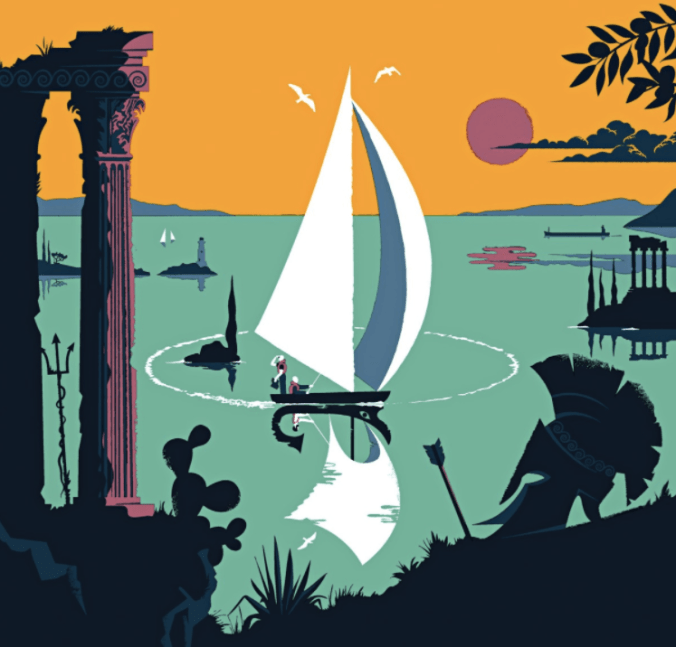
Illustration by Golden Cosmos

The title had me at Father, and again at Odyssey (Final, not so much). My first encounter with Homer was in an advanced literature course in my last year of high school. As a father now, with a son who found his way back home to another Ithaca, after his own odyssey, I could not resist jumping right into this story. But half way through, I stopped reading it. I will not say why I stopped, but I mentioned it to Amie, who I consult on matters of an aesthetic nature, especially when they intersect with matters of a familial nature, and she had already read it to the end. She said it was important to read it all the way through. I now understand why, and must recommend the same now, whether or not you have read the Odyssey:

A FATHER’S FINAL ODYSSEY

My octogenarian dad wanted to study Homer’s epic and learn its lessons about life’s journeys. First he took my class. Then we sailed for Ithaca. Continue reading →
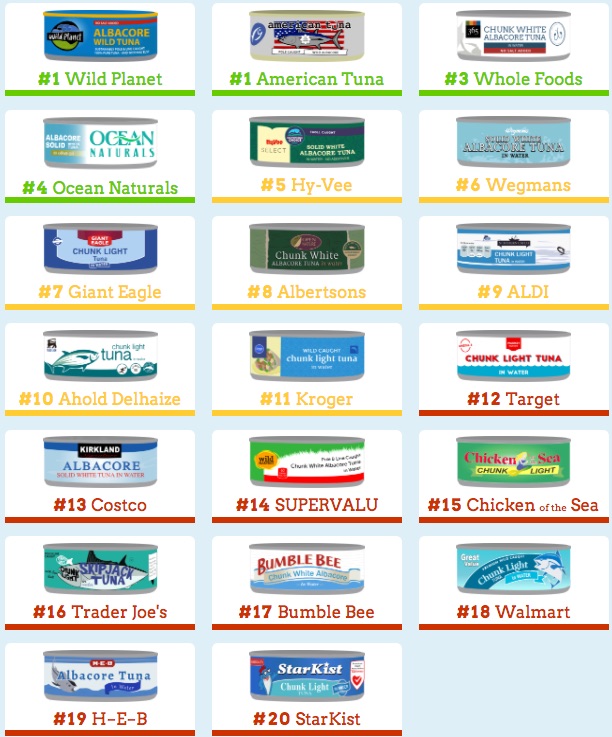
If You Eat Canned Tuna, Consider This

TunaRank.jpg

We check in with EcoWatch regularly, and from time to time Greenpeace has a surprising piece of content featured, like this 20 Canned Tuna Brands Ranked: How Sustainable Is Your Brand?

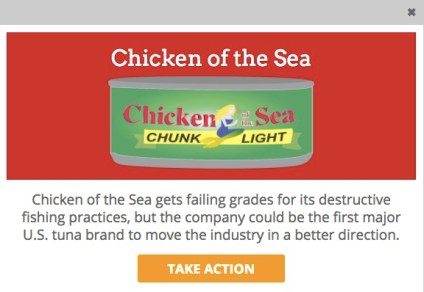
StarkistWarn.jpgWhat is surprising to me is this pop up call to action, which echoes back at least three decades for me to the first time I heard of Greenpeace, which was also the first time I heard of any issues related to canned tuna, which was also the first time I looked on a map to see where the Gulf of California, and Baja California Sur were situated. It is surprising because on the ranking above, this same tuna is not the absolute worst of the worst. Even more surprising, in its own way, is that Trader Joe’s is even worse in this ranking. Go figure. Anyway, thanks to David Pinsky, Greenpeace, and EcoWatch for this: Continue reading →

Margay Jump Start

MargayRecline.jpg

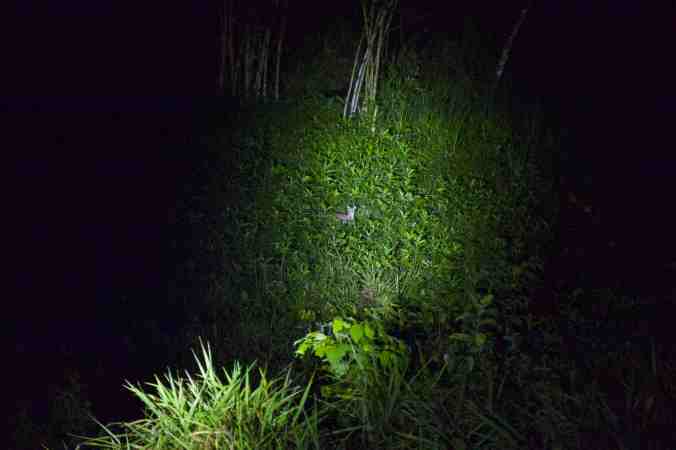
In the post where I mentioned this margay sighting I did not yet have any photographic evidence. Now I do. Prior to their departure, the same Los Angeles family mentioned in this cat-sighting post handed me the memory card from their camera and I was able to pull these images. In the rush of the holiday weekend I had forgotten these until now. Above was the first, taken as quickly as the camera could be lifted to follow the spotlight. Below, an enlargement of the cat. Continue reading →

Feline Trifecta

LeanderOcelot

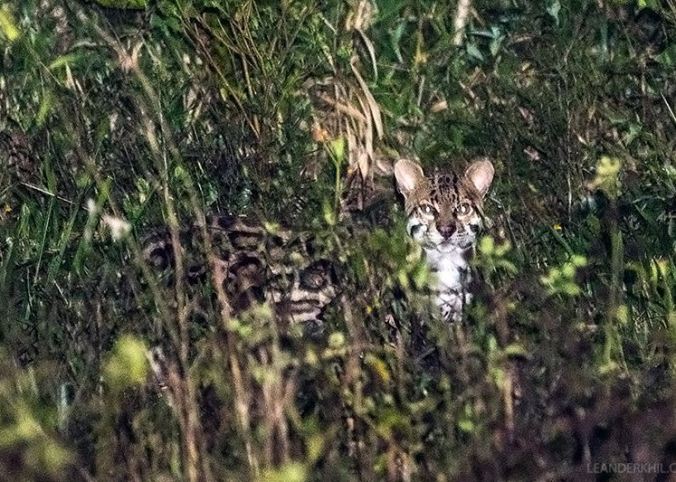
When Leander caught this cat in his camera some weeks ago, there was no telling if and when, or where, we might see it again. Last night, a family from Los Angeles who just the night before had seen two other species of cat during the night safari at Chan Chich Lodge, decided on a guided trek through the forest starting at 8pm. Continue reading →

Margay Sighting @ Chan Chich Lodge

IMG_7014

Persistence does not always pay off. But, it is often a great trait for its own sake. We all admire people who set out to do something, and stick with it long after there is reason to continue hoping for that something. And, if you are like me, you cheer the underdog, hoping they will at the very last minute get that something. Continue reading →

Dismantling Protection, Effectively & Efficiently

Kolbert-earth-day-trump-1200.jpg

How is it that an Administration as disorganized as Donald Trump’s has been so methodical when it comes to attacking the environment? PHOTOGRAPH BY JOE RAEDLE / GETTY

I committed myself to not name the name, because it adds fuel to a flame that is already out of control. But if you have read any of the posts in our model mad series the name is clearly implied.  Plenty of others name so well that it is best just to link their work. One of the best namer of names when it comes to our environment, and failure to protect it, is Elizabeth Kolbert. She occasionally points out that we do not simply fail to protect, but willingly allow the named to dismantle critical protections. We are sadly impressed that Dame Doomsday doesn’t disappoint with her latest contribution:

Next week, millions of Americans will celebrate Earth Day, even though, three months into Donald Trump’s Presidency, there sure isn’t much to celebrate. A White House characterized by flaming incompetence has nevertheless managed to do one thing effectively: it has trashed years’ worth of work to protect the planet. As David Horsey put it recently, in the Los Angeles Times, “Donald Trump’s foreign policy and legislative agenda may be a confused mess,” but “his administration’s attack on the environment is operating with the focus and zeal of the Spanish Inquisition.” Continue reading →

Tapir Encounter @ Chan Chich Lodge

IMG_7001

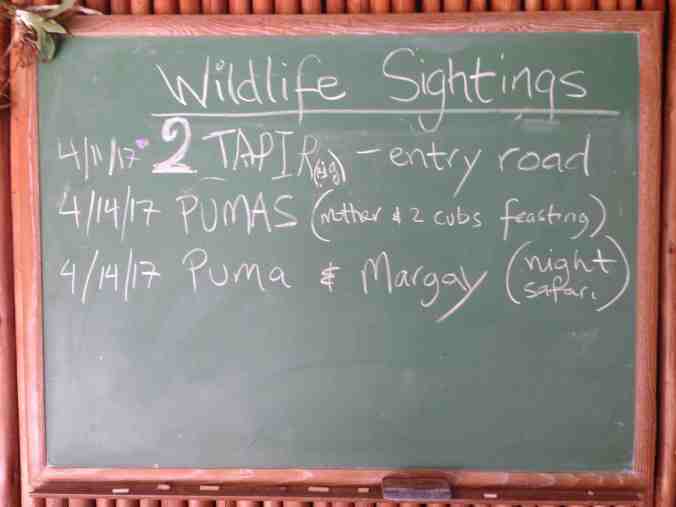
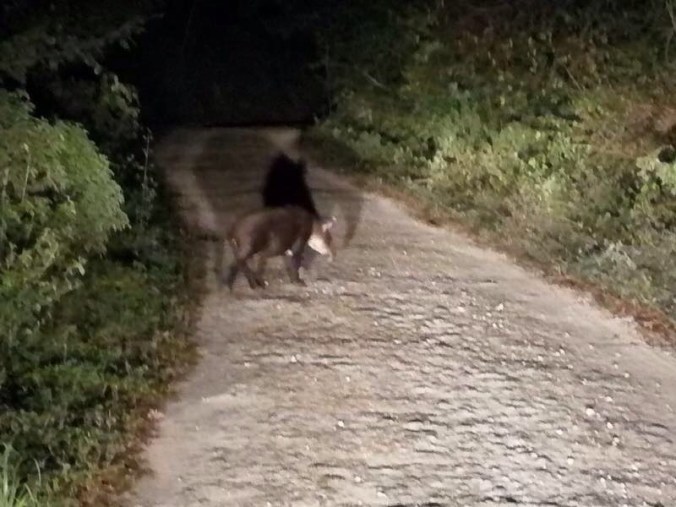
Over the last couple weeks we have had a pretty full range of the animals guests most hope to see. Although the jaguars have been elusive, puma and ocelot have been wandering the nearby forests allowing occasional sightings. But we can guess the jaguar are there because of this:

IMG_6994 Continue reading →

Family, Editorializing, Persistence

962.jpg

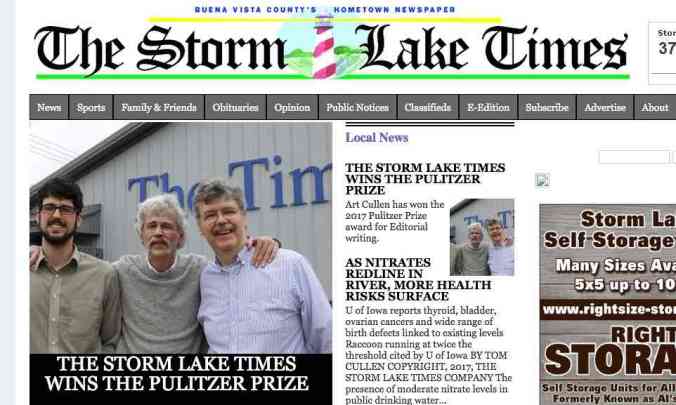
A front page screen shot of Iowa’s Storm Lake Times, which has won a Pulitzer Prize. Photograph: Storm Lake Times

There seems to be a tradition in the field of journalism in the USA whereby one publication celebrates another’s victory in the Pulitzer awards race. Thanks to the Guardian for its shout out, from across the water, to this little publication. As a member of a small organization with multiple family members working together; an organization that editorializes about food as much as anything else; an enterprise that persists against the odds; I particularly like the David & Goliath ring of this:

Tiny, family-run Iowa newspaper wins Pulitzer for taking on agriculture companies

Art Cullen owns the 3,000-circulation Storm Lake Times with his brother John. His wife and son also work at the paper Continue reading →

Happy 20th Anniversary, Meg!

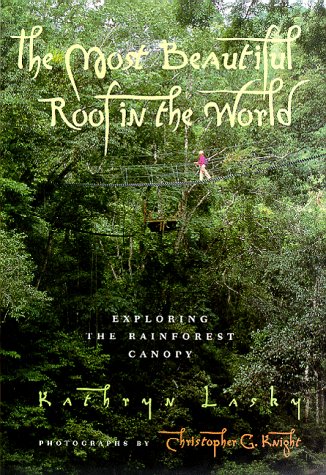
543092After posting this quick thought about foraging, I sent a link to Meg, and she reminded me that she had not only been to Belize but that there is a book about her time here.

As I explored the book I realized that it was first published 20 years ago, incidentally the year when I first visited Belize. I also discovered that the book is in wide circulation among educators in the USA, for hopefully obvious good reasons:

Journey along with Dr. Meg Lowman, a scientist who, with the help of slings, suspended walkways, and mountain-climbing equipment, has managed to ascend into one of our planet’s least accessible and most fascinating ecosystems–the rain-forest canopy. “Fresh in outlook and intriguing in details, this book will strengthen any library collection on the rainforest.”–Booklist Continue reading →

Newtonian Moment At Chan Chich Lodge

ForageCCL.jpgEach morning at dawn, and then again at dusk, I walk the trails at Chan Chich Lodge. The walks serve multiple purposes, but they also serve no particular purpose; and when I get that just right, ideas present themselves.
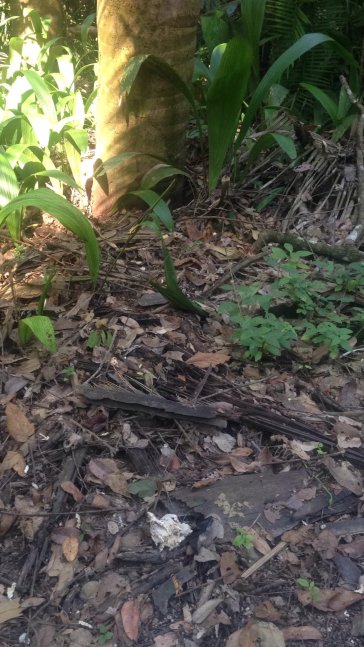
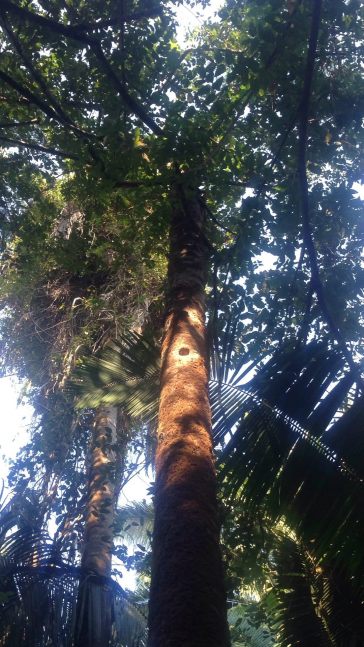
This tree, not a standout in any way I can see, is a marker for me now. It is on a trail where I have had some wonderful wildlife sightings, the best of which, camera-less, was with a tapir. More recently, a troupe of peccaries was snouting around the base of this tree.

And most days there are two species of primate in the vicinity, each challenging the other for territory in their own way–one with grunting howls and the other by shaking clusters of branches vigorously to appear more intimidating than their common name, spider monkey, would imply. Yesterday, a Newtonian inspiration, tailored to my own interests, came to me right here. I saw these bursts of light on the tree trunk at the same moment that I heard a plop in the leaves on the ground right in front of the tree.

ForageCCL2Instead of an apple, and instead of my head, it was some sort of a fungus, a cluster of mushrooms by the look of it, that fell from the canopy into the ground cover. Gravity already having had its heyday of consideration, I instead turned my thoughts to the possibility of a new dimension to the Chan Chich Lodge food program.

I had never heard of mushrooms growing in the forest canopy, but why should I not expect such a thing? I know from our friend Meg, among others, that the vast majority of biodiversity in a rainforest is concentrated in the canopy. So, hmmmm. Is it an edible one?

I snapped these photographs and sent them to one of the two fellows who I always consult on these matters. Answer: too dry to make a positive id. Don’t eat. Of course I will not! But, and here’s the closest I will get to a Newtonian moment of inspiration… Continue reading →

Utopia, Dystopia & Options

852ad6386c912e57e5ddca3d6602a1da.jpgI just listened to a conversation with Mr. Bregman, and as he explained the premise for his book I was struck: times like these are exactly when the seeds for utopian thinking are in the most fertile soil. The book itself is not likely my cup of tea, but I am impressed by this man’s effort to bring us this, now.

Cory Doctorow’s essay, over at Wired, is a perfect read to continue the thoughts on choices we make related to utopia versus dystopia:

…The difference between utopia and dystopia isn’t how well everything runs. It’s about what happens when everything fails. Here in the nonfictional, disastrous world, we’re about to find out which one we live in. Continue reading →

To Bait Or Not To Bait, A Debate

owl-baiting-9_custom-eff377db1531b3a9380239392d03516bf9b06f7f-s1400-c85

A great gray looks up after plunging into the snow, while hunting north of Two Harbors, Minn. The great gray is one of the world’s largest species of owl. Derek Montgomery for MPR News

We have never had, nor can I picture us having this debate at Chan Chich Lodge or any other wildlife setting we are responsible for managing; nonetheless, since we all live in glass houses of one sort or another, it is worth a moment to read this and ponder (thanks to Dan Kraker and Minnesota Public Radio, USA):

Earlier this winter, photographer Michael Furtman was driving along the North Shore of Lake Superior in search of great gray owls. Several of the giant, elusive birds had flown down from Canada looking for food.

He pulled off on a dirt road where he had seen an owl the night before. One was there, perched in a spruce tree, but so was a pair of videographers filming them.

“I backed off, I was going to just let them have their time with the bird,” Furtman says. “And then I saw them run out and put a mouse on the snow.” Continue reading →

Landscaping’s Latest Lovechild

stl-radish-03_resize.jpg

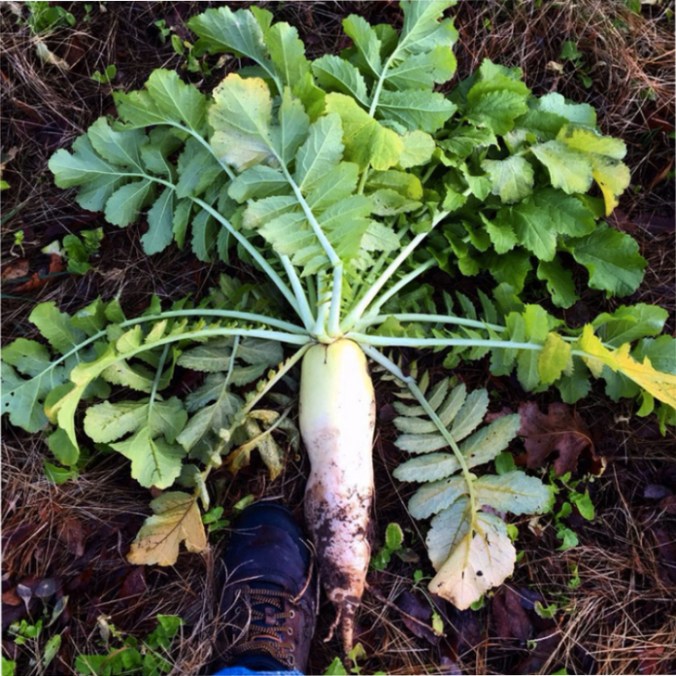
Tillage radish is similar in shape, size, taste, and color to daikon radish. Image courtesy of MVVA.

Do not let the gloom, or the investigative questions of the day, get the better of you. Instead, back to the land. This radish brings a smile. Not least because its story comes via a publication I have just become aware of:

THE DRILLING RADISHES OF ST. LOUIS

Oilseed radish, or Raphanus sativus, goes by the name “tillage radish,” “radish ripper,” “fracking radish,” and the comic book-worthy “turbo radish.” It can reach its two-inch-wide taproots down six feet, breaking up compacted soil and rebalancing nutrient levels, and is commonly put to work as a cover crop in agricultural fields. Continue reading →

Birdwatching 101, Mid-May, Chan Chich Lodge

SibleyYou probably cannot do much better, if you are just getting interested in birdwatching, than to have a primer like this one. The author, in the pantheon of ornithology according to the birdwatchers I know, spends half an hour sharing some of the basics in this podcast:

This week’s Please Explain is all about birdwatching. We chat with ornithologist David Allen Sibley, a leading expert in the field. Sibley is the author of The Sibley Guide to Birds, a reference work and field guide for the birds found in the North American region. He offers details and illustrations of 810 species of birds, with information about identification, life history, vocalizations, and geographic distribution. According to the Audubon Society, “There are 47 million birdwatchers. But there is only one David Sibley.”

In the final minutes Mr. Sibley answers a question that has been of interest to the staff of Chan Chich Lodge in recent months. Do bird feeders have any adverse effect on the birds they attract? In short, no. So today we returned the hummingbird feeders to their longstanding perches on the dining room deck. Birds, staff, and guests are all happy with this decision.

This podcast serves as a good reminder of an opportunity we are inviting birdwatchers of all skill levels to join us for. We have already posted about it here, and earlier here as well. Come join the fun!

America’s Best Idea Just Got Better

In our current political climate we continue to applaud those who stand up for science, nature and culture. It’s been particularly heartening to watch the steward’s of our national parks create a virtual protective shield around the vision they’re charged to protect.

My personal standing ovation goes to the partially anonymous park ranger who spends his spare time creating downloadable maps of all our country’s national parks, by state, from A to Z. (F, Q, U and X seem to be the only letters missing…) In addition to maps, site visitors find all sorts of experiential tips to prepare for safe exploration.

Glacier Maps

If you’re looking for a Glacier map, you’ve come to the right place; currently I’ve collected 28 free Glacier National Park maps to view and download. (PDF files and external links will open in a new window.) Here you’ll find a bunch of trail maps, along with other maps such as campgrounds and the shuttle bus. You can also browse the best-selling Glacier maps and guidebooks on Amazon. Continue reading →

A Book For Our Times

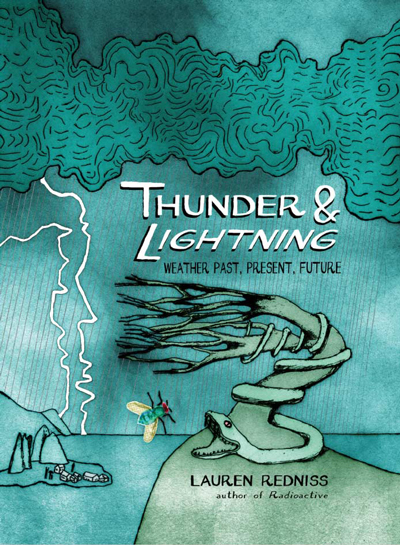
thunder-lightning-cover.jpgThis book just came back to my attention, after reading a review–excerpt after the jump–many moons ago. I am reminded that it looks worth the read; the publisher’s description may prompt a yawn at first, but let it sink in (i.e. a blurb about a book about weather might make your eyes droop just as the thought of seeds in a vault might, until you let that sink in):

In Thunder & Lightning, Lauren Redniss reveals how weather shapes our world and daily lives. She takes readers on a journey from the Biblical flood to the defeat of the Spanish Armada, from the frozen archipelagos of the Arctic Ocean to the ‘absolute desert’ of Atacama, Chile, unearthing surprising stories of savagery, mystery, and wonder. Continue reading →

Eat More Fruit

chimp_wide-e9ca161342ebb893d6a491900854de4b7f2b84fc-s1400-c85.jpg

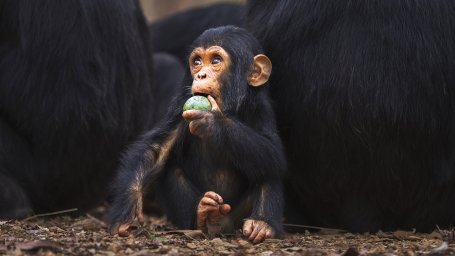
Compared to leaf-eaters, primates who ate fruit had around 25 percent more brain tissue. Anup Shah/Getty Images

Notwithstanding what I said here, eating fruit was already a good idea that now has one more bit of evidence. You should also eat it for the benefit of future generations, according to this story provided by the folks at the salt at National Pubic Radio (USA):

Primate brains may have grown larger and more complex thanks to a fruit-filled diet, a new study suggests.

The researchers analyzed the brain sizes and diets of over 140 primate species spanning apes, monkeys, lemurs and lorises and found that those who munched on fruit instead of leaves had 25 percent more brain tissue, even when controlling for body size and species relatedness. Take spider monkeys and howler monkeys, for example. Continue reading →

Eat More Sweets

Sax-TheSrirachaArgumentforImmigration-600

When fighting for the rights of immigrants, food just might be an unexpected weapon. PHOTOGRAPH BY ANNA QUAGLIA / ALAMY

Here is an idea I can believe in, not strictly because I like the type of sweets in the photo to the right (akin to those in my home growing up, made by my immigrant mom) but including that; mainly I like the idea of consuming certain items as a proxy for something more important. In a post titled THE SRIRACHA ARGUMENT FOR IMMIGRATION, by David Sax, this proxy is made clear in a concise 5-minute read:

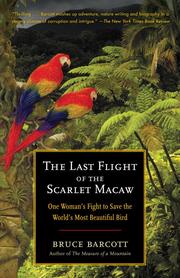
A Decade Since The Last Flight Of The Scarlet Macaw

The+Last+Flight+of+the+Scarlet+Macaw.jpgWhen a book like this comes recommended, book reviews from a decade earlier are as fresh and relevant as ever:

…When McPhee wrote “Encounters With the Archdruid,” the American conservation movement was a religious and mystical force. It may still be so today, but the movement now employs nearly as many big-city lawyers and consultants as any corporation hoping to develop a mine, oil field or… dam. They’re out in force in Bruce Barcott’s new book, “The Last Flight of the Scarlet Macaw: One Woman’s Fight to Save the World’s Most Beautiful Bird,” the story of a bitter fight against a dam in western Belize. No, it doesn’t sound thrilling (which is doubtless why the publisher kept the word “dam” out of the title), but Barcott, a contributing editor at Outside magazine and the author of “The Measure of a Mountain: Beauty and Terror on Mount Rainier,” makes it so, mashing up adventure travel, biography and nature writing in a steamy climate of corruption and intrigue…

It is not the first time this book has been recommended to me, but yesterday a fellow hotelier in Belize mentioned it when describing his getting to know someone central to the book’s story, and this  reminded me that I still had not touched the book. It is, I am told, a must read.  Bruce Barcott provided an excerpt of his book back when it first came out, so I have just started.

HEC 92 Call To Action On Sustainable Hospitality

HEC92CallAction

I already mentioned this session earlier, but I just got this snapshot in my inbox, which we took at the end of that discussion, so another quick comment. After an excellent Q&A (there is more than one CEO of a global brand visible in the audience if you know who to look for, among lots of other top industry talent and future leaders) we decided to turn the camera on everyone present, ourselves included, and our ask was simple: stand if this session has given you an idea what you will do differently starting Monday morning. Everyone stood, of course. So this snapshot, this call to action, was a way to do a reality check when the time comes…