Deep Ecology, American Roots: Part 2

My Part 1 post a couple days ago focused on George Perkins Marsh’s writings, and how they related to Arne Naess’ deep ecology. I closed with Marsh’s concluding comments in Man and Nature, which I’m including here:

In his final essay, “Nothing Small in Nature,” Marsh cautions that humans are never justified in assuming that their actions have no significant consequences just because they see no effects.  His advice—implicit in that the book ends after this point, with no structured summary or conclusion—is that people must look for, and then react properly (responsibly) to, the deleterious influence they can have on their environment.

But is this deep ecology?  Naess emphasizes the “equal right to live and blossom” of all organisms, allowing that in practice this principle of ecological egalitarianism cannot be fully carried out.  Marsh, when asked by his publisher whether or not man was a “part of nature,” replied that his beliefs could not be further from the idea that “man is a ‘part of nature’ or that his action is controlled by the laws of nature; in fact a leading spirit of the book is to enforce the opposite opinion, and to illustrate the fact that man… is a free moral agent working independently of nature.”   Continue reading
Deep Ecology, American Roots: Part 1

Part 1: George Perkins Marsh

In 1973, the Norwegian scholar and philosopher Arne Naess published the article “The Shallow and the Deep, Long-Range Ecology Movement. A Summary” in Inquiry, an interdisciplinary journal he established to promote discourse in the social sciences and humanities.  This brief article contained the base for what Naess termed the ‘deep ecology’ philosophy, which has since grown into a powerful—albeit fringe—branch of environmentalism with influence around the world.  The radical ideology that Naess sparked has an especially large following in the United States, where several environmental groups have been inspired by the proposed ‘ecosophy,’ or philosophy of ecological equilibrium surpassing shallow goals.

The relative popularity of deep ecology may have a foundation in United States environmental literature, where the writings of George Perkins Marsh and Aldo Leopold, among others, have distinct similarities to Naess’ claims and proposals.

What, exactly, was ‘deep ecology’ when Naess first wrote of it?  In his original seven-point survey, he described it as a belief in ecologically responsible practices that include such varied principles as complexity, diversity, and egalitarianism; a normative priority system—a life-style—that supports an ethical and humble view toward the environment.   Continue reading

Another Eight Year Echo

Seth wrote several times about La Cumplida, so I will let those serve as an introduction to both the farm and to its several important educational initiatives.  Here I will note that my first visit to La Cumplida was in early 2003, and my most recent visit was last week.  The photo to the left shows several of us standing in lush arabica coffee at about 1,200 meters.

Seth told me numerous times over the summer that Don Clemente wanted me to return to this spot, where I had visited with him in 2003, to take another look at this location for a new entrepreneurial conservation initiative.  I did so, and for now I can only say wow.  I hope to be able to say more in the near future.

Wordsmithing: Collective

Thanks as always to the OED, a splash of cool water on a word of obvious interest to us.  It is more straightforward than we might have thought when deciding what word best complemented Raxa to communicate, through a name, both the means and the ends of a new effort:

…gathered into one; taken as a whole; aggregate…

When it comes to words that are part of names, though, straightforward is not the only consideration that matters.  Implied meaning, even if not recorded anywhere with specificity, matters too.  There is some other sense to the word collective beyond those words in the OED definition, and hopefully that sense is reflected in the actions taken by Raxa Collective.

Wordsmithing: Action

It seems funny that this word is a noun, since normally verbs are “action” words.  But as the OED makes clear in the first entry in the definition of this word, an action is an outcome:

…Something done or performed, a deed, an act; habitual or ordinary deeds, conduct….

More!

Finding Oneself in a Modern World

This fall, many new faces will be arriving on campus, and many old ones will be returning. But for both groups, the same question will await them. This question has lived on Emory’s campus—all college campuses— for generations. It lurks around Asbury Circle; stalks the stacks after midnight in Woodruff Library; and patters through the fiendishly designed halls of Tarbutton when all of the faculty have gone home. It’s insistent, but patient, always around the next corner, but it never goes away: it is the question of, “what should I do?” Or as it maybe more frequently presents itself, “who should I be?”

Continue reading

Odysseus & Jobs

This news item serves as another reminder of the crafty hero and the travails of his journey.  The classical story works because we are always asking, what’s next?  We want to know.  We need to know.  We care.  And no matter what, we have hope.  But markets tell the story their way. Stock price down 5%.  The wounded hero gets no benefit of the doubt.  Will the ship sail well without him at the helm?  It is the entrepreneur’s ever-present existential question.

Summing Up Summer

During the past two and a half months in Nicaragua I was mostly working at Morgan’s Rock Hacienda & Ecolodge, exploring the property through nature tours as well as hiking by myself. I accompanied the local guides on their excursions with guests, offering constructive criticism based on my previous ecotourism experience and feedback gleaned from the tourists I joined. I wrote over 27,500 words and compiled a couple hundred pictures to publish around 26 posts directly related to Morgan’s Rock, and 20 others from locations around Nicaragua. Combined with the ever-growing variety of fellow contributors to this blog, I hope my posts have educated or at least entertained readers interested in wildlife, sustainability, and conservation.

I arrived in the States about ten days ago, and starting this Wednesday I’ll be back studying at Cornell University’s College of Arts & Sciences. During the Fall semester I expect to continue sharing on Raxa Collective, since several of my courses cover relevant topics within environmentalism. Although I may not be able to include the exotic sort of posts that include photos of amazing animals or my translation of an ex-vice-president’s opinion on reading, Ithaca is well known for its sustainably-oriented citizens, so I’m sure I’ll have enough local material to include on the blog. Until then!

Prince’s House

Without words to describe the day, I present more photos from Sung. These were taken during our visit with Prince, who lives with his mother and father in the hills just a few km higher in altitude than the site where I hiked earlier in the week. Prince, a bellhop at Cardamom County, was raised on a 5-acre cardamom and pepper plantation. Although I had walked through other plantations while here, this was the first time I was able to actually look around and witness the lifestyle of a planter and his family.

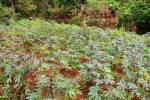
There was a glut of sensory detail so the smells and sounds be-damned; the pictures will have to do. Note, however, that the cicadas were in full force, and that there was an incessantly barking dog (named Tiger); and that the cows bellowed, not so much in ‘moos’ but in rounder ‘mows;’ and that the busker (the man pictured below) and his little sister sang out of tune and without rhythm; and that the tapioca and cardamom and jack fruit and pepper go on for acre after acre; and that Prince continuously warned us to be careful while walking on the slippery dirt road (‘slowly, slowly’) always in the same cadence and tone, the ‘oh’ in ‘slow’ every-so-slightly drawn out and the first ‘l’ slightly rolled. None of this the pictures can say. Nor can they quite capture what it’s like to be in a cardamom field where the stalks have grown ten feet high (like being in a cardamom fantasy-jungle), nor how steep is the hill that Prince and his family climb everyday after getting off the bus. And of course, what perhaps gave me the greatest pleasure: Prince’s brothers are named Rince and Rinso. That is, they are together Prince, Rince, and Rinso. You just can’t make that up.

Fruit Hunters

There’s a particular fruit stall that I frequent on Thevera Road. Its wares almost literally spill out onto the street, with filled bins overflowing the boundaries of the shop interior, fruit stacked high on shelves going up the ceiling on both walls of the narrow space. The back of the shop has a few tables where people can purchase fruit drinks, but I think the majority of their sales are of the fruit themselves.

There always seems to be something new, depending on the season (or week within the season). One day I entered to find a table overflowing with small, reddish purple plums. I’d never seen what I would call “stone fruit” in India before, so I excitedly pulled out one of my cloth bags and started picking through the pile for the ripest looking specimens. When I see plums it reminds me of living in Europe—where I used the multiple varieties in my version of the classic Tarte Tatin. Before living in Paris I actually had no idea there were so many types of plums, but as summer progressed new varieties would arrive at the Marché, each with more melodic names than the last: Reine Claude, Mirabelle, Belle de Louvain… and with each addition I would remake the tarte, and the family would pronounce that each one was the “perfect” plum for the recipe, eaten of course with a spoon of crème fraîche and the guilty expression of one caught licking the plate upon completion.

Here in India I brought the bag of plums home Continue reading

Moments of Peace

We will have more to say about cars in India.  Michael made brief mention here, but the environmental questions of an emerging middle class in countries as populous as India, most of whom see cars as a definition of progress and success (thank you Mr. Ford and Engine Charlie!), are blog-cloggingly numerous.  So we will tread only occasionally into this terrain.  And when we do say more, we will focus primarily on one form of treachery: the horn and its contribution to noise pollution.  Reading Mr. Egan’s account of a unusual moment of mass inspiration in an erstwhile car-struck city reminds us of our need to elaborate on our own plans for inspiring tranquility in the land of please-honk…

What They Do Not Teach You At Cornell Hotel School

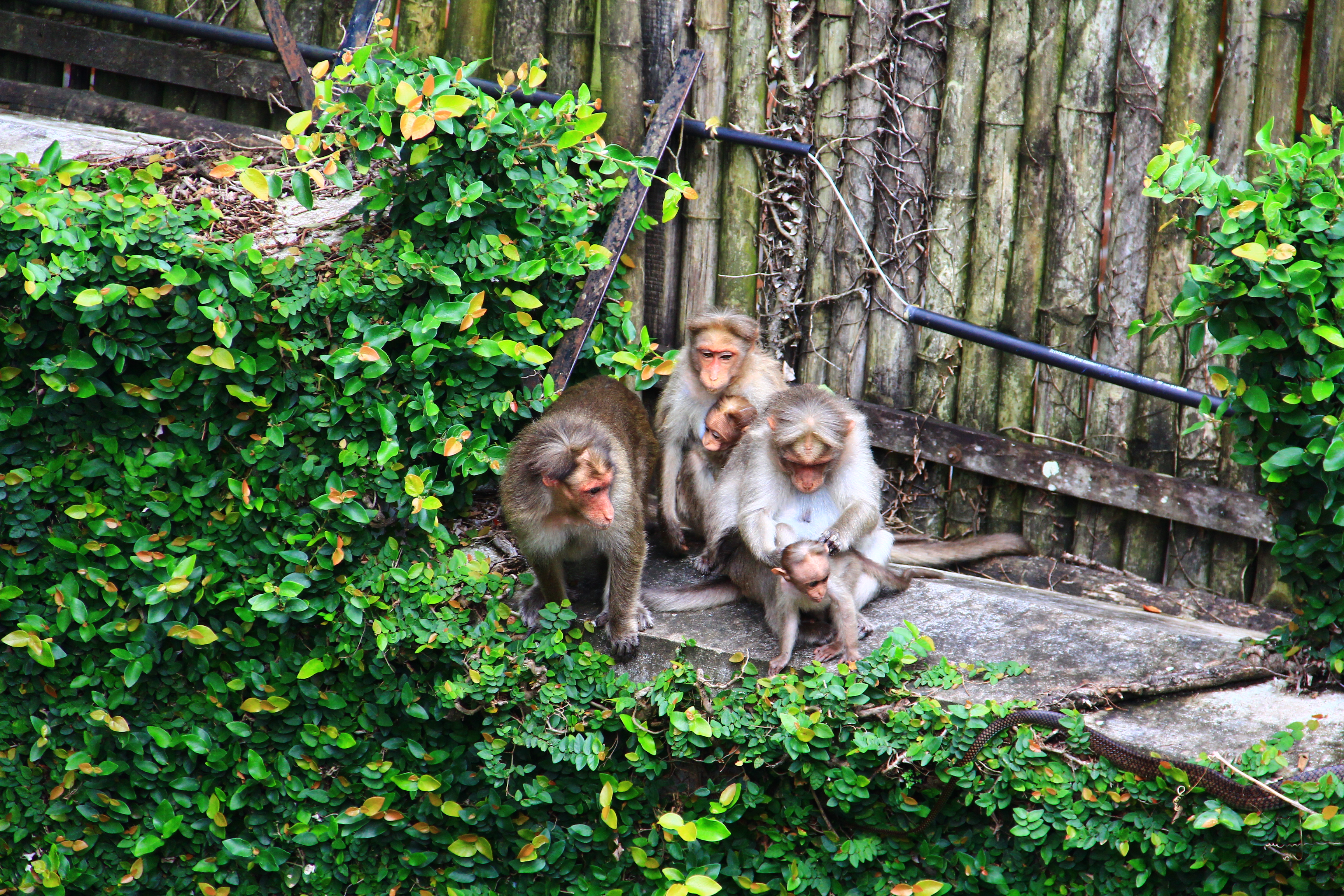
A couple of days ago, Michael wrote the post “Monkey Business…”.  The post illustrated my surprise seeing 20-ish monkeys, which to Michael was not an unusual event. Over the last week I too realized that a sudden appearance of the Macaque was just a part of daily life here.  However, I definitely enjoyed my first encounter of a Macaque family outing. I hope you enjoyed as well.

As I was enjoying the post by Michael, something in the second picture caught my attention after a while. In case like me you did not notice it in Michael’s post, it seems like the Macaques are observing something on the lower right.  If you click the picture you will see a larger view.

Did you see the dark ribbon (or it may look to you like a leather belt, if you read Seth’s post on a similar topic)?   Continue reading

Ayurveda v. Allopathy

A quick word before my note on this weekend’s three-day perambulation through tiger territory:

From this morning’s Hindu

Personalised Ayurvedic interventions have demonstrated clinically significant improvement in rheumatoid arthritis on a par with allopathy treatment with the added advantage of lesser side-effects, according to a study…

“We cannot make any tall claims with the results since it was a pilot study and the sample size was small. However, the study got a major stimulus when Dr. Edzard Ernst, the first professor of complementary medicine, called it a blueprint for research in Ayurveda,” Dr. Ram Manohar told The Hindu over telephone…

While the study was specific to rheumatoid arthritis, it also looked into whether complex Ayurvedic interventions could be studied in a clinical trial. The double-dummy, double-blind randomised clinical study has clearly shown the feasibility of further studies of this kind.

I haven’t mentioned in previous posts (though Gourvjit has) that Cardamom County Resort houses an Ayurvedic center, nor have I spent time detailing the history of this local art of healing and wellness. I ought to have, however, because this ‘alternative medicine’ is a conspicuous presence in Kerala, and is one reason many travelers are compelled to come here. Although this study doesn’t prove Ayurveda’s general validity from a scientific perspective, it is a first step in bridging the acceptance-gap between allopathic, Western medicine and this traditional, holistic approach.

Take a look at the article, and look out for future studies on Ayurveda’s efficacy!

The Fundamental Question

It’s something I ask myself every day. I wake up, untangle myself from my bedding, and ask…Why on earth am I here on this planet? I reassure myself with some grounding answers, and once I get a glimpse of the world outside my window I answer like this…

Sustainability is my passion. Sustainable societies. Sustainable economies. Sustainable environments. Got the idea? Basically, my goals focus on sustainable lifestyle for sustainable futures. To achieve this, I not only try practicing an enduring lifestyle, but I also live to promote the conservation efforts of others around the word.

Having been raised in a developed country where varieties of information seem endless, it excites me when less informative, developing countries make strides towards conservation.  Here, I will share my excitement as I discover more about global conservation initiatives, and, in turn, hopefully my accounts will inspire citizens of all originations to join these efforts to conserve and protect the beauty this planet and its inhabitants have to offer.

An Introduction

Before I post again about things of substance, I wanted to take a moment to introduce myself to our readership, to share my interests and goals, and to spell out more clearly the reason to the madness of my earlier posts. If I’m not mistaken, my fellow contributors will be doing the same over the next few days.

I am, nominally, Michael Muller. In the fall, I’ll be a senior at Amherst College, where I study, among other liberal arts ‘disciplines,’ Political Science, in particular political theory and the history of political thought. I have a peculiar fascination with how different groups’ and individuals’ concepts and philosophies affect and create attitudes, and how these attitudes influence action. If this all sounds highfalutin or like pseduo-psychology, you’re on the right track.

Self-deprecation aside, however, I also have a passion for interpreting and, if possible, correcting injustice. Thanks in large part to my upbringing, I tend to identify with the cause of protecting the less-protected, whether it’s a social group, eco-system or idea. Of course this tendency is all well and good in theory, but its tendance requires greater sedulity in practice. When Crist offered me the opportunity to come work and write for Raxa Collective this summer, to identify problems with and solutions for conservation initiatives in Kerala, I immediately snagged the opportunity, understanding it not only as one that would allow me to effect change, but also one that would test, probe, relax and strengthen my still-developing convictions.

In my posts over the next four weeks, besides providing personal insight into the wonders of the Periyar, Kumily, etc., I hope also to problematize and contextualize my own experiences, to illuminate some of the complexities inherent to preservation and conservation in a rapidly developing nation (and world), and offer possibilities for readers and travelers to get involved in the conversation.

With that in mind, I will try to offer non-political entry points into political questions, while not neglecting or forgetting the reason I’m here, or, for that matter, why anyone from outside Kerala would come here: the impossible rarity of its natural and cultural riches.

Thanks for reading, and I look forward to comments. Let’s have a conservation conversation*!

*Sorry.