Peru’s Rendering Of The Best Idea

20SCI-AMAZON1-jumbo

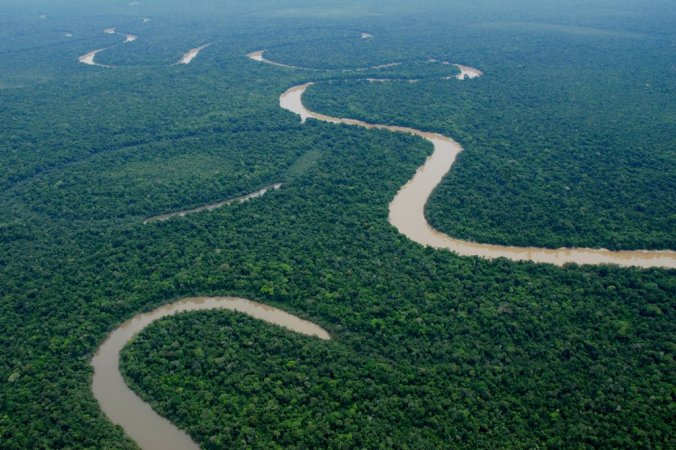
The Yaguas River of the Yaguas National Park in Peru, one of the Western Hemisphere’s newest national parks. Credit Álvaro del Campo/The Field Museum

Rules Of Experiencing Nature, Reconsidered

tnc_76472733_preview_cropped

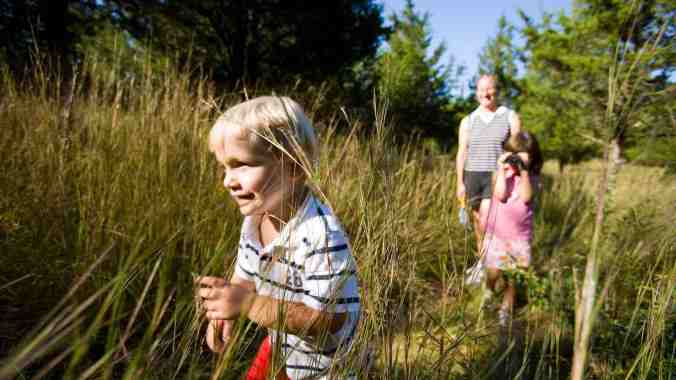
A woman and her young children hike through a grassy field in Pleasant Valley Preserve near the Eightmile River in Lyme, Connecticut. Photo © Jerry Monkman

Just when we thought we knew what we were doing out in nature, this:

Why Staying on the Trail Is Bad for Nature

Stay on the trail. Look, don’t touch. Take only photographs, leave only footprints.

These and similar rules have become a standard component of a refined environmental ethic; any reasonable outdoor education class is going to emphasize them.

I have a confession to make: As a kid I violated every one of those rules, frequently and without guilt. It made me a conservationist. Continue reading

The Idea Gets Greater, In Chile

webTHOMPKINSmap-460

Protecting More Wilderness
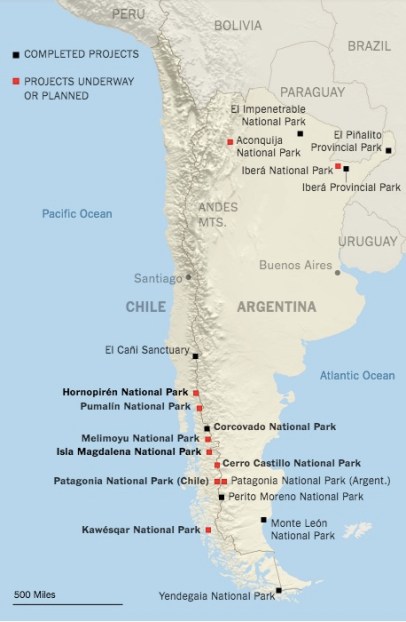
Map shows the scope of Tompkins Conservation park projects in Chile and Argentina. Eight Chilean parks, shown in boldface, comprise the latest expansion of wilderness areas, an area roughly twice the size of Massachusetts. Source: Tompkins Conservation. By The New York Times

When the news was first reported, just the facts were enough. Then yesterday we had some commentary that made us think more on how important this news really was, from a global perspective. Now, the story behind the facts, and this op-ed by Kristine McDivitt Tompkins echoes the greatest idea:

We need a new story about the Earth that isn’t just a litany of alarming statistics about crashing wildlife populations, polluted air and water, and climate chaos. We need a story that reminds us that the continuing degradation of landscapes and the seas is not necessarily a one-way street toward irreversible destruction.

On Monday we began to write such a story with the government of Chile. Under the wide skies of the new Patagonia National Park, President Michelle Bachelet and I formalized the largest-ever expansion of a national park system prompted by a donation of private land. Continue reading

The Greatest Idea, In Peril

5700

America’s public lands belong to all of us. We owe it to ourselves to save them

A truly noble idea – one deeply democratic in its inspiration and one that honors the human need to be in relationship to awe and majesty.

America’s public lands.

This idea was seeded by early American settlers, who came here to escape a class system in Europe that excluded them from land – owning it, hunting on it, surviving on it. Conservation was articulated as a national endeavor by hunters and foresters with the unique discernment that our game and timber resources were not boundless, and required professional management to remain bountiful.

This was a hard-won national ethos. From the pitch battles for their existence, our public lands were imbued with moral standing and national sanction: the idea that they “belong” to all of us. Continue reading

10 Million Acres Added to Chile’s Parks

I don’t normally expect to get my daily news from Instagram, unless it’s an update from a personal friend. I follow the company Patagonia because they feature beautiful photos like those above, but yesterday they shared this fantastic announcement. Visiting Patagonia about a decade ago was an amazing experience that I hope to repeat before too long, and I am thrilled that there will be some new national parks to visit. Jonathan Franklin reports for The Guardian:

McDivitt Tompkins, the former chief executive of the outdoors company Patagonia, handed over 1m acres to help create the new parks. The Chilean government provided the rest in federally controlled land.

McDivitt Tompkins has spent 25 years working on land conservation in Chile with her late husband Doug, who founded North Face and Esprit. Doug Tompkins died in a kayaking accident in Chile in 2015.

“This is not just an unprecedented act of preservation,” said [Chile’s President Michelle] Bachelet, who flew to this remote Patagonian valley on Monday to receive the donation. “It is an invitation to imagine other forms to use our land. To use natural resources in a way that does not destroy them. To have sustainable development – the only profitable economic development in the long term.”

Continue reading
Lionfish Management, Practitioner Exchange

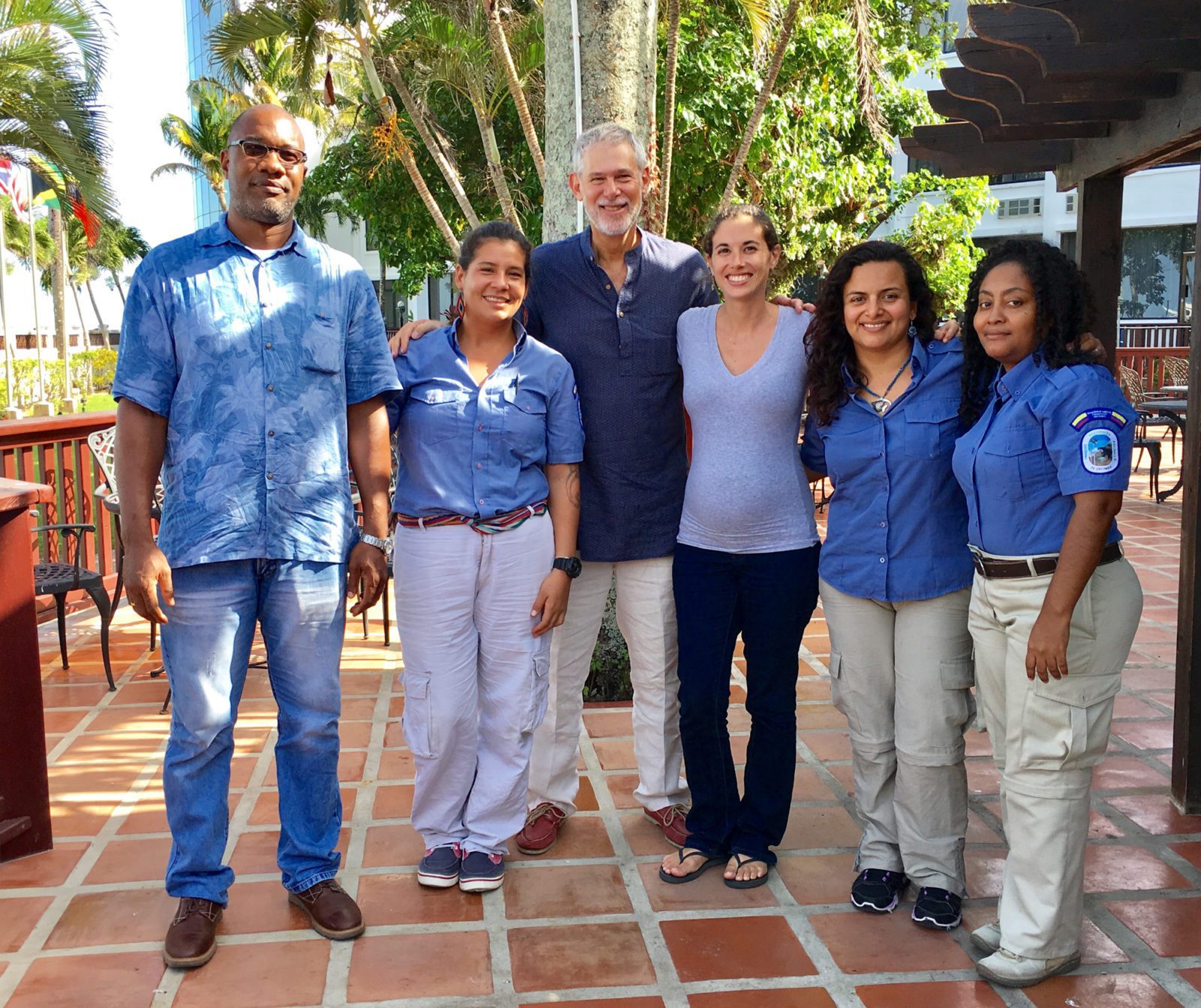
The four Colombian exchange delegates with Phil Karp and Jen Chapman, Blue Ventures’ Country Coordinator in Belize.

As in other fields of capacity building for development there is a growing recognition within the marine conservation community of the power of practitioner–practitioner exchange. Whether they take the form of ‘barefoot’ exchanges between fishers, or more formal exchanges involving Marina Protected Area (MPA) managers and policymakers, such exchanges are emerging as an extremely effective way of sharing, replicating, adapting and scaling up successful solutions to the challenges of marine protection and avoiding repetition of unsuccessful approaches. Practitioner exchanges are particularly effective for sharing ‘how to’ or tacit knowledge about solutions, as such tips and tricks tend not be fully recorded in written descriptions or case studies.

Practitioner exchange as a form of capacity building represents a departure from more traditional approaches such as technical assistance or deployment of expert advisors. In the latter case, external experts are relied on to share successful solutions with which they are familiar only through research, and may therefore lack a complete understanding of the full range of factors and potential pitfalls that could influence the successful implementation of an approach elsewhere.

Read more about Blue Ventures sharing the temporary fisheries closure model through community exchange.

Blue Ventures has been very active in practitioner exchanges for some time, focused on sharing its pioneering work on the use of periodic, short-term fishery closures as an effective solution to balancing species conservation and livelihoods.  Continue reading

Understanding Oregon Rancher Culture’s Concerns

21mag-oregon2-jumbo-v2

If, like those of us who contribute to this platform, you had been following the standoff mentioned in this article, and following the Bundys as a sidenote, this article is worth a read. The author Jennifer Percy gives full voice, as far as we can tell, to the concerns of the people from that region and specifically their opposition to all aspects of the federal government other than the military. The last three paragraphs of the article are particularly chilling but getting there is a worthy journey:

21mag-21oregon-t_CA1-superJumbo

The landscape of eastern Oregon has little in common with the state’s Pacific Coast. Credit Peter van Agtmael/Magnum, for The New York Times

I took the eastern route from Idaho, on a day of freezing rain, over the Strawberry Mountains, into the broad John Day River Basin, in Oregon. I was used to empty places. Most of my childhood was spent in this region of eastern Oregon, in remote areas of the sagebrush desert or in the volcanic mountains with their jagged peaks and old-growth forests. My family moved away just before I entered high school, and I never returned; I’ve felt in romantic exile ever since. This part of America that had once belonged to my childhood became the spotlight of national news in the winter of 2016, when the Malheur National Wildlife Refuge — an old childhood haunt — became the scene of a cowboy takeover. The takeover began as a protest in the town of Burns after two ranchers were sentenced to prison for arsons on federal land. The ranchers, Dwight and Steven Hammond, caught the attention of the Nevada rancher Ammon Bundy, who thought the punishment unfair. Bundy and a crowd of nearly 300 marchers paraded through Burns, and a splinter group eventually took over the Malheur headquarters. For 41 days, they refused to leave, protesting federal ownership of public lands, which they considered unlawful and abusive. I didn’t understand what had happened since I left, why so many people seemed so disillusioned and angry.

21mag-21oregon-t_CA0-superJumbo.jpg

Joe Cronin on his ranch in the Malheur National Forest, in October. Credit Peter van Agtmael/Magnum, for The New York Times

The ground was snow-covered when I visited John Day last winter and the temperature below freezing. I was there to attend a meeting organized by Jeanette Finicum, the widow of LaVoy Finicum, an Arizona rancher who was shot and killed by government agents a year earlier. LaVoy was a leader of the Malheur occupation. He left the refuge for a speaking engagement in John Day with plans to return, but he was shot three times at an F.B.I. roadblock. For that reason, his widow was calling this event “The Meeting That NEVER Happened.” Continue reading

Coy-Wolf Co-Habitation

00coyote3-blog427

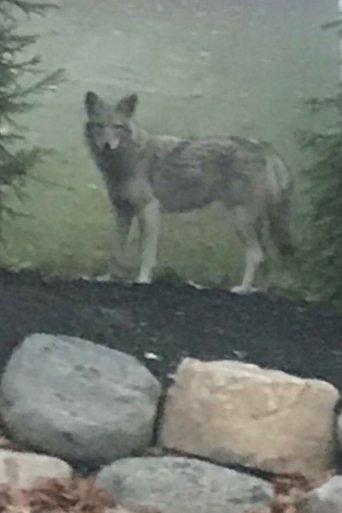
The Clarkstown Police Department posted a photograph of what they called a coywolf on Facebook last month. Credit via Clarkstown Police Department

Thanks to the New York Times for the local story follow-up to yesterday’s Yale360 globally-generalizable item on a related theme (click here or on the image to the right to go to the source):

CONGERS, N.Y. — Of all the coyotes that roam Dr. Davies Farm, looking for prey on this apple-picking orchard less than an hour from New York City, manager James Higgins says one of the pack stands out: Bigger and with more gray fur than its mates, this wolflike canine is a reason, Mr. Higgins says, there are fewer deer nibbling at Dr. Davies’s stock.

“We love having him here,” Mr. Higgins said as he drove around the property on an ad hoc coyote safari. There were no sightings, but Mr. Higgins ventured a profile of the creature: aloof, calm, uninterested in people.

“Anytime he sees any kind of human activity, he bolts,” Mr. Higgins said. “As long as he stays in his space and we stay in ours, everyone works in harmony.” Continue reading

Half-Earth Is Not Happening, But Co-Habitation Is


luisa-rivera-yale-e360_web

LUISA RIVERA / YALE E360

Thanks to Richard Conniff, whose articles about the intersection between humans and other species, and about how our museums shape our views we have shared from various sources, including this recent one from Yale360:

Habitat on the Edges: Making Room for Wildlife in an Urbanized World

Efforts to protect biodiversity are now focusing less on preserving pristine areas and more on finding room for wildlife on the margins of human development. As urban areas keep expanding, it is increasingly the only way to allow species to survive.

FemaleMountainLion_VerdugosMountainsGlendaleLA_NPS_web2

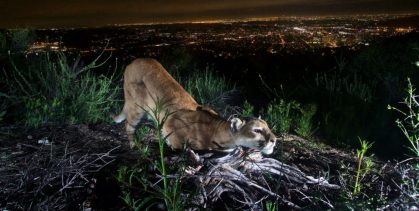
A female mountain lion in the Verdugos Mountains, north of Los Angeles. Also known as cougars, these animals are an increasingly common sight in the mountains surrounding Southern California’s cities. NATIONAL PARK SERVICE

One morning not long ago, in the southern Indian state of Karnataka, I traveled with a Wildlife Conservation Society biologist on a switchback route up and over the high ridge of the Western Ghats. Our itinerary loosely followed the corridor connecting Bhadra Tiger Reserve with Kudremakh National Park 30 miles to the south. Continue reading
Undoing Dams, Animals Pitch In

ap_498416275898

Since 2014, Washington’s Elwha River has flowed freely through what once was Lake Mills and the Glines Canyon Dam. But the site still leaves a barren scar in Olympic National Park. Now, a human- and bird-led effort is turning it green again. Photo: Elaine Thompson/AP

Conservation is sometimes in the hands of animals, as this story in the current Audubon magazine illustrates:

Birds Are Helping to Plant an Entire Lost Landscape in Olympic National Park

After the largest dam removal in U.S. history, scientists, Native Americans, and wild animals are working together to restore the heart of the Elwha.

ap_081210040812

The Elwha Valley and Glines Canyon Dam prior to demolition. Photo: Elaine Thompson/AP

It’s a scorching August day in the Elwha Valley, and it only feels bleaker as we peer into the 200-foot void of Glines Canyon Dam. A sputtering trail of water marks the concrete lip where, for nearly a century, two hulking braces trapped logs, rocks, and sediments as they washed down from the mountains of northern Washington, forming a reservoir that was six times deeper than a competition-diving pool. At its height, the dam churned out 13.3 megawatts of hydroelectricity, enough to power 14,000 homes and a local paper mill. But it also seriously altered the Elwha River’s ecology, along with that of surrounding Olympic National Park. Endangered chinook salmon were cut off from their spawning sites; fish-eating birds and otters suffered; and estuaries became more brackish and shallow. Finally, in 1992, the U.S. government issued the order to destroy Glines Canyon Dam and the nearby Elwha Dam. Yet it wasn’t until two decades later when the water was completely freed. Continue reading
Will Divestment Be The Best News Of 2017?

McKibben-Fossil-Fuel-Divestment

Time and again, the petroleum industry has used its political might to stymie global action on climate change. Now cities and states have become the new battleground. Photograph by Robert Nickelsberg / Getty

Some things we lose slowly, which seems better than losing them quicker; other things we gain too slowly:

The Movement to Divest from Fossil Fuels Gains Momentum

Tuesday should have been a day of unmitigated joy for America’s oil and gas executives. The new G.O.P. tax bill treats their companies with great tenderness, reducing even further their federal tax burden.

Kolbert-Tax-Bill-National-Wildlife-Refuge

Part of the Arctic National Wildlife Refuge, known as the 10-02 area, serves as the summer breeding ground for two hundred thousand caribou. Photograph by The Asahi Shimbun via Getty

And the bill gave them something else they’ve sought for decades: permission to go a-drilling in the Arctic National Wildlife Refuge. But, around four in the afternoon, something utterly unexpected began to happen. A news release went out from Governor Andrew Cuomo’s office, saying that New York was going to divest its vast pension-fund investments in fossil fuels. The state, Cuomo said, would be “ceasing all new investments in entities with significant fossil-fuel-related activities,” and he would set up a committee with Thomas DiNapoli, the state comptroller, to figure out how to “decarbonize” the existing portfolio. Continue reading

Rewilding Minelands

Flatwoods_WFA_2.10.17-26_web

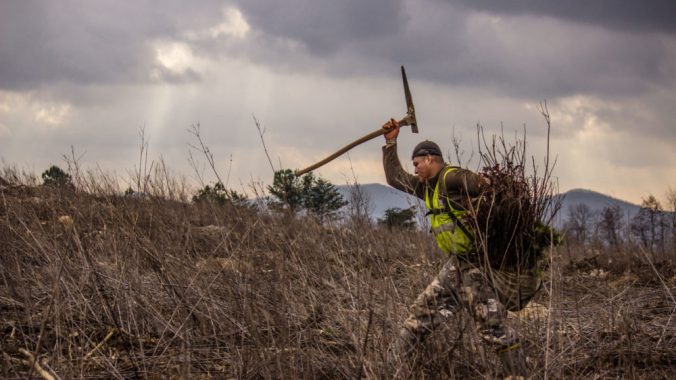
A contractor for Green Forests Work plants native hardwood and evergreen seedlings on a reclaimed mine site in Dorton, Kentucky. GREEN FORESTS WORK

Thanks to Yale 360 for this story about Green Forests Work, in a part of North America that is often considered lost, from an ecological perspective:

Reclaiming Appalachia: A Push to Bring Back Native Forests to Coal Country

Previous efforts to restore former coal mine sites in Appalachia have left behind vast swaths of unproductive land. Now, a group of nonprofits and scientists are working to restore native trees to the region — even if it means starting the reclamation process from scratch.

5.5.17_Monongahela-36_web

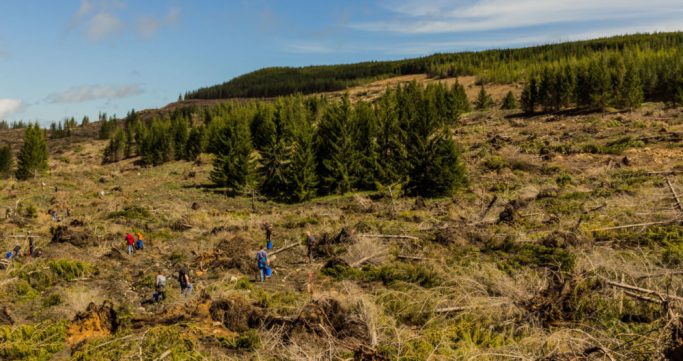
Volunteers fan out over a recently bulldozed plot on Cheat Mountain to plant red spruce and other native seedlings. GREEN FORESTS WORK

Near the top of Cheat Mountain in West Virginia, bulldozer operator Bill Moore gazes down a steep slope littered with toppled conifers. Tangled roots and angled boulders protrude from the slate-colored soil, and the earth is crisscrossed with deep gouges.

“Anywhere else I’ve ever worked,” Moore says, “if I did what I did here, I’d be fired.” Continue reading
Victory Favoring Earth, We Hope

Lisa Friedman appears twice on today’s landing page of the newspaper she works for, once as co-host on a video, below, about Alaska; and again as host of an equally important story in the form of an interview, also captured on this video titled Jerry Brown on How to Fix Global Warming.

JBrown

How can policymakers fight climate change in the face of political headwinds? Gov. Jerry Brown of California addresses that question at ClimateTECH, a conference from The New York Times, in a conversation with Thomas L. Friedman. By THE NEW YORK TIMES on Publish DateNovember 29, 2017. Photo by Friedemann Vogel/European Pressphoto Agency.  Watch in Times Video »

Rewilding Europe, Alive & Well


RewildBear

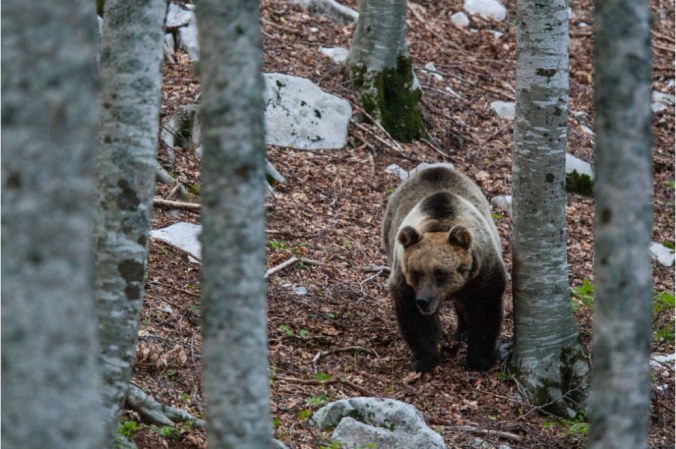
Salviamo L’Orso is committed to conserving the critically endangered Marsican brown bear (pictured here in its central Apennines habitat), and has already won many grants for its grassroots projects. Bruno D’Amicis / Rewilding Europe

It has been some time since we regularly featured news on the topic of rewilding. This announcement is as good a reason as any to revisit rewilding:

A Salviamo l’Orso project titled “Let’s take action for the Bear” was approved for funding by members of EOCA in early November, together with four other proposals from around the world.

With only 50 to 60 individuals remaining, all living in a relatively small area of the Central Apennines, the endemic Marsican brown bear (Ursus arctos marsicanus) is today critically endangered. The Salviamo l’Orso project, which comprises four conservation activities, will enhance the habitat of these magnificent animals and hopefully help them to expand their home range. Continue reading
Nature’s Silence Is Golden

rainforest-slide-S9Y8-jumbo

Yesterday’s post, linking to an article from the same source, combines with this one to confirm that some venerable members of the “mainstream media” see an audience (us, for example) for green-leaning reporting. Then we found this, about a remarkable Norwegian silence-hunter who has gone to the ends of the earth; and now finds himself in the East Village of New York City. Instead of featuring that story, this one below is must-read on the topic of quietude:

Lessons in Stillness From One of the Quietest Places on Earth

In the wilderness of Washington State’s Hoh Rain Forest, a poet searches for the rare peace that true silence can offer.

THE OLYMPIC NATIONAL PARK stretches down coastal Washington and east toward Seattle on a thumb of land known as the Olympic Peninsula, some 60 miles long by 90 miles wide. Around a three-hour ride by car from Seattle, it feels much farther, as if you have passed into an otherworldly realm. Within it are volcanic beaches scattered with the remains of massive Sitka spruces, evergreen-crowded mountains, broad, flat valleys and the Hoh Rain Forest, through which 12 miles of hiking trails and the glacier-formed Hoh River run. The Park, in total nearly a million acres, is home to what may be the most complex ecosystem in the United States, teeming with big-leaf maples, lichens, alders, liverworts, Monkey flowers, licorice ferns, club mosses, herbs, grasses and shrubs of remarkable abundance. Today, thanks to federal protections, it is home to some of the largest remaining stands of old-growth forest in the continental U.S. Continue reading
The Business of Arctic Anti-Stewardship

SCE034-00038_hr.JPG

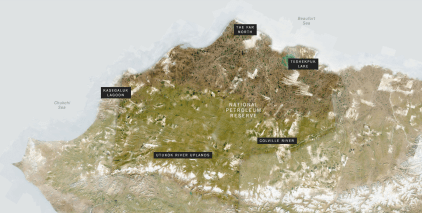
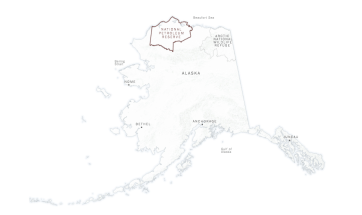
The upper Colville River and headwaters on Alaska’s North Slope | Joel Sartore

Screen Shot 2017-11-11 at 8.40.28 AMThanks to Christopher Solomon, contributing editor at Outside magazine, for this important story published in the New York Times. The interactive element highlighting each ecosystem, followed by migration visuals drive home the extremity and unprecedented nature of the policies that the federal government of the United States of America is now promoting.

America’s Wildest Place Is Open for Business

Screen Shot 2017-11-11 at 8.42.01 AMSeveral years ago a mapping expert pinpointed the most remote place in the Lower 48 states. The spot was in the southeast corner of Yellowstone National Park, 20 miles from the nearest road. Roman Dial read the news and wasn’t much impressed. To him, 20 miles — the distance a hungry man could walk in a long day — didn’t seem very remote at all.

Mr. Dial is a professor of biology and mathematics at Alaska Pacific University in Anchorage, and a National Geographic explorer. He decided to figure out the most remote place in the entire nation. His calculations led him to the northwest corner of Alaska, where the continent tilts toward the Arctic Ocean. The spot lay on the Ipnavik River on the North Slope, 119 miles west of the Haul Road (otherwise known as the Dalton Highway), which brings supplies and roughnecks to the oil fields at Prudhoe Bay. Continue reading

Speaking for the Trees

‘Hope, courage and anger’: The Indigenous Guardians of the Forest caravan to Bonn, in front of the French National Assembly in Paris last week. Photograph: Jonathan Watts for the Guardian

Thanks once again to the Guardian for sharing these stories from the front line.

‘For us, the land is sacred’: on the road with the defenders of the world’s forests

Of the many thousands of participants at the Bonn climate conference which begins on 6 November, there will arguably be none who come with as much hope, courage and anger as the busload of indigenous leaders who have been criss-crossing Europe over the past two weeks, on their way to the former German capital.

The 20 activists on the tour represent forest communities that have been marginalised over centuries but are now increasingly recognised as important actors against climate change through their protection of carbon sinks.

In the run-up to the United Nations talks, they have been visiting the UK, France, Belgium, the Netherlands and Germany, talking to city leaders, environment NGOs and youth groups. Their aim is to build support for their role as forest defenders – a role that frequently puts them odds with agribusiness, mining companies and public security. The Observer caught up with them on the road to Paris.

“We have been looking after the forest for thousands of years. We know how to protect them,” said Candida Dereck Jackson, vice president of the National Indigenous Alliance in Honduras, as she outlined the principal demands of the group: respect for land rights, recognition of crimes against the environment, direct negotiations over forest protection, decriminalisation of indigenous activists, and free, prior and informed consent before any development by outsiders. Continue reading

Keep National Parks Safe, Know Your Chocolate

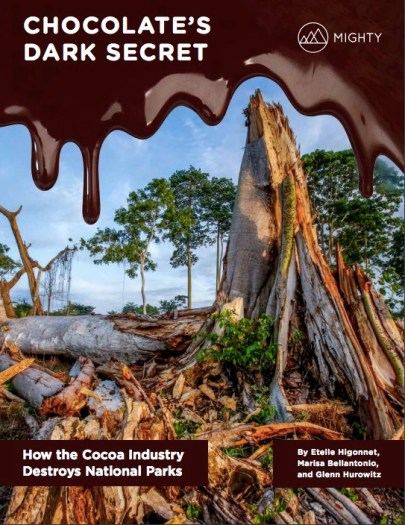
Choc.jpgI am now learning more about cacao, and its end use, the sweet we all adore. The rise in artisanal cacao farming, as we have noted on occasion, can have important implications for conservation. Whether you are a chocoholic or just a casual dabbler in the sweet bi-product of cacao, this report deserves your attention (click on the image to go to the source):

Chocolate is everywhere. It is the afternoon pick-me-up, the sensual indulgence, the accoutrement to seduction. Lovers gift truffles, skiers sip on rich hot chocolate, and connoisseurs savor the tiniest, richest bite of single origin dark chocolate. The ancient Aztecs believed that chocolate was an aphrodisiac, and the emperor Montezuma was reported to gorge himself on chocolate in advance of his trysts. Continue reading

Fall Migration

IMG_2292-for-web-1260x708

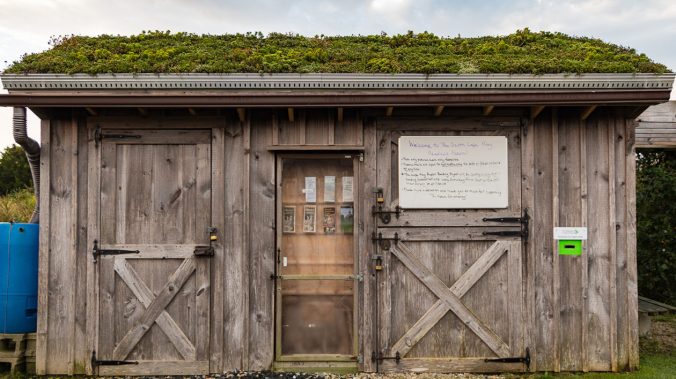
Green roof on the entrance building at TNC’s South Cape May Meadows Preserve. (Cape May, New Jersey) Sep 2017 © The Nature Conservancy/Cara Byington

Thanks to Cool Green Science for this story from a migratory birding hotspot:

Give Me Shelter

BY CARA BYINGTON

I’m climbing a somewhat rickety ladder when it occurs to me (not for the first time) that I really shouldn’t be doing this.

It’s September. Fall migration is getting underway. And I am in the very heart of one of birding’s holiest of high holy places: Cape May, New Jersey, that small curve of land between the Atlantic Ocean and the Delaware Bay where millions of birds spend at least some part of their lives, year over year, season over season. Continue reading

The Conservation Model Of Martha’s Vineyard

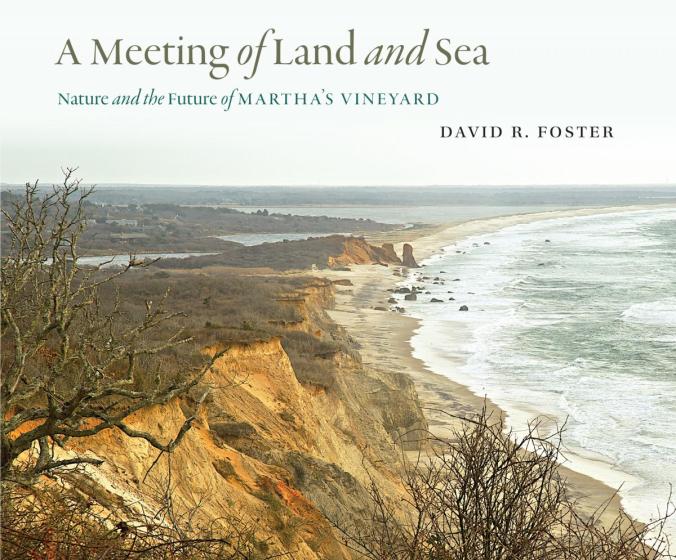
YUP FOSTER MV COVER.jpg

Whether or not you have been to Martha’s Vineyard, if you have been through our pages at all you will understand how this excerpt from the above book captures our attention and why we are interesting in tracking it down for a closer look:

The Vineyard landscape is distinct in many ways — most notably in land values, pace of development toward full build-out, the assemblages of plants and animals, and past success in land protection — but it typifies many qualities of Massachusetts and the greater New England region, including their conservation challenges. They share the history of agricultural and woodlot land use, the ongoing growth of their forests, the tension among farmed, open, and wooded lands, the relentless sprawl of development, the fragmentation of the land by many small, private landownerships, and the looming threats from climate change, sea level rise, insect outbreaks, and other stresses. Nevertheless, the Vineyard has put itself into a particularly strong position to address the looming challenges due to its expansive breadth of conserved lands, its forward-looking and Island-wide planning efforts and knowledge base about the landscape, and the capacity for ongoing land protection and stewardship. Continue reading