Paraguay’s Chaco Region

1-f_LUdJ744pFNFjVrM-NZXg

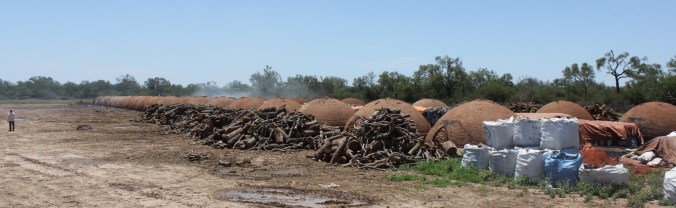
Bricapar charcoal facility at Teniente Ochoa ©Earthsight

The picture above, and the picture below, will suffice if you do not have the half hour required to read the details. Earthsight is a non-profit organization that uses in-depth investigations to expose environmental and social crime, injustice and the links to global consumption. One such investigation provides these images, and it is worth a read, especially if you are in Europe and you use charcoal for barbecue. Thanks to the folks in the Guardian’s Environment team for bringing the report and its consequences to our attention.

1-p3wv9-kVWxSHsitTi2BTEw

Figure 1: Jaguar photographed in the Gran Chaco forest ©Hugo Santa Cruz & Fundación Yaguareté

Choice Cuts

How European & US BBQs are fuelled by a hidden deforestation crisis in South America

Summary

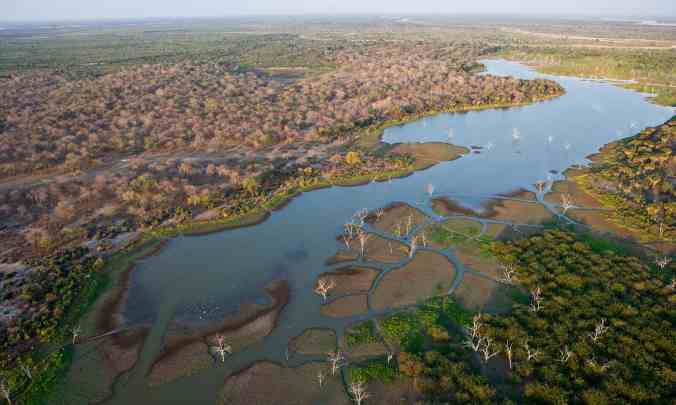
On a vast, hot plateau in Paraguay, in the centre of South America, lies a little-known environmental crisis, and a dirty secret that can be traced to the supermarkets of Europe.

The dry tropical forests of the Chaco are being destroyed faster than any other forests on earth. The trees felled as a result of the advance of industrial agriculture into pristine wilderness are being turned into charcoal to feed demand in Europe.

Described by David Attenborough as “one of the last great wilderness areas in the world”,[1] the Chaco is home to a plethora of precious wildlife and one of the world’s last tribes living in voluntary isolation, the Ayoreo. Continue reading
Habitat Conservation via Travel Choices

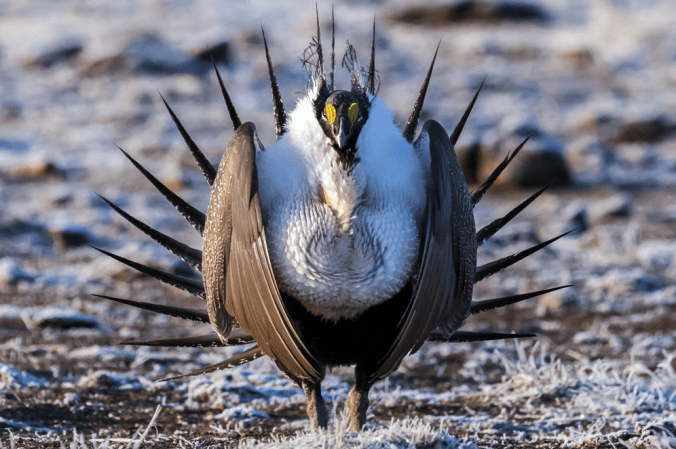
The greater sage grouse is a favorite among birders. Credit Rick McEwan


As protected areas and wildlife come under threat through lessening of restrictions on invasive oil and gas exploration, the importance of proving the economic value of conservation tourism become more and more evident.

Birders and Naturalists Ponder the Fate of the Greater Sage Grouse

Evan Obercian says it is the highlight of his Colorado birding tours every spring, even though he has to wake his clients up before 5 a.m. to be in the sagebrush flats before the sun comes up. And there they wait in Mr. Obercian’s van, listening to strange whoops and popping sounds that float magically from the predawn darkness.

The first rays of a new day’s sun reveal what is making the noise: large brown birds more than twice the size of a barnyard chicken, strutting and shaking while thrusting bulbous yellow air sacs out of their chests, and fanning a fantastic spread of pointy tail feathers. The bird is the greater sage grouse, and the sight is their spring mating ritual on their dancing grounds, called leks.

“It’s profoundly moving for me, and my clients,” said Mr. Obercian, “watching this ancient nuptial dance that’s been performed since way before there were any people on this land. It’s something way beyond just checking another bird off a list.”

The van acts like a blind, so the sage grouse do not notice that people are nearby, watching. Sometimes the grouse will dance right up to the tires. Birders are under strict orders not to get out, because as Mr. Obercian says, sage grouse “are very sensitive.” Continue reading

Forest Pathways For Species Survival

22CORRIDORS2-master675

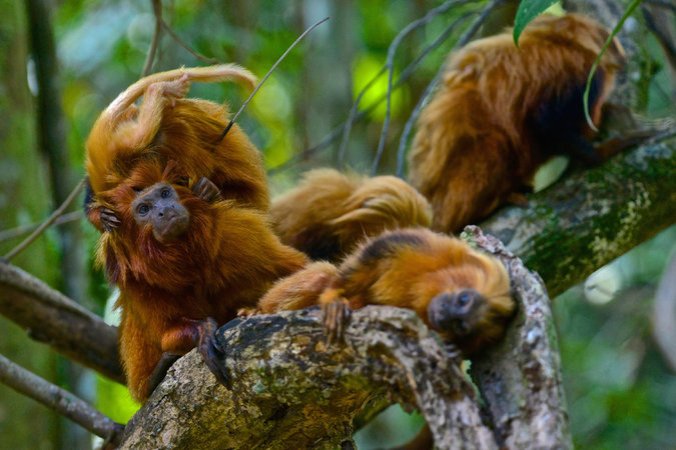
The golden lion tamarin has been observed passing through some of these corridors, an encouraging early sign for researchers. Credit Kike Calvo, via Associated Press

Thanks to Brad Plumer and the commitment of the New York Times to continue covering the complex topic of climate change in interesting, and sometimes hopeful ways:

Stitching Together Forests Can Help Save Species, Study Finds

In the 1980s, an ecologist named Thomas Lovejoy conducted an unusual experiment in Brazil’s Amazon rain forest. As loggers moved in with chain saws to clear trees for cattle pasture north of Manaus, he asked them to leave untouched several small “islands” of forest to see how the animals within them fared.

The results were unsettling. Continue reading

Farming Fish For The Whole World

nets-1_wide-01c3b5ebd0d717bd50433e402fd75dc5e35d6f44-s1300-c85

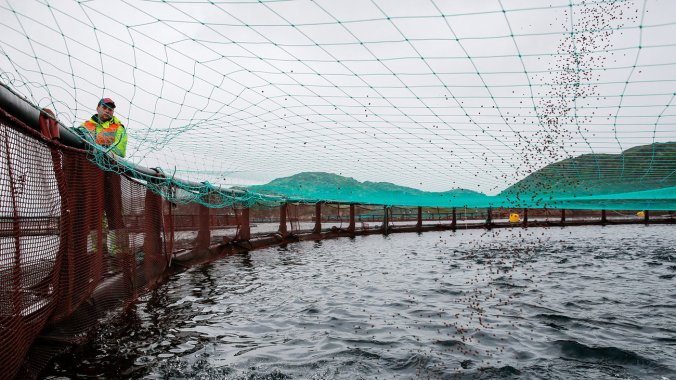
A Russian fish farming operation in Ura Bay in the Barents Sea.
Maxim Zmeyev/AFP/Getty Images

Thanks to Alastair Bland and the folks at the salt at National Public Radio (USA) for this look at the prospects for aquaculture on a global scale:

For years, scientists and activists have sounded the alarm that humans’ appetite for seafood is outpacing what fishermen can sustainably catch.

But new research suggests there is space on the open ocean for farming essentially all the seafood humans can eat. A team of scientists led by Rebecca Gentry, of the University of California, Santa Barbara, found that widescale aquaculture utilizing much of the ocean’s coastal waters could outproduce the global demand for seafood by a staggering 100 times. Continue reading

Conservationists And Public Servants Collaborate In South Texas

14butterfly4-master675

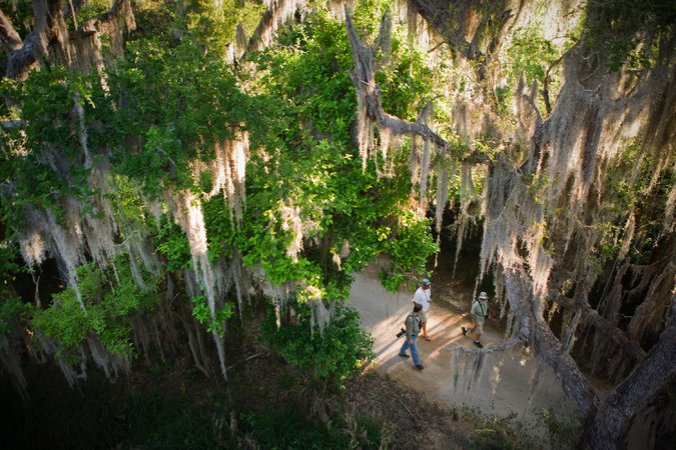
Birders walking under trees draped in Spanish moss in the Santa Ana National Wildlife Refuge near Alamo, Tex. The border wall would traverse the refuge. Credit Michael Stravato for The New York Times

Thanks to Michael Hardy and the New York Times for this coverage of an unwanted, disruptive intruder:

MISSION, Tex. — Last month, Marianna Wright, the executive director of the privately owned National Butterfly Center here, discovered survey stakes on the property marking out a 150-foot-wide swath of land.

Ms. Wright later encountered a work crew cutting down trees and brush along a road through the center. The workers said they had been hired by United States Customs and Border Protection to clear the land.

“You mean my land?” Ms. Wright asked, before kicking them out. Continue reading

Conservation Via Valuation

When we consider that cat sightings play an important role in why our guests come to Chan Chich Lodge, this type of valuation is something we can get behind whole heartedly. Thanks again to the Anthropocene for this interesting piece of daily science. And thanks again to Panthera.org for their role in the research.

The lesson of the $300,000 bobcat

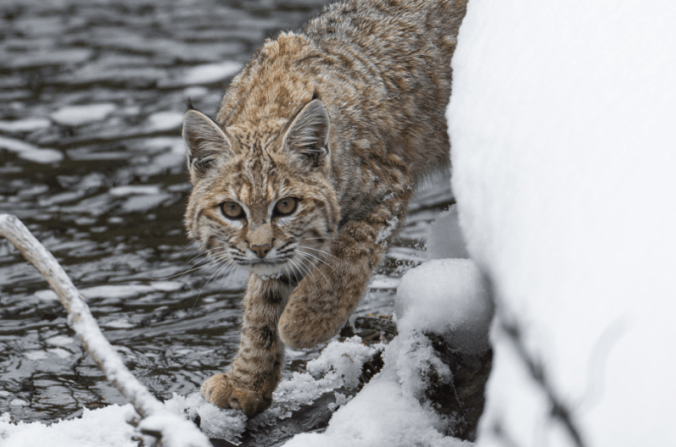
What is a bobcat worth? There’s a few ways of thinking about that question. One answer, of course, is that a bobcat’s value is intrinsic, their lives not something to signify with a price tag. Fair enough. But for the sake of discussion, and because there’s already a market for their hides, let’s run the math: in the state of Wyoming, a bobcat is worth roughly $300 dead and up to $308,000 alive. And in that vast difference is a tension — some would call it a flaw — in the way these marvelous cats, and many other species too, are presently managed in North America.

The calculations come from a study recently published in the journal Biodiversity and Conservation. Led by Mark Elbroch, a biologist with Panthera, the wild cat conservation organization, and also featuring researchers from wildlife advocacy group Wyoming Untrapped, the researchers totaled the revenues generated in 2015-2016 from selling trapping licenses in that state — $152,000 — and divided them by 1,160 bobcats killed, then added the average sale value of pelts. The final per-bobcat value came to $315.17.

Then Elbroch’s team turned to the example of a bobcat living along the Madison River in Yellowstone National Park, where his predilection for hunting waterfowl made him popular among wildlife lovers. They surveyed 46 photographers who traveled to Wyoming in winter 2015-2016 and the outfitters who guided them. Between outfitters’ fees, money spent on food, lodging and travel, and revenues from selling pictures, the bobcat generated $308,105, or a thousand-fold increase from his worth as a source of fur alone.

The researchers don’t argue that every living bobcat in Wyoming is worth more than $300,000.

Continue reading

Elephants, Orangutans, Rhinos & Tigers–What Are They Worth To Us?

4256n.jpg

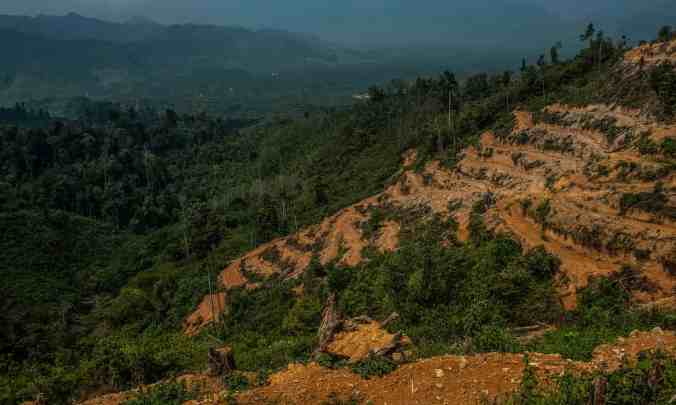
Deforestation in the Leuser ecosystem, one of the last homes to Sumatran elephants, orangutans, rhinos and tigers. Photograph: Sutanta Aditya/Barcroft Images

Thanks to the Guardian:

Pepsico, Unilever and Nestlé accused of complicity in illegal rainforest destruction

Palm oil plantations on illegally deforested land in Sumatra – home to elephants, orangutans and tigers – have allegedly been used to supply scores of household brands, says new report Continue reading

Wildlife Protection And Unintended Consequences

15tb-wolves02-master768

A wolf from a den within Yukon-Charley Rivers National Preserve in Alaska. A study found that limiting the population of wolves outside the preserve affected those within its boundaries. Credit Drew Rush/National Park Service

Mention Alaska, and we are in. Wolves, ditto. An academic publication called Wildlife Monographs? You had us at Alaska and wolves:

Protected Wolves in Alaska Face Peril From Beyond Their Preserve

Within the 2.5 million acres of the Yukon-Charley Rivers National Preserve in central Alaska, wolves and other majestic animals are protected. But animals like wolves do not respect lines drawn on a map. And a recent study suggests that efforts to limit populations of these predators outside those borders is having negative effects on wolves living within the preserve. Continue reading

Pines, Beetles & Grizzlies

15mcnamee-master768

Zoe Keller

Thanks to Thomas McNamee for his opinion on these matters:

The Government Is Now the Yellowstone Grizzly’s Biggest Threat

In March 2016, the United States Fish and Wildlife Service proposed removing the Yellowstone grizzly bear population from the list of threatened species. The uproar was ferocious. Conservationists, scientists, 125 Indian tribes and some 650,000 citizens expressed concern about the move.

Now the government has gone and done it anyway. Continue reading

Maternal Instinct vs Species Survival

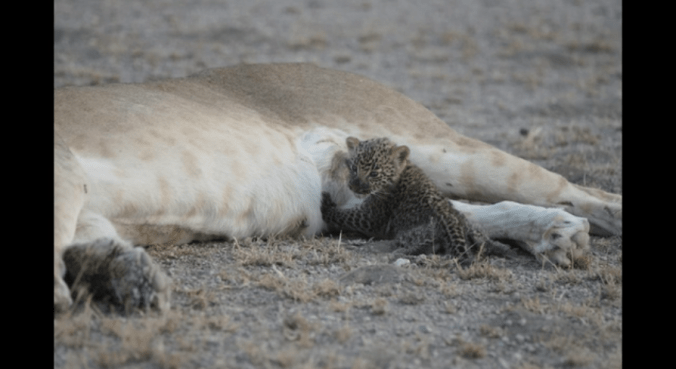
©JOOP VAN DER LINDE/NDUTU LODGE

The more time we spend at Chan Chich Lodge the more we see the seasonality of birth patterns in the wild. There clearly seems to be a “baby season”, that starts with the cats and moves down the food chain to their mammalian prey, as well as birds. Although no photo captures, several jaguar cubs were sighted earlier in the year, followed by dozens of fawns and baby collared peccary. Even the Gallon Jug Farm has welcomed 4 baby horses to the fold, with a fifth on the way…but we’ll talk about that another day.

This unusual news from Panthera.org, an important Big Cat Conservation NGO who uses our 30,000 acres as part of their Jaguar Corridor research, perhaps makes a little bit of sense within the context of those patterns.

We thank Susie Weller Sheppard for sharing these field notes.

Earlier this week, Panthera President and Chief Conservation Officer Dr. Luke Hunter received photos from our partners at KopeLion with some astonishing content: the first-ever evidence of a wild lioness nursing a leopard cub.

Taken on Tuesday by a Ndutu Lodge guest in Tanzania’s Ngorongoro Conservation Area, the images show a 5-year-old lioness, known locally as ‘Nosikitok,’ suckling a leopard cub estimated to be just 3 weeks old. Continue reading

Keeping Species Populations Healthy


lead_960x.jpg

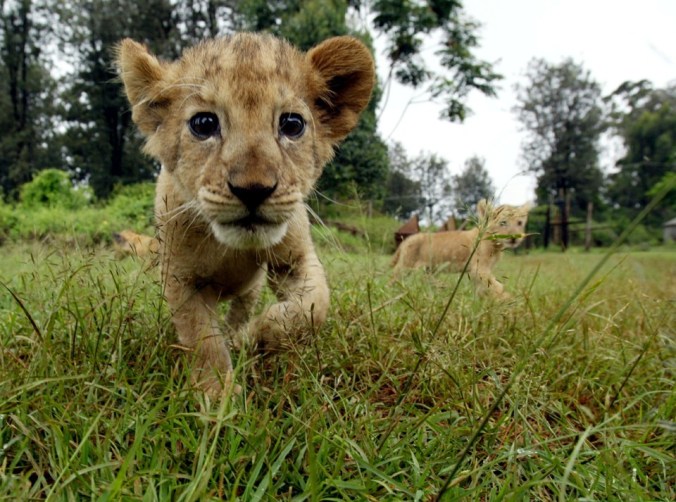
Lion cubs in Kenya. Radu Sigheti / Reuters

At Chan Chich Lodge we are aware that the half million acres of forest surrounding us are essential habitat not just for the specific jaguars, pumas, ocelots, margays and jaguarundis we have the good fortune to see with some frequency. Rather, that scale of acreage is essential for species survival. We are in a large forest corridor that is increasingly rare and unfortunately fragile in other locations throughout the Americas where they still exist. We do what we do with that in mind. Thanks to Ed Yong, at the Atlantic, for this context on extinction:

Imagine if every animal and plant on the planet collapsed into a single population each, says ecologist Gerardo Ceballos. If lions disappeared except from one small corner of Kenya, the prey they keep in check would run amok everywhere else. If sparrows were no more except in one Dutch forest, the seeds that sparrows disperse would stay in place everywhere else. If honeybees became isolated to one American meadow, the flowers that they pollinate would fail to reproduce everywhere else. None of those species would be extinct per se, “but we’d still be in very bad shape,” says Ceballos. Continue reading

Swamp Is Not A Bad Word

14847876920_3904caac90_o_slide-2a56f4c96e9fcd098def2965b202ed5806f00671-s1300-c85.jpg

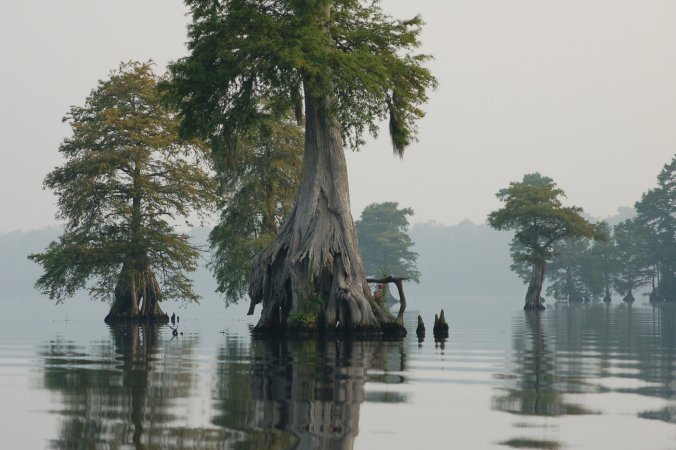
The Great Dismal Swamp National Wildlife Refuge in North Carolina and Virginia has been dramatically altered over the past few centuries by human development. Rebecca Wynn/U.S. Fish and Wildlife Service

Thanks to Sarah McCammon at National Public Radio (USA) for this story:

“Drain the swamp” may be a popular political slogan, but it doesn’t always work so well in nature. Continue reading

Nature Needs More Good Ideas

5000d.jpg

There is no known vaccine against temptation to harness nature. There is not enough nature left on the planet to allow this temptation to spread. But bad ideas are infectious:

Tanzania presses on with hydroelectric dam on vast game reserve

Stiegler Gorge dam on the Selous park, a world heritage site listed as ‘in danger’, will cause irreversible damage, say conservationists Continue reading

The Greatest Idea, Dumbed Down

1800

The Majestic Yosemite Hotel in Yosemite National Park. The facility had to be rebranded after a private concessionaire trademarked the previous name and common phrases like “Yosemite National Park.” Photograph: Handout

We have seen this movie before. It does not end well:

As Trump moves to privatize America’s national parks, visitor costs may rise

Some are concerned that the proposed privatization of some public park services would drive up costs for visitors and fail to raise enough for repairs Continue reading

Rancher’s Life In The High Plains

4681.jpg

The scale of the cattle farming at Gallon Jug is modest compared with the tradition of grazing on public lands typical of ranching in the western USA. But they share some common ground such as the horse-based cowboy (note below that women are also in the saddle in some places such as Montana). Something not discussed in the ideological battles over public lands that got to a boiling point in the last couple years–the intangible patrimony of a way of life–is worth a couple minutes of your consideration and this article lays it out, part of a series the Guardian is running:

In Montana, land transfer threatens the American rancher’s way of life

Ranchers in the west have been struggling for decades. Now a new threat looms: public land might be taken away from them Continue reading

Keep This Place Out Of Bounds

4256b.jpg

The letters come amid fears that the Trump administration will favor the powerful mining lobby, increasing the risk, particularly, of uranium contaminating water flowing into the Grand Canyon. Photograph: Stephen Yelverton Photography/Getty Images

Arizona officials, sensing an opportune moment, are using one of the most iconic places on earth to make a point. And the point is at one with the reason given for the USA pulling out of an environmental treaty, that every last buck to be raked out of the earth is more important than the earth as a whole, or a particular spot on the earth, or those living on the planet generations from now. The headline and story below fail to shock. This is how things are lately. Getting numbed to it is not an option. Arizona officials have made their point clear, but the point cannot be conceded. Boundaries still exist and must be protected. Thanks to the Guardian for its vigilance in its This is Your Land series:

Grand Canyon at risk as Arizona officials ask Trump to end uranium mining ban

Exclusive: Powerful regional officials to ask administration to end 20-year ban, saying it is unlawful and inhibits economic opportunity Continue reading

Farmers, Loggers & Biodiversity

5184 (1)

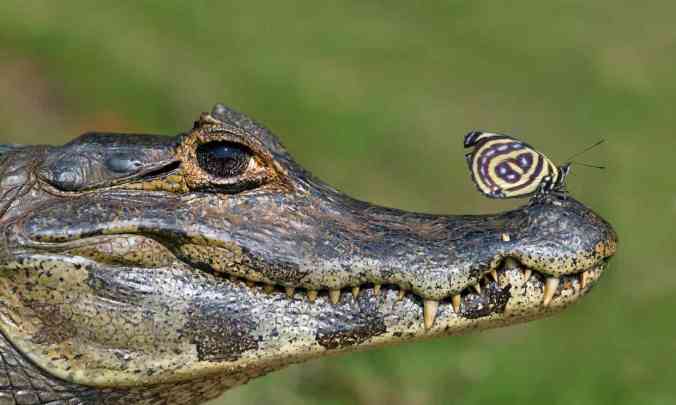
Serro Ricardo Franco is in one of the world’s biggest and most diverse ecological reserves. But reality on the ground is different, putting many animals at risk, such as Yacare caiman and giant river otters. Photograph: Angelo Gandolfi/Getty Images/Nature Picture Library

Sometimes, sitting in a glass house, reading the news makes me want to throw a stone. The glass house where I live includes a farm in an extremely biodiverse area. It is surrounded by nearly half a million acres where logging happens. But there is farming, as you can read about in the news below, and there are plenty of better ways of farming; there are loggers like those in the news below, and there are forests where extraction happens according to standards such as those set and enforced by the Forest Stewardship Council.

Instead of throwing a stone, I get up every day and make sure the glass around here is as transparent as possible, because we can demonstrate a better way of supplying food, of harvesting wood, and doing so with the protection of wildlife in constant view. Meanwhile, I do read the news from elsewhere and continue to share it here (thanks to the Guardian’s Jonathan Watts in Vila Bela da Santíssima Trindade for this one):

Wild Amazon faces destruction as Brazil’s farmers and loggers target national park

The Sierra Ricardo Franco park was meant to be a conservation area protecting rare wildlife

To understand why the Brazilian government is deliberately losing the battle against deforestation, you need only retrace the bootmarks of the Edwardian explorer Percy Fawcett along the Amazonian border with Bolivia.

During a failed attempt to cross a spectacular tabletop plateau here in 1906, the adventurer nearly died on the first of his many trips to South America. Back then, the area was so far from human habitation, the foliage so dense and the terrain so steep that Fawcett and his party came close to starvation.

He returned home with tales of a towering, inaccessible mesa teeming with wildlife and irrigated by secret waterfalls and crystalline rivers. By some accounts, this was one of the stories that inspired his friend Arthur Conan Doyle to write The Lost World about a fictional plateau jutting high above the jungle that served as a sanctuary for species long since extinct elsewhere. Continue reading

Sound, Noise & Wilderness

lead_960c

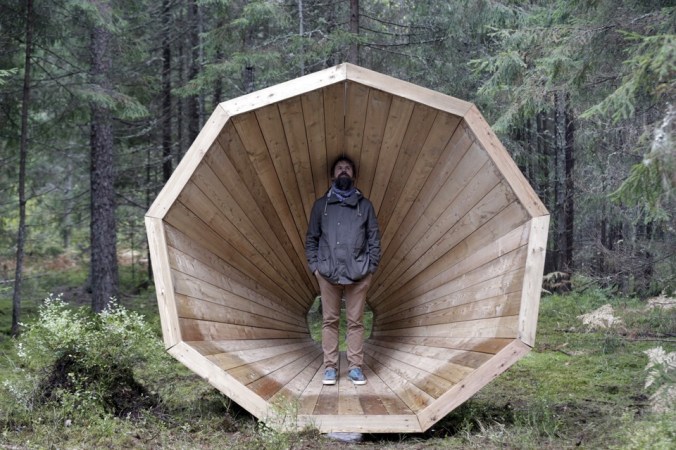
I’m sorry, what was that? Ints Kalnins / Reuters

Sound is often profound. Noise often annoys. Thanks as always to Ed Yong, touching on a topic we have been sensitive to for some time now:

A Not-So-Silent Spring

Even America’s protected areas are being subjected to harmful levels of noise pollution.

If a tree falls in the forest, and there’s no one around, the National Park Service will still hear it. Continue reading

Ranching, Recovery & Reason

MasterSceneofSilverCreek-GuiseppeSiata-1260x708.jpg

If you missed this post, it is worth a read for perspective either before or after the story below, and even if you do not read the story below that one should not be missed. Thanks to Cool Green Science:

Ridding the West of cattle remains a priority for some organizations and individuals. “Ranching,” the director of one prominent group told High Country News, is among “the most nihilistic lifestyles this planet has ever seen. Ranching should end. Good riddance.” Another group charges that ranching causes “desertification.” Another proclaims that “grazing spreads weeds.” Still another cites as a “myth” that “profitable livestock production and ecological preservation can coexist.” Continue reading

Wolf Wars Waning

wolf-and-sheep.jpg

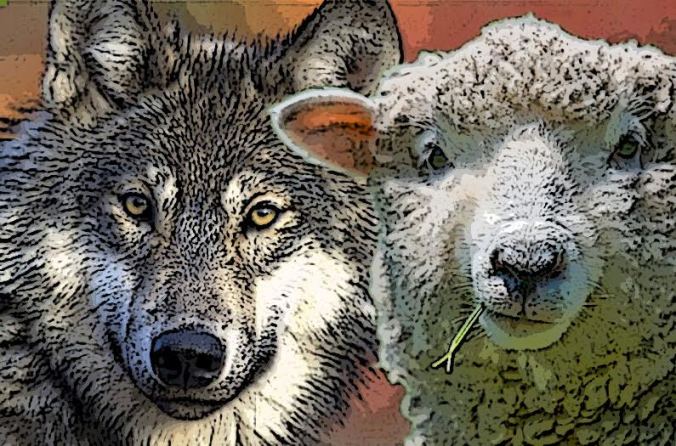
In 2007, a family of wolves in Idaho’s Sawtooth National Forest killed nine sheep. Ranchers who owned the sheep asked government wildlife managers to kill the wolves; but local wolf supporters and conservationists protested, asking instead for a non-lethal solution. So began what became the Wood River Wolf Project, a landscape-scale, multi-year experiment in how ranchers, livestock, and wolves can live together peacefully. Continue reading