Half-Earth Is Not Happening, But Co-Habitation Is


luisa-rivera-yale-e360_web

LUISA RIVERA / YALE E360

Thanks to Richard Conniff, whose articles about the intersection between humans and other species, and about how our museums shape our views we have shared from various sources, including this recent one from Yale360:

Habitat on the Edges: Making Room for Wildlife in an Urbanized World

Efforts to protect biodiversity are now focusing less on preserving pristine areas and more on finding room for wildlife on the margins of human development. As urban areas keep expanding, it is increasingly the only way to allow species to survive.

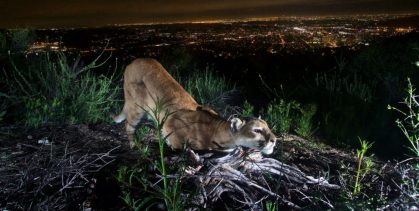
FemaleMountainLion_VerdugosMountainsGlendaleLA_NPS_web2

A female mountain lion in the Verdugos Mountains, north of Los Angeles. Also known as cougars, these animals are an increasingly common sight in the mountains surrounding Southern California’s cities. NATIONAL PARK SERVICE

One morning not long ago, in the southern Indian state of Karnataka, I traveled with a Wildlife Conservation Society biologist on a switchback route up and over the high ridge of the Western Ghats. Our itinerary loosely followed the corridor connecting Bhadra Tiger Reserve with Kudremakh National Park 30 miles to the south. Continue reading
Divesting Scales With Leadership

Screen Shot 2018-01-12 at 5.25.34 AMThanks to the Guardian for giving Bill McKibben the space to put the New York City decision in perspective:

Over the years, the capital of the fight against climate change has been Kyoto, or Paris – that’s where the symbolic political agreements to try and curb the earth’s greenhouse gas emissions have been negotiated and signed. But now, New York City vaulted to leadership in the battle.

On Wednesday, its leaders, at a press conference in a neighborhood damaged over five years ago by Hurricane Sandy, announced that the city was divesting its massive pension fund from fossil fuels, and added for good measure that they were suing the five biggest oil companies for damages. Our planet’s most important city was now at war with its richest industry. And overnight, the battle to save the planet shifted from largely political to largely financial. Continue reading
State By State Ranking For USA Bicyclists

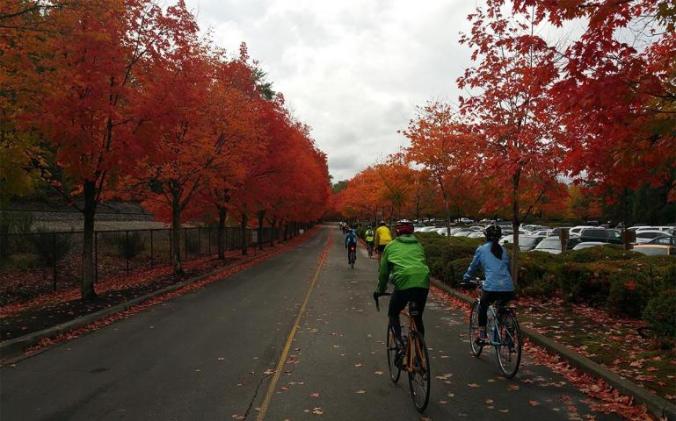
SIERRA Renton Gene Coulon Park WB

PHOTO COURTESY OF MACHIKO THRELKELD

Thanks to Sierra magazine for bringing this to our attention:

Is Your State Bicycle-Friendly?

A new report ranks the best and worst places to hop on the saddle

Do you live in the safest or the most dangerous state for riding a bike? The 2017 Bicycle Friendly State Report Card has the answer.

Each year, the League of American Bicyclists, an advocacy group founded in 1880 to improve street conditions for bikers, releases a detailed ranking that cyclists can use to track where it’s safe, and not so safe, to hop on wheels. The group also monitors each state’s progress toward increased bicycle safety. The rankings are derived from a variety of factors, including five key bicycle-friendly actions, federal data on bicycling conditions, and summaries with feedback on how each state can improve the safety and mobility of bicyclists. Continue reading
More Information, Thank You

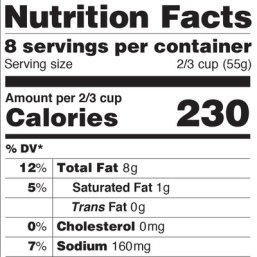
gettyimages-629786322-56167ac88fd815c0482912a5baea16972304ffc3-s1300-c85

Contradictory consumer demands for food labels are making some food companies re-think their alliance with the industry’s traditional lobbying group. miakievy/Getty Images

Food producers may not all, or always, appreciate how much information consumers want or need, but erring on the side of more in this case makes sense to us. Thanks to National Public Radio (USA) for this story:

For at least the past decade, the Grocery Manufacturers Association (GMA) has been the unrivaled voice of a vast industry, from neighborhood grocery stores to food manufacturing giants with supply chains that span the globe. Most recently, it’s been a powerful force in fighting proposals to require information about added sugar or GMOs on food labels.

untitled-1_sq-b58cbda94a29b6944b67706c24dcb43ed57e06fb-s400-c85Today, that colossus is teetering and facing questions about its future. Over the past six months, eight of GMA’s largest members have decided to drop their membership. Each defection was quickly revealed on the news site Politico. One industry insider says that he’s seen a list of another three companies that are considering leaving the association. Continue reading

New Vehicle Technology Makes Good Business Sense

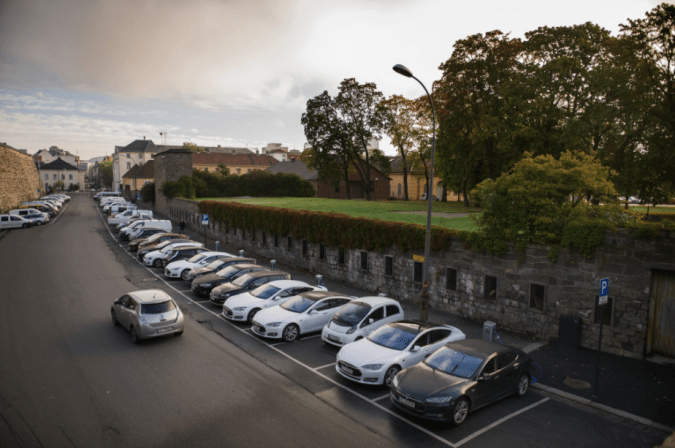
Free parking and charging stations for electric cars in Oslo. Norway offers generous incentives that make the vehicles cheaper to buy, and other benefits once they are on the road. Credit Thomas Haugersveen for The New York Times

Norway’s public policy that puts environmentalism front and center stands in stark contrast to the obvious deconstruction of protections in this country.

In Norway, Electric and Hybrid Cars Outsell Conventional Models

Sales of electric and hybrid cars in Norway outpaced those running on fossil fuels last year, cementing the country’s position as a global leader in the push to restrict vehicle emissions.

Norway, a major oil exporter, would seem an unlikely champion of newer, cleaner-running vehicles. But the country offers generous incentives that make electric cars cheaper to buy, and provides additional benefits once the vehicles are on the road.

Countries around the world have ramped up their promotion of hybrid and electric cars. As China tries to improve air quality and dominate new vehicle technology, the government there wants one in five cars sold to run on alternative fuels by 2025France and Britain plan to end the sale of gasoline- and diesel-powered cars by 2040.

Norway is ahead of the rest of the world. Continue reading
Poo-Power Innovations

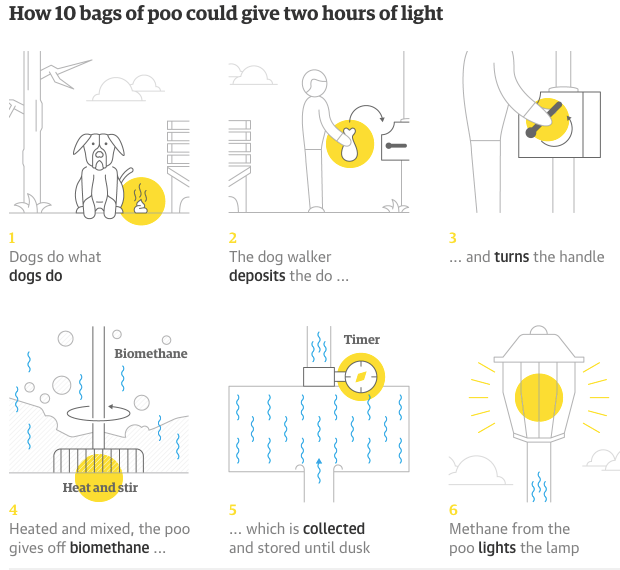
Guardian Graphic

Biomethane is an age-old concept in much of what is frequently called the “developing world”, so it’s difficult to overstate the irony of “1st world” adoption. That said, it’s heartening to read of more projects aimed at maximizing poo’s full potential.

From stools to fuels: the street lamp that runs on dog do

A long winding road climbs into a gathering dusk, coming to an abrupt dead end in front of a house. Here, a solitary flickering flame casts out a warm glow, illuminating the nearby ridge line of the Malvern Hills.

Below the light sits a mysterious green contraption resembling a cross between a giant washing machine and a weather station. This is the UK’s first dog poo-powered street lamp, and it is generating light in more ways than one.

The idea seems simple enough: dog walkers deposit the product of a hearty walk into a hatch and turn a handle. The contents are then broken down by microorganisms in the anaerobic digester, producing methane to fuel the light, and fertiliser…

…Humans have used animal dung as fuel since the neolithic period, and have known how to get flammable gas from decaying organic matter since the 17th century. Small-scale anaerobic digesters are commonplace in many developing countries, while larger plants producing heat and electricity from animal manure and human sewage have long been used in the west.

Yet the energy in most excrement still goes to waste.  Continue reading
Trees, Carbon-Neutral Energy, & Ambiguous Definitions

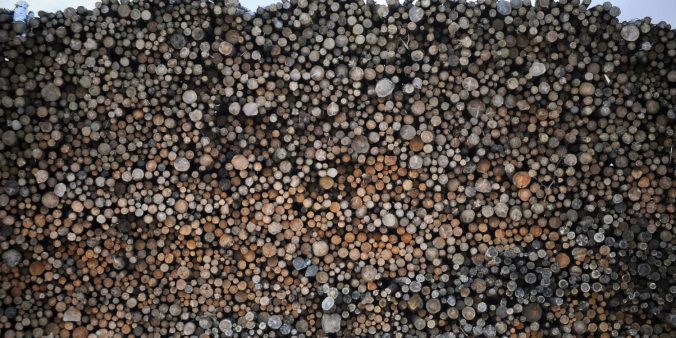
Logs_TimberYards_Finland_GettyImages-84157450_web16x9.jpg

Thanks to Fred Pearce over at Yale Environment360 for this puzzler:

Carbon Loophole: Why Is Wood Burning Counted as Green Energy?

A loophole in carbon-accounting rules is spurring a boom in burning wood pellets in European power plants. The result has been a surge in logging, particularly in the U.S. South, and new doubts about whether Europe can meet its commitments under the Paris accord. Continue reading

Battery Story, 2017

Tesla grid storage South AustraliaBattery technology is the thing. It seems to be a holy grail that environmentalists and technologists can agree on for helping us, humans who want a habitable planet for generations to come, mitigate climate change. And occasionally it is at the core of short term fixes. Once the dust has settled on 2017, and we are looking back on stories that were on the positive side of long term impact on the planet, this story will probably get more attention. For now it seems like a footnote at the end of the year to note that this Tesla scheme actually seemed to work:

Tesla Grid Storage Battery Reacts Insanely Fast To Coal Power Outage

Last spring, Elon Musk made a daring bet. He claimed he could build and install the world’s largest grid storage battery in South Australia within 100 days of the date a contract was signed or the system would be free. The contract was signed on September 29. Installation was completed by the third week of November. On December 2, the giant 129 MWh system was activated. Continue reading

An Interesting Alternative To Ayn Rand’s Prescription For The Future

171218_r31150

The Estonian government is so eager to take on big problems that many ambitious techies leave the private sector to join it.Illustration by Eiko Ojala

This is about people with an idea pursuing it with confidence in the ability of government to achieve something that its people want. Not everyone, everywhere, would want this to be sure. But it is a vote in favor of pursuing the common good together. It is worth the read, on a cold winter’s night (or wherever you may be) for a glimpse of the future for those in small, flexible places:

Estonia, the Digital Republic

Its government is virtual, borderless, blockchained, and secure. Has this tiny post-Soviet nation found the way of the future?

Up the Estonian coast, a five-lane highway bends with the path of the sea, then breaks inland, leaving cars to follow a thin road toward the houses at the water’s edge. There is a gated community here, but it is not the usual kind. The gate is low—a picket fence—as if to prevent the dunes from riding up into the street. The entrance is blocked by a railroad-crossing arm, not so much to keep out strangers as to make sure they come with intent. Beyond the gate, there is a schoolhouse, and a few homes line a narrow drive. From Tallinn, Estonia’s capital, you arrive dazed: trees trace the highway, and the cars go fast, as if to get in front of something that no one can see. Continue reading

Will Divestment Be The Best News Of 2017?

McKibben-Fossil-Fuel-Divestment

Time and again, the petroleum industry has used its political might to stymie global action on climate change. Now cities and states have become the new battleground. Photograph by Robert Nickelsberg / Getty

Some things we lose slowly, which seems better than losing them quicker; other things we gain too slowly:

The Movement to Divest from Fossil Fuels Gains Momentum

Tuesday should have been a day of unmitigated joy for America’s oil and gas executives. The new G.O.P. tax bill treats their companies with great tenderness, reducing even further their federal tax burden.

Kolbert-Tax-Bill-National-Wildlife-Refuge

Part of the Arctic National Wildlife Refuge, known as the 10-02 area, serves as the summer breeding ground for two hundred thousand caribou. Photograph by The Asahi Shimbun via Getty

And the bill gave them something else they’ve sought for decades: permission to go a-drilling in the Arctic National Wildlife Refuge. But, around four in the afternoon, something utterly unexpected began to happen. A news release went out from Governor Andrew Cuomo’s office, saying that New York was going to divest its vast pension-fund investments in fossil fuels. The state, Cuomo said, would be “ceasing all new investments in entities with significant fossil-fuel-related activities,” and he would set up a committee with Thomas DiNapoli, the state comptroller, to figure out how to “decarbonize” the existing portfolio. Continue reading

Rewilding Minelands

Flatwoods_WFA_2.10.17-26_web

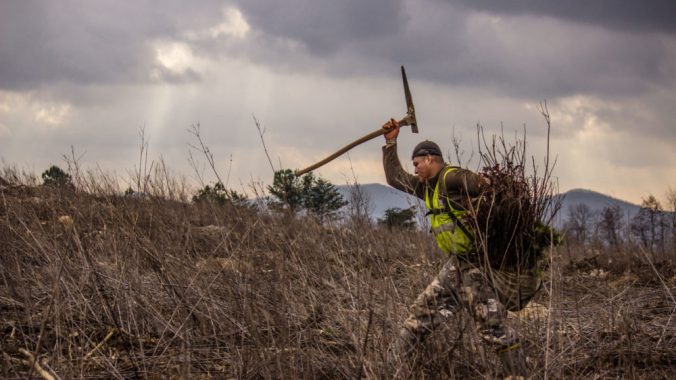
A contractor for Green Forests Work plants native hardwood and evergreen seedlings on a reclaimed mine site in Dorton, Kentucky. GREEN FORESTS WORK

Thanks to Yale 360 for this story about Green Forests Work, in a part of North America that is often considered lost, from an ecological perspective:

Reclaiming Appalachia: A Push to Bring Back Native Forests to Coal Country

Previous efforts to restore former coal mine sites in Appalachia have left behind vast swaths of unproductive land. Now, a group of nonprofits and scientists are working to restore native trees to the region — even if it means starting the reclamation process from scratch.

5.5.17_Monongahela-36_web

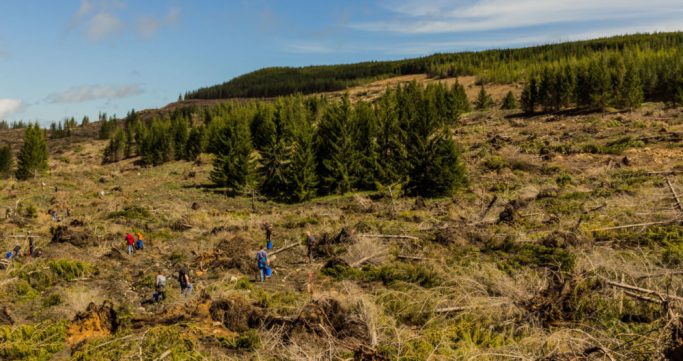
Volunteers fan out over a recently bulldozed plot on Cheat Mountain to plant red spruce and other native seedlings. GREEN FORESTS WORK

Near the top of Cheat Mountain in West Virginia, bulldozer operator Bill Moore gazes down a steep slope littered with toppled conifers. Tangled roots and angled boulders protrude from the slate-colored soil, and the earth is crisscrossed with deep gouges.

“Anywhere else I’ve ever worked,” Moore says, “if I did what I did here, I’d be fired.” Continue reading

Doomsday Discussion

Each day we scan the news for stories that will help make sense of the environmental challenges facing humanity, with special attention to potential solutions and collective action taken to rise up to those challenges. Earlier this year we declined to link out to this story that was a collection of doomsday scenarios:

NYLogo

The Uninhabitable Earth

Famine, economic collapse, a sun that cooks us: What climate change could wreak — sooner than you think.

By David Wallace-Wells

This article reporting on a recent panel at Harvard University has caused us to reconsider the decision:

112917_despair_014_605_embed

Nikhil Advani (from left), David Wallace-Wells, Elizabeth Wolkovich, Nancy Knowlton, and Campbell Webb.

…Unfortunately, that vision isn’t fiction, but rather Wallace-Wells’ summation of climate change’s little-discussed worst-case scenario for the year 2100.

“I think there’s real value in scaring people,” the journalist said Wednesday during a panel at the Geological Museum, sponsored by the Harvard University Center for the Environment.

The event, “Hope and Despair: Communicating an Uncertain Future,” explored whether doom and gloom are more effective than hope in spurring climate action. Panelists agreed that fear is a potentially powerful lever, but also insisted on the importance of covering success stories. Progress is an important motivator, keeping people from succumbing to despair in the face of bad news. Continue reading

Victory Favoring Earth, We Hope

Lisa Friedman appears twice on today’s landing page of the newspaper she works for, once as co-host on a video, below, about Alaska; and again as host of an equally important story in the form of an interview, also captured on this video titled Jerry Brown on How to Fix Global Warming.

JBrown

How can policymakers fight climate change in the face of political headwinds? Gov. Jerry Brown of California addresses that question at ClimateTECH, a conference from The New York Times, in a conversation with Thomas L. Friedman. By THE NEW YORK TIMES on Publish DateNovember 29, 2017. Photo by Friedemann Vogel/European Pressphoto Agency.  Watch in Times Video »

Nebraska & Keystone


McKibben-Nebraska-Approves-the-Keystone-Pipeline

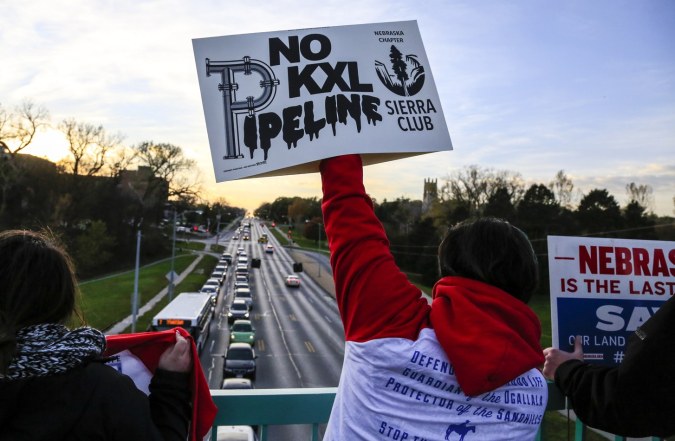
On the back of the Keystone fight, an entire new front in the climate fight has emerged. Photograph by Nati Harnik / AP

Difficult to believe:

Nebraska Sort of Approves the Keystone Pipeline

By Bill McKibben

In the summer of 2011, National Journal polled a group of “energy and environment insiders” in Washington, D.C., to ask if the Keystone XL pipeline would be approved. “Virtually all” of them said yes; by a landslide, they predicted that TransCanada Corporation would have the permits in hand by the end of that year. They didn’t reckon, however, with an outpouring of opposition, including from a group I helped found, 350.org. Continue reading

New Zealand, Invasive Species & Gene Editing

1920

Thanks to Ed Yong and his editors at The Atlantic for this story on one country’s approach to rats:

New Zealand’s War on Rats Could Change the World

The nation wants to eradicate all invasive mammal predators by 2050. Gene-editing technology could help—or it could trigger an ecological disaster of global proportions.

The first thing that hit me about Zealandia was the noise.

I was a 15-minute drive from the center of Wellington, New Zealand’s capital city, but instead of the honks of horns or the bustle of passersby, all I could hear was birdsong. It came in every flavor—resonant coos, high-pitched cheeps, and alien notes that seemed to come from otherworldly instruments. Continue reading

Heroes Come And Go, Climate Change Marches On

McKibben-Jerry-Brown-Bonn-Climate-Summit

For all their tough-on-carbon rhetoric, Governor Jerry Brown, of California, and other leaders are ignoring a key component of the fight against global warming. Photograph by Lukas Schulze / Getty

The song Kermit used to sing was cute. Until it was no longer cute. Saying it is not easy is a vast understatement in an era when bombast reigns. Bill McKibben, who we probably highlight more in these pages than any other single author, reminds us of this every time we read what he has to say. If you can call it a luxury, McKibben is more free to speak truth to power than a normally standup politician, who sometimes will take a position that pure activists are correct to oppose. Case in point, here is an erstwhile leader who pure activists will not allow to have it both ways:

Why Governor Jerry Brown Was Booed at the Bonn Climate Summit

Spare a little pity for Jerry Brown. The California governor has been standing up admirably to Donald Trump on many issues, but especially on climate change—even threatening to launch scientific satellites to replace the ones that Washington wants to ground. This week, he’s in Bonn, Germany, at the global climate talks, spearheading the drive to show that America’s states and cities have not forsaken the promises made last year in Paris. On Saturday, barely a minute into his big prime-time talk, Brown was rewarded for his pains with booing. He was visibly startled when demonstrators interrupted his speech and began chanting, “Keep it in the ground!” Continue reading

The Business of Arctic Anti-Stewardship

SCE034-00038_hr.JPG

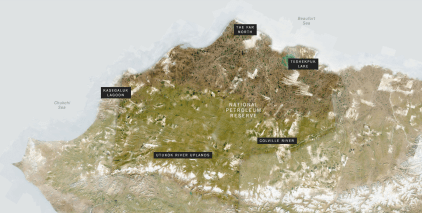
The upper Colville River and headwaters on Alaska’s North Slope | Joel Sartore

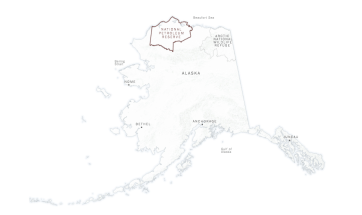
Screen Shot 2017-11-11 at 8.40.28 AMThanks to Christopher Solomon, contributing editor at Outside magazine, for this important story published in the New York Times. The interactive element highlighting each ecosystem, followed by migration visuals drive home the extremity and unprecedented nature of the policies that the federal government of the United States of America is now promoting.

America’s Wildest Place Is Open for Business

Screen Shot 2017-11-11 at 8.42.01 AMSeveral years ago a mapping expert pinpointed the most remote place in the Lower 48 states. The spot was in the southeast corner of Yellowstone National Park, 20 miles from the nearest road. Roman Dial read the news and wasn’t much impressed. To him, 20 miles — the distance a hungry man could walk in a long day — didn’t seem very remote at all.

Mr. Dial is a professor of biology and mathematics at Alaska Pacific University in Anchorage, and a National Geographic explorer. He decided to figure out the most remote place in the entire nation. His calculations led him to the northwest corner of Alaska, where the continent tilts toward the Arctic Ocean. The spot lay on the Ipnavik River on the North Slope, 119 miles west of the Haul Road (otherwise known as the Dalton Highway), which brings supplies and roughnecks to the oil fields at Prudhoe Bay. Continue reading

Speaking for the Trees

‘Hope, courage and anger’: The Indigenous Guardians of the Forest caravan to Bonn, in front of the French National Assembly in Paris last week. Photograph: Jonathan Watts for the Guardian

Thanks once again to the Guardian for sharing these stories from the front line.

‘For us, the land is sacred’: on the road with the defenders of the world’s forests

Of the many thousands of participants at the Bonn climate conference which begins on 6 November, there will arguably be none who come with as much hope, courage and anger as the busload of indigenous leaders who have been criss-crossing Europe over the past two weeks, on their way to the former German capital.

The 20 activists on the tour represent forest communities that have been marginalised over centuries but are now increasingly recognised as important actors against climate change through their protection of carbon sinks.

In the run-up to the United Nations talks, they have been visiting the UK, France, Belgium, the Netherlands and Germany, talking to city leaders, environment NGOs and youth groups. Their aim is to build support for their role as forest defenders – a role that frequently puts them odds with agribusiness, mining companies and public security. The Observer caught up with them on the road to Paris.

“We have been looking after the forest for thousands of years. We know how to protect them,” said Candida Dereck Jackson, vice president of the National Indigenous Alliance in Honduras, as she outlined the principal demands of the group: respect for land rights, recognition of crimes against the environment, direct negotiations over forest protection, decriminalisation of indigenous activists, and free, prior and informed consent before any development by outsiders. Continue reading

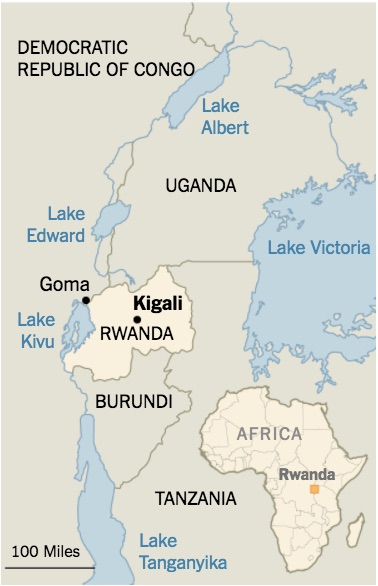
All In, Eliminating Plastic Bags, Rwanda Is A Leader

RWANDAmap

By The New York Times

Thanks to the New York Times for this success story from a small country in Africa that has been working its way steadfastly to global leadership, quietly but surely for the last decade-plus. Eliminating plastic bags from a country seems impossible, until you read how it was done:

GISENYI, Rwanda — They are sometimes tucked into bras, hidden in underwear or coiled tightly around a smuggler’s arms.

They’re not narcotics or even the illegally mined gold and diamonds that frequently make it across the border into Rwanda. But they are, at least in the eyes of Egide Mberabagabo, a watchful border guard, every bit as nefarious.

The offending contraband? Plastic bags.

“They’re as bad as drugs,” said Mr. Mberabagabo, one of a dozen border officials whose job it is to catch smugglers and dispose of the illicit plastic he finds. Continue reading

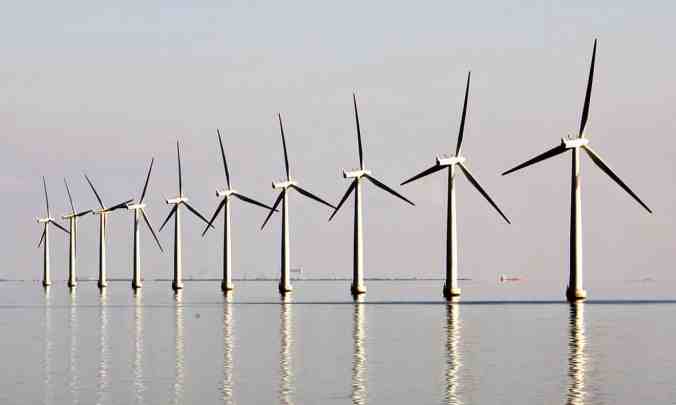
Britain’s Windfalls

1386

Thanks to the Guardian for this update on the current state of the art of wind power, and it is good to see Britain in the lead:

Wild is the wind: the resource that could power the world

Wind isn’t just mysterious, destructive and exhilarating – capturing just 2% of it would solve the planet’s energy needs at a stroke. And as the windiest country in Europe, Britain is at the forefront of this green revolution Continue reading