Bear Ears Monuments, Cheering & Detraction

cedar-mesa_custom-427276f5586a9f7a0a22192760db944d7196cb73-s2500-c85.jpg

Photo by Josh Ewing/Bears Ears Inter-Tribal Coalition

The Food & Environment Reporting Network updates our understanding of the added significance of Bear Ears Monument, and its detractors:

Bears Ears Monument Is A Win For Tribal Food Sovereignty. Will Trump Undo It?

By Kristina Johnson

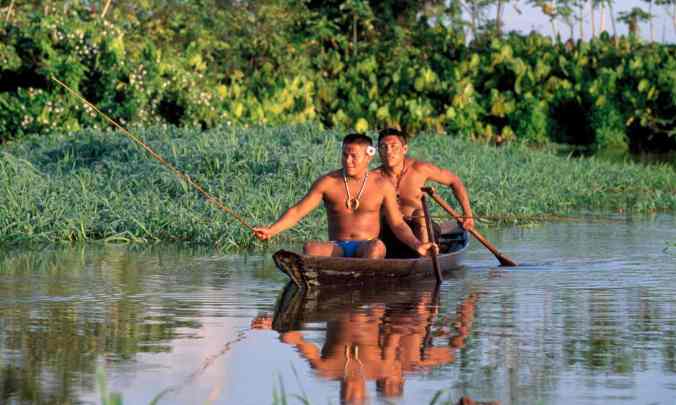
Seven years ago, the Navajo tribal council in southeastern Utah started mapping the secret sites where medicine men and women forage for healing plants and native people source wild foods. They wanted to make a case for protecting the landscape known as Bears Ears, a place not only sacred to their tribe, but to many other tribes in the region, going back thousands of years. In one of his final acts in office, President Obama late last month created the 1.35-million-acre Bears Ears Monument, in a move that proponents say will safeguard the area’s ecology and guarantee food sovereignty for the region’s Native Americans.: Continue reading

China Closes Out 2016 With Another Important Conservation Statement

jp-ivory-master768

A Chinese police officer watched over ivory products being prepared for destruction during a ceremony in Beijing in 2015. China’s ban announced on Friday would shut down the world’s largest domestic ivory market. Credit Ng Han Guan/Associated Press

Yesterday’s news, combined with today’s, could be called a conservation bifecta:

China Bans Its Ivory Trade, Moving Against Elephant Poaching

By

China announced on Friday that it was banning all commerce in ivory by the end of 2017, a move that would shut down the world’s largest ivory market and could deal a critical blow to the practice of elephant poaching in Africa. Continue reading

Droning Over Wetlands

Thanks to The Nature Conservancy’s Cool Green Science team for helping us realize we almost missed this story:

Flight Over the Bas-Ogooué: Using Drones to Map Gabon’s Wetlands

BY JUSTINE E. HAUSHEER

How do you map a nearly inaccessible 9,000-square-kilometer African wetland that is home to hippos, forest elephants, crocodiles, and the notorious Gaboon viper?

Enter the drones.

Nature Conservancy scientists are using unmanned aerial vehicles to create the first-ever detailed wetlands habitat map of coastal Gabon, in collaboration with scientists from NASA, and other conservation groups working in Gabon. Continue reading

The State Of Great

29brown-hp-master768

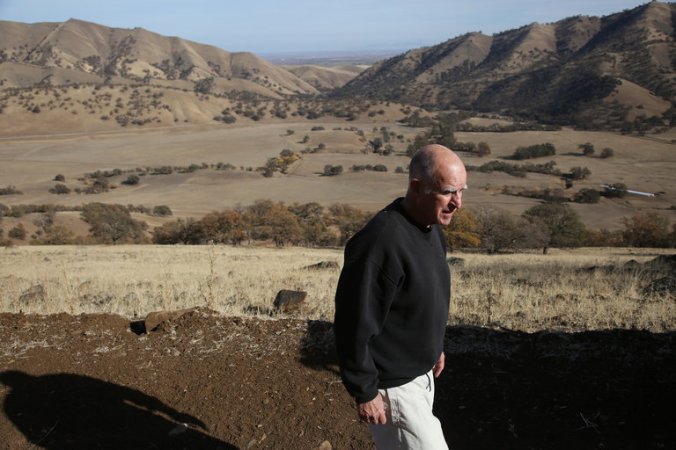
Gov. Jerry Brown at his 2,514-acre family ranch in Colusa County, Calif. “I wouldn’t underestimate California’s resolve if everything moves in this extreme climate denial direction,” he said. “Yes, we will take action.” Credit Jim Wilson/The New York Times

This article, by Adam Nagourney and science writer Henry Fountain, gives climate-concerned citizens everywhere hope that recent tectonic shifts on the political landscape in the USA will not result in complete abandonment of reason within all the states of that union:

LOS ANGELES — Foreign governments concerned about climate change may soon be spending more time dealing with Sacramento than Washington.” Continue reading

For the Birds: a Message to North American Policymakers


The State of North America’s Birds 2016

The State of North America’s Birds 2016

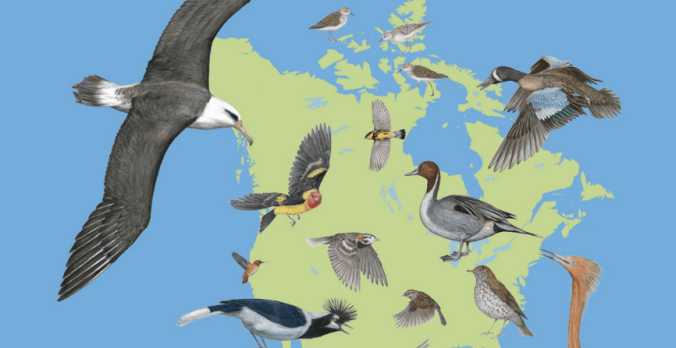
We continue to laud the importance of eBird on this site, gaining special importance as it becomes more and more clear that wildlife doesn’t acknowledge political borders. The data gleaned from tens of thousands of Canadian, Mexican and U.S. citizen scientists who contribute to eBird indicate that more than 350 species in North America migrate up and down Canada, the U.S.A, and Mexico over the course of a calendar year.

And according to the recently released State of North America’s Birds 2016 report, those three countries—their governments, and their societies—need to step up and do more to preserve our continent’s spectacular and shared natural heritage of birdlife. This report is the first-ever scientific conservation assessment of all 1,154 bird species in North America, and it was only possible because of the tremendous scale and big-data capabilities of citizen-science….

Among the many takeaways from eBird maps and models includes one of relevance to our property, Chan Chich Lodge, located on 30,000 acres of Belizean forest in the Yucatan peninsula.

The Yucatan Peninsula is one of North America’s most vital bird habitat regions

The Yucatan Peninsula is one of North America’s most vital bird habitat regions

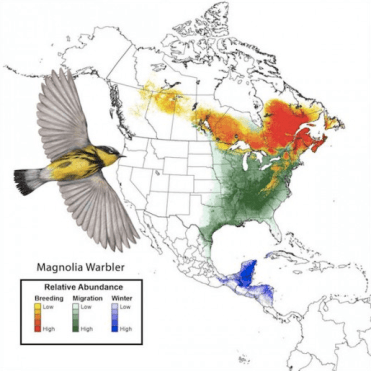
Not only is the Yucatan rich with endemic birdlife, it’s a critical wintering area for more than 120 birds species that migrate from Canada and the U.S.A. In winter, the entire population of Magnolia Warblers relies on an area of tropical forest in Mexico only 1/10 the size of its boreal forest breeding range, with the Yucatan as the bull’s-eye of their wintering range.

Continue reading

Food’s Future Seen In Urgent Present Perspective

06tp-foodwaste-inyt-6-blog427

Cristiana Couceiro

When this particular chef develops a thought into action, we are at least curious. When he shares a short essay on how the future of food might work, such as A Blueprint for the Future of Food, we take note. The following is from Turning Points, exploring how key moments from this year might signal something important coming in the year ahead.

Turning Point: France becomes the first country to outlaw food waste.

Not long ago, just before boarding a trans-Atlantic flight, I overheard a woman tell her friend that she had packed her own water bottle because she disliked wasting all the plastic bottles given out on planes. A few minutes later she was on the phone with another friend, explaining that she was on her way to Europe for the weekend to shop and relax. Continue reading

Solar Road In Normandy Breaks New Ground

3906

A test phase will evaluate whether the solar panel road can provide enough energy to power street lighting. Photograph: Christophe Petit Tesson/EPA

When we think of Normandy, apples and oysters come to mind. Calvados, too. We are happy those traditions endure but even happier to see the roads there as a hotbed of environmental innovation:

World’s first solar panel road opens in Normandy village

Route in Tourouvre-au-Perche cost €5m to construct and will be used by about 2,000 motorists a day during two-year test period Continue reading

Rolling Back Environmental Laws, A Rolling Plague

5150

The proposals threaten indigenous territory in Brazil, opponents say. Photograph: Alamy Stock Photo

We hear it is coming to the USA after inauguration next month, and has been a tendency in tough times in many places–relaxing environmental protections to encourage economic growth. Bad ideas have a way of spreading and our thanks to the Guardian for their observations in Brazil:

Brazil’s plan to roll back environment laws draws fire: ‘The danger is real’

Environmental and indigenous activists condemn plan they say would threaten indigenous territories and make compliance with Paris deal impossible Continue reading

Atlantic Canyon Withdrawal, Another Obama Legacy

ap_16281732045464_wide-253ae041d7cf2035c25a21f614330c82b0673230-s400-c15

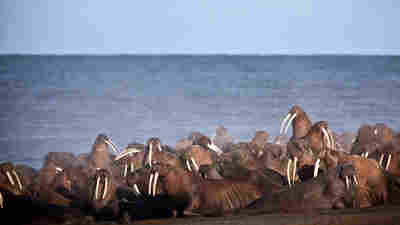
Walruses rest on the shores of the Chukchi Sea, the vast majority of which was designated off-limits to drilling on Tuesday. Ryan Kingsbery/AP

It is impossible to predict what will happen 2017 onward to these final environmental initiatives of the outgoing President of the USA. Nonetheless, we will cheer his efforts on behalf of conservation right to the very end of his term.  Thanks to National Public Radio (USA) for this news:

Obama Designates Atlantic, Arctic Areas Off-Limits To Offshore Drilling

“These actions, and Canada’s parallel actions, protect a sensitive and unique ecosystem that is unlike any other region on earth,” the White House said in a statement. Continue reading

Winds Over The Water Serving Those On Shore

00windpower-superjumbo

The Block Island Wind Farm’s turbines off the coast of Rhode Island in August. They began spinning on Monday and will deliver electricity to Block Island, a community nearby. Credit Kayana Szymczak for The New York Times

 Thanks to the Science section of the New York Times:

America’s First Offshore Wind Farm Spins to Life

By

Until this week, all of the wind power generated in the United States was landlocked. Continue reading

Understanding The Solar-Carbon Threshold

sunset

Image: Daniel Parks/Flickr

We are constantly playing catch up with the terminology, let alone the science, of environmental efficiency in all its forms and considerations. Anthropocene delivers the daily goods, in the form of a summary of an environmentally-oriented scientific study, that we constantly find useful:

Solar power will cross a carbon threshold by 2018

Recycling Thermal Erstwhile-Waste

00wit_paris-thermal-master768-v3

Illustration by Tamara Shopsin; Photos by All for You, Mrnok, via shutterstock

We appreciate that the City of Lights keeps brightening our future, as well as their own:

If the Pool Is Warm in Paris, Thank the Washing Machine

By

What do washing the dishes and uploading pictures to Facebook have in common? Continue reading

Banks, Rainforests, We The People

04DEFORESTATION-superJumbo.jpg

Young orphaned orangutans on a climbing expedition with their keeper at International Animal Rescue’s orangutan school in West Kalimantan, Indonesia. Credit Kemal Jufri for The New York Times

We first started paying close attention to the plight of the ecosystem in the image above when we saw the talk given by Willie Smits, who has taken action, to say the least, in the interest of protecting that rainforest and its inhabitants. It is not because of the orangutans (though see the photo below and try to resist reading on) that we find this article compelling; it is because there is a clear and compelling call to action on holding our institutions accountable:

How Big Banks Are Putting Rain Forests in Peril

By

In early 2015, scientists monitoring satellite images at Global Forest Watch raised the alarm about the destruction of rain forests in Indonesia.

Environmental groups raced to the scene in West Kalimantan province, on the island of Borneo, to find a charred wasteland: smoldering fires, orangutans driven from their nests, and signs of an extensive release of carbon dioxide into the atmosphere. Continue reading

Urban Cycle Heaven

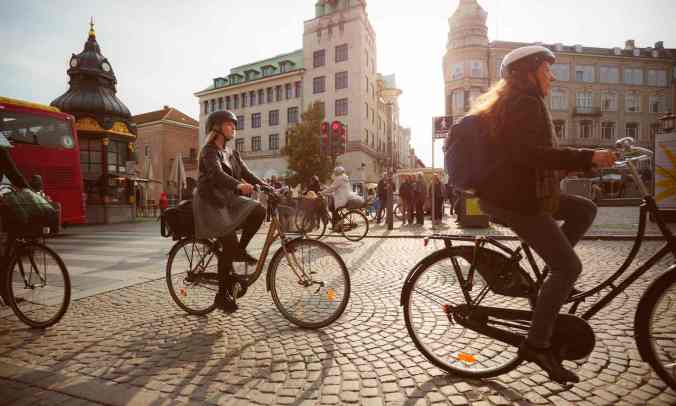
Copenhagen has recorded 13,100 more bikes than cars in the city centre over the past year. Photograph: Michal Krakowiak/Getty Images

Scandinavia in general (and Denmark in particular) is famous for forward thinking initiates, both socially and environmentally. Thanks to the Guardian for sharing this milestone.

Two-wheel takeover: bikes outnumber cars for the first time in Copenhagen

Denmark’s capital has reached a milestone in its journey to become a cycling city – there are now more bikes than cars on the streets. Can other cities follow? Continue reading

World Class Recycling

wit-germany-recycle-superJumbo.jpg

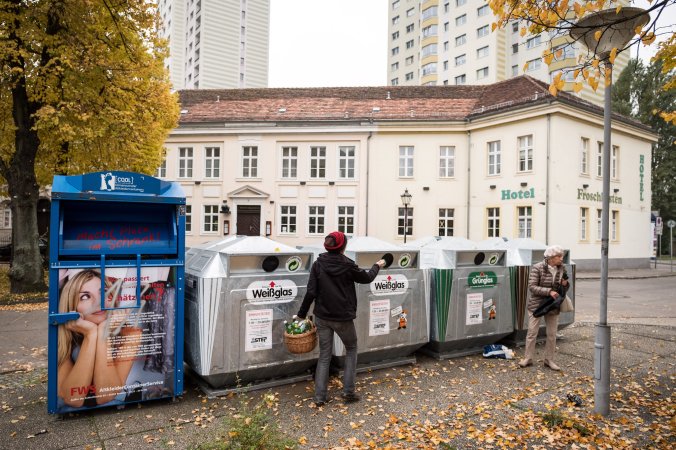
Recycling bins for glass bottles — both clear and colored — in Potsdam, Germany. Credit Gordon Welters for The New York Times

Thanks to the New York Times for reminding us who’s who in the world of recycling:

Germany Gleefully Leads List of World’s Top Recyclers

By

The praise from a German friend was the first sign that I had gone native.

“You see?” he said to his American wife, pointing to the sink where, without thinking, I was rinsing out the plastic yogurt cup I’d just emptied, unwrapping its cardboard sleeve and separating the foil from the lip of the container. “That is how to recycle!”

What may sound like a lot of extra fuss over trash has become second nature among Germans, the world’s recycling champions. Continue reading

Lessons From Ningaloo Reef

WOPA100627_D105

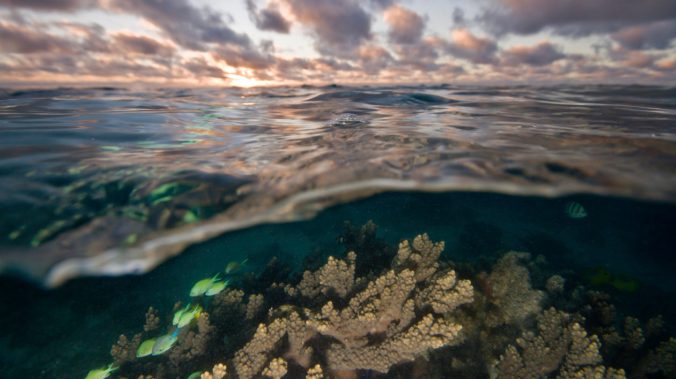
Acropora coral and blue green chomis on Ningaloo Reef in Western Australia. Photo © Steve Lindfield

Thanks to James Fitzsimons and The Nature Conservancy’s Australia program for this one:

Big, Bold & Blue: Lessons from Australia’s Marine Protected Areas

BY JUSTINE E. HAUSHEER

Australia has one the largest systems of marine protected areas in the world, from the coral-covered Great Barrier Reef to the sub-Antarctic Macquarie Island. Now, a new book details the lessons learned by Australian scientists, policymakers, and communities during more than 130 years of marine conservation.

The book — Big, Bold & Blue: Lessons from Australia’s Marine Protected Areas — gathers lessons learned from academia, government, NGOs, indigenous communities, and the fishing sector. Continue reading

Something’s Wrong With This Picture

3872

Under current legislation, European bioenergy plants do not have to produce evidence that their wood products have been sustainably sourced. Photograph: Wolf Forest Protection Movement

Thanks to the Guardian for this coverage of disturbing news from Europe:

Protected forests in Europe felled to meet EU renewable targets – report

Europe’s bioenergy plants are burning trees felled from protected conservation areas rather than using forest waste, new report shows

Arthur Neslen

Protected forests are being indiscriminately felled across Europe to meet the EU’s renewable energy targets, according to an investigation by the conservation group Birdlife. Continue reading

Alternative Energy Will Boom

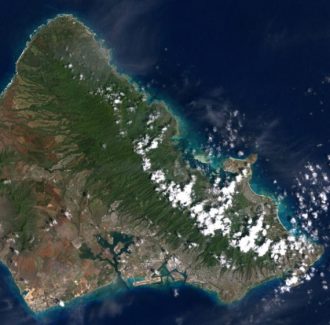
hawaii-solar-570x562The title is either wishful thinking, or stating the obvious; we are not sure which. Thanks to our colleagues at Clean Technica for this:

Hawai’i Solar Power (In Depth)

by

Glorious blue skies and endless sunshine. Warm, balmy breezes. Isn’t that how you envision Hawai’i? Like the slogan, “Everything’s better in Hawaii,” right?  Oops, one thing does dampen the impression of Hawai’i, though: its high cost of living, especially for energy. Continue reading

Renewable Energy Outlook

light-bulbs2.jpg

World electricity production going from black to green

In a time of troubling headlines, the more promising headlines can get lost, but they are there. At least with regard to renewable energy. Click the image above to read the summary of this book at Anthropocene or the image below to go to the source:

MTrenew2016.jpgThe rapid spread of renewable energy is a bright spot in the global energy transition towards a low carbon economy. Despite lower fossil fuel prices, renewable power expanded at its fastest-ever rate in 2015, thanks to supportive government policies and sharp cost reductions. Continue reading

The Future Of Food & Taxes

5126

Food production causes a quarter of greenhouse gas emissions, largely from the raising of cattle and other livestock. Photograph: Mike Kemp/Getty Images

Tax meat and dairy to cut emissions and save lives, study urges

Surcharges of 40% on beef and 20% on milk would compensate for climate damage and deter people from consuming as much unhealthy food

Damian Carrington

Climate taxes on meat and milk would lead to huge and vital cuts in carbon emissions as well as saving half a million lives a year via healthier diets, according to the first global analysis of the issue. Continue reading