Perspective On The Ages

ages_custom-9ff69ab35ab626c9478bbdca45cef0f576c4797a-s1100-c85

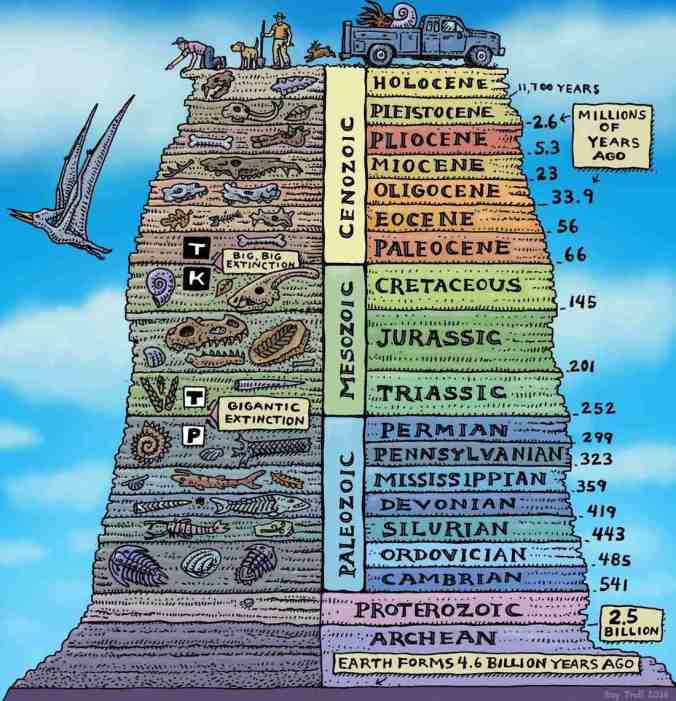
The Geologic History of Earth. Note the timescales. We are currently in the Holocene, which has been warm and moist and a great time to grow human civilization. But the activity of civilization is now pushing the planet into a new epoch which scientists call the Anthropocene. Ray Troll/Troll Art

Big words in the title may distract from the excellent point of this “cosmos & culture” article at National Public Radio (USA), worth a read:

Climate Change And The Astrobiology Of The Anthropocene

You can’t solve a problem until you understand it. When it comes to climate change, on a fundamental level we don’t really understand the problem.

For some time now, I’ve been writing about the need to broaden our thinking about climate. That includes our role in changing it — and the profound challenges those changes pose to our rightly cherished “project” of civilization. Continue reading


45 Red Wolves Remain In North Carolina

980x (3).jpg

Captive red wolf at Species Survival Plan facility, Point Defiance Zoo and Aquarium (Tacoma, Washington).B. Bartel / USFWS

Thanks to EcoWatch for this news

The U.S. District Court for the Eastern District of North Carolina today issued a preliminary injunction that orders the U.S. Fish and Wildlife Service (USFWS) to stop capturing and killing—and authorizing private landowners to capture and kill—members of the rapidly dwindling population of wild red wolves. Continue reading

Pangolins, Remarkable In More Ways Than One

1187

More than 1 million wild pangolins have been killed in the last decade. Photograph: Paul Hilton/WCS

We honestly knew little, perhaps nothing, about these creatures until very recently when they were in the news; and they were almost gone before we learned about them. Suddenly, thankfully, pangolins have been given the attention they deserve from the folks (including all of us) who may be able to help them survive as a species:

Pangolins thrown a lifeline at global wildlife summit with total trade ban

World’s most illegally trafficked mammal wins total ban on international trade in all species under the strictest Cites protection possible

Pangolins, the world’s most illegally trafficked mammal, were thrown a lifeline at a global wildlife summit on Wednesday with a total trade ban in all species. Continue reading

And In Other News Of Justice Related to Native Americans

gettyimages-477544415_slide-adeabb7c612c053a7083d6f756f6b0ec083cec86-s1100-c85

A road through the Gila River Indian Community in 2014. The tribe is one of 17 tribal governments the U.S. government announced Monday it had settled lawsuits with, over alleged mismanagement of land and resources. The Washington Post/Getty Images

Justice. Native Americans. Those are normally combined in the same sentence. But today, twice. In addition to the editorial here, we are happy to read the news below. Recognizing a mistake is a good first step. Taking action to fix the mistake is a great next step. Plenty more to be done on this one:

U.S. Government To Pay $492 Million To 17 American Indian Tribes

The U.S. government has agreed to pay a total of $492 million to 17 American Indian tribes for mismanaging natural resources and other tribal assets, according to an attorney who filed most of the suits.

In a joint press release by the Departments of Interior and Justice, Secretary of the Interior Sally Jewel said, “Settling these long-standing disputes reflects the Obama Administration’s continued commitment to reconciliation and empowerment for Indian Country.” Continue reading

Down An Amazing Rabbithole

Yesterday’s post got us looking through the MacArthur Foundation’s website, and lots of worthy material there to investigate, including this news we missed a couple months back. In some ways the findings are intuitive, and maybe seem not surprising; but the scientific evidence of the challenges facing biodiversity on the planet are certainly useful for policy planning, not to mention strengthening our resolved commitment to entrepreneurial conservation:

screen-shot-2016-09-25-at-3-23-18-pmMost Biodiverse Countries Spending the Least on Conservation, Study Finds

biodiversity-200.jpg.580x580_q85.jpgCountries that contain most of the world’s species biodiversity are also spending the least on a per-person basis to protect these natural assets, according to a MacArthur-supported study by theWildlife Conservation Society and the University of Queensland. Countries near or in the tropics, where most of the world’s diversity is located, spent the least on biodiversity conservation. The report recommends engaging leadership of these countries and promoting conservation through existing social traits within cultures that do not currently prioritize conservation.  Continue reading

Beauty Is A Beast

3029

Culling could undermine the viability of the entire Norwegian wolf population, say conservationists. Photograph: Roger Strandli Berghagen

We love sheep, and sheep farmers, and shepherds, and wool, and so on. But we cannot read this without feeling more sympathy for the wolves, at this moment:

Norway’s wolf cull pits sheep farmers against conservationists

Norway’s recent decision to destroy 70% of its tiny endangered population of wolves shocked conservationists worldwide and saw 35,000 sign a local petition. But in a region dominated by sheep farming support for the cull runs deep

Elisabeth Ulven and Tone Sutterud in Oslo

Conservation groups worldwide were astonished to hear of the recent, unprecedented decision to destroy 70% of the Norway’s tiny and endangered population of 68 wolves, the biggest cull for almost a century. Continue reading

Forest Protection By Any Other Name, For Any Other Purpose, Through Any Other Means, Is Just As Sweet

2000

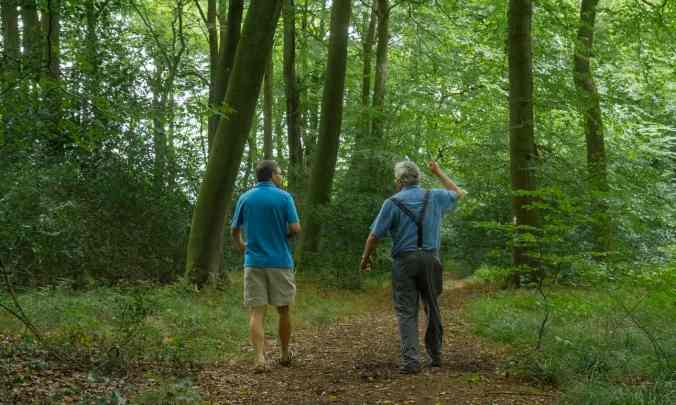
Richard Fortey and Derek Niemann among the beeches in Grim’s Dyke Wood. Photograph: Sarah Niemann

We do not favor private sector conservation efforts over all other options; we favor them over the option of no conservation at all. Governments around the world have rightly done the heaviest lifting on preserving nature, considering their resources, eminent domain, and other factors including the most salient; public lands effectively belong to an entire nation’s citizens. Philanthropies have also done enormous good. We have written plenty on both public and philanthropic conservation schemes. Today, a more modest story, but no less lovely:

A walk in the woods with Richard Fortey

Henley, Oxfordshire The palaeontologist and author offers a tour of Grim’s Dyke Wood, which he bought in 2011

Derek Niemann

Five years after the palaeontologist Richard Fortey bought Grim’s Dyke Wood, a small Chiltern beech wood, he shows no diminution in enthusiasm for his “nature reserve”. He gives me a tour, though in truth we delight in each other’s discoveries. I find him a ring of bright feathers on a pile of rotting pine logs, a raptor’s kill, the buffs and browns speaking of a song thrush forever silenced. He finds bracket fungi that have insinuated themselves into the thin, horizontal lesions on a cherry tree’s trunk. Continue reading

The Future Of Coffee Matters To Us For More Than One Reason

3000

A farmer with coffee cherries from his latest crop, the seeds of which are roasted, ground and brewed to make coffee. Photograph: YT Haryono/Reuters

We work in several countries where coffee production is important to the national economy. We serve coffee in every property we have ever managed. Many of us working in La Paz Group are coffee junkies.

But more than that, as I have mentioned at least once in these pages, we care extra deeply about the future of coffee because on one of the properties we manage, some excellent arabica estate coffee is growing in the shade of a rainforest canopy. I owe you more on that topic. For now, what has my attention is ensuring the long run sustainability of this organic coffee production.

So you can be sure of where some of our team members will be next Tuesday. Join us if you can:

Climate change is threatening the world’s coffee supplies: what can we do? – live chat

Join us on this page on Tuesday 20 September, 2-3pm (BST), to debate the future of coffee, and the millions who depend on it, in the face of climate change

What we’ll be discussing Continue reading

Using Those Final Months Well

midwayatoll_wide-1f160673ec1ed0fd74e6f9d1873a19f4ecc530f8-s1100-c85

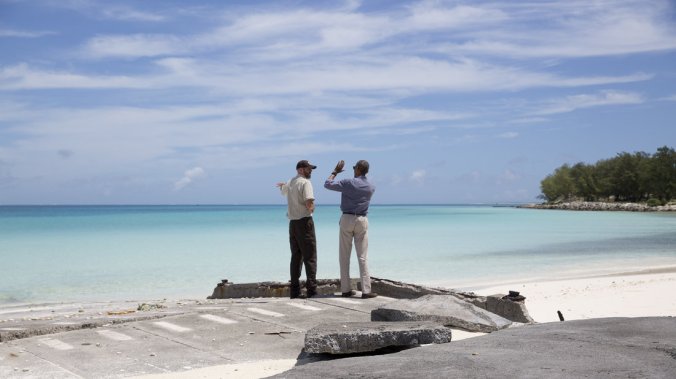
President Barack Obama on Midway Atoll in the Papahānaumokuākea Marine National Monument, Northwestern Hawaiian Islands, earlier this month with Marine National Monuments Superintendent Matt Brown. Obama expanded the monument using his authority under the 1906 Antiquities Act. Carolyn Kaster/AP

We are happy to see the Antiquities Act again proving so useful, so soon (the clock is ticking):

Obama To Designate First Marine National Monument In The Atlantic Ocean

During the Our Ocean conference later this morning in Washington, D.C., President Obama will establish the first national marine monument in the Atlantic Ocean.

The area of the Northeast Canyons and Seamounts Marine National Monument is the size of Connecticut and has been called an “underwater Yellowstone” and “a deep sea Serengeti.” Continue reading

Momentum In Tribal Territory


12tribes-listy9-jumbo.jpg

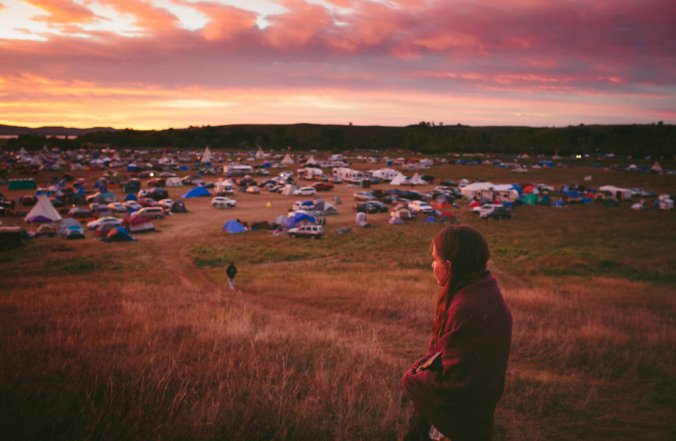
Susan Leopold, a member of the Patawomeck tribe of Virginia, watching the sun rise over an encampment where thousands have come to protest an oil pipeline near Cannon Ball, N.D.   Credit Alyssa Schukar for The New York Times

This is a great follow up to the earlier stories we read on this topic. We appreciate that the New York Times is now giving this as much attention as it deserves, and doing so with the dignity and respect that the protesters deserve:

From 280 Tribes, a Protest on the Plains

NEAR CANNON BALL, N.D. — When visitors turn off a narrow North Dakota highway and drive into the Sacred Stone Camp, where thousands have come to protest an oil pipeline, they thread through an arcade of flags whipping in the wind. Each represents one of the 280 Native American tribes that have flocked here in what activists are calling the largest, most diverse tribal action in at least a century, perhaps since Little Bighorn. Continue reading

Antiquities Act & Presidential Creativity

Sally Jewell

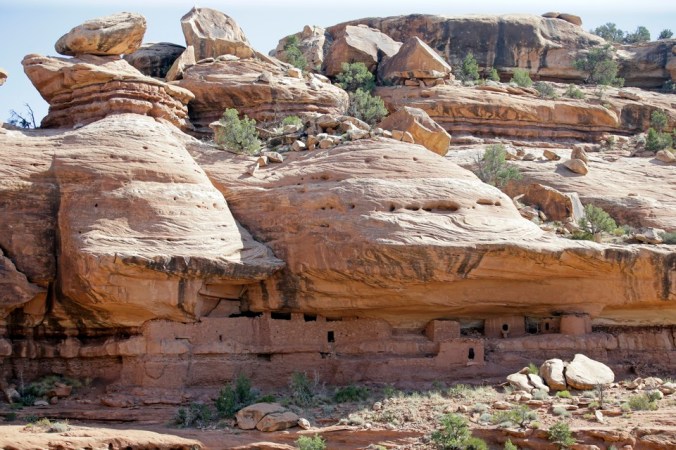
This July 15, 2016, file photo, U.S. The “Moonhouse” in McLoyd Canyon, near Blanding, Utah, is shown during U.S. Interior Secretary Sally Jewell tour. Hundreds of people who oppose the proposed Bears Ears National Monument in southeastern Utah showed up at Senate field hearing Wednesday, July 27, 2016, in Blanding on the polarizing topic. The meeting comes just weeks after Jewell visited the area and hosted a public town hall to hear from people from both sides. (AP Photo/Rick Bowmer)

The Atlantic has another story we appreciate today, besides this one. Whether Utah wants it or not, the designation sounds appropriate, and we appreciate the creative efforts of the President of the USA to dust off the Antiquities Act for this purpose:

…1.9 million acres in southeast Utah that President Obama is pondering designating a national monument. The “ears” in question are twin buttes hovering over the surrounding San Juan County, a sprawling stretch of wilderness that now finds itself at the white-hot center of a brawl over public-land management, presidential authority, and the 110-year-old Antiquities Act. Continue reading

Make Trouble When It Is Needed

lead_960 (1).jpg

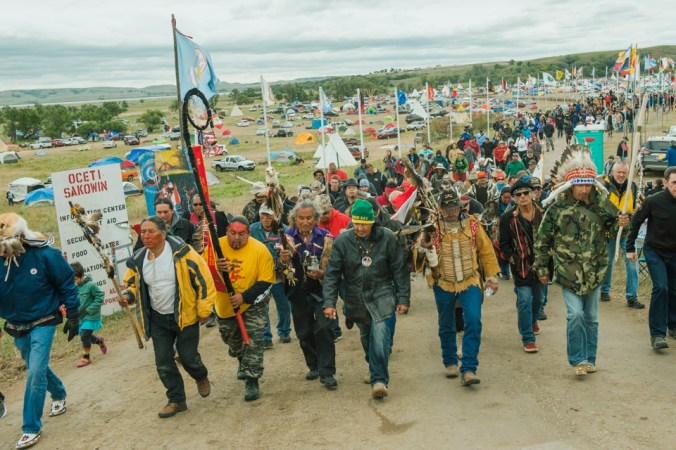
Protesters demonstrate against the Energy Transfer Partners’ Dakota Access oil pipeline near the Standing Rock Sioux reservation in Cannon Ball, North Dakota, U.S. September 9, 2016. REUTERS/Andrew Cullen

We are happy that the trouble-maker who brought this to our attention, and those pictured above are heard by the Trouble-Maker-In-Chief of the USA (who we hope uses his remaining four months in that office to similar good effect):

The Obama Administration Temporarily Blocks the Dakota Access Pipeline

The surprise move came after a federal judge declined to stop the 1,100-mile fossil fuel project’s construction.

The Standing Rock Sioux Tribe and the hundreds of Native protestors who have joined them in rural North Dakota won a huge but provisional victory in their quest to stop the Dakota Access pipeline, as the U.S. government announced late on Friday afternoon that it was voluntarily halting work on the project. Continue reading

Yosemite, Bigger & Better

ap_16251730452359_custom-c087184ae5c62fc4faaf27c7f89712aed7b80839-s1400-c85

A photo provided by The Trust for Public Land shows Ackerson Meadow in Yosemite National Park, Calif. Visitors to the park now have more room to explore nature with the announcement on Wednesday that the park’s western boundary has expanded to include Ackerson Meadow, 400 acres of tree-covered Sierra Nevada foothills, grassland and a creek that flows into the Tuolumne River. Robb Hirsch/AP

The full story here. All we can say is a three-letter word (no spoiler, so after the jump):

Yosemite National Park is growing by 400 acres — the largest expansion to the park since 1949.

NPR’s Nathan Rott reports that the new addition to the park, a stretch of land along the western boundary of Yosemite, has historically been used for logging and cattle grazing.

The Trust for Public Land, a conservation group, bought the land from private owners for $2.3 million and donated it to expand the park. The purchase was supported by the Yosemite Conservancy, National Park Trust and American Rivers, as well as private donors.

“The area includes a sprawling grassy meadow, wetlands and rolling hills dotted with tall pine trees, and is known to be home to at least two endangered species,” Nathan reports. Continue reading

From A Favorite Trouble-Maker

591.jpg

‘We see the effects of warming on land: the floods, the droughts, the refugees headed towards temporary safety.’ Photograph: Malcolm Francis/NIWA

Please click here so that credit goes to the source for this editorial by one of the thinkers we regularly turn to, one of our favorite sources of reminder to take action:

So, just as a refresher, it’s always good to remember that we live on an ocean planet. Most of the Earth’s surface is salt water, studded with the large islands we call continents.

It’s worth recalling this small fact – which can slip our minds, since we humans congregate on the patches of dry ground – because new data shows just how profoundly we’re messing with those seven seas. The International Union for the Conservation of Nature has published an extensive study concluding that the runaway heating of the oceans is “the greatest hidden challenge of our generation”. Continue reading

Can Environmental Regulations Increase Corporate Profits?

Image credit: Royal Olive via Flickr

A thought-provoking question, the economic and political debate over regulation and efficiency is one that has plagued governments long before the US Environmental Protection Agency was created. But with the EPA’s role in regulating pollution (among other things, of course) has come the question of whether corporations can actually benefit in the long run as a result of more stringent requirements that prevent wanton waste, for instance, being put in public waters. Sarah DeWeerdt reports:

According to conventional economic wisdom, the cost of complying with environmental regulations represents a burden that eats into companies’ profits. But another view, known as the Porter hypothesis, holds that environmental regulations can spur innovation and increased efficiency, ultimately increasing profitability.

Economists have debated these ideas for the past two decades but have had little direct empirical evidence to help settle the matter. Now, researchers Dietrich Earnhart of the University of Kansas and Dylan Rassier of the U.S. Department of Commerce have provided such a real-world test with a look at the U.S. chemical manufacturing industry between 1995 and 2001.

Continue reading

Renewable Energy = Renewed Job Market

Workers with Bella Energy install solar panels on a rooftop in Boulder on July 25, 2014. Photo © Denver Post

The energy that is generated from coal needs to keep decreasing relative to alternative energy sources if we want to reduce the release of pollutants and greenhouse gases into the atmosphere and rely on renewables instead. But for many people working in the coal industry, this change represents unemployment and poverty. In Colorado, a plan to train coal workers for solar energy jobs may be able to ameliorate the situation. Lea Terhune reports for Share America:

What does greater use of green energy mean for workers in more traditional energy sectors? A Colorado initiative may have the answer: put the workers where the jobs are. Consider the findings of Michigan Technological University professor Joshua M. Pearce and associates: There are nearly 209,000 solar workers in the United States, compared to about 150,000 remaining jobs in the coal industry. Hence Colorado’s plan: train unemployed coal workers to install solar panels.

“Our results show that there is a wide variety of employment opportunities in the solar industry, and that the annual pay is attractive at all levels of education,” Pearce writes in the Harvard Business Review.

Continue reading

Polled Brits Support EU’s Strong Wildlife Protection

We featured an opinion editorial from Friends of the Earth CEO Craig Bennett in The Guardian about Brexit’s effect on the environment exactly two months ago, and now the same publication is sharing pretty good news from a YouGov opinion poll in the UK whose results were released today. Apparently, a significant majority of Brits who were polled are in favor of laws protecting wildlife and their habitat that are at least as strong as the EU regulations already in place, but which wouldn’t apply post-Brexit. Some even support stronger environmental protection in the farming industry than current EU Common Agricultural Policy, especially wanting a ban in neonicotinoid pesticides. Damian Carrington reports:

Much of the protection of British wildlife and the environment stems from EU’s birds and habitat directives, but these will have to be replaced when the UK leaves the bloc. Farming minister George Eustice campaigned for the UK to leave the EU and told the Guardian in May that these directives were “spirit crushing” and “would go”.

Continue reading

Op-Ed: US National Protected Lands at Risk

From the New York Times, president of the Wilderness Society Jamie Williams writes an opinion editorial titled “Don’t Give Away Our Wildlife Refuges.” Perhaps given the global crisis I read the final word as refugees accidentally, so I was expecting something else entirely – maybe animals that are displaced by climate change. Instead, I learned that there is a relatively strong segment of the US Congress and state legislatures that are constantly trying to undermine the country’s system of public protected lands, sometimes in ways that could lead to the park or refuge’s destruction:

Tucked into the fiscal relief package for Puerto Rico this spring was a provision to give away a national treasure that belongs to all Americans — 3,100 acres of the Vieques National Wildlife Refuge. The proposal had nothing to do with the economic recovery of Puerto Rico. But it would have handed an important victory to extremists in Congress and state legislatures who want to grab national lands and turn them over to the states to be sold or leased.

Continue reading

National Parks Valorizing Flora & Fauna

5616.jpg

Glad to see chefs in South America leading this innovative form of entrepreneurial conservation, and crossing country borders to do so:

Bolivian national park serving up sustainable ingredients for fine dining

Chefs among travellers proving there is demand for produce from Madidi – and helping communities understand commercial potential of their flora and fauna

Deep in Bolivia’s Madidi national park, Kamilla Seidler – the head chef of the Gustu restaurant in La Paz – was looking at a basket of cusí, the fruit of the babassu palm. An oil processed from the seeds is already marketed as a hair and skin product, but Seidler suspected it could have culinary potential, too.

“Bring me three kilos of it and in a month I can tell you all kinds of things you can do with it,” she told Agustina Aponte, who was representing a group of women from Yaguarú, one of 31 campesino and indigenous communities living within Madidi’s 1.89m hectares.

Continue reading

Bill McKibben Deserves Better

07mckibbenSUB-master768.jpg

We frequently have linked to articles about, and to messages by, this man whenever we see them. It is not surprising to read this, but it is important that we are all aware of this additional price he pays for the actions he takes on behalf of the environment:

MIDDLEBURY, Vt. — THERE are shameful photos of me on the internet.

In one series, my groceries are being packed into plastic bags, as I’d forgotten to bring cloth ones. In other shots, I am getting in and out of … cars. There are video snippets of me giving talks, or standing on the street. Sometimes I see the cameraman, sometimes I don’t. The images are often posted to Twitter, reminders that I’m being watched.

In April, Politico and The Hill reported that America Rising Squared, an arm of the Republican opposition research group America Rising, had decided to go after me and Tom Steyer, another prominent environmentalist, with a campaign on a scale previously reserved for presidential candidates. Using what The Hill called “an unprecedented amount of effort and money,” the group, its executive director said, was seeking to demonstrate our “epic hypocrisy and extreme positions.” Continue reading