Geothermal Engineering, Radical Solutions

NAS_Clouds_courtesy-Flickr-user-Janne-Morem

Photo by Janne Morem/Flickr. Could global warming be overcome by releasing light-reflecting chemicals into the atmosphere? With safety and efficacy at the forefront of debate, David Keith discusses the moral and political quandaries surrounding the science of geoengineering.

We have mentioned geothermal engineering on and related topics on than one occasion, but there is a more radical branch of engineering the thermal options at our disposal, with special regard to the climate change “solutions” debate. Thanks to Harvard Gazette for this informative interview on the topic:

Climate engineering: In from the cold

Keith says new reports will likely boost deeper look at geoengineering concepts

When the National Academy of Sciences (NAS) released a pair of reports this month on geoengineering, which involves deliberately intervening in the climate system to counter global warming, discussion of the controversial topic moved into the mainstream science community. The reports concluded that geoengineering is no silver bullet, and that further research is needed. Continue reading

Neighbors Unite

Photo credit: Davebloggs007/Flickr

Photo credit: Davebloggs007/Flickr

Many of the RAXA Collective contributors could could easily get behind  the motto: “Book Lovers Unite!”; many could be found with their noses in a book from early childhood to the present day. So when we read about these “pop up libraries” in various parts of the country the only response possible was excitement.

Books are an essential part of culture and the LFL concept of sharing creates an even greater community bond worth conserving.

Three years ago, The Los Angeles Times published a feel-good story on the Little Free Library movement. The idea is simple: A book lover puts a box or shelf or crate of books in their front yard. Neighbors browse, take one, and return later with a replacement. A 76-year-old in Sherman Oaks, California, felt that his little library, roughly the size of a dollhouse, “turned strangers into friends and a sometimes-impersonal neighborhood into a community,” the reporter observed. The man knew he was onto something “when a 9-year-old boy knocked on his door one morning to say how much he liked the little library.” He went on to explain, “I met more neighbors in the first three weeks than in the previous 30 years.” Continue reading

Sustainable Cities Index 2015

Screen Shot 2015-02-11 at 7.15.47 PM

We have not had as many posts on sustainable cities as we should, but aim to begin making up for that with this link to the current state of the art:

…The purpose of this report, our first Sustainable Cities Index, is to take 50 of the world’s most prominent cities and look at how viable they are as places to live, their environmental impact, their financial stability, and how these elements complement one another. All 50 of these brilliantly different cities – many of which I have been fortunate enough to visit – are in various stages of evolution – some being further along the sustainability journey than others. Each possesses its own geolocation and cultural distinctions but shares common urban challenges in the areas of job creation, mobility, resiliency and improving the quality of life of its residents.

Continue reading

Fairer Trade Pact, In The Interest Of Wildlife

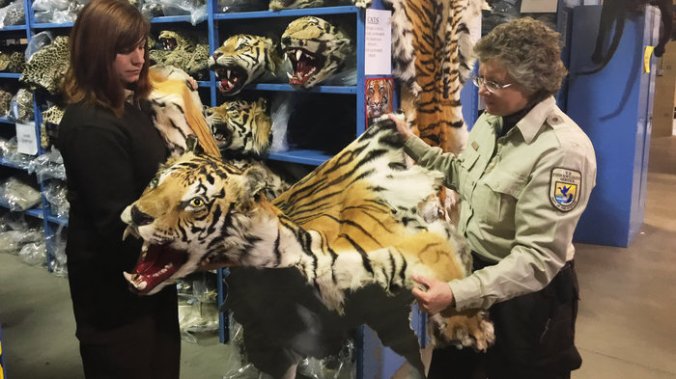
Coleen Schaefer (left) and Doni Sprague display a tiger pelt that was confiscated and is being stored at the National Eagle and Wildlife Repository on the outskirts of Denver. Some 1.5 million items are being held at the facility. The Trans-Pacific Partnership, which is still under negotiation, would punish wildlife trafficking.

Coleen Schaefer (left) and Doni Sprague display a tiger pelt that was confiscated and is being stored at the National Eagle and Wildlife Repository on the outskirts of Denver. Some 1.5 million items are being held at the facility. The Trans-Pacific Partnership, which is still under negotiation, would punish wildlife trafficking. Jackie Northam/NPR

Thanks to National Public Radio (USA) for this story, which has nothing pleasant about it but which signals a positively determined approach to do something substantive about this tragic scourge:

Tiger Skins And Rhino Horns: Can A Trade Deal Halt The Trafficking?

If you want a sobering look at the scale of wildlife trafficking, just visit the National Eagle and Wildlife Repository on the outskirts of Denver. In the middle of a national reserve is a cavernous warehouse stuffed with the remains of 1.5 million animals, whole and in parts.

They range from taxidermied polar bears to tiny sea horses turned into key chains. An area devoted to elephants is framed by a pair of enormous tusks. Continue reading

Seeing The Forest Through The Concrete Jungle

urbanization-680x450

Shutterstock, Oxygen64

Thanks to Dan Levitan for his ever-punchy summaries of important environmental science stories in Conservation:

IS THERE AN OPTIMAL URBANIZATION STRATEGY?

Cities are going to get bigger. With more than half the world now living in urban areas, and that percentage growing steadily, that means the concrete and steel will have to stretch out into areas that are currently forest and farm and grass. But just letting that process happen without a plan is likely to be a very bad idea.

A study published in the journal Landscape and Urban Planning simulated the urbanization process in the Piedmont region of North Carolina out to 2032. The question the authors posed was, essentially, what land will suffer in favor of the ever-growing city? Continue reading

Please Do The Needful

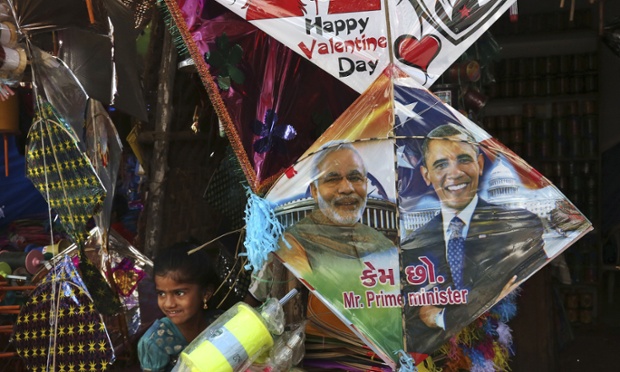
An Indian girl stands near a kite with portraits of India’s Prime Minister Narendra Modi and US President Barack Obama, displayed for sale at a shop ahead of the Hindu festival of Makar Sankranti, also knowns as kite festival, in Hyderabad, India, 12 January 2015. Photograph: Mahesh Kumar A./AP

An Indian girl stands near a kite with portraits of India’s Prime Minister Narendra Modi and US President Barack Obama, displayed for sale at a shop ahead of the Hindu festival of Makar Sankranti, also knowns as kite festival, in Hyderabad, India, 12 January 2015. Photograph: Mahesh Kumar A./AP

Down here in Kerala the air is perfectly clean, and the biodiversity hotspot of the Western Ghats may spoil us into thinking all is well with the environment; but it is not. And the meeting of these two heads of state could do something substantive about it. We hope they do (the needful, as they say in India):

…“The co-operation on clean energy and climate change is critically important,” Ben Rhodes, the deputy national security adviser, told a conference call with reporters.

America is hoping to persuade India, one of the world’s biggest emitters, to commit to an ambitious post-2020 plan for reining in its greenhouse gas emissions ahead of the international climate change meeting in Paris this December. Continue reading

Sometimes The Truth Is Hard To Believe

Photo by Christopher Halloran/Shutterstock.com, modified by Phil Plait

Photo by Christopher Halloran/Shutterstock.com, modified by Phil Plait

We try to minimize the doom and gloom and accentuate the solutions; but sometimes our eyebrows rise to new heights and we must share:

Yup, a Climate Change Denier Will Oversee NASA. What Could Possibly Go Wrong?

By Phil Plait

So, Sen. Ted Cruz (R-Texas) was just named to be the chairman of the Subcommittee on Space, Science, and Competitiveness as Republicans take over the Senate. This subcommittee (which used to be just Space and Science but was recently renamed) is in charge of oversight of, among other things, NASA.

This is not a good thing. Just how bad it is will be determined. Continue reading

Particulate Matter Pollution

A view of the Eiffel Tower through smog in March. Several regions of France experienced high levels of particulate pollution that month. Credit Patrick Kovarik/Agence France-Presse — Getty Images. Via The New York Times.

We’re always interested in learning about pollution and ways to counter it, no matter what kind of pollution it is. Roughly a week ago Michael Greenstone, the Milton Friedman professor of economics at the University of Chicago, wrote a piece for the New York Times about particulate matter pollution, which we have limited knowledge of. Some of the data Greenstone explained was fairly surprising, and we learned more about this serious form of air pollution. Here he is on the topic:

The World Health Organization considers fine particulate matter pollution levels higher than 10 micrograms per cubic meter to be unsafe. The majority of American cities are in the safe zone, with the average pollution level at 9.6. Thirty-three percent of cities are above the W.H.O. standard. Those cities tend to be geographically dispersed throughout the United States, but are predictably cities with heavy industry and driving, like Cleveland, Chicago, Los Angeles and Philadelphia. Outside of the W.H.O., the United States has its own particulate matter standard of 12 micrograms per cubic meter. The pollution in 13 percent of American cities is higher than that.

Continue reading

Lima, Climate Change, Key Takeaways

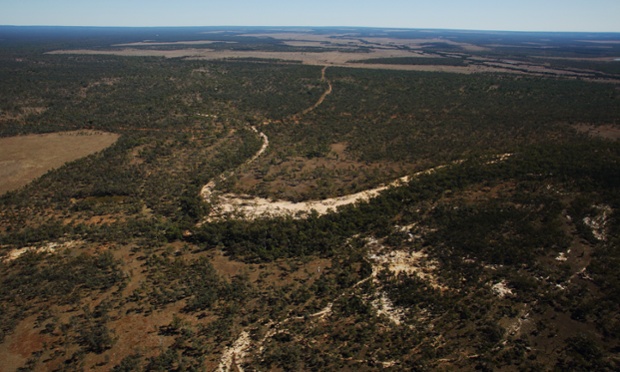
The Galilee basin in central Queensland: ‘it would produce 6% of the carbon necessary to take the planet past a 2C temperature rise, the red line set by the world’s governments’. Photograph: Andrew Quilty/PR

The Galilee basin in central Queensland: ‘it would produce 6% of the carbon necessary to take the planet past a 2C temperature rise, the red line set by the world’s governments’. Photograph: Andrew Quilty/PR

We new that his leaving 350 would not mean any retreat from activism. Proof positive here. Thanks to Bill McKibben and the Guardian for their attention to this week’s meetings in Lima:

The world’s nations are meeting in Lima, near the equator, to pledge and promise about global warming. But the actual worth of those promises can be more accurately gauged in the far north and the far south of the planet, where real decisions in the next months will show whether the climate concern is rhetorical or real.

By now most people know about the northern example: the tar sands of Alberta. Some time in the coming months the new Republican-controlled Congress will demand that Obama approve the construction of the Keystone XL Pipeline. If he vetoes that call and sticks to his principles, it will help keep expansion of the tar sands complex in check. That won’t make up for America’s vast expansion of oil and gas drilling in recent years, but it will send some kind of signal: there is a limit somewhere to how much fossil fuel we plan to extract. Continue reading

Farming, Food & Climate Change

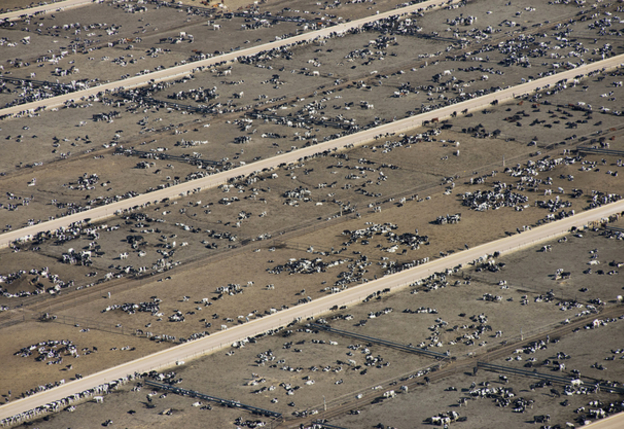
Cattle feedlot, southeastern Colorado. April 2013. 84760. Credit: John Wark

Cattle feedlot, southeastern Colorado. April 2013. 84760. Credit: John Wark

Thanks to Audubon magazine for the interview in their current issue with one of the go-to explainers we most frequently seek out on food sustainability issues:

Food Fight: Reforming the Farm

Celebrated author Michael Pollan talks climate change, and how farming can help stop it.

BY RENE EBERSOLE  Published: November-December 2014

Q: Should we be looking more closely at how the food we eat affects the climate?

A: I think there’s a growing recognition that you can’t really address climate without looking at the food system. Yet exactly how you do that, what that means from a policy point of view, is a lot more complicated than regulating coal-fired power plants.

Agriculture is a large source of global warming emissions. Yet you propose that it can help reverse climate change?

Continue reading

Be Careful What You Wish For

You can’t always get what you want. Sometimes you can, but the law of unintended consequences never ceases to surprise us. Thanks to this week’s Science section of the New York Times for a marine/culinary example:

A New Bounty of Oysters in Maryland, but There Is a Snag

Recent changes to state policy and a growing national affection for the shellfish have led to an oyster farming boom that is hampering the traditional fishing ways of the watermen.

The Solar Cycling Double Whammy

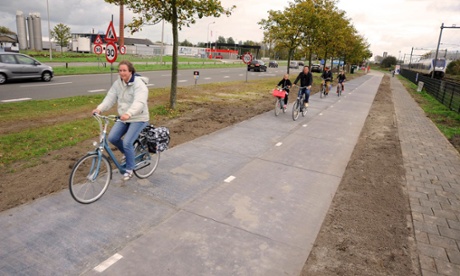
5414df08-e96b-4af8-ae68-1c517a64a043-460x276

SolaRoad in Krommenie, the Netherlands, will be the world’s first cycle path with embedded solar panels. Photograph: SolaRoad

Two wrongs never make a right, but sometimes two green initiatives work together to create more than the sum of their parts, as this story reported in the Guardian demonstrates:

World’s first solar cycle lane opening in the Netherlands

Solar panels embedded in the cycle path near Amsterdam could generate enough electricity to power three houses, with potential to extend scheme to roads

The bike path that connects the Amsterdam suburbs of Krommenie and Wormerveer is popular with both school children and commuters: around 2,000 cyclists ride its two lanes on an average day.

But next week Krommenie’s cycle path promises to become even more useful: on 12 November a 70-metre stretch will become the world’s first public road with embedded solar panels.

Continue reading

Wet Future, Sustainable Cities

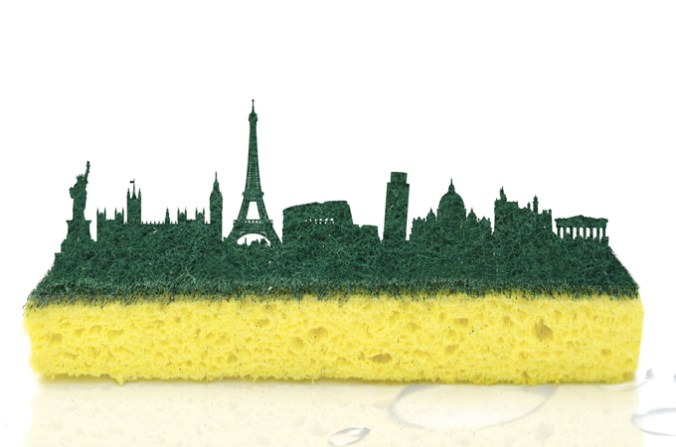
city-sponge

Thanks to Conservation for this counterintuitive explanation of the sustainable city of the future, with the water-related effects of climate change taken into account:

THE FUTURE WILL NOT BE DRY

In a world of melting ice caps, storm surges, and tropical cyclones, the most resilient cities aren’t the ones that fight the water back—but the ones that absorb it.

By Fred Pearce

The ramshackle river port of Khulna in southwest Bangladesh is one of the most flood-prone urban areas on Earth. The third-largest city in one of the world’s poorest and most populous nations is at constant risk of inundation. It lies 125 kilometers inland from the shores of the Indian Ocean. And yet a tenth of this city of 2 million people is flooded at least ten times a year on average.

Continue reading

Profits, Privileges, Environmental Destruction

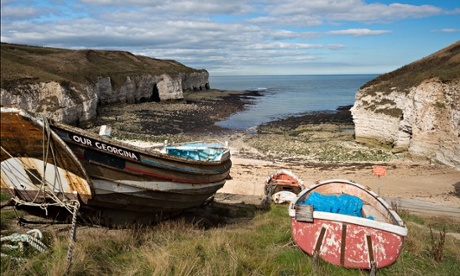
Mombiot blog on sea protection : Fishing boats near the beach at Flamborough head Yorkshire

Fishing boats near the beach at North Landing, Flamborough Head, on the Yorkshire coast. Falmborough Head is home to one of the UK’s three ‘no take’ zones – that in total cover just 5 sq km. Photograph: Paul Richardson/Alamy

The excellent Guardian editorialist, whom we have linked to more than once, strikes again:

Ripping up the sea floor on behalf of royal profits

George Monbiot: Even the pathetic laws protecting marine life in this country are instantly swept aside in response to lobbying by Prince Charles’s tenants

A few days ago, I visited the Flamborough Head “no take zone”, one of the UK’s three areas in which commercial fishing is prohibited.

Here marine life is allowed to proliferate, without being menaced by trawlers, scallop dredgers, drift nets, pots and all the other devices for rounding it up, some of which also rip the seabed to shreds. A reef of soft corals, mussels, razorfish and other species has begun to form, in which plaice and cod, crabs and lobsters can shelter, unmolested by exploitation. Fantastic, isn’t it?

Well curb your enthusiasm. Continue reading

Say It Ain’t So, Ferran!

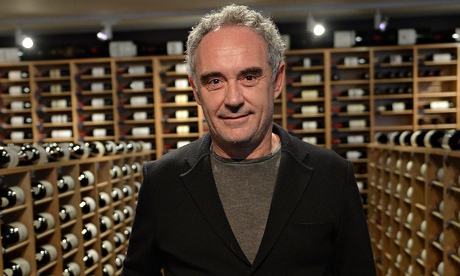
Ferran Adrià, of the award-winning restaurant elBulli. Photograph: Emmanuel Dunand/AFP/Getty Images

Ferran Adrià, of the award-winning restaurant elBulli. Photograph: Emmanuel Dunand/AFP/Getty Images

The quote from a group supporting the development of a museum on a protected coastal ecosystem–“We understand that it’s very easy to raise the populist flag in defence of the environment and that this always manages to attract a good number of supporters,”–says all you need to know to understand how important this issue is. In fact, it is not so easy. It is not easy at all to protect the last remaining unspoiled beaches in the world. We are sure that with a bit of publicity, the right outcome will prevail in this case:

When Ferran Adrià shut the doors of his elBulli restaurant in 2011, he quickly reassured gastronomes that it was not closing for good, just for a revamp. ElBulli would become a cultural foundation , complete with museum and visitor centre called elBulli 1846, all to reopen on an expanded plot in 2015.

Foodies may have been reassured, but not so environmentalists, who are furious that the expanded elBulli will eat up more space on the Cala Montjoi, one of Spain‘s few protected Mediterranean beaches. Continue reading

Saving Species–One Paper, One Video, One Course, And One Initiative At A Time

saving-species-logo-long-small

We thank Stuart Pimm for his ongoing excellent contributions to conservation through science and education, as well as creative activism, and congratulate him and his colleagues for their most recent publication:

new scientific paper was published today in the prestigious journal Science and it has important findings for biodiversity. Though it reaffirms what we already know—that there is a global extinction crisis and it is worse than we believed—it also details how technology and smart decision-making are offering hope for endangered species and their habitats. Continue reading

Bedeviling Bovine Biproducts

cow-butt

Roberta Kwok, over at Conservation, shares a new view on the humble cow:

COWS VS. COAL

To reduce emissions, the usual thinking goes, we should promote alternative energy and declare war on coal. But researchers argue that policymakers are ignoring a crucial climate threat: cows. Continue reading

Thank You, Australia

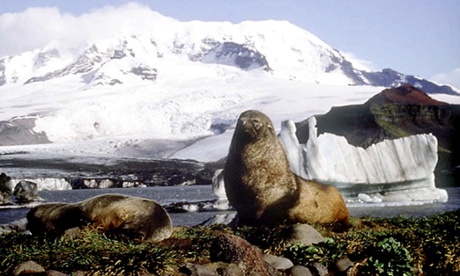
An elephant seals basks on Heard Island. Photograph: Australian Antarctic Division, HO/AP

An elephant seals basks on Heard Island. Photograph: Australian Antarctic Division, HO/AP

Thanks to the Guardian for their coverage of environmental issues around the world. We give credit where due, and this is continued good news for marine conservation without any qualifications (not even going to mention mining policies):

The government has created Australia’s largest fully protected marine reserve near two far-flung islands, in a move which environmental groups say will help safeguard rare whale species.

The Heard Island and McDonald Islands Marine Reserve has been expanded by 6,200 sq km following a scientific assessment of its conservation values.

The reserve now spans 71,200 sq km of ocean. Heard and McDonald Islands, an Australian external territory located 4,100km south-west of Perth, are barren, uninhabited outposts considered among the most remote places on Earth. Continue reading

Improving Governance For The Environment, One Citizen And One Pollinator At A Time

We have been noting increasing stories about loss of pollinators in the USA and Europe, and especially notice how seriously this problem is taken in the UK. Solutions? Not so obvious.  But we are on the lookout each day for innovations in both the public and private sectors. This UK governance procedure seems a promising mechanism for getting citizens aware of, then involved finding solutions for environmental challenges such as the alarming loss of pollinators nationwide:

A consultation on the National Pollinator Strategy: for bees and other pollinators in England

Overview

Defra is seeking views on a proposed national pollinator strategy for bees and other pollinators in England.  The strategy sets out proposals to safeguard these important insects given their role in pollinating many food crops and wild plants and their contribution to our food production and the diversity of our environment… Continue reading

Greening The Green, With Plastic?

Photo by Julian Herbert/Getty Images

Photo by Julian Herbert/Getty Images

We rarely have the chance to link to the writing of Hendrik Hertzberg, one of the New Yorker‘s cleverest turners of phrase, because he so frequently writes on political matters (generally outside our scope on this site).  But when he writes on another topic, it is invariably worth reading if nothing else for the quality of his writing.  This one, as it happens, is closer to our general range of interests because of the ecological implications:

On Wednesday came news that, starting in 2016, the Bank of England will replace its paper currency with plastic.

This doesn’t mean that our British cousins will thenceforth have to make all their purchases with credit cards, as in, “Do you take plastic?” They’ll still have folding money, but it will be printed on sheets of plastic polymers—a stiffer version of the stuff that the plastic bags which disfigure the trees of New York City are made of. Continue reading