If You Happen To Be On Ponce De Leon

Screen Shot 2015-04-25 at 5.25.37 AM

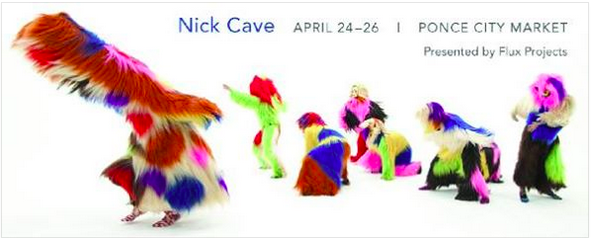
It’s been awhile since we wrote about Nick Cave and the inspired and inspiringly creative form of upcycling he applies in his “happenings”. It seems particularly appropriate that this particular Flux Project (sounds pretty pop-up, right?) takes place at Atlanta’s Ponce City Market, an adaptive reuse renovation of the historic 1926 Sears & Roebuck building into an urban community of hub of living, work and public space.

About the work

Up Right: Atlanta is a “call to arms, head and heart” for Cave initiates—the lead characters of this work. Through the performance, they are prepared mind, body and spirit to face the forces that stand in the way of self-hood, to enter a world over which they have complete control. Initiates become warriors of their own destiny.
Continue reading

Redefining Recycling

In the early years of this site we highlighted a concept of “the fourth r” – focusing on the restaurants and events planners who support a form of social entreprenuership by donating excess food to local shelters. On an annual basis huge amounts of prepared foods go to waste in all forms of venues, but the classic buffet-style cafeteria is a long-term culprit. But luckily creative solutions have gone hand-in-hand with awareness of the problem. At the time we used the term “recycled” when taking about the food programs. Kudos to the new voices who redefined at as “repurposed.”

Back in 2011 when I was a student at the University of Maryland in College Park I once noticed a massive pile of trash in front of a dining hall. A closer look revealed that it was mostly food — a half-eaten sandwich, a browning apple and what appeared to be the remains of the day’s lunch special.

The heap was gross, but intriguing. Turned out it was a stunt to get students thinking about how much food they throw out each day.

Nowadays, students are coming face to face with their food waste, and its environmental and social impact, a lot more often. They also have more opportunities do something about it. Continue reading

21st Century Alchemy

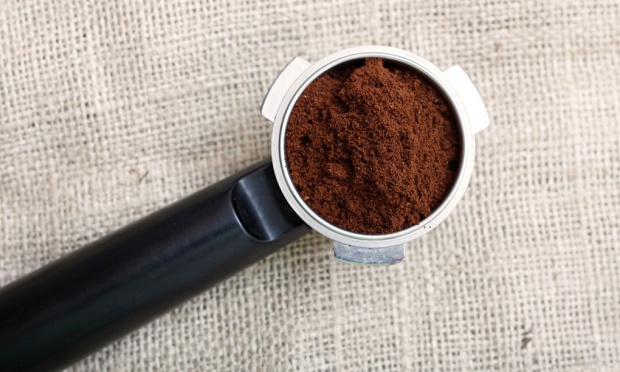
Scientists at the City University of Hong Kong can turn coffee grounds and stale bakery goods into a sugary solution that can be applied to manufacture plastic. Photograph: Alamy

Scientists at the City University of Hong Kong can turn coffee grounds and stale bakery goods into a sugary solution that can be applied to manufacture plastic. Photograph: Alamy

We frequently talk about the recycling on these pages, with an eye toward the developing awareness that the concept is no longer limited to inorganic, static materials. This recent article in the Guardian indicates that plant cellulose based plastic is just the tip of the iceberg in the possible ways to convert the mountains of food waste in many parts of the world into materials with environmental benifits.

Scientists at the City University of Hong Kong have found that they can turn coffee grounds and stale bakery goods – collected from a local Starbucks – into a sugary solution that can be used to manufacture plastic. The food waste was mixed with bacteria and fermented to produce succinic acid, a substance usually made from petrochemicals, that can be found in a range of fibres, fabrics and plastics. Continue reading

Beer, Craftily Crafted

Water samples at the Clean Water Services brewing competition last year used to compare their high-purity water to other local sources of water. /Courtesy of Clean Water Services

Water samples at the Clean Water Services brewing competition last year used to compare their high-purity water to other local sources of water.
/Courtesy of Clean Water Services

When we previously wrote about artisanal beer and it’s most precious ingredient, water, we thought that the New Belgium Brewery was an outlier of alchemy. But thanks to the NPR team at the Salt, we hear this forward thinking form of recycling is more common than we thought.

Clean Water Services of Hillsboro says it has an advanced treatment process that can turn sewage into drinking water. The company, which runs four wastewater treatment plants in the Portland metro area, wants to show off its “high-purity” system by turning recycled wastewater into beer.

Clean Water Services has asked the state for permission to give its water to a group of home brewers. The Oregon Brew Crew would make small batches of beer to be served at events – not sold at a brewery.

But as of now, the state of Oregon doesn’t technically allow anyone to drink wastewater, no matter how pure it is.

The Oregon Health Authority has approved the company’s request for the beer project. But the Oregon Environmental Quality Commission will also have to sign off on it before anyone serves a beer made from recycled sewage.

Continue reading

A Human’s Best Illustration Of Important Stuff

179571de-e7d8-4a39-82bf-ad6bef672f58-620x372

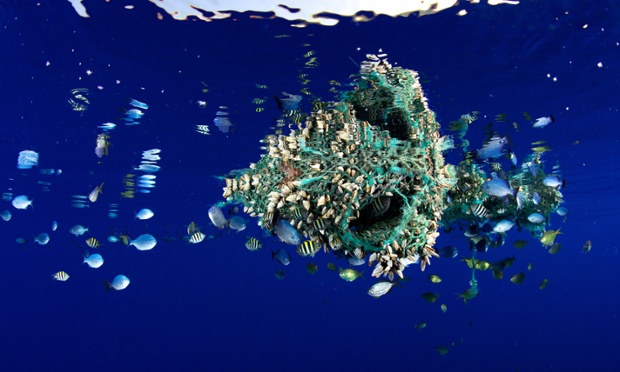
Plastic pieces in the ocean damage wildlife and enter the food chain when ingested by fish. Photograph: Bryce Groark/Alamy

Thanks to the Guardian for ongoing coverage of the world’s great environmental challenges:

Full scale of plastic in the world’s oceans revealed for first time

Over five trillion pieces of plastic are floating in our oceans says most comprehensive study to date on plastic pollution around the world

More than five trillion pieces of plastic, collectively weighing nearly 269,000 tonnes, are floating in the world’s oceans, causing damage throughout the food chain, new research has found.

Data collected by scientists from the US, France, Chile, Australia and New Zealand suggests a minimum of 5.25tn plastic particles in the oceans, most of them “micro plastics” measuring less than 5mm.

Continue reading

Courtney, Come To Kerala!

3D0A6730-web

We lean to the idea that art can be a nobler calling than other ways of making a living, even in unusual circumstances. After reading the morning news today, one could be forgiven for continuing to think that art is essentially a commercial endeavor, which we would rather not believe in spite of all the evidence:

AUCTION1-thumbStandardThanks to Giacometti, Sotheby’s Hits Its Highest Total Ever at Fall Opening

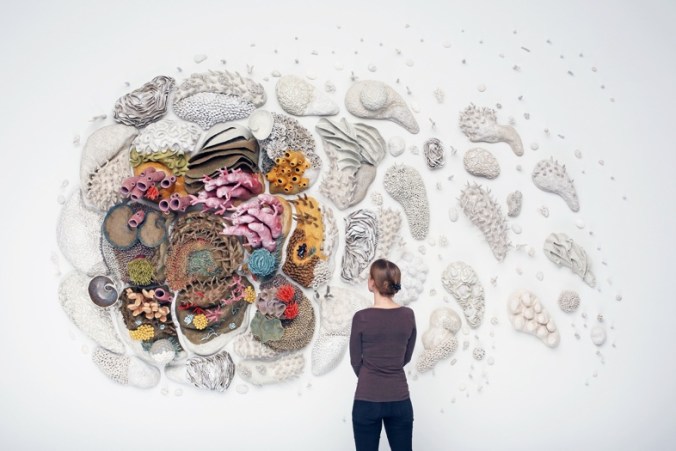
But thanks to Courtney Mattison for hewing to a different road, for which our doors will be open if she chooses to visit: Continue reading

Shiny, Pretty Things

2014RAPLighters_copy

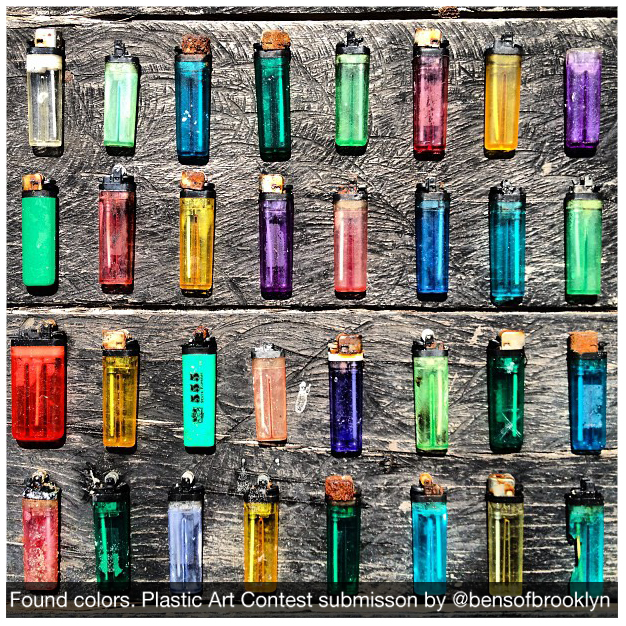
We have not eliminated plastic entirely at our properties, but we have been thinking about it for the last few years and taking action every chance we get. How to make the best of an otherwise horror show of plastic, according to this post on Surfrider Foundation’s blog:

The reality of plastic pollution is that it is happening in every home, office, school and community. It’s plaguing our country. Plastic creates toxic pollution at just about every stage of its existence, from manufacture, to use, to disposal. Considering the facts, it’s no surprise that it’s the most prevalent type of marine litter worldwide.

The extent of plastic use is mind-boggling.

Take plastic bags for instance. Americans go through about 100 billion plastic bags a year. That’s 360 bags for every man, woman and child in the United States. And, less than five percent of these bags are recycled. Continue reading

Lost At Sea

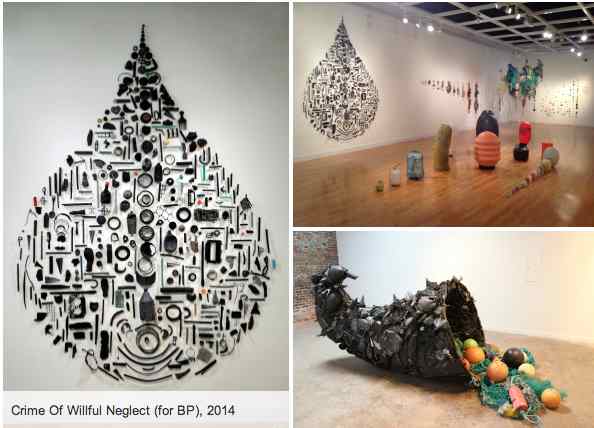
From the Drifters Project by Pam Longobardi

From the Drifters Project by Pam Longobardi

The world’s oceans effect all life on earth and it’s no longer news that even the most pristine places on earth are impacted by our “toxic legacy,” as artist Pam Longobardi puts it. The project statement for her Drifters project is really worth reading. Here is an excerpt I found particularly poignant:

Plastic objects are the cultural archeology of our time.  These objects I see as a portrait of global late-capitalist consumer society, mirroring our desires, wishes, hubris and ingenuity.  These are objects with unintended consequences that become transformed as they leave the quotidian world and collide with nature to be transformed, transported and regurgitated out of the shifting oceans.  The ocean is communicating with us through the materials of our own making.  The plastic elements initially seem attractive and innocuous, like toys, some with an eerie familiarity and some totally alien.  At first, the plastic seems innocent and fun, but it is not.  It is dangerous.   We are remaking the world in plastic, in our own image, this toxic legacy, this surrogate, this imposter.

By doing this Drifters project, she has removed thousands of pounds of material that would be considered trash and then presenting it within a cultural context. Amie wrote a previous post about artists using ocean trash as materials for art. They too found themselves telling the story of global consumerism using plastic.   Continue reading

Newspaper Bag Station at Cardamom County

???????????????????????????????

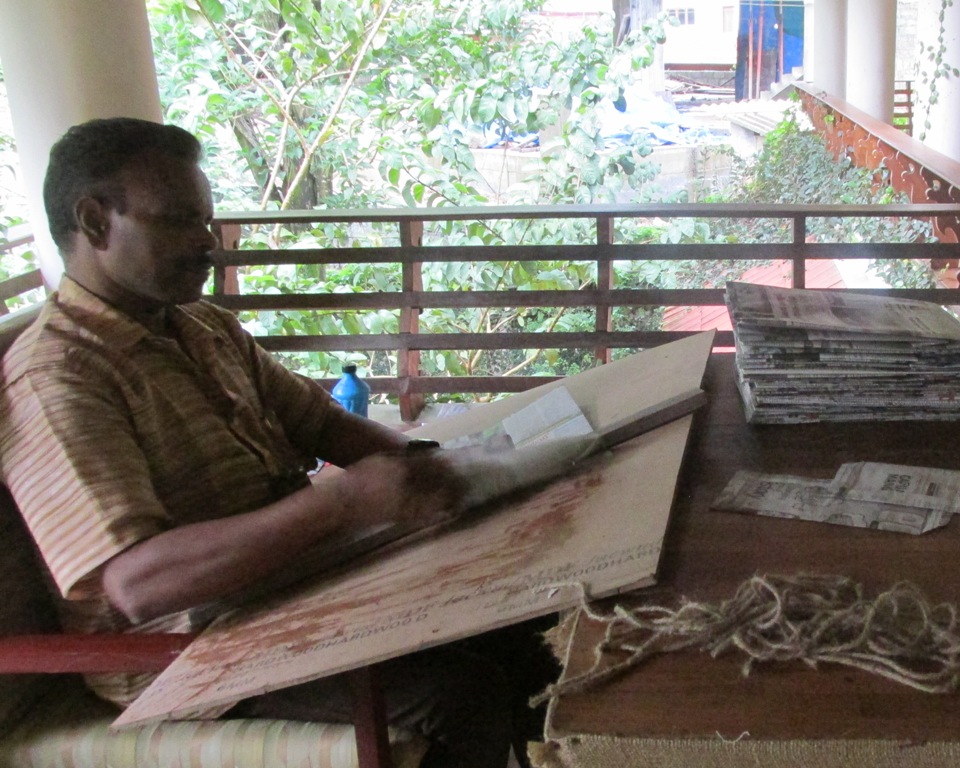
New member of PaperTrails stationed at Cardamom County

At Cardamom County, we have been working to get the local community involved through the group PaperTrails. PaperTrails helps provide jobs for people who could otherwise not get them. La Paz Group has appreciated the way it involves the locals by providing work and  re-purposing old newspaper. For La Paz Group they make gift bags out of recycled newspaper and sanitary bags from recycled paper. Now, we have a new member of the PaperTrails team stationed at Cardamom County. He is stationed on the second level of the Ayurvedic Center and makes bags for all the La Paz Group properties.. We like this because now guests can engage with the paper bag initiative in a new way. They can see how they are made and learn to make them as well.  Continue reading

Bicycle Zeitgeist

We love design and we love bicycles, and we’ve been writing about their innovation-intersection long before Gianluca’s collapsable model came to our attention.

But we’re grateful for the reminders of the creativity that urges us to upcycle, recycle and craft our “ride”.

Mythology of Waste

This slideshow requires JavaScript.

It’s been several months since Chinese conceptual artist Xu Bing orchestrated the monumental task of suspending a pair of 12 ton birds into the nave of one of New York City’s most famous cathedrals. Fashioned from salvaged construction debris from Beijing’s World Financial Center, the phoenix pair is reminiscent of the more 2-dimensional work of Brazilian artist Vik Muniz in both philosophy and meticulously layered execution.

Throughout China’s history, every dynasty has had its form of phoenixes. Representing luck, unity, power and prosperity, these mythological birds have, for the most part, been benevolent, gentle creatures. But this pair, fashioned from the materials of commercial development, reflect the grimmer and grittier face of China today.

“They bear countless scars,” Mr. Xu explained, having “lived through great hardship, but still have self-respect. In general, the phoenix expresses unrealized hopes and dreams.” Continue reading

Recycling’s Rare Odd Find

This slideshow requires JavaScript.

We should recycle, re-use, waste less just because. Occasionally there are distracting stories about other reasons for these more eco-efficient behaviors. A copy of the USA Declaration Of Independence found in a “junk” sale–that sort of thing. These rare occurrences just make it more fun to do the green thing:

When a scrap metal dealer from U.S. Midwest bought a golden ornament at a junk market, it never crossed his mind that he was the owner of a $20 million Faberge egg hailing from the court of imperial Russia.

In a mystery fit for the tumultuous history of Russia’s ostentatious elite, the 8-cm (3-inch) golden egg was spirited out of St Petersburg after the 1917 Bolshevik Revolution and then disappeared for decades in the United States. Continue reading

Statler Hotel Partners with Clean the World

Jason Koski/University Photography

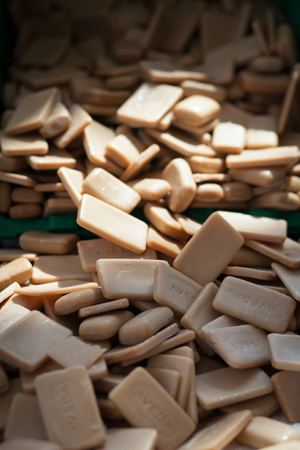
According to the Cornell Chronicle from a few weeks ago, Cornell University’s Statler Hotel has been a partner with the nonprofit Clean the World organization since March, and has collected over 2,500 bars of soap from the Statler’s rooms. This soap has been recycled and distributed to communities in need throughout over 55 countries.

Clean the World is a great group that we have written about before, since its goal is to take something that would otherwise be wasted and provide it to people at risk of poor health due to hygienic conditions  that can be easily ameliorated by increased access to soap.

Continue reading

Fish Or No Fish, Take Stock

When asked why they recycled, 89% of people in 2010 identified the danger of climate change as a motivator. Photograph: Alex Segre/Rex Features

Thank you, Sarah:

As a member of the science and technology select committee I am delighted to have secured and be participating in an inquiry into public understanding of climate change.

As we have interviewed expert witnesses and considered a range of written evidence, one thing has struck me in particular. While there is an ongoing public discussion on climate change that needs more scientific input and greater participation, a clear development in recent years has been the rise in the numbers of people prepared to do something about climate change. Continue reading

India’s Recycling Communities

Scrap waste collected in Bholakpur Photo Courtesy of The Hindu

Scrap waste collected in Bholakpur
Photo Courtesy of The Hindu

What happens to obsolete computer or the animal skins from meat factories?

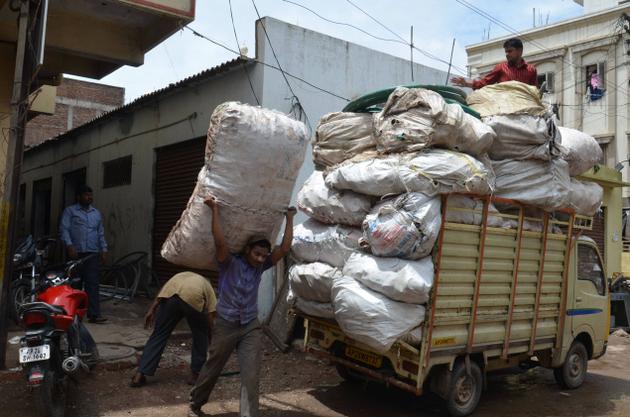
The majority of people couldn’t answer whether these items are recycled or landfilled. A recent article in The Hindu gives some insight into what happens to these items in Bholakpur, a small area of Hyderabad, and it is a surprisingly important industry. Much of what might be considered trash in the Hyderabad area plays an important role in in the community being recycled by families, and resold on the secondary market.

Once inside (Bholakpur), the animal skins go to one of the 200 skin processing units and the plastic and iron scrap to one of the 500-odd plastic or 300-odd iron scrap dealers. There it is sorted and either cleaned up and resold, or ground, melted and transformed into raw material for industrial use. Thus giving new life to waste and also earning a living for the people involved in the process. This includes over 60 per cent of the ward’s 36,000 voter population.

These recycling communities don’t just exist in the Hyderabad area, but also in many of the large metropolitan areas in India. Continue reading

It’s Never Too Late

Recycling In India

Photograph Credit: mackenzienicole

To be completely honest, helping the environment had rarely been a crucial concern of mine.  Actually, that’s an understatement: Helping the environment had rarely been a concern of mine at all.  Growing up, my parents tried to nudge me the right way.  For example, they always told me not to waste food – the theme of this year’s World Environment Day.  However, it didn’t actually sunk in.  At buffets I would take more food than I actually needed so I could try everything before it was gone. To me, this was well justified – we were paying the same amount regardless of what we took, right? I even scorned my parents’ initiative to use fluorescent light bulbs in the house; I didn’t see the benefit of using light bulbs that took a while to light up.

This past summer I decided to come to India and intern for Raxa Collective to experience something both culturally and professionally different.  From the moment I arrived I was amazed at the passion with which Amie, Crist, and the rest of the Raxa Collective staff operated.  Cardamom County already had numerous eco-friendly initiatives in place such as their natural farm, composting, and the use of glass water bottles in the restaurant, solar panels to heat the water in the kitchen, and compact fluorescent lighting (CFL).  However, it was evident that the Raxa Collective staff was not willing to settle.  Continue reading

Trashy bags : social and environmental entrepreneurship inspiration from Ghana

How we do business and perceive the world has been informed for many years by the concepts of Recycling and Upcycling. So our first introduction to Trashy Bags during a trip to Accra was exciting to say the least.

Trashy Bags is a social enterprise that makes recycled eco-friendly bags and gifts from plastic trash. They employ over sixty local people to collect, clean and stitch plastic trash into bags and other products. Packaging and “billboard flex film” waste is a huge problem worldwide, not just in Ghana. But a growing issue in parts of world where clean drinking water isn’t readily available is the build-up of spent “water sachets”—non biodegradable plastic water pouches.

It is estimated that in Ghana, waste produced from plastic packaging amounts to 270 tonnes per day; most of it non-biodegradable.  That adds up to over 22,000 tons of plastic in one year.

This figure has risen in just ten years by about 70%. Despite this rise, it is estimated that only 2% of plastic waste is recycled. You may ask what happens to the remaining 98%.   Continue reading

Extreme recycling: Haathi Chaap, paper made from elephant dung

Stationery made of elephant dung. Among the entrepreneurial ventures I discovered while browsing through the sustainable products distributed by Raxa Collective at Cardamom County, this one must be my favorite. I had seen goat dung dried and then mixed with dirt to build houses in Masai villages in Kenya, but I had never seen tools or products made out of dung.  Continue reading