You Had Us At Non-Toxic

flow-battery2

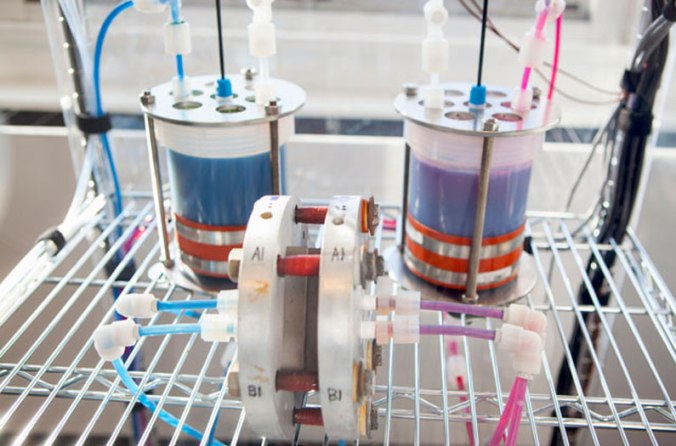
Photo: Organic mega-flow battery in the Harvard SEAS lab. (Photo by Eliza Grinnell, Harvard School of Engineering and Applied Sciences)

Thanks to Anthropocene:

This non-toxic battery lasts a decade, could be renewable energy’s missing piece

by Prachi Patel

As more and more people install solar panels, the need to store solar power is growing. Batteries that store sun-generated electricity are key for houses to have power at night or when it’s cloudy. But today’s battery technologies are riddled with issues such as high cost, toxicity, and short life. Continue reading

Solar Energy Benefits for All

h_bostonia_16-9939-solarpanel-116

All photos from: Boston University Bostonia

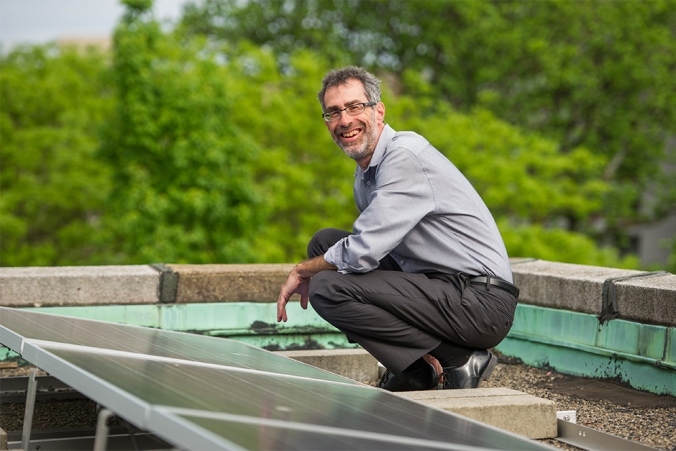
It seems obvious that investing in renewable solar energy saves money for those who install photovoltaic (PV) systems for their homes. However, what might not be so obvious is that PV systems also reduce electricity prices for all those with no solar panels, as professor Robert Kaufmann from Boston University discovered. His research revealed that the approximately 40,000  households and community groups with solar panels in Massachusetts reduce electricity prices for all of the three million electricity ratepayers in the state, including those with no solar panels.

“Until now, people have focused on how much was being saved by those who owned PV,” says Kaufmann. “What this analysis quantified was that it actually generates savings for everybody.”

Continue reading

Rhode Island’s Offshore Wind Turbines Completed

One of five turbines that make up the Block Island Wind Farm, the first offshore wind farm in the United States, off the Rhode Island coast. Credit Kayana Szymczak for The New York Times

Less than a month ago we shared the story in WIRED about the Block Island Deepwater Wind farm, and now, construction is finished! That may seem like trivial news to Europeans with coastline who have been enjoying offshore wind power for years now, but given that this is the first project of its kind in the US, it’s an exciting sign of progress to come in renewables for a nation with one of the largest carbon footprints. Justin Gillis reports for the New York Times:

BLOCK ISLAND, R.I. — The towering machines stand a few miles from shore, in a precise line across the seafloor, as rigid in the ocean breeze as sailors reporting for duty.

The blades are locked in place for now, but sometime in October, they will be turned loose to capture the power of the wind. And then, after weeks of testing and fine-tuning, America’s first offshore wind farm will begin pumping power into the New England electric grid.

Continue reading

A Portable Power Plant

estream-portable-hydro-power-plant-blades-889x593

Source: Enomad.com

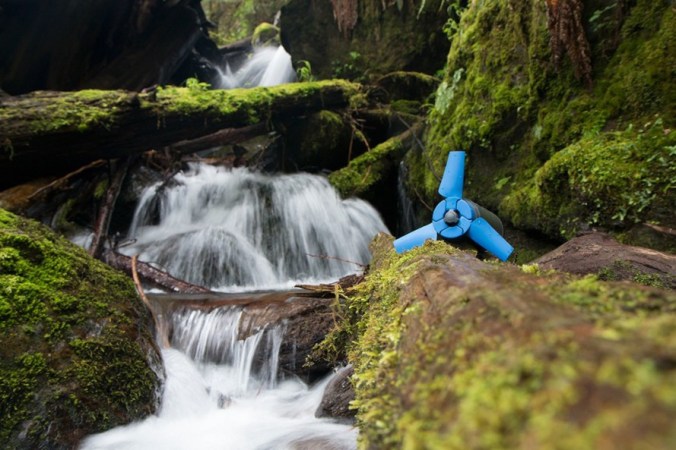
I believe I can confidently say that all of us at some point during a nature outing have run out of battery power on our cell phone or camera just at the moment we were about to capture a magnificent shot of a cool animal or a picturesque landscape. There are plenty of portable battery chargers that can spare us from those despairing occurrences, but what about one that uses a renewable energy source to charge? I bet you’re guessing it’s solar powered, but that would be too ordinary for the developers at Enomad. They have created a portable hydroelectric generator called Estream that can fit easily into a travel pack. The tube-like device has three turbines which rotate when placed or dragged underwater and the energy created from the rotating turbines gets stored in the battery attached. The battery takes about 4.5 hours to charge, and can power up a maximum of three smartphones, GoPros, or even tablet PCs.

Continue reading

Concentrating Solar with Mirrors and Molten Salt

A tower of salt, surrounded by sunlight-sensing and -reflecting mirrors. Photo © SolarReserve

Two months ago we posted about non-photovoltaic solar power via a story from Scientific American, and this week they’re exploring the subject again, this time in the desert of Nevada with the first utility-scale “concentrating solar” plant that can provide electricity even at night. Concentrating solar involves storing heat from the sun rather than converting light into electricity, and apparently molten sodium and potassium nitrates can do this very effectively. Knvul Sheikh reports:

Deep in the Nevada desert, halfway between Las Vegas and Reno, a lone white tower stands 195 meters tall, gleaming like a beacon. It is surrounded by more than 10,000 billboard-size mirrors focusing the sun’s rays on its tip. The Crescent Dunes “concentrating solar power” plant looks like some advanced communication device for aliens. But the facility’s innovation lies in the fact that it can store electricity and make it available on demand any time—day or night.

Continue reading

South Australia’s Renewable Energy

Wind turbines at the Snowtown Facility.

Any story regarding the expansion and encouragement of renewables to promote sustainable development is a good story in our book, and we’re impressed by the Clean Energy Council policy manager’s statement, “If South Australia was a nation, it would be second only to Denmark [in renewables].” South Australia is a state in the middle of the southern coast of the country, about a hundred square miles larger than the US state of Texas, so it’s great to hear that such a large area relies so much on innovation. Kathy Marks reports for the Guardian:

In a state that leads the country – in fact, much of the world – in producing electricity from renewable sources, Snowtown is wind central. The first stage of a $660m, 270-megawatt farm, with 47 turbines, opened in 2008, 5km west of the town; the second, adding another 90 turbines, came on stream in 2014.

Developed by New Zealand’s Trustpower, South Australia’s biggest wind facility – and Australia’s second biggest – created hundreds of construction jobs and 21 permanent positions.

Continue reading

Shiny, Pretty Things

2014RAPLighters_copy

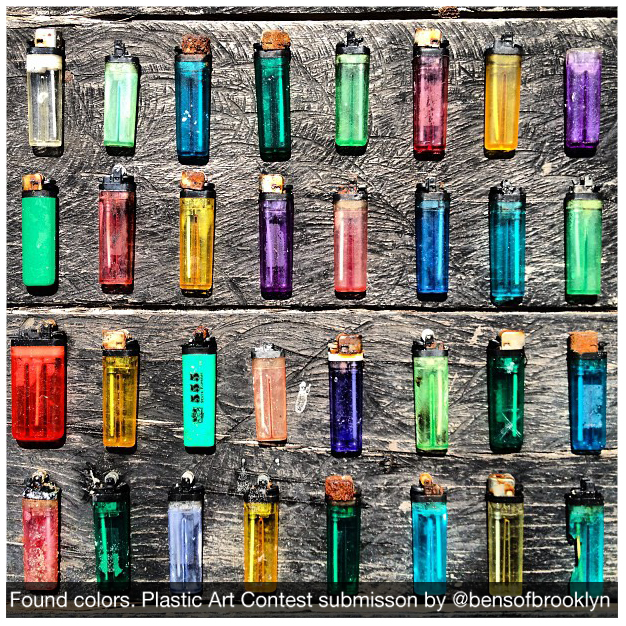
We have not eliminated plastic entirely at our properties, but we have been thinking about it for the last few years and taking action every chance we get. How to make the best of an otherwise horror show of plastic, according to this post on Surfrider Foundation’s blog:

The reality of plastic pollution is that it is happening in every home, office, school and community. It’s plaguing our country. Plastic creates toxic pollution at just about every stage of its existence, from manufacture, to use, to disposal. Considering the facts, it’s no surprise that it’s the most prevalent type of marine litter worldwide.

The extent of plastic use is mind-boggling.

Take plastic bags for instance. Americans go through about 100 billion plastic bags a year. That’s 360 bags for every man, woman and child in the United States. And, less than five percent of these bags are recycled. Continue reading

The Sense in Sustainability

adak-fish-farm-krishnankotta-mala

Today we went to  a 68 acre fish farm in Thrissur called ‘Haya Poya’. They were using a traditional box system (the local name is petty para) to collect fish and manage the water level. We went to learn about implementing aquaculture at Kayal Villa, a newer property.

By using this traditional method, they do not have to introduce new varieties of fish in order to farm. They do this mainly because it is less costly to collect the fish naturally than to artificially introduce fish. Also, since it is all local varieties, it limits the possibility of messing up the natural ecosystem with foreign invasive species.

During our ride home, the agronomist, Mr. Deyal, and I continued the conversation about doing what’s ecologically beneficial is actually easier and more cost-efficient. He said

“Only an ecologically viable system will be economically viable. When we fight against the environment, the environment will go against us and we will have to invest more money to protect against it.”

This reminds me of a conversation I had with an oil driller recently. When I asked him what the most challenging thing about his job was, he said ‘going against nature,’ and then proceeded to tell me how rebellious nature was to the oil drilling process and how costly it is. I found it interesting that although their career choices were the antithesis of each other, the conversations I had with them had parallel messages: going against nature is costly.  Continue reading

Coffee in Xandari

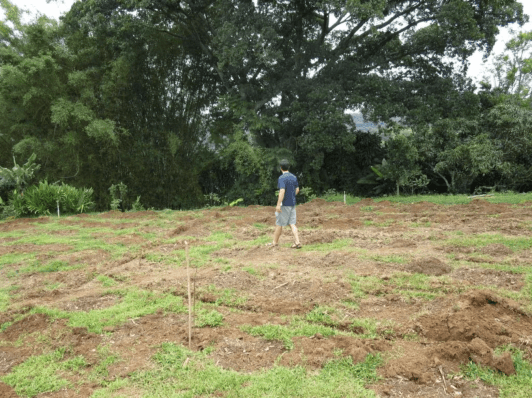
Here at Xandari (Alajuela, Costa Rica) everything is ready for coffee’s big return. The resort’s land was once dedicated to growing and harvesting the finest estate coffee this country offers (you can visit the Doka Estate, to which Xandari’s land once belonged, in one of our guests’ favorite day tours), but for the last 18 years more attention was given to the organic vegetables, orchards and gardens that now dot the verdant grounds. Plans are in motion, however, to bring the crop back to this area long celebrated for the quality of its coffee.

The ground is tilled:

Screen Shot 2022-07-22 at 10.58.04 AM

Continue reading

Solar’s Messy Compromises

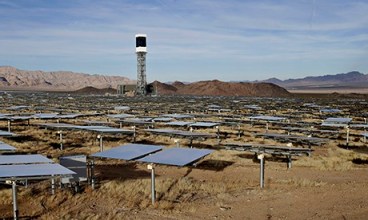
BrightSource Energy's Ivanpah Solar Electric Generating System in the Mojave Desert. Photograph: Isaac Brekken/Washington Post

BrightSource Energy’s Ivanpah Solar Electric Generating System in the Mojave Desert. Photograph: Isaac Brekken/Washington Post

It’s not easy being green.  Even seeming no-brainers like this solar initiative requires complicated tradeoffs between one environmental objective and another:

…The Ivanpah Solar Electric Generating System will send that power across California, the Golden State, early this year, becoming the largest solar plant in the world to concentrate the sun’s rays to produce electricity. Such utility-sized solar plants are beginning to appear across the US, with 232 under construction, in testing or granted permits, many in the south-west and California, says the Edison Electric Institute, which represents utilities. The scale of the largest plants is difficult to imagine in the eastern part of the country, where a relative lack of available open land and unobstructed sunlight have limited solar facilities to perhaps a tenth the size of the West’s plants. In the west, ample sun, wide-open spaces, financial incentives, falling costs and state mandates have made big solar plants possible…

…But even as the largest plants are helping utilities meet state requirements for renewable energy, the appetite for them may be waning, say experts. The next phase of solar development – especially in the east – may feature smaller projects located closer to cities. Environmental groups want regulators to look at sites such as landfills and industrial zones before allowing construction in largely undisturbed environments such as deserts. Continue reading

What Should We Expect of Solar?

I was pleased to see our fellow contributors give voice to the promising outlook of solar energy in a recent post. There is no doubt that this technology will be a game-changer for utilities in the coming century, and I’m excited to be a part of it. Last month, I was thrilled to start my first full-time position at SunPower Corporation, one of the largest solar cell manufacturers in the United States. Tempering that excitement was the knowledge that, at least for the short term, I wouldn’t be traveling to India to work with Crist and some of his wonderful staff. But let’s back solar.

This is every solar installer’s dream: a perfectly tilted, south-facing, non-shaded, sun-bathed roof.

Continue reading

The Wind Power Debate Gets More Interesting

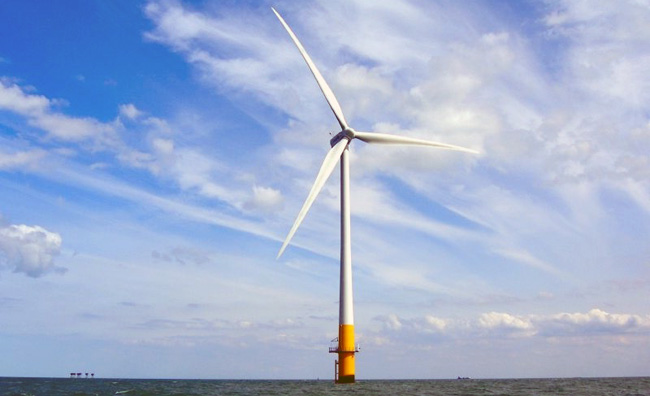
An offshore wind turbine, part of the London Array wind farm site, located in the outer Thames Estuary, about 70 miles east of London. Image: phault via flickr

An article in Inside Science (click the image above to go to the article) discusses new research demonstrating that wind power might be able to generate all the world’s electricity needs without large atmospheric effects:

There is enough energy for people to reap from the wind to meet all of the world’s power demands without radically altering the planet’s climate, according to two independent teams of scientists.

Wind power is often touted as environmentally friendly, generating no pollutants. It is an increasingly popular source of renewable energy, with the United States aiming to produce 20 percent of its electricity by wind power by 2030. Still, there have been questions as to how much energy wind power can supply the world, and how green it actually is, given how it pulls energy from the atmosphere. Continue reading

Hot, Fresh Data


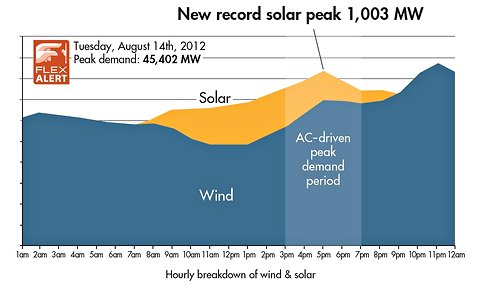
Thanks to one of our favorite informers, Felicity Barringer, whose past stories we have occasionally riffed on, for this piece in today’s Dot Earth section of the New York Times website (click the graph above to go to the source, and yes it counts as a non-subscriber article read):

From California to New Jersey, the summer sun was hot this year — and so was the solar industry. While the business of solar energy is still small enough and young enough to record firsts at the fearsome pace of a toddler, the milestones are getting more substantial. Continue reading