Rural Lives & Other Options

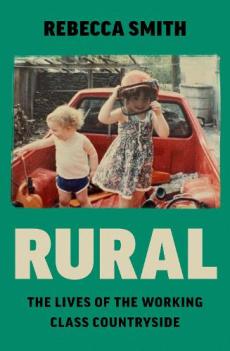
The reviews are in, and below is an excerpt. The book does not appear to be available through online booksellers in the USA, but I will be watching for it. The excerpt echoes my experience growing up in an equivalent place. A key difference between my youth and hers: my family’s income was modest but, due to my immigrant mother and father’s New England heritage I inherited a clear sense of mobility. I never had the oppressive sense of class boundaries that can dictate exclusion.

Instead I had the sense, and still do, that I could have chosen to earn the requisite fortune that would have afforded me the luxury of owning my own home in that town. But I chose otherwise, and for plenty of reasons I have no regrets whatsoever.

The view from the author’s bedroom window at Graythwaite. Rebecca Smith

Jane Austen’s English Countryside Is Not Mine

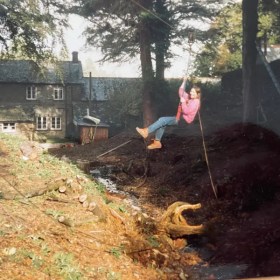
Often people assume I am someone I am not. My childhood was spent making dens in the hidden corners of the landscaped gardens of a grand country estate in the Lake District. I wandered woods full of baby pheasants being fattened up for the shoot. I roamed the hills listening to my Walkman like a modern Brontë sister. I had lakes to paddle in and a dinghy that we bumped down the ­path to a private beach.

The author playing in the garden at Graythwaite. Rebecca Smith

But they weren’t my gardens. It wasn’t my beach.

Until the age of 18, I lived on three private country estates in England. First in Yorkshire, then in Bedford, then on Graythwaite Estate, in Cumbria in the Lake District. In each of these my dad had the job of forester, working his way up until he was head forester, overseeing 500 hectares of woodland at Graythwaite, where the job came with a three-bedroom lodge on the estate. Continue reading
Sensory Heritage Is The New Green

20200620_EUP501

For some time now green has been the new thing and we live in one of its showcases, with access to all kinds of tropical nature within easy driving distance. But it has been where we live that, for the last few months, has had us greening our own living patterns. There will be a fuller post on that soon, but for now I just smile at my friends across the Atlantic, on a day when our rooster woke me as usual well before the sunrise. And opening the gallinero (chicken coop) on my way to the lower land we are planting, I was sensitive to the smell that I had otherwise stopped noticing until I read this short piece. I appreciate the imaginative approach, probably unique to France, to protecting heritage that some at best take for granted and others find a nuisance:

Townies v tractors

French urbanites fuss about rustic noises and smells

Some second-home owners have sued over loud livestock and church bells

France’s sense of itself has long been rooted in the land, even though three-quarters of French people live in towns. Now, however, having locked down in small airless spaces, many city-dwellers feel the call of the wild. Estate agents report an uptick in searches for homes with gardens. Diehard urbanites talk wistfully of a bucolic existence in la France profonde. In a poll, 61% of the French think confinement will encourage people to move to the country or buy a second home. But do today’s townsfolk know what rural life really entails?

The question arose late last year, when Pierre Morel-À-L’Huissier, a deputy from the Lozère, a remote rural area, introduced a bill to protect France’s “sensory heritage”. By this, he meant “the crowing of the cockerel, the noise of cicadas, the odour of manure”, and other rural sounds and smells. Continue reading

Endangered species : the Vechur cow

Vechur calf

Vechur cow

We recently talked about the cowbird, but today I’d just like to talk about cows. Cows are ubiquitous here in India. The Vechur cow, however is on the FAO’s ‘Critical-Maintained Breeds List.’ Continue reading

A stroll around Kumily

Cardamom County is located at the junction of Kumily and Thekkady and for me it is not quite clear yet where one starts and the other stops. Walking around Kumily in the early morning is a privileged moment to witness daily wonders. Continue reading

The Great Paddy-City Migration

For those of us living and working in Rising Asia, much in this book either rings true from experience or is eye-opening about things that may be lurking just around the corner, out of sight.  Kerala is a long way from Lahore, in every sense.  But at least the basic notion–that the world has only in the last year or so become one in which a majority of us are urban dwellers for the first time in human history, and not long from now it will be a super-majority–can be felt in Raxa Collective’s back yard.  The great migration from paddy to city is noisily happening all around us each day.  What of it?

Mr. Hamid has alot to say about that, good, bad and ugly.  An interview he conducted to discuss the book can be heard in this podcast.  The book is likely to anger some, but it has received positive reviews, even from often-tough critics:

“Mr. Hamid reaffirms his place as one of his generation’s most inventive and gifted writers.” –Michiko Kakutani, The New York Times

Continue reading

Eight-legged Transportation

Photo Credits: Ramesh Kidangoor

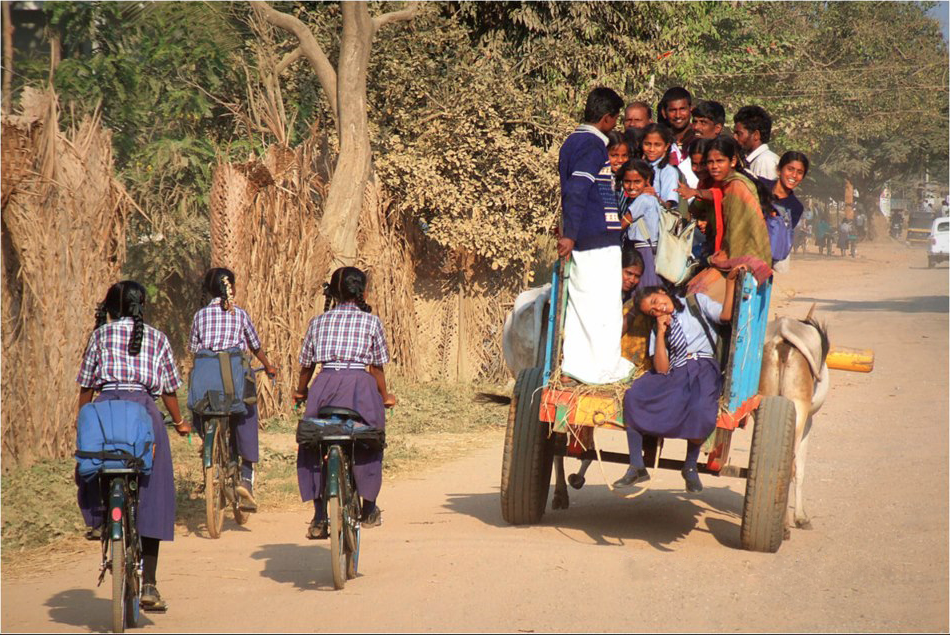
Bullock carts play an important role in both rural and urban transportation in India. Even in the 21st century they are frequently used for the transfer of materials and people in villages and cities alike. Continue reading