Lessons From Ningaloo Reef

WOPA100627_D105

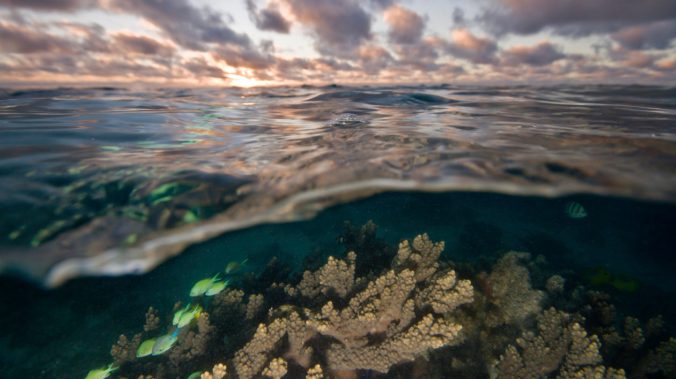
Acropora coral and blue green chomis on Ningaloo Reef in Western Australia. Photo © Steve Lindfield

Thanks to James Fitzsimons and The Nature Conservancy’s Australia program for this one:

Big, Bold & Blue: Lessons from Australia’s Marine Protected Areas

BY JUSTINE E. HAUSHEER

Australia has one the largest systems of marine protected areas in the world, from the coral-covered Great Barrier Reef to the sub-Antarctic Macquarie Island. Now, a new book details the lessons learned by Australian scientists, policymakers, and communities during more than 130 years of marine conservation.

The book — Big, Bold & Blue: Lessons from Australia’s Marine Protected Areas — gathers lessons learned from academia, government, NGOs, indigenous communities, and the fishing sector. Continue reading
The Science Of Marine Conservation

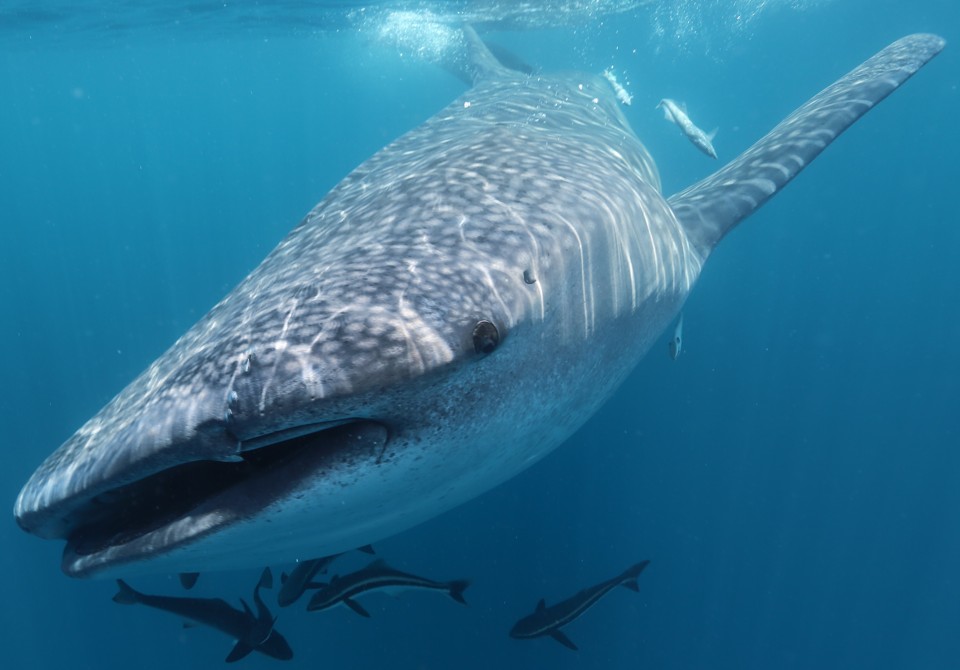
A whale shark in the Persian Gulf. Steffen Sanvig Bach

This is the future of marine ecosystem science (thanks as always to Ed Yong and the Atlantic’s ongoing  commitment to compelling coverage of environmental issues):

The World’s Biggest Fish in a Bucket of Water

Scientists used DNA floating in just 30 liters of seawater to count the endangered whale shark across two oceans.

ED YONG

If you lean over the side of a boat and scoop up some water with a jug, you have just taken a census of the ocean. That water contains traces of the animals that swim below your boat—flecks of skin and scales, fragments of mucus and waste, tiny cells released from their bodies. All of these specks contain DNA. And by sequencing that DNA gathered from the environment—which is known as environmental DNA, or eDNA—scientists can work out exactly what’s living in a patch of water, without ever having to find, spot, or identify a single creature.

And that helps, even when the creature in question is 18 meters long. Continue reading

The Definition Of Rich

22rockefellerjp-master768

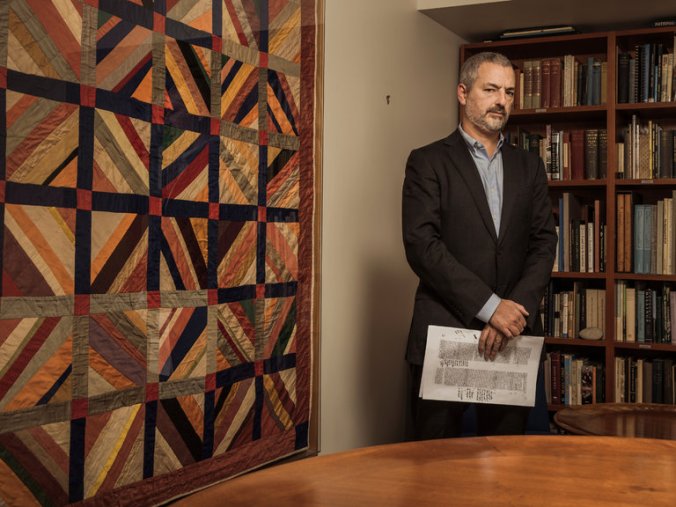
David Kaiser, is a fifth-generation Rockefeller and the head of a family fund fighting Exxon Mobil. Credit Sasha Maslov for The New York Times

The saying “that is rich” means, in this case, something more like–Really, Exxon Mobil?

Exxon Mobil Accuses the Rockefellers of a Climate Conspiracy

By

Exxon Mobil, under fire over its past efforts to undercut climate science, is accusing the Rockefeller family of masterminding a conspiracy against it. Yes, that Rockefeller family. Continue reading

Trees Cooling Urban Jungles

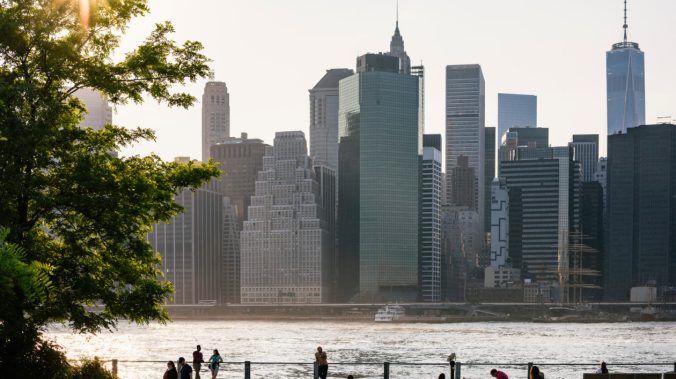
Brooklyn Bridge Park.

Thanks to Cool Green Science:

Using Cloud Computing to Untangle How Trees Can Cool Cities

BY TIMOTHY BOUCHER

We’ve all used Google Earth — to explore remote destinations around the world or to check out our house from above. But Google Earth Engine is a valuable tool for conservationists and geographers like myself that allows us to tackle some tricky remote-sensing analysis.

After having completed a few smaller spatial science projects in the cloud (mostly on the Google Earth Engine, or GEE, platform), I decided to give it a real workout — by analyzing more than 300 gigabytes of data across 28 United States and seven Chinese cities. Continue reading

Acorns, Seeds, Understood

201610516172412162-2016-11nightstandravenf1

Thanks to American Scientist for this book review:

From Little Acorns

Peter H. Raven

SEEDS: A Natural History. Carolyn Fry. 192 pp. University of Chicago Press, 2016. $35.

Plant conservationists, horticulturists, plant ecologists, and the like face a perplexing public relations problem when it comes to their beloved subject: For many people, plant life—even though it is essential to the existence of all living things on our planet—may seem dull, especially in comparison with animal life. In 1998 American botanists James Wandersee and Elizabeth Schussler coined the term plant blindness, defining it as “the inability to see or notice the plants in one’s own environment,” leading to “the inability to recognize the importance of plants in the biosphere and in human affairs.” In the pages of Seeds, Carolyn Fry offers an almost certain cure for this malady. Continue reading

For Lunar Phenomena, Tonight’s The Night Of A Lifetime

12supermoon-super-superjumbo

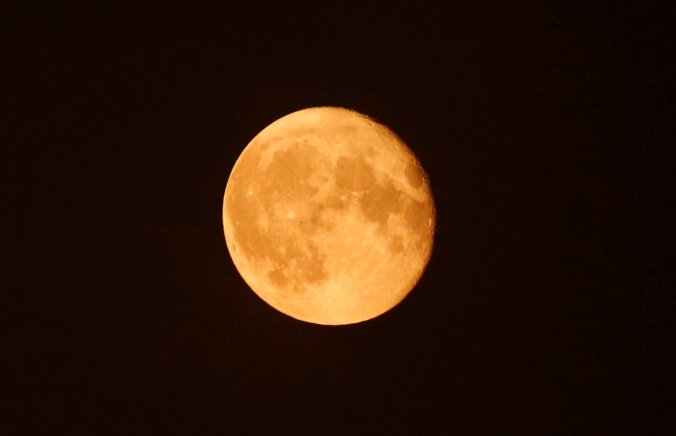
A supermoon seen above Cairo in October. Credit Amr Abdallah Dalsh/Reuters

Thanks to the New York Times for this reminder:

The Supermoon and Other Moons That Are Super in Their Own Ways

By NICHOLAS ST. FLEUR

Shrug off the supermoon.

Yes, it’s true that on Sunday and Monday nights the full moon will be at its closest to Earth in nearly 70 years. But to the casual observer, it probably won’t look much different from a regular full moon. Yet headlines heralding the event as some sort of don’t-miss spectacle are everywhere. Continue reading

Lab Animals Sometimes Take A Tickle For Science

Rats.jpg

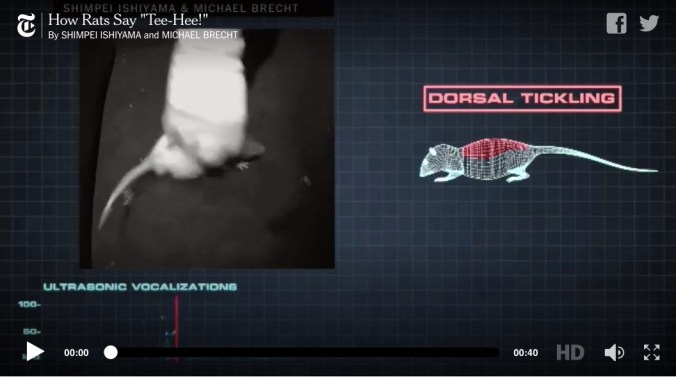
By SHIMPEI ISHIYAMA and MICHAEL BRECHT on Publish DateNovember 10, 2016. Photo by Shimpei Ishiyama, Michael Brecht.

Click above to go to the video, and the title below to go to the article:

Oh, for the Joy of a Tickled Rat

By

There’s just something about a rat jumping for joy when it’s been tickled that can change your whole outlook on rats, and neuroscience.

For one thing, it gives me new faith in people to think that accomplished researchers spent time tickling their experimental subjects. And the similarity of rats to humans in the tickling realm is pleasantly bewildering. Continue reading

Late October’s Flame Red Trees

26tb-foliage-superjumbo

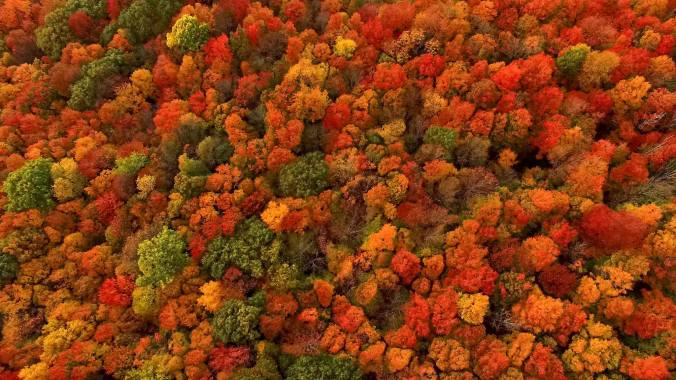
Treetops near Song Mountain in Tully, N.Y., last week.CreditLauren Long/The Syracuse Newspapers, via Associated Press

We do not need to understand it to appreciate the beauty, but the science behind it is another wonder of its own:

Why Does Fall Foliage Turn So Red and Fiery? It Depends.

By

Leaves scream their final cries in color before dropping to the ground. Their shouts — in golden, crimson or scarlet — eventually fade to brown bellows, and their lifeless bodies dry up on the forest floor. It absorbs their crinkly corpses and that’s it — worm food. The fall of a leaf in autumn is an orchestrated death. A complex, brilliant, beautiful death.

Right now across the United States, fall foliage season is peaking, and everyone’s out to get a peep at the fiery show. Hiking trails are crowded. Mountain roads are packed, and leaf cams are getting lots of love. When you think of it as watching the death of leaves, it sounds morbid, but it’s captivating nonetheless. Does the way some turn red in the process serve any purpose? Continue reading

Iridescence & Pretty, Shiny Natural Things

lead_960-5

Matthew Jacobs

The Atlantic’s science writers are back in the saddle, leading the way with the best stories recently:

Why Do These Plants Have Metallic Blue Leaves?

Ooh, shiny

ED YONG

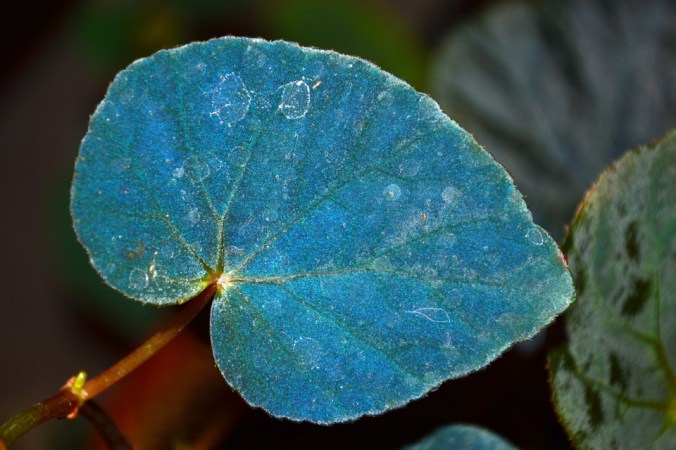
Roses are red but violets aren’t blue. They’re mostly violet. The peacock begonia, however, is blue—and not just a boring matte shade, but a shiny metallic one. Its leaves are typically dark green in color, but if you look at them from the right angle, they take on a metallic blue sheen. “It’s like green silk, shot through with a deep royal blue,” says Heather Whitney from the University of Bristol.

And she thinks she knows why. Continue reading

Genetic Engineering Versus GMO

14236210688_a488be4c46_k

E-maxx/Flickr.com

Thanks to Anthropocene for this summary of promising new findings for the GMO-concerned:

A novel approach to pesticide-free, non-GMO food?

Monkeys & Tools

lead_960-4

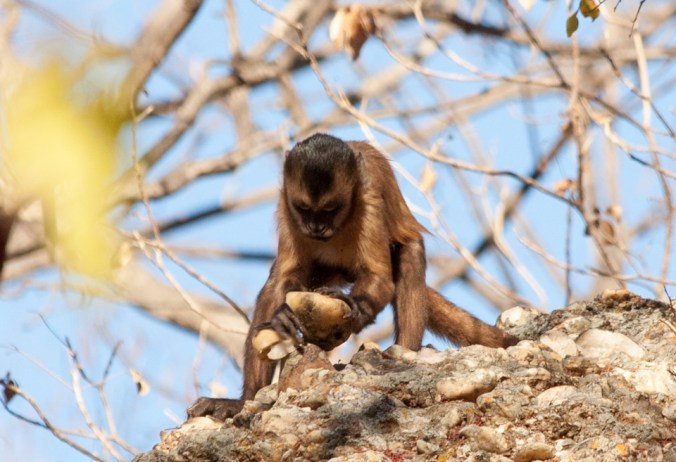
Monkey see, monkey smash. T. Falótico

Ed Yong’s recent story about this cleverest of creatures:

Rock-Smashing Monkeys Unintentionally Make Sharp Stone Tools

What this says—and doesn’t say—about the evolution of human technology

In 2014, Michael Haslam wedged between two boulders in northeast Brazil and filmed some monkeys. Oblivious to the voyeur, the monkeys—bearded capuchins—began smashing stones together. They lifted small cobbles into the air and brought these down upon a rock face, like a hammer upon an anvil. In the process, the hammer stones would often shatter.

After the monkeys had gone, Haslam picked up some of these broken fragments—and was amazed. Many had sharp edges, and looked remarkably like human tools. Continue reading

Perspective On Life, Micro View

y648From the macro to the micro, some detailed reporting on a topic we need to be more informed about; in this book review of the recent book by Ed Yong (science reporter, another of our frequent fliers; see his recently filmed lecture on the topic below):

Reader, as you read these words, trillions of microbes and quadrillions of viruses are multiplying on your face, your hands and down there in the darkness of your gut. With every breath you take, with every move you make, you are sending bacteria into the air at the
rate of about 37 million per hour — your invisible aura, your personal microbial cloud. With every gram of food you eat, you swallow about a million microbes more.

According to the latest estimates, about half of your cells are not human — enough to 21weiner-master315make you wonder what you mean by “you.” Your human cells come from a single fertilized egg with DNA from your mother and father. Microbes began mingling with those human cells even before your first breath, the first kiss from your mother, your first taste of milk. And your human cells could not have built a healthy body without intimate help from all those trillions of immigrant microbes — your other half. Continue reading

Arctic Bumblebees

bees-test-topper-jumbo.jpg

Superb science journalism:

Six Scientists, 1,000 Miles, One
Prize: The Arctic Bumblebee

A team of researchers scours the wilds of northern Alaska for Bombus polaris, a big bee that has adapted to the cold and that can teach them more about the effects of climate change.

By

DALTON HIGHWAY, Alaska — “To bees, time is honey.

— Bernd Heinrich, “Bumblebee Economics

Hollis and Bren Woodard capturing bees next to the Alaskan pipeline. Katie Orlinsky for The New York Times

One hundred miles north of the Arctic Circle, by the side of a dusty road, two women in anti-mosquito head nets peer at a queen bumblebee buzzing furiously in a plastic tube.

“I think it’s the biggest bumblebee I’ve caught in my life!” Kristal Watrous says. Continue reading

Stromatolites & You

screen-shot-2016-10-09-at-10-29-39-am

We humans are part of a very tiny slice of history, whereas in Western Australia we can have a glimpse at a big slice of history. It is humbling, and at the same time inspiring. As good science journalism should be. We are not too proud to admit that these had completely escaped our attention until just now:

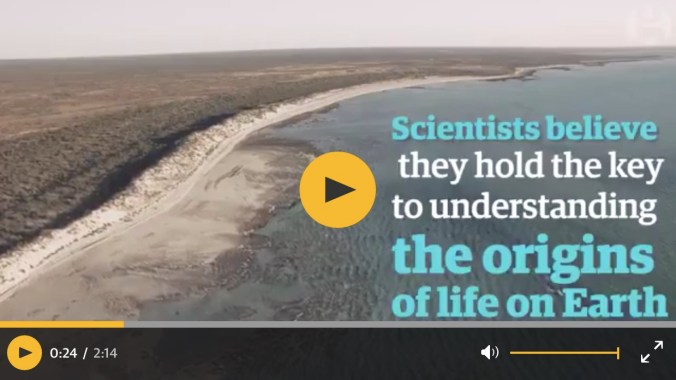
The natural wonder that holds the key to the origins of life – and warns of its destruction

Stromatolite-building bacteria once ruled the Earth, then changed its climate so much they nearly became extinct. Michael Slezak visits the world’s largest surviving colony in Hamelin pool, Western Australia

Just shy of the westernmost tip of the Australian continent lies a pool that provides an unparalleled window into the origins of life on Earth. In its warm, briny waters a biological process takes place that began just as the continents were starting to form.

It is this very process that made the abundance of life on the planet possible and studying it today promises insights into how life began as well as what the Earth was like 3.7bn years ago. Continue reading

Inspiring Science

Long before we tackled the science to allow a view of what Carl Sagan would come to call “our pale blue dot”, there were artists and explorers who imagined the vastness of the world and took off into the unknown – both figuratively and literally.

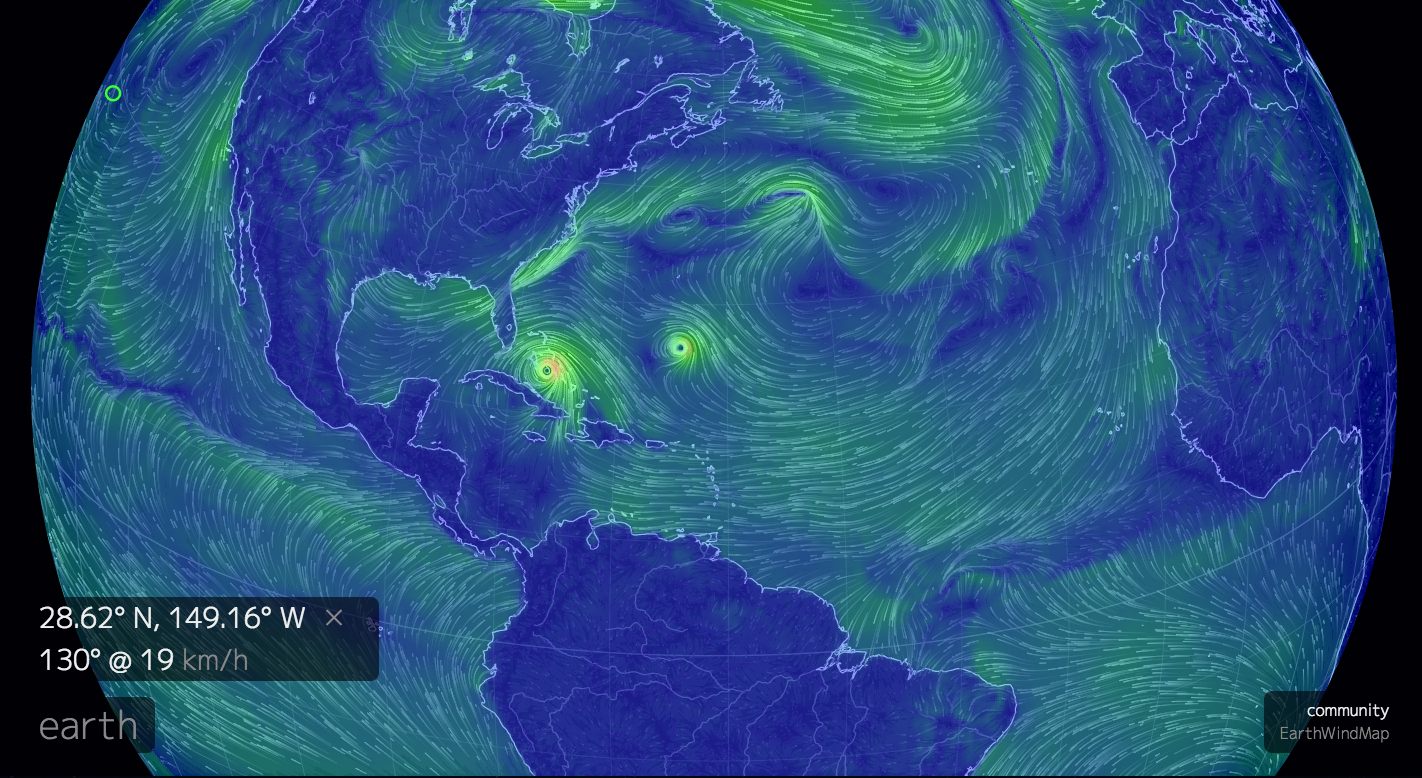
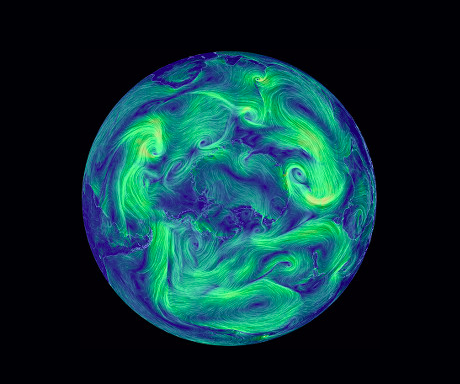
EARTH collaborates with information from scientific organizations such as NASA and NOAA to create an interactive visualization of global weather conditions forecast by super computers updated every three hours. The actual global images are a fascinating swirl of wind and current, reminiscent of a Vincent Van Gogh painting.  The ocean surface current estimates are updated every five days, ocean surface temperatures and anomaly from daily average (1981-2011) are updated daily, and ocen waves are updated every three hours – all of which combine to present a moving canvas of what is presently occurring on this blue marble of a planet.

About The Art

EARTH, by Cameron Beccario, is a near real-time visualization of global weather conditions forecast by supercomputers. This vivid capture depicts intricate, dramatic swirling patterns of wind streamlines reminiscent of oil paintings of the Impressionists. Continue reading

Coffee’s Potentially Powerful Afterlife

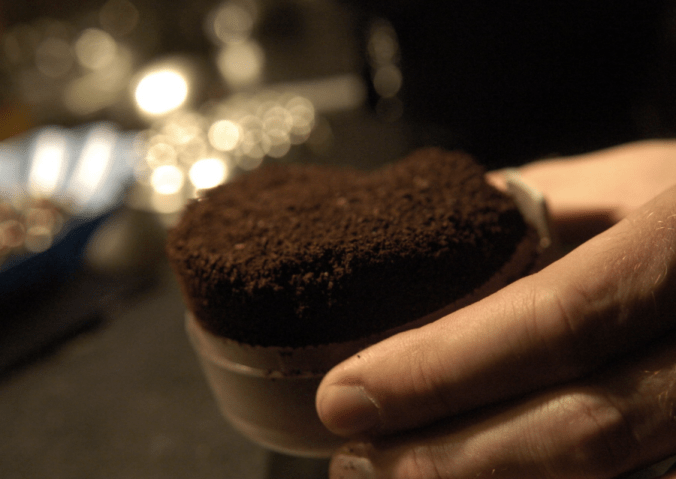
Researchers are experimenting with using used coffee grounds to filter pollutants out of water. Credit RJ Sangosti/The Denver Post via Getty Images

Researchers are experimenting with using used coffee grounds to filter pollutants out of water. Credit RJ Sangosti/The Denver Post via Getty Images

Coffee lovers that we are, it’s amazing that we almost missed this piece of news…

Each year, coffee manufacturers, restaurants, cafes and home brewers worldwide produce about six billion tons of coffee waste… If not rotting in a dump or fertilizing a garden, the grounds end up in animal feed and biofuels.

But researchers in Italy have found a new home for the stinky old coffee bits — by infusing them into a porous foam that removes heavy metals from polluted water, according to a study published this month in ACS Sustainable Chemistry and Engineering.

“We use a lot of coffee here in Italy,” said Despina Fragouli, the author of the study and a materials scientist at the Istituto Italiano di Tecnologia. She and her team develop new compounds from agricultural waste — like turning cacao husks into a material for preserving and packaging food.

Naturally, they wondered “What about coffee?” Continue reading

Viewing the Nobel Prize Through a 21st Century Lens

We believe in the core principle from market-based economics that incentives drive behavior. We lean toward behavioral economics as a more robust and believable model than the standard “homo economicus” (read oversimplified but mathematically model-able idea of human decision-making) taught to most 20th century students. We believe that desire for recognition is an incentive commonly found among super-achievers. And this explains why “big” prizes are created and tend to matter over time. Not to  suggest that geniuses chase prizes (on the contrary, much of the time).

But the Nobel probably inspires its fair share of young academics in a few fields. For that reason we find this editorial opinion piece quite compelling, especially due to the first example given:

In the mid-1960s, Robert Paine, a scientist at the University of Washington in Seattle, discovered a hidden organizing principle in the coastal ecosystem he was studying. When a certain species of starfish was present, a panoply of algae, limpets, barnacles, anemones and mussels lived in delicate, dynamic balance. But when he removed the starfish and tossed them into the ocean, that balance collapsed and one kind of mussel took over.

Dr. Paine coined a term to describe the starfish’s outsize influence: keystone species. Keystone species have since been identified in forests, in grasslands, in the ocean and even in the human gut. The concept has become one of ecology’s guiding theoretical principles, Continue reading

Coal Mining, Climate Change & Entrepreneurial Conservation

coal-jp1-superjumbo

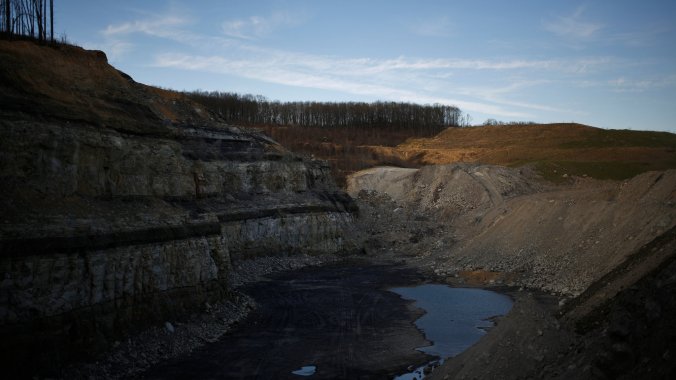
Reclamation crews fill in rock highwalls like this one, creating flat land that Tom Clarke intends to reforest as a way to trap and hold carbon dioxide. Credit Luke Sharrett for The New York Times

We had to read it to believe it:

A Curious Plan to Fight Climate Change: Buy Mines, Sell Coal

Tom Clarke, a nursing home owner, concocted a strategy to cut carbon emissions by gaining control of millions of tons of coal reserves and multiple mines.

FAIRVIEW, W.Va. — The coal was piled about as high as it could go, spilling down to the railroad tracks and towering over the elevator shaft. A yellow bulldozer pushed the mound to make room for more. From a distance on this rainy day, the black heap looked like a giant whale about to swallow the mine whole.

The word underground was that Federal mine No. 2 would soon have to close. It was early April, and the mine was running out of storage space. There were not enough buyers for all the coal. Continue reading

Perspective On The Ages

ages_custom-9ff69ab35ab626c9478bbdca45cef0f576c4797a-s1100-c85

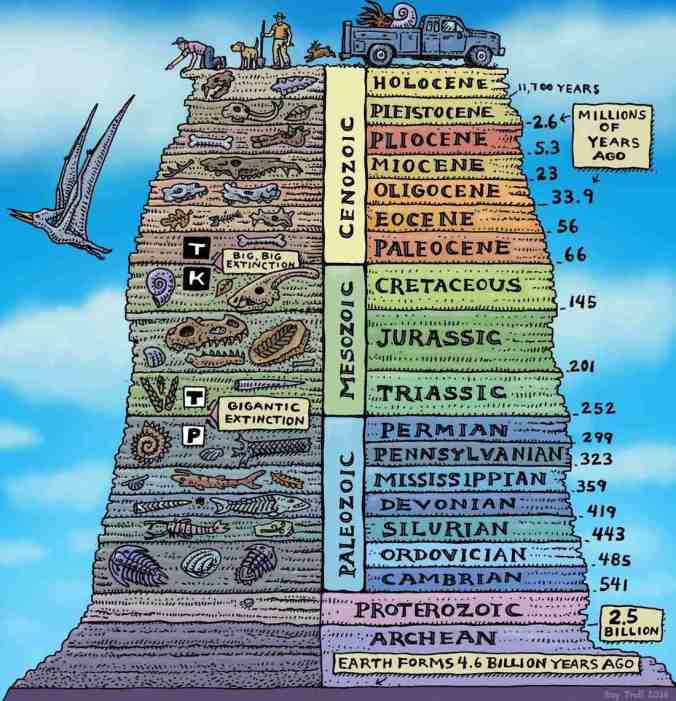
The Geologic History of Earth. Note the timescales. We are currently in the Holocene, which has been warm and moist and a great time to grow human civilization. But the activity of civilization is now pushing the planet into a new epoch which scientists call the Anthropocene. Ray Troll/Troll Art

Big words in the title may distract from the excellent point of this “cosmos & culture” article at National Public Radio (USA), worth a read:

Climate Change And The Astrobiology Of The Anthropocene

You can’t solve a problem until you understand it. When it comes to climate change, on a fundamental level we don’t really understand the problem.

For some time now, I’ve been writing about the need to broaden our thinking about climate. That includes our role in changing it — and the profound challenges those changes pose to our rightly cherished “project” of civilization. Continue reading

Bees’ Emotions

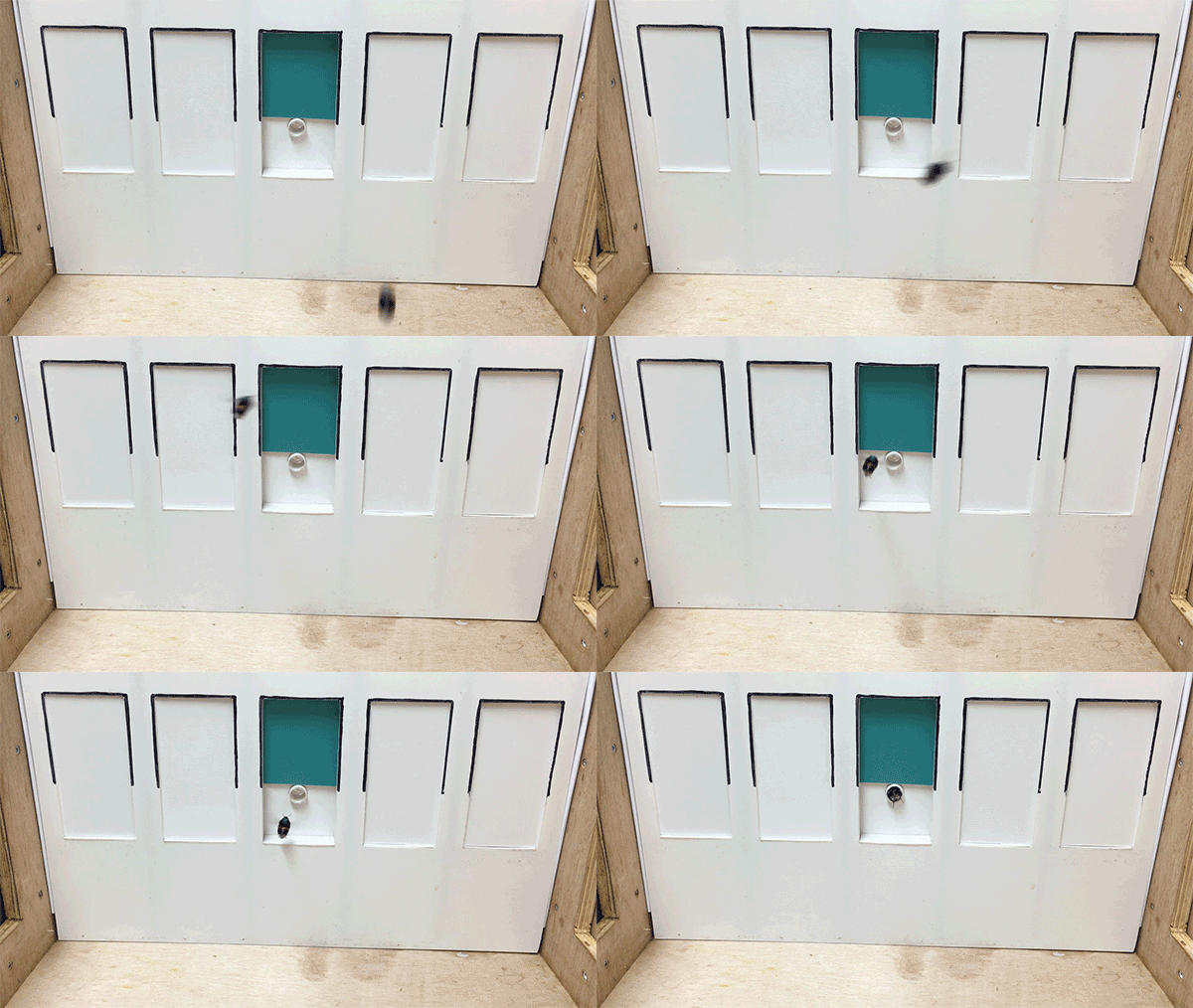
bees-experiment.gif

A bee enters a cylinder with an ambiguous reward in the study of bee “feelings.” CreditClint J. Perry

We avoid gimmickry but now a bee has finally convinced us that a gif can do just what is needed to convey a point:

The Sweet Emotional Life of Bees

By

It is hard enough to figure out emotions in humans — but insects?

Nonetheless, as far back as Darwin, scientists have suggested that insects have something like emotional states, and researchers continue, despite the difficulties, to try to pin those states down. Continue reading