Repel, Trap and Steer Light

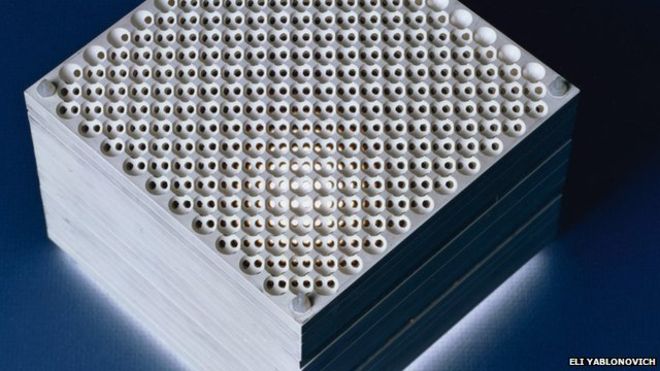
Photonic crystals can manipulate light in the same way that a semiconductor like silicon can steer electrical current. PHOT: Eli Nablonovich

Photonic crystals can manipulate light in the same way that a semiconductor like silicon can steer electrical current. PHOTO: Eli Nablonovich

The US physicist who first discovered “photonic crystals” which can repel, trap and steer light is to receive the Newton Medal, the BBC has revealed. This is the highest honor given by the Institute of Physics in London. Prof Eli Yablonovitch of the University of California, Berkeley, proposed and created the crystals in the 1980s.  Photonic crystals are periodic dielectric structures that have a band gap that forbids propagation of a certain frequency range of light. This property enables one to control light with amazing facility and produce effects that are impossible with conventional optics. Butterfly wings and the colorful plumage of peacocks and some parrots all contain examples, which were only understood after Yablonovitch and his fellow physicists fully described photonic crystals in the 1980s.Even the chameleon was recently shown to produce – and control – its color using the shape of photonic crystals.

Continue reading

Is This the New Super Battery?

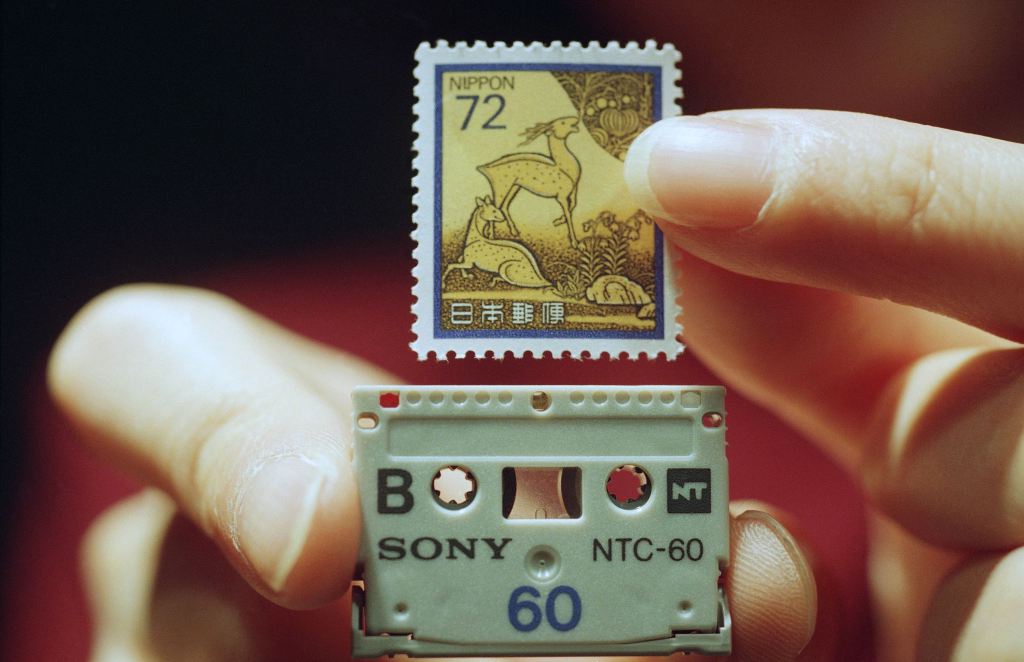
A cassette tape—the origin, incredibly, of how batteries are made.(AP Photo)

A cassette tape—the origin, incredibly, of how batteries are made.(AP Photo)

Since about 2010, a critical mass of national leaders, policy professionals, scientists, entrepreneurs, thinkers and writers have all but demanded a transformation of the humble lithium-ion cell. Only batteries that can store a lot more energy for a lower price, they have said, will allow for affordable electric cars, cheaper and more widely available electricity, and a reduction in greenhouse gas emissions. This is where Yet-Ming Chiang enters the picture. A wiry, Taiwanese-American materials-science professor at the Massachusetts Institute of Technology (MIT), Chiang is best known for founding A123, a lithium-ion battery company that had the biggest IPO of 2009.

Continue reading

Green Talk on the High Seas

Phytol-based herders aren’t a universal remedy for oil spills, but in certain scenarios they could become the go-to mitigation strategy. PHOTO: Bloomberg

In May, an oil pipeline in Santa Barbara County burst, pouring some 21,000 gallons of oil into the Pacific Ocean. Despite clean-up crews’ efforts to contain it, the oil slick stretched along the coast for miles, serving as a glaring reminder that spill mitigation strategies are still lacking. When oil tankers crash and inevitably spill oil into the open seas, a go-to clean-up method is corralling the rapidly spreading oil and burning it. But in some places, like the ice-strewn Arctic ocean, physically corralling that oil with boats and boons is practically impossible. But here’s a plant-based, eco-friendly molecule that could be used to clean up the inevitable spills of the future.

Continue reading

LEGO Is Going Green

LEGO will invest $150 million to build a sustainable materials research center at its headquarters in Denmark. It is hiring over 100 specialists in material science to shape the  green future of the favorite building brick. PHOTO: Pinterest Read more: LEGO is investing $150 million to make better, more sustainable toy bricks | Inhabitat - Sustainable Design Innovation, Eco Architecture, Green Building

LEGO will invest $150 million to build a sustainable materials research center at its headquarters in Denmark. It is hiring over 100 specialists in material science to shape the green future of the building brick. PHOTO: Pinterest

By 2030, LEGOs will no longer be made of plastic. Instead, the world’s largest toy company will be using a more “sustainable material” to compose their toy blocks, which have been made of a strong plastic called acrylonitrile butadiene styrene since 1963.

While the switch will certainly save the company on its carbon footprint — the production of LEGOs uses more than 6,000 tons of plastic annually — it won’t be cheap. The Lego Group plans to invest $1 billion in their new Lego Sustainable Materials Centre in Denmark, where a team of 100 specialists will conduct research to find the best sustainable replacement for the building blocks’ current building material.

Continue reading

More of This Fish, Please

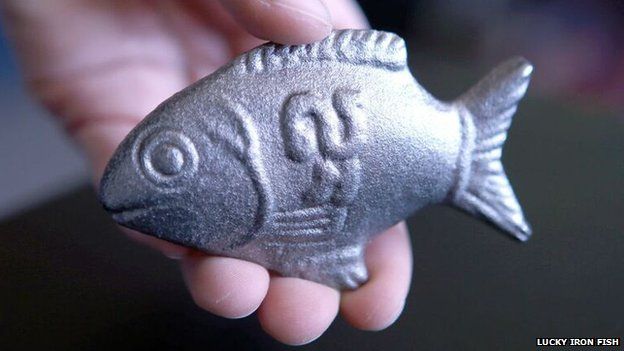
The lucky iron fish, designed by Gavin Armstrong, was based on the iron fish used in Dr Charles' research

The lucky iron fish, designed by Gavin Armstrong, was based on the iron fish used in Dr Charles’ research

Anemia is the most common and widespread nutritional disorders in the world, affecting 2 billion people globally – or over 30 percent of the world’s population. But Canadian scientists have come up with an ingenious solution, and it’s so simple, it fits in the palm of your hand. Meet the Lucky Iron Fish – a chunk of iron that’s thrown into the saucepan and boiled with lemon to give adults 75 percent of their daily recommended iron intake, and close to 100 percent for kids.

And this little fish just won the Product Design Grand Prix at Cannes.

When Canadian science graduate Christopher Charles visited Cambodia six years ago he discovered that anaemia was a huge public health problem. In the villages of Kandal province, instead of bright, bouncing children, Dr Charles found many were small and weak with slow mental development. Women were suffering from tiredness and headaches, and were unable to work. Pregnant women faced serious health complications before and after childbirth, such as hemorrhaging. Ever since, Dr Charles has been obsessed with iron.

Continue reading

Spider’s Silk, Minus the Crawlies

Bolt Threads' technology was inspired by the spider, but it has broadened into a platform of programmable polymers: a protein material that can be tuned to create a nearly limitless array of properties PHOTO: Researchgate

Bolt Threads’ technology was inspired by the spider, but it has broadened into a platform of programmable polymers: a protein material that can be tuned to create a nearly limitless array of properties PHOTO: Researchgate

Welcome to the age of slow fashion. Fashion that’s got its sense and sensibility focused on sustainability. Slow fashion represents all things “eco”, “ethical” and “green” in one unified movement. It was first coined by Kate Fletcher, from the Centre for Sustainable Fashion, when fashion was compared to the Slow Food experience. Carl Honoré, author of “In Praise of Slowness”, says that the ‘slow approach’ intervenes as a revolutionary process in the contemporary world because it encourages taking time to ensure quality production, to give value to the product, and contemplate the connection with the environment. And now meet Bolt Threads. A company that started out to make spider’s silk sans the creepy crawlies. Have they succeeded?

Continue reading

Coca-Cola Thinking Plants

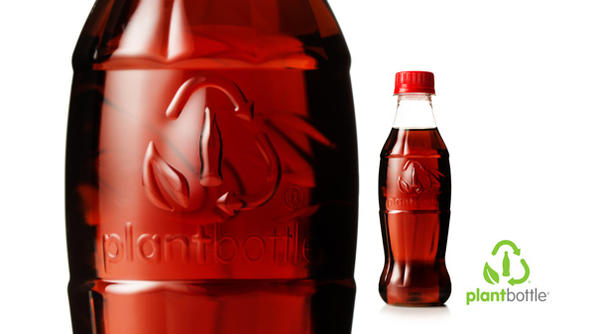
BUSINESS THE BITE Coca-Cola debuts 100% plant-based bottle as companies go eco-friendly (+video)  csmonitor icon Latest News MORE EMAIL Subscribe Coca-Cola has unveiled a bottle made entirely of plant-based materials. The new Coke bottle is the latest sign of the company's growing shift toward more environmentally friendly practices. By Ellen Meyers, Staff writer JUNE 4, 2015 About video ads Coca-Cola to release plant-based recyclable bottles WSBTV - Atlanta Coca-Cola to release plant-based recyclable bottles Coca-Cola debuted an updated version of its PlantBottle, its first bottle made from 100 percent plant materials at the Expo Milan 2015 on Wednesday. The Atlanta-based beverage giant did not specify when the 100 percent plant-based bottles would be available to consumers. However, the company said it wants its current version of its PlantBottle, made of 30 percent plant-based materials, to be used in all of its products by 2020. “Our vision was to maximize game-changing technology, using responsibly sourced plant-based materials to create the globe’s first fully recyclable PET plastic bottle made entirely from renewable materials,” Nancy Quan, the company’s global research and development officer, said in a press release. Recommended: Who owns Gatorade: Coke or Pepsi? Take our 'parent company' quiz! Since the 2009 launch, Coca-Cola has distributed more than 35 billion bottles in nearly 40 countries using its current version of PlantBottle packaging, according to the release. The company estimates that the packaging helped save the equivalent annual emissions of more than 315,000 metric tons of carbon dioxide. TEST YOUR KNOWLEDGE Who owns Gatorade: Coke or Pepsi? Take our 'parent company' quiz! PHOTOS OF THE DAY Photos of the day 06/16 In 2011, Coca-Cola licensed the technology for making PlantBottles to H.J. Heinz to use in its ketchup bottles. In 2013, Ford Motor Company said it plans to use the same material found in PlantBottle packaging in the fabric interior in certain test models of the Fusion Energi hybrid sedan. Coca-Cola says the new bottles will be the world's first entirely plant-based PET bottles. PET, known as polyethylene terephthalate, is a plastic resin and the most common type of polyester, according to the National Association for PET Container Resources (NAPCOR). It was discovered and patented in England in 1941, but it was not until the late 1990s when more companies and manufacturers started to make and use PET containers for products. NAPCOR says PET is appealing for both consumers and manufacturers for its low weight, strength, and recyclability, and its use in packaging materials, like bottles, has ticked up over the past few years. However, PET has its drawbacks. It can be an expensive packaging material to produce, according to a 2004 report from the Recycling Operators of New Zealand. RONZ also found that “PET acts as a gas ‘sieve,’ slowly allowing oxygen in and carbon dioxide out. This means the shelf life of beverages can be limited by the reduction, over time, in carbonation and oxygen degradation of flavours.” In other words, the carbonation in soda could go flat faster.  In terms of recycling, quality and quantity of supplies are also still major concerns. For reclaimers – professional recycling centers – PET packaging can be harder to clean than other plastics, Reclaimers still reported high levels of contamination in PET containers in 2013, according to NAPCOR’s 2014 report on recycling activity for PET containers. That complication can mean less PET materials are actually reused. In fact, only 22.6 percent of recycled PET containers in the US went on to be used in other products.   NAPCOR also reported that domestic collection of PET containers in the US is growing, but it is not enough to meet current and potential demand from reclaimers. That's led them to import PET from places like Canada, Mexico, and Latin America. While PET recycling has a long way to go, Coca-Cola's latest move highlights a long withstanding trend: the importance of businesses being more envronmentally conscious

While PET recycling has a long way to go, Coca-Cola’s latest move highlights a long withstanding trend: the importance of businesses being more envronmentally conscious

Coca-Cola has unveiled a bottle made 30% of plant-based materials. The new Coke bottle is the latest sign of the company’s growing shift toward more environmentally friendly practices. Can it be sustained? That remains to be seen.

Since its introduction in 2009, PlantBottle packaging has been distributed in a variety of packaging sizes across water, sparkling, juice and tea beverage brands—from Coca-Cola to DASANI to Gold Peak. Today, PlantBottle packaging accounts for 30 percent of the Company’s packaging volume in North America and 7 percent globally, some 6 billion bottles annually, making The Coca-Cola Company a large bioplastics end user.  In 2011, the company licensed PlantBottle Technology to H.J. Heinz for use in its ketchup bottles. In 2013, Ford Motor Company announced plans to use the same renewable material found in PlantBottle packaging in the fabric interior in certain test models of the Fusion Energi hybrid sedan. And in 2014, the first reusable, fully recyclable plastic cup made with PlantBottle Technology rolled out in SeaWorld and Busch Gardens theme parks across the United States. More.

Continue reading

The Food Cart Just Turned Green

One hundred of the first carts will be funded by MOVE and reserved for disabled veterans, and the remaining 400 will go to vendors who sign up—at no cost to them, because the pilot program will be sponsored. PHOTO:  Today's the Day I

One hundred of the first carts will be funded by MOVE and reserved for disabled veterans, and the remaining 400 will go to vendors who sign up—at no cost to them, because the pilot program will be sponsored. PHOTO: Today’s the Day I

Food carts are an iconic part of New York City’s street life. NYC has over 5,000 licensed trucks and carts, and an estimated 3,000 unlicensed ones on the streets. Cart operators, representing diverse ethnicities and cuisines, serve approximately 1.2 million customers every day. A food cart can be started with little capital and improved with sweat equity. However, until now, this industry has had no choice but to rely on smoke-spewing carts and their antiquated technologies that are dirty and unsafe. But hold on, the MRV100 is here.

Most food carts run off a diesel generator that’s designed to run only a few hours. Vendors run them for stretches of up to 14 hours, leading to a high output of greenhouse-gas emissions such as carbon monoxide, nitrous oxide, and particulate matter. You can see the smoke with the naked eye, but the hard facts are even more frightening: The research and consulting firm Energy Vision found that each cart produces the same amount of nitrous oxide as 186 cars on the road.

Continue reading

This Furniture Can Grow You Dinner

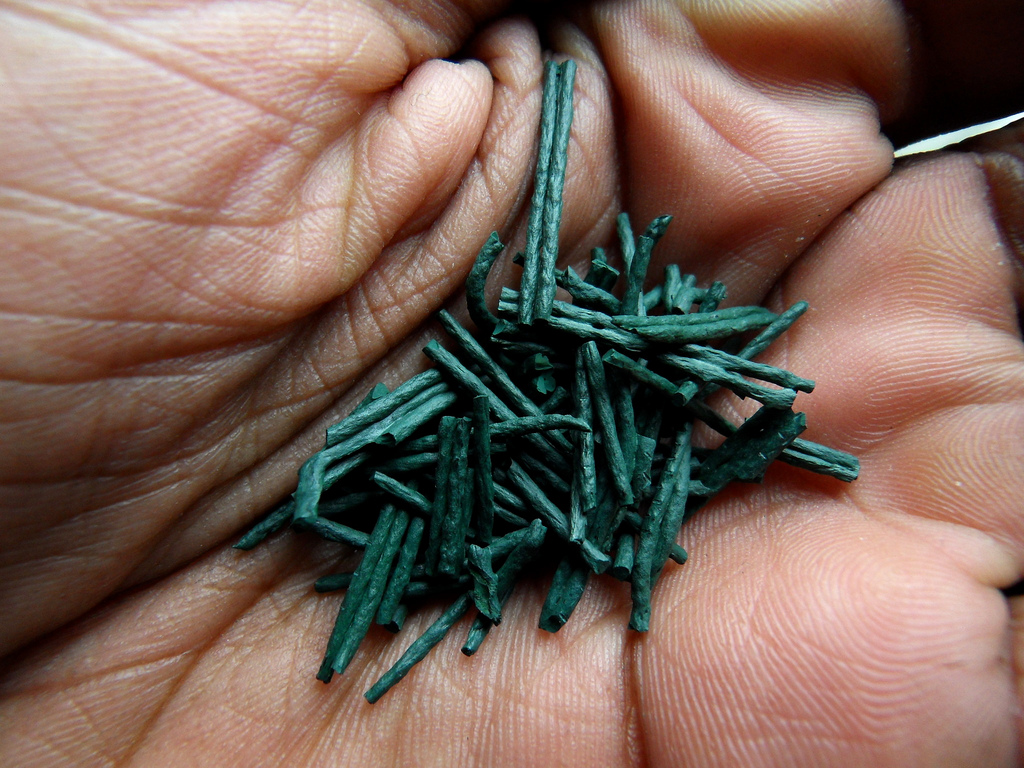
Spirulina is said to be the richest food in iron, 20 times higher than common iron-rich foods; and its iron is twice as effective than iron found in most vegetables and meats. COURTESY: Esse Spirulina

Spirulina is said to be the richest food in iron, 20 times higher than common iron-rich foods; and its iron is twice as effective than iron found in most vegetables and meats. COURTESY: Esse Spirulina

In the living room of the not-so-distant-future, you might have a glowing green blob of microorganisms next to your sofa instead of a lamp. A new line of photosynthetic furniture is filled with spirulina—a tiny, edible bacteria—that the designers imagine could help feed us without the incredible environmental footprint of conventional agriculture.

A new line of photosynthetic furniture is filled with spirulina… The custom glass bioreactors use waste heat, light, and carbon dioxide from a home to feed the spirulina inside. Periodically, someone can turn a tap, empty out the green sludge, and eat it.

Continue reading

The ‘E’ word – E-waste

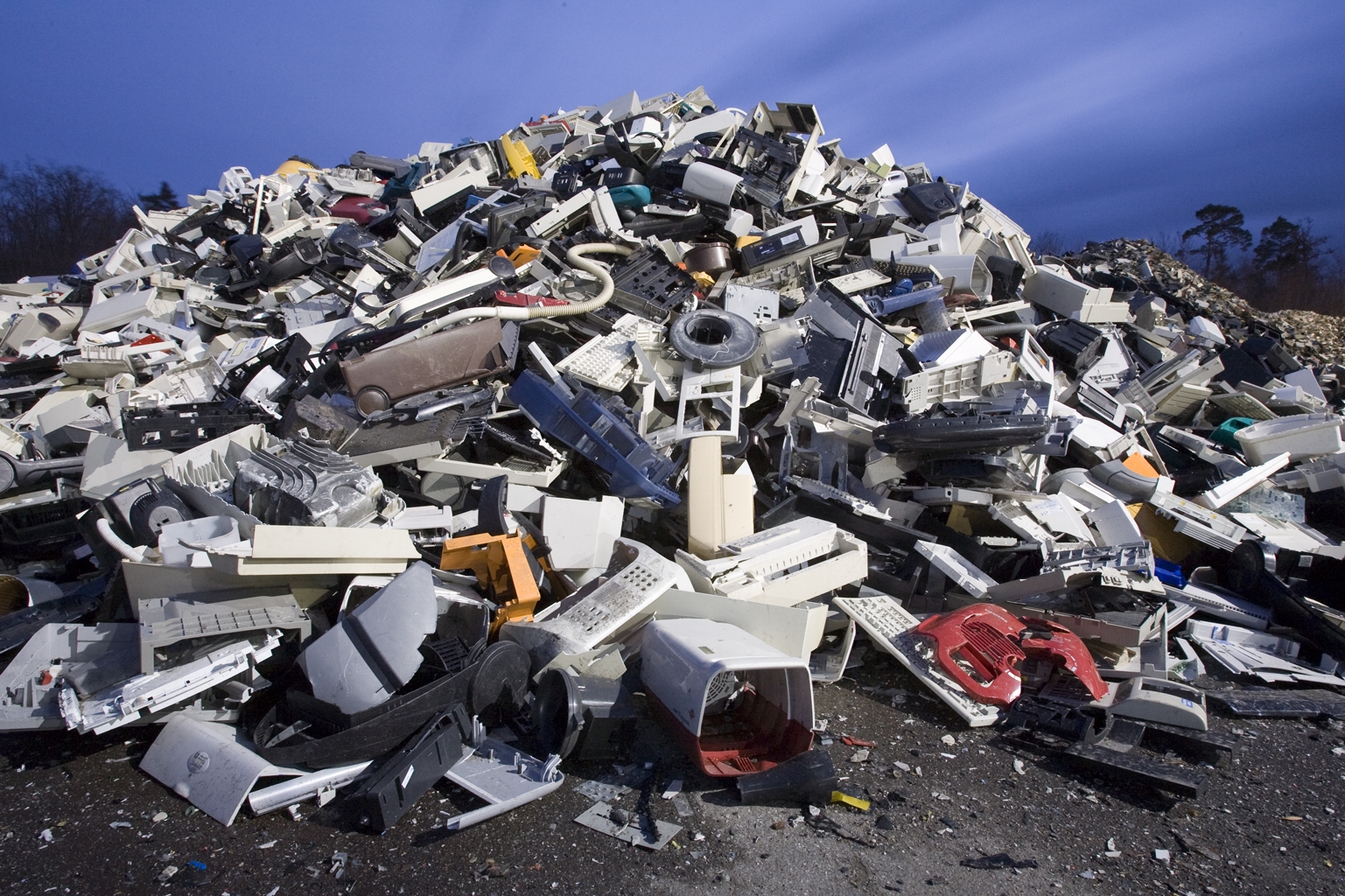
The StEP Initiative forecasts that by 2017, the world will produce about 33 percent more e-waste, or 72 million tons (65 million metric tons). That amount weighs about 11 times as much as the Great Pyramid of Giza.

The StEP Initiative forecasts that by 2017, the world will produce about 33 percent more e-waste, or 72 million tons (65 million metric tons). That amount weighs about 11 times as much as the Great Pyramid of Giza.

By 2017, the global volume of discarded refrigerators, TVs, cellphones, computers, monitors and other electronic waste will weigh almost as much as 200 Empire State Buildings, a new report predicts.The forecast, based on data gathered by United Nations organizations, governments, and non-government and science organizations in a partnership known as the “Solving the E-Waste Problem (StEP) Initiative,” predicts e-waste generation will swell by a third in the next five years, led by the United States and China. The StEP Initiative created a map of the world’s e-waste, which is available online. [Infographic: Tracking the World’s E-Waste]

Continue reading

A Ticket on the Eco-friendly Supersonic, please

Supersonic flight is one of the four speeds of flight. speeds up to five times faster than the speed of sound. PHOTO: NASA

Supersonic flight is one of the four speeds of flight. It has speeds up to five times faster than the speed of sound. PHOTO: NASA

Imagine flying at more than twice the speed of sound. At that speed, a London to New York flight lasts under 3.5 hours. And the last time that happened was in 2003, just before the supersonic Concorde ceased operating. More than a decade later, there are conversations on whether the supersonic culture can be revived. There are arguments for both sides and the latest is news about the talent at NASA working on making commercial supersonic flight eco-friendly.

Unless you have access to a F-22 fighter jet, you probably haven’t been able to fly faster than the speed of sound since the last Concorde flight in 2003. NASA wants to change this. The agency said that it is spending over $6 million to fund research into cheaper and greener supersonic travel. This isn’t NASA’s first attempt to bring back supersonic travel. It has been (literally) pushing the boundaries of flight for years. NASA’s predecessor was involved in building the first supersonic plane in 1946, and the agency has been working on concepts since 2006 with companies like Lockheed-Martin and Boeing that may one day lead to a new generation of planes that get you places very quickly.

Continue reading

Avian Alarm Calls

A Tufted Titmouse calling in flight.

When you’re walking in the woods or even on a city block, chances are you’ll hear birds chirping at some point. Whatever they’re trying to communicate, it certainly isn’t the joyous celebration of life that cartoons and our active imaginations often make out birdsong to be. Males might be trying to attract a mate, individuals could be declaring their territory, and if it’s the right time of year, chicks may be begging for food. Another reason for a bird to vocalize is to create an alarm call in the interest of its general foraging flock, whether to flee from or mob a potential predator.

I’ve watched small birds like sparrows and chickadees mob a pygmy owl, crows, and a Red-tailed Hawk, but I’ve never had the chance to experience the beginning of the action, which apparently starts with just one alarm call, which turn out to be variable enough in some cases to communicate predator size and danger. Christopher Solomon reports for the New York Times‘ science section:

MISSOULA, Mont. — In the backyard of a woodsy home outside this college town, small birds — black-capped chickadees, mountain chickadees, red-breasted nuthatches — flitted to and from the yard’s feeder. They were oblivious to a curious stand nearby, topped by a curtain that was painted to resemble bark.

Continue reading

Green, Cause And Effect, Explained

Photo Illustration by Andrew B. Myers for The New York Times

Photo Illustration by Andrew B. Myers for The New York Times

Considering she is one of our favorite science writers, it has been a while; just over a year in fact, since we last we read of her, at which time she was in one of our favorite locations. The wait was worth it, because this article helps us understand why we reference green so often in these pages:

…Goethe praised green as the “soothing” marriage of the chromatic opposites yellow and blue. George Washington called green “grateful to the eye,” and painted his Mount Vernon dining room a brilliant verdigris. And let’s not forget that everybody’s favorite elephant, Babar, wore a dapper suit in a “becoming shade of green.” Continue reading

The Great Golden Swallow Gear Review: Part 4

A mongoose in the Havahart 1090

Havahart Medium 1-Door Collapsible Easy Set Trap, Model 1090:

Justin:  Great product all-around.  Lightweight, foldable, and easy to set once you’ve learned how to do so.  It’s a solid unit that can take some hits and very rarely did the trap spring by itself.

Garmin Oregon 650 3-Inch Worldwide Handheld GPS with 8MP Digital Camera:

Justin:  Most reliable and intuitive GPS that I’ve ever used.  The touch screen and layout is user-friendly and easy to navigate.  I chose this unit based on reviews that claimed it’s its high-sensitivity, WAAS- and GLONASS-enabled GPS receiver and HotFix® satellite prediction would allow for reliable accuracy, even in deep forest in remote locations.  Sure enough, even under the most dense canopy cover, we were always able to quickly gain satellite reception and an accuracy of 30ft or better.  In less demanding environments, satellite precision was 5ft or less.  The ability to load Continue reading

So Much Expertise, So Little Time

Kris Snibbe/Harvard Staff Photographer With Charlie Rose as moderator, a panel of experts in science, politics, business, economics, and history shared their views during Monday's Presidential Panel on Climate Change at Sanders Theatre. “The challenge of climate change is profound. The risks it poses are dire. Confronting those dangers is among the paramount tasks of our time,” said President Drew Faust in introducing the discussion.

Kris Snibbe/Harvard Staff Photographer. With Charlie Rose as moderator, a panel of experts in science, politics, business, economics, and history shared their views during Monday’s Presidential Panel on Climate Change at Sanders Theatre. “The challenge of climate change is profound. The risks it poses are dire. Confronting those dangers is among the paramount tasks of our time,” said President Drew Faust in introducing the discussion.

Thanks to the Harvard Gazette, and the panelists who took the stage last week for another in ongoing series of assessments of the urgency of need for action on climate change:

There is hope in global action to fight climate change, in the slow adoption of wind and solar power, in moves by the U.S. government to cut emissions from vehicles and power plants, in the lead taken by some businesses to clean up operations and draw attention to the problem.

But it’s too late to avoid several more degrees of warming by the turn of the next century, too late to completely stave off dramatic melting, and too late to avoid the slow swamping of Pacific island nations, whose thousands of years of history and culture seem certain to be swallowed by rising seas. Continue reading

The Dumbest Experiment In History, By Far

Screen Shot 2015-04-05 at 7.14.35 AM

It’s official, our blog-crush on this particular conservation-focused entrepreneur. We have not yet heard (click above for a podcast in which “Neil deGrasse Tyson explores the future of humanity with one of the men forging that future: billionaire entrepreneur Elon Musk, CEO of SpaceX and Tesla Motors. Co-hosted by Chuck Nice and guest starring Bill Nye.”) or yet read (continue below to Motherboard‘s interview) anything to make us question that he is the real deal; a living, breathing visionary achiever of heroic proportions:

Elon Musk: Burning Fossil Fuels Is the ‘Dumbest Experiment in History, By Far’

Written by JASON KOEBLER, STAFF WRITER

Elon Musk, founder of Tesla and SpaceX, and chairman of SolarCity, and the guy who dreamt up the hyper loop, says we shouldn’t need an environmentally motivated reason to transition to clean energy. We’re probably going to run out of oil sometime; why find out if we can destroy the world while we do it, if an alternative exists?

“If we don’t find a solution to burning oil for transport, when we then run out of oil, the economy will collapse and society will come to an end,” Musk said this week during a conversation with astrophysicist and Cosmos host Neil deGrasse Tyson. Continue reading

Colors From Life Way Out There

The Milky Way, from Scutum to Serpens and northern Sagittarius. CREDIT IMAGE BY JOHN CHUMACK / SCIENCE SOURCE

The Milky Way, from Scutum to Serpens and northern Sagittarius. CREDIT IMAGE BY JOHN CHUMACK / SCIENCE SOURCE

While pondering our own local attractions in the universe tonight, our minds will certainly wander, in wonder, toward the colors further afield, thanks to this post in the Elements section of the New Yorker‘s website and some of our earlier posts on this topic:

What Are the Colors of Alien Life?

BY NICOLA TWILLEY

Just before it became the first man-made vessel to leave the solar system, in 1990, Voyager 1 took a portrait of Earth, some four billion miles away. Our pinprick of a planet occupied a mere twelve per cent of one pixel, but its atmosphere, rich in water, oxygen, and ozone, reflected and scattered the glow of the sun in an unmistakable way; the astronomer Carl Sagan dubbed Earth the “pale blue dot.”  Continue reading

Tetrad, A Wonder To Behold Tonight In Kerala

The moon exhibits a deep orange glow as the Earth casts its shadow in a total lunar eclipse as seen in Manila, Philippines, before dawn Thursday in a June 2011 eclipse. Bullit Marquez/AP

The moon exhibits a deep orange glow as the Earth casts its shadow in a total lunar eclipse as seen in Manila, Philippines, before dawn Thursday in a June 2011 eclipse. Bullit Marquez/AP

Thanks to National Public Radio (USA) for this notification of one of the occasional wonders of the universe, brought to a night sky near you, if you are in one of the lucky places. In Kerala we will be watching over the water from the deck of the restaurant, 51, at Spice Harbour :

Get Ready For The Third Installment In The Lunar Eclipse Tetrad

SCOTT NEUMAN

North Americans could get a glimpse of the Earth shadowing the moon (very) early Saturday — the third in a series of four lunar eclipses that began nearly a year ago. But only those on the West Coast, in the Pacific or Asia will have a chance at seeing the full show.

Continue reading

Bummer Of A Finding

Another day, another news cycle. Another week, another wave of stories on topics we care about, some fun, some inspirational, some downright scary. In science news, a story we find not particularly surprising, but we must share it:

24RAINFOREST-thumbStandardAmazon Forest Becoming Less of a Climate Change Safety Net

By JUSTIN GILLIS

The ability of the Amazon basin to soak up excess carbon dioxide is weakening over time, researchers reported last week.