How Coral Reefs Grow By Crawling

coral-reef-shutterstock_116387641-680x450

shutterstock.com

In its weekly “good reads” section Conservation has this following summary of an article in Scientific Reports, of interest to our reef watchers/protectors:

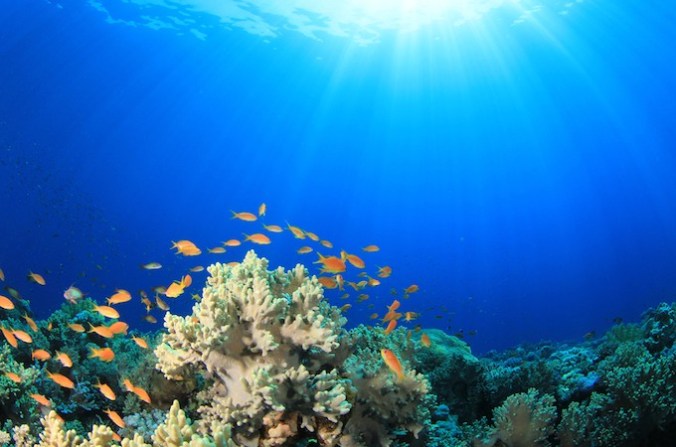
In November 1835, the HMS Beagle visited Tahiti, in the South Pacific. Climbing up the island’s slopes, the young Charles Darwin looked across the sea to nearby Moorea, and saw an island surrounded by a barrier reef. During and after his voyage, Darwin constructed a theory for reef formation that explained how fringing reefs grow into barrier reefs, which then convert into atolls. “The close similarity in form, dimensions, structure, and relative position between fringing and encircling barrier-reefs, and between these latter and atolls,” he wrote, “is the necessary result of the transformation, during subsidence, of the one class into the other. On this view, the three classes of reefs ought to graduate into each other.” Continue reading


About Those Dancing Frogs


Thanks to National Geographic’s website for extending the details of this  news we first shared here:

…The spectacular haul more than doubles the number of Indian dancing frogs, a family named for the bizarre courtship displays of their foot-waving males, to 24 species. Continue reading

Explaining Elephant Ears

Photo © Disney

Photo © Disney

When we look for scientific answers to interesting questions, the name Disney does not normally come to mind, but credit where due (thanks to Science Friday for this):

Why Are Elephant Ears So Big? And Other Pachyderm Questions

BY JULIE LEIBACH

Joseph Soltis, a research scientist at Disney’s Animal Kingdom, recently chatted with SciFri about the “words” that African elephants use to communicate. Below, Soltis has addressed a few of your pachyderm questions:
How do researchers keep bias towards human languages out of the study of elephant languages? Do a linguistics study as if the elephants were human?—@CyberResearchUS
You always have to be careful not to freely ascribe human-like capabilities to animals without evidence. For language, this is especially important. We [humans] can make a simple distinction between sentences with lots of words strung together following grammatical rules and a simple vocabulary of individual words.

Continue reading

Big Living Things

It has been a while since we linked to Krulwich Wonders, which we have done too many times to link back to all previous posts, but now is as good a time as ever to do so again:

A Question Of Biggitude: What’s The Largest Creature On Earth

by 

What’s the biggest living thing on earth? I can think of two. I’m not sure which is biggest, but neither of them is a blue whale. These are weirder. Much, much weirder.

One is a tree. The other eats trees.

This is the tree.

Continue reading

If You Do Not Happen To Be In Monterey Bay, You Might Want To Be

This slideshow requires JavaScript.

Something is happening in the Bay Area, and it is worth a listen, or a quick read. National Public Radio (USA) has a podcast version of this story here:

Monterey Bay on California’s central coast rests atop one of the largest underwater canyons in the world. It’s deeper than the Grand Canyon, making it possible for lots of ocean life — including humpback whales, orcas, dolphins and sea lions — to be seen extremely close to shore. That is, given the right circumstances. Lately, the right circumstances have converged, and there’s more marine and wildlife in the bay than anyone’s seen in recent memory. Continue reading

Food, Form, Philibuster

Tasters have compared Soylent to Cream of Wheat and “my grandpa’s Metamucil.” Photograph by Henry Hargreaves.

Life without food as we know it? After our inspiration and efforts to launch 51, and all kinds of other good reasons to love food as we know it (and all the forms of food we have yet to know), some tech fellows want to do away with all that? Food without form that we can recognize is fine for short term bursts of unusual pleasure, but not as a dominant replacement. We will resist and delay this as long as our breath and imaginations hold out:

In December of 2012, three young men were living in a claustrophobic apartment in San Francisco’s Tenderloin district, working on a technology startup. They had received a hundred and seventy thousand dollars from the incubator Y Combinator, but their project—a plan to make inexpensive cell-phone towers—had failed. Down to their last seventy thousand dollars, they resolved to keep trying out new software ideas until they ran out of money. But how to make the funds last? Rent was a sunk cost. Since they were working frantically, they already had no social life. As they examined their budget, one big problem remained: food. Continue reading

Nature Has The Long View

MobiusII

When you love what you do, the hope is that you will do it indefinitely. E.O. Wilson shows little sign of slowing down any time soon, and his new book is the best evidence to date. Not exactly light weekend reading, nor summer beach fare, but from the sound of this review, worth the effort:

LOOKING FOR ETERNITY? LOOK TO NATURE

A Review of “A Window on Eternity” by E.O. Wilson

By Bill Chameides

To say that E.O. Wilson, arguably the greatest living biologist, is prolific is a bit of an understatement. At 84, Wilson continues to churn out books at a rate of one to two each year. Yesterday, Earth Day 2014, marks the release of his latest book, A Window on Eternity: A Biologist’s Walk Through Gorongosa National Park  (Simon and Schuster), and a DVD companion titled “The Guide.” Continue reading

Bedeviling Bovine Biproducts

cow-butt

Roberta Kwok, over at Conservation, shares a new view on the humble cow:

COWS VS. COAL

To reduce emissions, the usual thinking goes, we should promote alternative energy and declare war on coal. But researchers argue that policymakers are ignoring a crucial climate threat: cows. Continue reading

Welcome Back, Dot Earth

An illustration from a children’s book published in 1888.

An illustration from a children’s book published in 1888.

Out of nowhere, a few days back, Andrew Revkin and Dot Earth came back from who knows where. In our first year or two they were among our most consistent sources of excellent reportage on environmental issues. Then, nothing. Now, something, sneaking into view within the Opinion pages of the New York Times (really, we need their old excellent reporting more than we need opinion, but…):

dotearth_postENVIRONMENTAL POLICY

No Time to Waste: Students Pursue Environmental Progress Instead of Exam Grades

By ANDREW C. REVKIN APRIL 22, 2014, 12:13 PM

Continue reading

A Minor Detraction From Aging’s Major Detractors

old-tree

Thanks to Roberta Kwok for her ever-concise summaries of remarkable scientific findings on Conservation‘s website, this one following the theme of a companion post with regard to aging organisms:

SCORE ONE FOR THE REALLY OLD GUYS

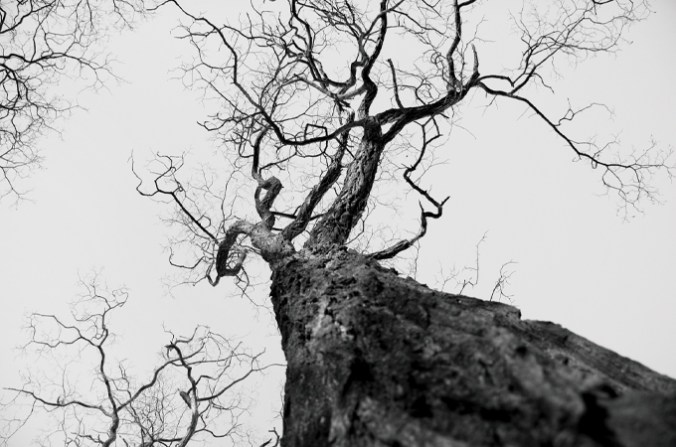
Aging is generally associated with slowing down. But scientists have found that trees actually grow faster as they get older, making them star players in a forest’s carbon storage. In fact, one old tree can fix as much carbon in a year as the total amount of carbon in a “middle-aged” tree. Continue reading

Field Trips-R-Us

Science teachers huddle over bacteria colonies at Chicago's Museum of Science and Industry. The museum plans to train 1,000 area educators to be better science teachers in the next five years. Linda Lutton/WBEZ

Science teachers huddle over bacteria colonies at Chicago’s Museum of Science and Industry. The museum plans to train 1,000 area educators to be better science teachers in the next five years. Linda Lutton/WBEZ

We are partial to field trips. Bravo to these educators for recognizing their value and putting their own two feet forward first (thanks to NPR, USA, for the podcast and published story):

In a classroom across from the coal mine exhibit at the Chicago’s Museum of Science and Industry, students are huddled around tables, studying petri dishes of bacteria.

But these aren’t school-age kids — these students are all teachers, responsible for imparting science to upper-elementary or middle-school students.

That’s a job that many here — and many teachers in grammar schools around the country — feel unprepared for. Continue reading

Thinking In Unexpected Places

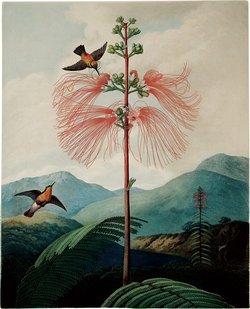
The Large Flowering Sensitive Plant, whose ‘plant electricity,’ Oliver Sacks writes, ‘moves slowly…as one can see by watching the leaflets…closing one by one along a leaf that is touched.’ Illustration from Robert John Thornton’s The Temple of Flora (1799–1807), published in a new edition by Taschen.

The Large Flowering Sensitive Plant, whose ‘plant electricity,’ Oliver Sacks writes, ‘moves slowly…as one can see by watching the leaflets…closing one by one along a leaf that is touched.’ Illustration from Robert John Thornton’s The Temple of Flora (1799–1807), published in a new edition by Taschen.

Thanks to the New York Review of Books for engaging one of the great thinker-researcher-writers of our time for this story The Mental Life of Plants and Worms, Among Others:

Charles Darwin’s last book, published in 1881, was a study of the humble earthworm. His main theme—expressed in the title, The Formation of Vegetable Mould through the Action of Worms—was the immense power of worms, in vast numbers and over millions of years, to till the soil and change the face of the earth. But his opening chapters are devoted more simply to the “habits” of worms.

Worms can distinguish between light and dark, and they generally stay underground, safe from predators, during daylight hours. They have no ears, but if they are deaf to aerial vibration, they are exceedingly sensitive to vibrations conducted through the earth, as might be generated by the footsteps of approaching animals. All of these sensations, Darwin noted, are transmitted to collections of nerve cells (he called them “the cerebral ganglia”) in the worm’s head.

Continue reading

Long-Form Science Writer On Vacation In One Of Our Favorite Places

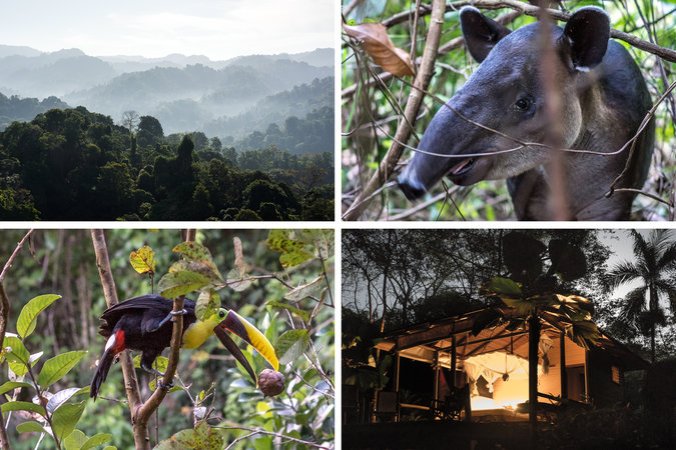
Clockwise from top left: Rain forest in Corcovado National Park; a tapir in the park; a cabin at Bosque del Cabo Rainforest Lodge; spying on a toucan at the lodge. Credit Scott Matthews for The New York Times

Clockwise from top left: Rain forest in Corcovado National Park; a tapir in the park; a cabin at Bosque del Cabo Rainforest Lodge; spying on a toucan at the lodge. Credit Scott Matthews for The New York Times

As might be guessed from many of the sources linked to here, several of us are fans of long-form narrative and some enough so that we listen to a podcast dedicated to interviewing long-form journalists. We love well-crafted descriptive wording. Our friends in Costa Rica generally, and the Osa Peninsula especially, must be delighted to have Amy Harmon‘s long-form knowhow working in their favor in this week’s Travel section of the New York Times.

BdCShirtBy almost unbelievable coincidence, while wearing the shirt to the left (selfie by yours truly, dear reader) I was listening to a podcast interview with Amy Harmon  at the moment this article–what first caught my eye was the title about travel to Costa Rica–came onto my screen. Then, seeing it was by Amy Harmon I had to read it immediately for another reason. We have a large collection of posts dedicated to science writers and their craft, but none yet dedicated to her work (this post is the first step of correcting that negligence). Below, excerpts of the description of the experience she had at Bosque del Cabo, a property where many of our guests who stay at Xandari also visit, and vice versa:

…Our first stop, Bosque del Cabo, was a 40-minute ride by taxi from Puerto Jiménez, the biggest town on the peninsula with a population of 1,780. I had chosen one of the two cabins at Bosque just steps from the rain forest, at the edge of a large clearing planted with native trees and plants. A half-mile away from the main lodge area, these “garden cabinas” are reached by a trail through the forest that crosses high above a river over a suspension bridge… Continue reading

Collaborative Shorts From Brown

We have been watching those folks at Brown University since the early days of this blog, and more recently too. They are a community we never tire of learning more about, and from. In the five years since they first started offering simple but imaginative explanations for complex phenomena (many, but not all, oceanographically topical), we have almost come to expect a six minute short on how to save the world’s high seas from over-fishing collapse. Not likely, but we appreciate their efforts with each new short, most recently from about six weeks ago.

The New York Times, one of our many regular sources for excellent science writing, paid attention to this project late last year. We look forward to more. Background on, and credits for, the shorts:

Continue reading

Professors, aka Heroes, Who Teach What Others Might Shun

Thanks to the New York Times for the weekly Tuesday Science section:

08CONV_SPAN-thumbStandardA CONVERSATION WITH

What Fish Teach Us About Us

Neil H. Shubin, the paleontologist who helped discover a fossil hailed as a missing link between sea and land animals, talks about his television series, “Your Inner Fish,” and why he teaches anatomy classes.

Science, Private Interests, Troubling Trend

privatescience1-sfSpan-v2

Béatrice de Géa for The New York Times. Wendy Schmidt and her husband are advancing ocean studies.

Click the image at left to go to the story, in the Science section of the New York Times, about what seems a troubling trend. There is something unsettling about science being increasingly influenced by individuals’ private interests rather than society as a whole. It has nothing to do with their being billionaires, but with the fact that science historically has advanced Continue reading

Scientists Working On Infrared-Based Renewable Energy

Harvard physicists Federico Capasso (left), Steven J. Byrnes (right), and Romain Blanchard propose a new way to harvest renewable energy. (Photo by Eliza Grinnell, SEAS Communications.)

Harvard physicists Federico Capasso (left), Steven J. Byrnes (right), and Romain Blanchard propose a new way to harvest renewable energy. (Photo by Eliza Grinnell, SEAS Communications.)

Thanks to the Harvard School of Engineering And Applied Sciences for this press release of important renewable energy scientific news:

Infrared: A new renewable energy source?

HARVARD PHYSICISTS PROPOSE A DEVICE TO CAPTURE ENERGY FROM EARTH’S INFRARED EMISSIONS TO OUTER SPACE

By Caroline Perry

When the sun sets on a remote desert outpost and solar panels shut down, what energy source will provide power through the night? A battery, perhaps, or an old diesel generator? Perhaps something strange and new.

Physicists at the Harvard School of Engineering and Applied Sciences (SEAS) envision a device that would harvest energy from Earth’s infrared emissions into outer space.

Heated by the sun, our planet is warm compared to the frigid vacuum beyond. Thanks to recent technological advances, the researchers say, that heat imbalance could soon be transformed into direct-current (DC) power, taking advantage of a vast and untapped energy source. Continue reading

Rock, Water, Science, News

A diamond from Juína, Brazil, containing a water-rich inclusion of the olivine mineral ringwoodite. Richard Siemens/University of Alberta

A diamond from Juína, Brazil, containing a water-rich inclusion of the olivine mineral ringwoodite. Richard Siemens/University of Alberta

What makes scientific information newsworthy? One possibility is when the information conveyed may have profound implications for life on earth. This Scientific American article about a rock is really about water, and about a kind of water that many of us had never been aware of:

…”It’s actually the confirmation that there is a very, very large amount of water that’s trapped in a really distinct layer in the deep Earth,” said Graham Pearson, lead study author and a geochemist at the University of Alberta in Canada. The findings were published today (March 12) in the journal Nature.

The worthless-looking diamond encloses a tiny piece of an olivine mineral called ringwoodite, and it’s the first time the mineral has been found on Earth’s surface in anything other than meteorites or laboratories. Ringwoodite only forms under extreme pressure, such as the crushing load about 320 miles (515 kilometers) deep in the mantle. Continue reading

A Musically Satisfied Cow Is A Productive Cow

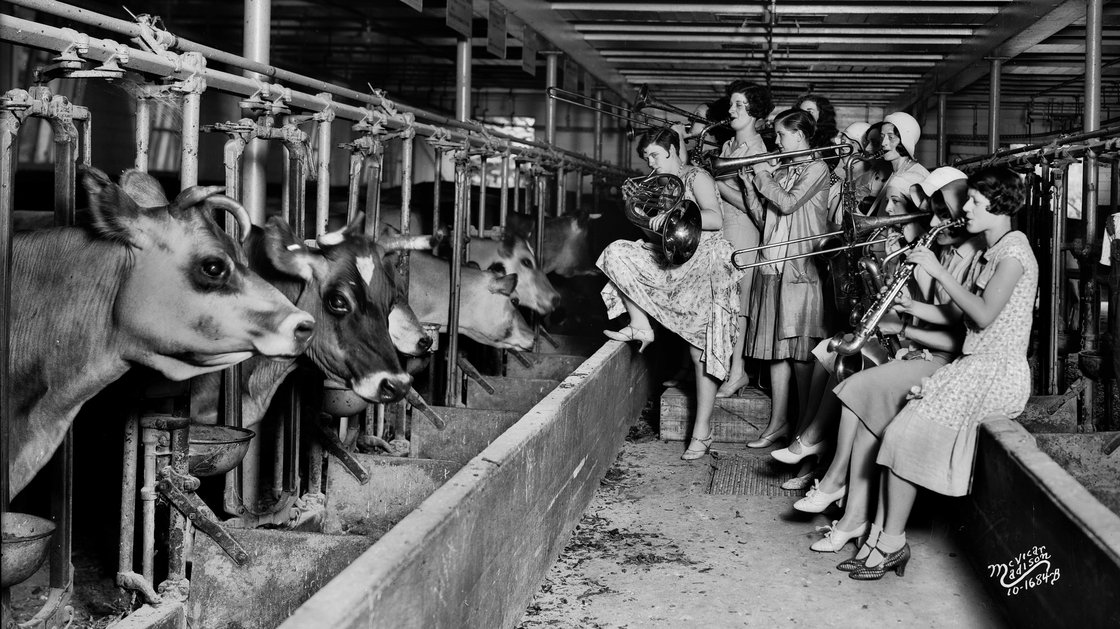
The Ingenues, an all-girl band and vaudeville act, serenade the cows in the University of Wisconsin, Madison's dairy barn in 1930. The show was apparently part of an experiment to see whether the soothing strains of music boosted the cows' milk production. Angus B. McVicar/Wisconsin Historical Society

The Ingenues, an all-girl band and vaudeville act, serenade the cows in the University of Wisconsin, Madison’s dairy barn in 1930. The show was apparently part of an experiment to see whether the soothing strains of music boosted the cows’ milk production. Angus B. McVicar/Wisconsin Historical Society

It is not difficult to believe, but it is funny. Thanks to National Public Radio (USA) for this story about the importance of animal happiness, an idea we can all, from carnivore to vegan all everyone in between, agree is good (the video below is at least as compelling as the scientific references):

When it’s time to buckle down and focus, plenty of office workers will put on headphones to help them drown out distractions and be more productive. But can music also help dairy cows get down to business?

Some dairy farmers have long suspected that’s the case. It’s not unheard of for farmers to play relaxing jams for their herds to boost milk production, as the folks at Modern Farmer recently reported.

A tantalizing 2001 study out of the University of Leicester in the U.K. appeared to lend credence to those claims. It found that milk production went up by as much as 3 percent when cows listened to slow tunes like R.E.M.’s “Everybody Hurts” and Simon & Garfunkel’s “Bridge over Troubled Water,” rather than faster songs. Continue reading