Extinction Reversal

When Phil first mentioned the series he would share here, the fit could not have been more perfect. It was based on his own experience as a diver; on his own informed understanding of environmental challenges at once universal and personal (as a diver, he has witnessed changes that disturb him); on his role as a citizen science participant; and on his belief in entrepreneurial conservation as a solution to some otherwise intractable challenges.

We prefer the first person here, but also share as much as we can of what science has to say on these subjects through our reliable cadre of science journalists. Carl Zimmer, over at National Geographic‘s Phenomena site, writes about genetically engineering in the wild, which raises important, obvious and not so obvious ethical issues:

Back in April, I wrote in National Geographic about the provocative idea of bringing extinct species back to life. In the five months that have passed since then, I haven’t spotted any mammoths or saber-tooth lions drifting through my front yard. If “de-extinction” ever does become real, it won’t for quite a while.

What I have seen over the past five months is a new conversation. Part of the conversation has revolved around the specifics of de-extinction. Some people are open to the possibilities of rebuilding genomes and embryos of vanished species. Some people find it a flashy distraction from the real work of fighting the current wave of extinctions. Continue reading

Speaking Of Science Journalism

“This is our artificial sun,” Joel Ager said, as he gestured with mock grandeur toward a metal box about the size of an old computer tower. A glowing lens, which looked like it was transplanted from a projector, shined out of a hole in its side. It was aimed at a beaker filled with water sitting a few inches away. Ager’s colleague produced a metallic toothpick-sized stick, alligator-clipped it to electrodes, and dunked it. Under the light, the submerged stick became a luminous red.

And this is Annalee Newitz, Andrew Revkin said, as he got on with down-to-earth reporting at his Dot Earth blog.  She writes clearly. She looks funny (as in, she has a sense of humor, which is equally clear from her writing). This is Annalee Newitz in her own words.

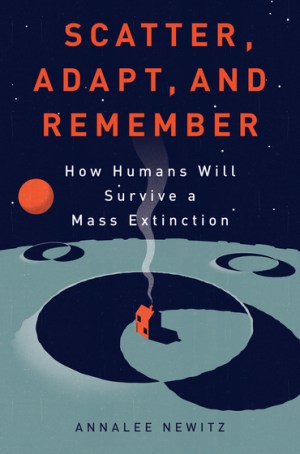
And this is Annalee Newitz, in her own words, on the topic of the end of the world as we know it (click the image above, or here, to go to the full version of her recent post on the New Yorker website) in her new book:

This speculative and hopeful work of popular science focuses our attention on humanity’s long history of dodging the bullet of extinction—and suggests practical ways to keep doing it. From bacteria labs in St. Louis to ancient underground cities in central Turkey, we discover the keys to long-term survival. This book leads us away from apocalyptic thinking, into a future where we live to build a better world.

Science reporting is an art as much as it is anything else. Facts are an essential ingredient (along with humor and others) in our daily doses of information-sharing.

Science Journalism And The Dynamics Of Democratizing Commentary

Wellcome Images

Wellcome Images

Lovely, thoughtful, radical stuff happening over at this old school publication as it navigates the new world of social media (click the image above to go to the source):

Comments can be bad for science. That’s why, here at PopularScience.com, we’re shutting them off.

It wasn’t a decision we made lightly. As the news arm of a 141-year-old science and technology magazine, we are as committed to fostering lively, intellectual debate as we are to spreading the word of science far and wide. The problem is when trolls and spambots overwhelm the former, diminishing our ability to do the latter. Continue reading

Little Wonder

Thanks to the Science section folks at the New York Times, who have added to an already excellent Tuesday paper section with lots of excellent online resources such as this (click the image to the left to go to the video):

SCIENCE

ScienceTake: A Frog’s Secret to Sticking

Nature is full of animals with amazing abilities that scientists are trying to understand, and the torrent frog is one of them. True to its name, it lives stuck to waterfalls.

Popularity Contests Some Will Never Win

05SharksPeople@Thomas P. Peschak

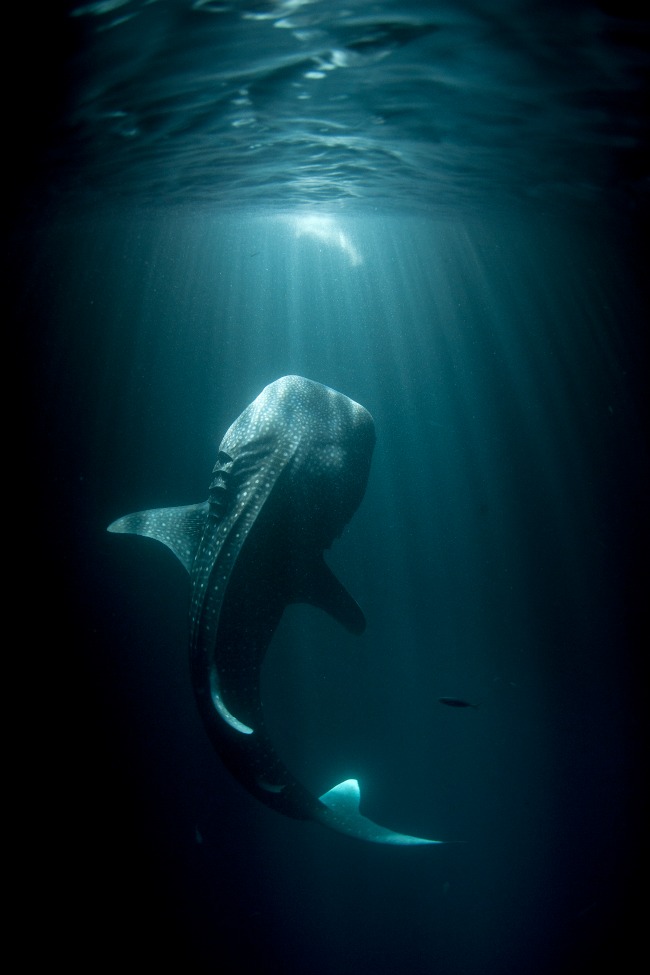
Whale shark. (Thomas Peschak / University of Chicago Press)

We note from time to time the tallies of our most popular posts and writers. Seth still has the record for “most instantaneously viral” with Volcano Sandboarding (3,000+ views in the first couple days after it was posted); Tim’s Carbon Emissions Series: Vacationers’ Diets is by far the most viewed with nearly 9,000 readers to date; Salim is by far the most widely read of our contributors, just having passed the 50,000 mark for views of his daily series on the natural and cultural heritage of south India (Thiruvathira Kali (Traditional dance of Kerala) being the most popular with nearly 3,000 views).

Phil’s most recent post has been a runaway hit, and rapidly approaching 1,000 views within a couple weeks it is on pace to put him in the ranks of our most popular contributors.  So when we saw the photo above, we thought of Phil’s series with the hope he contributes another post soon. Dr. Tenner’s book review, from which that photo comes, provides an essential reminder of facts, as well as visual testament to the beauties and tragedies associated with sharks, to counter whatever perverse attention those Shark Week shows purvey:

…Thomas Peschak makes an eloquent visual case for the sublimity of sharks—and also for their conservation. He notes that the media still devotes far more attention to rare shark attacks than to the urgent need to protect them from human depredation, especially the shark fin trade. He might have noted that Peter Benchley, who became wealthy through the 1970s novel and film Jaws, regretted the fear he had sown and became a shark advocate. In the long run, though, China’s removal of Mao Tse-Tung’s ban on shark fin soup as bourgeois decadence in 1987 may have resulted in more shark slaughter than all the horror books, films, and news items together. Great conservation photography like Peschak’s, one must hope, will have the power to change attitudes globally…

Continue reading

Obviously Worth A Look

Avid consumers of Malcolm Gladwell’s scientific gumshoe writings for the masses, occasional consumers of Daniel Kahneman‘s constant illuminations of cognitive science, and those who just watch out for randomly passing-by phenomenal thinker/researcher/writers, will likely appreciate this from the Cornell Alumni Magazine profile of Watts:

A central part of Watts’s argument is that hindsight isn’t 20/20; it’s reductive and unreliable. In a section on the Mona Lisa, for example (see excerpt), he discusses how the painting languished in relative obscurity for centuries, only becoming world famous after it was stolen from the Louvre in the early 1900s—but since the idea of its greatness owing to a fluke is so inherently unsatisfying, people ascribe post-facto “common sense” explanations. (It’s the smile! It’s the fantastical background! It’s the genius of Leonardo da Vinci!) Continue reading

Boys, Girls, Science And Geek Myths

Thanks, as always with Natalie Angier, for incisive reportage on an important scientific concern:

Peter Ostrander, the tireless coordinator and cheerleader for a renowned science and mathematics magnet program at Montgomery Blair High School in Silver Spring,  Continue reading

Scientific Findings About Those Famous Cousins

According to fable attributed to Aesop, there was once a country mouse who invited his cousin who lived in the city to come visit him…If you do not know that story, it is easy to find. The moral of that story seems to be that peace and quiet in the country ultimately provide a better life than the dangers of the city, no matter the attractions of the latter.  Hard to argue with that, unless you are a city mouse at heart.  And/or if your mouse brain has been hardwired that way. In which case, you can thank the tendency of humans to transform the natural environment into built space. Carl Zimmer explains recent scientific findings along these lines:

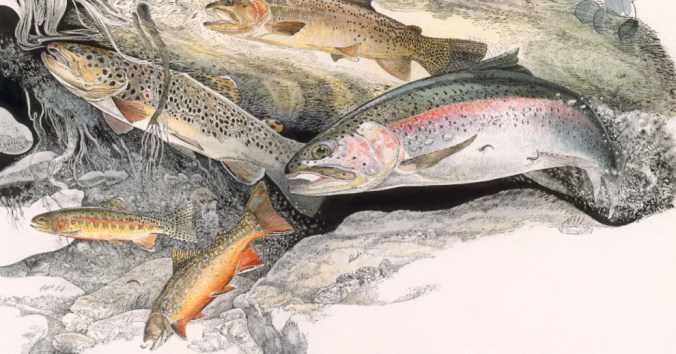
Evolutionary biologists have come to recognize humans as a tremendous evolutionary force. In hospitals, we drive the evolution of resistant bacteria by giving patients antibiotics. In the oceans, we drive the evolution of small-bodied fish by catching the big ones. Continue reading

How The Catcher In Rye Works

At first light Richard Dale collects migrating birds caught in the mist net Photograph: Dan Kitwood/Getty Images

At first light Richard Dale collects migrating birds caught in the mist net Photograph: Dan Kitwood/Getty Images

We have paid attention to the places where birdsong, and other ornithological phenomena, are studied since the beginning of this blog 2+ years ago.  Thanks to the Guardian for this slide show to tell a short story:

Birds are recorded at the ringing station in Rye – in pictures

Bird ringers, aided by the British Trust for Ornithology, are this month recording hirundines and other migratory birds at a private reserve in East Sussex

Conservation and Your Health

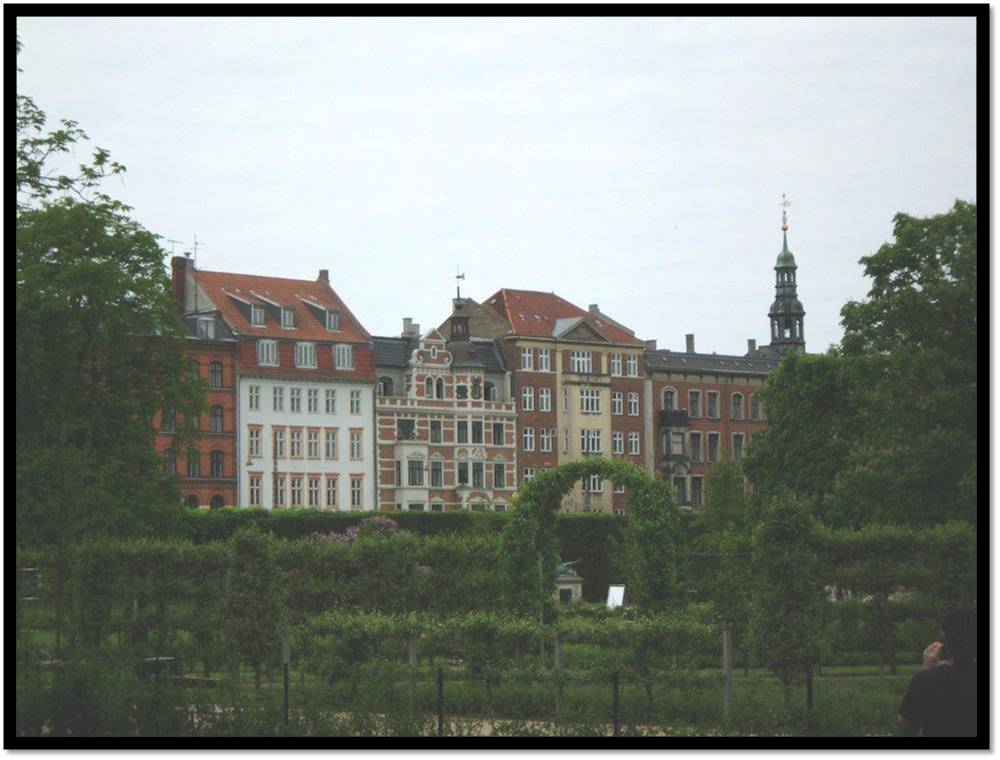
Park in København  -Enriching the city's biodiversity

Park in København -Enriching the city’s biodiversity

Conservationists have always referenced the benefits of biodiversity to the natural world, but many people wouldn’t associate that benefit with our own species. Humans have always had a bond and relation with the natural world, so it is logical that the change, no matter how small, in one would affect the other. According to a Discovery Magazine article, there is new compelling evidence out there showing that biodiversity is good for our health, and the lack of it in urban areas might be the cause of the rise in inflammatory and allergy problems.

The main evidence comes from a Finnish study that found that children who lived in a more biodiverse environment were less likely to have an allergic reaction to a controlled allergen substance than children who did not.

…the urban-dwelling nature of developed countries may be to blame for their increasing problem with inflammatory diseases. If so, conservation of natural spaces, including parks and other green initiatives, may be key to protecting the health of future generations. Continue reading
170 Million Year Old Barometer For River Water Quality

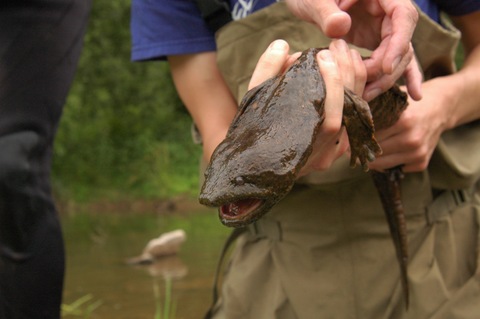
Matt Neff from the Smithsonian’s National Zoo holds a hellbender salamander that he caught in the Blue Ridge mountains of Virginia. Scientists hope to learn how healthy and viable the population is. Photo by Rebecca Jacobson

Thanks to the Public Broadcasting System of the USA for this story segment as their Science Wednesday feature this week:

…At the end of a long day snorkeling in the clear streams of southwestern Virginia’s Blue Ridge Mountains, Terrell and her team assumed their positions. As three scientists lifted a flat, heavy rock, Terrell groped underneath the stone, let out a muffled cry through her snorkel mask and popped out of the water.

“Where did it go? Did you see it?”

The biologists checked their nets and scoured the water. Sarah Colletti from the Aquatic Wildlife Conservation Center pointed at the slick rocks under the water. “Right there, he’s looking right at you.” One of the biologists lunged, secured a firm grasp, and triumphantly pulled it out: a nearly two-foot long hellbender. Continue reading

If You Are Planning Marriage

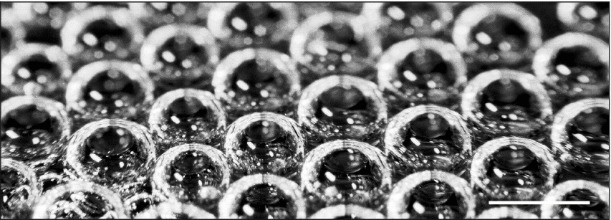
Bubbles at the surface of a freshly poured flute of champagne. Photograph by Gérard Liger-Belair.

Bubbles at the surface of a freshly poured flute of champagne. Photograph by Gérard Liger-Belair.

Champagne is associated with celebration for many reasons, and having just learned that one of our former interns is planning a wedding we could not resist sharing this information in the spirit of citizen science-sharing (click the image above to go to the source in Scientific American‘s website):

…In Uncorked: The Science of Champagne, recently revised and translated into English, physicist Gerard Liger-Belair explains the history, science and art of the wine. His book also features high-speed photography of champagne bubbles in action and stop-motion photography of the exact moment a cork pops (potentially at a speed of 31 miles per hour (!). Continue reading

An Old Dog Doing New Tricks

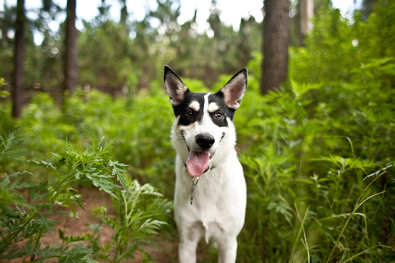
John W. Adkisson for The New York Times. Peony, a Carolina dog. Some of the breed’s rare traits include a fishhook tail, a pointed, somewhat lupine face and the habit of digging snout pits.

John W. Adkisson for The New York Times. Peony, a Carolina dog. Some of the breed’s rare traits include a fishhook tail, a pointed, somewhat lupine face and the habit of digging snout pits.

DNA is the trick that brings some new respect to this canine line, in a debate we did not even know about until today’s New York Times Science section revealed it:

Carolina dogs, like a few other breeds, are without certain genetic markers indicating European origins, suggesting they have been in the Americas Continue reading

Why agroforestry has struggled in Barrio Nuevo

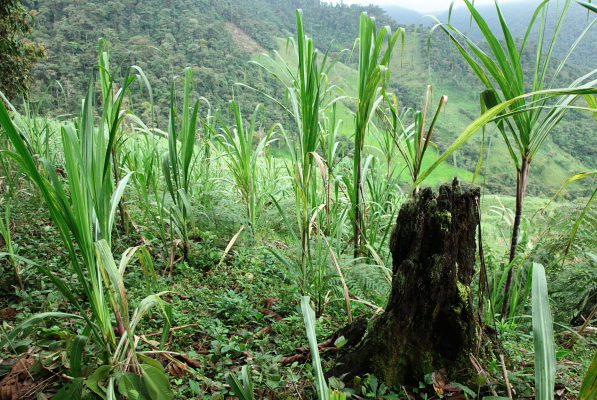
The sacrifices of agriculture are obvious to some, yet unperceived by others.

The sacrifices of agriculture are obvious to some, yet unperceived by others.

Good news: after lots of talking, listening, and uphill walking, we’ve completed our work in Barrio Nuevo. Researching the shade coffee project in Barrio Nuevo was extremely insightful. I admit, the success of the project was a bit disappointing, but this itself was a lesson in being more detached form one’s research. From a research standpoint, there’s nothing wrong with a project failing. What good would this evaluation be if we were only confirming that everything was going well?

So what went wrong? Why did it go wrong? How can it be fixed? And is there hope for agroforestry in Barrio Nuevo still? These are the questions I’ve been asking myself for almost a month and here’s what I’ve concluded from the first stage. Continue reading

Powdermill Avian Research Center (PARC)

This slideshow requires JavaScript.

Thanks to Atlantic‘s website for hosting the Venue folks’ post about this remarkable research station devoted to a phenomenon we pay tribute to every day. In particular, this post helps understand a century+ of evolution in the research tools used to study the behavior of birds:

On a recent morning, Venue joined researchers Luke DeGroote, Amy Tegeler, Mary Shidel, Kate Johnston, and Matt Webb, as well as several dozen warblers, catbirds, and a cuckoo, for a tour of the various devices of bird surveillance at the Powdermill Avian Research Center (PARC), part of Carnegie Museum of Natural History’s Powdermill Nature Reserve. Continue reading

Sagan’s Pale Blue Dot

Scientists, among other communities we follow, make us smile when they speak in a language we can understand (those of us who are not scientists, which is most of us on this site). We have had occasion in the past to point to the famed scientist and former Cornell University professor Carl Sagan, and now Robert Krulwich shares this video on one of his Wonders posts (after clicking through, scroll down):

…Looking at this, Carl Sagan thought, first, how small we look, how small we are — which inspired him to write his eloquent Pale Blue Dot meditation, which, if you haven’t read it lately, take a minute and a half to look at this short version gorgeously animated by Joel Somerfield at Order, a British design studio. Carl Sagan himself is narrating. Continue reading

Student Innovation Helping Make a Better World

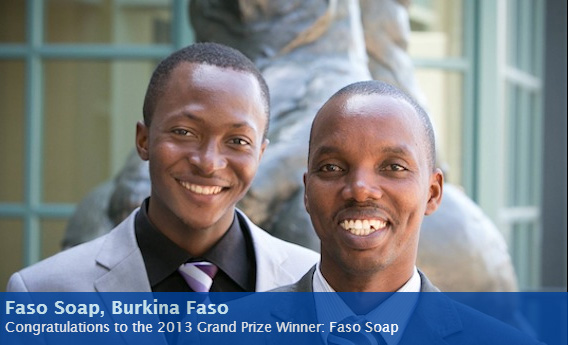
Fasoap Founders Photo courtesy of gsvc.org

Moctar Dembele and Gerard Niyondiko are this year’s grand prize winners of Global Social Venture Competition, an annual competition that awards young entrepreneurs for ideas that can have a positive impact on the world. Their idea “Fasoap” hopes to help prevent the contraction of malaria, a disease that Johns Hopkins Research Institute states over 40% of the world is at risk for, including parts of Africa and India. Malaria a disease that is contracted through bites of infected mosquitoes. Once contracted the medical treatment for the malaria can be very costly, and many of the people who contract it have trouble seeking and paying for such medical care. Continue reading

Birthday Present For Mr. Tesla

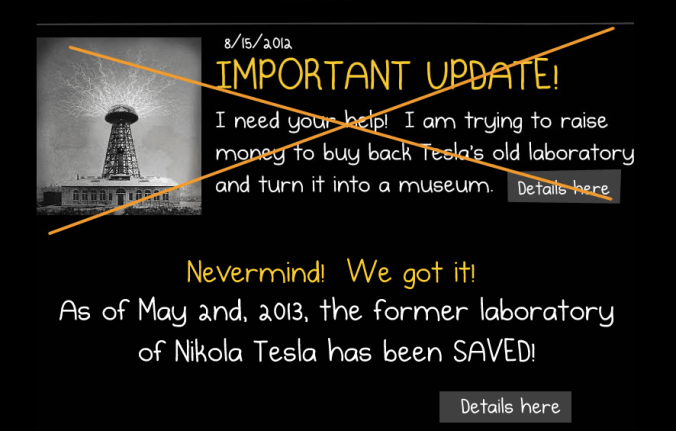
Last August we recommended reading to the end of Mr. Inman’s mischievously hilarious tribute to Nikola Tesla, partly because every bit of it was great, but the end asked for attention to an initiative that rang true to us: the conservation of patrimony related to this exceptional man.  A couple months ago, when we saw on Mr. Inman’s site that the initiative had succeeded we decided to investigate further before celebrating this. Now, in honor of Tesla’s birthday, seems like a good time to highlight it.  Click the image above to see the results.  There have been some birthday tributes to Tesla elsewhere and we share one of those as well. Continue reading

The Upsides Of Downside Exploration

The Shinkai6500 deep-sea submersible

The Shinkai6500 deep-sea submersible. Photograph: Jon Copley

Told in the first person, we appreciate Jon Copley’s account of his most recent amazing work, and the Guardian’s coverage of it:

Five kilometres, or 3.1 miles, is not a great distance on land – the length of a pleasant stroll. But five kilometres vertically in the ocean separates different worlds. On 21 June I had the opportunity to make that short journey to another world, by joining Japanese colleagues for the first manned mission to the deepest known hydrothermal vents, five thousand metres down on the ocean floor. Continue reading

The Truth About Komodo Dragons

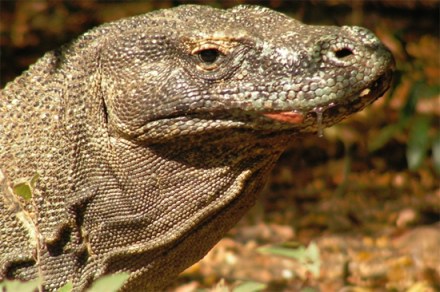
The Komodo dragon: surprisingly clean.

The Komodo dragon: surprisingly clean.

Myth-busting science writers, especially when they free a phenomenal animal from the clutch of wrongly bad reputation, are heroic folk to us:

In 1969, an American biologist named Walter Auffenberg moved to the Indonesia island of Komodo to study its most famous resident—the Komodo dragon. This huge lizard—the largest in the world—grows to lengths of 3 metres, and can take down large prey like deer and water buffalo. Auffenberg watched the dragons for a year and eventually published a book on their behaviour in 1981. It won him an award. It also enshrined a myth that took almost three decades to refute, and is still prevalent today. Continue reading