Fringe Physics

We have a soft spot for unusual geniuses, whether formally defined, or recognized in other ways, so it is with pleasure that we discovered this book (click the image to the left), its author, and a TED talk (after the jump) to boot.

For the past fifteen years, acclaimed science writer Margaret Wertheim has been collecting the works of “outsider physicists,” many without formal training and all convinced that they have found true alternative theories of the universe. Jim Carter, the Einstein of outsiders, has developed his own complete theory of matter and energy and gravity that he demonstrates with experiments in his backyard‚-with garbage cans and a disco fog machine he makes smoke rings to test his ideas about atoms. Captivated by the imaginative power of his theories and his resolutely DIY attitude, Wertheim has been following Carter’s progress for the past decade.

Click the picture to the right for a podcast that gives a nifty overview of the book. Click here for a review of the book from a great blog connected to Columbia University’s math department. Click here for an excellent review in a once great and occasionally still good newspaper’s website. And click here for a review from an always great magazine’s website.
Continue reading

The Buzz

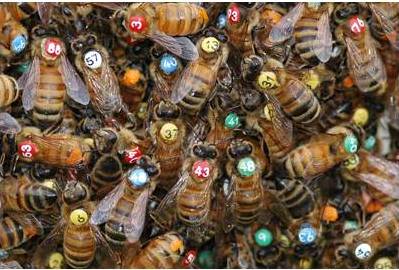
Bee swarm labeled for individual identification. Photo:Thomas Seeley

Cornell professor and chair of neurobiology and behavior Thomas Seeley has been fascinated with bees for much of his life. His new book Honeybee Democracy (Princeton University Press) steps way beyond entomology and apiculture by suggesting the swarming habits of Apis melllifera in decision making as “analogous to how the nervous system works in complex brains.”  Continue reading

Bumbling Back From The Brink

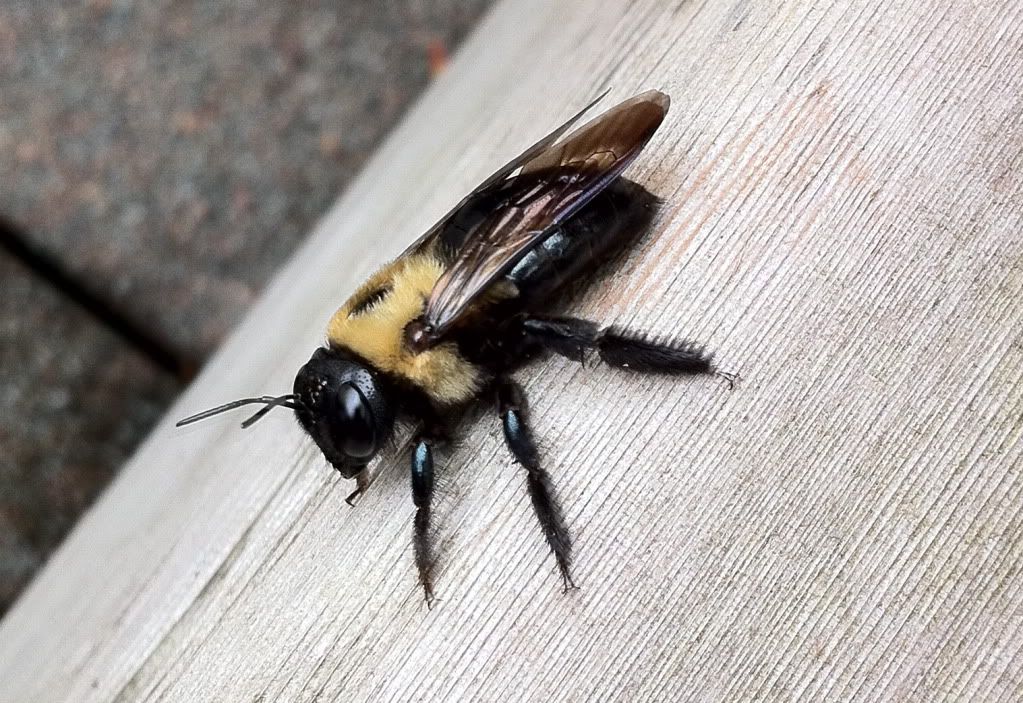
Cockerell's Bumblebee. (Credit: G. Ballmer, UC Riverside)

While news related to species loss seems almost always seem to be coming in at us like floodlights, occasionally there is a glimmer of hope shining outward in the headlines:

ScienceDaily (Dec. 5, 2011) — A team of scientists from the University of California, Riverside recently rediscovered the rarest species of bumblebee in the United States, last seen in 1956, living in the White Mountains of south-central New Mexico. Continue reading

Arts & Science

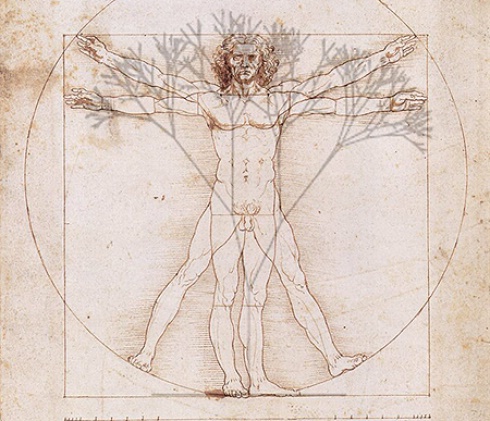
Every year, some percentage of undergraduate students majoring in an academic discipline within the liberal arts, often aka Arts and Science, wonder: what’s next?  As in, what will I do when I complete my degree?  Many do not need to wonder because they are on a clear path–pre-med or pre-law for example.  But for those wondering, we hope our site sheds some light on the variety of possibilities.  For one example (click the image above for the source) we like the idea of literally combining art and science (so did da Vinci):

…a mysterious, nearly universal growth pattern first observed by Leonardo da Vinci 500 years ago: a simple yet startling relationship that always holds between the size of a tree’s trunk and sizes of its branches.  A new paper has reignited the debate over why trees grow this way, asserting that they may be protecting themselves from wind damage.

Continue reading

The Meaning(s) Of Organic

At first glance, this article and others on this website appeared to be of the “denier” variety, but on close read of this particular item (click the banner below to go to the article) it seems clearly of the educational clarification variety.

According to Rodale and his acolytes, products created by—and processes carried out by—living things are fundamentally different from lab-based processes and lab-created products. The resurrection of this prescientific, vitalistic notion of organic essentialism did not make sense to scientists who understood that every biological process is fundamentally a chemical process. In fact, all food, by definition, is composed of organic chemicals.

Continue reading

Lost Ladybugs

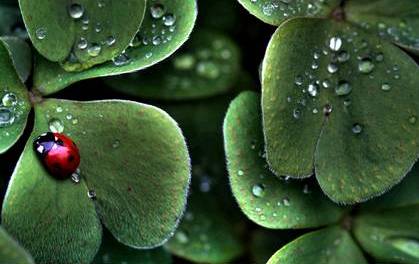
Earlier this week, James posted about a crowd of ladybugs he spotted on a recycling bin at Emory. His account reminded me of a guest lecture in my entomology class earlier this year, when John Losey came to talk to us, in part, about the Lost Ladybug Project.

The Lost Ladybug Project, which is a citizen science similar to the ornithological projects I’ve written about previously, aims to educate participants on the values of biodiversity conservation and the importance of ladybugs as predators in ecosystems. Continue reading

Using Small Mammal Remains for Environmental Archaeology

Credit: Bresson Thomas

Archaeological remains of small mammals generally weighing under 1kg, or micromammals, are important as environmental indicators, partly because they tend to specialize in certain habitats and are sensitive to change. Many factors affect their ranges of distribution, including predators, food requirements, competition, fire, shifts in precipitation patterns, and shelter availability. Micromammals such as voles and mice also tend to live in dense populations and have evolved rapidly through high fecundity. Due to these diverse and interrelated factors, the interpretation of micromammal remains—bones and middens, mostly—requires a deep understanding of the rodents’ relationship with its environment. In other words, ecological information is imperative to accurate assessment of archaeological data on micromammals.

But sometimes micromammal remains have answered modern ecological questions. For example, packrat middens in arid North America offer relatively high temporal, spatial, and taxonomic resolution (i.e., small intervals with which to measure time, space, or species range), and contain what is possibly the “richest archive of dated, identified, and well-preserved plant and animal remains in the world” (Pearson & Betancourt 2002, p500). Continue reading

Freeze Frame

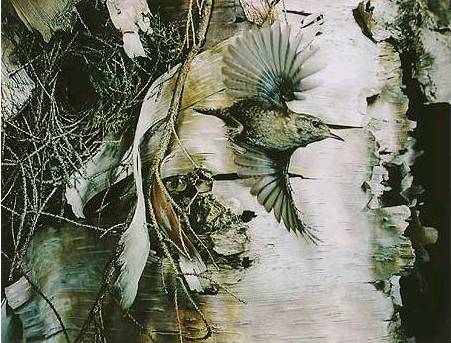
Eliot Porter Winter Wren, 1969 Amon Carter Museum Collection*

Sometimes it takes a scientific mind to re-calibrate the artistic eye.  Eliot Porter’s parents had instilled a love of nature and science in him from an early age, and he’d been photographing birds since received his first camera at the age of 10.  His training in medicine and as a chemical engineer didn’t dampen his interest, in fact he was among the first to bridge the gap between photography as a fine art and its foundations in technology and science. Continue reading

Prime Directive, Reconsidered

Global climate change will soon be changing ecosystems around the world to such an extent that many species will no longer have proper habitats to survive and reproduce in. Over the past several years, the scientific community has been discussing the possibility of moving such species to new ranges in order to conserve biodiversity and reduce potential for extinction. This controversial process, known as assisted colonization or managed relocation, might be able to save some species from their current state of risk, but it may also prove dangerous for the natives of whatever area the “colonizers” are moved to. By diligently evaluating the perils and uncertainties of relocation and carefully considering the repercussions of leaving species to their shrinking habitats, The Nature Conservancy (TNC), given its mission and vision statements, should determine that in most cases, the costs of assisted colonization outweigh the benefits.

Patagonian mountains

By assisting the colonization of species with limited ability to adapt or relocate, the annual number of species gone extinct might be lowered in the coming decades. There are, however, disagreements as to whether or not humans should meddle with species movement. Continue reading

Paying for Ecosystem Services

Tim Chen has covered ecosystem services as they relate to ecotourism; below I’ve written some additional information on how the process might work on the market.

Sulfur-rich waterfall in Costa Rica

As developing countries increasingly convert natural ecosystems to areas controlled by humans, ecosystem services (e.g., waste absorption, water purification, soil conservation) are being lost. In order to prevent these shifts, people who live in urban areas or have no close relationship with, for example, their sources of drinking water are often willing to pay people who do have direct impacts on the watersheds. Payment for ecosystem services (PES) has become a measure by which higher-resource groups can induce lower-resource communities or individuals to protect local wetlands, forests, or other areas in order to maintain the ecosystem services that support a particular standard of living. Before such payment schemes can be established, however, certain scientific analyses must be carried out to determine the most efficient allocation of resources and facilitate the selection of the right service providers. Continue reading

Scraping Hell’s Attic

The Sulphur-Bottom Whale

The sulphur-bottom whale is the largest mammal on (or under) the earth’s surface; many speculate that it might be the largest animal ever to have inhabited our terraqueous globe. These immense creatures can typically grow to between eighty and a hundred feet long, with the largest specimens caught suggesting that the whales might exceed one hundred and ten feet in length! The weight of the sulphur-bottom whale is commensurate with its size: they can weigh between one hundred and one hundred and fifty tons. For comparison, the largest elephant ever recorded weighed a mere twelve tons. If the sulphur-bottom whale rolled over in its sleep Continue reading

Music of the Spheres

Changing Water – Gulf of Maine, 2011, Nathalie Miebach

Tones sound, and roar and storm about me until I have set them down in notes                                                              —Ludwig van Beethoven

Boston artist Nathalie Miebach found the seemingly unlikely intersection between astronomy, meteorology, ecology and basket weaving, essentially translating data into 3 dimensions… then she adds the plane of music.  For her work, Miebach was selected as a 2011 TEDGlobal Fellow.

Initially focusing her woven sculptures on data from the stars, her work was rerouted by a call from two weather scientists at Tufts University.  Intrigued by her work and it’s possible applications, they asked her to collect weather data on Cape Cod.  From that point on, winds, temperature, barometric pressures, and rainfall became part of the raw material for her artistic work. Continue reading

Water + Sunlight = Electricity?

Plants are typically regarded as the most efficient energy producers of the biological world, and I myself have imagined the possibility of harnessing their photosynthetic capabilities to generate sustainable energy. In my daydreaming, I visualized the biochemical transfer of a leaf’s photosynthetic output, adenosine triphosphate (ATP), down the plant’s stem and into a battery via some half-baked imaginary electrical conversion process. A possibility I had never before considered was that scientists were not focused on using the biological resources available to them, but rather mimicking and improving the processes carried out by their biological models. This recent development (late March, 2011) is described by Discover Magazine:

Scientists say that they’ve passed a chemistry milestone by creating the world’s first practical photosynthesis device. The playing-card-sized photosynthetic gadget uses sunlight to split water molecules into oxygen and hydrogen, which can then be used to produce energy, and is reputedly 10 times more efficient than a natural leaf. Researchers say they expect it to revolutionize power storage, especially in remote areas that don’t currently have electricity. “A practical artificial leaf has been one of the Holy Grails of science for decades,” says lead researcher Daniel Nocera, who’s presenting this research at the National Meeting of the American Chemical Society this week.

Full story here.