Understanding The Solar-Carbon Threshold

sunset

Image: Daniel Parks/Flickr

We are constantly playing catch up with the terminology, let alone the science, of environmental efficiency in all its forms and considerations. Anthropocene delivers the daily goods, in the form of a summary of an environmentally-oriented scientific study, that we constantly find useful:

Solar power will cross a carbon threshold by 2018

Alternative Energy Will Boom

hawaii-solar-570x562The title is either wishful thinking, or stating the obvious; we are not sure which. Thanks to our colleagues at Clean Technica for this:

Hawai’i Solar Power (In Depth)

by

Glorious blue skies and endless sunshine. Warm, balmy breezes. Isn’t that how you envision Hawai’i? Like the slogan, “Everything’s better in Hawaii,” right?  Oops, one thing does dampen the impression of Hawai’i, though: its high cost of living, especially for energy. Continue reading

Renewable Energy Outlook

light-bulbs2.jpg

World electricity production going from black to green

In a time of troubling headlines, the more promising headlines can get lost, but they are there. At least with regard to renewable energy. Click the image above to read the summary of this book at Anthropocene or the image below to go to the source:

MTrenew2016.jpgThe rapid spread of renewable energy is a bright spot in the global energy transition towards a low carbon economy. Despite lower fossil fuel prices, renewable power expanded at its fastest-ever rate in 2015, thanks to supportive government policies and sharp cost reductions. Continue reading

Solar Rising

4000

A road divides solar panels at the Ivanpah Solar Electric Generating System in the Mojave Desert, Nevada. Photograph: Bloomberg/Bloomberg via Getty Images

Those of us who live near the Kochi Airport in Kerala, India feel pretty proud of our 100% solar-powered access to the outside world; but this story tells us to expect even more in the USA soon:

US energy shakeup continues as solar capacity set to triple

Solar expected to almost triple in less than three years by 2017 as coal continues to fall, solidifying gas as country’s chief electricity source, reports Climate Central

Bobby Magill for Climate Central, part of the Guardian Environment Network

Solar power capacity in the US will have nearly tripled in size in less than three years by 2017 amid an energy shakeup that has seen natural gas solidify its position as the country’s chief source of electricity and coal power continue to fade, according to monthly data published by the US Department of Energy. Continue reading

Solar’s Silicon Future

p04bw5z3

Thanks to the BBC for this story:

Why Apple And Google Are Moving Into Solar Energy

Silicon Valley’s biggest companies are investing in renewable energy in a serious way – a sign, perhaps, of rapid changes in the energy market.

By Chris Baraniuk 14 October 2016

Most people think of Apple as a company that makes phones, computers and smart watches – not an energy provider. But in August all of that changed when the firm was given permission to sell energy from a Californian solar farm that it acquired last year. Continue reading

Price of Solar Continues to Decline

Precisely two months ago we shared a great function by Google for investigating the potential for installing solar power in your neighborhood (mostly if you’re in the US). Last week, one of our most successful Instagram posts was of three shades of blue at Villa del Faro (see above), where photovoltaics are key. Panels are becoming less and less expensive, so hopefully the alternative energy will keep spreading!  Continue reading

First Solar Plane Voyage Around the World

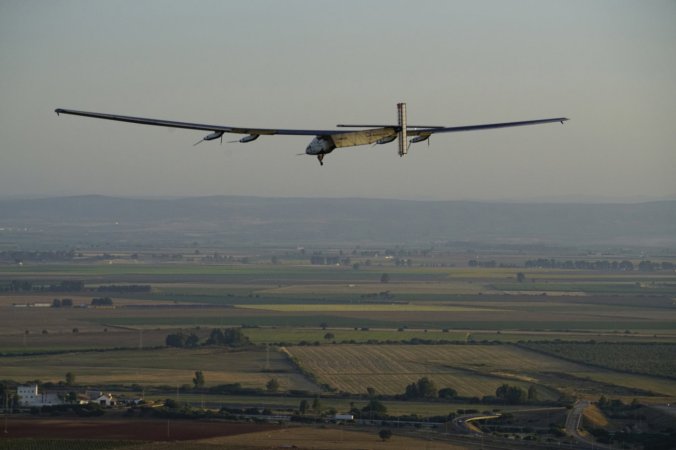
After a pit stop in Oman Solar Impulse 2 sets off for Ahmedabad, India on 10 March 2015 Photograph: Jean Revillard/Solar Impulse

The strange rear profile you see in the photo above is that of the Solar Impulse 2, a two-ton plane (a Boeing 747 weighs 154 tons) with solar panels on its wings that made history this week as it completed a round-the-globe voyage over the course of roughly three weeks in flight. The Solar Impulse 2 and one of its pilots, André Borschberg, broke the record for the longest nonstop solo flight ever a few weeks ago, when Borschberg flew from Japan to Hawaii. Damian Carrington reports for The Guardian:

The final leg of the feat, aimed at showcasing the potential of renewable energy, was a bumpy one, with turbulence driven by hot desert air leaving the solo pilot, Bertrand Piccard, fighting with the controls.

The plane, which has a wingspan wider than a Boeing 747 and carries more than 17,000 solar cells on its wings, began the circumnavigation in March 2015 in Abu Dhabi. It has since crossed both the Pacific and Atlantic Oceans using no fossil fuel and has spent more than 23 days in the air.

Continue reading

Concentrating Solar with Mirrors and Molten Salt

A tower of salt, surrounded by sunlight-sensing and -reflecting mirrors. Photo © SolarReserve

Two months ago we posted about non-photovoltaic solar power via a story from Scientific American, and this week they’re exploring the subject again, this time in the desert of Nevada with the first utility-scale “concentrating solar” plant that can provide electricity even at night. Concentrating solar involves storing heat from the sun rather than converting light into electricity, and apparently molten sodium and potassium nitrates can do this very effectively. Knvul Sheikh reports:

Deep in the Nevada desert, halfway between Las Vegas and Reno, a lone white tower stands 195 meters tall, gleaming like a beacon. It is surrounded by more than 10,000 billboard-size mirrors focusing the sun’s rays on its tip. The Crescent Dunes “concentrating solar power” plant looks like some advanced communication device for aliens. But the facility’s innovation lies in the fact that it can store electricity and make it available on demand any time—day or night.

Continue reading

Solar for Homes, Empowered by Google

First result when searching “solar power” in Google

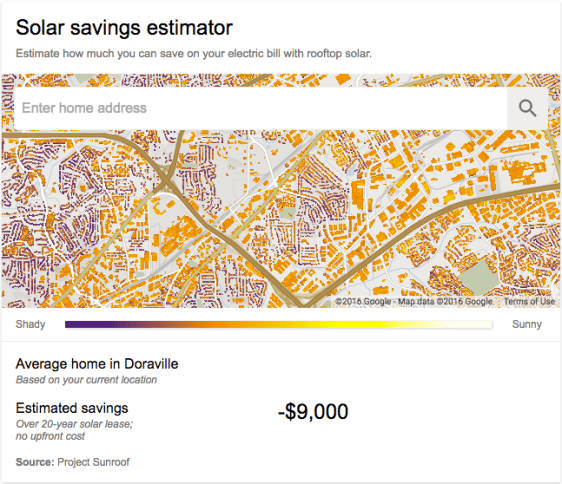
We posted about a solar oven yesterday, and today we heard about a less tangible but equally valuable product offered for free by Google: by visiting their Project Sunroof webpage, you can find out in seconds if your roof is suitable for panels, how many panels you’d need, and finally, what your payment options are depending on your location (at the moment it seems focused on the US and the different state and federal tax credits available). From their About page:

Why are we doing this?

As the price of installing solar has gotten less expensive, more homeowners are turning to it as a possible option for decreasing their energy bill. We want to make installing solar panels easy and understandable for anyone.

Project Sunroof puts Google’s expansive data in mapping and computing resources to use, helping calculate the best solar plan for you.

Continue reading

Aviation & Renewable Resource Milestone

ap_16175288680698_custom-0c6b67df90bdb4e2069afde43ff22e60a5cc62cd-s1400-c85

Solar Impulse 2, piloted by Swiss pilot Bertrand Piccard, prepares to land in Seville, Spain, on Thursday. Jean Revillard/AP

In case you missed it, this is awesome, and worth a quick read (thanks to NPR, USA):

‘Beautiful Flight’ Across The Atlantic Is Major Milestone For Solar Plane

After 71 hours and 8 minutes of flight time crossing the Atlantic, Solar Impulse 2 has touched down in Seville, Spain. It’s a major step toward the team’s goal of circumnavigating the globe using only the sun’s power.

The end of this leg means they’ve now completed 90 percent of that journey.

As The Two-Way has reported, the single-seater plane took off from New York’s John F. Kennedy International Airport early Monday with pilot Bertrand Piccard at the controls. Continue reading

Solar Thermal vs Photovoltaics

Photo © German Aerospace Center

Solar power is always on our radar, but we understand that storing the electricity from photovoltaics can be an issue. Today we are learning about a new solar technology for the first time, even though it revolves around something that we benefit from every day: the sun’s heat. Umair Irfan reports for Scientific American‘s ClimateWire section on this interesting idea being researched in Europe:

COLOGNE, Germany—At Germany’s aerospace agency, the next frontier is capturing the sun here on Earth and keeping it on tap.

In a 4-year-old glass and steel building near the Cologne-Bonn Airport, researchers at the German Aerospace Center (DLR), Germany’s equivalent of NASA, are working on new ways to produce more heat than light in order to smooth over intermittency, one of the biggest drawbacks of solar power on the grid.

Continue reading

Solar Improvements Increase Output Estimates

Update: Check out The Guardian‘s coverage of a new San Francisco law requiring solar panels on new buildings for 2017.

We’re always happy to see photovoltaics in the news, whether they’re installed in old golf courses, floating on rafts, powering an airport in Kerala, or remotely charging your phone via adaptor. So we’re not surprised to see that since 2008, US rooftop solar potential has doubled. From Conservation Magazine:

To take advantage of the sun’s energy to satisfy our ever-increasing need for electricity, Americans will have to take a fresh look at their roofs. A report by the National Renewable Energy Laboratory shows that if all suitable roof areas in the United States were plastered with solar panels, they would generate about 1,118 gigawatts of solar power. That is 40% of the power that Americans consume every year.

And that isn’t the half of it. The study only estimates the solar power potential of existing, suitable rooftops, and does not look at the immense potential of ground-mounted photovoltaics, said NREL senior energy analyst Robert Margolis in a press release. “Actual generation from PV in urban areas could exceed these estimates by installing systems on less suitable roof space, by mounting PV on canopies over open spaces such as parking lots, or by integrating PV into building facades. Further, the results are sensitive to assumptions about module performance, which are expected to continue improving over time.”

Continue reading

My Big Fat Floating Solar Panel

QE-press-release

This recent Thames Water press release has just come to our attention and it sounds like progress, or what we count as good news:

Europe’s biggest ever floating solar panel array is being installed on London’s Queen Elizabeth II reservoir as part of Thames Water’s ambitious bid to self-generate a third of its own energy by 2020.

Continue reading

Prefab Solar Classrooms Power Education in Kenya

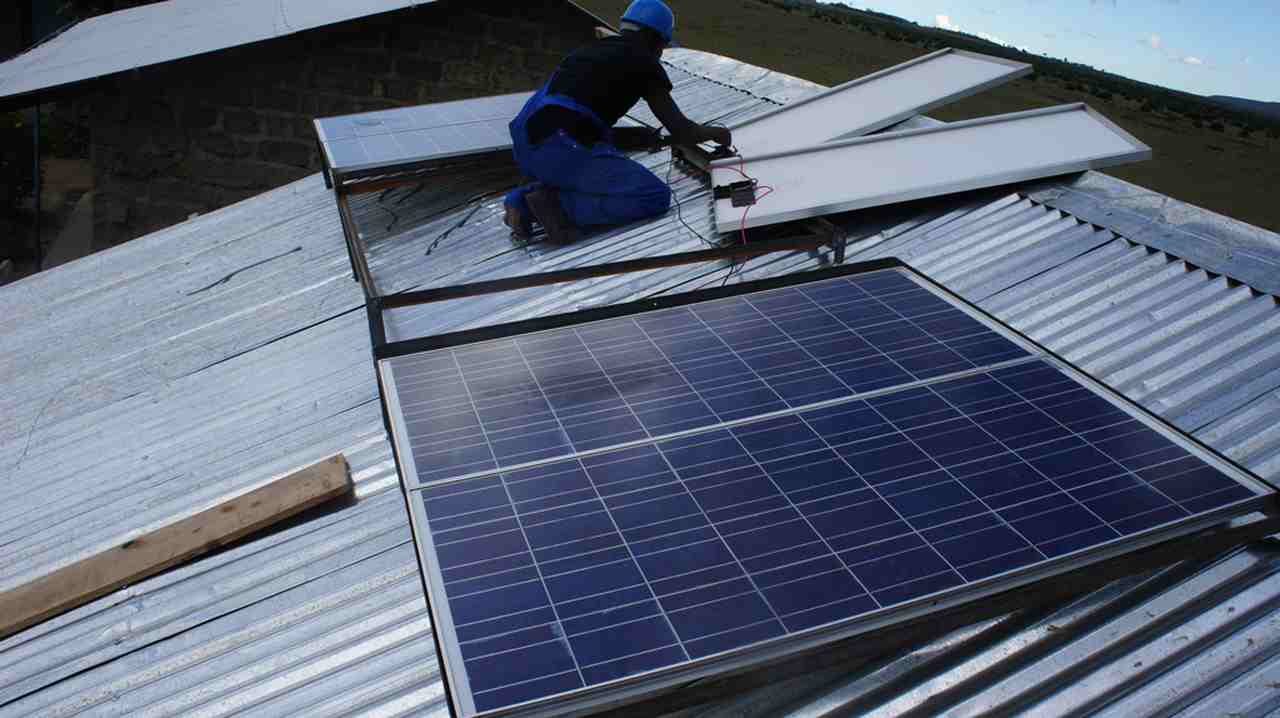
According to a UN report, there are around 57 million children who don’t have a school to go to.The UN’s Educational, Scientific and Cultural Organisation (Unesco) says in some areas it could take 70 years before there are enough primary school places for every child. There has been some progress though; there are now half as many children unable to go to school as there were in the year 2000. That means in the past 13 years around 60 million more children now have access to an education. And initiatives like Aleutia’s definitely play a big role in bringing down the number of children who lack access to education.

Continue reading

Solar Power Just an Adapter Away

Now you can power your iPhone from the sun, even if you can't afford solar panels.

Now you can power your iPhone from the sun, even if you can’t afford solar panels.

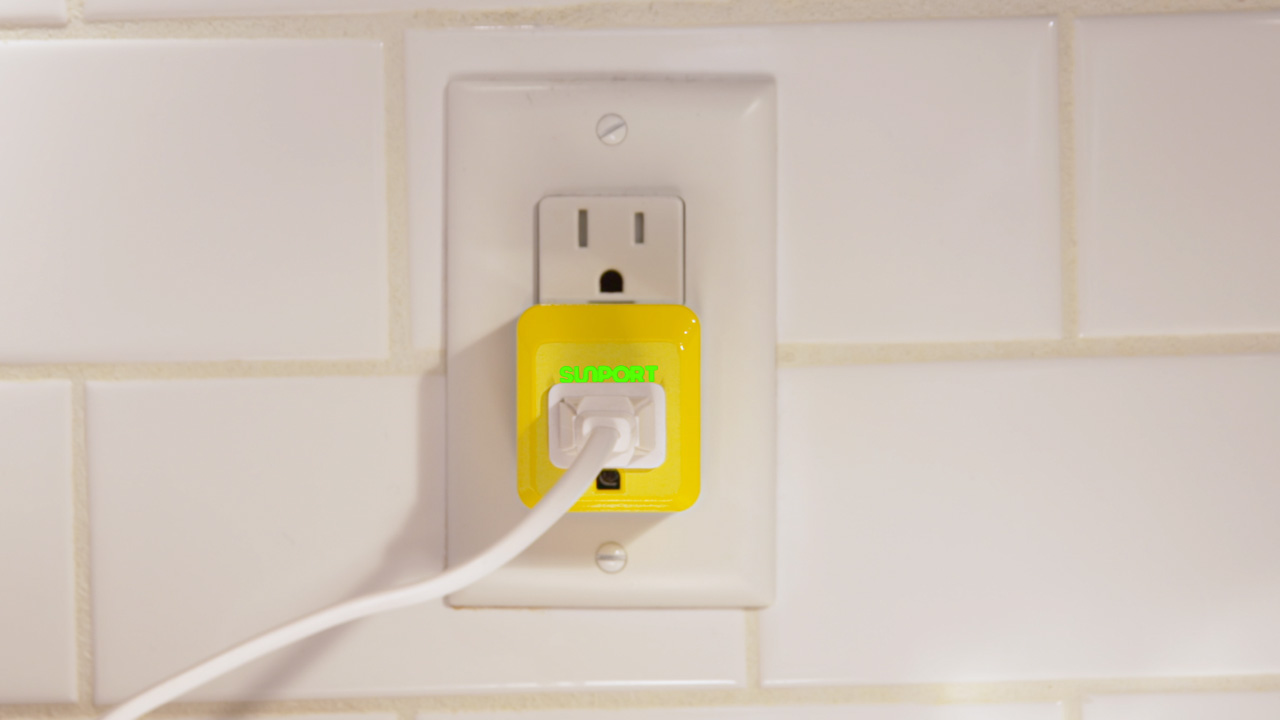
Thanks to steeply falling prices, solar power keeps breaking records for new installations. But it still makes up less than 1% of total energy production in the U.S. The chances are good that you probably don’t yet have solar panels on your roof yet. Now, however, you can run your gadgets on solar just by using a different outlet. Plug your laptop into the SunPort, and it will automatically calculate how much power you’re drawing from the grid—and “upgrade” you to solar instead of coal, natural gas, or whatever else your local utility happens to use.

Continue reading

What’s in the Buffalo Air?

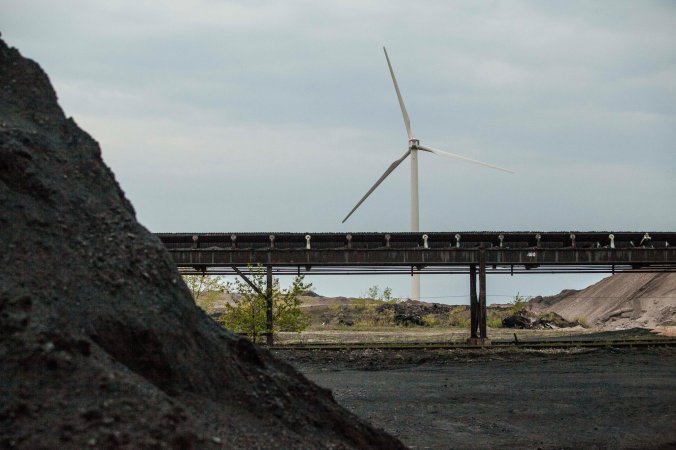
Wind turbines rise along the shores of Lake Erie on land that used to be home to Bethlehem Steel. PHOTO: Brendan Bannon for The New York Times

Wind turbines rise along the shores of Lake Erie on land that used to be home to Bethlehem Steel. PHOTO: Brendan Bannon for The New York Times

Along a bend in the Buffalo River here, an enormous steel and concrete structure is rising, soon to house one of the country’s largest solar panel factories. Just to the south, in the rotting guts of the old Bethlehem Steel plant in Lackawanna, where a dozen wind turbines already harness the energy blowing off Lake Erie, workers are preparing to install a big new solar array. And in Lockport, to the north, Yahoo recently expanded a data and customer service center, attracted by the region’s cheap, clean power generated by Niagara Falls.

After decades of providing the punch line in jokes about snowstorms, also-ran sports teams and urban decline, the Queen City of the Lakes is suddenly experiencing something new: an economic turnaround, helped by the unlikely sector of renewable energy.

Continue reading

Give it Up for the Dutch!

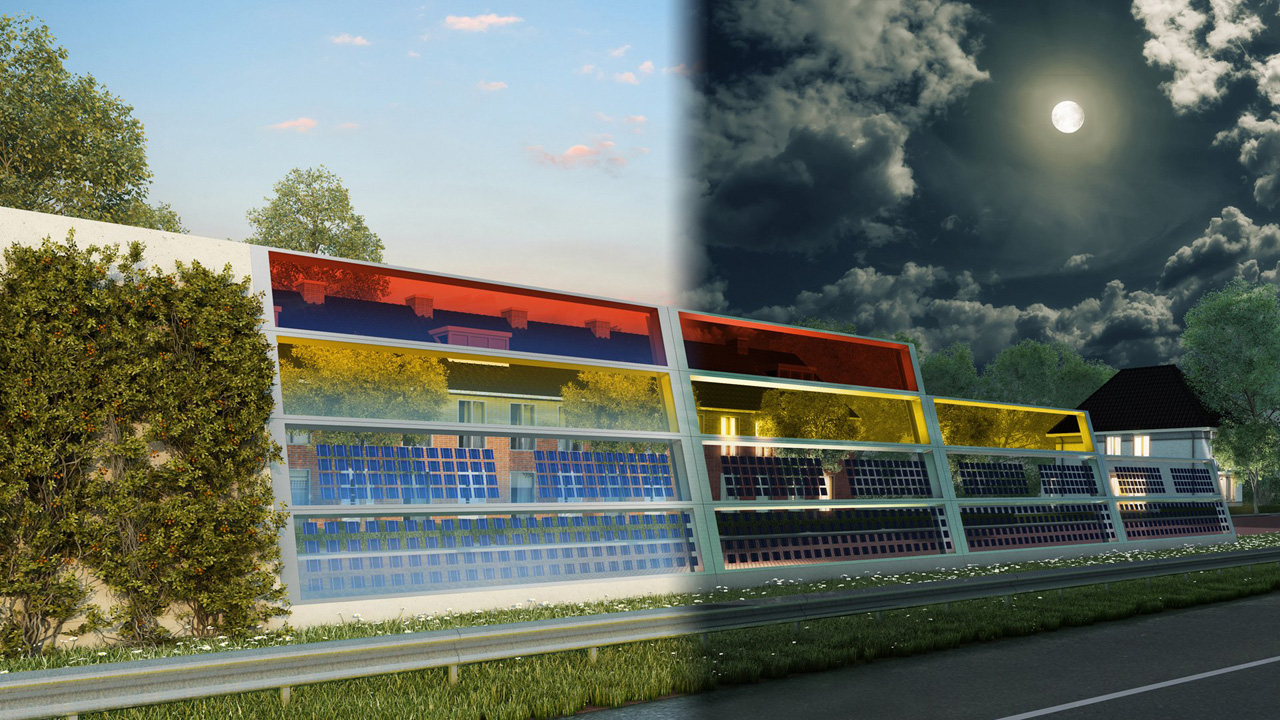
These beautiful, translucent barriers quiet traffic—and generate power at the same time

These beautiful, translucent barriers quiet traffic—and generate power at the same time

Driving the Dutch highways just got a lot more colorful. And this has to be one of the best Dutch ideas yet—roadside noise barriers that also generate solar power. Not only that, they work on cloudy days, and one kilometer (0.62 miles) provides enough electricity to power 50 homes. Continue reading

Dubai Thinks Solar Palm Trees

These solar "Palm Trees" in Dubai will charge phones at parks and beaches

These solar “Palm Trees” in Dubai will charge phones at parks and beaches

Look at what’s installed and ready-for-use in Dubai this summer: “Smart palms” that store solar energy during the day and discharge power at night. Smart Palm, the company, has set up two so far—one on Surf Beach, another in a park near the waterfront. It plans to plant them in 103 locations under a contract with the United Arab Emirates city.

Continue reading

Making Solar Follow Through

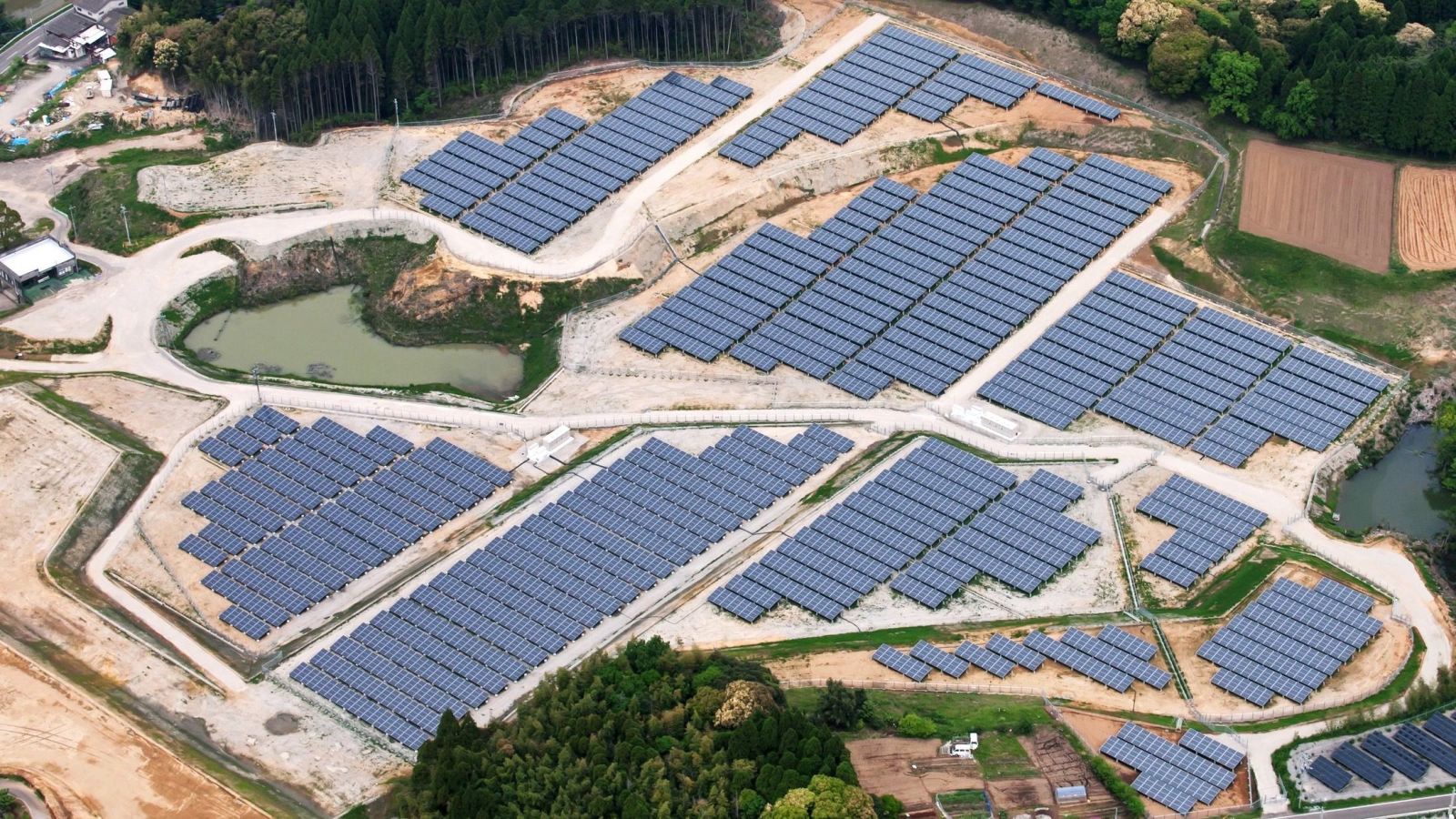
Part of a completed solar project on an old golf course in the Miyazaki prefecture. (Kyocera)

Part of a completed solar project on an old golf course in the Miyazaki prefecture. (Kyocera)

In Japan, country club memberships famously went for millions of dollars in the late 1980s. Then, too many courses were built in 1990s and 2000s during a real estate boom. Now the nation faces the question of what to do with its abandoned golf courses. Meanwhile, Japan’s energy strategy in the aftermath of Fukushima calls for roughly doubling the amount of renewable power sources in the country by 2030. It is already building solar power plants that float on water. Perhaps inevitably, then, the nation has turned to building solar plants on old golf courses.

Continue reading

10,000 km in a Tuk-tuk and With the Sun

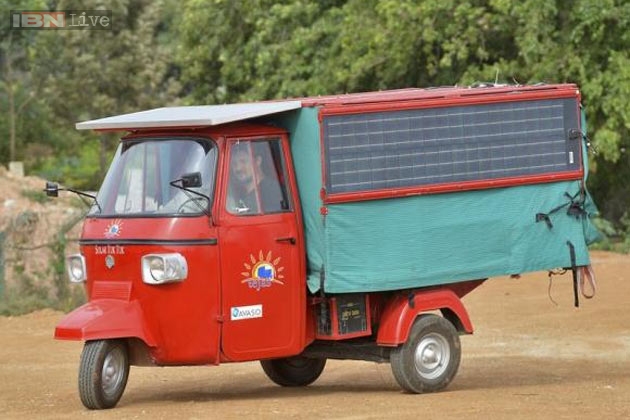
Tejas is a renovated Piaggio Ape  with a 13-kilo-watt prototype engine, lithium-ion batteries and six solar panels. PHOTO: IBN

Tejas is a renovated Piaggio Ape with a 13-kilo-watt prototype engine, lithium-ion batteries and six solar panels. PHOTO: IBN

Our itinerary has been filled with travel all week. And we almost gave The New Indian Express article on the travel plans of Indian engineer Naveen Rabelli and Austrian filmmaker Raoul Kopacka a miss. That was only until we read the details: a 10,000 km journey from India to London on a self-built solar-powered tuk-tuk/autorickshaw to Britain to promote a sustainable low-cost alternative-transport solution and check air pollution in towns and cities across their journey. Talk about going the extra mile.

Continue reading