Fifty Shades of Black

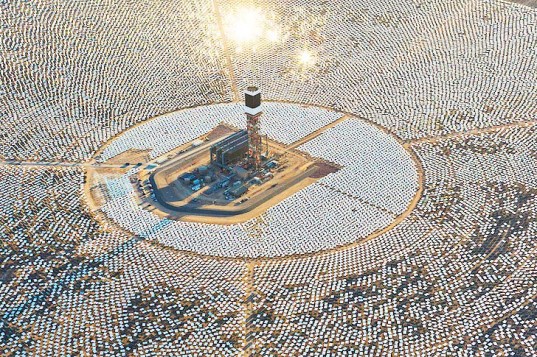
Ivanpah, the world's largest concentrating solar power plant, located just southwest of Las Vegas,  can produce a whopping 392 megawatts of solar energy to power 140,000 California homes with clean energy

Ivanpah, the world’s largest concentrating solar power plant, located just southwest of Las Vegas, can produce a whopping 392 megawatts of solar energy to power 140,000 California homes with clean energy PHOTO: Inhabitat

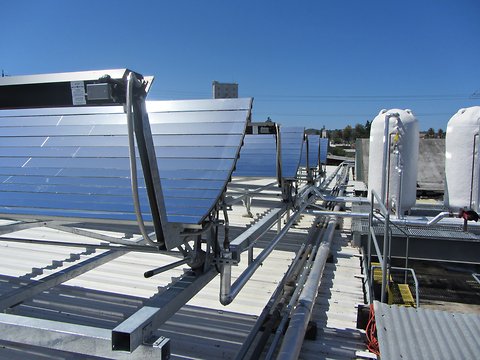
So we’ve all learnt, at some time or the other, that black absorbs light the maximum. And that the sun is one of the best sources of clean and renewable energy. Now, put two and two together. Yes, we are definitely talking tapping the sun’s light and heat. And we need a black surface to do so. The catch: the color needs to be as black as black can get.

Continue reading

SolaRoad’s First Seven Months

More than 150,000 bicyclists have used the road in the last six months in the Netherlands, where many people commute by bike. Photo credit: SolaRoad

More than 150,000 bicyclists have used the road in the last six months in the Netherlands, where many people commute by bike. Photo credit: SolaRoad

When we first linked out to this story some months ago, it did not get the number of clicks and reads as we expected. So now that we read a bit more about the results since November, all we can do is recommend that you pay attention:

SolaRoad, the world’s first “solar road,” has only been in operation since November, but it’s already generating more power than expected. SolaRoad is a bike path in Krommenie, a village northwest of Amsterdam in the Netherlands, that also functions as a massive solar array. The project was developed by TNO, the Province of Noord-Holland, Ooms Civiel and Imtech. Continue reading

Desalination Technological Innovation, Well Timed, Much Needed

freshwater

Drought solution? A invention from MIT and Jain Irrigation Systems can turn salt water into clean drinking water using solar energy. Photo credit: Shutterstock

Thanks to EcoWatch for this good news:

MIT’s Solar-Powered Desalination Machine Could Help Drought-Stricken Communities

Lorraine Chow

A team from the Massachusetts Institute of Technology and Jain Irrigation Systems have come up with a method of turning brackish water into drinking water using renewable energy. With parts of the planet running dangerously low on fresh water, this technology can’t come soon enough.

This solar-powered machine is able to pull salt out of water and further disinfect the water with ultraviolet rays, making it suitable for irrigation and drinking. As the MIT News Office explained, “Electrodialysis works by passing a stream of water between two electrodes with opposite charges. Because the salt dissolved in water consists of positive and negative ions, the electrodes pull the ions out of the water, leaving fresher water at the center of the flow. A series of membranes separate the freshwater stream from increasingly salty ones.”

Continue reading

The Dumbest Experiment In History, By Far

Screen Shot 2015-04-05 at 7.14.35 AM

It’s official, our blog-crush on this particular conservation-focused entrepreneur. We have not yet heard (click above for a podcast in which “Neil deGrasse Tyson explores the future of humanity with one of the men forging that future: billionaire entrepreneur Elon Musk, CEO of SpaceX and Tesla Motors. Co-hosted by Chuck Nice and guest starring Bill Nye.”) or yet read (continue below to Motherboard‘s interview) anything to make us question that he is the real deal; a living, breathing visionary achiever of heroic proportions:

Elon Musk: Burning Fossil Fuels Is the ‘Dumbest Experiment in History, By Far’

Written by JASON KOEBLER, STAFF WRITER

Elon Musk, founder of Tesla and SpaceX, and chairman of SolarCity, and the guy who dreamt up the hyper loop, says we shouldn’t need an environmentally motivated reason to transition to clean energy. We’re probably going to run out of oil sometime; why find out if we can destroy the world while we do it, if an alternative exists?

“If we don’t find a solution to burning oil for transport, when we then run out of oil, the economy will collapse and society will come to an end,” Musk said this week during a conversation with astrophysicist and Cosmos host Neil deGrasse Tyson. Continue reading

Rooftop Solar Panels in Utility Corporation’s Cross-Hairs

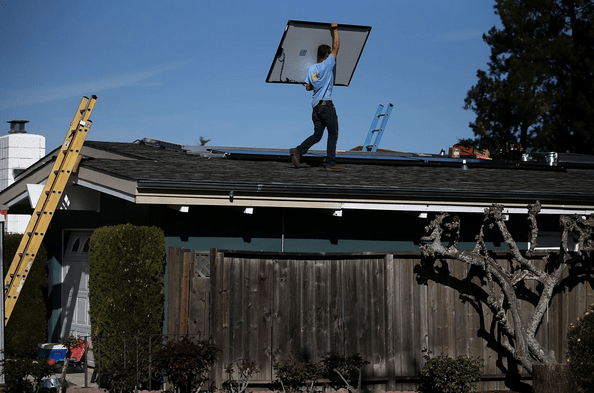
SolarCraft worker Craig Powell carries a solar panel on the roof of a home in San Rafael, Calif. The average price of photovoltaic cells has plummeted 60 percent since 2010. (Justin Sullivan/Getty Images)

SolarCraft worker Craig Powell carries a solar panel on the roof of a home in San Rafael, Calif. The average price of photovoltaic cells has plummeted 60 percent since 2010. (Justin Sullivan/Getty Images)

Conflicts between the use of alternative energy technologies such as solar and the status quo of fossil fuel based utility companies is nothing new, but was less of an issue when the infrastructure of the former was so costly few people could afford the investments required. But more efficient designs and lower production costs have made the panels and system more accessable to more people, enough so that utility executives are pushing for legislation that will stem the tide by mounting surcharges and other disincentives.

“The utilities are fighting tooth and nail,” said Scott Peterson, director of the Checks and Balances Project, a Virginia nonprofit that investigates lobbyists’ ties to regulatory agencies. Peterson, who has tracked the industry’s two-year legislative fight, said the pivot to public utility commissions moves the battle to friendlier terrain for utilities. The commissions, usually made up of political appointees, “have enormous power, and no one really watches them,” Peterson said. Continue reading

Arizona Utilities: A Thorn in the Side of Distributed Generation

Nationwide, utilities have been wary of the expansion of residential solar (termed Distributed Generation in the energy industry), as we discussed in a previous post. The contentions between utility executives and DG providers came to head an announcement from Salt River Project.

SolarCity Files Lawsuit Against Salt River Project for Antitrust Violations

SolarCity’s dispute with SRP claims that that new surcharges “sabotaged” customers’ ability to generate their own power.

The crux of SRP’s (a major Arizona utility) new fee is this: all customers who have solar arrays installed after December of 2014 will be assessed a $50 “demand charge,” which will apply regardless of how much or little power the customer’s array produces. Therefore, any new residential solar customer should expect to pay at least $600 per year, in addition to their variable utility costs. SunPower, the solar company for which I work, has determined that the SRP fees have made residential solar non-viable overnight. SolarCity has taken the same position and is now suing the utility for antitrust violations.

Continue reading

Solar To Take Prime Position On Cost Basis Soon

iHF9w5iJW38M

Thanks to Bloomberg for the surprising news:

While You Were Getting Worked Up Over Oil Prices, This Just Happened to Solar

By Tom Randall

Continue reading

The Solar Cycling Double Whammy

5414df08-e96b-4af8-ae68-1c517a64a043-460x276

SolaRoad in Krommenie, the Netherlands, will be the world’s first cycle path with embedded solar panels. Photograph: SolaRoad

Two wrongs never make a right, but sometimes two green initiatives work together to create more than the sum of their parts, as this story reported in the Guardian demonstrates:

World’s first solar cycle lane opening in the Netherlands

Solar panels embedded in the cycle path near Amsterdam could generate enough electricity to power three houses, with potential to extend scheme to roads

The bike path that connects the Amsterdam suburbs of Krommenie and Wormerveer is popular with both school children and commuters: around 2,000 cyclists ride its two lanes on an average day.

But next week Krommenie’s cycle path promises to become even more useful: on 12 November a 70-metre stretch will become the world’s first public road with embedded solar panels.

Continue reading

The Sense in Sustainability

adak-fish-farm-krishnankotta-mala

Today we went to  a 68 acre fish farm in Thrissur called ‘Haya Poya’. They were using a traditional box system (the local name is petty para) to collect fish and manage the water level. We went to learn about implementing aquaculture at Kayal Villa, a newer property.

By using this traditional method, they do not have to introduce new varieties of fish in order to farm. They do this mainly because it is less costly to collect the fish naturally than to artificially introduce fish. Also, since it is all local varieties, it limits the possibility of messing up the natural ecosystem with foreign invasive species.

During our ride home, the agronomist, Mr. Deyal, and I continued the conversation about doing what’s ecologically beneficial is actually easier and more cost-efficient. He said

“Only an ecologically viable system will be economically viable. When we fight against the environment, the environment will go against us and we will have to invest more money to protect against it.”

This reminds me of a conversation I had with an oil driller recently. When I asked him what the most challenging thing about his job was, he said ‘going against nature,’ and then proceeded to tell me how rebellious nature was to the oil drilling process and how costly it is. I found it interesting that although their career choices were the antithesis of each other, the conversations I had with them had parallel messages: going against nature is costly.  Continue reading

Add Agrivoltaics To Your Green Vocabulary

agrivoltaics

Farming food and fuel, side by side

Thanks to Conservation, and particularly Courtney White, for this synopsis:

What is the best way to utilize sunlight—to grow food or to produce fuel?

For millennia, the answer was easy: we used solar energy to grow plants that we could eat. Then, in the 1970s, the answer became more complex as fields of photovoltaic panels (PVPs) began popping up all over the planet, sometimes on former farmland. In the 1990s, farmers began growing food crops for fuels such as corn-based ethanol. The problem is that the food-fuel equation has become a zero-sum game. Continue reading

Solar’s Messy Compromises

BrightSource Energy's Ivanpah Solar Electric Generating System in the Mojave Desert. Photograph: Isaac Brekken/Washington Post

BrightSource Energy’s Ivanpah Solar Electric Generating System in the Mojave Desert. Photograph: Isaac Brekken/Washington Post

It’s not easy being green.  Even seeming no-brainers like this solar initiative requires complicated tradeoffs between one environmental objective and another:

…The Ivanpah Solar Electric Generating System will send that power across California, the Golden State, early this year, becoming the largest solar plant in the world to concentrate the sun’s rays to produce electricity. Such utility-sized solar plants are beginning to appear across the US, with 232 under construction, in testing or granted permits, many in the south-west and California, says the Edison Electric Institute, which represents utilities. The scale of the largest plants is difficult to imagine in the eastern part of the country, where a relative lack of available open land and unobstructed sunlight have limited solar facilities to perhaps a tenth the size of the West’s plants. In the west, ample sun, wide-open spaces, financial incentives, falling costs and state mandates have made big solar plants possible…

…But even as the largest plants are helping utilities meet state requirements for renewable energy, the appetite for them may be waning, say experts. The next phase of solar development – especially in the east – may feature smaller projects located closer to cities. Environmental groups want regulators to look at sites such as landfills and industrial zones before allowing construction in largely undisturbed environments such as deserts. Continue reading

What Should We Expect of Solar?

I was pleased to see our fellow contributors give voice to the promising outlook of solar energy in a recent post. There is no doubt that this technology will be a game-changer for utilities in the coming century, and I’m excited to be a part of it. Last month, I was thrilled to start my first full-time position at SunPower Corporation, one of the largest solar cell manufacturers in the United States. Tempering that excitement was the knowledge that, at least for the short term, I wouldn’t be traveling to India to work with Crist and some of his wonderful staff. But let’s back solar.

This is every solar installer’s dream: a perfectly tilted, south-facing, non-shaded, sun-bathed roof.

Continue reading

The Sun Also Rises In India

Green Blog updates us on the state of affairs in India with regard to solar energy:

After years of lagging behind China and the West in the adoption of solar power, some states in India are proposing to build solar farms at a galloping pace that leaves them at risk of falling short of electricity (a familiar problem here) or of paying higher prices for it. Continue reading

Hot, Fresh Data


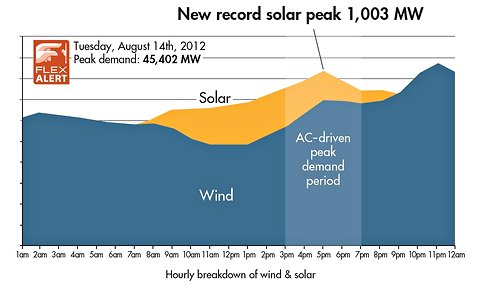
Thanks to one of our favorite informers, Felicity Barringer, whose past stories we have occasionally riffed on, for this piece in today’s Dot Earth section of the New York Times website (click the graph above to go to the source, and yes it counts as a non-subscriber article read):

From California to New Jersey, the summer sun was hot this year — and so was the solar industry. While the business of solar energy is still small enough and young enough to record firsts at the fearsome pace of a toddler, the milestones are getting more substantial. Continue reading

Hybrid Solar Electricity And Hot-water Systems For Big Buildings

Click the image to go to the story in the always-informative Green section of the New York Times website:

When photovoltaic cells make electricity from sunlight, they collect a lot of heat along the way. And they don’t work as well warm as they do cold.  Four years ago I wrote about a hybrid system that was intended both to make electricity and gather usable heat on residential rooftops. That company, now called Echo Solar, is offering its product around the country.

The Meaning(s) Of Organic

At first glance, this article and others on this website appeared to be of the “denier” variety, but on close read of this particular item (click the banner below to go to the article) it seems clearly of the educational clarification variety.

According to Rodale and his acolytes, products created by—and processes carried out by—living things are fundamentally different from lab-based processes and lab-created products. The resurrection of this prescientific, vitalistic notion of organic essentialism did not make sense to scientists who understood that every biological process is fundamentally a chemical process. In fact, all food, by definition, is composed of organic chemicals.

Continue reading

Water + Sunlight = Electricity?

Plants are typically regarded as the most efficient energy producers of the biological world, and I myself have imagined the possibility of harnessing their photosynthetic capabilities to generate sustainable energy. In my daydreaming, I visualized the biochemical transfer of a leaf’s photosynthetic output, adenosine triphosphate (ATP), down the plant’s stem and into a battery via some half-baked imaginary electrical conversion process. A possibility I had never before considered was that scientists were not focused on using the biological resources available to them, but rather mimicking and improving the processes carried out by their biological models. This recent development (late March, 2011) is described by Discover Magazine:

Scientists say that they’ve passed a chemistry milestone by creating the world’s first practical photosynthesis device. The playing-card-sized photosynthetic gadget uses sunlight to split water molecules into oxygen and hydrogen, which can then be used to produce energy, and is reputedly 10 times more efficient than a natural leaf. Researchers say they expect it to revolutionize power storage, especially in remote areas that don’t currently have electricity. “A practical artificial leaf has been one of the Holy Grails of science for decades,” says lead researcher Daniel Nocera, who’s presenting this research at the National Meeting of the American Chemical Society this week.

Full story here.