News We Can Cheer

windwins750.jpg

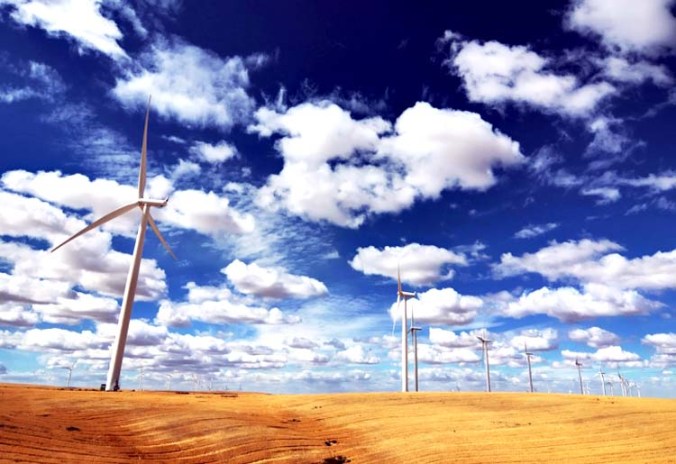
A wind farm in Washington state. Photo credit: Daniel Parks / flickr

Thanks to EcoWatch for this unexpected news:

Renewable Energy Investments Set New Record, Twice That of Coal and Gas

Renewable energy investment totaled a record $286 billion, with China, India, Brazil and other developing countries accounting for $156 billion in 2015. China’s investment alone rose 17 percent from the year prior, representing 36 percent of the global total. Experts expect this surge to continue, while coal remains in decline; China also announced this week that they will be suspending construction of new coal mines in 15 provinces. Continue reading

Urban Heroic Recycling

29RECYCLE1-master675

Workers inspecting a bale of refuse at the Recology recycling plant in San Francisco. Foreign officials and others often visit the facility for ideas on how to handle their own mushrooming piles of garbage. Josh Haner/The New York Times

From the New York Times:

San Francisco, ‘the Silicon Valley of Recycling’

By

Robert Reed, who is enjoying a surprising career turn as a busy tour guide at the latest hot spot here, stood smiling one recent sunny morning before 10 foreign dignitaries and journalists. They included the mayor of Genoa, Italy, and the general consuls from Italy, Canada and Switzerland.

Each visitor wore a sport coat and tie, and a yellow safety vest to ensure they wouldn’t be run down by garbage trucks. Continue reading

Disruptive Urban Energy-Generation

brooklynmicrogrid

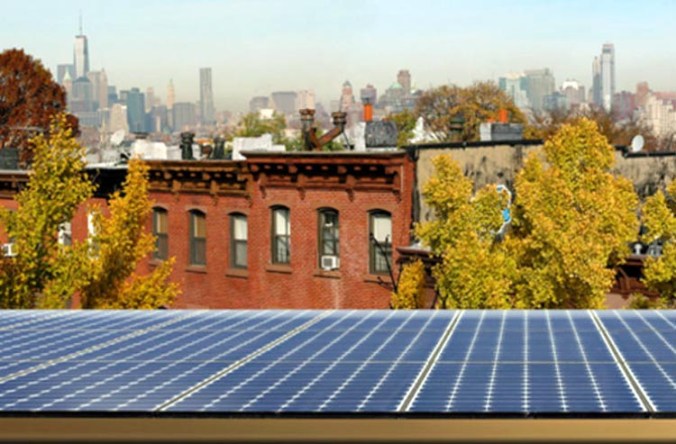
Brooklyn Microgrid wants to increase the amount of renewable energy generated in the community by members of the community. Photo credit: Brooklyn Microgrid

Thanks to Ecowatch for this story:

Many U.S. cities have taken the lead on sustainability efforts, particularly when it comes to adopting renewable energy. Already, at least 13 U.S. cities—including San DiegoSan FranciscoBurlington, Vermont; and Aspen, Colorado—have committed to 100 percent clean energy.

Other American cities, though not generating all their electricity from renewables, have innovative projects that could soon become widely adopted and transform our energy system.

Here are three cities leading the way: Continue reading

The Whole Picture

Did you take these for just some stunning water colors? Well, these are hard data on climate change. An artistic expression of an ugly, oft overlooked truth. Jill Pelto, the artist, who graduated in December from the University of Maine with a degree in earth science and studio art, created these paintings based on graphs of data on the environmental effects of climate change.

Continue reading

To Dam or Not to Dam

In southern Laos, near where the Don Sahong dam will soon rise, a fisherman’s son snoozes above his father’s weir, waiting for fish migrating upstream to tire and wash back into the trap. PHOTO: David Guttenfelder

In southern Laos, near where the Don Sahong dam will soon rise, a fisherman’s son snoozes above his father’s weir, waiting for fish migrating upstream to tire and wash back into the trap. PHOTO: David Guttenfelder

Dams are barriers built across rivers and streams to confine and regulate water flow for irrigation and hydroelectricity. However, in recent years, the social, economic, and environmental impacts of these constructions have become a pressing concern. While dams are integral to agricultural irrigation, and can help control floods, the construction causes mass displacement, increases risks of earthquakes and landslides. Along the Mekong in China, the people need clean electricity but also the fish and rice that and undammed river provides.

Ban Pak Ing may be a vision of the future for many Mekong villages. Five more dams are under construction in China. Downstream, in Laos and Cambodia, 11 major dams—the first on the main stem of the lower Mekong—are either proposed or already being built. By disrupting fish migration and spawning, the new dams are expected to threaten the food supply of an estimated 60 million people—most of whom live in villages much like Ban Pak Ing. The electric power generated by the lower Mekong dams is destined largely for booming urban centers in Thailand and Vietnam. Kraisak Choonhavan, a Thai activist and former senator, calls the lower Mekong dams “a disaster of epic proportions.”

Continue reading

Wonky Produce!

2385

Asda’s wonky vegetable box contains items that are either oddly shaped, have growth cracks or are smaller or larger than average. Photo: Asda

In our vigilance on the waste reduction front, especially with regard to food, we are tracking efforts globally that we believe we, and our readers, will find interesting and useful.

We have long ago come to understand that the standard definition of beauty as it relates to fruits and vegetables–uniformity prized over flavor and nutrition–has done a huge disservice to the environment, not to mention to the consumers who suffer gastronomically as a result.

Thanks to the Guardian‘s Environment section for this news:

Asda puts UK’s first supermarket wonky veg box on sale

Box of imperfect in-season vegetables will feed a family of four for a week and costs £3.50 – 30% less than standard lines

The UK’s first supermarket ‘wonky vegetable’ box goes on sale on Friday, containing enough ugly potatoes and knobbly carrots to feed a family of four for an entire week for just £3.50. Continue reading

The Sunny Road Ahead

solar20roadway_zpsn4ltyttq

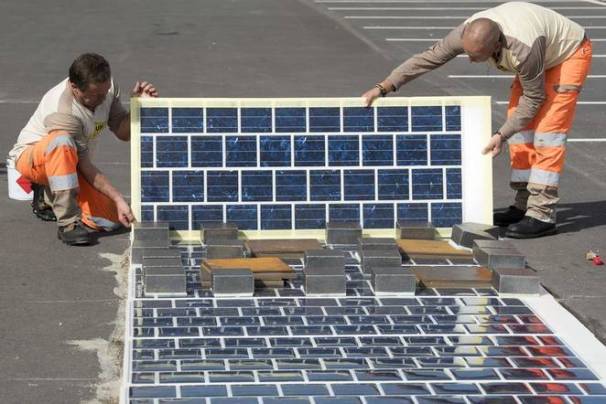
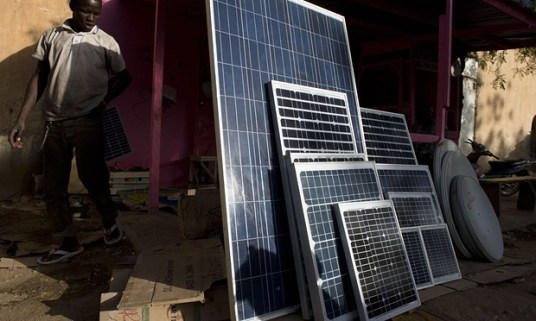
Wattway panels (treehugger.com)

What do you imagine when you think of a sunny road?  Probably not anything resembling a landscape as literally solar as what you would find northwest of Amsterdam in the town of Krommenie, or soon enough in France.

Continue reading

Versatile Bamboo and Cast Aluminum Structures for the DR and Elsewhere

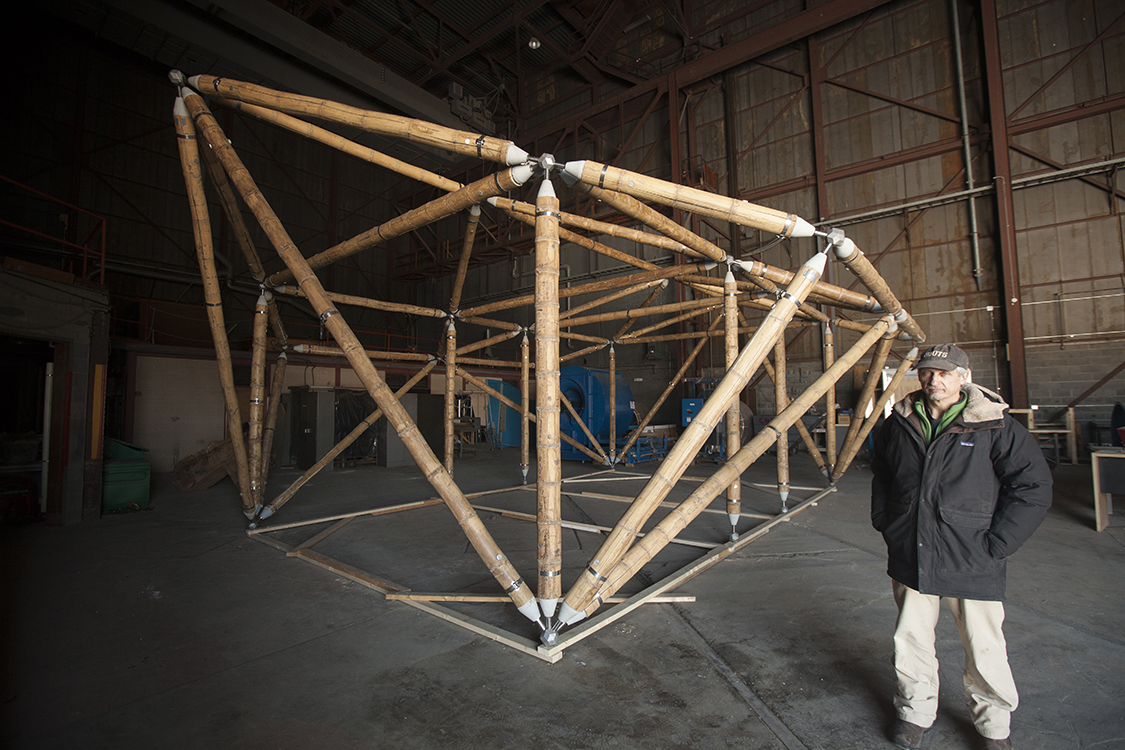
Jack Elliot and students completed a test build in Cornell’s High Voltage Laboratory before erecting the structure in the Dominican Republic. Photo © Robert Barker / University Photography

Bamboo comes up frequently on this blog, since it is such a fast-growing plant that can be used in various ways for construction and design. Recently, we learned of a collaborative project at Cornell University where bamboo-based structures intended to resist the violence of earthquakes and hurricanes in the Caribbean (and tested on the island of the Dominican Republic) use an aluminum joint system invented by a Cornell professor. Roger Segelken reports for the Cornell Chronicle:

The first field test of Design and Environmental Analysis (DEA) associate professor Jack Elliott’s “Triakonta” structural system stands in the Punta Cana coastal region of the Dominican Republic, as an outdoor classroom for the Puntacana Ecological Foundation.

“The structure itself is elegant and has sparked dialogue about sustainable architecture amongst visiting guests, students and even architects,” said Jake Kheel, M.S. ’02, environmental director of Grupo Puntacana, which operates a resort adjoining the eco-preserve where Cornellians and locals built the bamboo structure in mid-2015.

Continue reading

Rising Anxiety

bangladesh

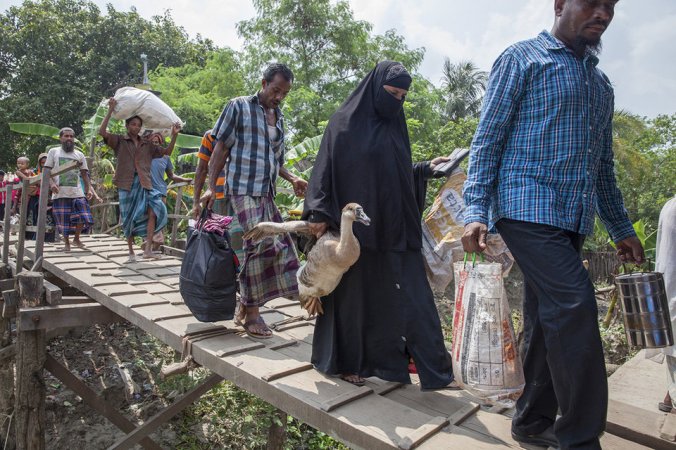
Bangladesh is one of the countries most vulnerable to the effects of climate change with millions expected to be displaced in the next 40 years. PHOTO: Probal Rashid

Developing countries are the most hit by climate change. Its effects—higher temperatures, changes in precipitation patterns, rising sea levels, and more frequent weather-related disasters—pose risks for agriculture, food, and water supplies. At stake are recent gains in the fight against poverty, hunger and disease, and the lives and livelihoods of billions of people in these countries. Bangladesh is one of them, with a rapidly increasing number of ‘climate refugees’.

Continue reading

Beautiful LEGO: Wild!

doyle_01

LEGO creation by Mike Doyle, image via ThisIsColossal

We all love LEGO, whether it is being used for beautiful creations or as useful inventions, and were happy to learn last year of the company’s goal to move toward sustainable materials and away from petrochemicals. An artist who works his sculptures only in LEGOs, Mike Doyle, has recently published a third book titled Beautiful LEGO, this time subtitled “Wild!” (the first had no subtitle and the second was subtitled “Dark“). Kate Sierzputowski covers Doyle’s new book showcasing works of natural LEGO marvels (by other artists as well as himself) on ThisIsColossal:

One of Doyle’s own pieces that appears in the book is a new piece titled Appalachian Mountaintop Removal (2015), a work composed of more than 10,000 pieces that directly references the act outlined in its title.

Continue reading

The Evolution of the Cleanest Continent

arei_zpslcjewaue

In addition to the successful planting of millions of trees and bushes in parts of Tigray, Ethiopia, and elsewhere in Africa as part of the African Forest Landscape Restoration Initiative (AFR100), the announcement of another ambitious initiative by several African countries during the United Nations’ summit of climate change in Paris could spearhead the continent to becoming the world’s cleanest in the following decades.

Continue reading

Design Lessons from History

Masdar city in the United Arab Emirates has attempted to combine some of the lessons learned from the past with modern technologies by increasing shaded areas, creating narrow streets and constructing a wind tower.

Masdar city in the United Arab Emirates has attempted to combine some of the lessons learned from the past with modern technologies by increasing shaded areas, creating narrow streets and constructing a wind tower.

Oil heartlands of Abu Dhabi, Dubai, Doha and Iran’s coast will experience higher temperatures and humidity than ever before on Earth if the world fails to cut carbon emissions, according to a recent study. While air-conditioned homes and offices provide respite from the heat, architects are looking to history to find how civilizations battled the hostile conditions.

Historically, the inhabitants of the Gulf were either farmers living near oases in agricultural villages, Bedouins living in tents in the desert, or urban dwellers living in cities. Given the global trend toward urbanisation, it makes sense to take a closer look at how the latter group coped with the heat. Traditional buildings in the gulf’s cities and villages are designed to maximise shading, reduce thermal gain of the sun radiation, regulate building temperature and enhance air circulation. These effects are achieved through a clever combination of building materials, placement and design.

Continue reading

Look At the Germans

Wind turbines surround a coal-fired power plant near Garzweiler in western Germany. Renewables now generate 27 percent of the country’s electricity, up from 9 percent a decade ago. PHOTO: Nat Geo

Wind turbines surround a coal-fired power plant near Garzweiler in western Germany. Renewables now generate 27 percent of the country’s electricity, up from 9 percent a decade ago. PHOTO: Nat Geo

Germany has been one of the few countries that have successfully moved away from nuclear energy. Germany has so far successfully shut down its nine units that had the capacity of generating enough power for at least 20 million homes in Europe. In fact, the contribution of nuclear power in Germany’s electricity generation has now fallen to just 16 percent and renewables are now the preferred source of electricity generation in the country.

Germany is pioneering an epochal transformation it calls the energiewende—an energy revolution that scientists say all nations must one day complete if a climate disaster is to be averted. Last year about 27 percent of its electricity came from renewable sources such as wind and solar power, three times what it got a decade ago and more than twice what the United States gets today. The change accelerated after the 2011 meltdown at Japan’s Fukushima nuclear power plant, which led Chancellor Angela Merkel to declare that Germany would shut all 17 of its own reactors by 2022.

Continue reading

The Greenest Island in the World?

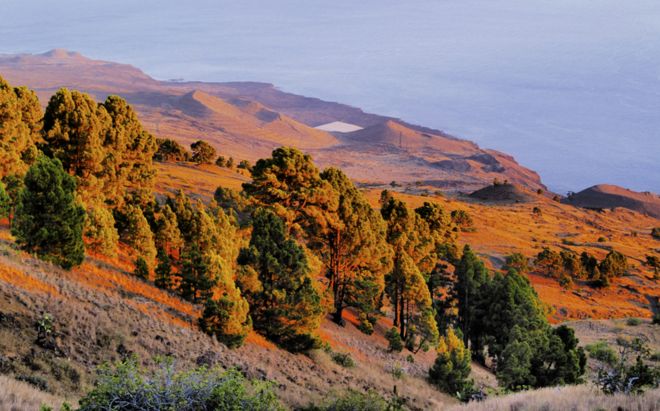
The smallest and most isolated of the Canary Islands, El Hierro, has a way of combining hydro and wind power that may allow it, one day, to get all its energy from renewable sources. PHOTO: BBC

The smallest and most isolated of the Canary Islands, El Hierro, has a way of combining hydro and wind power that may allow it, one day, to get all its energy from renewable sources. PHOTO: BBC

The question is not about who has the densest forests or flora resources showing up high estimates in green. It is one of keeping up a sustained model of efficient use of alternative and natural sources of energy. And on that front, El Hierro seems like it’s well on its way to self-sufficiency on the energy front.

For more than 30 years, El Hierro has been dreaming of becoming self-sufficient. And this year it took a big step forward. At the end of June its new hydro-wind facility, Gorona del Viento, came fully on stream and in July and August it provided roughly half of the island’s energy needs.That means the island’s 10,000 inhabitants are suddenly less reliant on supplies of diesel arriving over unpredictable seas from Tenerife, 200km away. In July, Gorona del Viento saved 300 tonnes of fossil fuels, but that is predicted to rise to 500 tonnes per month before long – the equivalent of saving 40,000 barrels of oil and 19,000 tonnes of emitted CO2 per year.

Continue reading

365 Days in the Wilderness

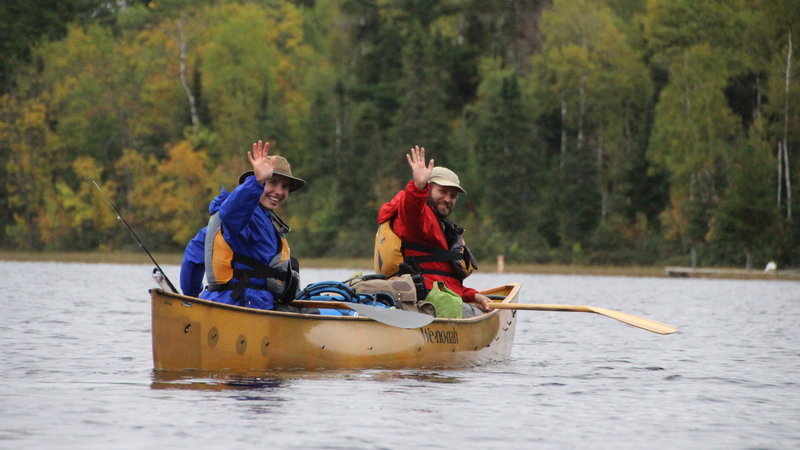
Amy and Dave Freeman paddle into the Boundary Waters, starting their 365 days in the wilderness to raise awareness of mining plans in the region.PHOTO: Alex Chocholousek

Amy and Dave Freeman paddle into the Boundary Waters, starting their 365 days in the wilderness to raise awareness of mining plans in the region.PHOTO: Alex Chocholousek

The Boundary Waters Canoe Area Wilderness is located in the northern third of the Superior National Forest in northeastern Minnesota. Over 1 million acres in size, it extends nearly 150 miles along the International Boundary adjacent to Canada’s Quetico Provincial Park and is bordered on the west by Voyageurs National Park. The BWCAW contains over 1200 miles of canoe routes, 12 hiking trails and over 2000 designated campsites. Wilderness offers freedom to those who wish to pursue an experience of expansive solitude, challenge and personal integration with nature.

And now some, or all of it, may be lost to sulphide mining.

Continue reading

Helping Salmon Get By

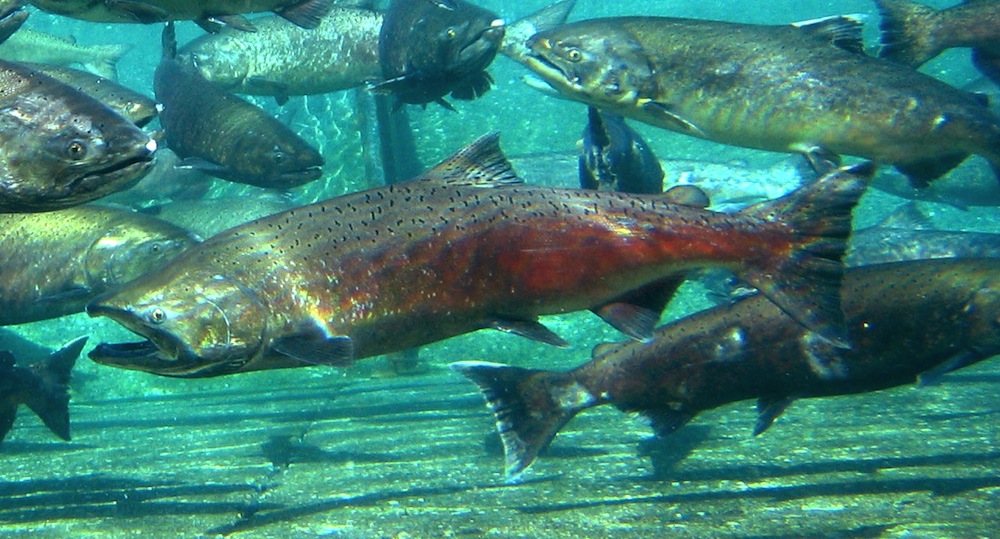
Drought and man-made obstacles lead fishery to boost releases of Chinook into Sacramento River, in hopes that a few thousand return to spawn.  PHOTO: Livescience

Drought and man-made obstacles lead fishery to boost releases of Chinook into Sacramento River, in hopes that a few thousand return to spawn. PHOTO: Livescience

To boost the dwindling population of natural chinook salmon in California, hundreds of thousands of fish are spawned and released by federal and state agencies every year. This year, 600,000 salmon were released earlier than normal because of a historic drought in California.

The California drought, the state’s worst on record, has taken a terrible toll on those already-diminished winter Chinook salmon runs. It’s not just that there isn’t enough water; there’s not enough cold water, especially after competing interests such as urban areas and big agriculture—each equipped with more political muscle than wild salmon advocates have—take their share. In 2014, the returning winter Chinook numbers were the worst that fishery officials had ever seen. In a normal year, about 25 percent of the eggs produce baby salmon healthy enough to migrate; last year, with only 5 percent surviving their infancy in the unusually warm water, nearly the whole winter run was wiped out.

Continue reading

When Temples Teach About Forests

Traditional temple gardens, called Nandavanam, are strewn along the banks of the river Tamaraparani that originates in the Western Ghats, India. Each is attached to one of the 150-odd temples in the region, some as old as 1,000 years. PHOTO: Scroll

Traditional temple gardens, called Nandavanam, are strewn along the banks of the river Tamaraparani that originates in the Western Ghats, India. Each is attached to one of the 150-odd temples in the region, some as old as 1,000 years. PHOTO: Scroll

Sacred texts are guides to living while temples and the religious community teach a thing or two about what has been and what will be. But do temple gardens move beyond their aesthetic value and stand for something greater? Yes, their valuable insights into living ecosystems.

Some of these old surviving forest patches are invaluable when it comes to shining a light on what a forest might have been like in the area several thousand years ago, like a relic to an ancient civilisation. Considering the Indian government’s rapid march towards creating new forests to combat deforestation, sacred groves, their histories and regeneration can be a blueprint to such plans. “In short, one could say sacred groves provide a small window into an ecosystem’s past,” said Osuri. “They might even provide a source population and a reference library.”

Continue reading

What’s the Tree Population?

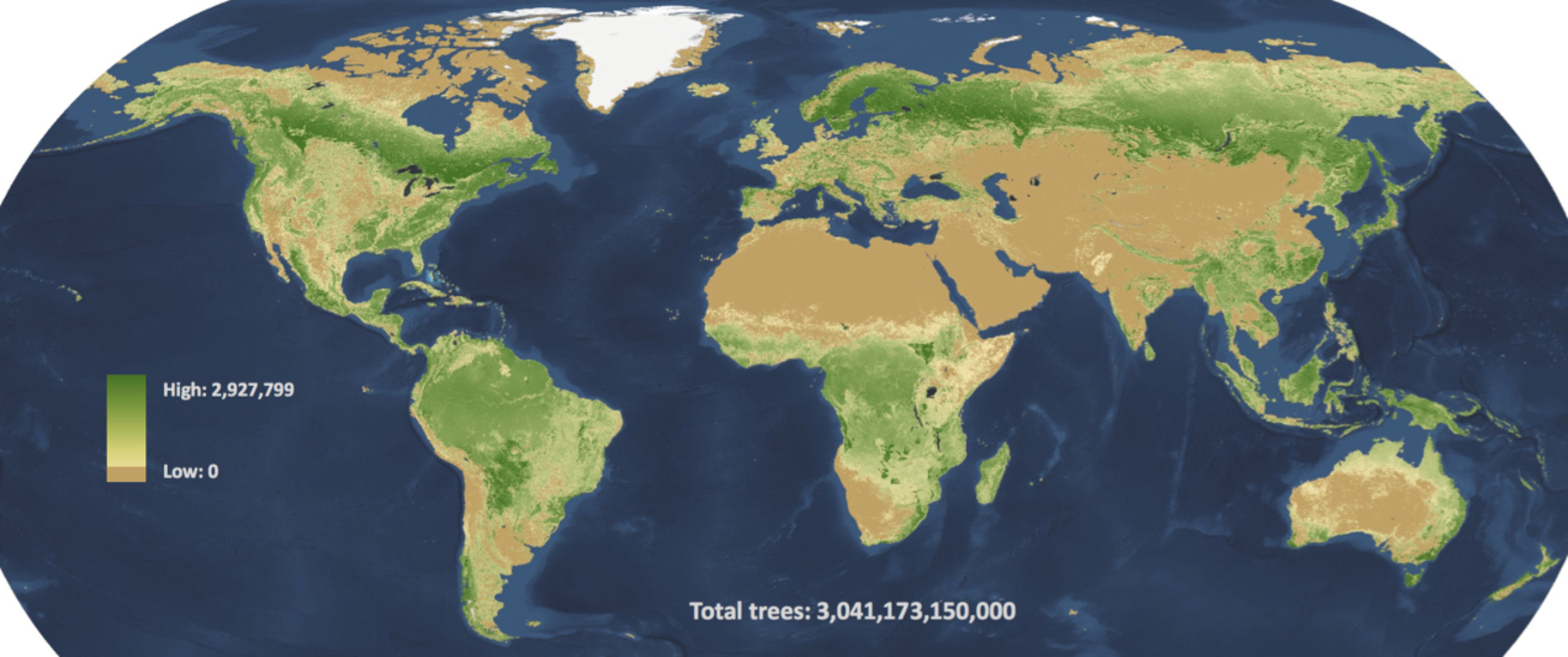
Three trillion trees, mapped to the square kilometre.  Source: Crowther et al / Nature

Three trillion trees, mapped to the square kilometre. Source: Crowther et al / Nature

Three trillion trees live on Earth, but there would be twice as many without humans. Each year more than 15 billion trees are lost worldwide, according to a major new study. Previous estimates for the total number of trees on Earth have been much lower. The new study is important not only because it gives a higher number, but how it was produced. As well as using remote sensing data such as images taken by satellites that can classify land type, the research also integrated 429,775 ground-based assessments of tree density.

Continue reading

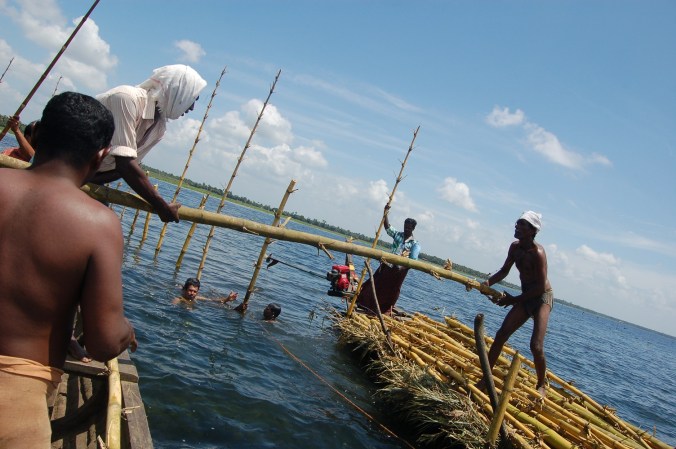
The BIG Backwater Conservation Story

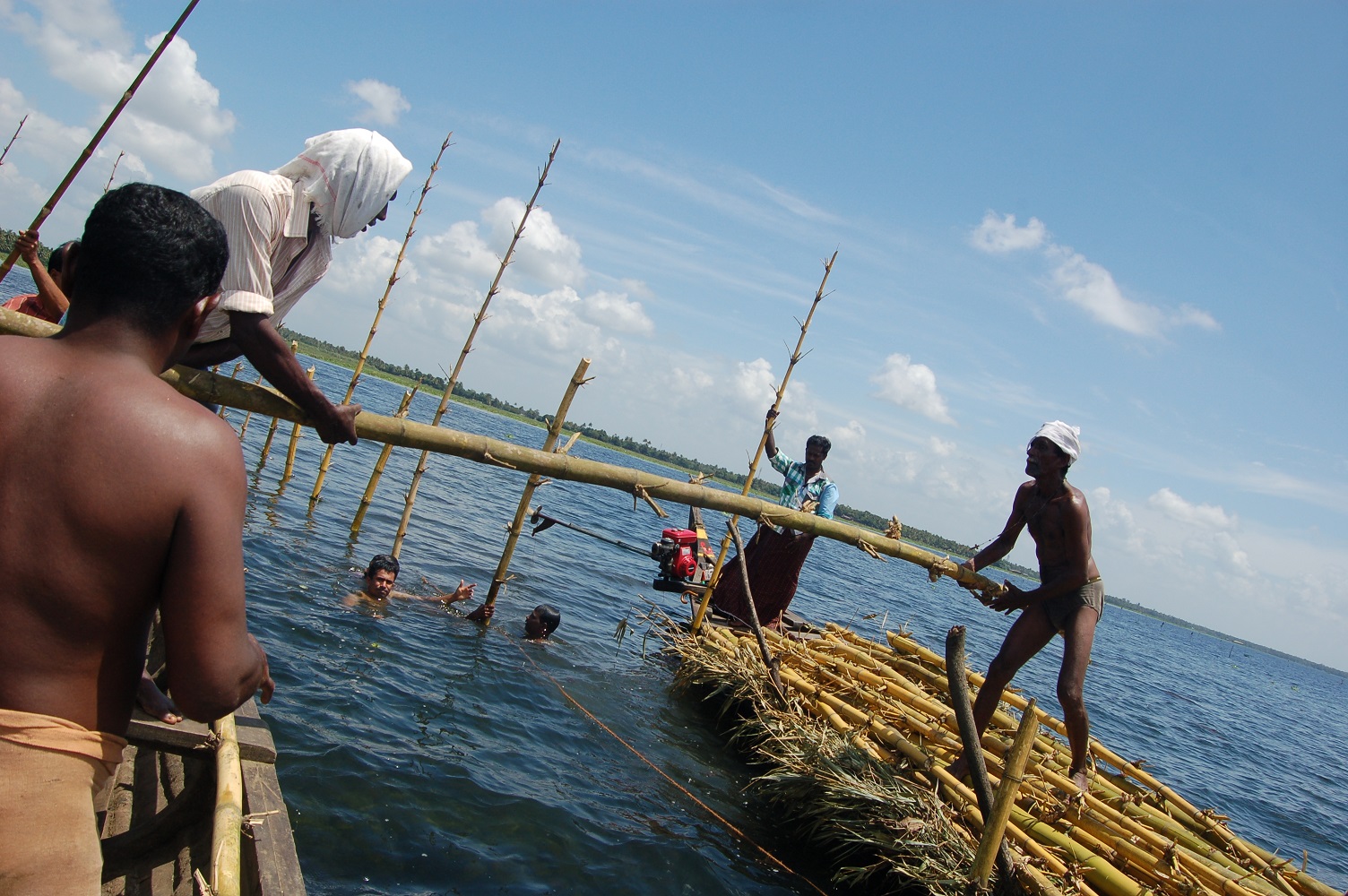
A fish sanctuary in the making on Lake Vembanad, Kerala, India. PHOTO: Scroll

A fish sanctuary in the making on Lake Vembanad, Kerala, India. PHOTO: Scroll

We love the backwaters. Period. Every single time one of our Xandari Riverscapes houseboats puts out into these deep waters, our hearts swell with pride. Responsible showcasing the charm, the timelessness of these waters and its people brings us much joy. And when we come across conservation efforts to maintain the quintessence and soul of this stretch of paradise, we can’t help but let you know.

Spread over 36,000 hectares and three districts in Kerala, this is the kind of landscape that gives conservation ecologists a blinding headache – a resource-rich, highly-productive area that is pulled apart in several directions (waste-dumping, tourism, livelihoods, water security) and depended upon by conflicting communities who have no other alternatives. Lakes have been straddling this intersection all across India – from Chilika in Odisha, to the Bengaluru urban lakes, to Loktak in Manipur, to Vembanad.

Such heavy-use landscapes outside protected areas, however, also might hold answers to the future of conservation. Whether it is a large lake system, or forest fragments that serve as the refuge of a few species or a corridor for wild animals, or a forest fringe, or large agricultural swathes that also host biodiversity, a section of conservationists believes that the future lies in teamwork between nature and mankind.

Continue reading

Who’s Taking Over Coral Reefs?

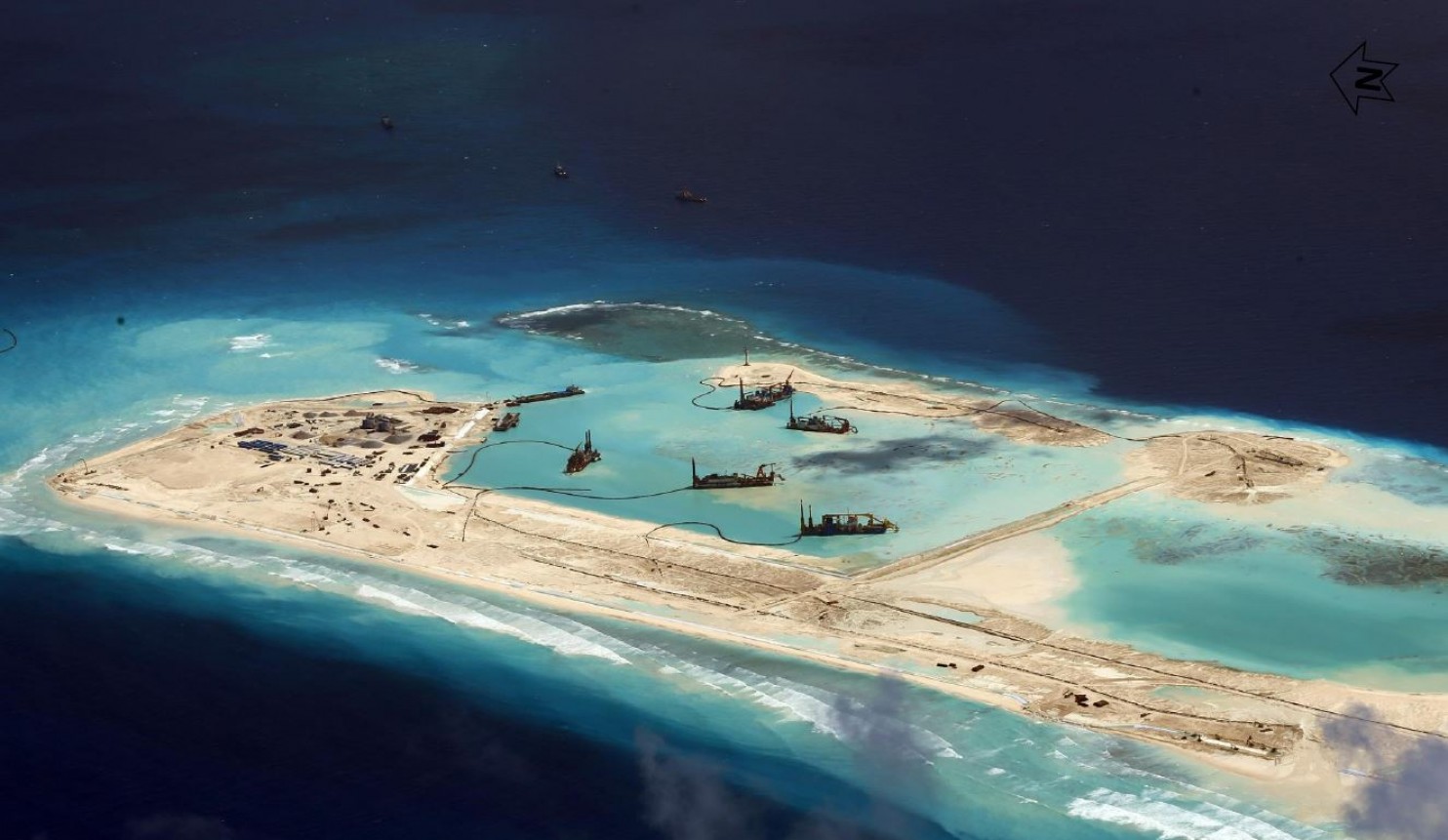
Between August and November in 2014, Chinese dredgers created a land mass on Fiery Cross that spans 3,000 meters long and 200 to 300 meters wide. PHOTO: Washington Post

Between August and November in 2014, Chinese dredgers created a land mass on Fiery Cross that spans 3,000 meters long and 200 to 300 meters wide. PHOTO: Washington Post

Here are some figures for China’s military strength. Here is also the fact that much of the country’s military building is concentrated in the high seas. Especially in waters that once hosted biodiversity hotspots in coral reefs.

As China races to extend its military reach, it is turning pristine habitats into permanent islands. Satellite images of the South China Sea show rapid destruction of some of the most biodiverse coral reefs in the world. The reclamation of land in the contested Spratly archipelago to build runways, military outposts and even small towns is endangering ecosystems that are key to maintaining world fish stocks and biodiversity.

Continue reading