Sustainable Seafood, from Dock to Dish

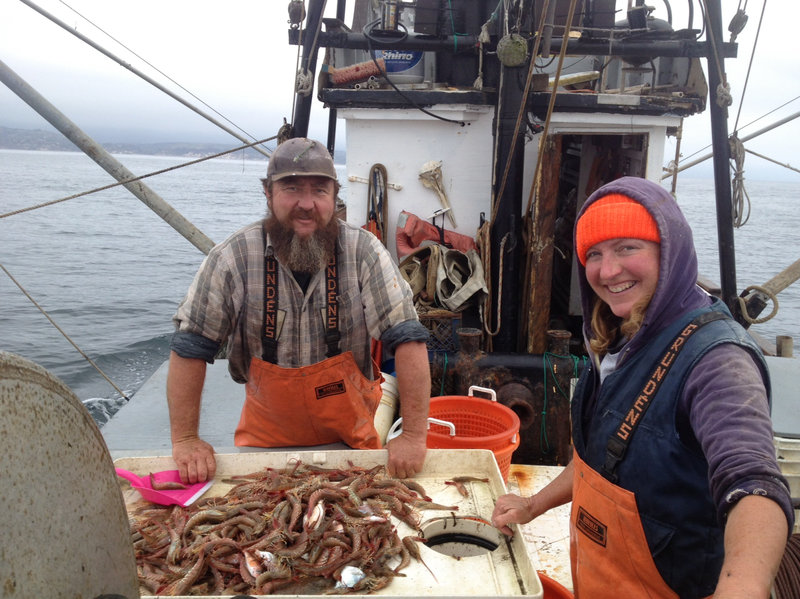
Sixteen Santa Barbara-based fishermen are participating in the Dock to Dish pilot program in California. Seen are Keith and Tiffani Andrews fishing for ridgeback shrimp on the fishing vessel Alamo. PHOTO:   Sarah Rathbone

Sixteen Santa Barbara-based fishermen are participating in the Dock to Dish pilot program in California. Seen are Keith and Tiffani Andrews fishing for ridgeback shrimp on the fishing vessel Alamo. PHOTO: Sarah Rathbone

You’ve heard of farm-to-table. At its heart, farm-to-table means that the food on the table came directly from a specific farm. Also emphasizes a direct relationship between a farm and a restaurant or store. The vocabulary of the movement is changing now to include produce from the seas, giving birth to the concept of dock to dish.

The pile of fish marks an important step toward a fundamentally different way that prominent chefs are beginning to source American seafood: the restaurant-supported fishery. Call it an evolutionary leap from community-supported-agriculture programs, which support local farmers, and community-supported fisheries, which support small-scale fishermen. Both models rely on members who share the risks of food production by pre-buying weekly subscriptions.

Continue reading

The Good Race Against Food Waste

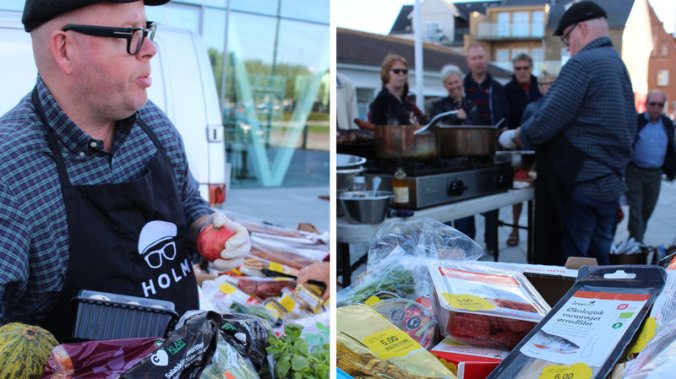
Claus Holm, a Danish celebrity chef, demonstrates at a festival on the Danish island of Fyn how expired products lurking at the back of the fridge can still be delicious. PHOTO: Sidsel Overgaard for NPR

Claus Holm, a Danish celebrity chef, demonstrates at a festival on the Danish island of Fyn how expired products lurking at the back of the fridge can still be delicious. PHOTO: Sidsel Overgaard for NPR

By 2050, the world will need 60 per cent more calories per year to feed a projected population of 9 billion. Cutting the rate of global food loss and waste could help bridge this food gap while creating environmental and economic benefits. And the people of Denmark are already well ahead in the race to cut food waste. While the Stop Wasting Food movement is the national embodiment of a collective consciousness, the need to cut back on waste has seeped through the consumer chain, as NPR finds.  Continue reading

In the Foothills of Ethical Fashion

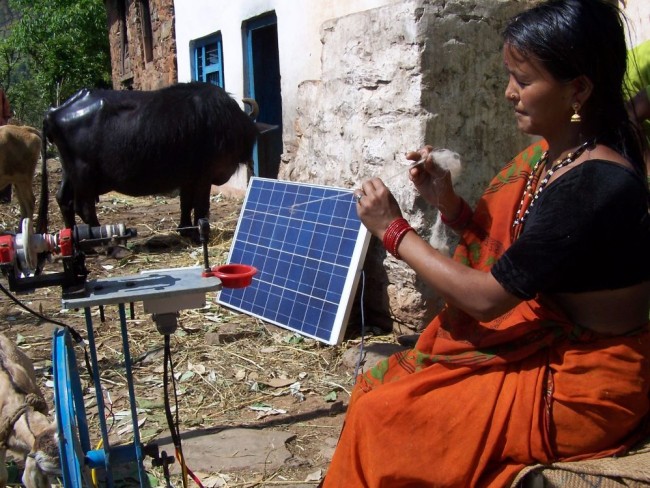
Avani uses green energy for all their production processes. Solar energy is used in the form of solar powered spinning wheels and calendering machines for all textile production. PHOTO: Avani

Avani uses green energy for all their production processes. Solar energy is used in the form of solar powered spinning wheels and calendering machines for all textile production. PHOTO: Avani

AVANI is a voluntary organization working in the Kumaon region of Uttarakhand, located in the middle ranges of the Central Himalayan region of India. The genesis of AVANI came about in the context of the isolation and consequent problems of the far-flung villages situated in one of the highest mountain ranges of the world. Its work focuses on developing and disseminating appropriate technologies for meeting the energy and water requirements of the local villages, promoting craft-based (development of handmade naturally dyed textiles) and farm-based livelihood opportunities. To date, AVANI projects include the dissemination of solar technology, water resource management, natural textiles and paints, and the social and economic development of rural communities with projects such as healthcare and micro-finance.

Continue reading

In The Line of Fire

A firefighter monitors the flames in Cualedro. PHOTO: Pedro Armestre

A firefighter monitors the flames in Cualedro. PHOTO: Pedro Armestre

The Mediterranean climate, particularly the prolonged dry and hot summer season, is naturally favourable to wildfires. Their frequency and impact have increased over the last few decades in southern European countries, mainly due to land-use and socio-economic changes. Many traditional rural activities (e.g. firewood collection and livestock grazing systems) have been partly or totally abandoned in favour of alternatives (e.g. fossil fuels and factory farming). These changes have led to more homogeneous landscapes and the accumulation of dry matter in forests and rangelands, resulting in a greatly increased fire hazard.

Continue reading

New York, Have a Sunny Day!

With New York packing so many buildings into a small area, the rooftops offer seemingly limitless potential to take homes off the grid. PHOTO: Business Insider

With New York packing so many buildings into a small area, the rooftops offer seemingly limitless potential to take homes off the grid. PHOTO: Business Insider

For the average homeowner, there’s more benefit to going solar than ever before. With the sun being a consistent source, of energy, those investing in photo-voltaic panels can be assured of seeing returns. There’s bound to be questions about feasibility, yes. About how much space is required, the type of structures involved, whom to contract for setup, etc.That’s where Mapdwell, a spin-off company from MIT that is creating incredibly detailed maps of the solar potential for each and every building in various cities, comes in.

“Solar energy has all this baggage, in a way. Solar panels have been out there for 30 to 40 years, but most homeowners still believe panels are “complicated, expensive, not-for-me kinds of things,” says CEO Eduardo Berlin, an architect and designer who is based in Cambridge, MA. “Solar is a real possibility for many people now, but somehow that got missed. It never got rebranded. The idea that you can put something on a roof and create energy from the sun, it’s pretty amazing.”

Continue reading

The Decision is To Bee

Researchers are using micro sensors to learn about the problems bees face. PHOTO: BBC

Researchers are using micro sensors to learn about the problems bees face. PHOTO: BBC

Around here, we understand the importance of bees. That explains the numerous posts on these winged creatures. If you must know right away, bees are guardians of the food chain and keepers of biodiversity, thanks to their super power of pollination. Precisely why it’s a cause for worry when we hear of their numbers dwindling. Now, an international group of scientists, beekeepers, farmers and technology companies is using cutting-edge technology to help find out why honey bee populations around the world are crashing.

Continue reading

The Disappearing Cajun Culture

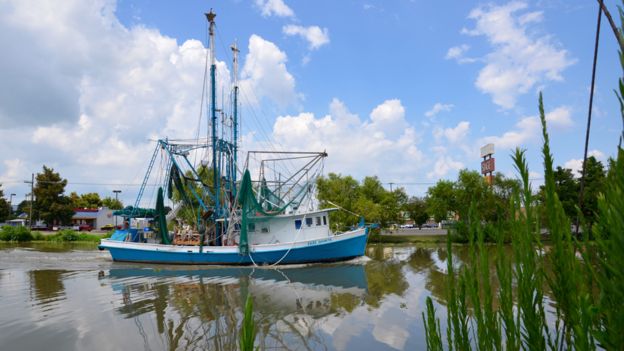
A shrimp boat heading out to fish on Bayou Lafourche. PHOTO: BBC

A shrimp boat heading out to fish on Bayou Lafourche. PHOTO: BBC

Cajuns are mostly descended from French immigrant ancestors. Their name comes from Acadia in Nova Scotia, Canada, where they originally settled – they were expelled by the British in the 18th Century, and many eventually ended up in southern Louisiana. What was once home to several hundred families now only counts a few permanent residents. Where there were cotton fields, there’s now open water. Where a cemetery once stood, a few last remaining tombstones are sliding into the bayou.The people here have survived hurricanes, including Katrina in 2005, and the BP oil spill in 2010. But their resilience is being tested again by a less dramatic, but no less dangerous threat – the long-term erosion of the marshes and wetlands that run all along Louisiana’s coast.

Continue reading

Drawing Inspiration from Paper Folding

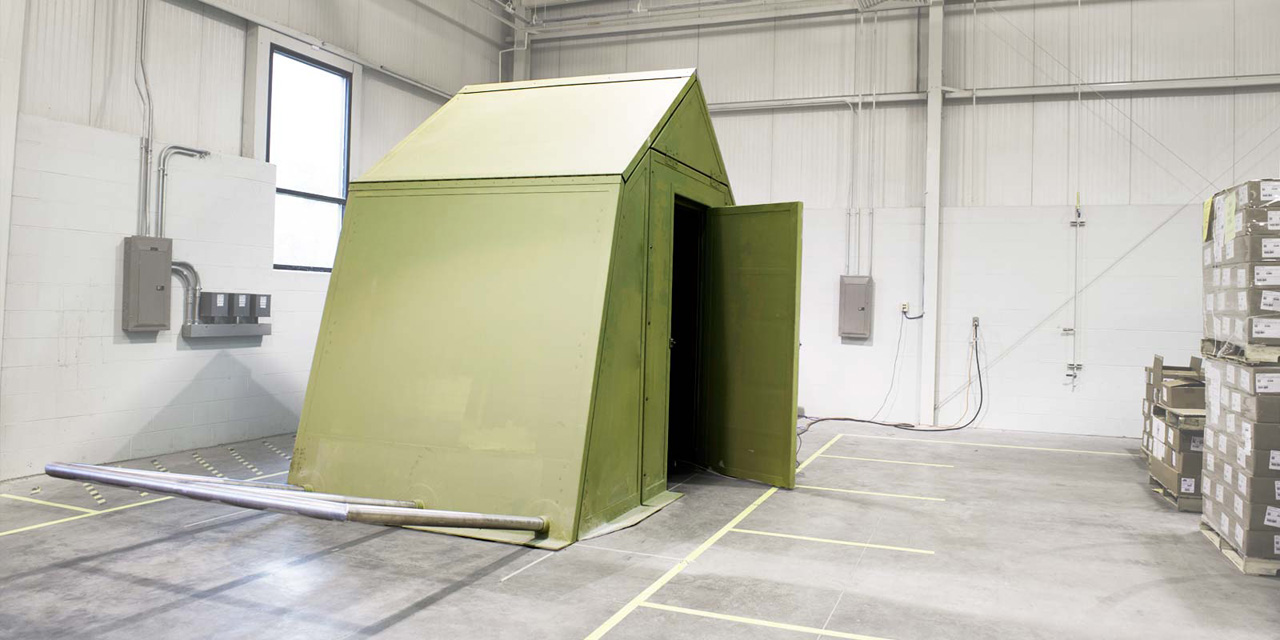
The flat-pack design could reduce energy demand drastically compared to a standard canvas structure. PHOTO: CoExist

The flat-pack design could reduce energy demand drastically compared to a standard canvas structure. PHOTO: CoExist

It has long been known that origami has many benefits like developing eye hand co-ordination, sequencing skills, attention skills, patience, temporal spatial skills, math reasoning etc. And now a structure design inspired by the Japanese art of folding paper may help the military significantly reduce its energy demand.

Continue reading

Watching the Waters

 Scientists believe ocean currents and natural cycles are temporarily offsetting a sea level rise in the Pacific Ocean. Photograph: Ray Collins/Barcroft Media

Scientists believe ocean currents and natural cycles are temporarily offsetting a sea level rise in the Pacific Ocean. Photograph: Ray Collins/Barcroft Media

Over the past century, the burning of fossil fuels and other human and natural activities has released enormous amounts of heat-trapping gases into the atmosphere. These emissions have caused the Earth’s surface temperature to rise, and the oceans absorb about 80 percent of this additional heat. As per a recent update from a panel of NASA scientists, sea levels worldwide rose an average of nearly 3 inches (8 cm) since 1992, the result of warming waters and melting ice.

Continue reading

“Holy Crab,” Bulbman

For most of August Xandari has been operating at full capacity. Since this past weekend the hotel has had fewer guests as families prepare for the new school year in Europe and the United States. In a way, it’s a relief, not only for me and my unrestrained desire to sing when I’m alone, but also for the auditory senses of the guests. I no longer bump into hikers during my treks along the waterfall trails and I avoid the embarrassment of having to “justify” my discordant singing. All in all, at least for a few days, no one has to put up with my singing…except maybe for an unexpected creature I found at “river view 2.”

Continue reading

Nature’s Wisdom The Only Teacher

The Marudam School in Thiruvannamalai in Tamil Nadu. For starters, it’s run by an NGO – The Forest Way – a registered charitable trust involved in education, afforestation, environmental education, organic farming and more. Also, it receives no funding from the government. The school, set in an organic farm and powered by renewable energy, teaches its students about conscious living that respects the environment.

Continue reading

Redefining Disabilities Through Organic Farming

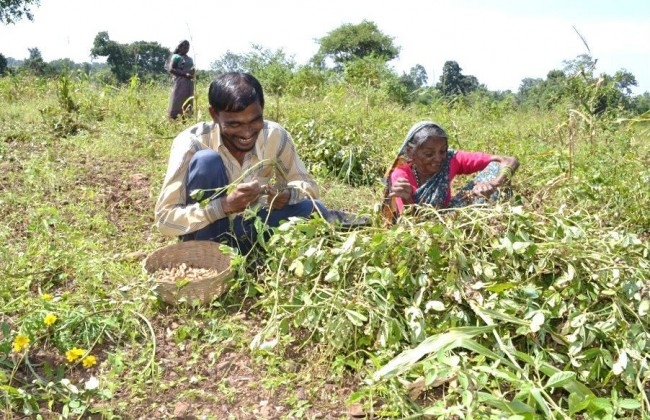
39-year-old Mahadev Charokar is vision impaired but has got amazing hearing, olfactory and tactical senses. He can differentiate between various denominations of currency notes, can walk up to his farms 1.5 km away and even lead a bullock-driven plough on fields. PHOTO: The Alternative

39-year-old Mahadev Charokar is vision impaired but has got amazing hearing, olfactory and tactical senses. He can differentiate between various denominations of currency notes, can walk up to his farms 1.5 km away and even lead a bullock-driven plough on fields. PHOTO: The Alternative

The adoption of the World Programme for Action concerning Disabled Persons in 1982 laid the foundation for a new approach to disability, with the goals of full participation and equalization of opportunities for persons with disabilities. The World Programme of Action has time and again reinforced the role of persons with disabilities as both agents and beneficiaries of development. The onus is on taking action so that persons with disability do not end up being referred to as a “vulnerable group” but rather, that disability itself will be considered as a cross-cutting theme in any emerging goals on sustainable development. In Madhya Pradesh, India, a unique experiment with organic farming is mainstreaming people with disabilities.

Continue reading

Because Every Vegetable Deserves Love

"Cosmetically challenged" farm produce make for tons of  food waste globally. PHOTO:  JCPestano/Shutterstock)

“Cosmetically challenged” farm produce make for tons of food waste globally. PHOTO: JCPestano/Shutterstock)

If you live in Berkeley, Oakland, and Emeryville, often find yourself complaining about high pricing of groceries, this is for you. Above bring fruits and vegetables to you at economical rates, this start-up is concerned with the noble business of minimizing food waste. How they do it – by collecting rejected asymmetrical farm produce and shipping 10-14 pounds of oddball deliciousness to your doorstep, and it’ll only cost $12.

Continue reading

Costa Rica, Punching Above Its Weight, Competitively

“I’m very comfortable with the word ‘revolution,’ ” Figueres said.

“I’m very comfortable with the word ‘revolution,’ ” Figueres said.

Usually “punching above your weight” is a reference to a competition you are not prepared to win. But based on our experience in and observation of Costa Rica it means something entirely different to us. It means something more like: go for it! Give it your best even if the odds are not with you. If not you, then who?

We all have a debt, of one sort or another, to Costa Rica from my perspective if only for this reason. In so many ways it has been inspirational in an against-the-odds sort of way. And who can resist a bit of inspiration?

I shared this article with the La Paz Group teams in India and Costa Rica yesterday, with a note about how it helps understand the challenges related to climate change and what can be done about those challenges—all relevant to the 3 C’s of La Paz Group. Complicated stuff, but clearly important.

I also shared the article for another reason. The woman who features in this article is from Costa Rica, and reading it you can understand a bit better why Costa Rica is so frequently mentioned as an environmentally responsible country. This is important for all of us in La Paz Group because our journey began in Costa Rica, which started our path to Kerala, India and many other places beyond.

To give one small but important example of the long range impact of Costa Rica on La Paz Group, consider the Certification for Sustainable Tourism program developed two decades ago under the visionary leadership of the president of Costa Rica (brother of the subject of the linked article here). Jocelyn is at Xandari Costa Rica specifically to work on getting Xandari to rise up to the highest level from its current status at the second highest level of CST ranking. She has made this the foundation of her career development just after graduating from one of the world’s most prestigious academic institutions. It is impressive that she chose to do so, but equally telling about the lasting impact of Costa Rica’s commitment to sustainable development. Continue reading

Keeping Flies Away from Olives

 Every year in Catalonia, Spain, farmers have to fight the olive fruit flies so they don’t ruin the year’s crop. PHOTO: Wikipedia

Every year in Catalonia, Spain, farmers have to fight the olive fruit flies so they don’t ruin the year’s crop. PHOTO: Wikipedia

The olive fly (Bactrocera oleae) is the single major pest for olives, causing widespread crop damage and significant financial losses to Europe’s olive farmers. The control of the fly has been largely based on the use of chemicals, but the intense use of insecticides leads to development of insecticide resistance, which makes control problematic. In addition, legislation on insecticides have seen some of them being phased out. An alternative? The almost-DIY fly trap.

Continue reading

When It Takes Plastic Balls to Fight Drought

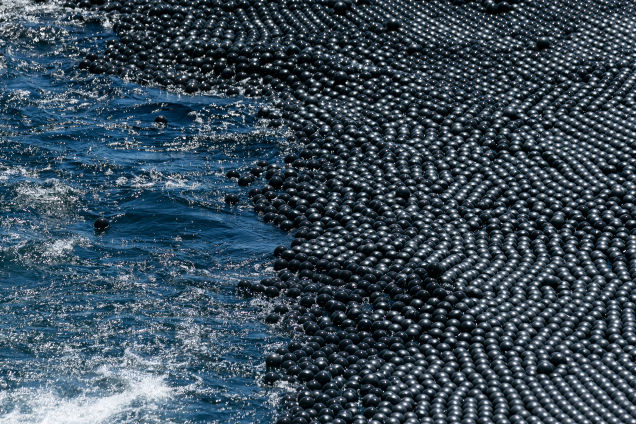
A small portion of the 90 million black plastic balls added to the Los Angeles Reservoir on August 12, 2015. Image credit: AP/Damian Dovarganes

A small portion of the 90 million black plastic balls added to the Los Angeles Reservoir on August 12, 2015.  Image credit: AP/Damian Dovarganes

In a drought, every drop of water is precious, including those lost to evaporation in the hot summer. But in a massive open reservoir, how do you prevent that from happening? Facing a long-term water crisis, officials concerned with preserving a reservoir in Los Angeles hatched a plan: They would combat four years of drought with 96 million plastic balls. On Monday, the 175-acre Los Angeles Reservoir saw the final installment of the project: 20,000 small black orbs that would float atop the water.

Continue reading

Let’s Fill Up on Some Brewtroleum

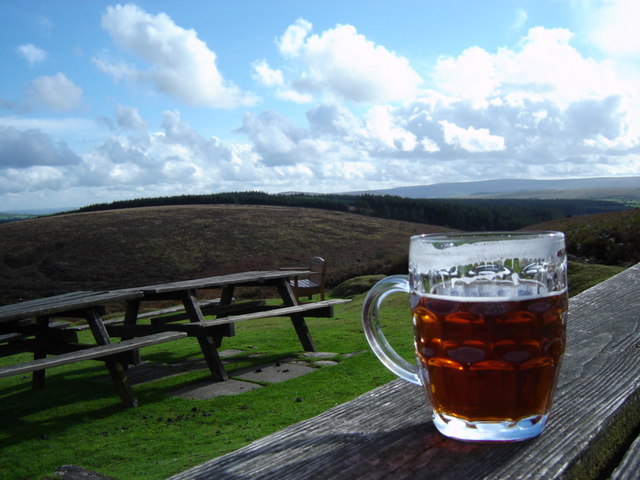
New Zealanders can now run their cars on the same fuel they run themselves on—beer. Brewtroleum is a new biofuel which mixes beer by-products with regular gasoline to power the nation's cars. PHOTO: Wikimedia Commons

New Zealanders can now run their cars on the same fuel they run themselves on—beer. Brewtroleum is a new biofuel which mixes beer by-products with regular gasoline to power cars. PHOTO: Wikimedia Commons

Generally, beer and moving cars don’t work well together. Remember the warnings against drinking and driving? But in a few places, companies are recycling the detritus of the beermaking process into a clean gasoline additive that allows cars to navigate without using as much of the precious fossil fuel.The latest venture comes from New Zealand where for a short time, motorists can fill up their cars with beer. Well, almost beer.

Continue reading

Helping the Ocean Clean Up

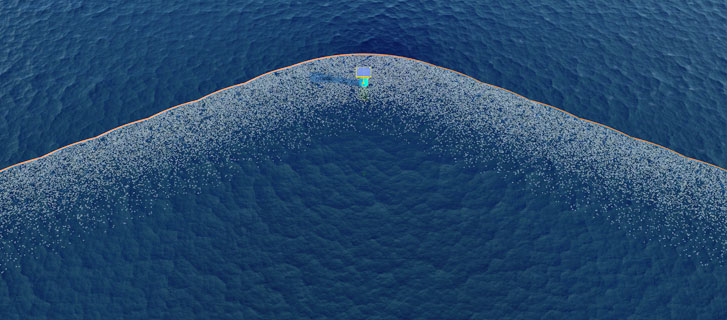
The Ocean Cleanup started tests in 2014 to see if the floating barriers are a feasible way to remove garbage. PHOTO: The Ocean Cleanup

The Ocean Cleanup started tests in 2014 to see if the floating barriers are a feasible way to remove garbage. PHOTO: The Ocean Cleanup

Dutch engineering student Boyan Slat announced in a 2012 TEDx talk that he had invented a way for the oceans to rid themselves of plastic with minimal human intervention. About 8 million tons of plastic enters the ocean each year. Part of this accumulates in 5 areas where currents converge: the gyres. At least 5.25 trillion pieces of plastic are currently in the oceans, a third of which is concentrated in the infamous Great Pacific Garbage Patch. Slat’s idea is to building a stationary array with floating barriers that would filter and collect floating plastic using the ocean’s natural currents.

Continue reading

Leaving an Ugly Mark in Space

It’s not just here on earth that litter is a problem. In the last 40 years, there have been more than 5,000 launches into space, and they’ve ended up leaving a mark, and now scientists are worried about the litter they’ve left behind. ‘Space junk‘ are the small objects that we’ve left behind in space.They include things like old satellites, gloves, and toolkits accidentally dropped by astronauts. In 2014, the International Space Station had to move three times to avoid lethal chunks of space debris. The problem also threatens crucial and costly satellites in orbit. So what is the scale of the space junk problem, and what can we do about it?

Continue reading

Will Greece Look to the Sun God?

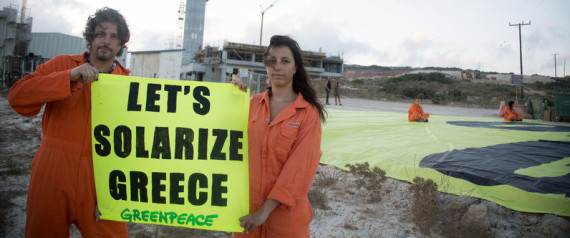
Greenpeace activists spread a banner pointing at a Greek oil-fired power plant under construction in Rhodes, to reveal one of the most unacknowledged causes of the Greek crisis; the country’’s dependence on imported fossil fuels.

Yes, the Greek people are going through difficult times. There are scenes of pensioners queuing at cash machines to withdraw part of their monthly pensions. And there is also a significant need for reform. Even the International Monetary Fund is going back on its word, prompting the country to look at what best it can do. The space of energy would be a good place to start with, given that the country has under-utilized its natural and most abundant asset.

Continue reading