The Incas and their Hand-built Roads

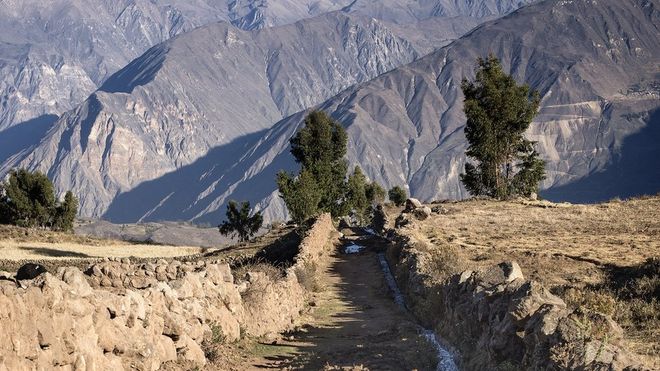
An exhibition at the National Museum of the American Indian concludes that the ancient Incas were great environmentalists. PHOTO: BBC

An exhibition at the National Museum of the American Indian concludes that the ancient Incas were great environmentalists. PHOTO: BBC

The Inca Road is one of the most extraordinary feats of engineering in the world. By the 16th Century it had helped transform a tiny kingdom into the largest empire in the Western hemisphere. And to the envy of modern engineers, substantial parts of the 24,000-mile (39,000-km) network survive today, linking hundreds of communities throughout Argentina, Bolivia, Chile, Colombia, Ecuador and Peru. Incredibly, it was constructed entirely by hand, without iron or wheeled transportation. A new exhibit at the Smithsonian Institution in Washington DC shows why the Incan kingdom built a lasting infrastructure.

Continue reading

Let’s See You Shop Sustainably

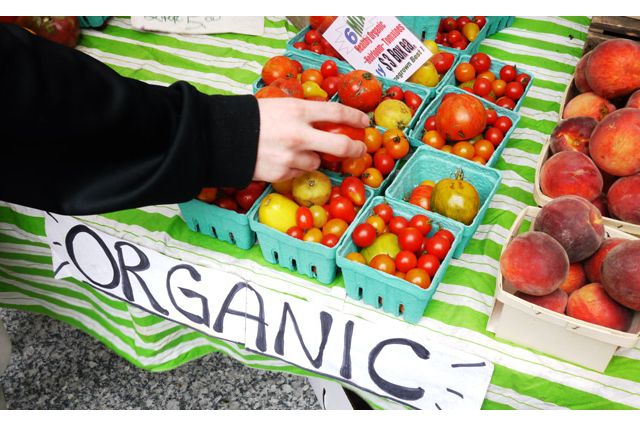
HowGood, an independent research organization based in New York City, may have answers for the food industry’s many scales of sustainability. PHOTO: ucla.edu

HowGood, an independent research organization based in New York City, may have answers for the food industry’s many scales of sustainability. PHOTO: ucla.edu

Are you a conscientious shopper? Do tags of ‘organic’, ‘locally sourced’, ‘homegrown’, ‘all-natural’, etc easily sway you and your shopping cart? Got questions that can better aid your shopping choices? Then HowGood is where you should stop by before you head to the check-out counter.

But if one apple touts organic certification, and an adjacent apple boasts local sourcing, which green reigns supreme? And what grocery store offers the singular scale for weighing the overall benefits? HowGood, an independent research organization based in New York City, has toppled the food industry’s many scales of sustainability to answer these questions through a more nuanced, easy to understand system.

Continue reading

The Ice Man of India

Ladakh’s beautiful mountains might be a paradise for tourists, but ask the locals who struggle to meet their basic water needs every year. PHOTO: Wikimedia Commons

Ladakh’s beautiful mountains might be a paradise for tourists, but ask the locals who struggle to meet their basic water needs every year. PHOTO: Wikimedia Commons

Rain is scarce in the snow-peaked Himalayas of northern India, and summers bring dust storms that whip across craggy brown slopes and sun-chapped faces. Glaciers are the sole source of fresh water for the Buddhist farmers who make up more than 70% of the population in this rugged range between Pakistan and China. But rising temperatures have seen the icy snow retreat by dozens of feet each year. To find evidence of global warming, the farmers simply have to glance up from their fields and see the rising patches of brown where, once, all was white. Knowing no alternative, they pray harder for rain and snow. But Chewang Norphel had the answer: artificial glaciers.

Continue reading

Green Talk on the High Seas

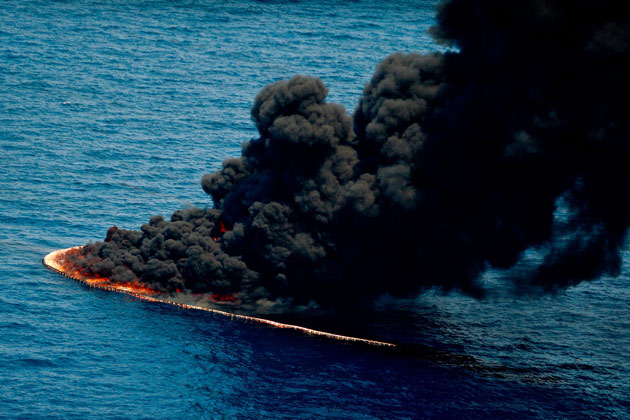
Phytol-based herders aren’t a universal remedy for oil spills, but in certain scenarios they could become the go-to mitigation strategy. PHOTO: Bloomberg

In May, an oil pipeline in Santa Barbara County burst, pouring some 21,000 gallons of oil into the Pacific Ocean. Despite clean-up crews’ efforts to contain it, the oil slick stretched along the coast for miles, serving as a glaring reminder that spill mitigation strategies are still lacking. When oil tankers crash and inevitably spill oil into the open seas, a go-to clean-up method is corralling the rapidly spreading oil and burning it. But in some places, like the ice-strewn Arctic ocean, physically corralling that oil with boats and boons is practically impossible. But here’s a plant-based, eco-friendly molecule that could be used to clean up the inevitable spills of the future.

Continue reading

Spider’s Silk, Minus the Crawlies

Bolt Threads' technology was inspired by the spider, but it has broadened into a platform of programmable polymers: a protein material that can be tuned to create a nearly limitless array of properties PHOTO: Researchgate

Bolt Threads’ technology was inspired by the spider, but it has broadened into a platform of programmable polymers: a protein material that can be tuned to create a nearly limitless array of properties PHOTO: Researchgate

Welcome to the age of slow fashion. Fashion that’s got its sense and sensibility focused on sustainability. Slow fashion represents all things “eco”, “ethical” and “green” in one unified movement. It was first coined by Kate Fletcher, from the Centre for Sustainable Fashion, when fashion was compared to the Slow Food experience. Carl Honoré, author of “In Praise of Slowness”, says that the ‘slow approach’ intervenes as a revolutionary process in the contemporary world because it encourages taking time to ensure quality production, to give value to the product, and contemplate the connection with the environment. And now meet Bolt Threads. A company that started out to make spider’s silk sans the creepy crawlies. Have they succeeded?

Continue reading

Coca-Cola Thinking Plants

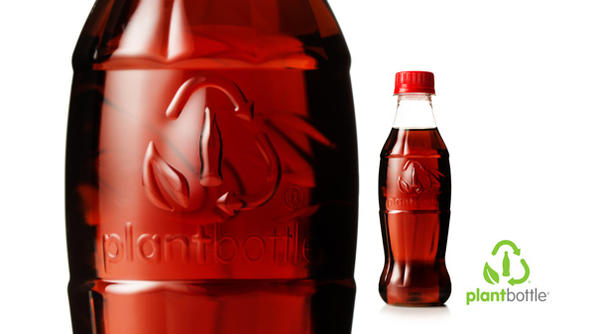
BUSINESS THE BITE Coca-Cola debuts 100% plant-based bottle as companies go eco-friendly (+video)  csmonitor icon Latest News MORE EMAIL Subscribe Coca-Cola has unveiled a bottle made entirely of plant-based materials. The new Coke bottle is the latest sign of the company's growing shift toward more environmentally friendly practices. By Ellen Meyers, Staff writer JUNE 4, 2015 About video ads Coca-Cola to release plant-based recyclable bottles WSBTV - Atlanta Coca-Cola to release plant-based recyclable bottles Coca-Cola debuted an updated version of its PlantBottle, its first bottle made from 100 percent plant materials at the Expo Milan 2015 on Wednesday. The Atlanta-based beverage giant did not specify when the 100 percent plant-based bottles would be available to consumers. However, the company said it wants its current version of its PlantBottle, made of 30 percent plant-based materials, to be used in all of its products by 2020. “Our vision was to maximize game-changing technology, using responsibly sourced plant-based materials to create the globe’s first fully recyclable PET plastic bottle made entirely from renewable materials,” Nancy Quan, the company’s global research and development officer, said in a press release. Recommended: Who owns Gatorade: Coke or Pepsi? Take our 'parent company' quiz! Since the 2009 launch, Coca-Cola has distributed more than 35 billion bottles in nearly 40 countries using its current version of PlantBottle packaging, according to the release. The company estimates that the packaging helped save the equivalent annual emissions of more than 315,000 metric tons of carbon dioxide. TEST YOUR KNOWLEDGE Who owns Gatorade: Coke or Pepsi? Take our 'parent company' quiz! PHOTOS OF THE DAY Photos of the day 06/16 In 2011, Coca-Cola licensed the technology for making PlantBottles to H.J. Heinz to use in its ketchup bottles. In 2013, Ford Motor Company said it plans to use the same material found in PlantBottle packaging in the fabric interior in certain test models of the Fusion Energi hybrid sedan. Coca-Cola says the new bottles will be the world's first entirely plant-based PET bottles. PET, known as polyethylene terephthalate, is a plastic resin and the most common type of polyester, according to the National Association for PET Container Resources (NAPCOR). It was discovered and patented in England in 1941, but it was not until the late 1990s when more companies and manufacturers started to make and use PET containers for products. NAPCOR says PET is appealing for both consumers and manufacturers for its low weight, strength, and recyclability, and its use in packaging materials, like bottles, has ticked up over the past few years. However, PET has its drawbacks. It can be an expensive packaging material to produce, according to a 2004 report from the Recycling Operators of New Zealand. RONZ also found that “PET acts as a gas ‘sieve,’ slowly allowing oxygen in and carbon dioxide out. This means the shelf life of beverages can be limited by the reduction, over time, in carbonation and oxygen degradation of flavours.” In other words, the carbonation in soda could go flat faster.  In terms of recycling, quality and quantity of supplies are also still major concerns. For reclaimers – professional recycling centers – PET packaging can be harder to clean than other plastics, Reclaimers still reported high levels of contamination in PET containers in 2013, according to NAPCOR’s 2014 report on recycling activity for PET containers. That complication can mean less PET materials are actually reused. In fact, only 22.6 percent of recycled PET containers in the US went on to be used in other products.   NAPCOR also reported that domestic collection of PET containers in the US is growing, but it is not enough to meet current and potential demand from reclaimers. That's led them to import PET from places like Canada, Mexico, and Latin America. While PET recycling has a long way to go, Coca-Cola's latest move highlights a long withstanding trend: the importance of businesses being more envronmentally conscious

While PET recycling has a long way to go, Coca-Cola’s latest move highlights a long withstanding trend: the importance of businesses being more envronmentally conscious

Coca-Cola has unveiled a bottle made 30% of plant-based materials. The new Coke bottle is the latest sign of the company’s growing shift toward more environmentally friendly practices. Can it be sustained? That remains to be seen.

Since its introduction in 2009, PlantBottle packaging has been distributed in a variety of packaging sizes across water, sparkling, juice and tea beverage brands—from Coca-Cola to DASANI to Gold Peak. Today, PlantBottle packaging accounts for 30 percent of the Company’s packaging volume in North America and 7 percent globally, some 6 billion bottles annually, making The Coca-Cola Company a large bioplastics end user.  In 2011, the company licensed PlantBottle Technology to H.J. Heinz for use in its ketchup bottles. In 2013, Ford Motor Company announced plans to use the same renewable material found in PlantBottle packaging in the fabric interior in certain test models of the Fusion Energi hybrid sedan. And in 2014, the first reusable, fully recyclable plastic cup made with PlantBottle Technology rolled out in SeaWorld and Busch Gardens theme parks across the United States. More.

Continue reading

Embarking on a Path of Sustainability

I never expected to return to Costa Rica after finishing college, and much less, to fulfill a role that I only dreamed about.  When I was offered the opportunity to help advance the sustainability projects at Xandari Resort in Costa Rica, I knew this was an opportunity that I could not let pass. From the first day that I selected Hospitality Administration as my major at Boston University (BU) and through my four years learning about and working in hospitality, I have grown to cherish the industry. Through my multiple work experiences in hotels and food and beverage companies, primarily in operations and guest relations, I experienced daily the joy of hospitality services. Continue reading
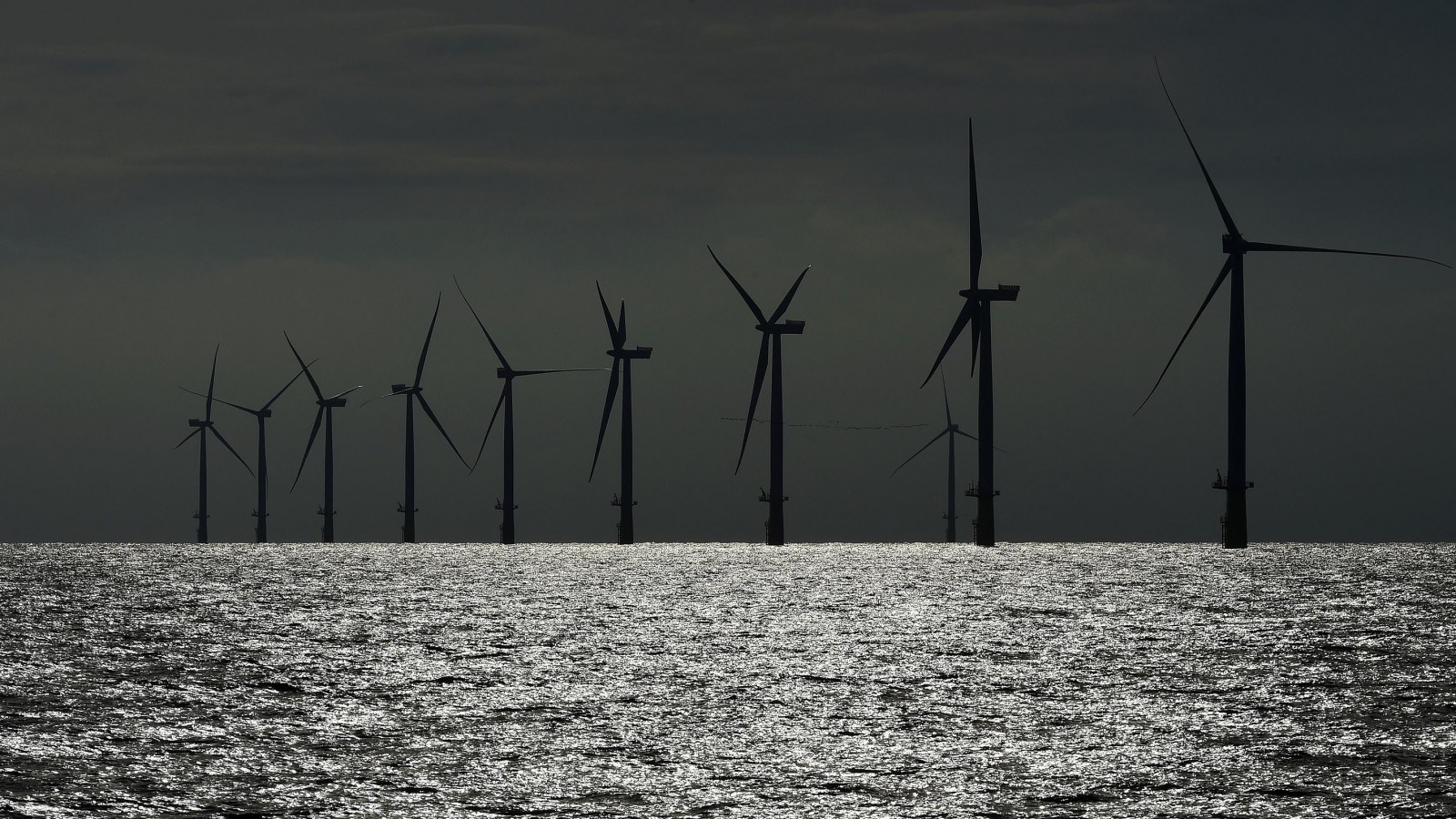
More (Offshore) Power to You, Germany

Germany is set to overtake the UK as the biggest installer of offshore wind globally, Denmark comes behind the UK by capacity, followed by Belgium and China PHOTO: Reuters/Fabian Bimmer

Germany is set to overtake the UK as the biggest installer of offshore wind globally. Denmark comes behind the UK by capacity, followed by Belgium and China. PHOTO: Reuters/Fabian Bimmer

We first discussed wind energy, as a viable resource to power the world’s needs, almost three years ago. Prior to that and in the time hence, Germany has done much about it. The country has chalked out a plan to replace nuclear power plants with offshore wind farms in a bid to use renewable energy round-the-clock. Importantly, the country is sticking to its plan. Above all, it is building on it.

Germany has hugely ambitious green goals. Five years ago it set a goal to produce 18% of its energy from renewables by 2020 (latest figures show it having reached 12.4%). The country also wants to reduce greenhouse gas emissions by 40% by 2020, compared with 1990 levels, and by 80% by 2050. The transformation is knows as the Energiewende—literally “energy turn.”

Continue reading

Fifty Shades of Black

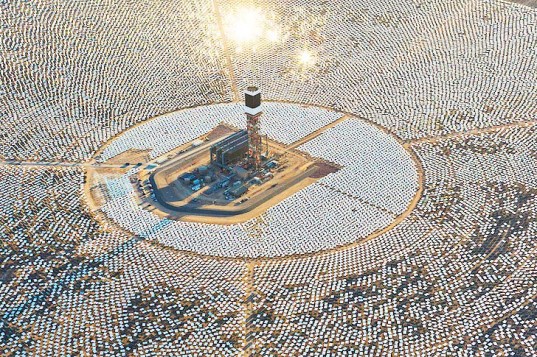
Ivanpah, the world's largest concentrating solar power plant, located just southwest of Las Vegas,  can produce a whopping 392 megawatts of solar energy to power 140,000 California homes with clean energy

Ivanpah, the world’s largest concentrating solar power plant, located just southwest of Las Vegas, can produce a whopping 392 megawatts of solar energy to power 140,000 California homes with clean energy PHOTO: Inhabitat

So we’ve all learnt, at some time or the other, that black absorbs light the maximum. And that the sun is one of the best sources of clean and renewable energy. Now, put two and two together. Yes, we are definitely talking tapping the sun’s light and heat. And we need a black surface to do so. The catch: the color needs to be as black as black can get.

Continue reading

Extreme Recycling

Filtering membranes in an Orange County, Calif., water purification facility. The plant opened in 2008 during the state's last drought. Credit Stuart Palley for The New York Times

Filtering membranes in an Orange County, Calif., water purification facility. The plant opened in 2008 during the state’s last drought. Credit Stuart Palley for The New York Times

As the California drought continues public and private sector organizations look to solutions to comply with the State’s mandatory water reduction measures. In addition to desalination plants coming back on line and rainwater harvesting, communities are looking at ways to overcome the “yuck factor” of water recycling.

Less “extreme” versions have been in place for some time, as household wastewater goes through layers of treatment processes that break it down to its prime components of “H, 2 and O”. The results have been used for irrigation for years, but it’s possible to purify the water to sparklingly clear levels.

Used already in craft beer brewing, extreme purified water is one of the array of ideas being implemented to manage California’s ever-growing problems. Dealing with consumers is essentially a marketing problem, more so in this case than the norm.

Water recycling is common for uses like irrigation; purple pipes in many California towns deliver water to golf courses, zoos and farms. The West Basin Municipal Water District, which serves 17 cities in southwestern Los Angeles County, produces five types of “designer” water for such uses as irrigation and in cooling towers and boilers. At a more grass-roots level, activists encourage Californians to save “gray water” from bathroom sinks, showers, tubs and washing machines to water their plants and gardens. Continue reading

Waste, Quantified Into Profit

With a new chain called Loco’l, the chef Roy Choi is hoping to create competitively priced, sustainable fast food, primarily by minimizing waste. CREDIT PHOTOGRAPH BY MARIO ANZUONI / REUTERS VIA LANDOV

With a new chain called Loco’l, the chef Roy Choi is hoping to create competitively priced, sustainable fast food, primarily by minimizing waste.
CREDIT PHOTOGRAPH BY MARIO ANZUONI / REUTERS VIA LANDOV

Food Trucks are the ultimate “pop up” upstarts, with their expansive ranges between classic and trendy. Roy Choi, who New Yorker writer Lauren Markem calls “the godfather of the foodtruck movement” wants to do more than serve great, locally sourced food at his new venture Loco’l’s. His “fast food” restaurant concept located in San Francisco’s Tenderloin District, will be inspired by the goal of working toward a waste free kitchen. In order to keep the costs down in what is a notoriously wasteful segment of the restaurant market, Choi is going lean using a software that helps create a more sustainable kitchen.

In tapping into waste, Choi and Patterson hope to marry fiscal prudence with environmental idealism. According to a report published in 2012 by the Natural Resources Defense Council, the amount of wasted food in the U.S. has increased by fifty per cent since the nineteen-seventies, to the point where more than forty per cent of all food grown or raised in the United States now goes to waste somewhere along the supply chain. This in turn means that vast amounts of fossil fuels, water, and other resources are being wasted in the production of unused food. Continue reading

Planet Of The Apes, If We Act

An endangered Sumatran orangutan in the forest of Bukit Lawang, in Indonesia’s Sumatra island, one of the key sites identified as at risk. Photograph: Romeo Gacad/AFP/Getty Images

An endangered Sumatran orangutan in the forest of Bukit Lawang, in Indonesia’s Sumatra island, one of the key sites identified as at risk. Photograph: Romeo Gacad/AFP/Getty Images

© WWF

© WWF

The photograph above illustrates a story in today’s Guardian in the Environment section, and addresses the readership of that publication in a manner that expects action. We had provided the executive summary of the study here that is the maritime version of a major call to action, and that was still quite a read; here, thanks to the Guardian, is a briefer read on the topic of a terrestrial call to action by WWF, one we hope that apes of all varieties can appreciate:

Hundreds of millions of acres of forest could be lost in the next two decades in less than a dozen global hotspots for deforestation, conservationists have warned.

Research by wildlife charity WWF has identified 11 “deforestation fronts” where 80% of projected global forest losses by 2030 could occur.

Up to 170m hectares (420m acres) could be lost between 2010 and 2030 in these areas if current trends continued – equivalent to the disappearance of a forest stretching across Germany, France, Spain and Portugal.

The areas are the Amazon, the Atlantic Forest and Gran Chaco, and the Cerrado in South America, the Choco-Darien in Central America, the Congo Basin, East Africa, eastern Australia, the Greater Mekong in South East Asia, Borneo, New Guinea and Sumatra. Continue reading

Water, Water Everywhere, Once Upon A Time

150504_r26451-320

The Salton Sea is a vital, threatened link between the Colorado River and coastal cities. PHOTOGRAPH BY CLAIRE MARTIN / INSTITUTE

Sometimes reading, like taking vitamins or swallowing that medicine, must be done without a spoonful of sugar. Sometimes we would rather read fairy tales and happily ever after while other times we must read the news, with the detailed pictures and some thoughtful analysis, to know what our future might look like, to get us thinking about what we might do about it if we do not like what we see. This is a must read that fits into the latter category:

…The air smelled sweet and vaguely spoiled, like a dog that has got into something on a hot day. When the wind blew, it veiled the mountains in dust and sent puckered waves to meet the frothy white flow from the pipe. The sea, which is called the Salton Sea, is fifteen times bigger than the island of Manhattan and no deeper in most places than a swimming pool. Since 1924, it has been designated as an agricultural sump. In spite of being hyper-saline, and growing saltier all the time, the sea provides habitat to some four hundred and thirty species of birds, some of them endangered, and is one of the last significant wetlands remaining on the migratory path between Alaska and Central America. Continue reading

Eco-Modernist Strategy

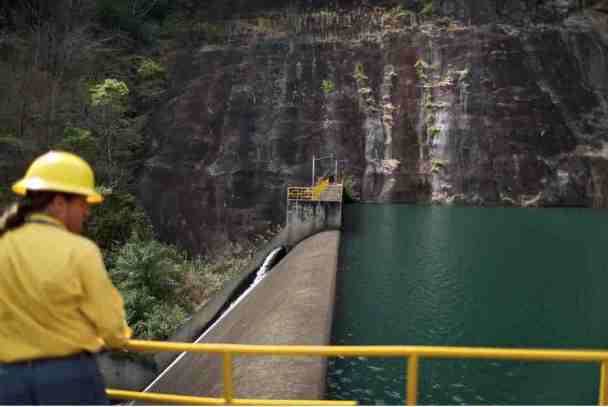
A dam in Guanacaste Province, Costa Rica, drives a hydroelectric plant. Developing nations will require large amounts of new energy to achieve American and European living standards. Credit Joe Raedle/Getty Images

A dam in Guanacaste Province, Costa Rica, drives a hydroelectric plant. Developing nations will require large amounts of new energy to achieve American and European living standards. Credit Joe Raedle/Getty Images

We are in the sustainable development camp through and through, but Mr. Porter’s point is well taken:

A Call to Look Past Sustainable Development

Eduardo Porter

The average citizen of Nepal consumes about 100 kilowatt-hours of electricity in a year. Cambodians make do with 160. Bangladeshis are better off, consuming, on average, 260.

Then there is the fridge in your kitchen. A typical 20-cubic-foot refrigerator — Energy Star-certified, to fit our environmentally conscious times — runs through 300 to 600 kilowatt-hours a year.

Continue reading

Danish Can-Do Greenery

Screen Shot 2015-04-10 at 5.53.12 AM

Read a bit about their work, mission and invitation, and contagion takes on a new meaning:

Sustainia is a think tank and consultancy headquartered in Copenhagen, Denmark. We identify readily available sustainability solutions across the world and demonstrate their potential impacts and benefits in our work with cities, companies, and communities.

By focusing on innovative breakthroughs, inspiring alternatives and new opportunities, Sustainia is shaping a new narrative of optimism and hope for a sustainable future that seeks to motivate instead of scaring people with gloom and doomsday scenarios. Continue reading

Water And Its Discontents

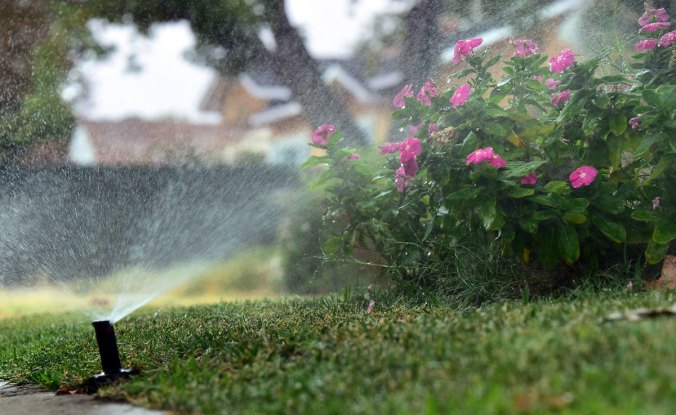
The California drought has prompted Governor Jerry Brown to mandate a twenty-five-per-cent reduction in the state’s water usage. CREDIT PHOTOGRAPH BY FREDERIC J. BROWN / AFP / GETTY

The California drought has prompted Governor Jerry Brown to mandate a twenty-five-per-cent reduction in the state’s water usage. CREDIT PHOTOGRAPH BY FREDERIC J. BROWN / AFP / GETTY

Thanks to this post we learn that writers from one of our most valued sources of cultural and environmental long-form journalism and rapid-fire website posts sometimes travel to Costa Rica, and we can only hope they will consider Xandari a home away from home on such travels. But more importantly, in this post, we are reminded that the environmental footprint of the foods we eat is a relatively new topic for most of us. Did you consider the almond, the way you consider beef, to be one of the greedier foods, in terms of the water-intensity of its life cycle? Until reading this post we were clueless on that topic:

Drought City

BY DANA GOODYEAR

“Los Angeles Residents Walk Up to 4 Hours Per Day to Look for Potable Water”: I read this headline in a small monthly that covers the coastal province in northwestern Costa Rica where I was travelling, but it took me a moment to realize that this was not about the city of nearly four million where I pay my water bill, and not a joke, though it was April 1st. Los Angeles, in this case, referred to a fifteen-family town in the Central American highlands. But my Los Angeles is in for it, too, and it is a measure of how imminent and ominous these changes feel that my mistake seemed, for a moment, plausible—a new extreme in a year’s worth of shocking news about the effects of the California drought. Continue reading

Rooftop Solar Panels in Utility Corporation’s Cross-Hairs

SolarCraft worker Craig Powell carries a solar panel on the roof of a home in San Rafael, Calif. The average price of photovoltaic cells has plummeted 60 percent since 2010. (Justin Sullivan/Getty Images)

SolarCraft worker Craig Powell carries a solar panel on the roof of a home in San Rafael, Calif. The average price of photovoltaic cells has plummeted 60 percent since 2010. (Justin Sullivan/Getty Images)

Conflicts between the use of alternative energy technologies such as solar and the status quo of fossil fuel based utility companies is nothing new, but was less of an issue when the infrastructure of the former was so costly few people could afford the investments required. But more efficient designs and lower production costs have made the panels and system more accessable to more people, enough so that utility executives are pushing for legislation that will stem the tide by mounting surcharges and other disincentives.

“The utilities are fighting tooth and nail,” said Scott Peterson, director of the Checks and Balances Project, a Virginia nonprofit that investigates lobbyists’ ties to regulatory agencies. Peterson, who has tracked the industry’s two-year legislative fight, said the pivot to public utility commissions moves the battle to friendlier terrain for utilities. The commissions, usually made up of political appointees, “have enormous power, and no one really watches them,” Peterson said. Continue reading

Better Buying, Canned Tuna Edition

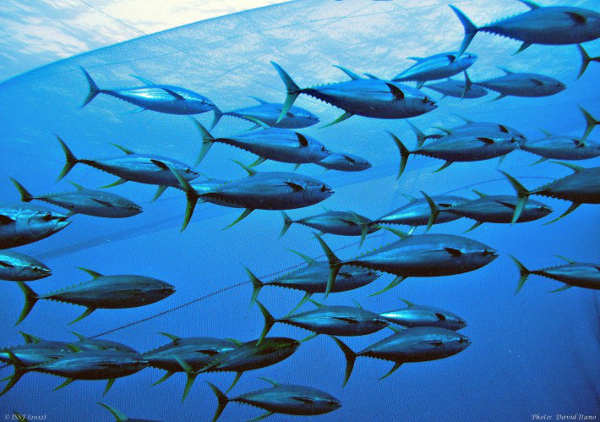
Seafood companies are responding to the public’s increased interest in whether fishing practices deplete tuna populations. Photo credit: David Hano/International Sustainable Seafood Foundation

Seafood companies are responding to the public’s increased interest in whether fishing practices deplete tuna populations. Photo credit: David Hano/International Sustainable Seafood Foundation

Thanks to Ecowatch for the updated primer on better canned tuna shopping criteria:

Canned tuna is one of the world’s most popular packaged fish, but it has also long been controversial. Between issues of overfishing resulting in fishery depletion and bycatch that threatens other species including the much-publicized incidental capture of dolphins by tuna fishermen, it has gotten a bad name. With the increased awareness of the harm tuna fishing can cause, companies have stepped up to try to reassure consumers that they are paying attention to the health of our oceans. Continue reading

Sustainable Logging Improves Lives

9642829930_d19343c79b_h-680x450

Logging generally does not come high on our priority list for inspirational stories, but we are nothing if not open to new ideas (thanks to Conservation for keeping up us apprised of encouraging surprises), especially when camera traps are involved to verify the facts:

ORANGUTANS MIGHT SURVIVE SUSTAINABLE LOGGING

Like for all of its great ape cousins, the rise of Homo sapiens has not been pleasant for the Bornean orangutan, Pongo pygmaeus. The endangered “red ape,” found only in Borneo, is threatened by the continuing loss of its forest home. Hectare after hectare of primary forest is being lost either to logging or to palm oil plantations. Continue reading

Lovely Things Pedaled To A Place Near You

trailhead650

Several contributors to this site descend from a man from the mountains north of Sparta, who sailed from Greece to New York City more than a century ago, and had a pushcart that earned him enough money to return to his village and become a prosperous olive farmer.

Good things come in, and from, pushcarts. We like the bike design as much as anything else in the photo above, and speaking of aesthetics the last photo below will help understand why we absolutely had to post this. As for pedal-powered treats on wheels, we will do something to extend the reach of 51 in Fort Kochi, so stay tuned… Thanks to Ecowatch.com for this:

Riding your bike to work is gaining momentum as more cities adopt or expand bike-sharing programs, but what about ordering your morning latte or lunch from a bike? With more and more food bikes popping up in cities across the country, finding more meals on wheels (without the truck) might soon be an option. Continue reading